Kennedy Center 2018 Honorees Include Cher and ‘Hamilton.’ Will President Trump Attend?
Image
“I am very grateful to the Kennedy Center,” Cher, an honoree, said in a statement via the Kennedy Center.CreditStuart C. Wilson/Getty Images Getty Images for Universal Pictures By Sopan Deb
· July 25, 2018
·
o
o
o
o
o
Reba McEntire, Cher, Philip Glass and Wayne Shorter will receive this year’s Kennedy Center Honors, the annual Washington distinction for artists who have made extraordinary contributions to culture.
And in a first for the 41-year history of the awards, which have always gone to individuals, the Broadway musical “Hamilton” will receive a special honor.
“I believe that this is a work that has transformed how we think about using art to talk about who we are as a society,” Deborah F. Rutter, the president of the John F. Kennedy Center for the Performing Arts, said in an interview.
Though typically a nonpartisan event, and one of the highlights of the Washington social calendar, the Kennedy Center honors presentation has not escaped the politicization of entertainment since the 2016 election. Last year, with a couple of the honorees, including the television producer Norman Lear, expressing discomfort with the president, Mr. Trump and the first lady, Melania Trump, withdrew from attending, “to allow the honorees to celebrate without any political distraction,” marking just the fourth time a president missed the event.
ADVERTISEMENT
It is still unclear if the Trumps will attend this year; the White House referred questions to Stephanie Grisham, a spokeswoman for Mrs. Trump, who said it was too early to say. At least two of the honorees have criticized Mr. Trump, as has Lin-Manuel Miranda, the creator of “Hamilton.”
A representative for Cher, who campaigned for Hillary Clinton in 2016 and has compared the president to Hitler, did not return a request for comment. But in a statement through the Kennedy Center, she said, “When I was very young, I saw ‘Dumbo’ and ‘Cinderella’ and knew then what I wanted to be and the path my life would take and here I am! I am very grateful to the Kennedy Center.”
Her half-century-long singing and acting career includes an Oscar, an Emmy and a Grammy, and she is once again at the forefront of pop culture consciousness. She is a star in the just-released movie sequel “Mamma Mia! Here We Go Again,” and a Broadway-bound musical based on her life is coming this fall.
Mr. Glass, a world-renowned composer and pioneer of minimalist music, said he was “completely thrilled” by the honor.
“The company I’m in is really impressive,” he said in an interview. “Wayne Shorter. ‘Hamilton.’ A country music icon. I mean, Cher, my god! Then there’s me. What am I doing here?”
ADVERTISEMENT
Mr. Glass, who has referred to Mr. Trump as an idiot, did not indicate that he would skip the awards if the president showed up. “Whether he’s there or not, who cares?” he said.
Image
“I will be there with bells on,” said the honoree Reba McEntire, who keeps politics and art separate. She said she would go whether or not Mr. Trump attended. “I have been looking forward to this so much.”CreditEmma Mcintyre/Getty Images for Celebrity Fight Night
Ms. McEntire, a country music savant with a sizable collection of No. 1 hits and a lengthy career on television, said “Heck yes,” when asked whether she would go either way, in line with her past position of keeping politics and art separate. She has appeared at the Kennedy Center Honors three times, to honor Loretta Lynn (2003), Dolly Parton (2006) and Lily Tomlin (2014).
“I will be there with bells on,” Ms. McEntire said. “I have been looking forward to this so much.”
Mr. Shorter, a 10-time Grammy Award-winning jazz saxophonist, who expressed surprise that he was picked for the honor, said he would attend either way. He has collaborated with several top musicians, including Herbie Hancock and Carlos Santana.
“I had no idea that they would reach that far away from the popular, well-known-artist box,” said Mr. Shorter, who performed at the 2013 Honors to celebrate Mr. Hancock.
As for “Hamilton,” the hit musical that Mr. Trump once called “overrated” and whose cast he has publicly sparred with, Ms. Rutter said the award was not intended as a political statement.
ADVERTISEMENT
But the rationale for the honor, as well as its unusual nature, could be seen as a message.
“When you have people of all backgrounds and races, age, socioeconomic differences and they all are moved by this work — this is a work of power and importance,” Ms. Rutter said. “And I’m disappointed that Mr. Trump may not like it. But in fact, this is not a rebuke. This is about celebrating a powerful work of art and I will always stand by the power of the arts.”
Mr. Miranda’s representative did not say whether he or the rest of the creative team will attend if Mr. Trump is there, but did provide a statement on their behalf.
“The Kennedy Center Honors is the highest achievement an artist can receive. For the Board to break with its custom of honoring an individual and choosing instead to bestow this recognition on a single piece of work is humbling beyond our wildest expectations for our show,” Mr. Miranda, Thomas Kail (director), Andy Blankenbuehler (choreographer) and Alex Lacamoire (musical director) said in the statement.
The ceremony, which is televised, is scheduled for Dec. 2, when Mr. Miranda will most likely be rehearsing for another stint in “Hamilton.” Mr. Miranda is reprising his role as Alexander Hamilton for a three-week run in Puerto Rico in January.
He has been an ardent critic of Mr. Trump, saying last year that the president was going “straight to hell.”
Mr. Trump set his sights on “Hamilton” shortly after he won the election, when Mike Pence, then vice president-elect, attended a performance of the show. Near the end of the musical, Brandon Victor Dixon, who was playing Vice President Aaron Burr, addressed Mr. Pence directly as he was leaving, saying: “We, sir — we — are the diverse America who are alarmed and anxious that your new administration will not protect us, our planet, our children, our parents, or defend us and uphold our inalienable rights.”
ADVERTISEMENT
“We truly hope that this show has inspired you to uphold our American values and to work on behalf of all of us,” he continued.
Mr. Trump responded angrily on Twitter, saying Mr. Pence had been “harassed” by the Hamilton cast, and that the actors were “very rude.”
A version of this article appears in print on July 26, 2018, on Page C1 of the New York edition with the headline: Kennedy Center Honorees To Include Cher and ‘Hamilton’. Order Reprints | Today’s Paper | Subscribe
·
·
·
· Related Coverage
PLEASE NOTE: IF YOU DO NOT WISH TO BE ON THIS MAILING LIST PLEASE RESPOND WITH ‘REMOVE’ IN THE SUBJECT LINE. IF YOU ARE RECEIVING DUPLICATE EMAILS OUR APOLOGIES, JAZZ PROMO SERVICES ANNOUNCEMENT LIST IS GROWING LARGER EVERY DAY…..PLEASE LET US KNOW AND WE WILL FIX IT IMMEDIATELY!
Lee Morgan, East Village Jazz Trumpet Prodigy
byJuly 10, 2018 Lee Morgan, prodigy jazz trumpeter, born on July 10, 1938, in Philadelphia. One of his sisters bought him his first trumpet, and by the time he was a teenager he played with John Coltrane for the album Blue Train. At 18, Dizzie Gillespie tapped Morgan to join his band. The jazz world opened up before him. Starting in the 1960’s, Morgan was a regular performer at Slugs’ Saloon at 242 East 3rd Street, between Avenue B and C, where – well, let’s say, headlines were made. Lee Morgan Success and Tumult
Once Dizzie Gilespie disbanded his group for financial reasons, Lee Morgan was well established in the jazz world. He began recording for Blue Note Records in 1956, eventually recording twenty-five albums as a leader for the label. Morgan recorded thirty-one albums total in lead role and played as a side player on over a hundred albums with various bands and musicians. In his late teens and early twenties, Morgan also began touring and composing. It was two of his tour-mates in Art Blakey’s Jazz Messengers who introduced Morgan to heroin.
Morgan’s story mirrors many young stars and jazz musicians of the time – heady with fame and innovation and virtuosity. And danger. The country and industry both idolized and derided the jazz community. Record deals, tours, segregation and racist Jim Crow laws were all part of the mix. In 1963, Morgan’s most successful record The Sidewinder was released. Chrysler used a song from The Sidewinder for a commercial, and when Morgan’s lawyers got involved, Chrysler took the commercial off the air but never paid for the use of the song or penalties. This and other factors led to Morgan becoming politically involved as a leader of the Jazz and People’s Movement. The Movement’s mission was to protest racism and its skewed publicity opportunities in the music industry, especially in television. Morgan kept working, despite these systemic challenges. Addiction and Recovery
Morgan was addicted to heroin for ten years. In the cold Manhattan winter of 1967, with his coat and trumpet in hock to support his addiction, he met a woman named Helen. Helen was a devotee of the jazz world, and known for being “square” herself, but for helping struggling musicians. She bought Morgan his coat and trumpet back, and from then on, she said, “he hung on to me.” They fell in love, and Helen “took over total control” of Morgan, helping him get well and working again. Within a year of meeting, the couple settled down in the Bronx. Helen took Lee’s last name, and they began introducing themselves as husband and wife, even though they never legally married. The only known photo of Lee and Helen Morgan together
Morgan began teaching music in New York schools. He got more involved with the Jazz and People’s Movement. He started seeing other women – for pleasure, but also for the pragmatic reason that it was hard to get from the downtown Jazz clubs back to the Bronx after a late, wild show. Around this time, Helen started carrying a gun. Slugs’ in the Far East The Albert Ayler Quintet Outside Slugs’ Saloon
The business at 242 East 3rd Street (now Rossy’s Bakery) was first a Ukrainian restaurant and bar. In 1964, owner Jerry Schultz opened it as a club and initially called it “Slugs’ Saloon.” He later changed the name to “Slugs’ in the Far East.” Long and railroad style, the bar had a capacity for 75 people but often held twice that. Prominent jazz musicians performed including Sonny Rollins, Albert Ayler, Ornette Coleman, and many others. Some of these performances were recorded – with or without the musicians’ knowledge – and appear unofficially released or on bootleg albums. Well-known artists flocked to Slugs’ for their shows, from Larry Rivers to Salvador Dalí. The Gun at Slugs’
On February 19, 1972, it was blizzarding in New York and Morgan was on his way to Slugs’ for a show. His car spun out in the snow, so Morgan abandoned his car, took his trumpet, and walked the rest of the way. People crowded the bar with their coats and cigarette smoke. Morgan was scheduled at Slug’s for the whole week and was staying in the Village, so Helen hadn’t seen him in a while. She decided, in the blizzard, to go down to the East Village to watch him perform. Walking into Slugs’ she saw Morgan, between sets, at a table with another woman. They approached each other with hostility, and Morgan threw her out of the bar. Lee Morgan (left) and Hank Mobley, talking at a table in Slugs’
“I didn’t have on my coat or nothing, but I had my bag,” Helen recalled. “He threw me out the club. Wintertime. And the gun fell out my bag, and I looked at it. I got up. I went to the door….The bouncer said to me, ‘Miss Morgan, I hate to tell you this but Lee don’t want me to let you in.’ And I said, ‘Oh, I’m coming in!’ I guess the bouncer saw the gun…He said, ‘Yes you are.’ And I saw Morgan rushing over there to me and all I saw in his eyes was rage.”
And so, as Chekov would have it, the gun was fired a single time, hitting Lee Morgan near his heart. It took the ambulance too long to get all the way east in the blizzard, and so Lee Morgan’s life ended at the hands of the woman who had saved him five years earlier. Morgan was 33 years old. Local African-American newspaper article about Morgan’s death
The shooting cast a dark shadow over Slugs’. Combined with the challenging neighborhood landscape, and difficulties of club ownership, Schulz decided to close Slugs’ in late 1972. Lee Morgan’s Legacy and Recognitions
Reading the long-form story of Lee and Helen is well worth it. As is watching the 2017 documentary I Called Him Morgan. The film is based on an interview with Helen Morgan in the 1990s after she had been released on parole. She pled not guilty to charges of second-degree manslaughter, but her case files were lost, so her sentence remains unknown.
The tragic death of Lee Morgan is now part of jazz mythology. In the decades following his death, Blue Note released previously unheard recordings. All to great critical acclaim, which is undiminished. Morgan is remembered as a prodigy, virtuoso, activist, and strong personality.
PLEASE NOTE: IF YOU DO NOT WISH TO BE ON THIS MAILING LIST PLEASE RESPOND WITH ‘REMOVE’ IN THE SUBJECT LINE. IF YOU ARE RECEIVING DUPLICATE EMAILS OUR APOLOGIES, JAZZ PROMO SERVICES ANNOUNCEMENT LIST IS GROWING LARGER EVERY DAY…..PLEASE LET US KNOW AND WE WILL FIX IT IMMEDIATELY!
Carmine Street Guitars, Beloved New York City Shop, Gets Documentary Tribute
The Ron Mann-directed film features appearances by Wilco’s Nels Cline and Lenny Kaye, among others, and will premiere at the Venice Film Festival. ByVARIETY STAFF Variety Staff Follow Us on Twitter@VarietyFOLLOW Variety’s Most Recent Stories
· Kendrick Lamar to Appear on Starz’s ‘Power’
VIEW ALL
· Facebook
· Twitter
· Reddit
· Email
· Show more sharing options
· LinkedIn
· WhatsApp
· Print
· Pin It
· Tumblr
New documentary “Carmine Street Guitars” will have its world premier at the Venice Film Festival. The Ron Mann-directed film chronicles a week in the life of Greenwich Village guitar maker Rick Kelly and his apprentice Cindy Hulej. Kelly’s method is unique: he builds his guitars out of wood salvaged from old New York City buildings constructed in the 1800s or as he calls it, “the bones of old New York.” Artists like Lou Reed and Bob Dylan have owned Kelly’s guitars, which feature parts taken from such iconic Manhattan locales as the Hotel Chelsea and Chumley’s pub.
The doc brings musicians of all stripes — including Patti Smith Band’s Lenny Kaye, Kirk Douglas of The Roots, Jamie Hince of The Kills, Bill Frisell, Nels Cline of Wilco, Marc Ribot, Ester Baling, Dallas and Travis Good of The Sadies and Dylan six-stringer Charlie Sexton — to the shop. Filmmaker Jim Jarmusch (pictured below) also makes an appearance for a quick guitar repair, and was responsible for the film’s conception, in a way. “This movie was really made thanks to Jim Jarmusch,” Mann tells Variety. “Not only for introducing me to Carmine Street Guitars but also for films like ‘Coffee and Cigarettes’ and ‘Patterson’ — this film has that sort of tone.” Mann’s own credits go back more than three decades and include 2014’s “Altman” as well as “Grass” and “Comic Book Confidential.”
CREDIT: COURTESY OF SPHINX PRODUCTIONS
Mann captures some visitors to the shop, which is located at 42 Carmine St., in intimate moments, like Cline sampling and buying a Kelly guitar for his friend and bandleader Jeff Tweedy; Frisell talks about growing up listening to Colorado’s unlikely surf band The Astronauts, and then plays an instrumental rendition of Brian Wilson’s “Surfer Girl;” And in the course of the week, Kelly acquires some spare wood from the venerated McSorley’s Ale House, and re-purposes it into a guitar that almost immediately ends up in the capable hands of Sexton.
Carmine Street Guitars is a New York story about standing tall in the face of commerce-driven gentrification. It’s also a meditation on the magic of wood and of music, and the interaction of people. “Marc Ribot says Rick’s shop is about community,” Mann explains. “That’s the way I saw it. I always likened Carmine Street Guitars to a small town post office at a turn of the 20th century . Ultimately, I felt it was something that needed to be captured… before it just all slips away.” LEAVE A REPLY
PLEASE NOTE: IF YOU DO NOT WISH TO BE ON THIS MAILING LIST PLEASE RESPOND WITH ‘REMOVE’ IN THE SUBJECT LINE. IF YOU ARE RECEIVING DUPLICATE EMAILS OUR APOLOGIES, JAZZ PROMO SERVICES ANNOUNCEMENT LIST IS GROWING LARGER EVERY DAY…..PLEASE LET US KNOW AND WE WILL FIX IT IMMEDIATELY!
Annoyed by Restaurant Playlists, a Master Musician Made His Own
How Ryuichi Sakamoto assembled the soundtrack for Kajitsu, in Murray Hill, and what it says about the sounds we hear (or should) while we eat.
July 23, 2018
The prolific musician and composer Ryuichi Sakamoto at Kajitsu, a Manhattan restaurant where he created the music playlist.Nathan Bajar for The New York Times
Last fall a friend told me a story about Ryuichi Sakamoto, the renowned musician and composer who lives in the West Village. Mr. Sakamoto, it seems, so likes a particular Japanese restaurant in Murray Hill, and visits it so often, that he finally had to be straight with the chef: He could not bear the music it played for its patrons.
The issue was not so much that the music was loud, but that it was thoughtless. Mr. Sakamoto suggested that he could take over the job of choosing it, without pay, if only so he could feel more comfortable eating there. The chef agreed, and so Mr. Sakamoto started making playlists for the restaurant, none of which include any of his own music. Few people knew about this, because Mr. Sakamoto has no particulardesire to publicize it.
It took me a few weeks to appreciate how radical the story was, if indeed it was true. I consider thoughtless music in restaurants a problem that has gotten worse over the years, even since the advent of the music-streaming services, which — you’d think — should have made it better.
If I’m going to spend decent money on a meal, I don’t want the reservation-taker, the dishwasher or someone from the back office to be cooking it; I want someone who is very good at cooking food to do it. The same should apply to the music, which after all will be playing before, during and after the eating.
I would prefer that music not seem an afterthought, or the result of algorithmic computation. I want it chosen by a person who knows music up and down and sideways: its context, its dynamism and its historical and aural clichés. Such a person can at least accomplish the minimum, which is to signal to the customer that attention is being paid, in a generous, original, specific and small-ego way.
In February, I went to Mr. Sakamoto’s favorite restaurant, on 39th Street near Lexington Avenue, with my younger son. It is a split-level operation: On the second floor is Kajitsu, which follows the Zen, vegan principles of Shojin cuisine, and on the ground floor is Kokage, a more casual operation that incorporates meat and fish into the same idea. (A Japanese tea shop, Ippodo, occupies a counter toward the front of the street-level space.)
As soon as we sat down, the music pinned our attention. It came from an unpretentious source — a single, wide speaker sitting on a riser about a foot off the floor, hidden behind a serving table. (We were downstairs in Kokage, but the same music was playing upstairs in Kajitsu.) I asked a waiter if the playlist was Mr. Sakamoto’s. She said yes.
Mr. Sakamoto, 66, is exemplary perhaps not only for his music but also for his listening, and his understanding of how music can be used and shared. He is a hero of cosmopolitan musical curiosity, an early technological adopter in extremis, and a kind of supercollaborator. Since the late 1970s, when he was a founding member of the electronic-pop trio Yellow Magic Orchestra, he has composed and produced music for dance floors, concert halls, films, video games, cellphone ringtones, and acts of ecological awareness and political resistance. (Much of this is detailed in “Coda,” Stephen Nomura Schible’s recently released film documentary about him.)
Some of what we heard at Kokage sounded like what Mr. Sakamoto would logically be interested in. There was slow or spacious solo-piano music from various indistinct traditions; a few melodies that might have been film-soundtrack themes; a bit of improvisation. Where there was singing, it was generally not in English. I recognized a track from Wayne Shorter’s record “Native Dancer,” with Milton Nascimento, and a pianist who sounded like Mary Lou Williams, although I couldn’t be sure. This wasn’t particularly brand-establishing music, or the kind that makes you want to spend money; it represented a devoted customer’s deep knowledge, sensitivity and idiosyncrasies. I felt generally stumped and sensitively attended to. I felt ecstatic.
He is not in the habit of complaining when he has a problem with music in public spaces, because it happens so often.
I found out that Mr. Sakamoto had enlisted Ryu Takahashi, a New York music producer, manager and curator, to help him with the playlist. My son and I met them both, as well as Norika Sora, Mr. Sakamoto’s wife and manager, on a bright spring afternoon between services at Kajitsu, where the tobacco-earth smell of Iribancha tea permeated the dining room. Mr. Sakamoto was dressed in black down to his sneakers.
I asked if the story I’d heard was true. It was, he said. I asked if it would bother him if people knew. “It’s O.K.,” he said. “We don’t have to hide.”
He is not in the habit of complaining when he has a problem with music in public spaces, because it happens so often. “Normally I just leave,” he said. “I cannot bear it. But this restaurant is really something I like, and I respect their chef, Odo.” (Hiroki Odo was Kajitsu’s third chef, and worked there for five years, until March. Mr. Odo told me the music had been chosen by the restaurant’s management in Japan.)
“I found their BGM so bad, so bad,” Mr. Sakamoto said, using the industry term for background music. (“BGM” was also the title of a Yellow Magic Orchestra record from 1981.) He sucked his teeth. “Really bad.” What was it? “It was a mixture of terrible Brazilian pop music and some old American folk music,” he said, “and some jazz, like Miles Davis.”
Some of those things, individually, may be very good, I suggested.
“If they have context, maybe,” he replied. “But at least the Brazilian pop was so bad. I know Brazilian music. I have worked with Brazilians many times. This was so bad. I couldn’t stay, one afternoon. So I left.”
He went home and composed an email to Mr. Odo. “I love your food, I respect you and I love this restaurant, but I hate the music,” he remembered writing. “Who chose this? Whose decision of mixing this terrible roundup? Let me do it. Because your food is as good as the beauty of Katsura Rikyu.” (He meant the thousand-year-old palatial villa in Kyoto, built to some degree on the aesthetic principles of imperfections and natural circumstances known as wabi-sabi.) “But the music in your restaurant is like Trump Tower.”
Mr. Sakamoto’s soundtrack plays in Kokage and upstairs at Kajitsu, above. “The color of the wall, the texture of the furniture, the setting of the room, wasn’t good for enjoying music with darker tones,” said Norika Sora, Mr. Sakamoto’s manager and wife.Nathan Bajar for The New York Times
A bad musical experience in a restaurant these days may be a kind of imitation of a thoughtful one, or at least a sufficient one: a good-enough one. It can be the result of the algorithmic programming from, say, a Pandora or Spotify station. It can be one of the many playlists made by human curators at one of those streaming services, meant for broad appeal. Or it can be the result of the safe or self-absorbed choices from someone in the restaurant. As with restaurant food, so with restaurant music: Good-enough isn’t good enough.
Some feeling of lift or transcendence is essential.
I asked a few restaurateurs how they get beyond the good-enough in creating or controlling their own playlists. Gerardo Gonzalez, the chef at Lalito, in Chinatown, spoke of first encounters and parting impressions. He contends that music is the first and strongest sensory indicator of what a restaurant is about; he wants his customers to leave in a better mood than that in which they entered.
Well-known tracks, he suggested, can be useful. But some feeling of lift or transcendence is essential. (He cited the jazz-harp music of Alice Coltrane and Dorothy Ashby as examples of music that does not go wrong.) Also, a great playlist for your customers is not equal to the music you listen to for own purposes. “I draw the line,” he specified, “at something I might listen to at home, which might be bleak and dystopic.”
Brooks Headley, the chef of Superiority Burger in the East Village, and a musician himself — he has played drums in punk bands since the early ’90s — sent an iPod around to some discerning friends so they could load it up with their suggestions. “Nothing too moody or serious,” he cautioned them. They took his request seriously, and he likes not knowing everything that plays. (A hit in his restaurant: the album “Rock and Rollin’ With Fats Domino,” played in its entirety, all 29 minutes.)
Frank Falcinelli, a chef and partner at Prime Meats and the Frankies restaurants in New York, dreads restaurant-music clichés, and has developed ways to avoid them: playing original versions of songs made much more famous by covers, or playing deep cuts from well-known popular records. For instance: “Moonlight Mile,” from the Rolling Stones album “Sticky Fingers,” but not “Brown Sugar.” (Please, not “Brown Sugar.”)
Siobhan Lowe, manager of the restaurant (Reynard) and bar (The Ides) in the Wythe Hotel in Brooklyn, hired the sound-design firm Gray V to make its varied and frequently updated playlists. She will give instructions — “make a playlist for a rainy afternoon in the Ides that would not freak out my dad but that music nerds will be impressed by” — and then lets the experts do their work. Like Mr. Falcinelli, she has seen the seductive power of the deep cut over her customers: Her example was a live version of Talking Heads’s “The Big Country.”
I asked Mr. Sakamoto whether the exercise of creating a restaurant playlist was as simple as choosing music he liked. “No,” he said. “In the beginning, I wanted to have a collection of ambient music — not Brian Eno, but more recent.” He came to the restaurant and listened carefully as he ate. He and his wife agreed that the music was much too dark in mood.
“The light is pretty bright here,” Ms. Sora said. “The color of the wall, the texture of the furniture, the setting of the room, wasn’t good for enjoying music with darker tones, to end your night. I think it depends not just on the food or the hour of the day, but the atmosphere, the color, the decoration.”
Fine details at Kajitsu: a cup of tea.Nathan Bajar for The New York TimesA splash of cherry blossoms.Nathan Bajar for The New York Times
Mr. Takahashi reckoned that he and Mr. Sakamoto made at least five drafts before settling on the current version of the Kajitsu playlist. Some songs were too this or too that — too loud, too bright, too “jazzy.”
“Playing jazz in restaurants is too stereotypical,” Mr. Sakamoto said. Jazz pianists are a particularly vexed issue for him. You will hear Mary Lou Williams, but not (at this point, anyway) Duke Ellington. You will hear Bill Evans, but not his famous “Waltz for Debby.” You will hear solo Jason Moran and Thelonious Monk.
One of the solo-piano songs that slayed me turned out to be the first movement of John Cage’s serene “Four Walls,” played by Aki Takahashi. (“It’s so pop,” Mr. Sakamoto marveled. “It’s like a radio hit.”) Another was Gavin Bryars’s “My First Homage.” A few others that moved me, piano or not: David Shire’s “Graysmith’s Theme,” from the score to the film “Zodiac”; Roberto Musci’s “Claudia, Wilhelm R and Me.” All of this music stood at a particular angle with regard to the listener: It was riveting, moderate and unobtrusive.
Mr. Sakamoto objects to loud restaurant music.
It was also not very loud, and here we arrive at an issue that may concern older customers more than younger ones. Mr. Sakamoto objects to loud restaurant music, and often uses a decibel meter on his phone to measure the volume of the sound around him.
He has composed original music for public spaces before, he said — a scientific museum and an advertising-agency building in Tokyo. He used light and wind sensors to change the music during the day. But the only experience he has had making playlists of the music of others, for other people, has been for family members.
He made one for his son, when he was learning to play the bass guitar; Mr. Sakamoto carefully excluded the bassist Jaco Pastorius, for reasons of personal taste, but his son found out about Mr. Pastorius a week later and scolded his father for the omission. Mr. Sakamoto made one for his father, during a hospital illness. And he made one for his mother’s funeral.
Was that, I asked, a collection of music she liked? Mr. Sakamoto paused and laughed and shook his head. “It was, kind of, my ego,” he said.
Mr. Sakamoto and Mr. Takahashi plan to change their playlist with each new season. Mr. Odo’s next venture, a bar named Hall and a restaurant named Odo, is scheduled to open in the Flatiron district in the fall. Mr. Sakamoto, again, has been retained as chief playlister. Follow NYT Food on Twitter and NYT Cooking on Instagram, Facebook and Pinterest. Get regular updates from NYT Cooking, with recipe suggestions, cooking tips and shopping advice.
PLEASE NOTE: IF YOU DO NOT WISH TO BE ON THIS MAILING LIST PLEASE RESPOND WITH ‘REMOVE’ IN THE SUBJECT LINE. IF YOU ARE RECEIVING DUPLICATE EMAILS OUR APOLOGIES, JAZZ PROMO SERVICES ANNOUNCEMENT LIST IS GROWING LARGER EVERY DAY…..PLEASE LET US KNOW AND WE WILL FIX IT IMMEDIATELY!
Streaming services are seeing a jazz renaissance amongst younger fans
By Kamilah McInnis BBC Reporter Getty ImagesNubya Garcia describes her eclectic sound as “passion” After spending years adrift from the musical mainstream, jazz is enjoying an unexpected return to the limelight.
An explosion of young musicians are exploring the sound and a new movement is hitting the high notes with both listeners and players.
The increasing surge of interest has been reflected in both live performance ticketing sales and streaming figures.
Spotify told the BBC that in the past six months, the number of UK users aged 30 and under listening to their flagship Jazz UK playlist had increased by 108%.
Smaller streaming platforms such as Deezer and Amazon Music reported similar increases.
The growth has been attributed to a flourishing UK scene which fuses jazz with a variety of genres.
Dr Peter Elsdon, a musicologist at the University of Hull, describes jazz as “a chameleon” that constantly changes colour to reflect its environment.
“What you’re hearing is something that’s got the essence of jazz but with a lot of other contemporary music,’ he says.
Dr Elsdon also acknowledges that streaming has allowed us to make connections between different artists and genres faster than before; and that young people are more open to exploration. Getty ImagesYoung fans enjoying the atmosphere in the crowd at Love Supreme Jazz Festival
“Because of the way streaming services work, people can find out about jazz more easily and quickly than they might have been able to in the past,” he explains.
As well as streaming, Dr Elsdon notes that social media means jazz artists can market themselves directly to fans, promoters and venues.
“It’s possible now to put your music out there and get gigs without a major record deal.
“That makes the whole scene a lot more interesting, actually, because you don’t have it being controlled by a few labels. It’s more democratic.”
BBC News has spoken to four artists at the forefront of this resurgence. Oscar Jerome, 26 Ale X KurunisOscar Jerome believes young artists and listeners are searching for something more “relevant to them now”
Oscar Jerome is a guitarist and singer-songwriter from Norwich, who now resides in London.
Despite studying jazz at Trinity College of Music, he used to avoid the label due to its “negative connotations”.
“I was worried people would think it wasn’t energetic music that they could dance to; or that it wasn’t necessarily something that they could relate to,” he says.
The 26-year-old’s music is a melting pot of genres; jazz, hip-hop, blues, soul, house, West-African music and even Jimi Hendrix, who he cites as a “big influence.”
“As long as it’s soulful, I like it,” he says.
Jerome feels that young musicians and listeners are making, mixing and searching for music that’s more “relevant to them now”.
“I would say that popular music now is very saturated. In terms of the charts, you can just tell that most of that music has been written for those people by a group of songwriters. It doesn’t really mean anything.”
“A lot of people are searching for something outside.” Nubya Garcia, 26 Adama Jalloh
Nubya Garcia is a London-based saxophonist and composer who describes her music as a “healthy dose of my love for jazz, electronic music, hip-hop, calypso, soca and modal jazz.”
“The sound that you’re hearing is passion,” she adds.
Her eclectic sound has drawn a diverse audience. In August she’ll even be making a trip to Croatia to perform at the electronic music festival Dimensions.
“I don’t fit in to just one venue,” she says. “I could fit into a concert hall, I could fit into a dirty club, I could fit into a jazz club, I could fit in to a warehouse.”
“This body of music that is happening at the moment, it’s versatile in terms of who and where we’re playing to and where we’re playing, especially in the UK and around the world,” she explains.
Well-known for her confident and expressive performances, Garcia feels the increaseof music lovers attending live shows has played a “big part” in helping the new jazz scene to grow.
“People want to feel the music, the energy and see what’s going on,” she says. Moses Boyd, 27 Getty ImagesMoses Boyd is a “sound-system baby” who’s bringing the carnival to jazz
Moses Boyd is a drummer from London and an omnipresent contributor to the evolving UK jazz scene.
He’s played with a roster of big names; Sampha, Nubya Garcia, Zara McFarlane, Little Simz and Four Tet to name but a few.
He also has his own band, The Exodus.
“Even if you don’t see me on the stage, I’m on a lot of the records that are becoming staples [of] the jazz scene or the new emerging jazz scene,” he says.
The 27-year-old describes himself as a “sound-system baby” and wants to bring the carnival to jazz.
“I’m West Indian, born here second generation but my family are from Dominica and Jamaica, so I grew up with soca, reggae and all that kind of music.”
“When you go to carnival and you hear that bass in your stomach, I felt that was missing from jazz. I wanted to utilise that back and bring that communal aspect of music for the dance and that’s what sound-system culture is about.” Femi Koleoso, 23, from Ezra Collective Getty ImagesFemi Koleoso says Ezra Collective’s sound is “authentically London” and “mixed with the jazz tradition”
Despite their youth, Ezra Collective are one of the longest-running bands within the new wave of UK jazz music.
The five-piece met at the age of 16 through Tomorrow’s Warriors, a jazz music education and artist development organisation that works across the country.
Six years later and the group are going stronger than ever.
“I would describe Ezra Collective’s sound as a really authentically London sound, blended and mixed with the jazz tradition and everything else we love, whether that’s Afro-beats, hip-hop, house, reggae, dub, funky-house, grime,” says the group’s drummer Femi Koleoso.
It’s these original “cocktail” compositions that Koleoso believes are attracting listeners.
“So things like me sitting on a stage and playing a song that’s older than my Nan, I’ll play a song I wrote and then maybe some peers that were born in the 90s will understand where I’m coming from.” Love Supreme FestivalDrummer Femi Koleoso sits in the middle alongside the other members of Ezra Collective
Koleoso says the “momentum” of the jazz scene is unstoppable.
“I think this movement, this music and what’s going on, it’s got the capacity to headline festivals. Not just jazz festivals, but mainstream festivals. It’s got the capacity to sell out huge venues.”
All four artists performed at Love Supreme, the UK’s first full weekend camping jazz festival.
Launched in 2013, the event has grown from 5,000 attendees to 34,000 multi-generational fans in just five years. Love Supreme Festival Love Supreme Festival is located in the middle of South Downs National Park, Glynde
“Jazz can be traditionally quite an old genre and quite an urban genre as well. So we’ve taken it out of the city, we’ve taken it out of the concert halls and we’ve taken it out of the grey hair basically,” festival founder Ciro Romano tells the BBC.
“We’re all for our older audience, but we’re also embracing our younger audience. This music is amazing and we’re trying to bring it to a broader audience and make it less elitist.”
Interestingly, many of the new generation of jazz artists have collaborated with each other – helping create their own scene and fuelling the festival’s success.
“Those young London artists that are all working with each other to create a web of talent, it’s all interconnected, so really it’s them,” says Ciros.
“If they didn’t exist then we wouldn’t exist, or we’d exist in a different form.
“It’s really interesting what’s happening.” Follow us on Facebook, on Twitter @BBCNewsEnts, or on Instagram at bbcnewsents. If you have a story suggestion email entertainment.news@bbc.co.uk.
PLEASE NOTE: IF YOU DO NOT WISH TO BE ON THIS MAILING LIST PLEASE RESPOND WITH ‘REMOVE’ IN THE SUBJECT LINE. IF YOU ARE RECEIVING DUPLICATE EMAILS OUR APOLOGIES, JAZZ PROMO SERVICES ANNOUNCEMENT LIST IS GROWING LARGER EVERY DAY…..PLEASE LET US KNOW AND WE WILL FIX IT IMMEDIATELY!
PLEASE NOTE: IF YOU DO NOT WISH TO BE ON THIS MAILING LIST PLEASE RESPOND WITH ‘REMOVE’ IN THE SUBJECT LINE. IF YOU ARE RECEIVING DUPLICATE EMAILS OUR APOLOGIES, JAZZ PROMO SERVICES ANNOUNCEMENT LIST IS GROWING LARGER EVERY DAY…..PLEASE LET US KNOW AND WE WILL FIX IT IMMEDIATELY!
The Vanished Music Stores of New York City’s Forty-eighth Street Thomas Beller
The other day, I biked the length of Forty-eighth street from Seventh Avenue to Sixth Avenue and encountered an unusual view. In the middle of the south side of the block, where a clutch of music stores had once been, was rubble. An enormous expanse of rubble. The municipal version of a tooth that has been knocked out. If that wasn’t surprising enough, the space directly across the street, on the north side of the block, which had also been home to several music stores, was also rubble.
Forty-eighth Street was once famous for stores that sold musical instruments. Those stores catered to musicians of every stripe, but the vibe was very rock and roll. The names that stand out for me are Manny’s and Sam Ash, but there were several others, packed together, one next to the other, each a world unto itself. In my own private atlas of the city, that street was also notable for the degree its character changed in the course of one block, from Seventh Avenue to Sixth Avenue. The music stores, like the support of a seesaw, were the point at which that character made its pivot.
I was a drummer. I went for supplies: sticks, a cymbal stand, felt for cymbals. I’d ogle drum pedals. As I recall it, one first encountered huge stacks of amps upon entering. But the guitars, in the store as onstage, were the show. They hung from the walls, a profusion of colors and styles. The salesmen glared at you as you walked in. They had the aura of roadies. They’d seen it all. Weathered road dogs of rock.
These places were theatres of humiliation, or small-scale virtuosity. Someone was always noodling on a guitar, trying to imagine an intimate relationship with this instrument, weighing the cost of it, hearing its sound. It was a kind of foreplay. Doing it in public. Sometimes they were doing something impressive. But even then one passed by with a twinge of embarrassment on their behalf, thinking, Get a room!
It was in these stores that I first understood the importance of learning a riff. The customers who were trying out a guitar were not pleasantly strumming chords. Certainly for those buying an electric guitar this was not done. He or she—although it was, it seemed to me, almost always he—would try out riffs. Bursts of a lead. Or some other, more subdued, but still searing riff. “Can’t You Hear Me Knocking?” by the Rolling Stones—that opening. Once, twice. Again. It was supposed to be an audition for the guitar, but it always felt like an audition for the guitarist. Listening became an exercise in discerning where on the pro spectrum the player was: sometimes you would hear a spectacular riff and think, Wow, this guy is really good. Only to hear it falter. And then repeat, and falter again. Like someone declaiming a poem to which they know only the first few lines.
There was also the question of style and taste—the look of the guitar being tried out. The dress of the player. The kind of music the potential buyer was interested in. It was an exercise in both “Name That Tune”—because usually, the riffs were famous riffs—and name that style. This guy is into Kiss, this guy into the Byrds, this one into the Clash. There was a lot of metal. I was going to these stores from the late nineteen-seventies until the mid-nineties, a time when the hard crunch of metal was prevalent in one form or another. Maybe I shouldn’t say metal. Maybe I should say rock and roll, in all its glorious young-dumb-and-full-of-come stupidity. Or just rock.
I don’t have a need for the music stores of Forty-eighth street. I don’t play the drums anymore, not really. For a while, when my kids were little, I would find myself in a house with a kiddie drum set. I would hang in the main room with the other parents for a while and then sneak off and hold forth, rock out. The kids would come in. They loved it. Even the parents were amused, popping their heads in the room, wondering if there was a child prodigy in their midst, a tyke with attitude, only to discover a very large man sitting behind the very tiny drum set.
But wait, wait one second. That last time I visited Manny’s, years ago, I went into the new—to me—drum room, the soundproof box. I played on a snazzy set for a few minutes. When I came out, two teen-agers asked me to “go play that beat again.” It was like a live-action version of finding an old record in a vintage store, the one with the breakbeat that you need. They were about eighteen years old. Bomb Squad protégés, for all I know, who are now laying down tracks and making big money. You walk into those stores as an absolute nobody. But you are a nobody with potential, which is almost everything. It was invigorating.
Writing about this minutia brings me back to the spirit of those music stores on Forty-eighth Street: they weren’t merely a place to buy musical equipment. They were an immersive world where all this stuff was highly important. There were photos on the wall, the trappings of fame, money, the sense that giants had strode into this place, that the gods bought instruments here, or just strings and picks. Just by walking into these places you became a part of the ecclesiastical grit of rock music in New York.
Which sends me back to the two ends of Forty-eighth street. I would usually approach from the west, from Seventh Avenue, by bike or subway. That area always held an atmosphere of unreconstructed old Broadway. The movie theatres with their porno marquees. The famous Brill Building was across the street (a block or two away), as was Colony Records. I tended to carry cash on these excursions—the money always felt a little dirty and exciting, as cash does. The Seventh Avenue end of Forty-eighth street, with the old sooty buildings filled with small offices with the smoked glass and gold lettering, a hive of press agents, private detectives, hustlers of one kind or another, was, by the time you got to Sixth Avenue, completely effaced.
Forty-eighth and Sixth was a place where I liked to linger in the late afternoon, a habit that dates back to my days as a bike messenger. In one sense, a bike messenger hanging around midtown after work is like a cashier at a grocery store who is still hanging around after their shift. But I really did love the strange vacant open spaces of midtown at the end of a summer day. Instead of the clotted, hidden warren of offices, instead of lewd porn and tourist traps that hung “Going out of Business! 90 percent off!” banners year-round, you were standing at the base of a canyon of glass towers, each built with some special zoning easement that its developer acquired with promises for public space at the base of the building. And the space is, indeed, available to the public. And there are even benches and some trees and other places where one can, in theory, sit. But it’s all stone and marble—a public place completely devoid of hospitality. A poem of emptiness. The fecund sleazy clutter of old-world New York finds it opposite here, in the cold, transparent, but equally sleazy world of corporate-H.Q. America. The building on the corner of Forty-eighth and Sixth houses Fox News. The red news zipper rushes by in its endless river of disinformation.
The music stores in between these two poles were commercial establishments. You came here to get what you needed and left with your booty, the tools of the trade. Soon you would be in your own private space—your room, your rehearsal space—plugging in whatever you had bought, setting it up. You would be free to make your own music and get away into a world of your own making. That is the city paradox, one that the music stores of Forty-eighth Street embodied in their own way: you have to go right into the center of things, immerse in the crowds, and there you find the very tools that allow you to vanish.
PLEASE NOTE: IF YOU DO NOT WISH TO BE ON THIS MAILING LIST PLEASE RESPOND WITH ‘REMOVE’ IN THE SUBJECT LINE. IF YOU ARE RECEIVING DUPLICATE EMAILS OUR APOLOGIES, JAZZ PROMO SERVICES ANNOUNCEMENT LIST IS GROWING LARGER EVERY DAY…..PLEASE LET US KNOW AND WE WILL FIX IT IMMEDIATELY!
Say It Louder: I’m Black and I’m Proud
It’s been 50 years since James Brown wrote a song that is still necessary.
July 20, 2018 By Randall Kennedy Mr. Kennedy is a law professor at Harvard.
James Brown performs during a 1968 concert at Madison Square Garden.Walter Iooss Jr./Getty Images
In the gym at Paul Junior High School in Washington, D.C., in the spring of 1968, not that long before the assassination of the Rev. Dr. Martin Luther King Jr., I asked a buddy whether he was interested in a certain girl. He told me that he was not because she was too dark.
He and I were African-American. (Then we would have called ourselves Negro.) So was she. All of us supported the Civil Rights Movement and idolized Dr. King, yet I did not hold my friend’s color-struck judgment against him. And he did not state his opinion with embarrassment. We had both internalized our society’s derogation of blackness.
Indeed, we luxuriated in the denigration, spending hours trading silly, recycled but revealing insults: “Yo mama so black, she blend in with the chalkboard.” “Yeah, well, yo mama so black, she sweats chocolate.”
It was precisely because of widespread colorism that James Brown’s anthem “Say It Loud, I’m Black and I’m Proud” posed a challenge, felt so exhilarating, and resonated so powerfully.
It still does. Much has changed over the past half century. But, alas, the need to defend blackness against derision continues.
The song was released in August 1968, five months after the assassination of Dr. King, and it shot to the top of the Billboard magazine rhythm and blues singles chart, where it remained for six weeks. I still remember the thrill of singing along with Soul Brother Number One that first summer. I have done so hundreds of times since.
Various musicians in the 1960s tapped into yearnings for black assertiveness, autonomy and solidarity. Curtis Mayfield and the Impressions sang “We’re a Winner.” Sly and the Family Stone offered “Stand.” Sam Cooke (and Aretha Franklin and Otis Redding) performed “A Change is Gonna Come.” But no entertainer equaled Brown’s vocalization of African-Americans’ newly triumphal sense of self-acceptance.
That Brown created the song most popularly associated with the Black is Beautiful movement is ironic. He generally stayed away from protest, endorsed the presidential re-election of Richard Nixon, lavishly praised Ronald Reagan, and consistently lauded Strom Thurmond.
His infrequent sallies into politics usually sounded in patriotic, lift-yourself-up-ism. In the song “America is My Home,” he proclaimed without embarrassment that the United States “is still the best country / And that’s without a doubt.” Alluding to his own trajectory, he challenged dissenters to name any other country in which a person could start out as a poor shoeshine boy but end up as a wealthy celebrity shaking hands with the president.
James Brown combs his hair backstage before performing for American troops during the Vietnam War.Simonpietri/Sygma, via Getty Images
At the very time that in “Say It Loud,” Brown seemed to be affirming Negritude, he also sported a “conk” — a distinctive hairdo that involved chemically removing kinkiness on the way to creating a bouffant of straightened hair. Many African-American political activists, especially those with a black nationalist orientation, decried the conk as an illustration of racial self-hatred. For a brief period, Brown abandoned the conk and adopted an Afro, but that was only temporary. The conk was part of the characteristic look of “The Godfather of Soul.”
Other than the refrain — “I’m black and I’m proud” — the lyrics of “Say It Loud” are wholly forgettable. They bear little of the artistry that graces the lyrics of “Lift Every Voice and Sing” (written by James Weldon Johnson as a poem in 1900) or “What Did I Do To Be So Black and Blue?” (written by Harry Brooks and Andy Razaf in 1929). Written in a year in which more than 100 black people were lynched, the words of “Lift Every Voice” are a magnificent exhortation championing dignity, bravery and resilience. “What Did I Do …?” is an ironic protest that also highlights the self-loathing that victims of abuse all too often assist in inflicting upon themselves:
How would it end? Ain’t got a friend
My only sin is in my skin
What did I do to be so black and blue?
Even though by 1968 uprisings against white supremacism had been erupting for a decade with great intensity and success — the Montgomery Bus Boycott, the Childrens’ Crusade in Birmingham, the protest against disfranchisement in Selma — prejudice against blackness remained prevalent, including among African-Americans.
In my neighborhood, calling someone “black” was an insult, often the trigger to a fight. Our disparagement of “black” derived from a centuries-long development that Winthrop D. Jordan describes in “White Over Black: American Attitudes Toward the Negro 1550-1812.” He shows, in excruciating detail, how blackness “served as an easily grasped symbol of the Negro’s baseness and wickedness.”
Wielded ferociously by whites, this symbol inflicted hidden injuries that scarred every strata of African-American society. In his memoir, “Soul on Ice,” published in 1968, Eldridge Cleaver recounts a fellow prison inmate’s scornful dismissal of African-American women: “I don’t want nothing black but a Cadillac.” He remembers another one remarking, that if “money was black, I wouldn’t want none of it.”
Champions of African-American uplift in the 1960s sought to liberate blackness from the layers of contempt, fear, and hatred with which it had been smeared for centuries. Brown’s anthem poignantly reflected the psychic problem it sought to address. People secure in their status don’t feel compelled to trumpet their pride. At the same time “Say it Loud!” was a rousing instance of a reclamation that took many forms. Instead of celebrating light skin, thin lips, and “good” (i.e., straight) hair, increasing numbers of African-Americans began valorizing dark skin, thick lips and “bad” (i.e., kinky) hair.
For purposes of collective self-identification, African-Americans took to calling themselves “black” as opposed to “Negro” or “colored.” Negro Digest was renamed Black World. Negro History Week was superseded by Black History Month. Students demanded the establishment of black studies programs.
In his final book, “Where Do We Go From Here?,” Dr. King also embraced the reclamation of blackness. One “must not overlook,” he insisted, “the positive value in calling the Negro to a new sense of manhood, to a deep feeling of racial pride and to an audacious appreciation of his heritage.” He went on to say that a black man “must stand up amid a system that still oppresses him and develop an unassailable and majestic sense of his own value. He must no longer be ashamed of being black.”
The reclamation of blackness in the sixties made tremendous headway quickly. By 1970 my friend would not have dared to repeat out loud what he had told me unapologetically two years before. Here, as elsewhere, however, changes wrought by the black liberation movement, though impressive, were only partial. Nearly four decades after the release of “Say It Loud,” Professors Jennifer Hochschild and Vesla Weaver, having synthesized the pertinent academic literature, declared authoritatively that compared to their lighter-skinned counterparts, dark-skinned blacks continue to be burdened by lower levels of education, income, and job status. They receive longer prison sentences and are less likely to own homes or to marry. Filmmakers, advertisers, modeling agencies, dating websites and other key gatekeepers demonstrate repeatedly the ongoing pertinence of the old saw:
If you’re black get back
If you’re brown, stick around
If you’re white you’re all right
James Brown performs in Toronto in the late 1960s.Jeff Goode/Toronto Star, via Getty Images
Colorism was part of the drama that starred Barack and Michelle Obama. That a man of color was twice elected to the presidency is surely a sign that racism has waned. Still, that Barack Obama is not a black black man but instead an African-American of intermediate hue raises the question whether or to what extent colorism played a role in enabling his triumph. As for Michelle Obama, many black people delight in the fact that she was not only an African-American first lady but a dark-skinned first lady. Much of the satisfaction that an ambitious African-American man chose as his partner an accomplished dark woman arises, however, from the rankling impression that frequently such men prefer lighter companions. Alice Walker’s articulation of the point is unexcelled in its bluntness: “For the dark-skinned black woman it comes as a series of disappointments and embarrassments that the wives of virtually all black leaders (including Marcus Garvey!) appear to have been chosen for the nearness of their complexions to white alone.”
Intra-racial colorism in Black America is often seen as a topic that should, if possible, be avoided, especially in “mixed company.” That sense of embarrassment three decades ago prompted officials at Morehouse College to demand that Spike Lee cease filming on campus once they learned that his movie was exposing, among other things, black collegiate colorism. The impulse toward avoidance remains strong.
With racial prejudice against all African-Americans still a potent force, many would just as soon ditch the discussion of “black on black” complexional bias. Colorism, however, remains a baleful reality. The urgency with which it needs to be confronted is evident in moving speeches from the actress Lupita Nyong’o about learning to appreciate her dark skin. It is evident, too, in Kendrick Lamar’s insistence that dark-skinned women also be featured in videos showcasing his music.
Half a century after James Brown’s proclamation, it remains imperative to assert what should have been assumed and uncontroversial all along: that black is beautiful and as worthy of pride and care and consideration as any other hue. Randall Kennedy, a professor at Harvard Law School, is the author, most recently, of “For Discrimination: Race, Affirmative Action and the Law.” Follow The New York Times Opinion section on Facebook and Twitter (@NYTopinion), and sign up for the Opinion Today newsletter.
PLEASE NOTE: IF YOU DO NOT WISH TO BE ON THIS MAILING LIST PLEASE RESPOND WITH ‘REMOVE’ IN THE SUBJECT LINE. IF YOU ARE RECEIVING DUPLICATE EMAILS OUR APOLOGIES, JAZZ PROMO SERVICES ANNOUNCEMENT LIST IS GROWING LARGER EVERY DAY…..PLEASE LET US KNOW AND WE WILL FIX IT IMMEDIATELY!
Les Lieber, Who Served Jazz to the Lunch Crowd, Dies at 106
July 16, 2018
Les Lieber performing at one of the last Jazz at Noon sessions, at the Players club in Manhattan in 2011. Mr. Lieber ran the sessions, at which talented amateur jazz musicians performed alongside top-flight professionals, for more than 45 years.Andrea Mohin/The New York Times
Les Lieber, who for more than 45 years ran Jazz at Noon, a fabled New York institution where talented amateur players got together every week to stretch their skills and to perform alongside top-flight professionals, died on July 10 on Fire Island, N.Y. He was 106.
His stepson Jamie Katz confirmed the death.
Mr. Lieber had already had a substantial career as a publicist and journalist when, in September 1965, he organized the first Jazz at Noon, partly to give himself a chance to play his alto saxophone and penny whistle for an audience. It was on a Monday at lunch hour at Chuck’s Composite, a restaurant on East 53rd Street.
“I was dying on the vine as a musician,” he told The New York Times in 1975, recalling the origin of the sessions. “I hadn’t had my sax out of its case in eight years. I felt there must be others like me who would love to play but couldn’t get a rhythm section together without disrupting their families.”
The experiment soon had a following, as players who might have once had thoughts of a professional career but had become doctors, lawyers or accountants pulled instruments out of closets. Soon Mr. Lieber added to the allure by recruiting professionals, for a modest fee, to drop in as guest stars.
“There’s sometimes been some grumbling from the pros about having to get up so early,” he said as the rolling jam reached its 10th anniversary. “But that hasn’t prevented people like Dizzy Gillespie or Buddy Rich or Clark Terry or Bobby Hackett from playing with us.”
Jazz at Noon moved around over the decades to various Manhattan locations. Mr. Lieber both played at the sessions and acted as master of ceremonies. In 2011 he announced the end of Jazz at Noon, which was then encamped at the Players club on Gramercy Park South in Manhattan. But he would play at least one other session at that club the next year. It was to celebrate his 100th birthday.
Leslie Lieber was born on March 16, 1912, in St. Louis. His father, also named Leslie, was a grocer, and his mother, Rosalie (Dillenberg) Lieber, was a homemaker. He grew up in St. Louis.
“I used to hum a lot when I was growing up,” he told The Wall Street Journal in an interview for his 100th birthday, “and my mother would say, ‘What are you humming?’ Because I was improvising and I didn’t know it.”
After attending Washington University there, he transferred to the University of Chicago, receiving a bachelor’s degree in European history and languages in 1934.
During World War II he served in the Army’s Ninth Air Force, then as publicity director for the American Forces Network. He would often tell of meeting the guitarist Django Reinhardt in Paris in 1945 and jamming with him on his penny whistle.
Mr. Lieber became a writer and editor. Working for the syndicated Sunday supplement This Week, he covered entertainment, interviewing many celebrities. He also did publicity work, including for some leading jazz figures.
His desire to perform himself never wore off, however, and in 1965, with the help of a publicist friend, Georgeanne Aldrich, he started Jazz at Noon. He soon moved the sessions from Mondays to Fridays, the music seeming more suited to ending the week than starting it.
His guess that there were others like him — good musicians who had given up dreams of playing professionally and moved on to the workaday world — proved correct. The Jazz at Noon bandstand, over the years, was filled by all sorts of people.
Robert Litwak, a cardiothoracic surgeon, was a frequent drummer at the sessions. Ormond Gale, a judge, occasionally came from Syracuse with his trombone. Bucky Thorpe, a truck driver, would sit in on trumpet whenever he could get a parking space. A Times article in 1965 described John Bucher, a stockbroker, as “the best amateur jazz cornetist in the United States and the only one who can give the latest Dow Jones averages between the second and third choruses.”
Mr. Lieber took to hiring a professional bassist to provide stability in the rhythm section. The author Donald Bain, a vibraphonist, described the sessions in a 1975 interview with The Times.
“They vary: sloppy at times, tight and swinging at others,” he said, “depending on what combination is on the stand and whether the accountant-pianist is in tax season or the surgeon-drummer lost a patient that morning.”
But Jazz at Noon was never a mere amateur jam, as one of the professionals who sat in, the singer Jon Hendricks, noted in 1987.
“I’d call them nonworking musicians, rather than nonprofessionals,” he said, “because they could virtually all make a living as good musicians had they not chosen a different career.”
In addition to Mr. Katz, Mr. Lieber is survived by his second wife, Edith; two sons, David and Jonathan; another stepson, Jeffrey Katz; seven grandchildren and step-grandchildren; and one great-grandchild.
Mr. Lieber saw so many players over the years that he came to rank professions by their musicianship. Doctors, he said, were better than lawyers — “more romantic, more interested in humanity.” Politicians, he said, “are among our worst musicians.”
They must have been absent on the day in February 1983 when representatives of the Perpignan wine region of France, on a visit to New York, caught Jazz at Noon and were impressed. It led to a road trip for the players who were there that day. Later that year they traveled to France to play at a festival.
“Les spoke impeccable French and arranged lavish dinners, accommodations and gifts,” the guitarist Bill Wurtzel, an advertising creative director and Jazz at Noon regular back then (and now a professional musician), recalled by email. “It was peach season, and I still have a case of peach wine.”
A version of this article appears in print on July 17, 2018, on Page A19 of the New York edition with the headline: Les Lieber, 106, Dies; Served Jazz to the Lunch Crowd. Order Reprints | Today’s Paper | Subscribe
PLEASE NOTE: IF YOU DO NOT WISH TO BE ON THIS MAILING LIST PLEASE RESPOND WITH ‘REMOVE’ IN THE SUBJECT LINE. IF YOU ARE RECEIVING DUPLICATE EMAILS OUR APOLOGIES, JAZZ PROMO SERVICES ANNOUNCEMENT LIST IS GROWING LARGER EVERY DAY…..PLEASE LET US KNOW AND WE WILL FIX IT IMMEDIATELY!
‘West Side Story Reimagined’ Review: A Kaleidoscope of Latin Jazz
Bobby Sanabria’s Multiverse Big Band brilliantly reworks Leonard Bernstein’s classic score into a two-CD, 20-track blend of Afro-Latin rhythms. Will Friedwald
July 16, 2018 5:49 p.m. ET
Photo: Jazzheads
Call me a heretic, but as much as I love Leonard Bernstein and Stephen Sondheim’s “West Side Story,” I have never been a fan of the 1961 movie version. For one thing, Richard Beymer as Tony is perhaps the most ineffectual leading man in any major Hollywood musical, and for another, those ballet dancers pretending to be juvenile delinquents never seemed the least bit threatening. I’d much rather listen to the original 1957 Broadway cast album (which features at least three elements that the film sorely lacked: Carol Lawrence, Larry Kert and Chita Rivera ) and to the equally exciting 1961 big-band jazz interpretation by Stan Kenton.
There were other jazz versions too, such as those of Oscar Peterson, Manny Albam, Dave Grusin, and Buddy Rich’s famous “West Side Story Medley.” But the first new album in many decades to challenge the Kenton version is “West Side Story Reimagined,” by the Bobby Sanabria Multiverse Big Band. Mr. Sanabria, a New York-based drummer, bandleader and educator, recorded the album live last November (at Dizzy’s Club Coca-Cola at Jazz at Lincoln Center), during the 60th anniversary year of the show’s Broadway opening, and is releasing it this month, in time for the Bernstein centennial. “West Side Story Reimagined” is notable for its ambition and scope: It attempts nothing less than to render nearly the entire score (except, strangely enough, for “I Feel Pretty”) in a dazzling kaleidoscope of Latin rhythms and styles, over 20 tracks and two CDs, employing 20 musicians and eight arrangers.
As you would expect, Mr. Sanabria and company tear into Bernstein’s Latin-tinged numbers with gusto and salsa-jazz orchestral fireworks. The “Gym Scene,” in particular, combines three distinct themes like ingredients in a Cuban sandwich: “Blues,” which suggests a provocative striptease by a dark-eyed señorita; “Mambo,” which reflects the atmosphere that Bernstein absorbed when studying Afro-Latin rhythms at the New York Palladium; and “Cha Cha Cha,” which presents the “ Maria ” melody in dance tempo, played by flutist Gabrielle Garo.
“America” was a considerable achievement for Bernstein in 1957; no one had ever composed a show tune in a contemporary 6/8 Latin dance rhythm before. (As Mr. Sanabria points out in the notes, Bernstein set the melody in a Mexican huapango rhythm “with elements of the Venezuelan joropo.”) Jeff Lederer’s arrangement, which also incorporates the song’s verse, captures instrumentally the combination of optimism and cynicism that is the stuff of Mr. Sondheim’s lyric. Conversely, Andrew Neesley’s treatment of “Cool,” starting with David Dejesus’s erotic-sounding soprano sax and Tim Sessions’s driving trombone, is hot and sweaty.
Yet it’s possibly even more delightful to hear the Afro-Cuban style applied to the non-Latin numbers; for instance, the ballads “Tonight” and “One Hand, One Heart” have been transformed into romantic boleros. The reanimated “Maria” now begins with a call-and-response chant, a tradition rooted in West African and Cuban religious ceremonies but familiar to jazz listeners from Dizzy Gillespie’s “Cubana Be, Cubana Bop.” Arranger Jeremy Fletcher’s reconception of “Gee, Officer Krupke ” is especially original, the famous comedy number now a vibrant salsa that reveals its vaudeville roots when it detours into a lopsided waltz passage.
“Somewhere” has, in recent decades, become de rigueur at both funerals and weddings. It was always a big dramatic anthem, and Kenton made it sound rather like Wagner—more “Tristan und Isolde” than Tony and Maria. Here, “Somewhere” remains reverential, but surprises us with an electric-violin solo by Ben Sutin. The “Somewhere” melody is heard again in the concluding track, “Epilogue/Finale,” but in the midst of a rather chaotic free-jazz jumble that, Mr. Sanabria tells us, is meant to reflect the story’s violent ending.
“West Side Story Reimagined” proves that a jazz rearrangement of a classic show is still a valid concept. (Coincidentally, the Brazilian pianist Eliane Elias also recently released a Latin jazz treatment of the Spanish-flavored “Man of La Mancha. ”) There’s every reason to hope that Steven Spielberg’s remake of “West Side Story” will improve upon the 1961 film, but I doubt if we’ll ever hear a more thrilling interpretation of that immortal score than that of the Bobby Sanabria Multiverse Big Band. Mr. Friedwald writes about music and popular culture for the Journal.
Jim Eigo Jazz Promo Services 272 State Route 94 South #1 Warwick, NY 10990-3363 Ph: 845-986-1677 Cell / text: 917-755-8960 Skype: jazzpromo E Mail: jim@jazzpromoservices.com www.jazzpromoservices.com “Specializing in Media Campaigns for the music community, artists, labels, venues and events.” NARAS VOTING MEMBER SINCE 1994
PLEASE NOTE: IF YOU DO NOT WISH TO BE ON THIS MAILING LIST PLEASE RESPOND WITH ‘REMOVE’ IN THE SUBJECT LINE. IF YOU ARE RECEIVING DUPLICATE EMAILS OUR APOLOGIES, JAZZ PROMO SERVICES ANNOUNCEMENT LIST IS GROWING LARGER EVERY DAY…..PLEASE LET US KNOW AND WE WILL FIX IT IMMEDIATELY!
Complete List of Digital Service Providers “Let me tell you why you’re here.”
Digital Service Providers (DSPs), also known simply as “music services,” are online platforms where users can stream, download, or interact with your music. “You’re here because you know something.”
As an independent artist, you can use distributors such as CD Baby, TuneCore, and DistroKid to get your music onto DSPs, such as Spotify and Apple Music. “What you know, you can’t explain, but you feel it.”
If you think that Spotify, Apple Music, Amazon Music, Pandora, Google Play Music, Deezer, Napster, SoundCloud, and TIDAL are the biggest (or only) players in the DSP space, you would be… [drum roll, please]…. wrong… oh, so very wrong! Are you starting to get an uneasy feeling? “There’s something wrong with the world.” WARNING! I have to say that I have mixed feelings about sharing this data with you. If you’re wondering what’s up with the movie quotes, well, I sort of feel like Morpheus in the scene from The Matrix movie, where he offers Neo (you) the choice between a blue pill and a red pill. “Do you want to know what it is?”
If you take the blue pill, you can stop reading now and go on believing that the digital music world is relatively simple, constant, and dominated by just a few services… and if you’re in the US, you can continue believing that Spotify and Apple Music are the big services that you should focus all of your energy on. It’s so much simpler with the blue pill; ignorance is bliss, so they say. “After this there is no turning back.”
So here’s your chance to stop reading now. But if you decide to continue reading on and take the red pill, so to speak, then let me warn you that you are in for a rude awakening! Gulp!
OK, so you’ve decided to take the red pill and awaken from your dream world… you might want to hold onto something! Starting to get dizzy…
Like the music industry as a whole, the music service space is amazingly complex, always changing, and absolutely gigantic. Trying to figure out how to collect all of your royalties is a pain, and then trying to understand your royalties and rates once you get them can be even harder. As I was doing research for this article, I was once again shocked with just how big the world is, and how many music markets and niches exist. Rather than get disheartened by it all, how about taking the optimistic approach and get excited with all of the opportunities out there for people to hear and download your music?
You’ll start to feel the effects of the red pill as you try to answer these next few quick questions. If you answer “no” to all of these, don’t feel too bad… I’m certain most independent artists in the US would do the same.
Did you know there are music services out there that have more monthly users than Spotify, Apple Music, Amazon Music, Pandora, Google Play Music, Deezer, Napster, SoundCloud, and TIDAL all combined?! Ever hear of Kuwo? QQ Music? Kugou?
Did you know there is a music service that is over three times as big as Apple Music and they just rebranded their music service last month? Yep, it’s Qianqian Music. Never heard of them?
Did you know that there is a music service that is in China that has at best a quarter market share there, but still probably has more monthly users than Spotify, Apple Music, and Amazon combined? Does NetEase ring a bell?
Did you know that when distributors like CD Baby, TuneCore, DistroKid, Routenote, etc. say that they distribute to 100+ stores or 200+ stores, many of those stores have shut down, or they are telecom companies, or they have to do with physical CDs (not digital)? For example, at the time of this writing, it feels like every other company or service on MondoTunes’ partner distribution list is now defunct, closed, rebranded, or has to do with physical CDs.
Did you know that you can get a premium subscription on the new YouTube Music service as well as on Google Play Music via the new YouTube Premium service, which used to be combined together as YouTube Red, which used to be YouTube Music Key, which you used to get for free if you were a Google Play All Access subscriber? Oh, and that is all totally separate from plain old YouTube. Simple, right?!
Did you know that many Spotify listeners on Windows 10 were previously using Groove Music, which used to be Xbox Music, which used to be Zune, which started out as simply a modified version of Windows Media Player?
Did you know that Sony’s PlayStation Music is actually now powered by Spotify, but it used to be its own service called Music Unlimited, which used to be Qriocity, which used to be part of the Sony Entertainment Network, which used to be known as Sony Network Entertainment?
Did you know that if you distribute through CD Baby, then your music should also be distributed to QQ Music, even though CD Baby is not partnered with QQ Music? That’s because CD Baby is partnered with Kdigital, which then distributes to a ton of other providers, including QQ Music. In fact, many providers on the list below also act as distributors and can provide your music to hundreds of other music services around the world! Yes, that means there are multiple “hidden” paths to distribute to each music service below… ugh!
Welcome to The Digital Service Provider Matrix!
Alright, I think you’re now ready to see the music service world as it really is: vast and wide and riddled with tombstones of bygone services. The chart below should completely rip apart your sweet little digital music service provider reality.
I spent days of research and work to cobble together this long list of DSPs, which includes links and information for over 350 digital service providers from around the world! I even included their monthly active users (MAU) where possible. And, if you can believe it, I intentionally didn’t include probably over 200 other services that distributors listed as DSPs they deliver to… that’s because I couldn’t find any substantial info online about those services, or they were just a telecom or technology company without any obvious music services available. Of course, the list below will never really be “complete,” but it’s the closest thing to a complete list that I know of. Enjoy! NOTE: Since the music business is ever changing, please help me keep this list current by letting me know if you find anything outdated, incorrect, or missing. Thanks!
PLEASE NOTE: IF YOU DO NOT WISH TO BE ON THIS MAILING LIST PLEASE RESPOND WITH ‘REMOVE’ IN THE SUBJECT LINE. IF YOU ARE RECEIVING DUPLICATE EMAILS OUR APOLOGIES, JAZZ PROMO SERVICES ANNOUNCEMENT LIST IS GROWING LARGER EVERY DAY…..PLEASE LET US KNOW AND WE WILL FIX IT IMMEDIATELY!
Stan “The Record Man” Lewis
During the heyday of modern American music, Shreveport was home to numerous record stores that frequently also served as recording studios. They included Murco Records/Bayou Record Shop in the Cedar Grove neighborhood, Stan’s/Jewel-Paula-Ron Records at 728 Texas Avenue, RAM Record Shop/Recording Studio on Greenwood Road near the Louisiana Exhibit Museum, and the Bossier Strip.
Murco Records specialized in 1960s R&B and local bands, releasing “Losin’ Boy” by Eddie Giles in 1966. Other successful artists included Reuben Bell and the Belltones, Dori Grayson, Charles Crawford, Ann Alford, Abraham & the Casanovas, and Marion Ester. Murco was responsible for forming much of the early catalog that comprises the “Southern Soul” genre.
Stan’s, established by proprietor Stan Lewis in 1948, was operational until the 1980s. Frequented by Elvis Presley and other Hayride performers, Stan’s also served as a distributor for numerous labels, including Atlantic, Chess, Modern, Specialty, and Lewis. In 1957, Lewis began writing and producing for R&B and rock & roll performers. Entrenched in the local music scene, Lewis and his family were intimately familiar with a number of artists, such as Dale Hawkins, whose 1957 seminal “swamp rock” hit “Susie Q” was written about Lewis’ daughter Susan. In 1963, Lewis established the Jewel label, which would later be supplemented by the Paula and Ronn labels. His clients included Big Joe Turner, John Lee Hooker, Ernest Franklin, Ike & Tina Turner, the Five Blind Boys of Mississippi, and Toussaint McCall, with the catalog also including recordings by Aretha Franklin, Fats Domino, Redd Foxx, and BB King. Later that decade, Lewis acquired Cobra Records, which led to the addition of Buddy Guy, Otis Rush, and Magic Slim. In 1999, the rights to Jewel were sold to EMusic.com, although Lewis remains an active consultant in the industry.
RAM Record Shop and Recording studio, founded by Myra Smith, specialized in rock and roll, rockabilly, R&B, and country music until moving to Nashville in the 1960s.
The Bossier Strip, located across the Red River in Bossier City, was also associated with a number of prominent musicians. This is where Hawkins’ recorded “Susie Q” and other songs, and is also where the Newbeats’ “Bread and Butter” was recorded, resulting in a request to formally record the track for Hickory Records. “Bread and Butter” reached number 2 on Billboard’s Hot 100 and was certified Platinum, selling over 1 million copies in the US.
Pop/R&B/country subsidiary of Shreveport, Louisiana-based Jewel Records (3), launched in 1965. Named after company founder Stanley Lewis‘ wife Paula. Label and record company.
PLEASE NOTE: IF YOU DO NOT WISH TO BE ON THIS MAILING LIST PLEASE RESPOND WITH ‘REMOVE’ IN THE SUBJECT LINE. IF YOU ARE RECEIVING DUPLICATE EMAILS OUR APOLOGIES, JAZZ PROMO SERVICES ANNOUNCEMENT LIST IS GROWING LARGER EVERY DAY…..PLEASE LET US KNOW AND WE WILL FIX IT IMMEDIATELY!
This morning Chicago art gallery Corbett vs. Dempsey—which also runs a superb record label under the same name, focusing on jazz and improvisation—announced the winners of the first Instant Award in Improvised Music. The honor, which includes an unrestricted prize of $50,000, is the first of its kind celebrating improvised music. Major awards such as the MacArthur Fellowship or the Herb Alpert Award in the Arts have occasionally gone to musicians who work extensively in improvisation, among them Ken Vandermark, Matana Roberts, and Nicole Mitchell, but never has such a lofty prize focused exclusively on the practice.
The Instant Award is granted by a new organization called the Horse With No Name, formed specifically for that purpose by the funder of the prize (who insists on anonymity). Corbett vs. Dempsey functions as a conduit for administering the award. “The selection process is private, but involves an independent committee chosen by the patron,” says gallery co-owner John Corbett. “The aim of the prize is to award specific musicians and to support improvised music in general as an art form.”
The first two winners are Poughkeepsie multi-instrumentalist (and frequent Chicago visitor) Joe McPhee, who shows no sign of slowing down at age 78, and Baltimore pedal-steel virtuoso Susan Alcorn, who’ll be in town for two rare local headlining gigs on July 29 at the Hungry Brain and July 30 at Experimental Sound Studio. Their backgrounds are about as different as possible, considering that they’ve both ended up in a position to be awarded this prize: McPhee is a dyed-in-the-wool jazz player, who first made his name in the late 60s blowing free jazz, some of it infused with funk. Alcorn, a Texas native, got her start in country music before exploring more abstract terrain—she’s interpreted compositions by tango nuevo pioneer Astor Piazzolla and played alongside avant-garde jazz musicians such as guitarist Mary Halvorson and saxophonist Ellery Eskelin.
PLEASE NOTE: IF YOU DO NOT WISH TO BE ON THIS MAILING LIST PLEASE RESPOND WITH ‘REMOVE’ IN THE SUBJECT LINE. IF YOU ARE RECEIVING DUPLICATE EMAILS OUR APOLOGIES, JAZZ PROMO SERVICES ANNOUNCEMENT LIST IS GROWING LARGER EVERY DAY…..PLEASE LET US KNOW AND WE WILL FIX IT IMMEDIATELY!
The lost recordings of jazz titan John Coltrane have been rediscovered and shared with the world. Jeffrey Brown visits the jazz great’s recording studio where the mystery began to take a listen to “Both Directions at Once: The Lost Album,” which features Coltrane at the height of his powers.
PLEASE NOTE: IF YOU DO NOT WISH TO BE ON THIS MAILING LIST PLEASE RESPOND WITH ‘REMOVE’ IN THE SUBJECT LINE. IF YOU ARE RECEIVING DUPLICATE EMAILS OUR APOLOGIES, JAZZ PROMO SERVICES ANNOUNCEMENT LIST IS GROWING LARGER EVERY DAY…..PLEASE LET US KNOW AND WE WILL FIX IT IMMEDIATELY!
Les Lieber in his home Natalie Keyssar for The Wall Street Journal
Les Lieber, who will turn 100 on March 16, has enjoyed a career that spans the entire history of jazz. In 1926, at 14, he was among the first musicians in his native St. Louis to play a newfangled instrument, the saxophone, on a newfangled medium, radio. And he has few rivals for the title of jazz’s greatest pennywhistle soloist.
Mr. Lieber still plays both instruments every day. And he still appears each week at Jazz at Noon, the performance series he launched 47 years ago as a way for avid, nonprofessional players to play with real jazz pros. Since 1965, Jazz at Noon—which currently meets every Friday at the Players Club on Gramercy Park South—has occupied some 20 restaurants, night clubs and other venues.
But nothing lasts forever. More Watch a video of jazz saxophonist and penny whistle virtuoso Les Lieber playing his instruments and discussing his life.
“I had intended to keep going until we hit 50 years,” Mr. Lieber said recently in his apartment on Lower Broadway. “But I think we might use my 100th birthday as a good opportunity to call it a day.”
If that sounds like the sudden end to one of New York’s longest-running jazz series, fans need not necessarily despair.
“Les has been saying ‘This will be the final season’ for over 20 years by now,” said his wife, Edie. The two have been married for nearly 60 years. (“It’s kind of embarrassing,” she said, “but neither one of us remembers exactly when we got married.”)
Indeed, the Jazz at Noon schedule shows performances slated through the season finale on May 18—nine weeks after the show to mark Mr. Lieber’s 100th birthday. So, clearly, a decision still needs to be made. But these things take time.
The conversation about Jazz at Noon and his centennial led Mr. Lieber to reminisce about the first time he heard a saxophone—it may have been played by the famous Six Brown Brothers, in the early 1920s. His mind also flashed forward a decade to his service as a foreign correspondent in Paris for the New York Times, when he was one of the first to break the news of the impending Spanish Civil War. (He was also leading a band of expatriate players at the time.)
Mr. Lieber’s bathroom wall is papered with articles he wrote during his journalism career. Natalie Keyssar for The Wall Street Journal
Remarkably, though he has been playing jazz consistently for more than 85 years, and leading and presenting bands for most of that time, he never aspired to be a full-time musician.
“My three interests in life are golf, jazz and language—and I learned French, German and Spanish pretty well,” he said.
It was his love of language and words that led him into his parallel career as a journalist. But first came the music.
Mr. Lieber’s first horn was the now-forgotten C melody saxophone, which he picked up in the ’20s. Within a few years, he had switched to alto, and by then he had also discovered the pennywhistle. He became, as far as anyone knows, the first to apply jazz techniques to what a CBS radio announcer would later call “a 10-cent celluloid fife.”
“Pretty soon I could play two whistles at once,” he said. “In the ’20s, it just sounded wrong. Nowadays, it sounds ‘modern.'”
By the end of 1938, Mr. Lieber and his first wife and two sons had settled in New York, and he found work with CBS, writing press releases and serving as a personal publicist for, among others, two of history’s most celebrated bandleaders, Benny Goodman and Paul Whiteman. During his years in radio, he also doubled as a regular pennywhistle soloist on the popular program “Saturday Night Swing Club.”
Mr. Lieber’s finest moment as a musician occurred in Paris, and it hardly involved music at all. At the tail end of World War II, after four years in the service, he was appointed head of publicity for the American Armed Forces Network, and he set about scouring France for one of his musical inspirations. “During the period leading up to the Liberation of Paris, I was wondering what had happened to Django Reinhardt,” he said. “I decided that I would try to find him and bring him to the AFN studios.”
As it turned out, there was some cause for concern: The pioneering gypsy jazz guitarist had been essentially trapped in France during the German occupation. The Nazis had infamously denounced both jazz and gypsies, but since many German officers secretly loved jazz, they actually protected Reinhardt.
After the Americans arrived, Mr. Lieber remembered, “the main worry was that the Allies might question Django for being cozy with the Germans.”
Mr. Lieber spent several days with Reinhardt in Paris, at which point he made two remarkable documents. The first was one of the only known photographs of the elusive gypsy with his caravan, in which he is shown playing for a group of children. The other was a recorded jam session, in which Mr. Lieber played alto sax on “Honeysuckle Rose” and pennywhistle on “Sweet Sue.”
After the war, Mr. Lieber wrote primarily for This Week magazine, a Sunday supplement that appeared in newspapers around the country.
Then, in 1965, he founded Jazz at Noon for musicians like himself—avocational players who played at a professional level and wanted to jam with celebrity guest stars. Through the years, jazz legends such as Clark Terry and Bob Wilber joined up to play with countless lawyers, accountants and dentists.
Mr. Lieber has appeared at Jazz at Noon every week, apart from those when he has been on the road—at 99 he’s still a peripatetic world traveler.
But even when he isn’t at the Players Club, he still plays every day for at least two 30-minute periods. “I don’t like to call it practicing,” he said. “I like to play tunes.”
After 85 years of playing the saxophone, he’s done with practicing.
PLEASE NOTE: IF YOU DO NOT WISH TO BE ON THIS MAILING LIST PLEASE RESPOND WITH ‘REMOVE’ IN THE SUBJECT LINE. IF YOU ARE RECEIVING DUPLICATE EMAILS OUR APOLOGIES, JAZZ PROMO SERVICES ANNOUNCEMENT LIST IS GROWING LARGER EVERY DAY…..PLEASE LET US KNOW AND WE WILL FIX IT IMMEDIATELY!
Les Lieber plays “It Had To Be You” on his penny whistle. Who knew this cool little instrument could sound so hot?
(From the 1939 short feature “Warner Bros. & Vitaphone Present Leith Stevens and The Saturday Night Swing Club ‘On The Air’ ” Dir. by Lloyd French; photographed by Ray Foster)
PLEASE NOTE: IF YOU DO NOT WISH TO BE ON THIS MAILING LIST PLEASE RESPOND WITH ‘REMOVE’ IN THE SUBJECT LINE. IF YOU ARE RECEIVING DUPLICATE EMAILS OUR APOLOGIES, JAZZ PROMO SERVICES ANNOUNCEMENT LIST IS GROWING LARGER EVERY DAY…..PLEASE LET US KNOW AND WE WILL FIX IT IMMEDIATELY!
Oberlin Honors the Late Great Jazz Bassist and Photographer Milt Hinton, And the Rest of the Classical Music to Catch This Week
Posted By ClevelandClassical Staff on Wed, Jul 11, 2018 at 8:59 am ClevelandClassical Staff
· jazzlibraryguy/WIkipedia
The late, great jazz bassist and equally famous photographer Milt Hinton will be honored at the Oberlin Conservatory of Music this week during the Milt Hinton Institute for Studio Bass with a faculty concert on Wednesday, July 11 at 7:30 pm, and a final concert featuring faculty-student ensembles and an orchestra of double basses on Friday, July 13 at 7:30 pm. Both are in Warner Concert Hall and both are free. Other activities take place during the week — check out a preview article here.
Thirty-one young pianists will also flock to Oberlin this week for the Thomas and Evon Cooper International Competition. Early rounds begin on Saturday morning, July 14, and as the week continues the field will be whittled down until three pianists remain in the draw to play concertos with Jahja Ling and The Cleveland Orchestra on Friday, July 13 at 7:30 pm. Read a preview here, read an interview with the sole Ohio competitor here, and order tickets for the final round at Severance Hall here.
The next evening, Saturday, July 14 at 8:30 pm, The Cleveland Orchestra returns to its summer home at the Blossom Music Festival to play a live score to the classic romance film, Singin’ in the Rain. Richard Kaufman conducts. And on Sunday evening, July 15 at 7:00 pm, violinist Vilde Frang joins conductor John Storgårds in Benjamin Britten’s Violin Concerto. Music by Antheil and Schumann complete the program. It’s also Blossom Picnic Contest tonight, which should inspire some interesting food adventures. You can order tickets here.
No Exit new music ensemble pianist Nicholas Underhill reprises his ambitious program of 20th and 21st century avant-garde works by himself, Xenakis, Philo, Copland, Feldman, Ornstein, Leisner, and Rzewski on Sunday, July 15 at 3:00 pm at SPACES gallery. The performance is free.
On Tuesday, July 17 at 12:30 pm, the Cleveland Institute of Music continues its summer cycle of Lunch & Listen Concerts in Mixon Hall. The topic is Bach, and you can hear his music played in four different combinations by violinists Jennifer Yamamoto Snyder and Jeffrey Zehngut, violist Lisa Boyko, cellist David Alan Harrell, flutist Saeran St. Christopher, and harpsichordist Alicja Basinska. Lunches are welcome on the patio (open at 11 am, beverages provided beginning at noon), and the concert’s free.
Asked to help celebrate the 50th anniversary of the Kent Blossom Music Festival, alumnus and violinist Philip Setzer offered to bring his Emerson String Quartet colleagues along. They’ll play Barber’s Adagio, Bartók’s Quartet No. 3, and Shostakovich’s Quartet No. 8. To conclude the evening, Setzer’s fellow KBMF alum, cellist Jerry Grossman, will join the famous ensemble for Schubert’s Cello Quintet in C. The concert takes place in Ludwig Recital Hall at Kent State University on Wednesday, July 18 at 7:30 pm. Order tickets online or purchase them at the door.
Check out details of these and many other classical music events on our Concert Listings page.
PLEASE NOTE: IF YOU DO NOT WISH TO BE ON THIS MAILING LIST PLEASE RESPOND WITH ‘REMOVE’ IN THE SUBJECT LINE. IF YOU ARE RECEIVING DUPLICATE EMAILS OUR APOLOGIES, JAZZ PROMO SERVICES ANNOUNCEMENT LIST IS GROWING LARGER EVERY DAY…..PLEASE LET US KNOW AND WE WILL FIX IT IMMEDIATELY!
The trombonist Bill Watrous performing in San Francisco in the early 1980s.Tom Copi/Michael Ochs Archives, via Getty Images
Bill Watrous, whose crisp and graceful playing made him one of the world’s most respected trombonists, died on July 3 at a hospital in Los Angeles. He was 79.
His sister, Sheila Watrous Wright, confirmed the death but did not specify the cause.
Mr. Watrous was heard often on studio recordings by artists like Quincy Jones, Prince and Frank Sinatra. But over a nearly 50-year career as a bandleader, he also released more than a dozen albums under his own name, spotlighting his eloquent playing in a range of contexts.
For a time in the 1970s he led a jazz-rock big band, Manhattan Wildlife Refuge, which released two albums on Columbia Records.
Mr. Watrous’s professional career began in the 1960s, when he played in ensembles led by the trumpeter Billy Butterfield and the trombonist Kai Winding and contributed to albums by the likes of Woody Herman, Wes Montgomery, Milton Nascimento and Chick Corea.
Reviewing a performance by the Bill Berry-Willis Conover Jazz Band in 1971, John S. Wilson of The New York Times wrote that Mr. Watrous’s “slippery trombone virtuosity brought down the house.”
After relocating to Los Angeles in 1977, Mr. Watrous became an in-demand session player, heard on dozens of albums and television scores, including Mr. Jones’s acclaimed soundtrack to the popular mini-series “Roots.”
He later taught at the University of Southern California for two decades, retiring in 2015.
In addition to Ms. Wright, Mr. Watrous is survived by his wife, Maryann; their son, Jason; two daughters, Melody Watrous Ide and Cheryl Schoolcraft, from a previous marriage, which ended in divorce; and a brother, Paul.
William Russell Watrous was born on June 8, 1939, in Middletown, Conn., and raised in Niantic, Conn. His father, Ralph, a trombonist who had played in vaudeville and regional bands, became his first role model. His mother, Edna (Little) Watrous, was a nurse and the head of the local nursing association.
The younger Mr. Watrous played with traditional jazz groups around Connecticut before joining the Navy at 18. He was assigned to a Navy Band unit in San Diego, then eventually reassigned to Brooklyn. While there, he apprenticed himself to Herbie Nichols, the iconoclastic bebop pianist and composer.
He stayed in New York after being discharged, and in 1965 he joined the “Merv Griffin Show” band. A few years later he became a member of the “Dick Cavett Show” ensemble. He did a short stint with the rock group Ten Wheel Drive before the influential producer John Hammond signed Manhattan Wildlife Refuge to Columbia.
That band released two albums of swirling, up-tempo fusion — a rough hybrid of early Return to Forever, Herbie Hancock’s Mwandishi and Chicago. It was not a major commercial success, but it cemented Mr. Watrous’s reputation as a composer and bandleader as well as a virtuoso instrumentalist.
Few knew about his talents at another kind of swing: As a teenager, Mr. Watrous had been briefly scouted by the New York Yankees, and in the early 1980s, when he was in his mid-40s, he even contemplated joining a minor-league baseball team.
On a visit to Texas, Mr. Watrous casually took batting practice with the Double-A Midland Cubs. After he hit more than two dozen balls over the fence, the team’s manager offered him a spot in the lineup as the designated hitter.
“They were serious, but it would have been $540 a month, riding the bus and playing in the middle of nowhere,” he later recalled in an interview with The Los Angeles Times. “But for a while there I felt like Robert Redford in ‘The Natural.’ I still feel the pangs.”
The music world would have missed him: For most of his career, in addition to his work at U.S.C., Mr. Watrous gave frequent master classes across the country. He also wrote an instruction book, “Trombonisms,” with Alan Raph. A jazz festival at Sam Houston State University in Huntsville, Tex., where he frequently performed and taught, was named after him. Correction: July 12, 2018 An earlier version of this obituary misstated the surname of the co-author of Mr. Watrous’s book “Trombonisms.” He is Alan Raph, not Ralph.
Alain Delaquérière contributed research.
A version of this article appears in print on July 12, 2018, on Page A23 of the New York edition with the headline: Bill Watrous, 79, a Graceful Trombonist, Bandleader and Prized Studio Player. Order Reprints | Today’s Paper | Subscribe
PLEASE NOTE: IF YOU DO NOT WISH TO BE ON THIS MAILING LIST PLEASE RESPOND WITH ‘REMOVE’ IN THE SUBJECT LINE. IF YOU ARE RECEIVING DUPLICATE EMAILS OUR APOLOGIES, JAZZ PROMO SERVICES ANNOUNCEMENT LIST IS GROWING LARGER EVERY DAY…..PLEASE LET US KNOW AND WE WILL FIX IT IMMEDIATELY!
Meet The NEA’s 2019 Jazz Masters: Dorough, Ibrahim, Schneider And Crouch
By Nate Chinen• 6 hours ago
The National Endowment for the Arts (NEA) Jazz Masters award, bestowed every year since 1982, is often characterized as the United States’ highest honor reserved for jazz. This morning the NEA announced four new recipients of the prize: pianist and composer Abdullah Ibrahim, composer-arranger-bandleader Maria Schneider, critic and novelist Stanley Crouch, and singer-songwriter and pianist Bob Dorough.
Each award, which comes with a $25,000 prize, begins with a nomination process that’s open the public, with the intention of recognizing “a broad range of men and women who have been significant to the field of jazz through vocal and instrumental performance, creative leadership, and education.”
By design, it’s a lifetime achievement honor for living artists — but in the case of Dorough, whose nomination was approved before his death in April, a rare posthumous distinction will be made. Dorough, who was 94 when he died, would have been the oldest Jazz Master inductee by about a decade.
Ibrahim — one of the most admired musicians ever to emerge from South Africa, originally under the name Dollar Brand — is 83. He remains active as a recording artist and touring concert attraction, typically either playing solo or with his longtime band, Ekaya. In recent years he has also revisited the music he made with The Jazz Epistles in the late 1950s, under apartheid. (NEA Jazz Masters are also required to be American citizens or permanent residents; since going into exile in the ’60s, Ibrahim has lived for long stretches in the United States.)
Crouch, who is 72, has long been one of the most prominent and provocative voices in jazz criticism. A longtime friend and mentor of Wynton Marsalis, he was among the earliest consultants to Jazz at Lincoln Center. Along with acclaimed collections of essays, Crouch has published a novel (Don’t the Moon Look Lonesome?) and a biography (Kansas City Lightning: The Rise and Times of Charlie Parker). He’ll receive the A.B. Spellman NEA Jazz Masters Fellowship for Jazz Advocacy, named after a colleague (and occasional sparring partner).
Schneider, at 57, is by far the youngest inductee in this NEA Jazz Masters class, but she brings more than her share of credentials. Widely hailed as the preeminent large-ensemble composer of her generation, she’s a perennial fixture in industry surveys like the DownBeat International Critics Poll and has won an armload of Grammy awards in both jazz and classical categories. Schneider is also no stranger to recognition from the National Endowment for the Arts, having won a grant from the organization in 1985, shortly after moving to New York.
According to custom, the new class of NEA Jazz Masters will be inducted in a tribute concert and ceremony at the Kennedy Center on Monday, April 15, 2019. The concert will be free and open to the public, and streamed online.
Copyright 2018 NPR. To see more, visit http://www.npr.org/.
PLEASE NOTE: IF YOU DO NOT WISH TO BE ON THIS MAILING LIST PLEASE RESPOND WITH ‘REMOVE’ IN THE SUBJECT LINE. IF YOU ARE RECEIVING DUPLICATE EMAILS OUR APOLOGIES, JAZZ PROMO SERVICES ANNOUNCEMENT LIST IS GROWING LARGER EVERY DAY…..PLEASE LET US KNOW AND WE WILL FIX IT IMMEDIATELY!
Giving Compact Discs Another Spin
Some go for pennies, some for more than $1,000. But to some, CDs are still priceless. Jason Guriel June 29, 20187:30 AM Error! Filename not specified.
Photo illustration by Slate. Photos by Thinkstock.
Recently, the ’80s band Felt began reissuing its early, out-of-print albums. Each one comes in a box with a remastered CD and a 7” vinyl single. Each dangles assorted lures like buttons and a poster. They’re not cheap; at $50 a pop, these reissues are basically bait for nostalgic grown-ups with an income.
But when I went on Amazon to source a cheaper version of the band’s first two albums—a twofer CD I’d owned and sold in grad school—I discovered the disc was going for more than $1,200. I refreshed the browser. $1,200.
Many things once thought worthless—vinyl records, Brutalism—have grown in value. The Internet, which leaves no take unturned, has been predicting a compact disc comeback for years. After seeing what my lost Felt CD was now selling for, I began checking the prices of the CDs I’d held onto. A solo album by Kevin Rowland, of Dexys Midnight Runners, turns out to be worth $100 to $200 on Amazon. A couple Alex Chilton discs fall within the same price range. I was pleased, but scandalized too; I’d been so negligent with this treasure. The compact disc was matter. It could be collected. It made a delicate claw of your hand—a setting for a stone—as you gripped its edges and placed it in its tray.
My CD collection had fallen into disrepair. I’d never completely kicked the habit of buying compact discs. They’re cheap, after all, and still accepted into iTunes. But from time to time, as a cash-strapped Ph.D. candidate, I had to carve out and liquidate parcels of my collection. The survivors followed me through several moves and acquired scratches. Cracks inched across their jewel cases. (A beloved box of Oasis singles, which quoted Benson & Hedges packaging, fell and shattered at the hinge.) My CDs lost their dedicated housing—those bygone towers with the horizontal slots—and wound up on shelving, bunkered in my basement. They were no longer even alphabetized.
In David Cronenberg’s film Videodrome, a media scholar named Professor Brian O’Blivion, modeled after Marshall McLuhan, creates an archive of videocassettes. There seems to be a cassette for every occasion; each contains a recording of O’Blivion holding forth. The collection, in other words, is his Cloud. He has backed up his soul.
Reflecting on the ruins of my own maimed, semidispersed, and not entirely worthless collection of media, I realized that some small part of myself that I’d externalized—which I’d made material—had been abandoned. Betrayed.
I’m a late adopter. Long after the world had embraced the Discman, I still preferred my Walkman. I liked that I couldn’t fast forward past subpar songs without draining the battery; I had to endure whole albums, one side at a time. Plus, the subpar songs sharpened my love for the better ones. They were the vegetables, deployed to delay and draw out the better bites. Not that there were many of them; I’d inherited my older sister’s cassettes, which furnished a respectable, ready-made canon: U2, the Smiths, the Cure, the Jesus and Mary Chain, New Order.
By the time the world had moved on to MP3 players, I was proudly walking around with a silver Discman, cupped like a clutch. It couldn’t carry more than one disc at a time, and I couldn’t suddenly swap out the album I’d chosen, unless I’d thought ahead and packed a bag. In time, I grudgingly allowed an iPod into my life. Still, the thought of shuffling songs, as if they were cards in a board game, seemed cavalier.
I kept buying CDs. I moved them onto my laptop, and then onto the iPod. Cords had to be located, hardware plugged in. I told myself I liked limits and wasn’t simply romanticizing an aversion to change. Also, the compact disc was matter. It could be collected. It came with liner notes, slim booklets on high-end stationery, which smelled good when you took the shrink-wrap off. And the disc itself wasn’t without charm. It boiled vinyl down to its Platonic parts: circle and gleam. It made a delicate claw of your hand—a setting for a stone—as you gripped its edges and placed it in its tray.
Eventually, grad school exacted a toll. I didn’t have a lot in the bank, but I could withdraw capital from the CDs I no longer loved. And for a time, there were a lot of them; they tempted like a trust fund. The aforementioned Felt CD would’ve vanished in one of my purges. It was a splendid item. It had a gray and defiantly anti-aesthetic cover, which promoted the bar code and the record label’s physical address, details both useless and glorious.
How did I decide which to keep and which to sell to the used-CD stores? I suppose I was betting on futures. I sold discs by worthy bands I wasn’t actively into, and which I wagered could be replaced later, with relative ease (the Beatles). I rid myself of music gone bad, by trendy, invasive bands that had crept onto my radar (the Vines). I dispensed with brief enthusiasms (Vangelis’ soundtrack for Blade Runner) and signifiers of adolescence (The Wall). And I cast out obscurities, like Felt, that had failed to hold my fickle attention.
Still, some mix of sentiment and principle saved certain CDs I had no immediate use for. I could never quite give up my Fred Neil albums. Neil was the author of “Everybody’s Talkin,’ ” famously covered by Harry Nilsson in Midnight Cowboy(though Neil’s version, lacquered in his lovely baritone, is the one to hear). Neil had stopped recording decades ago and was the definition of a cult artist. Amassing his few albums hadn’t been easy. The imperial thumb stayed up.
God knows what that liquidated Felt CD subsidized, though. Something unworthy, to be sure. If not a lesser album, then a forgotten meal. Drinks with long-gone friends. Nights I barely recollect.
Tom Scocca has a charming essay about test-driving a Cadillac called, “The Identities We Construct Through and Around Our Consumption of Commercial Products Are Tissue-Thin and Contingent.” That wordy title, which David Foster Wallace would’ve approved, is probably true.
Still, it’s hard not to feel that a collection, organized by a self, can express something substantial about that self, something beyond “I have cool, eclectic taste.” My late father bought and hoarded stamps. He drew intricate grids on 8-by-11-inch sheets of paper, in which he positioned his treasures. There are binders and binders of these sheets. Dealers at stamp and coin conventions were awestruck at how he’d chosen to organize his collection. Some “tissue-thin” part of him—his artfulness, his attention to detail—remains entangled in those grids of stamps.
Doesn’t a collection, like a life, require care? Don’t its constituent parts—whether discs or stamps or Christmas villages—have genealogies that attach to certain people or places? And at a certain point, isn’t winnowing a kind of airbrushing? I realize only now that in breaking up my CDs, I was banishing whole phases of my personal history—Britpop, jazz, garage rock, Patti Smith—to oblivion.
After I left grad school and got a job, I no longer had to sell CDs. I held onto my remaining discs because I needed some way of listening to music, and modern life doesn’t offer acceptable alternatives. YouTube is a trickster realm through which tumble, like space debris, inferior versions of dubious provenance (not to mention fan-made slideshows, as well-meaning as the macaroni art my toddler brings home). Streaming, like renting, makes no long-term sense. Vinyl, at this point, is out of the question, and anyway I need a portable solution. The Cloud seems about as trustworthy as real-world cumuli, which have a tendency to vanish. (To wit: this magazine has reported on the danger of one’s prized digital files being gessoed over at the whim of Apple.)
I’m stuck with uploading out-of-print CDs to my discontinued iPod Nano. I refuse to use my phone; I worry I’ll shorten its life.
Eventually—sadly—I found more reasonable listings for some of the CDs I thought were priceless. (Discogs puts them in the $40 to $50 range.) Perhaps the predators on Amazon, who’ve inflated prices, are fishing for more desperate and well-heeled nostalgists than me?
It doesn’t matter. The neighborhood street sale has become a favorite destination. Most of the CDs on offer are worthless, the de rigueur contents of bourgeois basements, emptied streetward: Buena Vista Social Club, Bette Midler, Coldplay. But I’ve encountered several serious collectors, standing with their mixed feelings in front of boxes, CD spines exposed to the sky. Marquee Moon by Television. Compact Disc by PiL. All for a buck or two. All in great condition. The retired—reformed?—collectors comment on the ones I pull out. They’ve elected to stream, they tell me, or need the shelf space. I sense my intensity, as I rifle through their prized possessions, is a comfort. A partner hovers near, perhaps to ensure that CDs are, in fact, liquidated. I must seem like an easy mark, carting away stacks of obsolete media; I’m convinced I’m the one perpetrating the con—or rebalancing the universe. At one recent sale, I bought a copy of HMS Fable by Shack, which I already own, on principle. It’s out of print and went for a dollar.
In fact, I’m buying and alphabetizing compact discs again. I’ve even ordered a few out-of-print discs, including a used copy of Back in Denim. (“Plays mint. Very clean.”) Felt’s frontman, the surnameless Lawrence, released this obscure album in 1992, under the Denim moniker. It anticipated all the Britpop albums I’d loved and lost. I’ve seen it going for hundreds, but managed to pick it up for about $20. I have no plans to sell it, though; I’d just like to give the disc a good home.
And I finally put up the wall-mounted MUJI CD player, which my wife gave me two years ago. It’s as elegant an object as any turntable. You tug the power cord, which dangles like a tail, to turn it on. The CD isn’t glassed in, and spins freely. I keep worrying it’ll fly off and embed itself in the ceiling or a scalp. But my CDs now enjoy a life outside of both iTunes and the basement, revolving on our kitchen wall while we cook. My 20-month-old son finds the blur mesmerizing.
PLEASE NOTE: IF YOU DO NOT WISH TO BE ON THIS MAILING LIST PLEASE RESPOND WITH ‘REMOVE’ IN THE SUBJECT LINE. IF YOU ARE RECEIVING DUPLICATE EMAILS OUR APOLOGIES, JAZZ PROMO SERVICES ANNOUNCEMENT LIST IS GROWING LARGER EVERY DAY…..PLEASE LET US KNOW AND WE WILL FIX IT IMMEDIATELY!
PLEASE NOTE: IF YOU DO NOT WISH TO BE ON THIS MAILING LIST PLEASE RESPOND WITH ‘REMOVE’ IN THE SUBJECT LINE. IF YOU ARE RECEIVING DUPLICATE EMAILS OUR APOLOGIES, JAZZ PROMO SERVICES ANNOUNCEMENT LIST IS GROWING LARGER EVERY DAY…..PLEASE LET US KNOW AND WE WILL FIX IT IMMEDIATELY!
Billboard’s charts used to be our barometer for music success. Are they meaningless in the streaming age? by Travis M. AndrewsJuly 5 Clockwise from top left, Drake, Kanye West, Prince and Michael Jackson. (Washington Post illustration; Getty Images; iStock)
Drake and Kanye West — two reigning kings of pop music — both flooded the American consciousness with music this summer in strikingly different manners.
West released a series of seven-track albums, including one bearing his name and one collaboration with Kid Cudi. Drake, meanwhile, dumped the contents of his hard drive on streaming services as a 25-track behemoth titled “Scorpion.”
Both approaches might seem ostentatious, but they also hinted that pop artists might be using some savvy trickery to manipulate the charts.
If that’s the case, it worked.
Despite lackluster reviews, Kanye’s “Ye” charted at the top of the Billboard 200 albums chart. He also set a record: Every single song debuted in the Top 40 of the Billboard 100. Perhaps that’s because it was only seven tracks, which encouraged listeners to spin (stream) it again and again. Perhaps that was Kanye’s plan.
And, despite its own lackluster reviews, Drake’s “Scorpion” utterly decimated current streaming records. It broke the one-week U.S. streaming record for an album in a mere three days, eclipsing Post Malone’s “beerbongs & bentleys,” which earned the record less than two months prior. Perhaps that was inevitable, given the sheer amount of songs listeners had to work through. Perhaps that was Drake’s plan. [Review: The world doesn’t need another soggy Drake album, but here, have two]
These records aren’t surprising. Instead, they’re a function of the charts desperately trying to figure out how to rank music in the streaming age.
Billboard added streaming songs as one of the metrics for its charts in 2012, leading the Recording Industry Association of America and Nielsen to follow suit. The criteria have changed several times in the interim — just last month, the company made changes to weight paid streams on services like Spotify over unpaid ones on jukebox-esque services like Pandora for the Billboard 100 singles chart. Meanwhile, for the Billboard 200, 1,500 streams of any songs on one record equals one listen to that record.
As the charts struggled to come up with a streaming equivalent to an album purchase or a song download, the media has been awash with headlines touting the latest record-breaking chart numbers. Artists such as Adele, Beyoncé, Taylor Swift, Drake, Kanye, Lil Wayne and Post Malone are constantly breaking each others’ records, leaving bands such as Prince, the Rolling Stones and ABBA in digital obscurity. Beyoncé performs onstage at Coachella on April 14. (Kevin Winter/Getty Images for Coachella)
All these headlines spark a few questions: If records are being broken every time the chart-bearers change the rules, then do they mean anything? Is it fair to compare Beyoncé and the Beatles? It was harder to purchase “The White Album” than to put a stream of “Lemonade” on repeat, after all. And if not, what happens to the way we conceive of the history of popular music? Meanwhile, are those shifting metrics altering the actual music we, the consumers, are receiving?
Since their inception in 1958, the Billboard charts served a window to pop music history. Along with statistics collected by RIAA and Nielsen, they offer a road map of what tunes, musicians and genres Americans found interesting enough to consume en masse. But they’ve always been at least something of a mirage.
“When the Beatles were around, there were horrible records of who sold what,” Donald S. Passman, author of “All You Need to Know About the Music Business,”told The Washington Post. “Nobody knew how many records were sold in retail, only how many were shipped to the store. So the charts were based on shipments.”
Smelling opportunity, many record companies would simply send out a bunch of records. Even if they ended up getting half of them back, the albums would climb the charts.
As Steve Knopper — who recently added a chapter on the streaming age to his book “Appetite for Self-Destruction: The Spectacular Crash of the Record Industry in the Digital Age” — put it: “There was a lot of hanky-panky going on, with record labels lobbying the stores. In the old days in the record industry, there were a lot of interesting ways of goosing the charts.”
That might still be the case.
SoundScan, a technology for tracking music sales and airplay, appeared in 1991 like a sonic boom. Suddenly, the charts were being fed actual, reliable statistics. Things didn’t remain simple for long, though, since the introduction of the iPod meant the rise of digital downloads, which Billboard began tracking in 2003. Then came streaming, which Passman called “the most fundamental, radical change I’ve seen in the music business” in his decades working within it.
Billboard has tried to stay in front of the game, constantly reconsidering how to react to new technologies. The company is always considering what a song download is worth, what the difference is between a stream and a radio play, etc.
“What we do is we react to the marketplace around us. I think we were fairly nimble on downloading and even more so on streaming to make sure we’re reflecting where the music consumer is going,” Billboard’s senior vice president of charts and data development Silvio Pietroluongo told The Post. “Where that will end up, though, I don’t know.”
He pointed out that streaming changed the actual manner in which we listen to music (once again).
“When streaming started, the idea was people would pick the tracks they wanted to hear, but now they’re being fed songs like a jukebox,” Pietroluongo said, referring to curated playlists and Internet radio stations. And Billboard has to “look at whether these actions should be treated differently.”
Because, much like those record stores, some artists appear to be gaming the system.
“I think there’s kind of an emphasis of just constantly flooding the market with songs, rather than building up to a big album,” Knopper said. Kanye appeared to do this with his recent seven-track albums, as did Drake with “Scorpion.” And, speaking of Drake, he’s done it before, with 2016’s record-breaking “Views.”
As Pitchfork’s senior editor, Jillian Mapes, wrote at the time:
There were many factors as to why “Views” ultimately broke single-week streaming records . . . By allowing individual song streams to count toward the album tally in Nielsen and RIAA data, there is an actual incentive for Drake to tack the nearly-year-old “Hotline Bling” onto his already saggy album because “Hotline Bling” is popular, and by virtue of that fact, it will continue to rack up streams.
It’s a knotty issue for Billboard, because streaming is more than a passing fad. It has ostensibly replaced both physical and digital album and single sales. In the first 15 years of the aughts, album sales fell from 785 million to 241 million, according to the Harvard Business Review.
As a result, music journalists often find themselves excitedly comparing things that are inherently incomparable. Michael Jackson performs during the Super Bowl halftime show on Jan. 31, 1993 in Pasadena, Calif. (George Rose/Getty Images)
“Can you say Kanye is as big an artist, being this successful in streaming, compared to Michael Jackson in the ’80s or the Beatles in the ’60s?” Knopper said. “That seems like apples and oranges. … It’s a completely different type of success and consumption.”
Even if you could, would the comparisons matter? Do the charts even matter to most consumers? Maybe — but probably not.
“They matter to record companies in terms of market share and clout,” Passman said. But “I don’t think consumers really read the charts anymore.”
Cultural critic Chuck Klosterman agreed. “I don’t know if serious or even casual music people care that much about any musical statistic outside of what is currently the number one song in the country . . . I think a lot of people who are drawn to studying the charts are the kind of people who are drawn to statistics.”
And the charts only focus on a frozen moment in time, not lasting cultural impact. Consider this: If someone asked you what was the most popular song in 1972, you’d probably hop on over to the Billboard charts and find that Gilbert O’Sullivan’s “Alone Again (Naturally)” and Roberta Flack’s “First Time I Ever Saw Your Face” dominated the year. That might be puzzling, since Don McLean released “American Pie” — a song that endures today — that same year.
“If you’re looking at charts to understand music history, the best analogy is using statistics to understand sports history,” Klosterman said. “You’re looking at something that numerically seems simple but it’s completely impacted and changed by the era it comes from.”
Plus, he added, like all statistics, “charts can be used in any way you want them to be.”
“It does seem that as often as the charts are used to validate someone’s importance, they’re just as often used to show that temporary interest in any kind of art is ephemeral and kind of meaningless,” Klosterman said, pointing to Prince and Led Zeppelin as an example. One could easily point to Prince’s five No. 1 hits as proof of his pop dominance. Simultaneously, one could point to the fact that Led Zeppelin never had a No. 1 hit as proof that singles don’t matter, since they’ve become one of the most pervasive rock bands in American history.
Maybe Kanye was inspired by the biblical number, and maybe Drake was ready to drop a Big Statement double-album. But it’s hard not to wonder what would have happened if Zeppelin had released “Physical Graffiti” in the streaming age. Read more: Villain or visionary? The mixed reactions to Joe Jackson’s death show a complicated legacy XXXTentacion does what Bowie and Prince didn’t and scores a posthumous No. 1 hit Lil Wayne peaked 10 years ago with ‘Tha Carter III’: The rise and fall of the ‘best rapper alive’ Forty years ago, ‘Rock Lobster’ launched the career of the B-52s — and revived John Lennon’s
PLEASE NOTE: IF YOU DO NOT WISH TO BE ON THIS MAILING LIST PLEASE RESPOND WITH ‘REMOVE’ IN THE SUBJECT LINE. IF YOU ARE RECEIVING DUPLICATE EMAILS OUR APOLOGIES, JAZZ PROMO SERVICES ANNOUNCEMENT LIST IS GROWING LARGER EVERY DAY…..PLEASE LET US KNOW AND WE WILL FIX IT IMMEDIATELY!
PLEASE NOTE: IF YOU DO NOT WISH TO BE ON THIS MAILING LIST PLEASE RESPOND WITH ‘REMOVE’ IN THE SUBJECT LINE. IF YOU ARE RECEIVING DUPLICATE EMAILS OUR APOLOGIES, JAZZ PROMO SERVICES ANNOUNCEMENT LIST IS GROWING LARGER EVERY DAY…..PLEASE LET US KNOW AND WE WILL FIX IT IMMEDIATELY!
Eugene Pitt, Doo-Wop Singer With Staying Power, Dies at 80
July 5, 2018
Eugene Pitt, seated, and the other members of the Jive Five in an undated publicity photo.Sterling Press, from the book “Doo Wop”
By Daniel E. Slotnik
Eugene Pitt, the lead singer of the Jive Five, a doo-wop group that reached the Top 10 in 1961 with “My True Story” and endured long past doo-wop’s heyday by mingling their sound with ascendant genres like funk, disco and soul, died on June 29 at his home in Newberry, S.C. He was 80.
The cause was complications of diabetes, his daughter Starr Pitt said.
Mr. Pitt formed the Jive Five in the late 1950s with Jerome Hanna, Thurmon Prophet, Richard Harris and Norman Johnson — four friends with whom he sang on the streets of Brooklyn. Like many young vocalists of the era, they sang doo-wop, the romantic, harmonic brand of pop music that became popular alongside early rock ’n’ roll and contributed to the sound of soul.
Mr. Pitt’s rich, rangy voice became the group’s centerpiece, sometimes soaring to a falsetto over the deeper harmonies of the others. The group was often billed, on record and in concert, as Eugene Pitt and the Jive Five or the Jive Five featuring Eugene Pitt, and Mr. Pitt remained the leader, and sometimes the only original member, as others came and went.
Their first and biggest hit was “My True Story,” a lament of lost love written by Oscar Waltzer and Mr. Pitt and punctuated by Mr. Pitt’s keening repetition of the word “cry.” In 1961 the song reached No. 1 on the Billboard R&B chart and No. 3 on the pop chart. It became the Jive Five’s signature for the next five decades.
Interest in doo-wop had begun to wane by the early 1960s, but the Jive Five remained popular throughout the decade with soulful songs like “A Bench in the Park” and “What Time Is It?” They reached the Top 40 in 1965 with the single “I’m a Happy Man.” The group also toured the United States, sharing bills with acts like Tom Jones, the Shirelles and Chubby Checker.
“The Jive Five at that time was the only group that survived through the British invasion,” Mr. Pitt said in an interview for the website Soul Express Online in 2009.
In the 1970s Mr. Pitt, with the Jive Five and others, recorded funky songs like “I Want You to Be My Baby” and disco numbers like “Samson” — sometimes under variations of the Jive Five name, like Jyve Fyve, and sometimes under different names altogether, like Ebony, Ivory & Jade.
“We changed our name, because we figured that Jive Five was an old doo-wop name, and we wanted to come out fresh,” Mr. Pitt said.
By the early 1980s the Jive Five were applying their vocal harmonies to more modern compositions. Their 1982 album, “Here We Are,” featured songs with a classic rock sound like “Hey Sam,” upbeat soul songs like “He’s Just a Lucky Man” and a crooning cover of Steely Dan’s “Hey Nineteen” that amplified its wistfulness.
“ ‘Here We Are’ shows the same stylistic flexibility that led the Jive Five to score ’60s chart successes in both vocal group (‘My True Story’) and pop-soul styles (‘I’m a Happy Man’),” Joe Sasfy wrote in a review in The Washington Post in 1982. “Most important, the Jive Five’s imaginative vocal arrangements and Eugene Pitt’s intimate lead vocals show the band’s ties to a more innocent past and its desire for a more viable artistic future.”
The Jive Five kept performing for decades, most recently in 2016.
Eugene Pitt was born in Brooklyn on Nov. 6, 1937, to Christal C. Pitt and Mammie Obye Pitt. His mother died when he was young, and his father, a longshoreman and gospel singer, taught Eugene and his many siblings how to sing and harmonize. Some of them performed as a gospel group in local churches when they were children, and Mr. Pitt’s brothers Frank and Herbert joined him in a later edition of the Jive Five.
Mr. Pitt began singing secular music on Brooklyn street corners before he graduated from Boys High School in Bedford-Stuyvesant. He sang in two local groups, the Akrons and the Genies, before starting the Jive Five.
Mr. Pitt’s marriage to Emma Spencer, the sister of Casey Spencer, a longtime member of the Jive Five, ended in divorce. In addition to his daughter Starr, he is survived by five other daughters, Sheila Pitt, Tawanna Davis, Kasey White, Shoshone Johnson and Tamma White; four sons, Eugene Jr., Eric, Lamont and Rashard; six sisters, Mildred Alexander, Margaret Atkins, Dorothea Dowling, Juanita Rhodes, Unise Ann Pitt and Christa Pitt; his brother Herbert; 25 grandchildren; and nine great-grandchildren.
Beginning in the mid-1980s, the Jive Five recorded memorable jingles for the children’s television network Nickelodeon, introducing a new generation to doo-wop’s sound. In 2009 Mr. Pitt released a solo CD, “Steppin’ Out in Front ‘I Love Beach Music.’ ”.
His most high-profile record in recent years was a 2013 album of doo-wop hits, sung by Aaron Neville and produced by Don Was and the Rolling Stones guitarist Keith Richards, on which Mr. Pitt sang backup. The album, titled “My True Story,” included a cover of Mr. Pitt’s biggest hit.
Follow Daniel E. Slotnik on Twitter: @dslotnik
PLEASE NOTE: IF YOU DO NOT WISH TO BE ON THIS MAILING LIST PLEASE RESPOND WITH ‘REMOVE’ IN THE SUBJECT LINE. IF YOU ARE RECEIVING DUPLICATE EMAILS OUR APOLOGIES, JAZZ PROMO SERVICES ANNOUNCEMENT LIST IS GROWING LARGER EVERY DAY…..PLEASE LET US KNOW AND WE WILL FIX IT IMMEDIATELY!
PLEASE NOTE: IF YOU DO NOT WISH TO BE ON THIS MAILING LIST PLEASE RESPOND WITH ‘REMOVE’ IN THE SUBJECT LINE. IF YOU ARE RECEIVING DUPLICATE EMAILS OUR APOLOGIES, JAZZ PROMO SERVICES ANNOUNCEMENT LIST IS GROWING LARGER EVERY DAY…..PLEASE LET US KNOW AND WE WILL FIX IT IMMEDIATELY!
From the left: Wendell Brunious, Dennis Mackrel, Jerome Richardson, Keter Betts, Monk Rowe, Bill Watrous, Rick Montalbano
Readers may have noticed my absence from writing this blog. All my spare time has been spent preparing uploads for the Fillius Jazz YouTube channel,where complete interviews have been posted for more than half of our oral history sessions. The death of Bill Watrous, however, has returned me to the blog. My interview with Bill, viewable here, was comprehensive and congenial, but there is more backstory to be shared about my association with him.
In the spring of 1999, in true cosmic fashion, Bill’s promo kit arrived unexpectedly on my desk just as I was seeking a trombone player to participate on my upcoming recording of “Jazz Life.” This album of original compositions would eventually include myself plus six members, three of whom are now deceased: bassist Keter Betts, saxophonist Jerome Richardson, and now trombonist Bill Watrous. Rounding out the ensemble were Rick Montalbano, Dennis Mackrel and Wendell Brunious. Before I started the archive project I had always assumed that artists of the stature of Bill Watrous would be unavailable to me. However, every artist I contacted happily agreed to the engagement. I learned along the way that jazz musicians always have dates in their calendars to fill, and a gig is a gig. Bill proved to be full of positive energy as well as the consummate musician. He entertained the group with his personal cache of jazz stories, while treating the music as if he was in an L.A. recording studio. One of my favorite moments on the recording is during the improvisation section of BeyondCategory at the 2:34 mark where Bill seamlessly extends Wendell’s last improvised phrase, then launches into his own striking solo. As trumpeter Joe Wilder said of improvisation, you always want to make a smooth transition, as perfectly exemplified in this moment.
Our paths crossed again at jazz conventions, and over the years we exchanged phone calls where our lengthy conversations extended beyond music and into the ups and downs of everyday life. Oddly enough, Bill’s wife Maryanne occasionally referred to Bill as “Monk.”
Bill’s passing caught me off-guard. He always struck me as younger than his years, probably due to his distinctive Price Valiant haircut, penchant for jean jackets, and his poignant observations on current events. Adios Mr. Watrous, and thank you for our friendship.
PLEASE NOTE: IF YOU DO NOT WISH TO BE ON THIS MAILING LIST PLEASE RESPOND WITH ‘REMOVE’ IN THE SUBJECT LINE. IF YOU ARE RECEIVING DUPLICATE EMAILS OUR APOLOGIES, JAZZ PROMO SERVICES ANNOUNCEMENT LIST IS GROWING LARGER EVERY DAY…..PLEASE LET US KNOW AND WE WILL FIX IT IMMEDIATELY!
Wynton Marsalis Provokes Again With Head-Scratching ‘Ever Fonky Lowdown’
July 2, 2018
Wynton Marsalis’s Jazz at Lincoln Center Orchestra debuted a polemical opera on June 7.Vincent Tullo for The New York Times Welcome to “The Month in Live Jazz,” a column highlighting three standout performances from the past month on stages across New York City. Jazz at Lincoln Center Orchestra ROSE HALL June 7
It had been a while since Wynton Marsalis — the famously provocative trumpeter and Jazz at Lincoln Center patriarch — had stirred controversy on the level that he did in May. In an interview with The Washington Post, he declared that profanity in hip-hop is “more damaging” to the black community than the Confederate statues that have come down across the country.
The interview was part of the publicity push for “The Ever Fonky Lowdown,” a full-length opera that his Jazz at Lincoln Center Orchestra debuted a couple of weeks later. It turns out the statements weren’t just campaign bluster. “The Ever Fonky Lowdown” largely took up the same concerns: what Mr. Marsalis openly calls the “pathology” of those who, to him, seem to celebrate their own poverty.
Oh boy.
Performed by the full orchestra, along with three singers, three dancers and the actor Wendell Pierce, who read most of the lines in the lengthy libretto, the suite offered occasional moments of musical verve, as on the funky, simmering theme song, the three female vocalists harmonizing in a high, chirping refrain (“It’s the ever-fonky lowdown”), and the Caribbean-flavored, swaggering “It May Sound Like the Drums of War.”
But unlike Mr. Marsalis’s other most recent work — 2016’s “Spaces,” featuring the orchestra in conversation with two dancers — the music here was tertiary. The ensemble arrangements were largely unimposing, and they allowed for scarce soloing. Mr. Marsalis meant this piece as a polemic.
Wendell Pierce played a character called Mr. Game in “The Ever Fonky Lowdown.”Vincent Tullo for The New York Times
Mr. Pierce’s character, called Mr. Game, is a carnival-barking composite of Upton Sinclair and Orson Welles villainy, explaining how capitalists hoodwink the less fortunate. But as the libretto’s historical narrative inched toward the present day, his caustic critiques fell with an increasingly relentless thud on the urban poor (“I love the ghetto and the old plantation, ’cause the good-ol’-time-attracting, character-detracting stories and the acting is for me”).
Later, in an almost unbelievable moment, Doug Wamble, a white guitarist, drawled a taunting ditty called “I Wants My Ice Cream.” (This piece was picking up on Mr. Game’s earlier argument that those who feast on hip-hop culture are refusing to do the hard work of eating their cultural “vegetables.”)
Seeing all this presented to a largely white, conspicuously wealthy crowd, it was hard not to feel uncomfortable. How many Mr. Games were there, quietly nodding in assent? Imani Uzuri and Mike Ladd THE KITCHEN June 28
As part of “On Whiteness,” the poet Claudia Rankine’s five-week, multidisciplinary interrogation at the Kitchen, Vijay Iyer was invited to assemble a four-night series of performances addressing racial identity and seeking angles of attack against white supremacy. On Day 4, back-to-back concerts from the vocalist Imani Uzuri (with Kassa Overall accompanying her on drums) and the poet Mike Ladd (helming a seven-person ensemble) addressed the topic with subtlety and vision.
Ms. Uzuri began her performance offstage, singing into a microphone in wordless, a cappella peals and shaking a tambourine. She walked through the audience and onto the stage in a slow, rhythmic step. Mr. Overall began to play behind her, first in a low rumble, then in a billowing circle of polyrhythms. As she sang clipped and stuttering renditions of old spirituals (“Wade in the Water,” “Sometimes I Feel Like a Motherless Child,” “It’s Me, O Lord”), she sometimes dropped to her knees or repeated short phrases, as if her body had given all it could. You felt the volume of the histories that had been lain upon her, simply by virtue of her birth.
Before and after her performance, a sound installation played of poets and artists discussing race, while a player piano ran through a preprogrammed set of Mr. Iyer’s improvisations. If you wondered why Ms. Uzuri and Mr. Ladd, two African-American artists, were headlining at an event interrogating whiteness, one gnomic line in this installation, spoken by the cinematographer Bradford Young, said it: “White folk don’t need to carry the baggage of white supremacy, because some black folk are going to carry it for them.”
Soon after that, Mr. Ladd took the stage with his band: the poets HPrizm and Ursula Rucker, Ms. Uzuri, Mr. Iyer, Mr. Overall and the electric guitarist Marvin Sewell. Their performance was titled “Blood Black and Blue,” and it drew upon Mr. Ladd’s conversations with black police officers. Toward the end, Mr. Ladd rolled tape of a female officer who said she sometimes feels like a modern-day overseer, keeping her peers penned in and closely watched.
“Blood Black and Blue” refused to point fingers or lay easy blame, instead exposing the heartbreak that often comes with carrying someone else’s baggage. Peter Evans and Cory Smythe THE JAZZ GALLERY June 12
The trumpeter Peter Evans performed with the pianist Cory Smythe at the Jazz Gallery.Vincent Tullo for The New York Times
The trumpeter Peter Evans and the pianist Cory Smythe, two of the most aggressively dazzling players in improvised music, recently released a short album inspired by another virtuoso American duo. Titled “Weatherbird,” it begins with the famous tune of that name recorded 90 years ago by the trumpeter Louis Armstrong and the pianist Earl Hines. On the album, Mr. Evans and Mr. Smythe play a relatively faithful rendition of the classic tune’s stippled, rag-like melody, then disassemble and erupt it over the course of five subsequent tracks.
At the Jazz Gallery, they hardly addressed that source material, instead swerving quickly into the open terrain of free improvisation. Mr. Evans began with a blast of notes, sustained and slow, alternating between muting the trumpet and cupping the microphone with its bell as he played. As Mr. Smythe played light but somber chords, sometimes using the soft pedal and adding a small complement of electronics, Mr. Evans played in gunshot gusts and stout melodies — assertive and bold, but vaguely absconded. He was matching Armstrong’s famous power, but not the gregariousness of his projection.
PLEASE NOTE: IF YOU DO NOT WISH TO BE ON THIS MAILING LIST PLEASE RESPOND WITH ‘REMOVE’ IN THE SUBJECT LINE. IF YOU ARE RECEIVING DUPLICATE EMAILS OUR APOLOGIES, JAZZ PROMO SERVICES ANNOUNCEMENT LIST IS GROWING LARGER EVERY DAY…..PLEASE LET US KNOW AND WE WILL FIX IT IMMEDIATELY!
Review: A Tour Through the Hyperactive World of John Zorn
July 2, 2018
John Zorn speaks to the audience during a concert of his works on Friday at National Sawdust in Brooklyn.Caitlin Ochs for The New York Times
When looking at John Zorn’s hyperactive release schedule on Tzadik, the record label he runs, it’s easy to feel overwhelmed.
Where to start? His recent pair of compositions for classical ensembles, or an album from his latest metal group? Oh, look: Last year’s book of tunes for small jazz comboseems to have attracted some of the best improvising players in the world. Perhaps it makes sense to select that other, also recent recording, the one that merges several of these stylistic inspirations — you know, for efficiency’s sake.
But the real fun comes from bingeing on several of Mr. Zorn’s projects at once. And something akin to this strategy seems to have guided the Brooklyn space National Sawdust, which hosted him for a three-concert stand this weekend. While the shows were tied to Sawdust’s Hildegard Month, with each program paying tribute to female artists, they also offered a compact yet substantive tour through Mr. Zorn’s many creative guises.
An early set on Friday was dominated by two recent classical works. In “Die Traumdeutung” (2017), composed for the Guggenheim Museum’s coming exhibitionof paintings by Hilma af Klint, the pianist Stephen Gosling and the violinist David Fulmer gave a glance at Mr. Zorn’s current approach to chamber music. His work in this idiom was once unsparing in its aggression, but there’s now more room for delicacy.
A similar spirit pervaded “Holy Visions,” a piece for female vocal quintet written in 2012 (and dedicated to Hildegard von Bingen). After languishing for a time in gleaming, early-music harmonies, the 20-minute composition moved with careful deliberation into some surprising new structures — embracing chattering, antiphonal complexity in some moments, and steadier Minimalist-inspired processes in others.
Technical difficulties kept projections of paintings by Mr. Zorn’s beloved Agnes Martin from accompanying “Through a Glass Darkly.” It stood on its own, thanks in large part to Mr. Zorn’s alto saxophone, more directly blues-influenced than I’d heard before, in a grandly sensitive performance with Brian Marsella on electric piano and three percussionists contributing polyrhythms on Haitian tanbou. (A slightly different version of the piece can be heard on Mr. Zorn’s latest album, “In A Convex Mirror.”)
From left, Elizabeth Bates, Sarah Brailey, Eliza Bagg, Rachel Calloway and Kirsten Sollek perform Mr. Zorn’s “The Holy Voices.”Caitlin Ochs for The New York Times
Later on Friday, Mr. Zorn the saxophonist returned with some more familiar, siren-peal alto playing, offering a live soundtrack to Marie Menken’s 1964 short film “Go! Go! Go!” It was the middle in a trio of accompaniments to short works by women filmmakers central to the avant-garde tradition. Mr. Zorn’s frenetic ensemble was a perfect partner for the stop-motion blitz of Ms. Menken’s swing through New York.
Some of the same players participated in a live score for Maya Deren’s silent 1946 short “Ritual in Transfigured Time.” Mr. Zorn conducted with evident enthusiasm, eliciting some excitable trills from the cellist Erik Friedlander during a climactic, disorienting party scene. Equally attuned to the cinematic language on display was a final electronic performance by Ikue Mori — an intent Mr. Zorn perched at her side — as the filmmaker Raha Raissnia presented an untitled work over multiple projectors operating simultaneously. The airy, mystical music suited Ms. Raissnia’s dreamy collisions between grainy film stocks and the harder-edged contours of moving images on video.
What else was left for Mr. Zorn to cover? How about a revival of “Cobra” (1984), one of his most famous so-called “game” pieces? This collaborative work — based on some set rules regarding cue cards, hats and headbands — involves a “prompter” (who holds all those cards), as well as improvising musicians who can “pitch” various possibilities.
The anarchy of “Cobra” can suffer a bit on recordings. It’s far easier to appreciate the piece in a live setting, as you watch Mr. Zorn place and remove his hat, or excitedly point at subsections of performers. Yet the group of 12 female musicians who performed it on Saturday created such a memorable squall that it might communicate just as well over headphones.
The veteran electric harpist Zeena Parkins was often a key agent in the swirl: sometimes using a whammy bar on her idiosyncratic instrument as part of a punkish tutti section, or else providing shimmering textures alongside vibraphone work by Sae Hashimoto.
A killer duo emerged from the group at several points, when the guitarist Ava Mendoza joined with the drummer Kate Gentile. (You can hear Ms. Mendoza’s work in the group Unnatural Ways, and Ms. Gentile’s kinetic band leading on the recent album “Mannequins.”) Later, they added the cellist Okkyung Lee to their mix, and I began to hope that this trio might find time to record in a studio.
In one of the final “Cobra” pieces, a soprano voice emerged. But there was no vocalist in the lineup. After a moment, I identified it as an element coming from Annie Gosfield’s laptop — and the piercing coloratura motif as a sample from her own recent operatic adaptation of “The War of the Worlds.” This ghostly aria for an alien formed the basis of an ideal closing number for “Cobra”: unpredictable, otherworldly, joyous.
PLEASE NOTE: IF YOU DO NOT WISH TO BE ON THIS MAILING LIST PLEASE RESPOND WITH ‘REMOVE’ IN THE SUBJECT LINE. IF YOU ARE RECEIVING DUPLICATE EMAILS OUR APOLOGIES, JAZZ PROMO SERVICES ANNOUNCEMENT LIST IS GROWING LARGER EVERY DAY…..PLEASE LET US KNOW AND WE WILL FIX IT IMMEDIATELY!
Henry Butler, Quintessential New Orleans Pianist, Is Dead at 69
July 4, 2018
Henry Butler, right, performing during the 2011 New Orleans Jazz and Heritage Festival. He was acclaimed as a member of a New Orleans piano pantheon that includes Jelly Roll Morton, James Booker, Professor Longhair, Fats Domino, Allen Toussaint and Dr. John.Rick Diamond/Getty Images
Henry Butler, a pianist who carried the flamboyant, two-fisted traditions of New Orleans to the brink of the avant-garde, died on Monday in a hospice facility in the Bronx. He was 69.
His death was confirmed by his manager, Art Edelstein. Mr. Butler, who had lived in Brooklyn since 2009, had been treated for metastic colon cancer.
Mr. Butler’s music was encyclopedic, precise and wild. He was acclaimed as a member of a distinctively New Orleans piano pantheon alongside Jelly Roll Morton, James Booker, Tuts Washington, Professor Longhair, Fats Domino, Allen Toussaintand Dr. John. He was also a forthright, bluesy singer who often used New Orleans standards as springboards for improvisation.
Mr. Butler commanded the syncopated power and splashy filigree of boogie-woogie and gospel and the rolling polyrhythms of Afro-Caribbean music. He could also summon the elegant delicacy of classical piano or hurtle toward the dissonances and atonal clusters of modern jazz. He could play in convincing vintage styles and sustain multileveled counterpoint, then demolish it all in a whirlwind of genre-smashing virtuosity.
Dr. John (Mac Rebennack) once described him as “the pride of New Orleans and a visionistical down-home cat and a hellified piano plunker to boot.”
Ivan Neville, who leads the New Orleans band Dumpstaphunk and recorded with Mr. Butler as part of the all-star group New Orleans Social Club, said by email on Tuesday that Mr. Butler was “an amazingly, truly gifted musician and pianist like no other.” He added, “At times it sounded like he had three or four hands instead of just two.” Mr. Butler was born in New Orleans on Sept. 21, 1948, and grew up in the Calliope housing projects there, which were torn down after Hurricane Katrina in 2005.
Glaucoma left him blind in infancy, and he attended the Louisiana State School for the Blind in Baton Rouge (now the Louisiana School for the Visually Impaired), where he studied piano along with drums and trombone. He also learned to read classical music in Braille notation while picking up popular songs by ear.
Mr. Butler went on to Southern University in Baton Rouge, where he majored in voice and minored in piano, mentored by the clarinetist and educator Alvin Batiste. He also studied with the jazz pianists George Duke and Roland Hanna, and earned a master’s degree in music at Michigan State University in 1974.
In New Orleans, Mr. Butler had a few marathon piano lessons with Professor Longhair (Henry Roeland Byrd), and he also got to work with Mr. Booker.
Although he was surrounded by New Orleans jazz and R&B while growing up, as a young musician Mr. Butler at first disdained those traditions as “tourist music.”
“In those days, we used to see a lot of people getting drunk,” he said in an interview with NPR. “So we sort of associated this music with that kind of stuff. As I grew older, I realized it really wasn’t the music that was the problem.”
He was 14 when he began playing professionally at dances and clubs. He performed at the first New Orleans Jazz and Heritage festival in 1970 with fellow Southern University students, and appeared at nearly every JazzFest afterward, including this year’s.
After receiving his master’s degree, Mr. Butler returned to New Orleans and taught in the vocal program at the Performing Arts High School of the New Orleans Center for the Creative Arts.
In 1980, he moved to Los Angeles, where he began his recording career as a mainstream jazz musician. He had distinguished sidemen on his debut album, “Fivin’ Around,” in 1986 (including the trumpeter Freddie Hubbard) and his 1987 album, “The Village” (including Mr. Batiste, the bassist Ron Carter and the drummer Jack DeJohnette).
But beginning with his album “Orleans Inspiration” in 1990, Mr. Butler broadened his jazz to embrace New Orleans funk, R&B and blues, stretching the familiar material to incorporate everything from Schubertian harmonies to free jazz. His recognition spread; he toured nationally and internationally.
Mr. Butler performing at Jazz Standard in Manhattan in 2014 with trumpeter Steve . “No one had a left hand like him,” Mr Bernstein said. “No one on the planet. It was so strong and fast.”Jacob Blickenstaff for The New York Times
He also found another artistic outlet: photography.
“I wanted to see why the sighted world was so interested in looking at images on a piece of paper or a piece of canvas,” he said in a recent interview with the website Australian Musician.
In New Orleans, he photographed Mardi Gras celebrants, street scenes and the wreckage of his Mason & Hamlin piano after Katrina; his photographs were in the traveling exhibition “Sight Unseen: International Photography by Blind Artists.”
From 1990 to 1996, Mr. Butler taught at Eastern Illinois University in Charleston, and in 1993 he started a series of jazz camps in various cities to teach blind and vision-impaired young musicians; a 2010 documentary, “The Music’s Gonna Get You Through,” was made about them.
After returning in 1996 to New Orleans he performed steadily around the city, as well as on the road and as a guest studio musician for James Taylor, Cyndi Lauper, Irma Thomas, Odetta, Afghan Whigs and others. He released an album as a band leader every two years until Katrina struck.
Flooding destroyed his home, including not only his piano but also his recording equipment, some album master tapes and his extensive archive of live recordings and Braille music manuscripts. Copies of live recordings survived in the collection of the musician George Winston, who helped Mr. Butler select a compilation of them for Mr. Butler’s 2008 album, “PiaNOLA Live.”
Six weeks after the hurricane, leading New Orleans musicians gathered to record as the New Orleans Social Club, a lineup that included Mr. Butler, Mr. Neville, the guitarist Leo Nocentelli, the bassist George Porter Jr. of the Meters and many guests. Their album, “Sing Me Back Home,” was released in 2006. The group reconvened for occasional performances, including one that was documented for the public television series “Austin City Limits.”
After Katrina, Mr. Butler moved to Denver before settling in Brooklyn. In New York he assembled a New Orleans-flavored band, Jambalaya. He also collaborated with the trumpeter Steve Bernstein and his group the Hot 9, reviving traditional jazz tunes and New Orleans R&B with postmodern glee. Mr. Butler’s final album, “Viper’s Drag,” was made with Mr. Bernstein and the Hot 9.
“Henry was fiercely independent, and he did not want to be second fiddle to anybody,” Mr. Bernstein said. “I’d just listen to him play the tunes, and I’d record it, and I’d end up transcribing what he played for the band. So the band was three-dimensional Henry, playing something he had played once. And then he’d be improvising on top of his improvisation.”
Mr. Bernstein added: “No one had a left hand like him. No one on the planet. It was so strong and fast, and he had such control of every part of it: the tone, the dynamics, the speed. He did all these things that were so fast that no one else could do them. If you looked at his hands, they were blurs.”
Mr. Butler learned he had colon cancer in 2015 and underwent surgery. The disease returned in 2017, and he used the crowdfunding site GoFundMe.com to finance alternative therapy.
But between medical treatments, he continued to perform worldwide. After appearing at the New Orleans Jazz and Heritage Festival in April, he performed in Beijing and in Melbourne, Australia, and he was planning European dates in July. His final concert was on June 18 at a Jazz for Justice benefit in New York City.
He is survived by his brother, George Butler Jr.
“I don’t believe in isolation,” Mr. Butler told the New Orleans magazine “Where Y’at” in 2017. “If you can’t bring it all together, why do it? I’m not bragging, but I love the fact that I can do it all.”
A version of this article appears in print on July 5, 2018, on Page B12 of the New York edition with the headline: Henry Butler, New Orleans Pianist Who Cut Across Genres, Dies at 69. Order Reprints | Today’s Paper | Subscribe
PLEASE NOTE: IF YOU DO NOT WISH TO BE ON THIS MAILING LIST PLEASE RESPOND WITH ‘REMOVE’ IN THE SUBJECT LINE. IF YOU ARE RECEIVING DUPLICATE EMAILS OUR APOLOGIES, JAZZ PROMO SERVICES ANNOUNCEMENT LIST IS GROWING LARGER EVERY DAY…..PLEASE LET US KNOW AND WE WILL FIX IT IMMEDIATELY!
‘Tricentennial Rag’ Review: A Paean to Traditional Jazz
New songs by clarinetist Dr. Michael White are grounded in the elements that define a distinct New Orleans style. Larry Blumenfeld
July 3, 2018 4:31 p.m. ET
Dr. Michael White Photo: Braden Piper
A small sign hangs above the stage of Preservation Hall, the dusty French Quarter auditorium that is a temple of New Orleans jazz: “Traditional requests, $2. Others, $5. ‘Saints,’ $10.” The idea being that it will cost extra to hear the tourist-pleasing warhorse “When the Saints Go Marching In.” That sign reflects a sometimes unspoken tension surrounding the city’s jazz culture—the ways in which it’s presented and received, and the meaning it holds. For its truest practitioners, New Orleans jazz tradition isn’t simply trotted out. It is something to protect, revere and yet still reconsider.
For clarinetist Dr. Michael White (as he is always billed), this tradition represents both an unexpected career path—he began as a Spanish professor at Xavier University of Louisiana, where he now holds an endowed chair in humanities—and a window into the true identities of both him and his native city. As a musician, bandleader and scholar, Dr. White, who is 63 years old, has sought to present New Orleans jazz tradition as a distinct and fully realized art form that “evolved from dancing, and is about community interaction and collective creativity,” he said in an interview.
Dr. White closes his new CD, “Tricentennial Rag” (Basin Street Records), with “Saints.” The album celebrates his city’s 300th anniversary, so perhaps the tune is required in the way that the national anthem precedes a baseball game. Still, Dr. White does save it for last, and plays it in somewhat unconventional fashion: It starts slowly, as a major-key dirge, and includes an improvised duet of clarinet and drums. The up-tempo sections, as sung by trumpeter Gregory Stafford, who is no less a stalwart of New Orleans tradition, with clarinet obbligati from Dr. White adorning each phrase, nevertheless carry an air of joyous ritual.
Anniversary notwithstanding, this album is no history lesson. The 10 tracks that precede “Saints” are original compositions. They’re grounded in the elements that define a distinct and indigenous New Orleans style: complexity as drawn from the sum of simple and precise parts; a sense of cohesion that supersedes individual improvisations; and the use of particular instrumental sounds and a consistent rhythmic orientation to express a feeling unique to the city (if you’ve been there, you understand). The opening track, “Frenchmen Street Strut,” rides a strict 4/4 rhythm—the loose-limbed variety of early jazz pioneers, not the stiff-boned caricature of Dixieland—and is filled with sliding trombone commentary and calls-and-responses. If these sounds speak of bygone days, Dr. White’s songs argue nevertheless for a living language through which he addresses his own life and times.
And these times are complicated. Practically and philosophically, Dr. White, like his city, is still finding a path back from the levee failures that followed Hurricane Katrina in 2005 (he lost a home and enough instruments and recordings to fill a small museum), and now confronts the disorienting effects of swift gentrification. (Jelly Roll Morton, a founding architect of local jazz tradition, spent his youth on Frenchmen Street; another stretch of that street, a locus of current nightlife, now often seems like a watered-down commercial version of that which Dr. White reveres.) Still, New Orleans retains its lure for musicians from other places, many in earnest search of tradition. The sweet-toned muted cornet sound on three tracks here is that of Shaye Cohn, a 35-year-old former classical pianist from the Boston area. On the title track, she fits right in alongside Dr. White and veteran New Orleans players such as banjoist Detroit A. Brooks.
“I Saw Jesus Standing in the Water,” an original song in the style of an up-tempo hymn, is especially revealing. Mr. Stafford sings a passage, “I went down to the shore / And I heard a mighty roar/And that’s when things changed forever more.” With these lyrics, Dr. White alludes to several things: the angry water of Lake Pontchartrain before Hurricane Katrina hit New Orleans; the prayers that have sustained him since; the sound of clarinetist George Lewis, which arrived as a revelation when he first heard it on a recording decades ago; and the great body of indigenous New Orleans music that by now forms Dr. White’s clearest guiding faith. –Mr. Blumenfeld writes about jazz and Afro-Latin music for the Journal.
PLEASE NOTE: IF YOU DO NOT WISH TO BE ON THIS MAILING LIST PLEASE RESPOND WITH ‘REMOVE’ IN THE SUBJECT LINE. IF YOU ARE RECEIVING DUPLICATE EMAILS OUR APOLOGIES, JAZZ PROMO SERVICES ANNOUNCEMENT LIST IS GROWING LARGER EVERY DAY…..PLEASE LET US KNOW AND WE WILL FIX IT IMMEDIATELY!
William Russell “Bill” Watrous, long considered the best trombone player of the late 20th century, passed on this evening in a hospital in Los Angeles. He was 79 years old.
Bill was raised in Connecticut. His dad was a trombonist, and young Bill used to sneak into the trombone closet when he was a kid, and good around with all of his dad’s trombones. He idolized his dad, and used to talk about him quite a lot.
He joined the navy band in 1957, and was assigned to unit bands in San Diego. My Uncle Sandy was one of his teachers at the Navy School of music in 1957, and was one of only a small handful of people I heard Bill talk about in a positive way from his time in the service.
After his stint in the fleet (He always said he was not a good sailor, but he got a lot out of his stint, including the discipline to learn to read music instead of memorizing everything and playing by ear) he went to New York and quickly got as much work as he could handle. He was on Merv Griffin’s band, and picked up oodles of session work until he felt confident enough to start his own band the “Manhattan Wildlife Refuge”, which redefined what the trombone was capable of.
After a few years in New York, he moved to Los Angeles to take advantage of the opportunities in the recording studios where he worked with everybody. His amazing range, speed, and melodic playing made him a favorite when someone wanted something impossible played on the trombone. He also wrote a lot of tunes himself, and in later years changed from being the technical master to being superbly melodious. Back when DownBeat was the musician’s magazine of choice, Bill took the title for years and years.
I first met Bill when he did a clinic and concert at the Navy School when I was a student there, and I got to work with him a few times after I left the service, the last time about 9 years ago. I also worked several clinics with Bill, where he put a lot of effort into teaching. He spent the last 20 years teaching at USC, and many of his students have gone on to do great things.
Bill was not only a great trombonist — he was a supremely silly person. He turned every rehearsal into a storytelling session, and every gig into a party. If you were good enough to work with him, he trusted you enough to put up with his jokes, gags and pranks. Everybody who knew Bill had oodles of stories about him and he had a bunch of his own.
Bill is survived by his wife Maryanne “Sweetface” Watrous, and his son Jason. Every trombonist in the world is in mourning right now.
I hope this is my last diary for a while.
PLEASE NOTE: IF YOU DO NOT WISH TO BE ON THIS MAILING LIST PLEASE RESPOND WITH ‘REMOVE’ IN THE SUBJECT LINE. IF YOU ARE RECEIVING DUPLICATE EMAILS OUR APOLOGIES, JAZZ PROMO SERVICES ANNOUNCEMENT LIST IS GROWING LARGER EVERY DAY…..PLEASE LET US KNOW AND WE WILL FIX IT IMMEDIATELY!
Henry Butler, New Orleans R&B and jazz piano virtuoso, dies at 68: Henry Butler, New Orleans R&B and jazz piano virtuoso, dies at 68
Henry Butler, New Orleans R&B and jazz piano virtuoso, dies at 68
Doug MacCash
Updated Jul 2, 11:20 PM; Posted Jul 2, 8:36 PM
Henry Butler, the imposing R&B and jazz pianist, died in New York City on Monday (July 2), according to his manager Art Edelstein and agent Maurice Montoya. He was 68 years old.
Mr. Butler died of end-stage cancer, Montoya confirmed. He had been diagnosed with the illness more than a year ago.
“He really fought hard,” Edelstein said, continuing to perform up until what’s believed to be his last show on June 18 in New York. “He’s really been active, but his body just gave out.”
Mr. Butler, who grew up in the Calliope housing development, was sightless since infancy. As a kid, he taught himself to play piano by ear, and by age 12 he was performing professionally.
At the Louisiana State School for the Blind, he learned to memorize classical scores written in Braille, before translating them to the keyboard. He continued his musical studies at Southern University, where he honed the use of his resonant singing voice.
Many have been impressed by Mr. Butler’s lack of reliance on others.
“Henry’s unbelievable–and unbelievably independent and always has been,” Edelstein said. “He got all over the world on his own.”
Mr. Butler was a powerful presence at Crescent City clubs and festivals for decades, and traveled extensively to deliver the New Orleans piano tradition to the world. In addition, Butler practiced photography, relying on friends to describe the scenes he then shot. His photos were symbols of his unwillingness to accept his visual limitations.
In 2005 Mr. Butler’s Gentilly home was flooded, ruining his piano and music collection. In the aftermath Mr. Butler relocated temporarily to Colorado and then New York. He has been based in Brooklyn for at least the past five years, Edelstein said.
In early 2017, word reached New Orleans that Mr. Butler had been diagnosed with advanced cancer. He continued to perform.
“He had a bright outlook for the future,” Montoya said, describing how he and Mr. Butler decided to keep booking gigs for Mr. Butler despite his illness. Mr. Butler had a European tour scheduled for this summer.
“He’s going to stay with us,” Montoya said. “If you went to his concerts, you can still hear him in your mind.”
Both Edelstein and Montoya described Butler as the last in a line of distinctive New Orleans pianists like icons James Booker and Professor Longhair.
“They all incorporated so much of New Orleans history,” Edelstein said, mixing sounds from 1950s New Orleans R&B, jazz, Latin music and other styles reflective of the city’s colorful influences. “Henry really is the last of that tradition.”
Butler did not turn over his earthly seat at the piano bench easily, Edelstein and Montoya said, but remained active in at least two bands, touring China and Australia in May, and continued performing solo gigs up until about two weeks ago.
He also played this spring’s New Orleans Jazz and Heritage Festival.
“I think he’s still playing,” Edelstein said. “He’s just playing somewhere else.”
Staff writer Laura McKnight contributed to this story.
Jim Eigo Jazz Promo Services 272 State Route 94 South #1 Warwick, NY 10990-3363 Ph: 845-986-1677 Cell / text: 917-755-8960 Skype: jazzpromo E Mail: jim@jazzpromoservices.com www.jazzpromoservices.com “Specializing in Media Campaigns for the music community, artists, labels, venues and events.” NARAS VOTING MEMBER SINCE 1994
PLEASE NOTE: IF YOU DO NOT WISH TO BE ON THIS MAILING LIST PLEASE RESPOND WITH ‘REMOVE’ IN THE SUBJECT LINE. IF YOU ARE RECEIVING DUPLICATE EMAILS OUR APOLOGIES, JAZZ PROMO SERVICES ANNOUNCEMENT LIST IS GROWING LARGER EVERY DAY…..PLEASE LET US KNOW AND WE WILL FIX IT IMMEDIATELY!
Kansas Joe McCoy and Memphis Minnie, “When The Levee Breaks” Rick MooreJune 29, 2018 A good song is often inspired by some painful experience, like a breakup or a death, or even a catastrophic natural event like a flood. So, after hundreds of thousands of people lost everything in the Great Mississippi Flood of 1927, the blues duo of Kansas Joe McCoy and Memphis Minnie were well-equipped to use their firsthand observations of the calamity to write and record “When the Levee Breaks.” It became classic decades later, not so much because of their original 1929 version, but thanks to a blues aficionado named Robert Plant.
The original recording – with seven verses in a typical A-A-B, 12-bars blues structure, and two verses repeated – didn’t have much of an impact at the time, at least not as much as other material by the duo would. Minnie was already the Mississippi Delta’s premier female artist and was an experienced professional musician, but only McCoy sang on “When the Levee Breaks” while they both played. It’s not really clear who wrote what parts of the song, but the recording’s jaunty uptempo performance didn’t really fit the lyric of despair and teeth-gnashing. The playing seemed more influenced by Piedmont blues innovator Blind Blake than by the musicians in the Delta, and McCoy’s somewhat pedestrian vocal delivery didn’t really give the lyric the edge it called for.
Some 40 years later, a famous rock singer named Robert Plant, who wore his affection for the blues on his sleeve, reportedly passed a copy of McCoy and Minnie’s song to his bandmate Jimmy Page for a listen. The result was Led Zeppelin’s version of “When the Levee Breaks” from the band’s historic fourth album. Plant changed the lyrics a little and made his own additions and ad-libs, singing four of the original verses almost verbatim but in a different order. Then he added a bridge of sorts with Don’t it make you feel bad when you’re tryin’ to find your way home/You don’t know which way to go/If you’re goin’ down south they got no work to do/Then you go north to Chicago. Plant sang with far more power and painful emotion than McCoy had, and his wailing blues harp and John Bonham’s legendary huge drum sound made the song a timeless classic for a new generation who had never heard of McCoy or Minnie. But the writing credits on the label appropriately listed the name of Memphis Minnie with the names of Led Zeppelin’s members.
Today, much more of the world is familiar with McCoy and Minnie’s original version of “When the Levee Breaks,” thanks to the Internet and modern-day Memphis Minnie devotees like blues vocalist/guitarist Erin Harpe. Minnie became a legendary singer and guitarist who beat Big Bill Broonzy in a cutting contest in Chicago, where she and McCoy moved to long before Plant sang about the city. She far outlived McCoy, who went on to have greater success as a songwriter than as an artist. She was still alive when Led Zeppelin cut “When the Levee Breaks,” hopefully receiving some of the royalty money due her before she died. Read the lyrics.
PLEASE NOTE: IF YOU DO NOT WISH TO BE ON THIS MAILING LIST PLEASE RESPOND WITH ‘REMOVE’ IN THE SUBJECT LINE. IF YOU ARE RECEIVING DUPLICATE EMAILS OUR APOLOGIES, JAZZ PROMO SERVICES ANNOUNCEMENT LIST IS GROWING LARGER EVERY DAY…..PLEASE LET US KNOW AND WE WILL FIX IT IMMEDIATELY!
Images of Vickie Jones for the March 1969 Jet profile. (Isaac Sutton / Johnson Publishing Company)
1. I Say a Little PrayerWhen Mary Jane Jones sang the gospel, her colossal voice seemed to travel far beyond her local Baptist church, over the ramshackle homes of West Petersburg, and far beyond the green fields of Virginia, where endless church spires pierced the sky. “I don’t know one note from the next,” she would declare. “But what talent I got, I got from God.” By January of 1969, the singer, then 27, had spent six years touring with the Great Gate, the town’s all-black gospel group, led by the man who had discovered her, the Rev. Billie Lee. “I had to teach most of the folk in my groups,” he said. “But that was one young lady I did not have to teach soul.” When she sang Shirley Caesar’s ballad about loss, “Comfort Me,” her face twisted with emotion, sweat soaked her black curls and real tears streamed from her eyes. “The song was about going through trials and tribulations,” said Lee. “She felt that song.”
Nothing in her life had been easy. She’d married at 19, but her husband had died, leaving her with a young son, Larry. She’d remarried, to Robert “Bobby” Jones, and had three more sons, Quintin, Gregory and Keith. But after years of living with Bobby’s alcohol-fueled violence, Jones divorced him in 1968. Navigating single motherhood without much education, Jones survived on government assistance and donations to the gospel group. To feed her young children, Jones began moonlighting in nightclubs as part of a Motown tribute act, earning $10 per night.
“She wanted to be like Aretha Franklin so much, man,” her son Gregory told me. His mother, who’d grown up in a house without plumbing, could only dream of rolling up to sold-out shows in a limousine, dripping in diamonds. Franklin made the dream seem possible. Like Jones, Franklin was 27 and had been discovered in the church, but in 1967 she’d signed with Atlantic Records. By 1969 she had won four Grammy Awards and sold 1.5 million albums. Ray Charles called her “one of the greatest I’ve heard any time.”
Jones followed Franklin’s every move in the digest-size magazine Jet. She painted her eyes like her idol’s and sang along to her hits on an eight-track, Franklin’s lyrics narrating her own struggles. When Jones’ blues band rehearsed at her cramped home, they trailed an amplifier outside and the whole neighborhood would get down to Jones singing “Think”: “I ain’t no psychiatrist / I ain’t no doctor with degrees / It don’t take too much high IQs / to see what you’re doing to me.”
This new soul genre merged gospel music with the profanity of the blues. The church called it “devil’s music.” To avoid expulsion from the choir, Jones appeared at clubs like the Mousetrap under a wig and a stage name, “Vickie Jones.” But Lee, who watched over her like an older brother, found out and sneaked in. “She never knew I was there. I went incognito,” he said. As the reverend watched from a darkened corner, his drink untouched, he said a little prayer: “Don’t lecture her, don’t preach to her, she’ll be all right.” But he worried privately: “When she goes into these situations, things could get out of hand.”
Aretha Franklin, a minister’s daughter, began her career singing gospel. When she told her father she wanted to sing secular music, he produced her first demo. (Redferns / Getty Images)
One night in early January 1969, Jones appeared at the Pink Garter, a former grocery store turned nightclub in nearby Richmond. “It was 90 percent black in there,” said Fenroy Fox, a.k.a. “the Great Hosea,” who ran the club. “Everything changed after Martin Luther King got killed. Blacks was staying in black places. People were scared.” That night, Hosea’s house band, the Rivernets, fell into “Respect,” and Jones stepped into the spotlight. “What you want,” she sang, “Baby, I got it!” To the whiskey-eyed crowd, she was Aretha.
Also on the bill that night was Lavell Hardy, a 24-year-old New York hairdresser with a six-inch pompadour. A year earlier, Hardy’s record “Don’t Lose Your Groove” had reached Number 42 on the Cash Box singles chart, behind a bizarre Jimi Hendrix parody by Bill Cosby. But Hardy earned $200 a night—20 times more than Jones—impersonating James Brown.
Hardy blew off the roof that night, but he said Jones-as-Aretha was the best performer he’d ever seen. “She’s identical from head to toe,” he gushed. “She’s got the complexion. She’s got the looks. She’s got the height. She’s got the tears. She’s got everything.”
A week later, Hardy followed Jones to a gig at Richmond’s Executive Motor Inn. When he invited her to tour with him across Florida, Jones refused. She’d never been to Florida, and she couldn’t afford the bus fare. Undeterred, Hardy told her he was booking the opening act for the real Aretha Franklin. “He told me I would be paid $1,000 for six shows in Florida,” Jones recalled. Naively, she believed him, and borrowed the one-way bus fare from a local money-lender. (Efforts to reach Hardy for this story were unsuccessful.) Traveling for the first time without her gospel group, Jones watched through the bus window as the fields gave way to palm trees. It was the start of a journey that one reporter would call “a bizarre tale of hijinks, of abduction, of physical threats, and finally of arrest.” When Jones arrived hot and tired in Melbourne, Florida, Hardy dropped the bomb. There was no Aretha, he admitted. Jones would impersonate the “Queen of Soul.”
“No!” she cried.
But Hardy said if she didn’t cooperate, she’d be “in a lot of trouble.”
“You’re down here and broke and you don’t know anybody,” he said.
“He threatened to throw me in the bay,” Jones later recalled. She couldn’t swim and had a fear of drowning.
“Your body can easily be disposed of in the water,” Hardy told her. “And,” he insisted, “you are Aretha Franklin.”
**********
I first heard of this amazing story when a friend stumbled across an item about Jones in the digital archives of the Baltimore Afro-American. Digging into other publications from that time—Jet and various local papers—I pieced together the details, then tracked down the people involved to find out what had happened next. I was intrigued to discover that Jones was not the only impostor at large in 1960s America.
In the early days of rock ’n’ roll, copycat performers were plentiful in black music circles. Artists had few legal rights, and fans often knew stars only by their voices. Back in 1955, James Brown and Little Richard shared a booking agent who once made Brown fill in when Richard was double-booked. When a crowd in Alabama realized it, and chanted, “We want Richard!” Brown won them over with a string of back flips.
(Martha Rich)
The Platters endured decades of litigation involving fake groups claiming to be the band that sang—wait for it—“The Great Pretender.” Even as recently as 1987, police arrested an impostor in Texas who performed as the R&B singer Shirley Murdock. “People are real dumb. They’re so star-struck. It was just so easy!” said the hoaxer, who underneath the makeup was a 28-year-old man named Hilton LaShawn Williams.
In Las Vegas not long ago, I met Roy Tempest, a former music promoter from London, who admitted to industrializing the impostor scam. He recruited amateur singers from America and toured them across the United Kingdom as bands like the Temptations. His performers were “the world’s greatest singing postmen, window cleaners, bus drivers, shop assistants, bank robbers, and even a stripper,” he said from behind golden, Elvis-style sunglasses. The Mafia in New York controlled his performers, he said, and the reason he got away with it, for a time, was that there was no satellite television. No one knew what the real musicians looked like.
It was likely Tempest who planted the idea of a fake tour in the mind of Lavell Hardy, whose own record was a minor hit in the U.K. “I got an offer to go to England for three weeks at $5,000 a week under the billing of James Brown Jr.,” Hardy boasted. Even though he impersonated Brown regularly, Hardy turned down the offer: If he was going to tour England, he wanted to do it under his own name. “I’m not James Brown Jr.,” he said. “I’m Lavell Hardy.” But when the singing hairdresser heard Jones sing, he said, “I knew that she could definitely be used as Aretha Franklin.”
2.Chain of Fools
In Florida, Hardy contacted two local promoters: Albert Wright, a bandleader, and Reginald Pasteur, an assistant school principal. On the telephone, Hardy claimed to represent “Miss Franklin.” His client usually commanded $20,000 per night, he said, but for a limited time she’d perform for just $7,000. Wright was desperate to meet Aretha Franklin. Perhaps Jones’ displeasure passed for a diva-like indifference, because Wright “thought I really was Aretha,” she later recalled. Jones said he “offered to arrange a detective to protect me and [provide] a car for my convenience.” The offer was refused—the last people Hardy wanted around were cops.
According to newspaper reports, Hardy’s “Aretha Franklin Revue” played three small towns across Florida. After every performance, “Aretha” dashed to her dressing room and hid. On the strength of these smaller shows, Hardy eyed bigger towns and talked of scoring a lucrative ten-night tour. Meanwhile, he fed Jones two hamburgers a day and kept her locked inside a grim hotel room, far from her boys, who were being cared for by her mother. Even if she’d been able to steal away to call the police, she might have felt some hesitation: In nearby Miami just a few months earlier, a “blacks only” rally had turned into a riot where police shot and killed three residents, and left a 12-year-old boy with a bullet hole in his chest.
In Fort Myers, the promoters booked the 1,400-seat High Hat Club, where the $5.50 tickets quickly sold out. Hardy’s impostor had fooled a few small-town crowds, but now she had to convince a larger audience. He dressed Jones in a yellow, floor-length gown, a wig and heavy stage makeup. In the mirror, she looked vaguely like a picture of Franklin from the pages of Jet. “I wanted to tell everybody beforehand that I was not Miss Franklin,” Jones insisted later, “but [Hardy] said the show promoters would do something awful to me if they learned who I really was.”
When Jones peered out from backstage she saw an audience ten times larger than those she’d seen at any church or nightclub. “I was scared,” Jones recalled. “I didn’t have any money, no place to go.”
Through the fog of cigarette smoke and heavy stage lighting, Hardy hoped his hoax would work.
Jones had no other choice than to walk onto the stage, where Hardy introduced her as “the greatest soul sister,” and the crowd whooped and hollered. But the venue’s owner, Clifford Hart, looked on with concern. “Some people who’d seen Aretha before said that wasn’t her,” he said, “but nobody was real sure.”
The hoodwinked conductor urged his band to play the Franklin song “Since You’ve Been Gone (Sweet Sweet Baby)” and, as it always did, the music transformed Jones. With every note, her fears melted away. She closed her eyes and sang, her powerful voice a mixture of Saturday night sin and Sunday morning salvation. Any doubters in the crowd were instantly convinced.
“That’s her!” someone in the crowd screamed. “That’s Aretha!”
Each new song whipped the crowd into a whistling, screaming, standing ovation, and to the owner’s relief, nobody asked for a refund. “They weren’t angry,” added Hart. “It was a pretty good show, anyway.” Finally, Jones broke into Franklin’s hit “Ain’t No Way.” She was hot now under the lights, and the wig, and the pressure. Jones was living her dream of singing for thousands. But the applause was not for her. It was for Franklin.
“Stop trying to be,” she sang, “someone you’re not.”
A portrait of Mary Jane Jones and her sons long after the Aretha incident. “I’ve never seen her perform,” says her son Gregory. “I was too young to see the shows.” (Kelly Jo Smart)
**********
As Jones sang for her survival, somewhere in Manhattan the real Aretha Franklin was struggling with her own identity crisis. “I’ve still got to find out who and what I really am,” the 27-year-old singer told an interviewer while promoting her album Soul ’69. Franklin was still more like Jones than she was like the woman seen in Jet. Both singers felt insecure about their lack of education, neither could read sheet music, and while Jones was petrified of drowning, Franklin feared airplanes. Both had been very young mothers (Franklin was pregnant with her first child at the age of 12). And both had survived abusive marriages.
“Bobby was good-looking and he loved Mary Jane…but Bobby had a drinking problem,” Lee recalled. After Bobby was briefly imprisoned for breaking and entering, he wasn’t able to find work, straining their marriage. Violence recurred in her life like a sad theme in a symphony. “Dad used to fight Mom when we was kids,” Gregory told me. “We couldn’t do nothing. We was too small.” Lee would warn his star, “You’d better get out of there. The man’s got no business putting his hands on you.” (Bobby Jones is deceased, according to his sons.)
Aretha Franklin had likewise tired of the beatings doled out by her husband, Ted White, who was also her manager. She left him in early 1969 and planned a getaway to the Fontainebleau Hotel in Miami Beach to perform and work on her divorce papers. It was a journey that would put her on a collision course with her doppelgänger.
**********
Perhaps Jones saw something of her violent ex-husband in her new captor, Lavell Hardy. He was handsome and vain, he straightened his hair with a corrosive chemical that burned the scalp and he had an inescapable hold over her. That second week of January 1969, Hardy took her to Ocala in Florida’s Marion County. There they booked the Southeastern Livestock Pavilion, a 4,200-seat venue where farmers showed their cattle at auction. The promoters plastered Aretha Franklin posters all over Ocala’s West Side, the town’s black area, while radio DJs shared the news. Jones had to prepare for her biggest show ever, unsure if she would see her children again.
On January 16, the telephone rang in the office of Gus Musleh, Marion County’s prosecutor. He was a squat Southern showman for whom the courtroom was a stage and the jury his adoring audience. On the line was Aretha Franklin’s attorney in New York. While arranging her Miami Beach shows, Franklin’s team had discovered the fake concerts.
Of course he’d heard about her Ocala show, Musleh said proudly. His wife was an Aretha Franklin fan. He had two tickets.
The lawyer told him the singer was a fraud.
Musleh called Towles Bigelow, the chief investigator at the Marion County Sheriff’s Office. There was no way an impostor could fool an arena full of people, Musleh warned him. There was no telling what damage they’d do to the pavilion when they found out. He demanded the impostor’s arrest.
Bigelow and his partner, Martin Stephens, were no ordinary small-town cops. They were former military men whom the sheriff called “investigators,” not detectives. They dressed in fine leisure suits, and Stephens, who’d guarded Elvis Presley when he filmed a movie in Ocala in 1961, wore a diamond tie tack. The men developed their own crime scene photos, carried their own guns and talked of their exploits in detective magazines. For these primordial policing machines, an arrest would not take long.
Stephens worked with Franklin’s attorney to piece together Hardy’s movements. “He had arranged nine appearances,” he concluded. Lawmen from nearby Bradenton told Stephens of a suspicious “Aretha Franklin” show where folks had paid $5.50 for tickets. “They were traveling around different locations,” Bigelow realized.
Hardy and Jones were captured at Ocala’s Club Valley nightclub, where they were preparing for another show. Although neither police officer can recall the actual arrest, the suspects were likely pushed into the back of Bigelow’s gold ’69 Pontiac, driven ten blocks to the station, fingerprinted and thrown in the cells. Hardy was charged with “false advertising” and his bond was set at $500. Behind bars, Jones swore she had been sequestered and fed only burgers. She hadn’t traveled to Florida to appear as Aretha Franklin, she said. “I’m not her. I don’t look like her. I don’t dress like her and I sure don’t have her money,” she insisted.
Stephens described Hardy as a “fast-talker,” who claimed no harm had been done to the Queen of Soul: “If it was a drag, Aretha would have gotten mad. But this girl went over.” And about Jones, he added: “There wasn’t anybody standing over her with a gun and a knife. She wasn’t forced to do anything. And about those hamburgers—we all ate hamburgers, not because we had to, but because they taste good!”
When Franklin’s lawyers announced that they’d bring the real Queen of Soul to Ocala to testify, a media storm blew into Florida. “Phony ‘Soul Sister’ Found Out,” screamed the Tampa Bay Times. “Forced to Pose, Aretha Impersonator Claims,” cried the Orlando Sentinel. “[Hardy] ought to be prosecuted,” Franklin told Jet, “not that girl.” But the South in the 1960s was not known for fairness toward African-Americans. Back at the Pink Garter, the Great Hosea heard of the arrests and feared that if Jones was ever convicted, “she’d have died in jail somewhere.”
Aretha’s hold on her crown is tenacious, and in RESPECT David Ritz gives us the decisive and definitive study of one of the greatest American talents of the twentieth century.
**********
At the Marion County Courthouse, where a statue of a Confederate soldier had stood guard since 1908, Musleh ordered the show’s promoter, Albert Wright, to refund all customers. Soon a lawyer named Don Denson appeared in Musleh’s office. “Gus, I’m representing Lavell Hardy,” he said, “and he’s already been punished because he paid my fee!” Hardy had had $7,000 when they arrested him, he said. “We pretty well cleaned him out!” Satisfied that Hardy had paid his dues—about $48,600 in today’s dollars—Musleh freed him on the condition that he leave Florida.
With no money for a lawyer, Jones pleaded her own case directly to Musleh in his office. “I want the truth told,” she insisted. Jones told him she’d been forced to sing just for room and board, or face a dip in the bay. “I had gone to Florida to perform under my stage name of Vickie Jane Jones,” she insisted.
Musleh believed her. “She didn’t have a red cent. She had four children at home and no way to get to them. We were thoroughly convinced that ‘Vickie’ was forced into being Aretha Franklin,” he concluded. But Musleh was curious how Jones had fooled so many people. So he asked her to sing.
Her voice traveled out from Musleh’s office, filling the entire courtroom. “This girl is a singer,” Musleh said. “She is terrific. Just singing without a combo, she showed she had a distinctive style of her own.” He decided not to file any charges. “It was obvious she was a victim,” he said.
And so Jones emerged from the courthouse a free woman, into a throng of reporters. “The judge said I really sounded like her,” Jones told them. “I know I can use a little training in singing jazz and the blues, but I feel I can go all the way. I don’t believe there is such a word as ‘can’t.’”
Waiting for her outside was Ray Greene, a white Jacksonville lawyer and entrepreneur who had become fixated on her story. Greene offered Jones a contract and sent her back to West Petersburg with a $500 cash advance. “I’m her managing agent and adviser,” the self-made millionaire told the Tampa Tribune before orchestrating what became a sold-out tour. And if Jones once needed money, Greene said, “she don’t need none now.”
Jones again left her children with her mother and traveled back to Florida. This time she ate fine steaks. “I don’t like hamburgers no more,” she told delighted reporters. On February 6, just before 10:30 p.m., she stood in the wings at the Sanford Civic Center. Onstage was one of America’s finest bandleaders and the winner of nine Grammys, Duke Ellington.
“I want to introduce you to a Florida girl who made national headlines two weeks ago,” Ellington said, glossing over the details of Jones’ story. He ushered her into the limelight. His band, one of the greatest jazz orchestras of all time, had fallen into “Every Day I Have the Blues” when Jones took the microphone. The crowd fell silent as she began to wail: “Speaking of bad luck and trouble, well, you know I’ve had my share…”
Afterward, Ellington planted a kiss on her cheek. “Did you get that one?” he asked the photographers, and when he kissed her a second time, a flashbulb popped. The next cover of Jet was not Aretha Franklin but a new star named Vickie Jones. “How could a nobody like Vickie have snared a well-to-do white Southern backer,” asked the magazine, “then secured the help of one of the most famous bandleader-composers of music the world has ever known?”
“It was so exciting just to be in Duke’s company,” Jones recalled. “But he don’t know how I sing, and I don’t know how he play.” She told the press that she hoped to complete her high school diploma. “Being black or white has nothing to do with success. It all depends on the individual,” she added, sounding more like the real Franklin with every interview. “No one can help the color he is—we were all born that way, and I never have been able to figure out what people get out of being segregated.”
The March 1969 cover of Jet featuring Jones and Ellington. At that point, Ellington was nearly 70 and continuing to make popular recordings. (Johnson Publishing Company)
Jones wanted to become famous, she said. “But in my own style. I’ve got my own bag. The way I feel is that people can buy Aretha for Aretha, and they can buy Vickie Jane for Vickie Jane. It’s going to be hard, but nothing’s going to stop me from making it as a singer. I want to do songs strictly about me, how I got started and how I love. Everything I write will be based on my life. I think people will be interested.”
Ellington offered to write her six songs. “She is a good soul singer,” he said, but she needed to “break the Aretha imitation and image.” Meanwhile, back at home, her phone was ringing constantly.
Lavell Hardy also wanted to speak to the media. “The news is now nationwide, and everybody wants to see Vickie and everybody wants to see me,” he told the Afro-American, before making an appeal for an agent to sign him too. “Otherwise I’ll stay on my own and make it big anyway,” he boasted.
“Lavell can sing and dance like James Brown, but he wants you to remember him as Lavell Hardy,” said the Great Hosea. “You didn’t see him impersonating anybody but Lavell down in Florida, did you?”
No, nobody did. But no one cared about Lavell Hardy. About a week after his boast, he was back onstage at the Pink Garter.
3.Natural Woman
For the singer who once dreamed of traveling in limousines, her wildest fantasies had come true. In Ray Greene’s limo, Jones rode to sold-out shows in New York, Detroit, Miami and Las Vegas. She boarded an airplane and flew to a show in Chicago, her fee rising from $450 per night to $1,500. Greene had given Jones the use of his personal driver, “Blue,” who steered her through crowds of admirers. When she appeared onstage in a glittering gown, every standing ovation was truly hers. Soon Jones was earning in one night more than she had earned in all her years as a tribute act or gospel singer, and sending cash home to her young family. She was, Greene boasted, “the best investment I ever made.”
Jones became so popular that in Virginia, another impostor was caught pretending to be her. “Fake Aretha Faked Out—Where Will it End?” the Afro-American asked. “She’s stopped now, but I don’t hold anything against her,” Jones said. “I know how it was to be hungry, without any money, supporting a family, and to be separated from my husband.”
Jones had finally achieved the Franklin lifestyle she’d only read about in Jet. But by now the whole world knew of the domestic abuse that the real Queen of Soul had suffered. In August, Franklin’s physician advised the exhausted star to cancel the rest of her bookings for 1969. Jones capitalized with back-to-back shows: Despite Duke Ellington’s advice, people still wanted Jones to sing Franklin numbers, not her own.
After roughly a year of touring, Jones arrived back in her hometown to perform. She was eating at West Petersburg’s Pink Palace restaurant when two little boys ran into the dining room.
“Ma!” cried Gregory and Quintin Jones, as waiters tried to shoo them out of the adults-only establishment.
“Hey! These are my babies!” Jones shouted.
Gregory and Quintin Jones (shown today) recall spotting their mother after a long absence. “I said, ’Look across the street,” recalls Gregory. “‘That’s Mom.’” (Kelly Jo Smart)
While Jones was on the road, her mother had struggled to care for the four boys and sent them to live with Jones’ alcoholic ex-husband. “She left y’all,” he told the children, declaring that they would never live with their mother again. Little Gregory was so upset that whenever he heard an Aretha Franklin song on the radio, he would change the station. But over French fries, his mother’s maternal instincts took over. That night, Jones quit show business.
Though she would never meet Aretha Franklin in person, the Soul Sister had inspired Jones to wow huge crowds, a prosecutor and the media. Now she was prepared to start a new role, at home with her children. She convinced a judge to award her full custody. “I can see now how important it is to speak well, and to know about things,” Jones told the Petersburg Progress-Index. “She made sure we went to school,” said Quintin.
Between 1968 and 1971, the number of color televisions in American homes more than doubled, and hit shows like “Soul Train” beamed Motown stars into living rooms across the country, making life harder for wannabe impostors. Today, social media has essentially wiped out the impostor industry, says Birgitta Johnson, an ethnomusicologist at the University of South Carolina. “Beyoncé fans have a private investigator’s knowledge of their artist, so if you come out and say Beyoncé is playing a private club here, they say no, Beyoncé is actually over here because she tweeted—and her mom was appearing on Instagram there, too.”
In time, Franklin recovered from her exhaustion and still performs today. Musleh, the Florida prosecutor, later pleaded insanity to charges involving $2.2 million in stolen bonds; he was sent to a mental institution.
Jones, who died in 2000, never performed again professionally. Her sons remember how their mother continued to sing to old Aretha Franklin records, and kept the copy of Jet with herself on the cover, to remind them that they could be anybody they wanted to be.
PLEASE NOTE: IF YOU DO NOT WISH TO BE ON THIS MAILING LIST PLEASE RESPOND WITH ‘REMOVE’ IN THE SUBJECT LINE. IF YOU ARE RECEIVING DUPLICATE EMAILS OUR APOLOGIES, JAZZ PROMO SERVICES ANNOUNCEMENT LIST IS GROWING LARGER EVERY DAY…..PLEASE LET US KNOW AND WE WILL FIX IT IMMEDIATELY!
The Beat Generation in Its Natural Habitat
Burt Glinn shot the Beats in New York’s jazz clubs, coffee shops and Village bars.
June 26, 2018 LENS
“There’s a big party at some painter’s loft, wild loud flamenco on the phonograph, the girls suddenly become all hips and heels and people try to dance between their flying hair. Men go mad and start tackling people, flying wedges of whole groups hurtle across the room, men grab men around the knees and lift them nine feet from the floor and lose their balance and nobody gets hurt, blonk.”
That’s Jack Kerouac writing in 1959 for Holiday magazine, in an essay titled “And This Is the Beat Night Life of New York.” What jumps out at you is the swirl of motion, the men and women defined by a few darting strokes. What doesn’t jump out, but is just as present, is the artful construction of the Beat Generation in the public consciousness. These bohemians put a lot of effort into explaining themselves for the mainstream they shunned. Burt Glinn, the Magnum photographer who took the pictures accompanying Kerouac’s essay, was one of many midwives in this creative process.
Helen Frankenthaler working on an abstract expressionist painting in her studio in New York in 1957.Burt Glinn/Magnum Photos
Half Note bar in New York, the jazz hangout for the Beats, in 1959.Burt Glinn/Magnum Photos
Glinn, who died in 2008, shot the Beats in their natural habitats in New York and San Francisco from 1957 — the year Kerouac published “On the Road” — to 1960, the year after the sitcom “The Many Loves of Dobie Gillis” and its beatnik caricature Maynard G. Krebs put bongo bohemia into suburban living rooms. New York was a smaller city then, and writers and jazz musicians and painters and fresh arrivals from anywhere all closed the night in the same Village bars or Times Square hamburger joints. A single table at the Five Spot jazz club, as captured in a well-known shot by Glinn, might seat the painters Helen Frankenthaler and Larry Rivers, the sculptors David Smith and Anita Huffington and the poets Kenneth Koch and Frank O’Hara.
In Glinn’s images, as in others, the Beats lived mostly in evocative black and white — aloof, interior, maybe a little buzzed. They’re stolen slices of Kerouac’s kinetics. Then a few years ago, Glinn’s widow, Elena Prohaska Glinn, was going through slides for a retrospective of his work and showed the publishers a trove of color images — warmer, less distant, more casual, less go-cat-go, more open to visitors.
New York City, 1959.Burt Glinn/Magnum Photos
A jazz spot in New York.Burt Glinn/Magnum Photos
Hugh Nanton Romney at a poetry and song night at the White Horse Tavern, 1959.Burt Glinn/Magnum Photos
“Magazines always wanted the black-and-white,” she said, “but the color held up very well.”
So well that they now provide the fresh material for a book called “The Beat Scene,” due out in the United States in July. For Glinn, who also photographed revolutionaries in Cuba and desegregation pioneers in Little Rock, Ark., hanging out with the Beats was fun work. “He made terrific friends,” Ms. Prohaska Glinn said. “That wasn’t dodging bullets or living in the same clothes for 10 days.”
And as Kerouac wrote, nobody gets hurt. Blonk. Comments The Times needs your voice. We welcome your on-topic commentary, criticism and expertise.
Barbara Moraff reading at Seven Arts Coffee Gallery, 1959.Burt Glinn/Magnum Photos
Allen Ginsgerg, Gregory Corso and Barney Rossett in Washington Square Park.Burt Glinn/Magnum Photos
A poetry reading by Ted Joans at the Bizarre, a coffee shop, in 1959.Burt Glinn/Magnum PhotosAlexander Kaldis talking with Willem de Kooning in his studio, with Anita Huffington and Larry Rivers in the background, 1957.Burt Glinn/Magnum PhotosThe writer LeRoi Jones with his newborn child.Burt Glinn/Magnum PhotosJack Kerouac after a reading.Burt Glinn/Magnum Photos
Follow @nytimesphoto on Twitter. You can also find Lens on Facebook and Instagram.
John Leland, a Metro reporter, joined The Times in 2000. His most recent book is “Happiness Is a Choice You Make: Lessons From a Year Among the Oldest Old,” based on a Times series. @johnleland
PLEASE NOTE: IF YOU DO NOT WISH TO BE ON THIS MAILING LIST PLEASE RESPOND WITH ‘REMOVE’ IN THE SUBJECT LINE. IF YOU ARE RECEIVING DUPLICATE EMAILS OUR APOLOGIES, JAZZ PROMO SERVICES ANNOUNCEMENT LIST IS GROWING LARGER EVERY DAY…..PLEASE LET US KNOW AND WE WILL FIX IT IMMEDIATELY!
Ryles Jazz Club Shutters This Weekend
The Inman Square institution has a sold out crowd for its final public performance Dana HaticJun 29, 2018, 8:45am EDT
Ryles Jazz ClubRyles Jazz Club/Facebook
Ryles Jazz Club (212 Hampshire St., Cambridge) will hear its last set this weekend. The Inman Square institution that’s provided an intimate setting for patrons to listen to soulful, spirited musicians and jazz acts for more than 40 years will close down as promised, as the owners have decided to sell the building.
With one final (sold out) public show on Friday featuring Soul City Band, Ryles bids farewell to the neighborhood with an invite-only event on Saturday, June 30.
Ryles first opened in 1977 under the direction of Jack Reilly, a longtime fixture of Cambridge’s music scene who previously ran his namesake club, Jacks, in Harvard Square. Reilly, who died in 2016 at 98, made Ryles a destination for both acclaimed musicians and those just starting out, including students from Berklee College of Music across the river in Boston.
In 1994, the Mitchell family of S&S Restaurant and Deli across the street purchased Ryles and invested in upgrades for the club, which spans two levels and has offered dancing on the second floor in addition to live music on the first. When the family announced the impeding closure of the club in February of this year, owner Gary Mitchell cited a desire to focus efforts on S&S, which will celebrate 100 years in business in 2019. The Ryles building was put up for sale with a deed restriction “that prohibits the new owner from opening a restaurant, bar, gourmet food store or music venue.”
Though Ryles’ final show is sold out, the Mitchell family is reportedly consideredselling the Ryles name, so maybe one day the jazz club will get new life elsewhere in the city.
• In a Sentimental Mood at Ryles [BG]
• After 40 Years, Owners of Ryles Jazz Club in Cambridge Are Selling [BG]
• Ryles Jazz Club, a Cambridge Institution, Is Closing [EBOS]
• Ryles Jazz Club [Official Site] Eater Boston
Sign up for our newsletter.
By signing up, you agree to our Privacy Policy and European users agree to the data transfer policy.
PLEASE NOTE: IF YOU DO NOT WISH TO BE ON THIS MAILING LIST PLEASE RESPOND WITH ‘REMOVE’ IN THE SUBJECT LINE. IF YOU ARE RECEIVING DUPLICATE EMAILS OUR APOLOGIES, JAZZ PROMO SERVICES ANNOUNCEMENT LIST IS GROWING LARGER EVERY DAY…..PLEASE LET US KNOW AND WE WILL FIX IT IMMEDIATELY!
Remembering Bob Bain: 1924 – 2018
Guitar legend Bob Bain used to have a print-out summarizing some of the many sessions he appeared on. He’d present it to visitors like me, making the pilgrimage to his beachfront Oxnard, California home, eager to meet a man who helped shape American popular music.
The list on that coffee table went on and on… a who’s who of jazz, pop and rock greats along with some of the most acclaimed soundtracks ever recorded: Ella Fitzgerald, Nat “King” Cole, Buddy Rich, Rosemary Clooney, Sinatra, Elvis, Bonanza, Peter Gunn…
Bain connected all these pivotal dots. And he had stories to tell. He kept the instruments that mattered from way back when – the Gibson L-5 that appeared on so many sessions, the Bigsby’d Telecaster he used on Peter Gunn and alongside Doc Severinsen on The Tonight Show – and, most importantly, he just kept playing. For nearly 80 years, he was a working musician, whether that meant being in Tommy Dorsey’s big band, bringing Henry Mancini (who Bob would always reference as “Hank”) scores to life or just playing monthly jazz gigs at his favorite Southern California restaurants, as he did well into his 90s.
Bob passed away at the age of 94 this week. Over the years, we were lucky enough to make that pilgrimage to Oxnard a few times. What follows is Adam Levy’s portrait of Bain from the Fretboard Journal #36, along with all of the videos we were able to film with Bob (and friends) over the last decade and some photos of Bob and his gear taken by Kevin Kinnear. –Jason Verlinde
Gunn Slinger: True recording-studio tales from Bob Bain By Adam Levy
My grandfather was a musical arranger who worked in television throughout the 1960s and ’70s. He used to take me to work with him sometimes when I was a kid and just getting into music. It was a thrill, to say the least. These were my first opportunities to see professional musicians at work, and the guys were so good. At a few of the sessions I witnessed, there’d be two or even three guitarists on the job. The guys would be deadly serious whenever the red light was on, then crack each other up between takes. Their camaraderie was palpable. “This,” I remember saying to myself, “has got to be the best job in the whole world.”
I still think so, though the business has changed dramatically since then. The halcyon days of tracking live with a roomful of players seem to be all but gone, and many once-busy professional studios have shut their doors for good. A recording session for a guitarist in 2014 may be as modest as an overdub assignment via a buddy’s living-room ProTools rig, or even the player’s own home setup if they have the gear and the know-how. Work is work, but low-budget sessions like these are a far cry from the way things were for a few golden decades between Eisenhower’s last term and Clinton’s first. That’s when studio musicians thrived. There was no shortage of work for players who could read and play their parts spot-on in just one or two takes. Guitarists were jobbing steadily in live radio orchestras, on soundtracks for TV and movies, and on record dates.
If anyone knows about the glory days of studio recording, it’s guitarist Bob Bain.
Bain’s recording credits are far too numerous to mention here, but among the highlights are the themes to the Peter Gunn and Bonanza TV shows, a handful of choice Frank Sinatra cuts, Nat “King” Cole’s original recording of “Unforgettable,” and the film Breakfast at Tiffany’s, where Bain strummed the actual “Moon River” chords that Audrey Hepburn mimed to. He often worked alongside other busy guitar sessioneers such as Tommy Tedesco, Howard Roberts and Dennis Budimir. Bain also regularly played in Doc Severinsen’s band on The Tonight Show from 1972 to ’92—the last 20 years that Johnny Carson hosted. I got the chance to interview Bain earlier this year at his beachfront home in Oxnard, about an hour north of Los Angeles, and I leapt at the opportunity.
To meet Bain, you’d never guess he was born in the 1920s. He still has a sharp memory and a wit quick, and he still plays wonderfully. Throughout our conversation, Bain would pick up his early ’60s Martin 0-18 to demonstrate a musical point, or just to play a few sweet impromptu chords. At one point, he asked me if I played any jazz. I do, so the two of us wound up jamming on a few vintage tunes, including “Honeysuckle Rose” and Django Reinhardt’s “Nuages.” Bain even gave me a little lesson, showing me some interesting chord shapes for a 12-bar jazz blues and demonstrating the authentic bossa-nova rhythm pattern that he’d learned decades earlier from Brazilian guitar virtuoso Laurindo Almeida.
Bain worked his first professional gig in 1939, when he was just a teenager, playing bass with a trio in an Italian restaurant on Sunset Boulevard. (Early on, Bain was handling guitar and bass with equal gusto. The goal was to work, and he was glad to play whichever the gig required.) Bear in mind, playing guitar—professionally or otherwise—was far less common back then than it is today, and there weren’t many star players one could look to for inspiration. Guitar as a phenomenon was still 25 years off. (Many consider the Beatles’ 1964 appearance on The Ed Sullivan Showas Ground Zero for American popular culture’s fascination with the instrument. Bain was already a pro before any of the Fab Four were even born.) No, it wasn’t any guitar hero that led Bain to pick up the instrument. It was simply a chance meeting with a boarder at his family’s rooming house.
“I was living with my grandmother at the time,” Bain says. “She had one tenant who was a guitar teacher. I used to hear him practice, and I got to know him. He had an acoustic guitar—a Kalamazoo—and he showed me some chords. I liked that immediately.” Not long after, Bain took some lessons with Russ Stout, who was a banjo player with the Coon-Sanders Orchestra. “He was a marvelous player,” says Bain. “He’d switched from banjo to guitar. Some of the guys back then were switching to tenor guitar, because it was tuned in fifths like a tenor banjo. That’s what Eddie Condon did. Switching from banjo to [standard] guitar meant that you had to learn different fingerings altogether.”
One of Bain’s first big breaks as a player was a steady gig with bandleader Tommy Dorsey. This was in the early 1940s, at the height of the big-band era. He played on “Opus No. 1,” one of Dorsey’s biggest hits. Bain was more felt than heard with the band, however. “Rhythm,” he says, “that’s all it was.” Bain played a 1939 Gibson ES-150 on the gig, equipped with a bar-style “Charlie Christian” pickup. He played the ES-150 acoustically, as Dorsey had no interest in amplification. That guitar had been a gift, in 1940, from Joe Wolverton—a fellow guitarist and mentor. “Joe told me, ‘I think you should have an electric guitar.’” Bain left Dorsey’s band after a few years and looked for more work at home in Los Angeles, but the studio scene was slow going at the time. “As Sweets used to say,” says Bain, referring to jazz trumpeter Harry “Sweets” Edison, “it’s hard to be melodic when work is so spasmodic.’” Bain was able to drum up some nightclub gigs, but he was soon offered a touring gig with Bob Crosby’s band and he took it, just to keep working regularly.
At the end of 1946, after about a year on the road with Crosby, Bain came back to town and again went looking for studio gigs. This is when things finally began to happen for him. “I worked at NBC a lot,” he says. “I had my own group there for a while. We played what were then called ‘sustaining shows.’ There were no commercials—it was just music. You’d have a girl singer and a quartet or quintet, and you’d play for half an hour. NBC had the Red Network and the Blue Network back then. The Red Network was commercial. The Blue had no commercials. It was a public service, like PBS. Then I went to MGM and started to work there, and then worked at Fox a lot. By that time, all the radio shows had begun using guitar and that’s where all the guitar players were. You know, you couldn’t find a guitar player sometimes. You’d call 15 guys and they were all working!”
By the early 1950s, many top bandleaders and orchestrators were favoring electric guitar as the hot new sound—in part due to the popularity of hit records by Les Paul. Prior to that, Hollywood arrangers had thought of the guitar as a solo instrument for Spanish-style classical music, or as a rhythm instrument for jazz and swing. Bain says that it took some time before anyone in town really knew how to write for the electric.
“I remember that [film composer Dimitri] Tiomkin had asked his orchestra who was playing on that hit record he’d heard. It was Les Paul. Tiomkin said, ‘Can we get that sound?’ This was for a John Wayne picture that Tiomkin had written the score for. But when I got to MGM for the session, the orchestrator told me, ‘We didn’t write any guitar parts. It’s all piano parts. Just come in when you think it’s right.’” Bain set up next to the French horn player on the session, Vince De Rosa. “He and I were pals,” Bain says, “so I thought I’ll just sit here and come in when Vince comes in. His part was written into the piano part, already transposed, so I could look at it and read it just like a guitar part, in the right register. Tiomkin thought it was just great! At the end of the session, he looked at me and said [mimicking Tiomkin’s Russian-Jewish accent], ‘Mein boychik, you give me good record sound.’”
Of course, it wasn’t just Bain’s sound or his reading chops that kept him in high demand. It was also his temperament. As orchestrators were often stabbing in the dark when scoring guitar parts, some of the things they wrote were unplayable—or nearly so. Rather than making a big deal of the problem parts, Bain was always more tactful. “If the part is impossible to play,” he says, “there’s no reason to try to play it. You go to the composer and say, ‘I can play something likethis,’ and that will be fine. Don’t try to play it, then make him look bad and yourself look bad. You have to learn to not be afraid, say, ‘I can’t play this.’ It takes experience to learn to do that. With some leaders, you learn that they don’t mean for you to play what they’ve written literally. They’re showing you what they’d play on piano, and you figure it out on guitar yourself. But you have to know the leader. You have to have the experience of knowing what he wants and get used to knowing what they mean.”
“Now, a guy like Hank,” Bain continues, “he would never do that.” Bain is talking about Henry Mancini, one of the composers who wrote lots of electric guitar into his film and television scores in the late 1950s and early ’60s, and who hired Bain whenever possible. Mancini, the guitarist says, always knew exactly what he wanted. Over time, as these two got to know each other better, the composer would sometimes use shorthand to convey the sound or feeling of what he wanted. To illustrate this point, Bain tells the story of one particular session where Mancini trusted him to play the right thing with only minimal ink on the page to indicate direction. “We were recording ‘The Second Time Around,’ which features a vocal group with the orchestra,” he says. “Hank wanted to get the feeling of older people. This song is not teenagers. There’s a guitar cadenza at the top and then the singers come in, so he wrote a big E-flat chord symbol with a note over it that said Eddie Lang. That could be anything. All kinds of things you could do. I played something old fashioned [Bain picks up his Martin and demonstrates] and he loved it. We were at a party not long after that, and [guitarist] Jack Marshall walked up to Hank and said, ‘Hey, that was really a beautiful thing you wrote for Bob on ‘The Second Time Around.’ Hank just smiled and said ‘Thank you.’ What else could he say?”
At times, of course, there were plenty of little black dots to be read, and Bain could handle those. But, he attests, knowing when to play the notes and when to just make music—manuscript be damned—comes down to experience. “You’ve got to know what to do at the right time,” he says. “Don’t get upset or get excited, and don’t ask too many questions. That’s a hard thing to teach younger musicians. I sent a sub in to play the Tonight Showone time, and the guy asked Doc a question about a note on one of the charts. Now, we’d been playing the chart for three years already. Doc gave him a look, like You’re gonna ask a question about a note? Figure it out for yourself. The band is playing. If you don’t like it, fix it, but don’t ask me!That’s the thing. You learn not to ask dumb questions.”
As the guitar grew in popularity throughout the 1960s, it became more common to have two or three six-stringers on recording sessions. “Pete Rugolo and Lalo Schifrin were the composers I remember that started writing for two guitars. They would use the electric within the orchestra, more like a timbre, maybe doubling a flute solo. Or like the way Frank Comstock wrote for the Les Brown band—with the guitar doubling the trumpet. You still want a rhythm player, so they’d hire two guys rather than having you play rhythm, then stop and pick up your electric guitar.” It’s worth noting here that while “rhythm guitar” is a pretty general term, when Bain mentions it—as he did many times during our conversation—he has something specific in mind. To Bain, and to many players of his generation, it means an acoustic rhythm part played on an archtop instrument, à la Freddie Greene with the Count Basie Orchestra. Bain will sometimes even use the phrase as a noun. For instance, he calls his prized 1934 Gibson L-5 his “rhythm guitar.” “We always referred to it as a ‘rhythm guitar,’” he told me. “The band leader or contractor would say, “Bring your electric, bring your rhythm, bring your gut-string.’ Some people might say ‘acoustic,’ but that could mean anything. ‘Rhythm guitar’ meant bring your Freddie Greene guitar. Early on, you could walk into a session with that and 99 percent of the time, that’s all you’d need. Electric was never asked for.”
That’s something that may be hard for modern-day players to comprehend. From the beginning of the jazz and swing era, up through the late 1940s, the guitar usually wasn’t considered a feature instrument. It was there to keep time, strumming chords on each quarter note, functioning almost as a connective tissue between the drums and the acoustic bass. Sometimes the guitars—usually archtop models—would be miked, sometimes they’d have to share the microphone with another instrument, as was the case when Bain recorded “The Minor Goes Muggin’” with Dorsey and his orchestra on a date featuring guest pianist Duke Ellington. “I sat in the crook of the piano,” Bain recalls. “In those days, sometimes they picked up the rhythm guitar on the piano line, because they only had so many inputs for the board. They’d have a mic on the drums—one mic, that’s it. There’d be mic on the bass, or maybe they’d put the bass and drums on the same mic. Sometimes they’d put the bass, guitar, and the drums all on the same mic and have the piano alone. But for some reason this guy [the engineer] wanted me to play to this piano mic, in the crook, facing into the piano. Duke kept smiling. He was so relaxed, even though they were playing tunes he didn’t know.”
Still intrigued by the image of studio guitarists working in tandem, I asked Bain how the pecking order was decided on such sessions. In other words, who’d play the Guitar 1 book, who’d play Guitar 2, and so on. “It would usually depend on the leader,” he says. “If it was Billy May, Al Hendrickson would play first guitar, because Al worked with Billy all the time. If it was Hank, of course I’d play first. For instance, I used to do a show with Howard [Roberts], and I was the first guitar player. Stanley Wilson was the leader. But if there was a guitar solo written in the first part, I’d automatically open the book and tell Howard, ‘This is your part.’ Stanley loved the way he played too.” However, Roberts—ever the tinkerer—didn’t always have his full attention on the music at hand, according to Bain. “Howard would always be sitting there with his mind running, like, How can I change this tailpiece to make this guitar sound better? He had all these prototypes that Gibson was making for him at the time. So if we had three or four cues in a row with no guitar parts, he’d find the nearest phone booth and be making calls.” If Roberts was still gone when it was time to play again, Bain would try to find a way to play both parts on his own. When Roberts returned, he’d ask Bain, “Did I miss anything?” Bain says, “I’d tell him, ‘No.’ Nobody knew the difference.”
Like many session players of Bain’s generation, he’s a jazz man at heart. Throughout his career, he has played lots of the music on film and TV dates, on nightclub stages, and as a sideman on records. He still likes to drop in now and then on John Pisano’s Guitar Night, a jazz-slanted concert series that happens weekly in Burbank. He also gets together with fellow studio vet Mitch Holder to play a few tunes at home, whenever their schedules align.
One of the first jazz players that piqued Bain’s interest was Gypsy-swing guitarist Django Reinhardt. Very early in Bain’s career, he had a touring job as the bassist for a Western swing trio. The group took a portable record player on the road, along with a stack of Reinhardt records. “We had all his records on Decca, maybe 15 or 20 of them. We’d listen to them in our hotel room after the job each night. Listening to Django, you couldn’t go wrong. It’s amazing how Django has become an in thing. You’re supposed to know who he is now. Back then, nobody knew who he was except guitar players.”
Bain spoke of Reinhardt with such enthusiasm, I was curious to know whether he had ever tried to learn any of the master’s work, note for note. “Yeah,” he says. “It’s fun to try to duplicate Django, and now there’s so many fellas that do it very well. But I don’t care who it is, you can pick Django right out. There’s Django, and then there’s somebody that sounds like Django. It’s like I can pick out Wes Montgomery. I don’t think anybody can sound exactly like him. There’s just something that’s not there with the other players. His sound, the way he phrased things, and the ease with which he played those phrases—you know, playing in octaves. I did a lot of sessions for Time Life records where we’d have to duplicate old original recordings. One was Wes’ version of ‘Tequila.’ That was an easy one to do. But there was another one that I did that was amazingly hard. I had to do it maybe five or six times to get it right. Still, when I listened back to it, it’s not Wes. It’s not even close to getting his sound the way he did. He had that sound. And that’s what I think about Django.”
“There’s something in your fingers,” Bain continues, “or it’s in—well, I don’t think it’s the guitar. Because Django sounded good on any guitar. He didn’t have to have that one Selmer. Barney [Kessel, famed jazz guitarist] told me about one time on a recording date when Django came in without a guitar. His had been stolen. Somebody in the studio knew somebody nearby, and they borrowed another guitar for the session. It wasn’t anything like Django’s guitar, but he sounded the same! He didn’t say anything about that guitar not being like his. He just played. Incredible talent. I think it’s in the way you feel the strings. To be able to feel that on electric guitar, that’s tougher. But Django on those electric guitar records, those few solos, it’s amazing how he was able to adapt. It didn’t seem to hang him up at all.”
At this point in the conversation, Bain and I had been chatting for a couple of hours, covering several decades of his personal and professional history. Bain was a charming host, offering elephant-ear cookies and Dr. Pepper when we took a short midinterview break, but I didn’t want to take up his whole afternoon with my questions. Still, I had a few more things I wanted to talk about with him—like his 1953 Telecaster. That’s the guitar played on Mancini’s Peter Gunntheme, as well as on countless sessions of all kinds. I’m glad I asked. Bain told me how the storied Tele came to be his main axe. It wasn’t his first electric guitar, as it turns out.
“Les [Paul, Bain’s dear friend] told me to get a Les Paul guitar. This was in the late ’50s. He said Tiny Timbrell [guitarist and West Coast sales rep for Gibson at the time] had a good one for sale at [Wallich’s] Music City [a well-known Hollywood record store that also sold instruments]. I went and got that guitar, and used and loved it. Then something happened where even the band leaders got to know the name Fender. So you’d get a call from a contractor and they’d ask, ‘Do you have a Fender?’ That was the rock-and-roll sound they were looking for. I went back to Music City and traded my Les Paul for this ’53 Telecaster. I thought it was okay, but there was so much highs in the sound. I asked Tiny what could be done, and he said, ‘I have an idea.’ He took the guitar and put a humbucker up by the neck. He had to put a shim under the neck to lift it up, because the strings would hit the humbucker. Tiny set it up so it was perfectly in tune. I used that guitar on everything since then.”
Bain was happy to let me play this amazing piece of musical history. I can vouch for the fact that it still plays perfectly in tune. I was a little surprised to find that Bain’s choice of strings weren’t particularly heavy. I’d presumed that players of his generation preferred the heaviest strings they could lay their hands on. Bain tells me that Barney Kessel—who he knew well, and often worked with—would use a .013 or .014 for his high string. “I couldn’t hardly push it down,” says Bain. “I used thinner gauge, but it’s a matter of choice with strings.” Another surprise to me—the strings on Bain’s instruments weren’t flat-wound. I’ve long thought that flats were a key part of the electric guitar sound of the ’50s and ’60s. Bain shakes his head. “Flat-wounds are great, and of course the string noise is a lot less. But I didn’t think flat-wounds punched out as nice. I always liked regular strings, and I was one of the few guys that used an unwound third string.”
While on the topic of strings, Bain tells me that he changed his at least once a week during his busiest years. “That,” he says, “is something that Les would always say. ‘Younger guitar players coming up, they don’t realize how important it is to change strings.’ They just lose something after you’ve played them for a week. Howard [Roberts] would sometimes change strings on a 10-minute break or at intermission because he felt they’d already lost something. I wasn’t that kind of a person. In fact, on certain instruments—like my Danelectro six-string bass guitar—the older they were, the better it sounded to me.” It wasn’t uncommon, Bain says, to be asked to play that Dano along with the actual bass part on a recording session, adding a timbre that neither the guitar nor the bass could render alone. On the original theme from the Mission Impossible TV show, for example, Bain played six-string bass guitar along with Carol Kaye’s propulsive bass line. “That put a little edge on it,” he says.
It was finally time for me to go. Before saying goodbye to Bain, I ran the list of questions I’d wanted to ask through my mind one last time. Yes—there was one more thing I wanted to know. I hadn’t looked up Bain’s exact age prior to our interview, though I knew he had a lot of history behind him. I figured it was fair to ask, and he answered without hesitation. “Ninety,” he says, eyes glinting. “That’s a lot of years of C7.”
PLEASE NOTE: IF YOU DO NOT WISH TO BE ON THIS MAILING LIST PLEASE RESPOND WITH ‘REMOVE’ IN THE SUBJECT LINE. IF YOU ARE RECEIVING DUPLICATE EMAILS OUR APOLOGIES, JAZZ PROMO SERVICES ANNOUNCEMENT LIST IS GROWING LARGER EVERY DAY…..PLEASE LET US KNOW AND WE WILL FIX IT IMMEDIATELY!
Dan Ingram, Irreverent Disc Jockey, Is Dead at 83
June 25, 2018
Dan Ingram in 1993, when he was a disc jockey in WCBS-FM in New York. He first achieved fame on WABC-AM when it was a Top 40 powerhouse.Jim Estrin/The New York Times
Dan Ingram, a popular disc jockey whose wisecracks and double entendres rippled through the air at rock ’n’ roll stations in New York City from the early 1960s to the early 21st century, died on Sunday at his home in Fort Lauderdale, Fla. He was 83.
His son Christopher said he died after choking on a piece of steak. He had received a diagnosis of Parkinsonian syndrome in 2014.
Mr. Ingram preceded the era of shock jocks, but he was a quick-thinking, somewhat bawdy jester who mocked songs, singers, sponsors and the weather at WABC-AM, a powerful Top 40 station that grew in the ’60s with the popularity of the Beatles, the Motown stable of artists and others.
Later, at WCBS-FM, the groundbreaking oldies station, he continued his drollery while exhuming the music he had played decades earlier.
“I like to have fun with my listeners,” Mr. Ingram told The New York Times in 1993 when he was at WCBS-FM. “I like them to use their minds. I like them to say, ‘I don’t believe he said that.’ But I don’t like to do sleaze.”
His irreverence was usually heard in short bursts, often during musical introductions before a song was sung.
In those exquisitely timed moments, called “talk-ups,” he might ridicule a song by Rosie and the Originals (“And now, ladies and gentlemen, the worst record ever recorded, ‘Angel Baby’ ”), tinker with the title of Elton John’s hit “Someone Saved My Life Tonight” (as “Someone Shaved My Wife Tonight”) and refer to Herb Alpert’s group, the Tijuana Brass, as “the Teeny Weeny Brass.”
Once, giving the weather report, he said: “I love brief showers. They’re fun. Watch those briefs coming down!” Allan Sniffen, who runs MusicRadio77, a website devoted to the Top 40 legacy of WABC-AM, called Mr. Ingram “the greatest of his generation.” In a telephone interview, he added: “He was technically the best. He could make the records fit together, he was funny, and he was the best ad-libber I ever heard.”
Mr. Ingram, Mr. Sniffen said, “inspired a generation of young listeners to become radio people.”
With a deep voice that conveyed mischief, Mr. Ingram addressed his fans as “Kemosabe” (the Native American character Tonto’s term of endearment for the Lone Ranger). He variously called his show the “Ingram mess,” the “Ingram flingram” or the “Ingram travesty.” And each day he named an “honor group” (like trombonists or garbagemen) and announced a word of the day, with a twisted definition.
“Contravene,” he once said, “is something that prevents babies.” Daniel Trombley Ingram was born into a musical family on Sept. 7, 1934, in Oceanside, N.Y. His father, John, played saxophone and flute for big bands, and his mother, Dorothy (Trombley) Ingram, was a cellist who led a chamber-music group, the Trombley Trio.
Smitten with radio, Mr. Ingram attended live broadcasts in Manhattan and entered a D.J. contest on Fred Robbins’s radio show at age 13. He finished last in a field of six. “The guy who won became a carpenter in New Jersey,” Mr. Ingram said in an interview in 2002 on the New Jersey FM station WFMU.
He attended Hofstra College (now Hofstra University) on Long Island but left before graduation to pursue a radio career, working at stations on Long Island and in Connecticut, Dallas and St. Louis. He joined WABC-AM in 1961 as it battled WMCA-AM for supremacy among rock listeners in the New York market. The other personalities at WABC included Bruce Morrow, known as Cousin Brucie, Ron Lundy, Chuck Leonard and Herb Oscar Anderson (who died last year). Of them, only Mr. Morrow survives.
Mr. Ingram stayed with WABC until it changed to a talk format in 1982. On his final broadcast, he signed off by saying, “The honor group of the day, my friend, is you, because if you hadn’t listened I would never have been here.”
After leaving WABC, Mr. Ingram held other radio jobs and did commercial voice-overs. But it was not until 1991 that he returned to prominence when he joined WCBS-FM, a powerhouse station built on playing classic rock ’n’ roll.
“I’m lucky as hell that there’s a place in New York where I can peddle my wares,” Mr. Ingram told The Times in 2002, a year before he retired. “Elderly disc jockeys aren’t exactly in great demand around the country.”
In addition to his son Christopher, who wrote a novel, “Hey Kemosabe!” (2014), based in part on his father’s experiences, Mr. Ingram is survived by his wife, Maureen Donnelly; four other sons, Daniel, David, Robert and Phillip; four daughters, Patricia Gavigan, Michelle Rydberg and Christina and Jacqueline Ingram; two stepdaughters, Laura Turetsky and Linda Ingram-Vargas; 26 grandchildren; and 12 great-grandchildren.
His first wife, Kathleen Patricia (Snediker) Ingram, died in a car accident in 1962; his marriages to Anita Strand and Jeannie Weigel ended in divorce.
Mr. Ingram’s freewheeling, smart-alecky approach had its moments of anxiety. In 1993, he told The Times that a disc jockey’s job is filled with “moments of terror interrupted by long periods of utter boredom.”
“You talk for 10 seconds, the music plays, you’ve got nothing to do.”
A version of this article appears in print on June 26, 2018, on Page A25 of the New York edition with the headline: Dan Ingram, 83, New York Disc Jockey Who Spun Hits and Cracked Wise, Dies. Order Reprints | Today’s Paper | Subscribe
PLEASE NOTE: IF YOU DO NOT WISH TO BE ON THIS MAILING LIST PLEASE RESPOND WITH ‘REMOVE’ IN THE SUBJECT LINE. IF YOU ARE RECEIVING DUPLICATE EMAILS OUR APOLOGIES, JAZZ PROMO SERVICES ANNOUNCEMENT LIST IS GROWING LARGER EVERY DAY…..PLEASE LET US KNOW AND WE WILL FIX IT IMMEDIATELY!
DownBeat Announces Winners of the 2018 Int’l Critics Poll
News, Vijay Iyer, Cecile McLorin Salvant, Benny Golson, Marian McPartland, Nicole Mitchell, Amir ElSaffar, Maria Schneider, Kris Davis, Julian Lage, Kendrick Lamar By DownBeat I Jun 25, 2018 10:24 PM
Pianist Vijay Iyer topped two categories in the DownBeat Critics Poll: Jazz Artist and Jazz Group (for the Vijay Iyer Sextet).
(Photo: Jimmy & Dena Katz)
Pianist Vijay Iyer, singer-songwriter Cécile McLorin Salvant, flutist Nicole Mitchell, trumpeter Amir ElSaffar, orchestra leader Maria Schneider and hip-hop artist Kendrick Lamar are among the talented performers who topped multiple categories in the 66th Annual DownBeat International Critics Poll.
Iyer topped the Jazz Artist category (a feat he also accomplished in 2012 and 2015), and his namesake sextet—which released the 2017 album Far From Over (ECM)—topped the Jazz Group category. Produced by Manfred Eicher, the album features Iyer (piano, Fender Rhodes), Graham Haynes (cornet, flugelhorn, electronics), Steve Lehman (alto saxophone), Mark Shim (tenor saxophone), Stephan Crump (double bass) and Tyshawn Sorey (drums).
Salvant topped the Female Vocalist category, and her ambitious double album, Dreams And Daggers (Mack Avenue), was voted Jazz Album of the Year.
Mitchell topped the Flute category, and her band the Black Earth Ensemble, which has had a rotating, fluid lineup for decades, won the category Rising Star–Jazz Group. One of Mitchell’s longtime collaborators, cellist Tomeka Reid, won the category Rising Star–Miscellaneous Instrument.
Composer, trumpeter, santur player and vocalist Amir ElSaffar topped two categories: Rising Star–Trumpet and Rising Star–Arranger. ElSaffar steadily has built a following, thanks to acclaimed albums such as Not Two (New Amsterdam), Crisis (Pi) and Alchemy (Pi).
Schneider topped the Arranger category, and the Maria Schneider Orchestra won the Big Band Category.
Grammy-winning hip-hop artist Kendrick Lamar—whose album Damn. (Interscope/Top Dawg Entertainment) has sold a million copies and earned him a Pulitzer Prize—topped two categories in the DownBeat Critics Poll. He won the Beyond Artist or Group category, and Damn. won for Beyond Album.
There was a tie in the category Rising Star–Jazz Artist, so pianist Kris Davis and guitarist Julian Lage will share the honor as co-winners.
The poll also resulted in two inductions into the DownBeat Hall of Fame. Joining the elite club are 89-year-old composer and saxophonist Benny Golson, and pianist and radio personality Marian McPartland (1918–2013), who was voted in via the DownBeat Veterans Committee.
Among the Golson compositions that have become standards are “Whisper Not,” “Killer Joe,” “I Remember Clifford” and “Along Came Betty.”
For decades, McPartland was a familiar, friendly voice heard on the NPR radio program Marian McPartlad’s Piano Jazz, which featured interviews and collaborations with guest musicians.
“DownBeat is proud to welcome Benny Golson and the late Marian McPartland into the Hall of Fame,” said Bobby Reed, DownBeat editor. “Golson and McPartland are both titans whose contributions to jazz are immeasurable. These two artists are linked by the fact that they both appeared in Art Kane’s iconic 1958 photograph A Great Day In Harlem. Two other things they have in common are a long career that has spread the popularity of jazz around the globe, and a body of work that will be revered by jazz fans for decades to come.”
Other winners in the 66th Annual DownBeat International Critics Poll include Ambrose Akinmusire (Trumpet), Mary Halvorson (Guitar), Steve Swallow (Electric Bass), Kurt Elling (Male Vocalist), Jacob Garchik (Rising Star–Trombone), Caroline Davis (Rising Star–Alto Saxophone), Ingrid Laubrock (Rising Star–Tenor Saxophone) and Johnathan Blake (Rising Star–Drums).
The complete list of winners is below. 66th ANNUAL DOWNBEAT CRITICS POLL WINNERS
Jazz Artist: Vijay Iyer
Jazz Album: Cécile McLorin Salvant, Dreams And Daggers (Mack Avenue)
Hall of Fame: Benny Golson and Marian McPartland
Historical Album: Miles Davis & John Coltrane, The Final Tour: The BootlegSeries, Vol. 6 (Columbia/Legacy)
Jazz Group: Vijay Iyer Sextet
Big Band: Maria Schneider Orchestra
Trumpet: Ambrose Akinmusire
Trombone: Wycliffe Gordon
Soprano Saxophone: Jane Ira Bloom
Alto Saxophone: Rudresh Mahanthappa
Tenor Saxophone: Charles Lloyd
Baritone Saxophone: Gary Smulyan
Clarinet: Anat Cohen
Flute: NicoleMitchell
Piano: Geri Allen (1957–2017)
Keyboard: Robert Glasper
Organ: Dr. Lonnie Smith
Guitar: Mary Halvorson
Bass: Christian McBride
Electric Bass: Steve Swallow
Violin: Regina Carter
Drums: Jack DeJohnette
Percussion: Hamid Drake
Vibraphone: Stefon Harris
Miscellaneous Instrument: Akua Dixon (cello)
Female Vocalist: Cécile McLorin Salvant
Male Vocalist: Kurt Elling
Composer: Muhal RichardAbrams (1930–2017)
Arranger: Maria Schneider
Record Label: ECM
Producer: Manfred Eicher
Blues Artist or Group: Bettye LaVette
Blues Album: Taj Mahal & Keb’ Mo’, TajMo (Concord)
Beyond Artist or Group: Kendrick Lamar
Beyond Album: Kendrick Lamar, Damn. (Interscope/Top Dawg Entertainment) Rising Star Categories
Rising Star–Jazz Artist (TIE): Kris Davis and Julian Lage
Rising Star–Jazz Group: Nicole Mitchell’s Black Earth Ensemble
Rising Star–Big Band: John Beasley’s MONK’estra
Rising Star–Trumpet: Amir ElSaffar
Rising Star–Trombone: Jacob Garchik
Rising Star–Soprano Saxophone: Jimmy Greene
Rising Star–Alto Saxophone: Caroline Davis
Rising Star–Tenor Saxophone: Ingrid Laubrock
Rising Star–Baritone Saxophone: Alex Harding
Rising Star–Clarinet: Matana Roberts
Rising Star–Flute: Rhonda Larson
Rising Star–Piano: Orrin Evans
Rising Star–Keyboard: Elio Villafranca
Rising Star–Organ: Roberta Piket
Rising Star–Guitar: Jakob Bro
Rising Star–Bass: Thomas Morgan
Rising Star–Electric Bass: Mimi Jones
Rising Star–Violin: Scott Tixier
Rising Star–Drums: Johnathan Blake
Rising Star–Percussion: Satoshi Takeishi
Rising Star–Vibraphone: Behn Gillece
Rising Star–Miscellaneous Instrument: Tomeka Reid (cello)
Rising Star–Female Vocalist: Jazzmeia Horn
Rising Star–Male Vocalist: Jamison Ross
Rising Star–Composer: Tyshawn Sorey
Rising Star–Arranger: Amir ElSaffar
Rising Star–Producer: Flying Lotus
The August issue of DownBeat has features on numerous winning artists as well the complete results for each category, listing more than 1,200 artists who received votes in the Critics Poll. To subscribe to DownBeat, visit the website. DB
Jim Eigo Jazz Promo Services 272 State Route 94 South #1 Warwick, NY 10990-3363 Ph: 845-986-1677 Cell / text: 917-755-8960 Skype: jazzpromo E Mail: jim@jazzpromoservices.com www.jazzpromoservices.com “Specializing in Media Campaigns for the music community, artists, labels, venues and events.” NARAS VOTING MEMBER SINCE 1994
PLEASE NOTE: IF YOU DO NOT WISH TO BE ON THIS MAILING LIST PLEASE RESPOND WITH ‘REMOVE’ IN THE SUBJECT LINE. IF YOU ARE RECEIVING DUPLICATE EMAILS OUR APOLOGIES, JAZZ PROMO SERVICES ANNOUNCEMENT LIST IS GROWING LARGER EVERY DAY…..PLEASE LET US KNOW AND WE WILL FIX IT IMMEDIATELY!
Rebecca Parris, Jazz Singer, Is Dead at 66
June 22, 2018
Rebecca Parris performing in 2007 at Birdland in New York with the bassist Dean Johnson.Richard Termine for The New York Times Rebecca Parris, a husky-voiced jazz singer known for both her blistering scat runs and her deeply affecting interpretations of ballads, died on June 17 in South Yarmouth, Mass. She was 66.
Her death was confirmed by her daughter, Marla Kleman, who said Ms. Parris had collapsed after a performance and was taken to Cape Cod Hospital, where she died. No cause was given, but Ms. Kleman said Ms. Parris’s health had been declining since 2004, when she had a heart attack and developed severe osteoporosis.
Ms. Parris was hailed by local journalists as “Boston’s first lady of jazz,” but over a four-decade career she also earned the respect of the jazz world at large, playing with luminaries like Dizzy Gillespie, Gary Burton and Buddy Rich. She performed at the Monterey Jazz Festival, the Blue Note in Greenwich Village, the Apollo Theater in Harlem and Tanglewood. She recorded 10 albums and was praised by some of her vocal heroes, including Sarah Vaughan and Carmen McRae.
“Her voice, a rich contralto with a baritone resonance, is so commanding that when a song’s attitude is combative, she can scare you,” Stephen Holden wrote in The New York Times in 2007, reviewing her performance at Birdland. “But when the mood is playful, she can also enfold you in a musical bear hug.”
It took Ms. Parris many years to find her footing as a jazz singer. She attended the Boston Conservatory to study opera, but dropped out and went to New York to pursue a career in musical theater. When she failed to land any significant parts, she went back to Boston and sang in a Top 40 cover band for a decade.
She saw a new path forward after sitting in on a few jazz gigs in Boston.
“It was like manna from heaven for me: lyrics and chord changes and sensible whole thoughts and beautiful ideas,” she said in 2008 when she appeared on the NPR show “Marian McPartland’s Piano Jazz.”
Her wrenching ballad performances and suave renditions of bossa nova standards earned her glowing reviews, increasingly prestigious bookings and the admiration of her colleagues. Her performance at the 1992 Floating Jazz Festival, a cruise across the Caribbean, caught the eye of Mr. Burton, the acclaimed vibraphonist. They recorded an album together, “It’s Another Day,” in 1993.
“She was very musical and had excellent taste in songs,” Mr. Burton said in a telephone interview. “She was underappreciated and underacknowledged.”
Rebecca Parris was born Ruth Blair MacCloskey on Dec. 28, 1951, in Needham, Mass., the youngest of three sisters. Her parents, Shirley Robinson and Ned MacCloskey, were both accomplished pianists; her father also taught English at Boston University. She grew up in Newton, Mass., and went to Newton South High School.
She took the stage name Rebecca Parris in the 1980s (the last name was inspired by the Cole Porter standard “I Love Paris”). She met the pianist Paul McWilliams in 1984 at a gig in Massachusetts, and the two remained partners until her death. Ms. Parris also adopted Ms. Kleman in 1997. In addition to Mr. McWilliams and Ms. Kleman, she is survived by her sister, Susan MacCloskey. Her marriage to Robert DeGrassie ended in divorce.
Ms. Parris settled down with Mr. McWilliams and Ms. Kleman in Duxbury, Mass., a suburb of Boston, and regularly packed local haunts like Regattabar and Scullers. She also taught private lessons and master classes.
Her osteoporosis caused her to lose six inches off her commanding height of six feet and required her to use crutches. But she never stopped performing.
She gave her last performance on a recent Sunday, sitting in with a trio that included Mr. McWilliams at the Riverway Lobster House in South Yarmouth. She sang two songs, “Old Devil Moon” and “There Will Never Be Another You,” on which she took an a cappella chorus.
“She sounded excellent,” Mr. McWilliams said of the performance. “When the band came back in, she was in perfect tune.”
PLEASE NOTE: IF YOU DO NOT WISH TO BE ON THIS MAILING LIST PLEASE RESPOND WITH ‘REMOVE’ IN THE SUBJECT LINE. IF YOU ARE RECEIVING DUPLICATE EMAILS OUR APOLOGIES, JAZZ PROMO SERVICES ANNOUNCEMENT LIST IS GROWING LARGER EVERY DAY…..PLEASE LET US KNOW AND WE WILL FIX IT IMMEDIATELY!
Jim’s skill at getting the word out to the right media in the right way at the right time has resulted in my enjoying audiences ranging from a full house to standing room only. I recommend him highly.



 Les Lieber performing at one of the last Jazz at Noon sessions, at the Players club in Manhattan in 2011. Mr. Lieber ran the sessions, at which talented amateur jazz musicians performed alongside top-flight professionals, for more than 45 years.Andrea Mohin/The New York Times


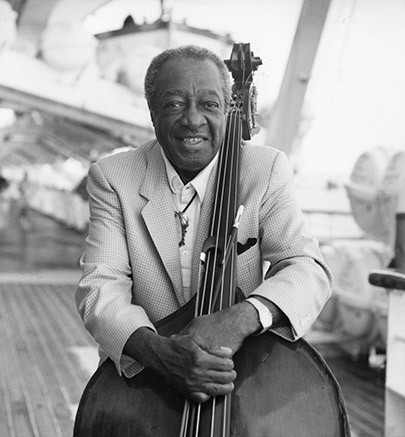


 Eugene Pitt, seated, and the other members of the Jive Five in an undated publicity photo.Sterling Press, from the book “Doo Wop”


 A good song is often inspired by some painful experience, like a breakup or a death, or even a catastrophic natural event like a flood. So, after hundreds of thousands of people lost everything in the Great Mississippi Flood of 1927, the blues duo of Kansas Joe McCoy and Memphis Minnie were well-equipped to use their firsthand observations of the calamity to write and record “When the Levee Breaks.” It became classic decades later, not so much because of their original 1929 version, but thanks to a blues aficionado named Robert Plant.