Specializing in Media Campaigns for the Music Community, Artists, Labels, Venues and Events

slide

Ben Riley, a Jazz Drummer Who Made Accompaniment His Art, Has Died at 84 | WBGO

Ben Riley, a Jazz Drummer Who Made Accompaniment His Art, Has Died at 84 | WBGO

http://wbgo.org/post/ben-riley-jazz-drummer-who-made-accompaniment-his-art-has-died-84#stream/0
 
Ben Riley, a Jazz Drummer Who Made Accompaniment His Art, Has Died at 84

Ben Riley, a subtle and versatile jazz drummer best known for his affiliation with Thelonious Monk in the 1960s and Kenny Barron, one of Monk’s pianistic heirs, in all the years since, died on Saturday at Good Samaritan Hospital in West Islip, New York. He was 84.
His death was confirmed by his daughter Kim, who said the cause of death is not yet known.
Riley enjoyed a six-decade career in jazz, playing on more than 300 albums. Along with Monk and Barron, he backed the pianists Andrew Hill and Abdullah Ibrahim, the tenor saxophonists Johnny Griffin and Stan Getz, and many others.
His drumming was noted for understatement, and for a slightly skewed rhythmic conception that could keep the listener off balance. If these seem contradictory, it was perhaps Riley’s greatest gift that he reconciled them.
“I came up in an era of accompaniment,” he told Modern Drummer magazine in 2005. “I enjoy that more than soloing, because each person I’ve worked with has had different attitudes, songs, and styles of playing.” He added: “I never come on a job thinking, ‘I’m going to play this or play that.’ I wait to see what they’re going to do and then fit into that picture.”

<img src=”http://wbgo.org/sites/wbgo/files/styles/default/public/201711/benriley17.jpg” alt=”Ben Riley at the Village Vanguard, Sept. 2004″>
In fact, Riley’s love of accompaniment was so pronounced that he recorded only three times as a bandleader, making his name-above-the title debut at age 60, with called Weaver of Dreams, featuring bassist Buster Williams and saxophonist Ralph Moore.
Prior to joining Monk’s band, Riley’s most widely acclaimed work was with tenor saxophonist Sonny Rollins, on his 1962 album The Bridge. Riley’s playing on this landmark — Rollins’ first artistic statement since returning from a sabbatical, which he spent practicing almost daily on the Williamsburg Bridge — affirms that sensitivity need not mean the loss of rhythmic oomph.
During Rollins’ solo on “John S.,” he swings hard on his ride cymbal while playing snare-drum accents so softly that they almost sound like brushwork, right up until his solo breaks.


John S.


<div class=”player-unavailable”><h1 class=”message”>An error occurred.</h1><div class=”submessage”><a href=”http://www.youtube.com/watch?v=SGb6AWsOdS0″ target=”_blank”>Try watching this video on www.youtube.com</a>, or enable JavaScript if it is disabled in your browser.</div></div>
Some of Riley’s more eccentric choices as a drummer were surfacing by the time of his 1960 recordings with Johnny Griffin, but they didn’t come fully to the fore until he joined Monk, a rhythmic eccentric in his own right, in 1964. He made his first appearance on It’s Monk’s Time, having been hired without previously playing or even rehearsing with the band.
But he works with relish and understanding, even on new tunes like “Brake’s Sake.” Riley seems to know instinctively where the accents need to be, hitting them on the head with Monk and saxophonist Charlie Rouse, while slipping in some of his own devices, especially during Rouse’s solo.


Brake’s Sake


<div class=”player-unavailable”><h1 class=”message”>An error occurred.</h1><div class=”submessage”><a href=”http://www.youtube.com/watch?v=-I_SGlRh7vk” target=”_blank”>Try watching this video on www.youtube.com</a>, or enable JavaScript if it is disabled in your browser.</div></div>
Benjamin Alexander Riley, Jr. was born on July 17, 1933 in Savannah, Georgia, and grew up in New York City. Interested in the drums from toddlerhood, he learned from the many musicians who lived or worked near his neighborhood, in the Sugar Hill section of Harlem. His most important early teacher was a little-known drummer named Phil Wright.
But he locked in on a prominent bebop player as his primary influence. “The first time I heard Kenny Clarke… ‘Uh-oh,’ I said, ‘I think that’s it,’” Riley told Ted Panken in 1994. “I love the way he accompanied, and I loved the subtleties that he brought to the table.”
Riley’s early career, after his discharge from the Army in the mid-1950s, found him accompanying Getz, pianist Randy Weston and saxophonist Sonny Stitt. He recorded with Griffin and another rough-edged saxophonist, Eddie “Lockjaw” Davis.
Riley’s association with Barron began in the 1970s and continued for decades, including lengthy collaborations first in bassist Ron Carter’s quartet, and then in the Monk tribute band Sphere. Their musical relationship was deeply empathic: on this 1978 recording with Buster Williams, hear how Riley anticipates almost every space and shift in tempo or dynamics in Barron’s solo.


Someday My Price Will Come


<div class=”player-unavailable”><h1 class=”message”>An error occurred.</h1><div class=”submessage”><a href=”http://www.youtube.com/watch?v=YLl_WeC8xCo” target=”_blank”>Try watching this video on www.youtube.com</a>, or enable JavaScript if it is disabled in your browser.</div></div>
In addition to his daughter Kim, Riley is survived by his wife, Inez Riley; another daughter, Gina; two sons, Corey and Jason Riley; nine grandchildren; 17 great-grandchildren; and one great-great-grandchild.
Riley’s final years were spent in a nursing home. According to his daughter, he was still making music. “There was another musician in there with him, and every week my father would play with him,” Kim said. “He didn’t have drums, but he would beat on the table, or chairs, or whatever. Playing all the way to the end.”

Jim Eigo Jazz Promo Services T: 845-986-1677 E-Mail: jim@jazzpromoservices.com
http://www.jazzpromoservices.com

HAVE A JAZZ EVENT, NEW CD OR IMPORTANT ANNOUNCEMENT FOR THE JAZZ COMMUNITY YOU WANT TO PROMOTE? CONTACT JAZZ PROMO SERVICES FOR PRICE QUOTE.

CHECK OUT OUR NEW YOUTUBE VIDEO

Unsubscribe | Update your profile | Forward to a friend

PLEASE NOTE: IF YOU DO NOT WISH TO BE ON THIS MAILING LIST PLEASE RESPOND WITH ‘REMOVE’ IN THE SUBJECT LINE. IF YOU ARE RECEIVING DUPLICATE EMAILS OUR APOLOGIES, JAZZ PROMO SERVICES ANNOUNCEMENT LIST IS GROWING LARGER EVERY DAY…..PLEASE LET US KNOW AND WE WILL FIX IT IMMEDIATELY!

Copyright (C) 2017 All rights reserved.

Jazz Promo Services

269 State Route 94 South

Warwick, Ny 10990

Add us to your address book

slide

Review: Defining the Canon of ‘The Great Jazz and Pop Vocal Albums’ By Will Friedwald- WSJ

Review: Defining the Canon of ‘The Great Jazz and Pop Vocal Albums’ By Will Friedwald- WSJ

https://www.wsj.com/articles/review-defining-a-canon-of-the-great-jazz-and-pop-vocal-albums-1510931940

Review: Defining the Canon of ‘The Great Jazz and Pop Vocal Albums’

A great critic’s chronicle of the postwar love affair between jazz and pop.

Ted Gioia

Nov. 17, 2017 2:01 p.m. ET

The relationship between jazz and pop culture reminds me of one of those turbulent Hollywood marriages. Sometimes it’s exciting, filled with passionate, public embraces. But just as often, there’s a nasty breakup with only indifference or hostility between the former soul mates.

Over the last few years, the jazz-pop relationship has gotten sexy again. If you doubt it, just gaze at the stars and chart their courses. Hip Hopper Kendrick Lamar has opened up a promising dialogue between rap and jazz. David Bowie hired jazz musicians for his last album, “Blackstar,” and created a genuine masterpiece. Bob Dylan started recording Frank Sinatra songs. And then a host of movies (“Whiplash,” “La La Land,” “Born to Be Blue,” “Miles Ahead,” “Nina”) sealed the deal. 

Against all odds, jazz has gone mainstream again. It won’t last long—it never does—but enjoy it while you can. This genre blending is creating some of the most exciting music on the current scene.

A few old-timers, however, remember an earlier marriage between jazz and pop. Now that was real sexy—back when Sinatra songs were sung seductively by Sinatra himself, not a Nobel laureate. This first golden age of pop-flavored jazz started around the same time as the birth of the record album, gained momentum during the course of the 1950s and only gradually fell apart in the 1960s. Many listeners believe this period marks the high point of American popular music. 

No critic has done a better job of chronicling this post-World War II love affair between jazz and pop than Will Friedwald. I’ve followed his work with interest since the 1980s, first discovering his writing in the Village Voice and then enjoying his seminal 1990 book “Jazz Singing.” In subsequent years, Mr. Friedwald seemed everywhere in the world of jazz-pop vocals. He collaborated with Tony Bennett on the singer’s autobiography, wrote a definitive book on Sinatra and penned countless essays and liner notes on singers famous and otherwise. 

Frank and Ella in concert, May 9, 1958.
Frank and Ella in concert, May 9, 1958. Photo: Getty Images

The Great Jazz and Pop Vocal Albums

By Will Friedwald

Pantheon, 402 pages, $40

In his new book Mr. Friedwald builds on his unique expertise in defining a canon of 56 classic jazz and pop vocal albums. But this is anything but one of those glib “list” books so popular nowadays. Mr. Friedwald digs in deeply in his analysis—almost every album gets more than 5,000 words of attention. Each track is weighed in the balance. In fact, Mr. Friedwald assesses virtually every arranger’s trick, instrumental solo and vocal inflection in his path. 

Much of this music is familiar, even overexposed, but Mr. Friedwald has the ability to surprise us, even shock us with his perspectives. He may have already written thousands of pages on jazz and pop singers, but he still wants to make waves, defy the consensus and topple the conventional wisdom.

Just consider the following. Sinatra gets only two albums included in this guide, but Doris Day earns three slots. The rest of the Rat Pack fares even worse. Dean Martin and Sammy Davis Jr. are left out of the canon entirely, but Barb Jungr and Robert Goulet make the cut. And in the strangest twist of all, Mr. Friedwald devotes a long sympathetic essay to Tiny Tim, a mostly forgotten ukulele-playing novelty act who enjoyed the briefest half-life of fame at the end of the 1960s. 

In other words, this book wants to provoke you. Mr. Friedwald is looking for an argument. I suspect that, more than anything, he wants to force you to go back to the music itself, listen carefully, and make up your own mind. 

This book certainly had that effect on me. I wasn’t always convinced by the author’s advocacy. I don’t see myself ever joining the Tiny Tim fan club. But in other instances I was glad for Mr. Friedwald’s prodding—for example, forcing me to revisit mostly forgotten albums by Kay Starr and Della Reese.

And I give him a standing ovation when he focuses on some of my favorite unsung singers of the 1950s. Very few music fans under the age of 70 even recognize the names June Christy, Jo Stafford and Lee Wiley. I fear that their remarkable body of work will be forgotten in the not-so-distant future. But Mr. Friedwald gives them the same lavish attention he devotes to Billie Holiday and Ella Fitzgerald.

As these comments make clear, Mr. Friedwald isn’t afraid to serve as advocate for lost causes. I can’t recall a single notable music critic in recent decades championing the work of singers Eydie Gormé and Steve Lawrence, a husband-and-wife team mostly known for appearances on TV variety shows of the 1960s, where they seemed hopelessly old-fashioned during the age of rock ’n’ roll. But Mr. Friedwald pleads eloquently on their behalf, and probably could convince any jury of their merits.

Of course, this author brings an important advantage to this project. By my estimate, he knew personally at least two-thirds of the singers and arrangers mentioned in these pages. And he clearly grilled them for information on recording sessions and songs, pulling out details that would otherwise be lost not only to us but to history. 

He wasn’t always successful. Doris Day, still alive at age 95, apparently has little interest in her old records. “Doris refuses to be impressed by anything in her own catalogue,” Mr. Friedwald complains at one juncture, noting that in all of his conversations with her she refuses to see any of her albums as worthy of note. When he interrogated Anita O’Day on details from her ghost-written memoir “High Times, Hard Times” (1981), the singer “gleefully announced that she had never read her own autobiography.” But our indefatigable critic perseveres, defending even those who won’t defend themselves. 

Mr. Friedwald includes a lengthy essay at the beginning of his book on the history of the pop vocal album. He offers the best account I’ve read of the business and aesthetic issues behind the rise of this platform for modern music. But he clearly sees the album as a dying format in the age of streaming, and his whole book is colored by a wistful end-of-an-era attitude. 

Perhaps that’s the very reason why Mr. Friedwald decided that the time had come for him to share his list of canonic jazz-pop vocal recordings. The party is over, he seems to say, and the best we can do is spin those classic discs one more time. I’m not so pessimistic, and wish he had made more space in these pages for the current crop of singers. He does give an in-depth appraisal of Cassandra Wilson’s work, but there’s plenty of other music happening that measures up to the best from the Cold War years. Check out Cécile McLorin Salvant’s new album, “Dreams and Daggers,” or the impressive body of recordings by (for starters) Kurt Elling, Gregory Porter, Diana Krall and Ian Shaw.

But if I am more optimistic than Mr. Friedwald about the fate of the jazz-pop album, I do fear the disappearance of the kind of insightful long-form music criticism featured in this book. You rarely encounter thoughtful 5,000-word assessments of albums anywhere nowadays. They may not be extinct, but they do belong on the endangered journalism list. Great musicians and brilliant albums aren’t going away, but loving appraisals as judicious as Mr. Friedwald’s are sadly in short supply. 

—Mr. Gioia writes on music, literature and popular culture. His latest book is “How to Listen to Jazz.”

Jim Eigo Jazz Promo Services T: 845-986-1677 E-Mail: jim@jazzpromoservices.com
http://www.jazzpromoservices.com

HAVE A JAZZ EVENT, NEW CD OR IMPORTANT ANNOUNCEMENT FOR THE JAZZ COMMUNITY YOU WANT TO PROMOTE? CONTACT JAZZ PROMO SERVICES FOR PRICE QUOTE.

CHECK OUT OUR NEW YOUTUBE VIDEO

Unsubscribe | Update your profile | Forward to a friend

PLEASE NOTE: IF YOU DO NOT WISH TO BE ON THIS MAILING LIST PLEASE RESPOND WITH ‘REMOVE’ IN THE SUBJECT LINE. IF YOU ARE RECEIVING DUPLICATE EMAILS OUR APOLOGIES, JAZZ PROMO SERVICES ANNOUNCEMENT LIST IS GROWING LARGER EVERY DAY…..PLEASE LET US KNOW AND WE WILL FIX IT IMMEDIATELY!

Copyright (C) 2017 All rights reserved.

Jazz Promo Services

269 State Route 94 South

Warwick, Ny 10990

Add us to your address book

slide

[jazz-research] Sol Schlinger, R.I.P.

[jazz-research] Sol Schlinger, R.I.P.

Sol Schlinger, R.I.P.

Baritone saxophonist Sol Schlinger, a veteran of the Charlie Barnet, Sauter-Finegan, and Benny Goodman bands as well as countless studio sessions with Manny Albam, Quincy Jones. Al Cohn, and many others, passed away last week in Florida at the age of 91. Those of us who knew him will never forget his warm, beautiful sound and his delightfully bizarre sense of humor. 

Kenny Berger 
 

Jim Eigo Jazz Promo Services T: 845-986-1677 E-Mail: jim@jazzpromoservices.com
http://www.jazzpromoservices.com

HAVE A JAZZ EVENT, NEW CD OR IMPORTANT ANNOUNCEMENT FOR THE JAZZ COMMUNITY YOU WANT TO PROMOTE? CONTACT JAZZ PROMO SERVICES FOR PRICE QUOTE.

CHECK OUT OUR NEW YOUTUBE VIDEO

Unsubscribe | Update your profile | Forward to a friend

PLEASE NOTE: IF YOU DO NOT WISH TO BE ON THIS MAILING LIST PLEASE RESPOND WITH ‘REMOVE’ IN THE SUBJECT LINE. IF YOU ARE RECEIVING DUPLICATE EMAILS OUR APOLOGIES, JAZZ PROMO SERVICES ANNOUNCEMENT LIST IS GROWING LARGER EVERY DAY…..PLEASE LET US KNOW AND WE WILL FIX IT IMMEDIATELY!

Copyright (C) 2017 All rights reserved.

Jazz Promo Services

269 State Route 94 South

Warwick, Ny 10990

Add us to your address book

slide

Mel Torme – Comin’ Home Baby – YouTube

Mel Torme – Comin’ Home Baby – YouTube

https://www.youtube.com/watch?v=Ut1xwRErqlM

Jim Eigo Jazz Promo Services T: 845-986-1677 E-Mail: jim@jazzpromoservices.com
http://www.jazzpromoservices.com

HAVE A JAZZ EVENT, NEW CD OR IMPORTANT ANNOUNCEMENT FOR THE JAZZ COMMUNITY YOU WANT TO PROMOTE? CONTACT JAZZ PROMO SERVICES FOR PRICE QUOTE.

CHECK OUT OUR NEW YOUTUBE VIDEO

Unsubscribe | Update your profile | Forward to a friend

PLEASE NOTE: IF YOU DO NOT WISH TO BE ON THIS MAILING LIST PLEASE RESPOND WITH ‘REMOVE’ IN THE SUBJECT LINE. IF YOU ARE RECEIVING DUPLICATE EMAILS OUR APOLOGIES, JAZZ PROMO SERVICES ANNOUNCEMENT LIST IS GROWING LARGER EVERY DAY…..PLEASE LET US KNOW AND WE WILL FIX IT IMMEDIATELY!

Copyright (C) 2017 All rights reserved.

Jazz Promo Services

269 State Route 94 South

Warwick, Ny 10990

Add us to your address book

slide

When Jazz Age Superstar Josephine Baker Spied on the Nazis

When Jazz Age Superstar Josephine Baker Spied on the Nazis

https://www.thedailybeast.com/when-jazz-age-superstar-josephine-baker-spied-on-the-nazis
 
When Jazz Age Superstar Josephine Baker Spied on the Nazis
The African-American singer and dancer was the toast of Paris when French intelligence asked her to spy on the Axis. It became one of her greatest performances.

Photo Illustration by Lyne Lucien/The Daily Beast
In the fall of 1939, Josephine Baker stepped onto a stage unlike any other she’d graced in her sizzling career. Hoping to improve the morale of the troops who manned the Maginot Line, the massive defensive structure that guarded France’s eastern border, the French high command had asked her to perform a series of shows. The bunkers and barracks were a far cry from the blazing lights of Paris’s Folies-Bergère or the Casino de Paris where Baker dazzled audiences with her graceful dancing, comedic timing, and barely-there costumes. Her shows gave the troops a reprieve from watching the German border and wondering when the Wehrmacht might strike. Instead, the men hooted and hollered as the 33-year old Baker sang and slinked her way through a series of French chansons.
Maurice Chevalier, who had made a career of musical comedy in Paris and Hollywood, joined Baker on the tour. The fifty-something Chevalier, sporting his trademark straw hat, insisted on going second, intending to finish the show in grand style. He didn’t count on Baker’s receiving calls for encore after encore, cutting into his performance time.
The soldiers responded to Baker the same way Paris had ever since the ambitious African-American girl from St. Louis charmed the city with her comedic sensuality. After a hardscrabble childhood in St. Louis, Baker found her way to headline La revue nègre at the Théâtre des Champs-Élysées in 1925. The daring show, which featured Baker dancing in nothing but a feather skirt, set Paris talking—and it hadn’t stopped since. Parisian society also welcomed Baker, giving her a level of freedom and acclaim that her country of birth could barely imagine, let alone offer. She embraced it all: the men, the jewelry, the clothes, the grand houses. She sauntered down the Champs-Élysées with her pet cheetah on a leash. She even gave product endorsements. When Casablancans opened their newspapers and magazines, they saw ads for Bakerfix, a crème “to keep your hair supple, brilliant, and in place,” available at Casablanca’s finer salons.
In December, Baker and Chevalier returned to the stage together at the Casino de Paris, the legendary red-velvet music hall in the ninth arrondissement. Rationing, curfews, travel permits, sandbags around monuments, sweethearts kissing loved ones farewell, and daily stories about war preparation dampened Paris’s joie de vivre. Inside the Casino de Paris, the halcyon days still reigned as people filled the theater to the rafters to see Paris-Londres, a revue celebrating Anglo-French friendship. The show—“a new spectacle of rhythm, charm, and beauty”—featured 32 “beautiful women” from Paris and London, along with performances by Chevalier, Baker, and Nita Raya. Chevalier opened the review with “Paris Will Always Be Paris,” while Baker closed the show with “Mon coeur est un oiseau des îles.” The sentimental song, in which she likens her heart a tropical bird, could melt even the hardest soldier’s heart.
The opening-night performance of Paris-Londres raised money for charity, with Baker’s portion going to the French Red Cross. Baker participated in other charity shows, including one at the beginning of February 1940 with Edith Piaf, Alibert, and other music hall icons. During the day, Baker worked in a shelter on the Left Bank for homeless refugees, continuing a long-standing habit of helping those less fortunate than her. “My heart sank at the sight of those exiles, broken body and soul by defeat,” she wrote.
Baker also began working for the Deuxième Bureau, the French intelligence service, after being recruited by Jacques Abtey, who sought “honorable correspondents” who could feed his organization information about what they heard and observed: who met whom, who had tense conversations in corners at parties, who struck up unusual friendships. In the aftermath of Germany’s invasion of Poland and its alliance with the Soviet Union, France’s security services became obsessed with Fifth Column threats. A theatrical agent, Daniel Marouani, suggested that Abtey consider using Baker, telling him, “She is more French than the French.” With her extensive social connections and adoring fans, Baker could be a trove of information.
Abtey agreed to meet Baker at Beau Chêne, her home in the Paris suburb of Le Vésinet. There, instead of a starlet, he encountered a woman in a battered hat collecting snails from her garden to feed her ducks. The glamour came next, when Baker invited him to join her in the salon, where a white-jacket-clad servant poured them champagne before a roaring fire. “‘France made me what I am,’ she told him. ‘The Parisians gave me their hearts, and I am ready to give them my life.’” It also didn’t hurt Abtey’s cause that he sported Nordic good looks—“young, blond, athletic, bursting with life,” as Baker described him—and was exactly her type. Baker became both his lover and his student.
“’Sometimes she would write along her arms, and in the palm of her hand, the things she heard. I told her this was dangerous, but she laughed. “Oh, nobody would think I’m a spy.”‘”
Related in Arts and Culture
“When I gazed deep into my own inner self, I realized that I would be incapable of functioning as a real spy,” wrote Baker. “But intelligence work was different. It seemed the perfect way to fight my war.” It didn’t take long for Baker to start passing along information gleaned at receptions at the Japanese and Italian embassies, parties she personally threw, and other affairs around Paris. “Sometimes,” Abtey said, “she would write along her arms, and in the palm of her hand, the things she heard. I told her this was dangerous, but she laughed. ‘Oh, nobody would think I’m a spy.’”
Following the fall of France in 1940, Baker and Atbey found themselves hiding out—comfortably—in Les Milandes, Baker’s estate in the southwest corner of the country. It was there that they received a courier from Captain Paul Paillole—Atbey’s former boss who was now masterminding an underground intelligence network in Vichy—with a mission. Paillole wanted Abtey to go to Portugal and make contact with British intelligence. But he remained leery of Baker. “I was afraid that she was one of those shallow show business personalities who would shatter like glass if exposed to danger,” said Paillole. Despite his reservations, he agreed to give her a chance.
According to the cover story they devised, Baker was embarking on a tour of Portugal and South America. Given that Germany had swallowed up most of western Europe, it would be logical for Baker, an international star, to look to neutral Portugal and the untouched countries of South America for bookings. Abtey, posing as her ballet master, became the 41-year-old Jacques-François Hébert. Abtey, who was really 35, had to be aged because no man under 40 was permitted to leave Vichy. To make himself look older, Abtey wore glasses and donned a heavy moustache. Assessing the starlet and her middle-aged ballet master, Paillole declared himself satisfied. “You look good together,” he said. “Good luck.”
To reach Portugal from Vichy, they needed transit visas for Spain. Baker worked her magic, charming a reluctant Spanish consul in Toulouse into giving them the needed paperwork. She did the same at the Portuguese and Brazilian consulates.
The duo performed so well in the field that they were given a new mission in December 1939: to go to Casablanca and set up a liaison station, where they would relay messages and intelligence between Vichy and London.
By the end of January 1940, Baker and Abtey were in Casablanca. As they made plans for Baker to return to Portugal to continue her intelligence gathering, they encountered a roadblock: the Portuguese consulate refused to issue Abtey a visa for Lisbon. Baker even tried the damsel-in-distress argument—“how would I manage the details without him?”—but the consul held firm. Abtey was stuck in French Morocco.
Back at their hotel, they debated about what to do next. “Do you think they may have blown your cover, Jacques?” she asked. Abtey didn’t think so, but they needed to press forward. “We decided,” wrote Baker, “that I would have to travel to Lisbon alone. Taking my sheet music, of course.”
At the end of February, Baker took the train north to Tangier, where she could catch a flight to Lisbon. While in Tangier, she renewed friendships forged during the filming of Princesse Tam-Tam, shot on location there and in Tunisia in 1935. She spent a few days at the villa of Abderahman Menebhi, the sultan’s brother-in-law, where she also saw Ahmed ben Bachir, the court chamberlain to the caliph of Spanish Morocco. With influential friends and a command of Spanish, Baker was also poised to gather information about Spanish Morocco.
By the beginning of March, Baker was back in Lisbon, where posters with her face plastered walls and kiosks around the city, announcing her upcoming shows. She needed every seat filled; her take of the box office receipts had become increasingly important. Financial restrictions made it difficult to get money from her bank accounts in Paris, putting a damper on her normally extravagant tastes. Between rehearsals, Baker lobbied for a visa for Abtey. She also collected bits of intelligence from sources who found their way to her, along with information she amassed from loose-lipped diplomats and Axis officials. She returned to Morocco at the end of March with messages from Paillole to Abtey pinned inside her bra. And once again, notes written in invisible ink covered the back of her sheet music. She didn’t, however, have a visa for Abtey.
For the next few months, Baker flitted back and forth between Casablanca and Lisbon, Seville, Madrid, and Barcelona. Between performances, she accepted invitations to parties and embassy functions, where she hobnobbed with the elite and diplomats. And as she bantered over champagne and twirled around the dance floor, she continued her intelligence gathering, transporting the information back to Abtey.
Excerpted from Destination Casablanca: Exile, Espionage, and the Battle for North Africa in World War II by Meredith Hindley. Copyright © 2017. Available from PublicAffairs, an imprint of Perseus Books, LLC, a subsidiary of Hachette Book Group, Inc.

Jim Eigo Jazz Promo Services T: 845-986-1677 E-Mail: jim@jazzpromoservices.com
http://www.jazzpromoservices.com

HAVE A JAZZ EVENT, NEW CD OR IMPORTANT ANNOUNCEMENT FOR THE JAZZ COMMUNITY YOU WANT TO PROMOTE? CONTACT JAZZ PROMO SERVICES FOR PRICE QUOTE.

CHECK OUT OUR NEW YOUTUBE VIDEO

Unsubscribe | Update your profile | Forward to a friend

PLEASE NOTE: IF YOU DO NOT WISH TO BE ON THIS MAILING LIST PLEASE RESPOND WITH ‘REMOVE’ IN THE SUBJECT LINE. IF YOU ARE RECEIVING DUPLICATE EMAILS OUR APOLOGIES, JAZZ PROMO SERVICES ANNOUNCEMENT LIST IS GROWING LARGER EVERY DAY…..PLEASE LET US KNOW AND WE WILL FIX IT IMMEDIATELY!

Copyright (C) 2017 All rights reserved.

Jazz Promo Services

269 State Route 94 South

Warwick, Ny 10990

Add us to your address book

slide

Helen Borgers, legendary DJ at K-Jazz in Long Beach, dies at 60 – Press Telegram

Helen Borgers, legendary DJ at K-Jazz in Long Beach, dies at 60 – Press Telegram

http://www.presstelegram.com/2017/11/13/helen-borgers-legendary-dj-at-k-jazz-in-long-beach-dies-at-60/
 
Helen Borgers, legendary DJ at K-Jazz in Long Beach, dies at 60
Valerie OsierNovember 14, 2017 at 8:41 am

Helen Borgers was laid off in June after 38 years with K-Jazz radio. (File photo)
Helen Borgers, the legendary DJ on KKJZ (K-Jazz) for 38 years, died Sunday after complications from surgery. She was 60.
Friends said Borgers will be remembered for her infectious laugh. In a 2012 K-Jazz YouTube video, Borgers broke through the soft jazz music as she showed a contest winner the audio board she worked with every day.
In the video, Borgers talked about the old turntables they used back in the day and remarked that the newer digital components of the audio board are harder to use. But that didn’t matter to her.
“As long as the music’s good, who cares? That’s the deal,” she said in the video.
Borgers worked at the Long Beach station for nearly four decades. She was laid off in late June. Shortly after, she underwent surgery and was hospitalized at Long Beach Memorial Medical Center.
Born on Aug. 9, 1957, in Kansas City, Missouri, Borgers spent almost her entire life in Long Beach.
Her best friend since junior high, Brooke Wharton, said that when they were almost teenagers, Borgers would describe herself as “too cool for school”—and she really was. As a 12-year-old, Borgers had a “meditation room” that her parents built her in their garage where she would listen to Ella Fitzgerald, Mose Allison and Oscar Peterson, among other jazz names.
Her older brother Ken Borgers, who is another longtime jazz-radio DJ with KSDS-Jazz 88 in San Diego, said in an interview that she also listened to The Beatles and other popular music, but it was jazz that was really her passion.
Her love of Shakespeare, which permeated her life, was also prevalent in her teens. Ken Borgers said that by junior high, his sister had memorized all of Shakespeare’s sonnets and most of his plays.
Wharton said in an email: “You would go to her house and she would have her latest edition of King Lear… which you would read with her for the 10th time, but this would be her latest iteration of Shakespeare.”
That love led Borgers to the Long Beach Shakespeare Company, where she had been the artistic director since 1997.
Borgers was also an activist and a bit of a rebel. At Hill Junior High in East Long Beach, Borgers and Wharton both got suspended for circulating a monthly underground newspaper, called “The Metamorphosis,” where they advocated for free speech and First Amendment rights for students in the Long Beach Unified School District. Their free speech rights were successfully defended by Long Beach attorney Arthur Gottlieb, Wharton said.
When she saw her freshman class schedule at Poly High School, Borgers thought it wasn’t challenging enough, so she, with Wharton and other students, presented their own program to the Board of Education. They became the founding students School of Educational Alternatives at Poly.
“We actually went to all of the high schools and junior highs giving speeches and recruiting students to come to SEA school,” Wharton said. “We also campaigned and canvassed many neighborhoods on behalf of a few political candidates (Democrats), long before we would be able to vote.”
Once the program got started, Wharton said Borgers “pretty much ran the school,” occasionally went to class and even led a class on Shakespeare.
Borgers graduated high school early to attend Cal State Long Beach. A child of teachers, Borgers told the Press-Telegram in 2010 that education is the most important thing in society.
“And it seems to me that the wisdom of the ages is in the classics in any art form, whether it be literature or music or drama,” Borgers said. “The great classical pieces all hold the real truth about being human. That’s why they call them humanities.”
Once at CSULB, Borgers began interning at K-Jazz, then called KLON, with her brother Ken.
Wharton said that Borgers was supportive and inspiring to musicians and actors. She played the flute, sang and played the piano. Her and Wharton would play music together on the flute and violin.
“As a struggling violinist, I often bemoaned that I would never sound like Heifetz or the great Russian violinist, David Oistrakh,” Wharton said in the email. “I remember her responding, ‘You don’t need to sound like Heifetz. What’s wrong with sounding like Wharton?’”
Helen is survived by her siblings, Carol Roland, Dave and Ken Borgers and partner, Cannon Coccellato.
Services are pending.

Jim Eigo Jazz Promo Services T: 845-986-1677 E-Mail: jim@jazzpromoservices.com
http://www.jazzpromoservices.com

HAVE A JAZZ EVENT, NEW CD OR IMPORTANT ANNOUNCEMENT FOR THE JAZZ COMMUNITY YOU WANT TO PROMOTE? CONTACT JAZZ PROMO SERVICES FOR PRICE QUOTE.

CHECK OUT OUR NEW YOUTUBE VIDEO

Unsubscribe | Update your profile | Forward to a friend

PLEASE NOTE: IF YOU DO NOT WISH TO BE ON THIS MAILING LIST PLEASE RESPOND WITH ‘REMOVE’ IN THE SUBJECT LINE. IF YOU ARE RECEIVING DUPLICATE EMAILS OUR APOLOGIES, JAZZ PROMO SERVICES ANNOUNCEMENT LIST IS GROWING LARGER EVERY DAY…..PLEASE LET US KNOW AND WE WILL FIX IT IMMEDIATELY!

Copyright (C) 2017 All rights reserved.

Jazz Promo Services

269 State Route 94 South

Warwick, Ny 10990

Add us to your address book

slide

Helen Borgers: A giant voice of Jazz has sadly gone silent.

Helen Borgers: A giant voice of Jazz has sadly gone silent.

https://www.facebook.com/helenborgers
 
 Helen Borgers, passed yesterday.  Helen spent 38 years at KLON (now KKJZ) in Long Beach, CA

Jim Eigo Jazz Promo Services T: 845-986-1677 E-Mail: jim@jazzpromoservices.com
http://www.jazzpromoservices.com

HAVE A JAZZ EVENT, NEW CD OR IMPORTANT ANNOUNCEMENT FOR THE JAZZ COMMUNITY YOU WANT TO PROMOTE? CONTACT JAZZ PROMO SERVICES FOR PRICE QUOTE.

CHECK OUT OUR NEW YOUTUBE VIDEO

Unsubscribe | Update your profile | Forward to a friend

PLEASE NOTE: IF YOU DO NOT WISH TO BE ON THIS MAILING LIST PLEASE RESPOND WITH ‘REMOVE’ IN THE SUBJECT LINE. IF YOU ARE RECEIVING DUPLICATE EMAILS OUR APOLOGIES, JAZZ PROMO SERVICES ANNOUNCEMENT LIST IS GROWING LARGER EVERY DAY…..PLEASE LET US KNOW AND WE WILL FIX IT IMMEDIATELY!

Copyright (C) 2017 All rights reserved.

Jazz Promo Services

269 State Route 94 South

Warwick, Ny 10990

Add us to your address book

slide

How Roy DeCarava’s jazz photographs captured the soul of Harlem

How Roy DeCarava’s jazz photographs captured the soul of Harlem

https://thevinylfactory.com/features/roy-decarava-kahlil-joseph-fly-paper-harlem/
 

How Roy Decarava’s Jazz Photographs Captured The Soul Of Harlem And Influenced A Generation
By Chris May
 
Roy DeCarava was a jazz photographer, artist and Harlem local who captured everyday life in the Manhattan district like no-one else. Through a sparing, striking use of natural light, DeCarava’s exploration of the aesthetics of blackness was revolutionary, developing a visual mode that challenged the era’s cultural assumptions around race, poverty and artistic representation.  Continue Reading 


Coltrane on soprano, 1963. Photograph by Roy DeCarava(c) Estate of Roy DeCarava 2017. All Rights Reserved.
 

Jim Eigo Jazz Promo Services T: 845-986-1677 E-Mail: jim@jazzpromoservices.com
http://www.jazzpromoservices.com

HAVE A JAZZ EVENT, NEW CD OR IMPORTANT ANNOUNCEMENT FOR THE JAZZ COMMUNITY YOU WANT TO PROMOTE? CONTACT JAZZ PROMO SERVICES FOR PRICE QUOTE.

CHECK OUT OUR NEW YOUTUBE VIDEO

Unsubscribe | Update your profile | Forward to a friend

PLEASE NOTE: IF YOU DO NOT WISH TO BE ON THIS MAILING LIST PLEASE RESPOND WITH ‘REMOVE’ IN THE SUBJECT LINE. IF YOU ARE RECEIVING DUPLICATE EMAILS OUR APOLOGIES, JAZZ PROMO SERVICES ANNOUNCEMENT LIST IS GROWING LARGER EVERY DAY…..PLEASE LET US KNOW AND WE WILL FIX IT IMMEDIATELY!

Copyright (C) 2017 All rights reserved.

Jazz Promo Services

269 State Route 94 South

Warwick, Ny 10990

Add us to your address book

slide

78rpm the first feature film by Brooklyn-based artist/filmmaker Joel Schlemowitz

78rpm the first feature film by Brooklyn-based artist/filmmaker Joel Schlemowitz

http://www.joelschlemowitz.com/
 
78rpm (2015, 98 min) is the first feature film by Brooklyn-based artist/filmmaker Joel Schlemowitz. The film is a fond documentary paean to the gramophone and the 78 record collector. 78rpm is amply equipped with expert talking heads – Schlemowitz interviews vintage culture mavens including Shien Lee of Dances of Vice and the London-based Shellac Sisters; authors and experts in the field; 78 record collectors including Michael Cumella of the Antique Phonograph Music program on WMFU; Jonathan Ward of Excavated Shellac; bandleader Vince Giordano; and even the grandson of the inventor of the gramophone, Oliver Berliner. But far from a dry and solemn history lesson, 78RPM is a film of mercurial high-spirited enthusiasm, featuring an array of hand-processed 16mm scenes of cinematic hijinks. Schlemowitz puts the music itself front and center, pausing to play a generous selection of old shellac records in their (3-minute) entirety – from hot jazz to Enrico Caruso to hillbilly ballads. The film’s subjects also ponder the rapid change of technology and the specter of ever-

Jim Eigo Jazz Promo Services T: 845-986-1677 E-Mail: jim@jazzpromoservices.com
http://www.jazzpromoservices.com

HAVE A JAZZ EVENT, NEW CD OR IMPORTANT ANNOUNCEMENT FOR THE JAZZ COMMUNITY YOU WANT TO PROMOTE? CONTACT JAZZ PROMO SERVICES FOR PRICE QUOTE.

CHECK OUT OUR NEW YOUTUBE VIDEO

Unsubscribe | Update your profile | Forward to a friend

PLEASE NOTE: IF YOU DO NOT WISH TO BE ON THIS MAILING LIST PLEASE RESPOND WITH ‘REMOVE’ IN THE SUBJECT LINE. IF YOU ARE RECEIVING DUPLICATE EMAILS OUR APOLOGIES, JAZZ PROMO SERVICES ANNOUNCEMENT LIST IS GROWING LARGER EVERY DAY…..PLEASE LET US KNOW AND WE WILL FIX IT IMMEDIATELY!

Copyright (C) 2017 All rights reserved.

Jazz Promo Services

269 State Route 94 South

Warwick, Ny 10990

Add us to your address book

slide

Dick Cavett Archives Headed to Library of Congress | Best Classic Bands

Dick Cavett Archives Headed to Library of Congress | Best Classic Bands

http://bestclassicbands.com/dick-cavett-archives-11-6-17/
 
Dick Cavett Archives Headed to Library of Congress
Best Classic Bands Staff
 

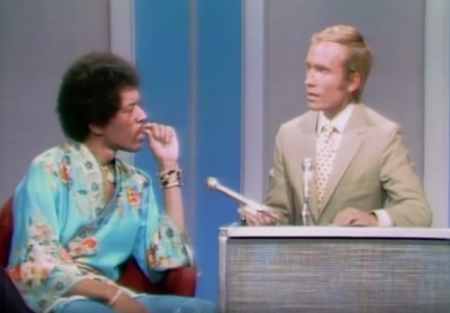
Jimi Hendrix visits Dick Cavett
Talk show host Dick Cavett, who welcomed rock artists including John Lennon and Yoko Ono, Jimi Hendrix, Janis Joplin, David Bowie, the Rolling Stones, Paul Simon, Sonny and Cher, the Byrds, John Sebastian, Joni Mitchell, Ray Charles and Jefferson Airplane onto his TV program, is donating his considerable archives to the Library of Congress. The trove is said to include more than 2,000 episodes of The Dick Cavett Show, which aired from 1968 to 1995.
The announcement, made on Nov. 4, specifically noted Cavett’s legendary on-air interview with John and Yoko. Other guests who sat for extended conversations with Cavett included Muhammad Ali, Orson Welles, Norman Mailer, Truman Capote, Jerry Rubin, Woody Allen, Bobby Fischer and Groucho Marx. Cavett hosted more than 5,000 guests in all.
One famous rock-related episode took place on Aug. 19, 1969, immediately following the 1969 Woodstock festival in upstate New York. David Crosby and Stephen Stills and Jefferson Airplane were joined by Joni Mitchell, who never made it to the festival (she supposedly was afraid she’d miss the taping if she got caught in traffic leaving the festival) but wrote the now-iconic “Woodstock” anthem. The Airplane’s performance of “We Can be Together” is said to be the first time that the word “fuck” made it past the censors on a network television program. Stills sang “4+20” live on the show, Mitchell sang :The Fiddle and the Drum” and Crosby joined the Airplane on their “Somebody to Love.”
Watch an excerpt of John and Yoko’s 1971 appearance on The Dick Cavett Show
 
 
John Lennon and Yoko Ono – Dick Cavett Show Excerpt 3 of 6


<div class=”player-unavailable”><h1 class=”message”>An error occurred.</h1><div class=”submessage”><a href=”http://www.youtube.com/watch?v=rosgATGkP_s” target=”_blank”>Try watching this video on www.youtube.com</a>, or enable JavaScript if it is disabled in your browser.</div></div>
Jimi Hendrix was also slated to be on that episode but was unable to make it on time, as his Woodstock set didn’t take place until that Monday morning.
Related: Jimi Hendrix on The Dick Cavett Show
In a statement, Librarian of Congress Carla Hayden said that Cavett “turned interviewing into an art form,” while Cavett, who is now 80, stated that he’s thrilled that his collection will be housed in the library.
Watch Jefferson Airplane and David Crosby sing “Somebody to Love” on The Dick Cavett Show
 
 
Jefferson Airplane – Somebody to Love (Dick Cavett Show)


<div class=”player-unavailable”><h1 class=”message”>An error occurred.</h1><div class=”submessage”><a href=”http://www.youtube.com/watch?v=cBYv2wr9co0″ target=”_blank”>Try watching this video on www.youtube.com</a>, or enable JavaScript if it is disabled in your browser.</div></div>

Jim Eigo Jazz Promo Services T: 845-986-1677 E-Mail: jim@jazzpromoservices.com
http://www.jazzpromoservices.com

HAVE A JAZZ EVENT, NEW CD OR IMPORTANT ANNOUNCEMENT FOR THE JAZZ COMMUNITY YOU WANT TO PROMOTE? CONTACT JAZZ PROMO SERVICES FOR PRICE QUOTE.

CHECK OUT OUR NEW YOUTUBE VIDEO

Unsubscribe | Update your profile | Forward to a friend

PLEASE NOTE: IF YOU DO NOT WISH TO BE ON THIS MAILING LIST PLEASE RESPOND WITH ‘REMOVE’ IN THE SUBJECT LINE. IF YOU ARE RECEIVING DUPLICATE EMAILS OUR APOLOGIES, JAZZ PROMO SERVICES ANNOUNCEMENT LIST IS GROWING LARGER EVERY DAY…..PLEASE LET US KNOW AND WE WILL FIX IT IMMEDIATELY!

Copyright (C) 2017 All rights reserved.

Jazz Promo Services

269 State Route 94 South

Warwick, Ny 10990

Add us to your address book

slide

ARC Holiday Record + CD Sale PSA

ARC Holiday Record + CD Sale PSA

Jim Eigo Jazz Promo Services T: 845-986-1677 E-Mail: jim@jazzpromoservices.com
http://www.jazzpromoservices.com

HAVE A JAZZ EVENT, NEW CD OR IMPORTANT ANNOUNCEMENT FOR THE JAZZ COMMUNITY YOU WANT TO PROMOTE? CONTACT JAZZ PROMO SERVICES FOR PRICE QUOTE.

CHECK OUT OUR NEW YOUTUBE VIDEO

Unsubscribe | Update your profile | Forward to a friend

PLEASE NOTE: IF YOU DO NOT WISH TO BE ON THIS MAILING LIST PLEASE RESPOND WITH ‘REMOVE’ IN THE SUBJECT LINE. IF YOU ARE RECEIVING DUPLICATE EMAILS OUR APOLOGIES, JAZZ PROMO SERVICES ANNOUNCEMENT LIST IS GROWING LARGER EVERY DAY…..PLEASE LET US KNOW AND WE WILL FIX IT IMMEDIATELY!

Copyright (C) 2017 All rights reserved.

Jazz Promo Services

269 State Route 94 South

Warwick, Ny 10990

Add us to your address book

slide

Joe, Dizzy & Henry – Gee, Baby, Ain’t I Good to You (Live) – YouTube

Joe, Dizzy & Henry – Gee, Baby, Ain’t I Good to You (Live) – YouTube

https://www.youtube.com/watch?v=jSzY17XELeg

Jim Eigo Jazz Promo Services T: 845-986-1677 E-Mail: jim@jazzpromoservices.com
http://www.jazzpromoservices.com

HAVE A JAZZ EVENT, NEW CD OR IMPORTANT ANNOUNCEMENT FOR THE JAZZ COMMUNITY YOU WANT TO PROMOTE? CONTACT JAZZ PROMO SERVICES FOR PRICE QUOTE.

CHECK OUT OUR NEW YOUTUBE VIDEO

Unsubscribe | Update your profile | Forward to a friend

PLEASE NOTE: IF YOU DO NOT WISH TO BE ON THIS MAILING LIST PLEASE RESPOND WITH ‘REMOVE’ IN THE SUBJECT LINE. IF YOU ARE RECEIVING DUPLICATE EMAILS OUR APOLOGIES, JAZZ PROMO SERVICES ANNOUNCEMENT LIST IS GROWING LARGER EVERY DAY…..PLEASE LET US KNOW AND WE WILL FIX IT IMMEDIATELY!

Copyright (C) 2017 All rights reserved.

Jazz Promo Services

269 State Route 94 South

Warwick, Ny 10990

Add us to your address book

slide

Connee Boswell singing Rock ‘N Roll- YouTube

Connee Boswell singing Rock ‘N Roll- YouTube

https://www.youtube.com/watch?v=Za9OhuB1_lE

Jim Eigo Jazz Promo Services T: 845-986-1677 E-Mail: jim@jazzpromoservices.com
http://www.jazzpromoservices.com

HAVE A JAZZ EVENT, NEW CD OR IMPORTANT ANNOUNCEMENT FOR THE JAZZ COMMUNITY YOU WANT TO PROMOTE? CONTACT JAZZ PROMO SERVICES FOR PRICE QUOTE.

CHECK OUT OUR NEW YOUTUBE VIDEO

Unsubscribe | Update your profile | Forward to a friend

PLEASE NOTE: IF YOU DO NOT WISH TO BE ON THIS MAILING LIST PLEASE RESPOND WITH ‘REMOVE’ IN THE SUBJECT LINE. IF YOU ARE RECEIVING DUPLICATE EMAILS OUR APOLOGIES, JAZZ PROMO SERVICES ANNOUNCEMENT LIST IS GROWING LARGER EVERY DAY…..PLEASE LET US KNOW AND WE WILL FIX IT IMMEDIATELY!

Copyright (C) 2017 All rights reserved.

Jazz Promo Services

269 State Route 94 South

Warwick, Ny 10990

Add us to your address book

slide

Premiering Monday, November 6, 2017 INDEPENDENT LENS | Chasing Trane | Trailer | PBS – YouTube

Premiering Monday, November 6, 2017 INDEPENDENT LENS | Chasing Trane | Trailer | PBS – YouTube

https://www.youtube.com/watch?v=RUlBjbyNd3o
 
Premiering Monday, November 6, 2017. Check local listings: http://www.pbs.org/independentlens/tv… Set against the social, political and cultural landscape of the times, Chasing Trane brings saxophone great John Coltrane to life, as a man and an artist. The film is the definitive look at the boundary-shattering musician whose influence continues to this day. Chasing Trane features never-before-seen Coltrane family home movies, footage of Coltrane and his band in the studio (discovered in a California garage during the production of this film), along with hundreds of rare photographs and television appearances from around the world. Coltrane’s incredible story is told by the musicians who worked with him (Sonny Rollins, McCoy Tyner, Benny Golson, Jimmy Heath, Reggie Workman), musicians inspired by his fearless artistry and creative vision (Common, John Densmore, Wynton Marsalis, Carlos Santana, Wayne Shorter, Kamasi Washington), Coltrane’s children (Ravi, Oran, and step-daughters Michelle Coltrane and Antonia Andrews) and biographers.

Jim Eigo Jazz Promo Services T: 845-986-1677 E-Mail: jim@jazzpromoservices.com
http://www.jazzpromoservices.com

HAVE A JAZZ EVENT, NEW CD OR IMPORTANT ANNOUNCEMENT FOR THE JAZZ COMMUNITY YOU WANT TO PROMOTE? CONTACT JAZZ PROMO SERVICES FOR PRICE QUOTE.

CHECK OUT OUR NEW YOUTUBE VIDEO

Unsubscribe | Update your profile | Forward to a friend

PLEASE NOTE: IF YOU DO NOT WISH TO BE ON THIS MAILING LIST PLEASE RESPOND WITH ‘REMOVE’ IN THE SUBJECT LINE. IF YOU ARE RECEIVING DUPLICATE EMAILS OUR APOLOGIES, JAZZ PROMO SERVICES ANNOUNCEMENT LIST IS GROWING LARGER EVERY DAY…..PLEASE LET US KNOW AND WE WILL FIX IT IMMEDIATELY!

Copyright (C) 2017 All rights reserved.

Jazz Promo Services

269 State Route 94 South

Warwick, Ny 10990

Add us to your address book

slide

‘Like It Is’ w/ Gil Noble – Sarah Vaughan – YouTube

‘Like It Is’ w/ Gil Noble – Sarah Vaughan – YouTube

https://www.youtube.com/watch?v=sYCYSXaQVFc


Jim Eigo Jazz Promo Services T: 845-986-1677 E-Mail: jim@jazzpromoservices.com
http://www.jazzpromoservices.com

HAVE A JAZZ EVENT, NEW CD OR IMPORTANT ANNOUNCEMENT FOR THE JAZZ COMMUNITY YOU WANT TO PROMOTE? CONTACT JAZZ PROMO SERVICES FOR PRICE QUOTE.

CHECK OUT OUR NEW YOUTUBE VIDEO

Unsubscribe | Update your profile | Forward to a friend

PLEASE NOTE: IF YOU DO NOT WISH TO BE ON THIS MAILING LIST PLEASE RESPOND WITH ‘REMOVE’ IN THE SUBJECT LINE. IF YOU ARE RECEIVING DUPLICATE EMAILS OUR APOLOGIES, JAZZ PROMO SERVICES ANNOUNCEMENT LIST IS GROWING LARGER EVERY DAY…..PLEASE LET US KNOW AND WE WILL FIX IT IMMEDIATELY!

Copyright (C) 2017 All rights reserved.

Jazz Promo Services

269 State Route 94 South

Warwick, Ny 10990

Add us to your address book

slide

Maurice Hines with The DIVA Jazz Orchestra • The Kate

Maurice Hines with The DIVA Jazz Orchestra • The Kate

http://thekate.tv/artist/maurice-hines/
 
Taking a break from his recent off-Broadway hit “Tappin’ Thru Life,” dancer, choreographer, and actor Maurice Hines bring his show-stopping energy and charismatic life story to The Kate.
 
The Tony Award-nominated performer honors the past while influencing the present with his touching personal stories about his late brother and dancing partner Gregory Hines, and their entry into show business as toddlers.
 
The endlessly endearing Maurice salutes the influences that shaped their passion for showbiz including Ella Fitzgerald with “It Don’t Mean a Thing” and Joe Williams with “Every Day I Have The Blues” – all backed by the high-spirited DIVA Jazz Orchestra, a nine-piece all female band that swings it like no other. Maurice gives us a taste of his signature tap style and introduces the rising-star tap duo the Manzari Brothers in an exhilarating tap challenge.
 
Hines is nothing short of dazzling with his tapping, singing, and humorous life stories, bringing back to the stage a forever timeless period in American culture.
 
Season 2, Episode 205: Maurice Hines (Full Episode)


Jim Eigo Jazz Promo Services T: 845-986-1677 E-Mail: jim@jazzpromoservices.com
http://www.jazzpromoservices.com

HAVE A JAZZ EVENT, NEW CD OR IMPORTANT ANNOUNCEMENT FOR THE JAZZ COMMUNITY YOU WANT TO PROMOTE? CONTACT JAZZ PROMO SERVICES FOR PRICE QUOTE.

CHECK OUT OUR NEW YOUTUBE VIDEO

Unsubscribe | Update your profile | Forward to a friend

PLEASE NOTE: IF YOU DO NOT WISH TO BE ON THIS MAILING LIST PLEASE RESPOND WITH ‘REMOVE’ IN THE SUBJECT LINE. IF YOU ARE RECEIVING DUPLICATE EMAILS OUR APOLOGIES, JAZZ PROMO SERVICES ANNOUNCEMENT LIST IS GROWING LARGER EVERY DAY…..PLEASE LET US KNOW AND WE WILL FIX IT IMMEDIATELY!

Copyright (C) 2017 All rights reserved.

Jazz Promo Services

269 State Route 94 South

Warwick, Ny 10990

Add us to your address book

slide

Nobody could swing harder than Stuff Smith: Fishko Files | WNYC

Nobody could swing harder than Stuff Smith: Fishko Files | WNYC

http://www.wnyc.org/shows/fishko

Jim Eigo Jazz Promo Services T: 845-986-1677 E-Mail: jim@jazzpromoservices.com
http://www.jazzpromoservices.com

HAVE A JAZZ EVENT, NEW CD OR IMPORTANT ANNOUNCEMENT FOR THE JAZZ COMMUNITY YOU WANT TO PROMOTE? CONTACT JAZZ PROMO SERVICES FOR PRICE QUOTE.

CHECK OUT OUR NEW YOUTUBE VIDEO

Unsubscribe | Update your profile | Forward to a friend

PLEASE NOTE: IF YOU DO NOT WISH TO BE ON THIS MAILING LIST PLEASE RESPOND WITH ‘REMOVE’ IN THE SUBJECT LINE. IF YOU ARE RECEIVING DUPLICATE EMAILS OUR APOLOGIES, JAZZ PROMO SERVICES ANNOUNCEMENT LIST IS GROWING LARGER EVERY DAY…..PLEASE LET US KNOW AND WE WILL FIX IT IMMEDIATELY!

Copyright (C) 2017 All rights reserved.

Jazz Promo Services

269 State Route 94 South

Warwick, Ny 10990

Add us to your address book

slide

Possibly The Weirdest Album I’ve Ever Found

Possibly The Weirdest Album I’ve Ever Found

Found today (Nov. 4, 2017 ) at Goodwill in Wappingers Falls NY
 
Hand drawn cover and label pasted over an old LP.


Jim Eigo Jazz Promo Services T: 845-986-1677 E-Mail: jim@jazzpromoservices.com
http://www.jazzpromoservices.com

HAVE A JAZZ EVENT, NEW CD OR IMPORTANT ANNOUNCEMENT FOR THE JAZZ COMMUNITY YOU WANT TO PROMOTE? CONTACT JAZZ PROMO SERVICES FOR PRICE QUOTE.

CHECK OUT OUR NEW YOUTUBE VIDEO

Unsubscribe | Update your profile | Forward to a friend

PLEASE NOTE: IF YOU DO NOT WISH TO BE ON THIS MAILING LIST PLEASE RESPOND WITH ‘REMOVE’ IN THE SUBJECT LINE. IF YOU ARE RECEIVING DUPLICATE EMAILS OUR APOLOGIES, JAZZ PROMO SERVICES ANNOUNCEMENT LIST IS GROWING LARGER EVERY DAY…..PLEASE LET US KNOW AND WE WILL FIX IT IMMEDIATELY!

Copyright (C) 2017 All rights reserved.

Jazz Promo Services

269 State Route 94 South

Warwick, Ny 10990

Add us to your address book

slide

Gil Noble’s Like It Is Phineas Newborn / Art Tatum Documentary – YouTube

Gil Noble’s Like It Is Phineas Newborn / Art Tatum Documentary – YouTube

https://www.youtube.com/watch?v=0vKrh-QIrP4

Jim Eigo Jazz Promo Services T: 845-986-1677 E-Mail: jim@jazzpromoservices.com
http://www.jazzpromoservices.com

HAVE A JAZZ EVENT, NEW CD OR IMPORTANT ANNOUNCEMENT FOR THE JAZZ COMMUNITY YOU WANT TO PROMOTE? CONTACT JAZZ PROMO SERVICES FOR PRICE QUOTE.

CHECK OUT OUR NEW YOUTUBE VIDEO

Unsubscribe | Update your profile | Forward to a friend

PLEASE NOTE: IF YOU DO NOT WISH TO BE ON THIS MAILING LIST PLEASE RESPOND WITH ‘REMOVE’ IN THE SUBJECT LINE. IF YOU ARE RECEIVING DUPLICATE EMAILS OUR APOLOGIES, JAZZ PROMO SERVICES ANNOUNCEMENT LIST IS GROWING LARGER EVERY DAY…..PLEASE LET US KNOW AND WE WILL FIX IT IMMEDIATELY!

Copyright (C) 2017 All rights reserved.

Jazz Promo Services

269 State Route 94 South

Warwick, Ny 10990

Add us to your address book

slide

Sonny Stitt-Muhal Richard Abrams I Should Care – YouTube

Sonny Stitt-Muhal Richard Abrams I Should Care – YouTube

https://www.youtube.com/watch?v=7rXnpcrO3Gk

https://www.discogs.com/Sonny-Stitt-I-Should-Care/release/10495613
 
Credits

Jim Eigo Jazz Promo Services T: 845-986-1677 E-Mail: jim@jazzpromoservices.com
http://www.jazzpromoservices.com

HAVE A JAZZ EVENT, NEW CD OR IMPORTANT ANNOUNCEMENT FOR THE JAZZ COMMUNITY YOU WANT TO PROMOTE? CONTACT JAZZ PROMO SERVICES FOR PRICE QUOTE.

CHECK OUT OUR NEW YOUTUBE VIDEO

Unsubscribe | Update your profile | Forward to a friend

PLEASE NOTE: IF YOU DO NOT WISH TO BE ON THIS MAILING LIST PLEASE RESPOND WITH ‘REMOVE’ IN THE SUBJECT LINE. IF YOU ARE RECEIVING DUPLICATE EMAILS OUR APOLOGIES, JAZZ PROMO SERVICES ANNOUNCEMENT LIST IS GROWING LARGER EVERY DAY…..PLEASE LET US KNOW AND WE WILL FIX IT IMMEDIATELY!

Copyright (C) 2017 All rights reserved.

Jazz Promo Services

269 State Route 94 South

Warwick, Ny 10990

Add us to your address book

slide

Muhal Richard Abrams, 87, Individualistic Pianist and Composer, Is Dead – The New York Times

Muhal Richard Abrams, 87, Individualistic Pianist and Composer, Is Dead – The New York Times

https://www.nytimes.com/2017/11/01/obituaries/muhal-richard-abrams-dead-idiosyncratic-pianist-and-composer.html?_r=0
 
Muhal Richard Abrams, 87, Individualistic Pianist and Composer, Is Dead
By HOWARD MANDEL NOV. 1, 2017


Muhal Richard Abrams at Alice Tully Hall in Manhattan in 2004. Hiroyuki Ito for The New York Times
Muhal Richard Abrams, the autodidactic pianist, composer and educator who was known both for his diverse, unclassifiable compositions and improvisations and for establishing and sustaining the influential Association for the Advancement of Creative Musicians, died on Sunday at his home in Manhattan. He was 87.
His death was confirmed by his daughter, Richarda Abrams.
As a pianist, Mr. Abrams could spontaneously weave references to historical jazz styles — including ragtime, stride piano, the compositions of Duke Ellington, swing and bebop — together with his own fleet modernism, far-reaching harmonies and dissonance.
As a composer, he represented a similarly wide range. Steeped in the blues, he also created works for chamber ensembles and orchestras, sometimes but not always including improvisation.
Mr. Abrams, who was named a Jazz Master by the National Endowment for the Arts in 2010 and was the first recipient of Denmark’s generous Jazzpar Award in 1990, was critically acclaimed for the breadth, depth and originality of his music.
In his book “The Freedom Principle” (1984), the critic John Litweiler wrote that Mr. Abrams’s phrasing was “turbulent, broken, constantly busy, yet his soloing sounds flowing, freely lyrical.”
“Abrams has never lost his early wonder at the vast possibilities of free music,” he added.
Mr. Abrams explored those possibilities with the Experimental Band, which he organized in Chicago in 1962 to workshop new compositions and arrangements by a coterie of like-minded instrumentalists.
He helped found the Association for the Advancement of Creative Musicians collective in 1965, teaming up with the pianist Jodie Christian, the trumpeter Philip Cohran (who died this year) and the drummer Steve McCall.
By not imposing or promoting a single aesthetic but instead encouraging unconventional originality, the association, which presented concerts and conferences, became an incubator for the genre-defying group the Art Ensemble of Chicago as well as the multi-instrumentalists and composers Anthony Braxton and Henry Threadgill, along with many others who channeled the high-energy “free” jazz of the early 1960s into more organized works.

 
Mr. Abrams leading the Jazz at Lincoln Center Orchestra at Frederick P. Rose Hall in Manhattan in 2010. Matthew Murphy for The New York Times
The first generation of A.A.C.M. musicians concentrated on sounds themselves, often employing so-called little instruments like bells, toy noisemakers and whistles to complement their performances. They investigated structured alternatives to standard song forms as well as the long, declamatory improvisations favored by New York City’s jazz avant-garde, exploring dissonance, serialism and polyphony, 20th-century concert music and non-Western idioms.
As Mr. Abrams did in his 1969 recording “Young at Heart / Wise in Time,” A.A.C.M. members acknowledged jazz, blues and other forms of African-American music as their heritage, but adopted Duke Ellington’s refusal to be defined by the past and Ornette Coleman’s break from chord progressions as an infallible guideline for improvisations.
Their presentations might involve performance art activities, multidisciplinary collaborations, abstract musical systems, newly invented instruments or anything else under the Art Ensemble’s inclusive motto, “Great Black Music: Ancient to the Future.”
Mr. Abrams was the first president of the A.A.C.M. and until his death was regarded as its eminence. Through its chapters in Chicago and New York, the organization continues to present concerts, provide promotional support and offer free training in theory, composition and instrumental mastery to young musicians.
Richard Louis Abrams was born in Chicago on Sept. 19, 1930. He was the second of nine children of Milton Abrams, a self-employed handyman, and his wife, Edna, who took the boy with her to weekly piano lessons at the Y.M.C.A.
Mr. Abrams took the name Muhal in 1967. Interviewed by the French magazine Jazz in 1973, he said that the word, its origin unclear, means “number one.”
A product of Chicago’s public schools, Mr. Abrams spent time in a reformatory for fighting and truancy, then entered DuSable High School. Although DuSable is noted for graduating many successful jazz musicians, he was more interested in sports and did not benefit from its music program. He left school in 1946, began studying with a pianist from his church and enrolled in Chicago Musical College.
By 1948 Mr. Abrams was playing professionally and engaged in a disciplined course of self-directed study of a broad range of subjects.

 
Mr. Abrams after a solo performance the Abrons Art Center in Manhattan 2010. Joshua Bright for The New York Times
“I was determined to teach myself because that way I could go directly at what I wanted,” he was quoted as saying in “A Power Stronger Than Itself: The AACM and American Experimental Music,” a comprehensive history by George E. Lewis, a professor of American music at Columbia University and a MacArthur and Guggenheim fellow who first gained attention as an A.A.C.M. trombonist.
Mr. Abrams’s interests included not just music theory but also occult arts, esoteric religions and painting. Later in his career he taught composition and improvisation at Columbia University, Syracuse University, Stanford University and elsewhere.
In 1955 he began writing arrangements for the Chicago pianist King Fleming’s band and occasionally sitting in with it. In 1957 he played on, and wrote compositions for, “Daddy-O Presents MJT+3,” an album organized by the popular radio host Daddy-O Dailey.
Soon after that, the Chess Records producer Charles Stepney introduced Mr. Abrams to Joseph Schillinger’s two-volume work “The Schillinger System of Musical Composition,” which offered methods of composition based on mathematical operations.
Mr. Abrams worked in commercial bands and stage shows, at church socials and as a sideman for jazz headliners touring the Midwest. He eventually joined the Chicago saxophonist Eddie Harris’s band.
His interests in contemporary composition, electronic music and self-determination led him to convene the Experimental Band and eventually to help form the A.A.C.M., whose first meeting was held in the basement apartment that Mr. Abrams shared with his wife, Peggy Abrams.
Black artist groups and jazz musicians’ collectives were a nationwide phenomenon in the 1960s, but none evinced the staying power of the A.A.C.M., which conducted programs like the A.A.C.M. School, which opened in fall of 1967. Mr. Abrams attributed the organization’s strength to Chicago’s relative isolation from mainstream commercial pressures and temptations.
An indication of the collective’s impact on late-’60s Chicago culture was the casting of Mr. Abrams as a black militant in “Medium Cool,” Haskell Wexler’s fictional film that centered on the turbulence surrounding the 1968 Democratic National Convention.

 
Muhal Richard Abrams, left, Jack DeJohnette and Henry Threadgill celebrating the 2015 release of their recording “Made in Chicago: Live at the Chicago Jazz Festival.” Sam Polcer for The New York Times
Still, their ambitions led several members of the A.A.C.M. to depart for Europe in 1970. That same year, Mr. Abrams was among the collective’s musicians who performed their first New York concert as the Creative Construction Company. Judging New York City more open to new music than Chicago, Mr. Abrams moved there in 1976 and became involved in the burgeoning “loft jazz” movement.
By then, he had appeared on a half-dozen albums as a leader and more than twice that many led by A.A.C.M. colleagues or Mr. Harris. From 1977 to 1997, Mr. Abrams released an album of his own almost every year, including a dozen on the Italian label Black Saint.
His most recent recording, released on ECM in 2015, was “Made in Chicago,” with his onetime protégés the drummer Jack DeJohnette, the saxophonist Roscoe Mitchell and Mr. Threadgill.
Mr. Abrams recorded and performed in every small-group format from duets to octets. He also composed works commissioned by the Kronos Quartet, the American Composers Orchestra, the Brooklyn Philharmonic and the Detroit Symphony Orchestra.
A multi-instrumentalist, he played clarinet as well as piano on “Levels and Degrees of Light” (1967) and synthesizer on “The Hearinga Suite” (1999), for which he conducted a 17-piece big band. When he was inducted as an N.E.A. Jazz Master in a ceremony in New York, he performed an unaccompanied piano improvisation that segued into a score featuring members of the Jazz at Lincoln Center Orchestra.
In addition to his daughter, Mr. Abrams is survived by his wife; two sisters, Dolores Abrams and Alice Rollins; four brothers, Milton, John, Michael and Mott Christopher; three grandchildren; and five great-grandchildren.
Mr. Abrams’s music was sometimes criticized as remote or overly introspective. Reviewing a 1983 solo concert by Mr. Abrams at the Guggenheim Museum, Bernard Holland, a classical music critic for The New York Times, wrote, “One had the feeling of a highly literate but isolated meditation between player and piano, but one in which the process of the music seemed clearer and more natural to him that it did to his listeners, or at least this listener.”
Mr. Abrams shrugged off such remarks. “Art has to bring the abstract world into a much clearer view for viewers or listeners,” he told Musician magazine in 1990.
As a member of grant-processing panels for the New York State Council on the Arts and the National Endowment for the Arts, he endorsed openness to new and unusual creative efforts, negotiating guideline revisions that promoted greater receptivity to idiosyncratic jazz notation and expression.
“Something new is rejected, but I think that has to do with one’s personal psyche,” he said. “People enjoy the familiar, and they have to wait a bit to enjoy the new.”

Jim Eigo Jazz Promo Services T: 845-986-1677 E-Mail: jim@jazzpromoservices.com
http://www.jazzpromoservices.com

HAVE A JAZZ EVENT, NEW CD OR IMPORTANT ANNOUNCEMENT FOR THE JAZZ COMMUNITY YOU WANT TO PROMOTE? CONTACT JAZZ PROMO SERVICES FOR PRICE QUOTE.

CHECK OUT OUR NEW YOUTUBE VIDEO

Unsubscribe | Update your profile | Forward to a friend

PLEASE NOTE: IF YOU DO NOT WISH TO BE ON THIS MAILING LIST PLEASE RESPOND WITH ‘REMOVE’ IN THE SUBJECT LINE. IF YOU ARE RECEIVING DUPLICATE EMAILS OUR APOLOGIES, JAZZ PROMO SERVICES ANNOUNCEMENT LIST IS GROWING LARGER EVERY DAY…..PLEASE LET US KNOW AND WE WILL FIX IT IMMEDIATELY!

Copyright (C) 2017 All rights reserved.

Jazz Promo Services

269 State Route 94 South

Warwick, Ny 10990

Add us to your address book

slide

Muhal Richard Abrams Dies at 87

Muhal Richard Abrams Dies at 87

https://jazztimes.com/news/muhal-richard-abrams-dies-87/
 
Muhal Richard Abrams Dies at 87
Hugely influential pianist-composer co-founded the AACM
By JazzTimesPublished 11/01/2017

Muhal Richard Abrams, Manzoni Theater, Milan, Italy, January 2016
Muhal Richard Abrams, the hugely influential and strikingly versatile pianist, composer, educator and NEA Jazz Master who co-founded the Association for the Advancement of Creative Musicians (AACM), died on Sunday, Oct. 29, at his home in New York City. His death was confirmed by his wife, Peggy Abrams, and their daughter, Richarda Abrams. He was 87.
A full JT obituary will follow, along with additional archival content. Memorial services are being planned, and that information will be posted to JazzTimes.com.
A review of Abrams’ duos album SoundDance.
Muhal Richard Abrams remembers his colleague Jodie Christian. 

Jim Eigo Jazz Promo Services T: 845-986-1677 E-Mail: jim@jazzpromoservices.com
http://www.jazzpromoservices.com

HAVE A JAZZ EVENT, NEW CD OR IMPORTANT ANNOUNCEMENT FOR THE JAZZ COMMUNITY YOU WANT TO PROMOTE? CONTACT JAZZ PROMO SERVICES FOR PRICE QUOTE.

CHECK OUT OUR NEW YOUTUBE VIDEO

Unsubscribe | Update your profile | Forward to a friend

PLEASE NOTE: IF YOU DO NOT WISH TO BE ON THIS MAILING LIST PLEASE RESPOND WITH ‘REMOVE’ IN THE SUBJECT LINE. IF YOU ARE RECEIVING DUPLICATE EMAILS OUR APOLOGIES, JAZZ PROMO SERVICES ANNOUNCEMENT LIST IS GROWING LARGER EVERY DAY…..PLEASE LET US KNOW AND WE WILL FIX IT IMMEDIATELY!

Copyright (C) 2017 All rights reserved.

Jazz Promo Services

269 State Route 94 South

Warwick, Ny 10990

Add us to your address book

slide

Tony Schwartz; Jimmy Giuffre: Music in Marble Halls – YouTube

Tony Schwartz; Jimmy Giuffre: Music in Marble Halls – YouTube

https://www.youtube.com/watch?v=brgJITrR-AU

Jim Eigo Jazz Promo Services T: 845-986-1677 E-Mail: jim@jazzpromoservices.com
http://www.jazzpromoservices.com

HAVE A JAZZ EVENT, NEW CD OR IMPORTANT ANNOUNCEMENT FOR THE JAZZ COMMUNITY YOU WANT TO PROMOTE? CONTACT JAZZ PROMO SERVICES FOR PRICE QUOTE.

CHECK OUT OUR NEW YOUTUBE VIDEO

Unsubscribe | Update your profile | Forward to a friend

PLEASE NOTE: IF YOU DO NOT WISH TO BE ON THIS MAILING LIST PLEASE RESPOND WITH ‘REMOVE’ IN THE SUBJECT LINE. IF YOU ARE RECEIVING DUPLICATE EMAILS OUR APOLOGIES, JAZZ PROMO SERVICES ANNOUNCEMENT LIST IS GROWING LARGER EVERY DAY…..PLEASE LET US KNOW AND WE WILL FIX IT IMMEDIATELY!

Copyright (C) 2017 All rights reserved.

Jazz Promo Services

269 State Route 94 South

Warwick, Ny 10990

Add us to your address book

slide

Sounds of My City – YouTube

Sounds of My City – YouTube

I found this fantastic recording yesterday in a local thrift shop with the original Folkways insert booklet no less.
 
Side 1: https://www.youtube.com/watch?v=TesEGllSUgA
Side 2: https://www.youtube.com/watch?v=mfnVlfB-vhE
Note: The blind street singer on side 2 is Moondog


https://folkways.si.edu/tony-schwartz/sounds-of-my-city-the-stories-music-and-sounds-of-the-people-of-new-york/childrens-documentary/album/smithsonian
Sounds of My City: The Stories, Music and Sounds of the People of New York
Tony Schwartz
 
Over the course of nine years, Tony Schwartz collected the sounds of New York, seeking to record “the audible expression of life.” Originally produced as a radio program for WNYC, the finished product is a lucid representation of the city, capturing street sounds, immigrant voices, lively music, raindrops, bird songs, and even the pragmatic advice of the city’s cabbies. 
Part anthropological study, part hometown travelogue, the recordings contextualize the city’s shifting rhythms and urban folklore as a meaningful collection of sounds, each one with a specific purpose and significance to the eight million inhabitants (plus an unknown number of cats and dogs). Schwartz’s New York is not just an imposing mystical metropolis, but a palpable place where people of all ages live their lives.
 
More About Tony Schwartz
http://www.npr.org/programs/lnfsound/stories/990226.stories.html


Jim Eigo Jazz Promo Services T: 845-986-1677 E-Mail: jim@jazzpromoservices.com
http://www.jazzpromoservices.com

HAVE A JAZZ EVENT, NEW CD OR IMPORTANT ANNOUNCEMENT FOR THE JAZZ COMMUNITY YOU WANT TO PROMOTE? CONTACT JAZZ PROMO SERVICES FOR PRICE QUOTE.

CHECK OUT OUR NEW YOUTUBE VIDEO

Unsubscribe | Update your profile | Forward to a friend

PLEASE NOTE: IF YOU DO NOT WISH TO BE ON THIS MAILING LIST PLEASE RESPOND WITH ‘REMOVE’ IN THE SUBJECT LINE. IF YOU ARE RECEIVING DUPLICATE EMAILS OUR APOLOGIES, JAZZ PROMO SERVICES ANNOUNCEMENT LIST IS GROWING LARGER EVERY DAY…..PLEASE LET US KNOW AND WE WILL FIX IT IMMEDIATELY!

Copyright (C) 2017 All rights reserved.

Jazz Promo Services

269 State Route 94 South

Warwick, Ny 10990

Add us to your address book

slide

Composers Concordance: “Stuff” Smith Concerto

Composers Concordance: “Stuff” Smith Concerto

https://www.newyorker.com/goings-on-about-town/classical-music/composers-concordance-stuff-smith-concerto
 
Composers Concordance: “Stuff” Smith Concerto
Nov. 5 at 2:45. 
(Le) Poisson Rouge
158 Bleecker St.
Downtown
212-505-3474
Website
William P. Gottlieb Collection / Library of Congress

The estimable violinist Miranda Cuckson is the featured soloist in the première of “The Unfinished Concerto,” a 1963 work by the great swing-jazz violinist Hezekiah Leroy Gordon (Stuff) Smith, transcribed and orchestrated by Dave Soldier from Smith’s own home recording. The wide-ranging program also includes Soldier’s piano concerto “Jaleo” (with Steven Beck) and works by Gene Pritsker, Dan Cooper, Mark Kostabi, and others, all performed by the CompCord String Orchestra.
 

Jim Eigo Jazz Promo Services T: 845-986-1677 E-Mail: jim@jazzpromoservices.com
http://www.jazzpromoservices.com

HAVE A JAZZ EVENT, NEW CD OR IMPORTANT ANNOUNCEMENT FOR THE JAZZ COMMUNITY YOU WANT TO PROMOTE? CONTACT JAZZ PROMO SERVICES FOR PRICE QUOTE.

CHECK OUT OUR NEW YOUTUBE VIDEO

Unsubscribe | Update your profile | Forward to a friend

PLEASE NOTE: IF YOU DO NOT WISH TO BE ON THIS MAILING LIST PLEASE RESPOND WITH ‘REMOVE’ IN THE SUBJECT LINE. IF YOU ARE RECEIVING DUPLICATE EMAILS OUR APOLOGIES, JAZZ PROMO SERVICES ANNOUNCEMENT LIST IS GROWING LARGER EVERY DAY…..PLEASE LET US KNOW AND WE WILL FIX IT IMMEDIATELY!

Copyright (C) 2017 All rights reserved.

Jazz Promo Services

269 State Route 94 South

Warwick, Ny 10990

Add us to your address book

slide

How to Experience Fats Domino’s New Orleans – The New York Times

How to Experience Fats Domino’s New Orleans – The New York Times

https://www.newyorker.com/goings-on-about-town/classical-music/composers-concordance-stuff-smith-concerto
 
Composers Concordance: “Stuff” Smith Concerto
Nov. 5 at 2:45. 
(Le) Poisson Rouge
158 Bleecker St.
Downtown
212-505-3474
Website
William P. Gottlieb Collection / Library of Congress
The estimable violinist Miranda Cuckson is the featured soloist in the première of “The Unfinished Concerto,” a 1963 work by the great swing-jazz violinist Hezekiah Leroy Gordon (Stuff) Smith, transcribed and orchestrated by Dave Soldier from Smith’s own home recording. The wide-ranging program also includes Soldier’s piano concerto “Jaleo” (with Steven Beck) and works by Gene Pritsker, Dan Cooper, Mark Kostabi, and others, all performed by the CompCord String Orchestra.
 

Jim Eigo Jazz Promo Services T: 845-986-1677 E-Mail: jim@jazzpromoservices.com
http://www.jazzpromoservices.com

HAVE A JAZZ EVENT, NEW CD OR IMPORTANT ANNOUNCEMENT FOR THE JAZZ COMMUNITY YOU WANT TO PROMOTE? CONTACT JAZZ PROMO SERVICES FOR PRICE QUOTE.

CHECK OUT OUR NEW YOUTUBE VIDEO

Unsubscribe | Update your profile | Forward to a friend

PLEASE NOTE: IF YOU DO NOT WISH TO BE ON THIS MAILING LIST PLEASE RESPOND WITH ‘REMOVE’ IN THE SUBJECT LINE. IF YOU ARE RECEIVING DUPLICATE EMAILS OUR APOLOGIES, JAZZ PROMO SERVICES ANNOUNCEMENT LIST IS GROWING LARGER EVERY DAY…..PLEASE LET US KNOW AND WE WILL FIX IT IMMEDIATELY!

Copyright (C) 2017 All rights reserved.

Jazz Promo Services

269 State Route 94 South

Warwick, Ny 10990

Add us to your address book

slide

How to Experience Fats Domino’s New Orleans – The New York Times

How to Experience Fats Domino’s New Orleans – The New York Times

https://www.nytimes.com/2017/10/27/travel/fats-domino-new-orleans-louisiana-music.html?emc=edit_tnt_20171027
 
How to Experience Fats Domino’s New Orleans
By JOHN L. DORMAN OCT. 27, 2017


Fats Domino in 1967. Clive Limpkin/Daily Express, via Getty Images
In charming and free-spirited New Orleans, music has an unescapable way of penetrating the soul. For fans of rhythm and blues and rock ’n’ roll in the 1950s and ‘60s, the death of singer and pianist Fats Domino on Tuesday elicited both nostalgic solemnity and a desire to celebrate his musical legacy.
Born in New Orleans in 1928 to a French Creole family, Mr. Domino rose from modest beginnings in the Lower Ninth Ward neighborhood to become an international sensation. His catalog boasts 23 gold singles and 37 Billboard Top 40 hits, including classics like “Ain’t That a Shame,” “Blueberry Hill,” “I Want to Walk You Home” and “Walking to New Orleans,” selling more than 65 million records in the process. Mr. Domino presented a raw and unique sound to the world, attracting scores of fans from all backgrounds, a rather stunning feat for an artist who lived through the deeply ingrained segregation of the American South.
Rick Coleman, the biographer and author of “Blue Monday: Fats Domino and the Lost Dawn of Rock ’N’ Roll,” wrote that Mr. Domino “was stepping beyond blues and jazz to the crossroads of a new, wider world that he would help create both musically and socially.”
Even with these accomplishments and his travels around the world, Mr. Domino’s heart remained true to Louisiana — and specifically, New Orleans.
In Mr. Coleman’s book, Dave Bartholomew, the prominent composer and music producer who recorded “The Fat Man” with Mr. Domino in 1949 and maintained a friendship with him over the years, gave one of the most succinct descriptions of New Orleans and its irreplicable style.
“There is no, no, no, no place like New Orleans for music,” Mr. Bartholomew said. “The pioneers are here. We built the house. You can decorate it, but we laid the foundation.”

 
Friends and fans of Fats Domino gather at a memorial outside of his old residence in the Lower Ninth Ward. Emily Kask/Agence France-Presse — Getty Images
Lower Ninth Ward
Travel east through the city’s French Quarter, Faubourg Marigny and Bywater neighborhoods and you’ll reach the Lower Ninth Ward. The Industrial Canal, which connects Lake Pontchartrain and the Mississippi River and allows cargo ships to pass, essentially cuts off the neighborhood from the rest of the city. This forged a unique culture in the area, which was largely swampland and was drained at the turn of the 20th century, with mostly working-class residents settling the land.
The Domino family lived in a narrow shotgun house on Jourdan Avenue that no longer exists, within sight of the eastern levee of the canal. In his book, Mr. Coleman describes how Mr. Domino “walked the dirt path of Jourdan Avenue to St. Claude Street, lighted in those days only by oil lamps in the houses and the stars above.”
Mr. Domino was rather shy as a child and left formal schooling during the fourth grade. He then had a succession of jobs, from an ice deliveryman helper to stable boy at the New Orleans Fair Grounds to coffee factory worker. During this time, Mr. Domino also learned how to play the piano, a pivotal part of his young life that would come to define his long career.
 
Even while Mr. Domino was achieving dizzying success, touring the country extensively and embarking on his first European tour in 1962, he preferred to keep his roots in New Orleans.
New Orleanians often spotted Mr. Domino driving around the city in his pink Cadillac. For decades, he resided in the Lower Ninth Ward at 1208 Caffin Avenue with his wife, Rosemary, who died in 2008. The property consists of a shotgun-style building and a corner building trimmed in pink. With a sign that reads “Fats Domino Publishing” and the initials F and D on the front of the home, this landmark property is easily identifiable.
In 1965, Hurricane Betsy brought severe flooding to the neighborhood after the levee protection system was breached. In 2005, flooding from Hurricane Katrina levee breaches was even more catastrophic, emptying the Lower Ninth Ward of much of its population, including Mr. Domino. Many buildings from his young adulthood were razed after they were deemed inhabitable. After initially riding out the storm, Mr. Domino had to be rescued by boat and subsequently decided to live with one of his daughters in Harvey, on the West Bank of the Mississippi River in Jefferson Parish.
After Mr. Domino’s death, the Lower Ninth Ward property quickly became a makeshift memorial, with admirers visiting to pay their respects and leave personal mementos to commemorate his life. The property presents an opportunity to see a slice of the city that has dealt with a great deal of tumult, but also one that always embraced Mr. Domino and paved the way for his first forays into rhythm and blues.

 
A streetcar on Canal Street. John L. Dorman/The New York Times
Central Business District
Canal Street, with its swaying palm trees and bustling streetcar lines, serves as a grand gateway to the heart of the city. In Mr. Domino’s heyday, the street also showcased the dichotomy between the bustling economic engine of the city, and at the time, lower-to-middle black class areas like the Lower Ninth Ward.
The lyrics to “Fat Man” highlight the busy corner of Rampart and Canal, where the black and white worlds of the city, respectively, merge:
I was standin’, I was standin’ on the corner
Of Rampart and Canal
I was watchin’, watchin’
Watchin’ all these Creole gals
Mr. Domino deftly references Creole culture, acknowledging the mixed-race women who descended from free black citizens. The lyric is a continued recognition of the somewhat fragile racial realities of the time, as well as a nod to his own background.

 
Musicians performing in the Faubourg Marigny neighborhood. Annie Flanagan for The New York Times
French Quarter
At the intersection of Rampart Street and Dumaine Street, on the northern edge of the French Quarter, a nondescript laundromat is in the former home of the J&M Recording Studio. The studio, opened by the recording engineer Cosimo Matassa, was designated as a Historic Rock and Roll Landmark by the Rock and Roll Hall of Fame and Museum in 2010, with songs including “Fat Man” and Roy Brown’s “Good Rockin’ Tonight” having been recorded at the location. Mr. Coleman describes the recording session for “Fat Man” as lasting almost six hours, which was not unusual for Mr. Domino, as he generally practiced his songs religiously.
In the Central Business District and straddling the border with the French Quarter is the old State Palace Theater, which operated as a Loew’s Theater during Mr. Domino’s adolescence. The original building, which was constructed in 1926 and features over 3,000 seats, remains intact, but redevelopment plans remain unclear. Mr. Domino went to the State Palace frequently in the 1940s.
“I used to see Gene Autry movies all the time,” Mr. Domino told Mr. Coleman, adding that he also saw “Roy Rogers, the Three Musketeers, and John Wayne.”
The nearby Civic, Joy and Orpheum Theaters, which all rose to prominence from the late 1900s to the ‘40s, underwent extensive renovations and continue to welcome new generations of audiences.
Mr. Domino’s performances in the 1990s and early 2000s at the House of Blues were highly anticipated and well-received, a testament to his enormous staying power.

 
A Fats Domino record was placed on the ground near Mr. Domino’s old home in the Lower Ninth Ward of New Orleans. Emily Kask/Agence France-Presse — Getty Images
New Orleans
Mr. Domino was a master at fusing music genres like rhythm and blues, jazz, boogie-woogie, gospel and even country. His love for New Orleans always remained a major theme in his musical universe. Performances at the annual New Orleans Jazz and Heritage Festival, fittingly held at the Fair Grounds where he once worked as a boy, always brought out legions of his fans. In his later years he played to smaller crowds, including a 2007 set at Tipitina’s Uptown, one of his last public performances.
In the song, “Walking to New Orleans,” Mr. Domino describes the sense of belonging and optimism that the city holds. Despite the sad circumstances, the song is upbeat and refreshingly personal:
I’ve got no time for talkin’
I’ve got to keep on walkin’
New Orleans is my home
That’s the reason why I’m goin’
Yes, I’m walkin’ to New Orleans
I’m walkin’ to New Orleans
At the time of Mr. Domino’s death, he was 89 years old. New Orleans shaped his work ethic and songwriting throughout his life, a testament to his ability to connect people through music.
“I try to keep a light beat and pleasant words to say in all my songs,” Mr. Domino told Mr. Coleman in 2006. “That’s part me and you know I love New Orleans, so I can do nothin’ but New Orleans.”
 

Jim Eigo Jazz Promo Services T: 845-986-1677 E-Mail: jim@jazzpromoservices.com
http://www.jazzpromoservices.com

HAVE A JAZZ EVENT, NEW CD OR IMPORTANT ANNOUNCEMENT FOR THE JAZZ COMMUNITY YOU WANT TO PROMOTE? CONTACT JAZZ PROMO SERVICES FOR PRICE QUOTE.

CHECK OUT OUR NEW YOUTUBE VIDEO

Unsubscribe | Update your profile | Forward to a friend

PLEASE NOTE: IF YOU DO NOT WISH TO BE ON THIS MAILING LIST PLEASE RESPOND WITH ‘REMOVE’ IN THE SUBJECT LINE. IF YOU ARE RECEIVING DUPLICATE EMAILS OUR APOLOGIES, JAZZ PROMO SERVICES ANNOUNCEMENT LIST IS GROWING LARGER EVERY DAY…..PLEASE LET US KNOW AND WE WILL FIX IT IMMEDIATELY!

Copyright (C) 2017 All rights reserved.

Jazz Promo Services

269 State Route 94 South

Warwick, Ny 10990

Add us to your address book

slide

Dick Noel Dead: Singer Known as “King of the Jingles,” Dies at 90 | Hollywood Reporter

Dick Noel Dead: Singer Known as “King of the Jingles,” Dies at 90 | Hollywood Reporter

http://www.hollywoodreporter.com/news/dick-noel-dead-singer-known-as-king-jingles-dies-at-90-1052144
 
Singer Dick Noel, “King of the Jingles,” Dies at 90
11:54 AM PDT 10/26/2017 by Mike Barnes
CREATOR: gd-jpeg v1.0 (using IJG JPEG v62), quality = 85
Courtesy of Hank Jones
Dick Noel
He performed with the Ray Anthony Orchestra and on TV shows hosted by Arthur Godfrey and Tennessee Ernie Ford.
Dick Noel, a crooner with the Ray Anthony Orchestra who went on to be known as “The King of the Jingles” for his work on commercials, died Friday in Escondido, California, after a long illness, his friend Hank Jones said. He was 90.
A Time for Love, his highly regarded 1978 album made in collaboration with pianist Larry Novak, featured world-weary renditions of such ballads as “Send in the Clowns” and “Here’s That Rainy Day,” and he was praised in the liner notes by famed jazz vocalist Mel Torme.
After serving in the U.S. Navy during World War II, Noel toured the country with Anthony in the late 1940s and sang with his orchestra on several hits, including “Count Every Star.”
The Brooklyn native also recorded for Decca and Columbia before launching his own label, Fraternity Records, which had hits with Cathy Carr’s “Ivory Tower” and Jimmy Dorsey’s “So Rare.”
Noel hosted several radio programs, sang regularly on The Ruth Lyons Show in Cincinnati and then joined Don McNeill’s popular Breakfast Club for which he was the lead singer on that Chicago-based radio show for years.
He made his first television appearances on Arthur Godfrey’s Talent Scouts at CBS and in 1962 became a featured performer on The Tennessee Ernie Ford Show at ABC.
Noel left Ford’s variety program in 1965 and returned to Chicago, where he sang on a multitude of national TV and radio commercials. “The King of the Jingles” was said to have recorded 15,000 spots, including those for United Airlines and McDonald’s, during his career.
Noel retired to the San Diego area in the late 1980s.
Survivors include Nancy, his wife of 40 years, daughters Patricia and Catherine and stepchildren Ken, Cliff and Laura.
CREATOR: gd-jpeg v1.0 (using IJG JPEG v62), quality = 85
See More
Hollywood’s Notable Deaths of 2017


Jim Eigo Jazz Promo Services T: 845-986-1677 E-Mail: jim@jazzpromoservices.com
http://www.jazzpromoservices.com

HAVE A JAZZ EVENT, NEW CD OR IMPORTANT ANNOUNCEMENT FOR THE JAZZ COMMUNITY YOU WANT TO PROMOTE? CONTACT JAZZ PROMO SERVICES FOR PRICE QUOTE.

CHECK OUT OUR NEW YOUTUBE VIDEO

Unsubscribe | Update your profile | Forward to a friend

PLEASE NOTE: IF YOU DO NOT WISH TO BE ON THIS MAILING LIST PLEASE RESPOND WITH ‘REMOVE’ IN THE SUBJECT LINE. IF YOU ARE RECEIVING DUPLICATE EMAILS OUR APOLOGIES, JAZZ PROMO SERVICES ANNOUNCEMENT LIST IS GROWING LARGER EVERY DAY…..PLEASE LET US KNOW AND WE WILL FIX IT IMMEDIATELY!

Copyright (C) 2017 All rights reserved.

Jazz Promo Services

269 State Route 94 South

Warwick, Ny 10990

Add us to your address book

slide

Jon Batiste: Fats Domino and the Rock ’n’ Roll I Didn’t Know – The New York Times

Jon Batiste: Fats Domino and the Rock ’n’ Roll I Didn’t Know – The New York Times

https://www.nytimes.com/2017/10/27/opinion/jon-batiste-fats-domino.html?emc=edit_tnt_20171027
 
Jon Batiste: Fats Domino and the Rock ’n’ Roll I Didn’t Know
By JON BATISTEOCT. 27, 2017
Jon Batiste, band director for “The Late Show With Stephen Colbert,” plays the basic melody of “When the Saints Go Marching In,” followed by a Fats Domino-style interpretation of it.
October 27, 2017. .
My first exposure to rock ’n’ roll came from watching mostly white bands like Nirvana, Korn and Limp Bizkit perform angsty songs on MTV. I bought some of their albums, but the genre didn’t really resonate with me until I learned that black people could be rock ’n’ roll artists too. None had as great an influence on me as Fats Domino, one of the biggest stars of the early rock ’n’ roll era, who died on Tuesday in Harvey, La.
I was raised in a musical household in New Orleans. I played the drums and piano as a child, and my dad played bass. He and his bandmates encouraged me to study the history of rock ’n’ roll, not dismiss it. In one of my weekly runs to Blockbuster’s used CDs section, I found a Led Zeppelin CD, which eventually led me to Jimi Hendrix. He was the first black person I learned about who played rock ’n’ roll — a term I thought was fixed but whose meaning kept expanding.
Around then, I began to play gigs with bands that would occasionally cover Mr. Hendrix’s songs, and it was powerful to watch the audience react. I wanted to be able to tap into that kind of energy too, but also to balance it with something else I couldn’t quite identify yet.
Around 1998, when I was 12 years old, I sat in on one of my father’s gigs and first heard “Blueberry Hill” by Fats Domino. The song seemed deeply familiar; it was almost as if it was otherworldly, floating somewhere in the ether. I had never heard such a percussive piano section. Folks of various ages and races got up to dance and sing along in a joyous communal outburst.
In this yearslong study of rock ’n’ roll, I had finally arrived at the beginning: Fats Domino.
While jazz was born in New Orleans in the early 1900s, and the city played a significant role in shaping rock ’n’ roll, Antoine Domino, known as Fats, was one of the few musicians who bridged those two genres. He was influenced by the first and laid the groundwork for the second.
The world began to take notice of Mr. Domino’s music in 1949 with the release of “The Fat Man” by Imperial Records. Through the 1950s and early ’60s, he gained enormous fame, selling 65 million singles, with 23 gold records. Even Elvis Presley said Mr. Domino had influenced him.
For years, the famed disc jockey and concert promoter Alan Freed presented Mr. Domino’s “race records” on the radio to growing audiences at home and overseas. But over time, the music industry marketed black rock ’n’ rollers like Fats Domino, Chuck Berry, Little Richard and others in a way that all but erased their legacy from what millennials like me had considered rock ’n’ roll.
Maybe that explains why it was only after I enrolled at Juilliard when I was 17 years old and really studied Mr. Domino’s catalog that I fully grasped the significance of the fact that an African-American man, born in the Jim Crow South, was a founder of a mostly white musical movement.
Mr. Domino pioneered a rollicking style of piano playing. His approach brought together extremes: It was both straight and swung (a defining trait of rock ’n’ roll), percussive and melodic, aggressive and sweet. The push and pull created a feeling that was both sophisticated and accessible.
Rhythmically, his style embodied the spirit of New Orleans. He brought together second-line parade music and boogie-woogie piano, which was basically brothel music. He could also write and reinterpret music that was not traditionally performed by black artists and filter it through his sensibility. It was colloquial. It was irresistible.
When I was growing up, most of what I heard about Mr. Domino was that he was friendly and a sharp dresser. But my father told me a story about Mr. Domino during a sound check that shows he was a musician of the highest order. Mr. Domino was practicing his signature piano style while talking to a reporter. With the discipline of an army general, he continued playing until he was satisfied, cordially shooing the interviewer away so that he could focus.
I’ll also remember Mr. Domino’s humility. He never believed the hype about him. And he was immune to taking himself too seriously. I’ve even heard musicians talk about how he would bring his pots and pans on tour and cook red beans and rice for the crew.
My colleagues and I on “The Late Show With Stephen Colbert” often joke about people in the “establishment.” To us, they represent almost the antithesis of progress and creativity. But when it comes to music, the “establishment” includes artists like Fats Domino.
Fats Domino passed away this week, knowing full well that he holds a rare title: founder of both the jazz and the early rock ’n’ roll establishments. As we celebrate his achievements, we ought to remember the real roots of rock ’n’ roll, our national music.


Jim Eigo Jazz Promo Services T: 845-986-1677 E-Mail: jim@jazzpromoservices.com
http://www.jazzpromoservices.com

HAVE A JAZZ EVENT, NEW CD OR IMPORTANT ANNOUNCEMENT FOR THE JAZZ COMMUNITY YOU WANT TO PROMOTE? CONTACT JAZZ PROMO SERVICES FOR PRICE QUOTE.

CHECK OUT OUR NEW YOUTUBE VIDEO

Unsubscribe | Update your profile | Forward to a friend

PLEASE NOTE: IF YOU DO NOT WISH TO BE ON THIS MAILING LIST PLEASE RESPOND WITH ‘REMOVE’ IN THE SUBJECT LINE. IF YOU ARE RECEIVING DUPLICATE EMAILS OUR APOLOGIES, JAZZ PROMO SERVICES ANNOUNCEMENT LIST IS GROWING LARGER EVERY DAY…..PLEASE LET US KNOW AND WE WILL FIX IT IMMEDIATELY!

Copyright (C) 2017 All rights reserved.

Jazz Promo Services

269 State Route 94 South

Warwick, Ny 10990

Add us to your address book

slide

Judd Apatow Ushers Grandfather Bob Shad’s Jazz Label Into the Streaming Age – Variety

Judd Apatow Ushers Grandfather Bob Shad’s Jazz Label Into the Streaming Age – Variety

http://variety.com/2017/music/news/judd-apatow-mainstream-records-1202573597/
 
Judd Apatow Ushers Grandfather Bob Shad’s Jazz Label Into the Streaming Age
A.D. Amorosi

CREDIT: Courtesy of Mia Apatow/Raymond Ross Photography
Producer, director and writer Judd Apatow is best known for making people laugh, but he and his sister, Mia, have been working on something more tuneful over the past couple years: the rerelease of jazz and blues recordings from a label that featured the likes of Dizzy Gillespie, Clark Terry and Sarah Vaughan, and was built by legendary jazz, blues and early R&B producer Bob Shad — who also happened to be the Apatows’ grandfather.
On Oct. 6, the relaunched Mainstream Records label will reissue catalog albums from sax men Harold Land (“A New Shade of Blue”) and Buddy Terry (“Awareness”). That follows two spiritually minded compilations dropped to test the waters: last year’s “Feeling Good” and this year’s “Innerpeace.”
“We always knew our grandfather’s music was loved by hard-core jazz and blues heads, but wouldn’t it be great if more people could hear it and love it in the streaming age,” Apatow says. “His music always sounds like everyone is having a ball.”
Apatow, still high from his first stand-up comedy tour in more than 20 years (a Netflix special debuts in December), is also leaning on a music theme for his current theatrical release, “May It Last: A Portrait of the Avett Brothers,” a documentary he produced on the alternative-country sensations that also will air on HBO in January.
“I have a soft spot for underappreciated artists,” Apatow muses, “something that stems from my grandfather’s love of jazz and blues, and having a label that, in the late ’60s and early ’70s, didn’t quite jibe with the times.”
Shad held the keys to several labels, such as Mainstream, founded in 1964. Besides dropping new and reissued jazz albums, it released comedy platters from Dickie Goodman (“the filthiest jokes I heard until that point,” laughs Apatow) as well as debut recordings from Janis Joplin with Big Brother and the Holding Company and Ted Nugent’s Amboy Dukes. “Everyone thinks Clive Davis is responsible for Janis, but my grandfather signed her first. My father was Nugent’s first manager.” Joke with the famously liberal Apatow about having anything to do with the staunchly Republican Nugent, and the director says, “I couldn’t agree less with him, but that doesn’t mean his albums don’t rock hard.”
Apatow describes Shad as a funny guy from the Bronx with a lot of attitude. “He gave people a hard time,” he says. “Example: the Blues Brothers. He hated them because he loved and even knew the guys who originated the original blues stuff. Why would people buy Belushi and Aykroyd? Why wouldn’t they just buy the real artists those guys were referencing? He could be irrational: He also hated Jimi Hendrix because he knew where the guitarist stole his riffs. The ‘Jaws’ soundtrack too — he knew the classical pieces that came from. Bob liked to show off that way.”
Young Apatow was only beginning to “get” jazz at age 17, when he was a DJ at his high school radio station, WKWZ in Syosset, N.Y. “I was their jazz DJ, and I started to understand that music on my own. I was excited and was going to visit [my grandfather] to aggressively discuss this music, but he died from a heart attack [in 1985] before I made that trip.”
Apatow has honored Shad in his films and television shows. In music comedy “Walk Hard,” Craig Robinson’s character is named Bob Shad. The producer-director also used Nugent’s “Journey to the Center of the Mind” in “Freaks and Geeks.” In “The Cable Guy,” Jim Carrey sings a twisted take on “Salt Peanuts” by Charlie Parker, one of Shad’s productions.
“My grandfather got Parker his union card. He paid for Alan Freed’s funeral. He was a poor kid with attitude who invented himself and therefore helped invent the record business.” The music that Mia and Judd Apatow will rerelease as part of the rediscovery of the Mainstream catalog is proof of that claim.
“A lot of Mainstream music — like Jack Wilkins’ funky ‘Red Clay’ — gets sampled by hip-hop artists all the time,” says Apatow, pointing out that Chance the Rapper’s “NaNa” track with Action Bronson does so (“with the dirtiest language,” he says).
“Shad’s Mainstream label was eclectic stuff at a time when that sort of music wasn’t necessarily the hottest thing happening,” Apatow notes. “My grandfather kept many musical styles alive by supporting jazz and blues right when they were losing favor. Now seems about the right time to reinvestigate those sounds.”
(Pictured: Freddie Robinson, Joe Sample, Blue Mitchell, Bob Shad and Herman Riley in 1973.)
 

Jim Eigo Jazz Promo Services T: 845-986-1677 E-Mail: jim@jazzpromoservices.com
http://www.jazzpromoservices.com

HAVE A JAZZ EVENT, NEW CD OR IMPORTANT ANNOUNCEMENT FOR THE JAZZ COMMUNITY YOU WANT TO PROMOTE? CONTACT JAZZ PROMO SERVICES FOR PRICE QUOTE.

CHECK OUT OUR NEW YOUTUBE VIDEO

Unsubscribe | Update your profile | Forward to a friend

PLEASE NOTE: IF YOU DO NOT WISH TO BE ON THIS MAILING LIST PLEASE RESPOND WITH ‘REMOVE’ IN THE SUBJECT LINE. IF YOU ARE RECEIVING DUPLICATE EMAILS OUR APOLOGIES, JAZZ PROMO SERVICES ANNOUNCEMENT LIST IS GROWING LARGER EVERY DAY…..PLEASE LET US KNOW AND WE WILL FIX IT IMMEDIATELY!

Copyright (C) 2017 All rights reserved.

Jazz Promo Services

269 State Route 94 South

Warwick, Ny 10990

Add us to your address book

slide

Fats Domino, Early Rock ’n’ Roller With a Boogie-Woogie Piano, Is Dead at 89 – The New York Times

Fats Domino, Early Rock ’n’ Roller With a Boogie-Woogie Piano, Is Dead at 89 – The New York Times

https://www.nytimes.com/2017/10/25/obituaries/fats-domino-89-one-of-rock-n-rolls-first-stars-is-dead.html?action=click
 
Fats Domino, Early Rock ’n’ Roller With a Boogie-Woogie Piano, Is Dead at 89
By JON PARELES and WILLIAM GRIMESOCT. 25, 2017


Fats Domino in 1967. Elvis Presley once pointed at him and said, “There’s the real king of rock ’n’ roll.” Clive Limpkin/Daily Express, via Getty Images
Fats Domino, the New Orleans rhythm-and-blues singer whose two-fisted boogie-woogie piano and nonchalant vocals, heard on dozens of hits, made him one of the biggest stars of the early rock ’n’ roll era, died on Tuesday at his home in Harvey, La., across the Mississippi River from New Orleans. He was 89.
His death was confirmed by the Jefferson Parish coroner’s office.
Mr. Domino had more than three dozen Top 40 pop hits through the 1950s and early ’60s, among them “Blueberry Hill,” “Ain’t It a Shame” (also known as “Ain’t That a Shame,” which is the actual lyric), “I’m Walkin’,” “Blue Monday” and “Walkin’ to New Orleans.” Throughout he displayed both the buoyant spirit of New Orleans, his hometown, and a droll resilience that reached listeners worldwide.
He sold 65 million singles in those years, with 23 gold records, making him second only to Elvis Presley as a commercial force. Presley acknowledged Mr. Domino as a predecessor.
“A lot of people seem to think I started this business,” Presley told Jet magazine in 1957. “But rock ’n’ roll was here a long time before I came along. Nobody can sing that music like colored people. Let’s face it: I can’t sing it like Fats Domino can. I know that.”
Rotund and standing 5 feet 5 inches — he would joke that he was as wide as he was tall — Mr. Domino had a big, infectious grin, a fondness for ornate, jewel-encrusted rings and an easygoing manner in performance; even in plaintive songs his voice had a smile in it. And he was a master of the wordless vocal, making hits out of songs full of “woo-woos” and “la-las.”

 
Fats Domino in 1956. Associated Press
Working with the songwriter, producer and arranger David Bartholomew, Mr. Domino and his band carried New Orleans parade rhythms into rock ’n’ roll and put a local stamp on nearly everything they touched, even country tunes like “Jambalaya” or big-band songs like “My Blue Heaven” and “When My Dreamboat Comes Home.”
Antoine Dominique Domino Jr. was born on Feb. 26, 1928, the youngest of eight children in a family with Creole roots. He grew up in the Ninth Ward of New Orleans, where he spent most of his life.
Music filled his life from the age of 10, when his family inherited an old piano. After his brother-in-law Harrison Verrett, a traditional-jazz musician, wrote down the notes on the keys and taught him a few chords, Antoine threw himself at the instrument — so enthusiastically that his parents moved it to the garage.
He was almost entirely self-taught, picking up ideas from boogie-woogie masters like Meade Lux Lewis, Pinetop Smith and Amos Milburn. “Back then I used to play everybody’s records; everybody’s records who made records,” he told the New Orleans music magazine Offbeat in 2004. “I used to hear ’em, listen at ’em five, six, seven, eight times and I could play it just like the record because I had a good ear for catchin’ notes and different things.”
He attended the Louis B. Macarty School but dropped out in the fourth grade to work as an iceman’s helper. “In the houses where people had a piano in their rooms, I’d stop and play,” he told USA Today in 2007. “That’s how I practiced.”
In his teens, he started working at a club called the Hideaway with a band led by the bassist Billy Diamond, who nicknamed him Fats. Mr. Domino soon became the band’s frontman and a local draw.
“Fats was breaking up the place, man,” Mr. Bartholomew told The Cleveland Plain Dealer in 2010. “He was singing and playing the piano and carrying on. Everyone was having a good time. When you saw Fats Domino, it was ‘Let’s have a party!’ ”
He added: “My first impression was a lasting impression. He was a great singer. He was a great artist. And whatever he was doing, nobody could beat him.”

Slide Show|7 Photos
Fats Domino, Early Rock ’n’ Roller With a Boogie-Woogie Piano, Is Dead at 89
Agence France-Presse — Getty Images
In 1947 Mr. Domino married Rosemary Hall, and they had eight children, Antoine III, Anatole, Andre, Anonio, Antoinette, Andrea, Anola and Adonica. His wife died in 2008. A complete list of survivors was not immediately available.
In 1949 Mr. Bartholomew brought Lew Chudd, the owner of Imperial Records in Los Angeles, to the Hideaway. Mr. Chudd signed Mr. Domino on the spot, with a contract, unusual for the time, that paid royalties rather than a one-time purchase of songs.
Immediately, Mr. Domino and Mr. Bartholomew wrote “The Fat Man,” a cleaned-up version of a song about drug addiction called “Junkers Blues,” and recorded it with Mr. Bartholomew’s studio band. By 1951 it had sold a million copies.
Mr. Domino’s trademark triplets, picked up from “It’s Midnight,” a 1949 record by the boogie-woogie pianist and singer Little Willie Littlefield, appeared on his next rhythm-and-blues hit, “Every Night About This Time.” The technique spread like wildfire, becoming a virtual requirement for rock ’n’ roll ballads.
“Fats made it popular,” Mr. Bartholomew told Rick Coleman, the author of “Blue Monday: Fats Domino and the Lost Dawn of Rock ’n’ Roll” (2006). “Then it was on every record.”
 
 
Fats Domino – Ain’t That A Shame – 1955 – (subtitulada)


<div class=”player-unavailable”><h1 class=”message”>An error occurred.</h1><div class=”submessage”><a href=”http://www.youtube.com/watch?v=iZa1icRd9CM” target=”_blank”>Try watching this video on www.youtube.com</a>, or enable JavaScript if it is disabled in your browser.</div></div>
Fats Domino – Ain’t That A Shame – 1955 – (subtitulada) Video by BurlFish79
In 1952, on a chance visit to Cosimo Matassa’s recording studio in New Orleans, Mr. Domino was asked to help out on a recording by a nervous teenager named Lloyd Price. Sitting in with Mr. Bartholomew’s band, he came up with the memorable piano part for “Lawdy Miss Clawdy,” one of the first rhythm-and-blues records to cross over to a pop audience
Through the early 1950s Mr. Domino turned out a stream of hits, taking up what seemed like permanent residence in the upper reaches of the R&B charts. His records began reaching the pop charts as well.
In that racially segregated era, white performers used his hits to build their careers. In 1955, “Ain’t It a Shame” became a No. 1 hit for Pat Boone as “Ain’t That a Shame,” while Domino’s arrangement of a traditional song, “Bo Weevil,” was imitated by Teresa Brewer.
Mr. Domino’s appeal to white teenagers broadened as he embarked on national tours and appeared with mixed-race rock ’n’ roll revues like the Moondog Jubilee of Stars Under the Stars, presented by the disc jockey Alan Freed at Ebbets Field in Brooklyn. Appearances on national television, on Steve Allen and Ed Sullivan’s shows, put him in millions of living rooms.
He did not flaunt his status as an innovator, or as an architect of a powerful cultural movement.
“Fats, how did this rock ’n’ roll all get started anyway?” an interviewer for a Hearst newsreel asked him in 1957. Mr. Domino answered: “Well, what they call rock ’n’ roll now is rhythm and blues. I’ve been playing it for 15 years in New Orleans.”
At a news conference in Las Vegas in 1969, after resuming his performing career, Elvis Presley interrupted a reporter who had called him “the king.” He pointed to Mr. Domino, who was in the room, and said, “There’s the real king of rock ’n’ roll.”
Mr. Domino had his biggest hit in 1956 with his version of “Blueberry Hill,” a song that had been recorded by Glenn Miller’s big band in 1940. It peaked at No. 2 on the pop charts and sold a reported three million copies.
“I liked that record ’cause I heard it by Louis Armstrong and I said, ‘That number gonna fit me,’ ” he told Offbeat. “We had to beg Lew Chudd for a while. I told him I wasn’t gonna make no more records till they put that record out. I could feel it, that it was a hit, a good record.”
He followed with two more Top Five pop hits: “Blue Monday” and “I’m Walkin’,” which outsold the version recorded by Ricky Nelson.
“I was lucky enough to write songs that carry a good beat and tell a real story that people could feel was their story, too — something that old people or the kids could both enjoy,” Mr. Domino told The Los Angeles Times in 1985.

 
Mr. Domino performing in 2007 on NBC’s “Today” show. Richard Drew/Associated Press
Mr. Domino performed in 1950s movies like “Shake, Rattle and Rock,” “The Big Beat” (for which he and Mr. Bartholomew wrote the title song) and “The Girl Can’t Help It.” In 1957, he toured for three months with Chuck Berry, Clyde McPhatter, the Moonglows and others.
Well into the early 1960s, Mr. Domino continued to reach both the pop and rhythm-and-blues charts with songs like “Whole Lotta Lovin’,” “I’m Ready,” “I’m Gonna Be a Wheel Someday,” “Be My Guest,” “Walkin’ to New Orleans” and “My Girl Josephine.”
He toured Europe for the first time in 1962 and met the Beatles in Liverpool, before they were famous. His contract with Imperial ended in 1963, and he went on to record for ABC-Paramount, Mercury, Broadmoor, Reprise and other labels.
His last appearance in the pop Top 100 was in 1968, with a version of “Lady Madonna,” the Beatles song that had been inspired by Mr. Domino’s piano-pounding style. In 1982, he had a country hit with “Whiskey Heaven.”
Although he was no longer a pop sensation, Mr. Domino continued to perform worldwide and appeared for 10 months a year in Las Vegas in the mid-1960s. On tour, he would bring his own pots and pans so he could cook.
His life on the road ended in the early 1980s, when he decided that he did not want to leave New Orleans, saying it was the only place where he liked the food.
He went on to perform regularly at the New Orleans Jazz and Heritage Festival, and in 1987 Jerry Lee Lewis and Ray Charles joined him for a Cinemax special, “Fats Domino and Friends.” He released a holiday album, “Christmas Is a Special Day,” in 1993.

 
Mr. Domino outside his home in New Orleans as it was being rebuilt in March 2007, less than two years after Hurricane Katrina struck. Alex Brandon/Associated Press
Reclusive and notoriously resistant to interview requests, Mr. Domino stayed home even when he received a lifetime achievement Grammy Award in 1987. (He did travel to New York when he was inducted into the Rock & Roll Hall of Fame in 1986 as one of its first members, although he did not take part in the jam session that concluded the ceremony.) In 1999, when he was awarded the National Medal of Arts, he sent his daughter Antoinette to the White House to pick up the prize.
He even refused to leave New Orleans when Hurricane Katrina devastated the city on Aug. 29, 2005, remaining at his flooded home — he was living in the Lower Ninth Ward then — until he was rescued by helicopter on Sept. 1.
“I wasn’t too nervous” about waiting to be saved, he told The New York Times in 2006. “I had my little wine and a couple of beers with me; I’m all right.”
His rescue was loosely the basis for “Saving Fats,” a tall tale in Sam Shepard’s 2010 short-story collection, “Day Out of Days.”
President George W. Bush visited Mr. Domino’s home in 2006 in recognition of New Orleans’s cultural resilience; that same year, Mr. Domino released “Alive and Kickin,’ ” his first album in more than a decade. The title song began, “All over the country, people want to know / Whatever happened to Fats Domino,” then continued, “I’m alive and kicking and I’m where I wanna be.”
He was often seen around New Orleans, emerging from his pink-roofed mansion driving a pink Cadillac. “I just drink my little beers, do some cookin’, anything I feel like ” he told The Daily Telegraph of London in 2007, describing his retirement.
In 1953, in Down Beat magazine, the Atlantic Records producer Jerry Wexler made a bold-sounding prediction that turned out to be, in retrospect, quite timid. “Can’t you envision a collector in 1993 discovering a Fats Domino record in a Salvation Army depot and rushing home to put it on the turntable?” he wrote. “We can. It’s good blues, it’s good jazz, and it’s the kind of good that never wears out.”
Correction: October 25, 2017
An earlier version of this obituary referred incorrectly to Mr. Domino’s induction into the Rock & Roll Hall of Fame in 1987. He attended the ceremony; he did not stay home that night.
 

Jim Eigo Jazz Promo Services T: 845-986-1677 E-Mail: jim@jazzpromoservices.com
http://www.jazzpromoservices.com

HAVE A JAZZ EVENT, NEW CD OR IMPORTANT ANNOUNCEMENT FOR THE JAZZ COMMUNITY YOU WANT TO PROMOTE? CONTACT JAZZ PROMO SERVICES FOR PRICE QUOTE.

CHECK OUT OUR NEW YOUTUBE VIDEO

Unsubscribe | Update your profile | Forward to a friend

PLEASE NOTE: IF YOU DO NOT WISH TO BE ON THIS MAILING LIST PLEASE RESPOND WITH ‘REMOVE’ IN THE SUBJECT LINE. IF YOU ARE RECEIVING DUPLICATE EMAILS OUR APOLOGIES, JAZZ PROMO SERVICES ANNOUNCEMENT LIST IS GROWING LARGER EVERY DAY…..PLEASE LET US KNOW AND WE WILL FIX IT IMMEDIATELY!

Copyright (C) 2017 All rights reserved.

Jazz Promo Services

269 State Route 94 South

Warwick, Ny 10990

Add us to your address book

slide

Fred Hersch: The First Time I Played for Charles Mingus – The New York Times

Fred Hersch: The First Time I Played for Charles Mingus – The New York Times

https://www.nytimes.com/2017/10/24/arts/music/fred-hersch-the-first-time-i-played-for-charles-mingus.html?emc=edit_tnt_20171025
 
Fred Hersch: The First Time I Played for Charles Mingus
By FRED HERSCHOCT. 24, 2017


The jazz pianist is a 10-time Grammy nominee. This is an edited excerpt from “Good Things Happen Slowly: A Life in and Out of Jazz,” by Fred Hersch (Crown Archetype). Tony Cenicola/The New York Times
In 1977, a week after I graduated from New England Conservatory in Boston, I moved to New York to play with the greatest players in jazz — isn’t that why most young jazz musicians come to New York? Soon after I arrived, while I was picking up gigs at a variety of small jazz clubs in the Village (and one night at a piano bar on the Upper East Side, where I unhappily sang show tunes), I began going to Bradley’s, a bar on University Place owned by Bradley Cunningham, a gregarious, imposing former marine in his early 50s.
I was 21 and Bradley’s was the place jazz musicians went to be with other musicians, hear gossip, learn material, steal ideas, get drunk — and possibly get laid.
I quickly insinuated myself into the scene. Truth to tell, I was pretty full of myself and probably too pushy. I suppose I was a nuisance, in everybody’s face a little too much. I made sure all the other pianists knew who I was, and I constantly asked people if I could sit in. Most of them were nice about it, considering how obnoxious I was. Eventually, the bassist Red Mitchell, whom I had sat in with a few times, said to Bradley, “Give the kid a gig already.”
I was just 22 when I was booked to play a full week at Bradley’s. It was heady. There was nobody else my age headlining at a place so prominent. Nearly all the other pianists who played Bradley’s were twice my age or older.
I was paid $100 a night — a lot of money in those days, almost my month’s rent. And Bradley offered you free dinner or free drinks. I took the dinner. Four sets a night — 45 minutes on, 30 off — from 9:45 to 2:45.
Not long after I began to play at Bradley’s, I got my first flattering notice in The New Yorker. In a listing in the magazine’s influential “Goings On About Town” section, Whitney Balliett, the magazine’s longtime jazz critic, described me as “a slender, bearded, light-fingered poet of a pianist.” To be recognized at my age by someone as highly regarded as Mr. Balliett was awfully gratifying, and to be called a poet specifically was a thrill. But I couldn’t help bristling a bit at “light-fingered.” I get that he was saying I didn’t have a heavy hand, and that was great. But I thought of “light” as a loaded word. It was a common antigay slur to call someone “light in the loafers.” Was Mr. Balliett trying to suggest something about me in a nonmusical sense?
I was paranoid, for sure — secretive about my sexual identity and terrified that the truth would come out and hurt me professionally just as I was beginning to have some success. There was not yet a gay consciousness in the jazz world. I was playing Billy Strayhorn’s music but didn’t even know that Strayhorn was gay. Jazz is an intimate art: You’re interacting spontaneously with other musicians, expressing yourself and responding to the way they express themselves. My fear was that if the straight musicians I played with knew I was gay, they would mistake my intense musical connection to them for coming on to them. I didn’t think that would go over well.
One night I went to a gay bar on Christopher Street, and as I walked out, a straight jazz pianist I knew, Jim McNeely, passed by. I thought, “There goes my cover. Now McNeely’s going to tell everybody my secret, and I’m sunk.” (Looking back now, I realize he probably never even saw me. My secret was still safe.)
In the fall of ’78, I was playing at Bradley’s with Sam Jones when Charles Mingus entered the club. This was late in his sadly abbreviated life — in less than six months, he would die from amyotrophic lateral sclerosis (A.L.S., or Lou Gehrig’s disease) at the age of 56. He was using a wheelchair, aided by his devoted wife, Sue. I saw him start to roll down the aisle toward the piano, and I thought, “Oh my God.” Other than Miles Davis himself, nobody could have been more intimidating to me. As a master bassist, a highly significant composer and an all-around jazz legend, he had a presence that totally freaked me out. I finished the set early, bolted up, ran to the back office and barricaded myself there. I hid for about 20 minutes until Sam came in with a glass of sherry and a concerned expression and sat down next to me.
He said softly, “Fred, you have to get a grip. Listen, there’s nothing you can play that that man hasn’t heard before. Just play your stuff. Do your thing. He came out of his house in a wheelchair because Bradley told him you had something going on. You wouldn’t be here if you didn’t deserve to be.”
So when the break was over, I went up to Mingus and nervously said, “It’s an honor to meet you. Thanks for coming down to hear Sam and me. Your music has been an inspiration to me for as long as I’ve been listening to jazz.”
He just smiled and said, “Thanks.” This wasn’t the profane “Beneath the Underdog” Mingus of yore, but still, just being in his presence gave me a shiver.
Trying to look cool, I went back up and I played what I played, and Mingus liked it well enough to sit there listening. This may not sound like that big a deal, but it was tremendous validation to me as a new citizen of the New York jazz community. Jazz, after all, is a music steeped in tradition as well as innovation. Every generation of musicians learns the music from the model of its elders — in the oral tradition. And everyone steals ideas from predecessors as well as from peers. The elders carry weight.
Mingus’s attention was his tacit mark of approval. That night he silently confirmed something I had been telling everybody else but wasn’t entirely sure of myself, deep down: I was good enough to be playing there as one of the “cats.”
From Our Advertisers
 

Jim Eigo Jazz Promo Services T: 845-986-1677 E-Mail: jim@jazzpromoservices.com
http://www.jazzpromoservices.com

HAVE A JAZZ EVENT, NEW CD OR IMPORTANT ANNOUNCEMENT FOR THE JAZZ COMMUNITY YOU WANT TO PROMOTE? CONTACT JAZZ PROMO SERVICES FOR PRICE QUOTE.

CHECK OUT OUR NEW YOUTUBE VIDEO

Unsubscribe | Update your profile | Forward to a friend

PLEASE NOTE: IF YOU DO NOT WISH TO BE ON THIS MAILING LIST PLEASE RESPOND WITH ‘REMOVE’ IN THE SUBJECT LINE. IF YOU ARE RECEIVING DUPLICATE EMAILS OUR APOLOGIES, JAZZ PROMO SERVICES ANNOUNCEMENT LIST IS GROWING LARGER EVERY DAY…..PLEASE LET US KNOW AND WE WILL FIX IT IMMEDIATELY!

Copyright (C) 2017 All rights reserved.

Jazz Promo Services

269 State Route 94 South

Warwick, Ny 10990

Add us to your address book

slide

Fats Domino, piano-playing prodigy and rock and roll legend, dies at 89 | NOLA.com

Fats Domino, piano-playing prodigy and rock and roll legend, dies at 89 | NOLA.com

http://www.nola.com/music/index.ssf/2017/10/fats_domino_dies.html#incart_2box
 
Fats Domino, piano-playing prodigy and rock and roll legend, dies at 89
By John Pope, NOLA.com pinckelopes@gmail.com The Times-Picayune
 
Updated on October 25, 2017 at 10:34 AM Posted on October 25, 2017 at 9:08 AM
Fats Domino, a portly piano-playing prodigy from the Lower 9th Ward whose boogie-woogie way with rhythm and blues made him a pioneer in the development of rock ‘n’ roll with songs such as “Ain’t That a Shame,” “Blue Monday” and “I’m Walkin’,” has died. He was 89.
Domino died at 3:30 a.m. on Tuesday (Oct. 24), according to the Jefferson Parish coroner’s office.
 
Mr. Domino, a lifelong New Orleanian who dominated pop and R&B charts from 1949 until the early 1960s, lived in splendor in a house on Caffin Avenue until floodwaters overwhelmed his home, along with the rest of the Lower 9th Ward, when Hurricane Katrina struck on Aug. 29, 2005. After days of media speculation about whether he had survived, Mr. Domino was rescued from his second-floor balcony by boat. From then on, he lived with his daughter Adonica in Harvey.
 
The floodwaters filled his house with mud, washed away many of his two dozen gold records that had hung on the walls and trashed his grand piano, which has since been put on display, in its ruined condition, in the Louisiana State Museum.

Nevertheless, Mr. Domino was philosophical about the loss when he walked through his home a month after the storm. In “Blue Monday: Fats Domino and the Lost Dawn of Rock ‘n’ Roll,” Rick Coleman quoted him as saying, “Whatever goes up gotta come down some kinda way.”
 
In describing Mr. Domino’s sunny, infectious style, which made people want to get up and start dancing, Peter Watrous wrote in The New York Times in 1991 that Mr. Domino “brought the city’s sense of joy, along with its rhythms and anarchic sensibility, to the rest of the country.”
 
“It’s something about his person that drew a lot of people in,” said Billy Diamond, a bassist and band leader, in “Fats Domino and the Birth of Rock ‘n’ Roll,” a documentary in the “American Masters” series on PBS.
 
Diamond gave Mr. Domino his nickname during a 1948 gig at the Robin Hood Club, Coleman wrote, because he felt the young man would be as famous as two other noted pianists with that moniker, Fats Waller and Fats Pichon.


The prospect of fame wasn’t the only reason he thought of that nickname that night. Diamond told Coleman that he had thought, “If he keeps eating, he’s gonna be just as big.”
 
In addition to entertaining people, Mr. Domino inadvertently helped break down racial barriers during a career that began in the waning days of Jim Crow laws that had been designed to keep races apart. The trade newspaper Variety reported that white fans at Mr. Domino’s concerts outnumbered African-Americans by three to one, Coleman wrote, and Ruth Cage wrote in Down Beat magazine that Mr. Domino’s music was “doing a job in the Deep South that even the U.S. Supreme Court hasn’t been able to accomplish” with its groundbreaking 1954 decision outlawing school segregation.
 
Mr. Domino, whose formal education stopped at the fourth grade, never tried to analyze the spell he and his music cast.
 
“As far as I know, the music makes people happy,” he said in a television interview. “I know it makes me happy.”
 
Mr. Domino’s style was credited as paving the way for rock ‘n’ roll in the mid-1950s. In acknowledgment of this contribution and his steady stream of hits, Mr. Domino was one of the Rock and Roll Hall of Fame’s first 10 inductees.
 
 
But in a 1956 interview, Mr. Domino said, “What they call rock and roll is rhythm and blues, and I’ve been playing it for 15 years in New Orleans.”
 
What Mr. Domino did “was almost a carbon copy” of the style of Smiley Lewis, a singer and guitarist with a tenor voice so powerful that he didn’t need a microphone, said Jon Cleary, the British-born, New Orleans-based pianist, in a 2014 interview on the public-radio show “Music Inside Out With Gwen Thompkins.”
 
But there was a difference. Although Mr. Domino was performing music that was familiar to New Orleans audiences, and although he was less innovative than such contemporaries as Professor Longhair and James Booker, he was the first to gain nationwide attention in the genre that became known as rock ‘n’ roll, Cleary said.
 
Mr. Domino “did it so well, and the package was so appealing commercially that he made great headway with it,” Cleary said. “It is important to know he did that before Chuck Berry or Little Richard or Elvis Presley … and Jerry Lee Lewis, the big names you associate with rock ‘n’ roll. He was the first one to really bust open the gates.”
 
Antoine Dominique Domino Jr., who was born Feb. 26, 1928, in the Lower 9th Ward, demonstrated a love of music early on. His family played 78 rpm records on a gramophone that listeners had to wind up with a crank. When the winding string broke, Coleman wrote that Mr. Domino twirled records with his fingers to keep the music going.
 
The family acquired an old upright piano when he was 10, Coleman wrote, and Mr. Domino taught himself to play songs he had heard on the radio. His brother-in-law, Harrison Verrett, wrote the notes on the keys, and the boy practiced so much that his parents put the piano in the garage.
 
Although audiences knew Mr. Domino as a cheerful, rambunctious performer who would bump his grand piano across the stage with his ample stomach, he grew up shy and played hooky so he wouldn’t have to stand in front of his class, Coleman said.
 
After leaving school, he held a variety of odd jobs, including delivering ice to homes that didn’t have refrigerators, fitting springs into bed frames, working in an auto-repair shop that a cousin owned and tending the cousin’s bar next door.
 
But, Coleman wrote, he kept playing the piano, chiefly around his neighborhood, and he sat in with Dave Bartholomew’s band. When Billy Diamond heard Mr. Domino play at a backyard barbecue in 1947, he invited the young pianist to join his band, the Solid Seekers, at the Hideaway Club.
 
One night, Bartholomew, a trumpeter who also was a talent scout for Imperial Records, brought Lew Chudd, the label’s owner, to the club to hear Mr. Domino. According to the PBS documentary, Chudd signed Mr. Domino to a contract after hearing him play “Junker Blues.”
 
Mr. Domino’s first recording, in 1949, was “The Fat Man,” featuring his “wah-wah” vocals over a strong backbeat. Widely regarded as the first rock ‘n’ roll record, it sold 1 million copies by 1953, according to Paul Friedlander’s “Rock and Roll: A Social History.”
 
On “American Masters,” the New Orleans pianist Jon Cleary said Mr. Domino had told him he had simply given a new name to “Junker Blues.”
 
The impact was seismic, Robert Christgau wrote in 2015 in The Village Voice.
 
While Mr. Domino’s “bouncy boogie-woogie piano and easy Creole gait were generically 9th Ward, they defined a pop-friendly second-line beat that nobody knew was there before he and Dave Bartholomew created ‘The Fat Man,'” Christgau wrote. “In short, this shy, deferential, uncharismatic man invented New Orleans rock and roll.”
 
“The Fat Man” was the first of a string of hits that Mr. Domino recorded in Cosimo Matassa’s J&M Studio at North Rampart and Dumaine streets with Bartholomew’s band.
 
Mr. Domino and Bartholomew were responsible for turning out more than 40 hits for Imperial, including “I’m Walkin’,” “Whole Lotta Loving,” “I Want to Walk You Home,” “Valley of Tears” and “Ain’t That a Shame.”
 
In 1955, Pat Boone reached a wider audience with a milder version of “Ain’t That a Shame” that was geared for white listeners during the last years of racial segregation. In that same vein, Ricky Nelson recorded “I’m Walkin'” two years later. But Nelson, unlike Boone, faced up to the man who had made the song famous: Nelson and Mr. Domino sang it at a 1985 concert in Los Angeles. The performance is on YouTube.
 
Among other Domino successes during this period were “I’m in Love Again”; “Walking to New Orleans”; “Blue Monday,” which Bartholomew wrote; and “Blueberry Hill,” which was Mr. Domino’s biggest hit, selling more than 5 million copies.
 
“Blueberry Hill” was not new. Gene Autry, who had achieved stardom as a singing cowboy, had introduced the song, and Louis Armstrong was among the other artists who had recorded it.
 
But that fact didn’t matter because Mr. Domino put his distinctive imprint on that song and everything else he played, the pianist and composer Allen Toussaint said on the “American Masters” program.
 
Regardless of whether a song was his or someone else’s, “Fats played it as if it was his own,” Toussaint said. “It was very final when Fats played. If you had never heard who played the original (and) if you heard Fats Domino’s version, it was enough. You can just take it from there.”
 
Eventually, Mr. Domino had 37 Top 40 singles. Steve Allen, on his television show, gave Mr. Domino a plaque recognizing him as the most-played R&B artist of 1956. Only Elvis Presley sold more records during the 1950s.
 
By this time, Mr. Domino was appearing in movies, including “The Big Beat” and “The Girl Can’t Help It,” and he performed onstage on Perry Como’s variety show with Como, Jo Stafford and Jackie Miles. Mr. Domino played on “The Ed Sullivan Show,” too, but he was alone before the camera; his band was behind a curtain.
 
And he was touring, racking up 30,000 miles in 1957 to play 355 shows around the United States. In Mr. Domino’s home state, he was extremely popular in Cajun country, Cleary said, and his variations on Cajun music helped give rise to the genre that became swamp pop.
 
Mr. Domino’s reign at the top of the charts came to an end in the early 1960s, falling victim to the overwhelming popularity of British rock groups such as the Beatles and the Rolling Stones.
 
The Beatles, however, were quick to cite Mr. Domino’s influence. John Lennon said “Ain’t That a Shame” was the first song he learned, and Paul McCartney cited Mr. Domino’s style as an influence when he wrote “Lady Madonna.” Incidentally, Mr. Domino’s 1968 cover of that song was his last Top 100 record.
 
When the Beatles came to New Orleans in September 1964, Mr. Domino visited with them in their trailer shortly before their performance in City Park Stadium (now Tad Gormley Stadium).
 
Mr. Domino kept performing, in New Orleans and on the road. In 1968, he and his band stayed in the Lorraine Motel just two weeks before the Rev. Martin Luther King Jr. stayed there – and was assassinated as he stood on a motel balcony. According to the PBS documentary, Mr. Domino had come to town to play for striking garbage workers, whom King also came to address and support.
 
Although Mr. Domino stopped recording regularly in the early 1970s, he kept playing concerts. But he stopped touring after a three weeks of European gigs in 1996, and he didn’t attend his induction into the Rock and Roll Hall of Fame.
 
Mr. Domino, a shy man throughout his life, seemed content to stay in the Lower 9th Ward, tooling around the neighborhood in his pink Cadillac convertible.
 
Meanwhile, the honors piled up. He received a Grammy Lifetime Achievement Award in 1987 and the National Medal of Arts in 1998. In 2004, Rolling Stone magazine ranked him No. 25 in its list of the “100 Greatest Artists of All Time.”
 
This happy existence changed on Aug. 29, 2005, when Katrina roared through New Orleans. When the levees failed, 80 percent of the city was under water, including the Lower 9th Ward.
 
Rumors spread that Mr. Domino had perished; someone even spray-pained “RIP Fats. You Will Be Missed” on the facade of his home.
 
Mr. Domino, who had refused to evacuate because his wife, Rosemary, was ill, was rescued, along with other family members, by boat.
 
Despite the areawide devastation, plans went ahead for the New Orleans Jazz and Heritage Festival the following spring; in addition to its traditional mission of celebrating local music, food and crafts, the 2006 version was designed to be a show of resilience and defiance in the face of catastrophe.
 
Mr. Domino was to be an embodiment of that spirit. He was the subject of that year’s festival poster, and he was scheduled to perform on the last afternoon.
 
A crowd gathered, not knowing that Mr. Domino had told friends that morning that he didn’t feel well, even though tests at Ochsner Medical Center found nothing amiss. Eric Paulsen, a television newsman and friend, drove Mr. Domino to the Fair Grounds in his black Jeep, where Mr. Domino took the stage and said: “I’m sorry I’m not able to perform. I love you all and always will. Thank you very much.”
 
Mr. Domino performed on the HBO series “Treme,” and a video of him on the keyboard is part of the “American Masters” documentary. His last concert was a 32-minute set at Tipitina’s in May 2007.
 
Tipitina’s Foundation, an offshoot of the Uptown music club that provides band instruments for schools, set to work restoring Mr. Domino’s Caffin Avenue home. To help pay for this initiative and the foundation’s other programs, a two-CD album, “Goin’ Home: A Tribute to Fats Domino,” was released in 2007 with a stellar lineup of artists —
Elton John, Neil Young, Paul McCartney, Bonnie Raitt and Irma Thomas, to name a few – performing Mr. Domino’s hits.
 
Mr. Domino showed up at the release party at Tipitina’s, but he sat silently in the balcony for a few minutes before leaving in a glossy black SUV.
 
To promote the album, Mr. Domino made a three-day trip to New York to appear on “Today” in November 2007. But Keith Spera, who wrote about the journey for The Times-Picayune, said Mr. Domino was edgy and eager to get back home.
 
In recent years, Mr. Domino didn’t stray far from that cocoon. Although Haydee Ellis, a longtime friend, said he was frail, she said he could still pick up on song cues.
 
“I’d say, ‘Hello, Josephine,’ and he’d say, ‘How do you do?'” she said, chuckling.
 
When Cleary visited, he told Thompkins that the older man’s eyes would light up when Cleary started playing the piano.
 
The music put a “big smile on his face,” Cleary said. “It takes a while, but eventually I can coax him on to the piano. (I) play the left hand, and he plays the right hand. It is great. Best medicine in the world to have some New Orleans music.”
 
Cleary sized up Mr. Domino’s impact after seeing one of his last New Orleans concerts.
 
“He never really changed what he did from Day One,” he told Thompkins. “He stumbled across a formula that didn’t require improvement. … Fats was, last time I saw him, singing exactly how (he) would have sounded half a century before. It was still the best thing you ever heard in your life.”
 
His wife, Rosemary Domino, died in 2008.
 
Survivors, all of whom live in the New Orleans area, include two sons, Anatole and Antonio Domino; three daughters, Antoinette Smith, Anola Hartzog, Adonica Domino and Andrea Brimmer; numerous grandchildren; and a great-grandchild.

Jim Eigo Jazz Promo Services T: 845-986-1677 E-Mail: jim@jazzpromoservices.com
http://www.jazzpromoservices.com

HAVE A JAZZ EVENT, NEW CD OR IMPORTANT ANNOUNCEMENT FOR THE JAZZ COMMUNITY YOU WANT TO PROMOTE? CONTACT JAZZ PROMO SERVICES FOR PRICE QUOTE.

CHECK OUT OUR NEW YOUTUBE VIDEO

Unsubscribe | Update your profile | Forward to a friend

PLEASE NOTE: IF YOU DO NOT WISH TO BE ON THIS MAILING LIST PLEASE RESPOND WITH ‘REMOVE’ IN THE SUBJECT LINE. IF YOU ARE RECEIVING DUPLICATE EMAILS OUR APOLOGIES, JAZZ PROMO SERVICES ANNOUNCEMENT LIST IS GROWING LARGER EVERY DAY…..PLEASE LET US KNOW AND WE WILL FIX IT IMMEDIATELY!

Copyright (C) 2017 All rights reserved.

Jazz Promo Services

269 State Route 94 South

Warwick, Ny 10990

Add us to your address book

slide

New York Today: 50 ‘Wonderful’ Years – The New York Times

New York Today: 50 ‘Wonderful’ Years – The New York Times

https://www.nytimes.com/2017/10/25/nyregion/new-york-today-50-wonderful-years.html?action=click
 
New York Today: 50 ‘Wonderful’ Years
By ALEXANDRA S. LEVINE OCT. 25, 2017


Louis Armstrong, with the producer Bob Thiele, in 1970. Doug Pizac/Associated Press
Good morning on this wishy-washy Wednesday.
Fifty years ago, the world heard Louis Armstrong’s flawlessly raspy voice sing “What a Wonderful World.”
He recorded the song in the summer, released it that fall, and in October of 1967, the melody made it to the Billboard easy-listening charts for the first time.
The song was inspired by a quaint, tree-lined slice of 107th Street in Corona, Queens, where Mr. Armstrong lived in a modest, red brick home for the last three decades of his life.
If you visit the location, now the Louis Armstrong House Museum, you’ll hear a recording of the musician describing the neighborhood:
“I saw three generations come up on that block. They’re all with the children and grandchildren, and they all come back to see Uncle Satchmo and Aunt Lucille. That’s why I can say I hear babies crying, I watch them grow, they’ll learn much more than I’ll ever know. I got pictures of them when they was 5, 6 and 7 years old, and it is a wonderful world.”
Ricky Riccardi, director of the research collections at the museum, said Armstrong simply would not leave. “The fame continued to grow, the money continued to grow — after a while, even Lucille started to get the itch — but he wanted to be right here,” Mr. Riccardi said, and at a time of war and racial strife, “the way the people lived on this one block in Corona was a life lesson for him.”
The museum is celebrating the song’s anniversary with “50 Years of ‘What a Wonderful World,’” an exhibition that traces the song to when it was first conceived by the producer Bob Thiele and the songwriter George David Weiss.
Mr. Weiss’s daughter, Peggy Weiss Self, who was at the Manhattan recording studio on that day 50 years ago, told us how Armstrong took her “small hand in his large one and said, ‘So you’re George’s daughter!’”
“He shook my hand and said, ‘Pleased to meet you,’ and I giggled. He was so joyful it was contagious.”
The songwriter’s son, Bobby Weiss, said Armstrong “traveled the world as a kind of international ambassador of good will, always talking about peace and love,” which inspired the song lyrics.
You can learn more about the song and Armstrong’s legacy at the exhibition, on display through the end of November. You can view the original sheet music, photographs from recording sessions and Armstrong’s trumpet, among other artifacts.
“The song just isn’t showing any signs of slowing down,” Mr. Riccardi said. “This is the story of one song, a four-case exhibit, and we could probably do this with just about any song from his output.”
Here’s what else is happening:
Weather
 
Intervals of clouds and sunshine
Skies of blue, and clouds of white — but you might want to take an umbrella and a light jacket, just in case.
Expect a partly cloudy day with a slight chance of showers, and temperatures in the high 60s. (They’re calling this unseasonably warm October “hotumn.”)
In the News
• Jessica Sunderland, an Iraq War veteran, was transitioning to female when she was jailed in Suffolk County in 2012. After the jail refused to supply the hormones that she had been prescribed at a veterans’ hospital, she sued the county. [New York Times]

 
Ms. Sunderland has joined a growing list of transgender inmates who have used the courts to challenge what they have called an unfair lack of medical treatment in the nation’s prisons and jails. Annie Tritt for The New York Times
• Lord & Taylor’s flagship Fifth Avenue building, an icon to old-school retail, will become the global headquarters of office space start-up WeWork. [New York Times]
• The first day of the federal trial of Norman Seabrook, the ex-president of New York City’s correction officers’ union, highlighted the fear and loyalty he instilled in union members. [New York Times]
• Mayor Bill de Blasio announced on Tuesday that his affordable housing plan would reach its goal of building or preserving 200,000 below-market-rate apartments two years ahead of schedule. [New York Times]
• It’s late October, and yet summer hasn’t taken the hint. [New York Times]
• Columbia football keeps winning. Some fans aren’t happy about it. [New York Times]

 
The Columbia University football team, which has not had a winning season since 1996, is 6-0. John Tully for The New York Times
• The architect of a new condominium tower rising on East 31st Street said he was inspired in part by Manhattan’s most iconic skyscrapers. [New York Times]
• The M.T.A. debuted trains with folded up seats to make more room during rush hour. [New York Post]
• A legislator has introduced a bill that would let victims of “stealthing,” secretly removing a condom during sex, sue partners who commit the act. [New York Post]
• A study says New Yorkers can expect storms like Hurricane Sandy more frequently in the future. [Gothamist]
• Today’s Metropolitan Diary: “Sideswiped by Glamour
• For a global look at what’s happening, see Your Morning Briefing.
Coming Up Today
• Brooklyn residents can speak about their needs and concerns as part of Mayor Bill de Blasio’s “City Hall in Your Borough” series, at Brooklyn College Student Center. 11 a.m. to 3 p.m. [Free]
• A bill on scaffolding law, which would limit how long scaffolding can stay up without ongoing work, will be discussed at a public hearing at 250 Broadway, in the 16th floor committee room. 1 p.m.
• It’s one of your last chances to visit Chihuly Nights, an illuminated display of Dale Chihuly’s glass sculptures, at the New York Botanical Garden in the Bronx (through Sunday). 6:30 p.m. [$38]
• Join the Secret Science Club for a talk by the evolutionary biologist Paul Turner on what it means to “go viral” — medically and scientifically — at the Bell House in Gowanus, Brooklyn. 8 p.m. [Free]
• Friends of the Brothers, an Allman Brothers tribute band with close ties to the group, pays homage in a concert at Brooklyn Bowl on Wythe Avenue. 8 p.m. [$12]
• Nets host Cavaliers, 7:30 p.m. (YES). Dodgers host Astros in game two of the World Series, 8:09 p.m. (FOX). New York Red Bulls at Chicago Fire, 8:30 p.m. (FS1).
• Alternate-side parking remains in effect until Nov. 1.
• For more events, see The New York Times’s Arts & Entertainment guide.
And Finally…

 
A swipe with no name. Christopher Gregory/The New York Times
The MetroCard will eventually bid us adieu. In the coming years, we’ll wave or tap our cellphones, credit or debit cards to get on the city’s subways and buses. So what will this new payment system be called?
London’s commuter smart card is called the Oyster. In Hong Kong, it’s the Octopus pass. Boston has the CharlieCard. Washington’s Metro takes the SmarTrip Card. And in Chicago, it’s the Ventra.
What should we name our new fare system? And why?
Share your suggestions in the comments, or email them to nytoday@nytimes.com, including your full name, age, and the neighborhood in which you live. We may contact you for possible inclusion in an upcoming story.
New York Today is a morning roundup that is published weekdays at 6 a.m. If you don’t get it in your inbox already, you can sign up to receive it by email here.
For updates throughout the day, like us on Facebook.
What would you like to see here to start your day? Post a comment, email us at nytoday@nytimes.com, or reach us via Twitter using #NYToday.
Follow the New York Today columnists, Alexandra Levine and Jonathan Wolfe, on Twitter.
You can find the latest New York Today at nytoday.com.
 

Jim Eigo Jazz Promo Services T: 845-986-1677 E-Mail: jim@jazzpromoservices.com
http://www.jazzpromoservices.com

HAVE A JAZZ EVENT, NEW CD OR IMPORTANT ANNOUNCEMENT FOR THE JAZZ COMMUNITY YOU WANT TO PROMOTE? CONTACT JAZZ PROMO SERVICES FOR PRICE QUOTE.

CHECK OUT OUR NEW YOUTUBE VIDEO

Unsubscribe | Update your profile | Forward to a friend

PLEASE NOTE: IF YOU DO NOT WISH TO BE ON THIS MAILING LIST PLEASE RESPOND WITH ‘REMOVE’ IN THE SUBJECT LINE. IF YOU ARE RECEIVING DUPLICATE EMAILS OUR APOLOGIES, JAZZ PROMO SERVICES ANNOUNCEMENT LIST IS GROWING LARGER EVERY DAY…..PLEASE LET US KNOW AND WE WILL FIX IT IMMEDIATELY!

Copyright (C) 2017 All rights reserved.

Jazz Promo Services

269 State Route 94 South

Warwick, Ny 10990

Add us to your address book

slide

TODAY WE LOST ANOTHER GREAT JAZZ ARTIST!

TODAY WE LOST ANOTHER GREAT JAZZ ARTIST!


Having trouble viewing this email? Click here


sadly, this morning we lost another friend,
the Legendary Jazz Great…


jazzmobile | 163 W. 125th St. | Suite 906| Harlem, NY10027 | 212.866.4900
 hot line – 212.866.3616
www.jazzmobile.org


earn more about the Constant Contact Cares4Kids program

The Constant Contact Cares for Kids program supports youth oriented nonprofit organizations. Learn more about the Cares for Kids program.

More than 600,000 small businesses and organizations trust Constant Contact to connect with their customers and members. Signup for a free 60-day trial.

 
Forward email

afe Unsubscribe
This email was sent to strimdacosta@gmail.com, by jazzy@jazzmobile.org
Update Profile/Email Address | Instant removal with SafeUnsubscribe™ | Privacy Policy.

Jazzmobile, Inc. | 163 West 125th Street | Harlem | NY | 10027


Jim Eigo Jazz Promo Services T: 845-986-1677 E-Mail: jim@jazzpromoservices.com
http://www.jazzpromoservices.com

HAVE A JAZZ EVENT, NEW CD OR IMPORTANT ANNOUNCEMENT FOR THE JAZZ COMMUNITY YOU WANT TO PROMOTE? CONTACT JAZZ PROMO SERVICES FOR PRICE QUOTE.

CHECK OUT OUR NEW YOUTUBE VIDEO

Unsubscribe | Update your profile | Forward to a friend

PLEASE NOTE: IF YOU DO NOT WISH TO BE ON THIS MAILING LIST PLEASE RESPOND WITH ‘REMOVE’ IN THE SUBJECT LINE. IF YOU ARE RECEIVING DUPLICATE EMAILS OUR APOLOGIES, JAZZ PROMO SERVICES ANNOUNCEMENT LIST IS GROWING LARGER EVERY DAY…..PLEASE LET US KNOW AND WE WILL FIX IT IMMEDIATELY!

Copyright (C) 2017 All rights reserved.

Jazz Promo Services

269 State Route 94 South

Warwick, Ny 10990

Add us to your address book

slide

In Memoriam: Andy McGhee

In Memoriam: Andy McGhee


Dear members of the Berklee community,
Teaching keeps me up to date and around good players. If you’re going to be a teacher and talk about something all day, you gotta be able to do it.
ndy McGheeThose are the words of former longtime Berklee faculty member Andy McGhee, who passed away on October 12 in Atlanta. With Andy’s passing, Berklee lost one of the seminal figures in its development. He would have been 90 years old on November 3.
Starting in 1966, Andy taught at Berklee for 47 years. After 31 years as a full-time faculty member, he first “retired” in 1997, but like many faculty members, continued to teach as a professor emeritus and part-time faculty member for another 16 years, finally deciding to completely retire in 2013. Andy taught private lessons and ensembles during his long tenure at Berklee. His many students included noted saxophonists such as Woodwind Department Chair Bill Pierce, as well as Javon Jackson, Donald Harrison, Walter Beasley, Antonio Hart, Richie Cole, Greg Osby, Jaleel Shaw, and Ralph Moore.
Bill Pierce remembers Andy as a “man of substance and integrity. In his own way, he tried to impart those virtues to those of us who had the privilege to be his students.”
ndy McGheeIn 1945 at age 17, Andy came to Boston from North Carolina to study at New England Conservatory of Music. This temporarily spared him from serving in the Armed Forces, but a year after his graduation in 1949, he was drafted. He married his wife, Constance, in 1950, and served in the Army in Korea and at Fort Dix, New Jersey, where he played in an Army band and gave lessons to other musicians. Andy returned to Boston in 1952 to play with a variety of groups, including trumpeter Roy Eldridge and local Boston musician Fat Man Robinson. From 1957–1963, Andy worked in Lionel Hampton’s band, touring the United States, Europe, and the Far East. His composition, “McGhee,” can be found on the recording, The Many Sides of Hamp.
Following the stint with Hampton, Andy worked with Woody Herman from 1963 to 1966. In Jim Sullivan’s profile of McGhee for Berklee Today’s spring 2006 issue, Andy recounted that “Woody Herman heard him play eight bars and decided to bring him into his band. He did not consider race an issue, which unfortunately it often was back then. Herman, in fact, told [Andy] (the only African-American in his band at the time) that if he encountered any racial issues when they were on the road, he should bring them to his attention. There were only two times it happened, and Herman dealt promptly with the issues on both occasions.”
In the interview for that same article, Andy produced a telegram from 1966 asking him to call a number in New York about his availability for the Count Basie Orchestra. When the offer for the prestigious road gig with Basie came in, Andy had already started teaching at Berklee and elected to stay put. “Biggest decision of his life? ‘Oh, yeah,’ said [Andy], clad in his trademark sweater on this cold January day. ‘I had a family, two daughters, and a wife. These were terrible times with the busing in Boston. My family lived in West Roxbury, and it was time for me to stay home.'”
ndy McGheeWhen Andy arrived at Berklee in 1966, he was part of a small and prestigious group of horn players-turned-teachers, sometimes teaching 35 hours a week. Jim Sullivan wrote in the Berklee Today article that “[Andy] praised Berklee founder Larry Berk as ‘someone who cared for you as a musician and as a human being.’ He recalls Berk asking him if he rented his house and advising him to buy rather than throw money out the window. ‘Larry was a good businessperson who had a passion for music. He was interested in ways I could make some money.’ Berk also encouraged [Andy] to write educational books.'” So, that’s what he did. While maintaining his teaching schedule, Andy wrote the instruction books, Improvisation for Saxophone: The Scale/Mode Approach, Improvisation for Flute: The Scale/Mode Approach, and Modal Studies for Saxophone. And though music remained the main interest for Andy, he was widely known to thoroughly enjoy playing golf.
The highlight of Andy’s non-teaching career may well be the Golden Men of Jazz tour he did with Hampton, Harry “Sweets” Edison, Clark Terry, Benny Bailey, Al Grey, and Benny Golson in the early 1990s. The Golden Men of Jazz played concerts throughout Europe and on returning to the United States played for President George H. W. Bush in Washington, D.C. Andy recalled in the Berklee Today article, “it was mellow, relaxed, no headaches. We flew first class, and we made some money.”
In May 2006, Andy was awarded an Honorary Doctorate of Music from Berklee and in commemoration of Andy’s’s long and dedicated service to the college and the impact he has had on his students through the years, the Andy McGhee Endowed Scholarship was established. Anyone interested in making a memorial gift to the fund can give online, or contact Jo Craig, gift entry and stewardship coordinator, at 617-747-2236 or jcraig1@berklee.edu.
I invite you to share your stories and memories about Andy on our In Memoriam blog.
Sincerely,
Jay Kennedy
Vice President for Academic Affairs / Vice Provost
Berklee


Copyright © 2017 Berklee Alumni.
All rights reserved.
You are receiving this email because you are affiliated with Berklee College of Music.
Our mailing address is:
Berklee Alumni
1140 Boylston Street
Boston, MA 02215

Add us to your address book
 
View in browser  |  Unsubscribe


Jim Eigo Jazz Promo Services T: 845-986-1677 E-Mail: jim@jazzpromoservices.com
http://www.jazzpromoservices.com

HAVE A JAZZ EVENT, NEW CD OR IMPORTANT ANNOUNCEMENT FOR THE JAZZ COMMUNITY YOU WANT TO PROMOTE? CONTACT JAZZ PROMO SERVICES FOR PRICE QUOTE.

CHECK OUT OUR NEW YOUTUBE VIDEO

Unsubscribe | Update your profile | Forward to a friend

PLEASE NOTE: IF YOU DO NOT WISH TO BE ON THIS MAILING LIST PLEASE RESPOND WITH ‘REMOVE’ IN THE SUBJECT LINE. IF YOU ARE RECEIVING DUPLICATE EMAILS OUR APOLOGIES, JAZZ PROMO SERVICES ANNOUNCEMENT LIST IS GROWING LARGER EVERY DAY…..PLEASE LET US KNOW AND WE WILL FIX IT IMMEDIATELY!

Copyright (C) 2017 All rights reserved.

Jazz Promo Services

269 State Route 94 South

Warwick, Ny 10990

Add us to your address book

slide

Tickling the Ivories – Highlands Current

Tickling the Ivories – Highlands Current


http://highlandscurrent.com/2017/10/22/tickling-the-ivories/

Tickling the Ivories

Alison Rooney  October 22, 2017
Trained as dentist, schooled in jazz
By Alison Rooney
Bert Rechtschaffer became a dentist in part because he had a lot of cavities as a child. (“My mom was big on baking,” he explains.) He also had an uncle who had a dental lab in his home in Brooklyn, and one day Bert’s mother took him there with an infected baby tooth.
“He looked at my mouth, my mother standing behind him, and he gave her a look as if there was a person dying,” Rechtschaffer, who lives in Garrison, recalls. “He shook his head and came at me with a needle which seemed at least 2 feet long. I wouldn’t open my mouth. ‘We can give you gas,’ my uncle said. My association with gas was the two huge, green oxygen tanks hooked up to another uncle who was dying. I ripped the chain bib off and ran down the street.”
What happened?
“Another dentist had more aplomb with a recalcitrant juvenile.”
Despite that early trauma, the magic touch of the second dentist and a cousin who became one, as well, inspired Rechtschaffer to give up his dream of becoming an airline pilot. That, and his poor eyesight.
 

Bert Rechtschaffer (Photo by A. Rooney)

Rechtschaffer had another interest that began when he was a child in Brooklyn: the piano. The family had an upright and “from the beginning I wanted to play jazz piano, but got told ‘You have to play classical,’ ” he recalls. “I took lessons from a church organist. She would say, ‘You’ve been playing that jazz music — it’s immoral. It leads young people to go to the puppy dogs.’ There were monthly recitals — it was awful.”
He kept playing, however, and these days is best known as the leader of the Bert Rechtschaffer Trio, which has become a jazz fixture in the Highlands. It next plays on Saturday, Oct. 28, at the Chill Wine Bar, 173 Main St., in Beacon, with Mike Dipazo on sax and Stephanie Lovina on bass. The music will start about 8:30 p.m.
Asked what dentistry and jazz piano have in common, Rechtschaffer quickly responds: “Dexterity. They both take a certain amount of dexterity.”
Rechtschaffer, 82, had a dental practice in Croton for more than 30 years. After raising two children and retiring, Rechtschaffer and his wife,  Sheilah, headed off around the world, including stays in St. Lucia, Brazil and Vietnam. He volunteered as a dentist, and she taught painting. When they returned, they relocated to Garrison.
 

Bert Rechtschaffer at the piano, with Lou Pappas on bass, at Chill Wine Bar (Photo provided)

Rechtschaffer got serious about jazz piano during his final semester at the University of Buffalo School of Dentistry, when he went to the head of the music department and told him he wanted to learn how to play the genre correctly.
“He said they’d take me on, but we’d be starting with Bach, Brahms and Beethoven,” he says. “He said if I wanted to play jazz, I’d need to learn this stuff. He was right.”
He met Sheilah in New York City in 1961, when they worked on different floors of an advertising agency. Bert had enlisted in the Air Force as a dentist and had taken a temporary job there while waiting for his certification.
“I sat next to the Verifax machine,” he recalls. “She’d come down, come off the elevator….  I invited her to dinner, but she was already preparing hers, and invited me to join her. We went to the Pioneer Supermarket below where she lived and got a few things, including their best dollar wine. She had her childhood piano in the apartment. Dinner was perfect. I didn’t make a pass at her, because it was too hot and she had no A/C.”
 

Bert Rechtschaffer during his time volunteering as a dentist in Vietnam (Photo provided)

They kept up a long-distance relationship after Bert was assigned by the Air Force to a base in Goose Bay in Labrador, Newfoundland.
“It was a ham-radio romance, like a movie,” he says.
Who would play you in the movie?
“George Clooney.”
Sheilah has always been active politically; Bert initially far less so.
“I ticked her off a lot,” he says. “She was all for unilateral disarmament. We had ‘discussions’ about that.”
While they were dating, “she visited me at the Air Force base,” he recalls. “I was in the middle of making my famous martini for her when the phone rings and it’s my commanding officer, who says ‘There’s a retired general here, I want you to come over.’ When we got there, Sheilah started preaching to the guy about disarmament. I was kicking her under the table.”

Related

Sheilah Rechtschaffer: Staying in the GameJuly 15, 2016In “Arts & Leisure”
Avant-Jazz Supergroup ‘Other Dimensions in Music’ at Chapel Restoration This SaturdayNovember 4, 2011In “Arts & Leisure”
The Jazz MasterSeptember 16, 2017In “Arts & Leisure”
 

Jim Eigo Jazz Promo Services T: 845-986-1677 E-Mail: jim@jazzpromoservices.com
http://www.jazzpromoservices.com

HAVE A JAZZ EVENT, NEW CD OR IMPORTANT ANNOUNCEMENT FOR THE JAZZ COMMUNITY YOU WANT TO PROMOTE? CONTACT JAZZ PROMO SERVICES FOR PRICE QUOTE.

CHECK OUT OUR NEW YOUTUBE VIDEO

Unsubscribe | Update your profile | Forward to a friend

PLEASE NOTE: IF YOU DO NOT WISH TO BE ON THIS MAILING LIST PLEASE RESPOND WITH ‘REMOVE’ IN THE SUBJECT LINE. IF YOU ARE RECEIVING DUPLICATE EMAILS OUR APOLOGIES, JAZZ PROMO SERVICES ANNOUNCEMENT LIST IS GROWING LARGER EVERY DAY…..PLEASE LET US KNOW AND WE WILL FIX IT IMMEDIATELY!

Copyright (C) 2017 All rights reserved.

Jazz Promo Services

269 State Route 94 South

Warwick, Ny 10990

Add us to your address book

slide

Thelma Anderson, 89, jazz promoter and city worker | Obituaries | phillytrib.com

Thelma Anderson, 89, jazz promoter and city worker | Obituaries | phillytrib.com

http://www.phillytrib.com/obituaries/thelma-anderson-jazz-promoter-and-city-worker/article_535b0649-86a9-5ba7-9f2c-40175a9777bb.html

Thelma Anderson, 89, jazz promoter and city worker
 
Oct 21, 2017
 
Thelma Anderson, the founder of the Council of Jazz Advocates, died on Friday, Oct. 6, 2017. She was 89.
 
She was known as “The Queen of Philadelphia jazz.” She was born on April 20, 1928, in Suffolk, Va., and was the only child of the late Willie and Fannie Wilson. She was raised in Philadelphia.
Anderson was a mother, educator and fearless promoter of jazz music. She developed a love for the music in second grade and grew up with such jazz luminaries as the Heath Brothers and her best friend, Benny Golson. She became hooked on jazz music after she saw Ella Fitzgerald with the Chick Webb Orchestra at the Nixon Grand Theater.
Anderson was educated in Philadelphia public schools, graduating from Girls High School, She attended Morgan State University, where she joined Delta Sigma Theta Sorority, Inc. and was an active member throughout her life.
 
She worked for Blue Cross/Blue Shield in customer service and was eventually promoted to an instructor who oversaw the entire department. In the mid-1960s, she commuted to New York City where she worked as the regional director of advertising for New Lady Magazine.
 
Anderson worked as a civil servant for the City of Philadelphia — first as assistant to Goldie Watson, deputy mayor for the city, and later held the position of deputy managing director for nearly 30 years until her retirement in the 1990s. She also headed the Clean Philadelphia Program and was a member of the Philadelphia More Beautiful Committee.
 
She is survived by: her son, M. Dean Anderson; daughter, Tracey L. Andrews; goddaughter, Althea Stinson; granddaughters, Teresa, Amber and Adjua; five great-grandchildren; five great-great-grandchildren; other relatives; and friends.
 
A jazz memorial will be held Nov. 25 at 2 p.m. at Oxford Presbyterian Church, 8501 Stenton Ave.
 
In lieu of flowers, the family requests that donations be made to the American Cancer Society in Thelma Anderson’s memory.


Jim Eigo Jazz Promo Services T: 845-986-1677 E-Mail: jim@jazzpromoservices.com
http://www.jazzpromoservices.com

HAVE A JAZZ EVENT, NEW CD OR IMPORTANT ANNOUNCEMENT FOR THE JAZZ COMMUNITY YOU WANT TO PROMOTE? CONTACT JAZZ PROMO SERVICES FOR PRICE QUOTE.

CHECK OUT OUR NEW YOUTUBE VIDEO

Unsubscribe | Update your profile | Forward to a friend

PLEASE NOTE: IF YOU DO NOT WISH TO BE ON THIS MAILING LIST PLEASE RESPOND WITH ‘REMOVE’ IN THE SUBJECT LINE. IF YOU ARE RECEIVING DUPLICATE EMAILS OUR APOLOGIES, JAZZ PROMO SERVICES ANNOUNCEMENT LIST IS GROWING LARGER EVERY DAY…..PLEASE LET US KNOW AND WE WILL FIX IT IMMEDIATELY!

Copyright (C) 2017 All rights reserved.

Jazz Promo Services

269 State Route 94 South

Warwick, Ny 10990

Add us to your address book

slide

WATCH: Trombone Shorty joins a ‘second line’ in New Orleans | PBS NewsHour

WATCH: Trombone Shorty joins a ‘second line’ in New Orleans | PBS NewsHour

https://www.pbs.org/newshour/arts/watch-trombone-shorty-joins-a-second-line-in-new-orleans
 
WATCH: Trombone Shorty joins a ‘second line’ in New Orleans

 
Anne Azzi Davenport Oct 19, 2017 4:06 PM EDT
 
Troy Andrews, better known as “Trombone Shorty,” has a word he uses to describe his music: “Supafunkrock.” On any given day, on any given song, he blends rock, pop, jazz, funk, and hip hop. The 31-year-old plays the trumpet, drums, organ and tuba as well as his signature trombone. On his latest album, “Parking Lot Symphony,” he also sings with his band Orleans Avenue. 
 
We spent a day with him recently in his native New Orleans as he walked us through a “Second Line” — the quintessential New Orleans art form in which a band plays while onlookers join the parade.
Trombone Shorty, who had to retrofit a trumpet mouthpiece on his beloved trombone as a youngster, explained musical “tailgating” and “growling” and also riffed on the classic “When the Saints go Marching in.”
 
After he prepped his horn and gathered a few members of his core group at his Buckjump Studio, he set out for his childhood neighborhood of Treme, one of the oldest black neighborhoods in America. As shown in the recent HBO series of the same name, “Treme” remains an important center of the city’s African-American and Creole culture, especially the modern brass band traditions.
Trombone Shorty said he always makes a point of dropping by his old neighborhood when he stops home briefly from his tours. 
 
To supplement the “first line,” the musicians had to seek out a tuba player in the neighborhood and then the “second line,” the music fanatics, followed. They played for us in front of the world-famous Candlelight Lounge. As part of the tradition, cars passing beeped horns in support.
 
Video by Jason Lelchuk, Chris Ford, Justin Scuiletti, Hannah Grabenstein
 
Below, watch NewsHour correspondent Jeffrey Brown’s full interview with Trombone Shorty:
https://www.youtube.com/watch?time_continue=1&v=YJ4qseA2kko


Jim Eigo Jazz Promo Services T: 845-986-1677 E-Mail: jim@jazzpromoservices.com
http://www.jazzpromoservices.com

HAVE A JAZZ EVENT, NEW CD OR IMPORTANT ANNOUNCEMENT FOR THE JAZZ COMMUNITY YOU WANT TO PROMOTE? CONTACT JAZZ PROMO SERVICES FOR PRICE QUOTE.

CHECK OUT OUR NEW YOUTUBE VIDEO

Unsubscribe | Update your profile | Forward to a friend

PLEASE NOTE: IF YOU DO NOT WISH TO BE ON THIS MAILING LIST PLEASE RESPOND WITH ‘REMOVE’ IN THE SUBJECT LINE. IF YOU ARE RECEIVING DUPLICATE EMAILS OUR APOLOGIES, JAZZ PROMO SERVICES ANNOUNCEMENT LIST IS GROWING LARGER EVERY DAY…..PLEASE LET US KNOW AND WE WILL FIX IT IMMEDIATELY!

Copyright (C) 2017 All rights reserved.

Jazz Promo Services

269 State Route 94 South

Warwick, Ny 10990

Add us to your address book

slide

Councilman Introduces Bill to Rename the Williamsburg Bridge After Sonny Rollins | Bowery Boogie

Councilman Introduces Bill to Rename the Williamsburg Bridge After Sonny Rollins | Bowery Boogie

http://www.boweryboogie.com/2017/10/councilman-introduces-bill-rename-williamsburg-bridge-sonny-rollins/
 
Councilman Introduces Bill to Rename the Williamsburg Bridge After Sonny Rollins

For one Lower East Sider, the quest to rename the Williamsburg Bridge after Jazz saxophonist Sonny Rollins just took a major step forward. City Council is now reviewing a bill that would make this happen.
In response to this community led effort, Brooklyn Councilman Stephen Levin introduced the bill, which is also supported by Brooklyn Borough President Eric Adams. The legislation, still in its infancy, calls for the rechristening of the bridge to the Sonny Rollins Bridge.
Why, you ask?
Norfolk Street resident Jeff Caltabiano began spearheading the effort last spring, shining a light on the connection between the legendary musician and this East River span. Sonny Rollins once lived at 400 Grand Street, now buried beneath a fifteen-story tower for the Essex Crossing development (i.e. Site 5). While taking a two-year hiatus from recording and performing in 1959, the horn player would seek refuge on the pedestrian path of the East River span, as “I had no place to practice…my neighbor on Grand Street was the drummer Frankie Dunlop, and his wife was pregnant,” he wrote in the New York Times two years ago. “Nobody was there, and it was beautiful. I went to the bridge to practice just about every day for two years. Playing against the sky really does improve your volume, and your wind capacity.”
Caltabiano wants to make this musical footnote known. “For all of his brilliance, resilience, longevity, and humanity, we must honor Sonny Rollins, the Saxophone Colossus,” he said of the grassroots campaign to rename the bridge. “This project dreams that one day Mr. Rollins will once more step onto his bridge, The Sonny Rollins Bridge, and feel the freedom of the open sky.”
“I first listened to Sonny Rollins at the age of 13. His music and his story has stayed with me to this day,” said Councilman Stephen Levin, the bill’s sponsor.  “Looking around New York City you’ll see plenty of monuments to politicians,” he added. “You won’t see many monuments to cultural pioneers that embody the spirit of the city.”
Below is a short documentary piece about Rollins’ two-year sabbatical on the bridge, produced by the Rollins Bridge team.
What do you think of the effort?


03:31


Vimeo


Jim Eigo Jazz Promo Services T: 845-986-1677 E-Mail: jim@jazzpromoservices.com
http://www.jazzpromoservices.com

HAVE A JAZZ EVENT, NEW CD OR IMPORTANT ANNOUNCEMENT FOR THE JAZZ COMMUNITY YOU WANT TO PROMOTE? CONTACT JAZZ PROMO SERVICES FOR PRICE QUOTE.

CHECK OUT OUR NEW YOUTUBE VIDEO

Unsubscribe | Update your profile | Forward to a friend

PLEASE NOTE: IF YOU DO NOT WISH TO BE ON THIS MAILING LIST PLEASE RESPOND WITH ‘REMOVE’ IN THE SUBJECT LINE. IF YOU ARE RECEIVING DUPLICATE EMAILS OUR APOLOGIES, JAZZ PROMO SERVICES ANNOUNCEMENT LIST IS GROWING LARGER EVERY DAY…..PLEASE LET US KNOW AND WE WILL FIX IT IMMEDIATELY!

Copyright (C) 2017 All rights reserved.

Jazz Promo Services

269 State Route 94 South

Warwick, Ny 10990

Add us to your address book

Call Now Button