Specializing in Media Campaigns for the Music Community, Artists, Labels, Venues and Events

slide

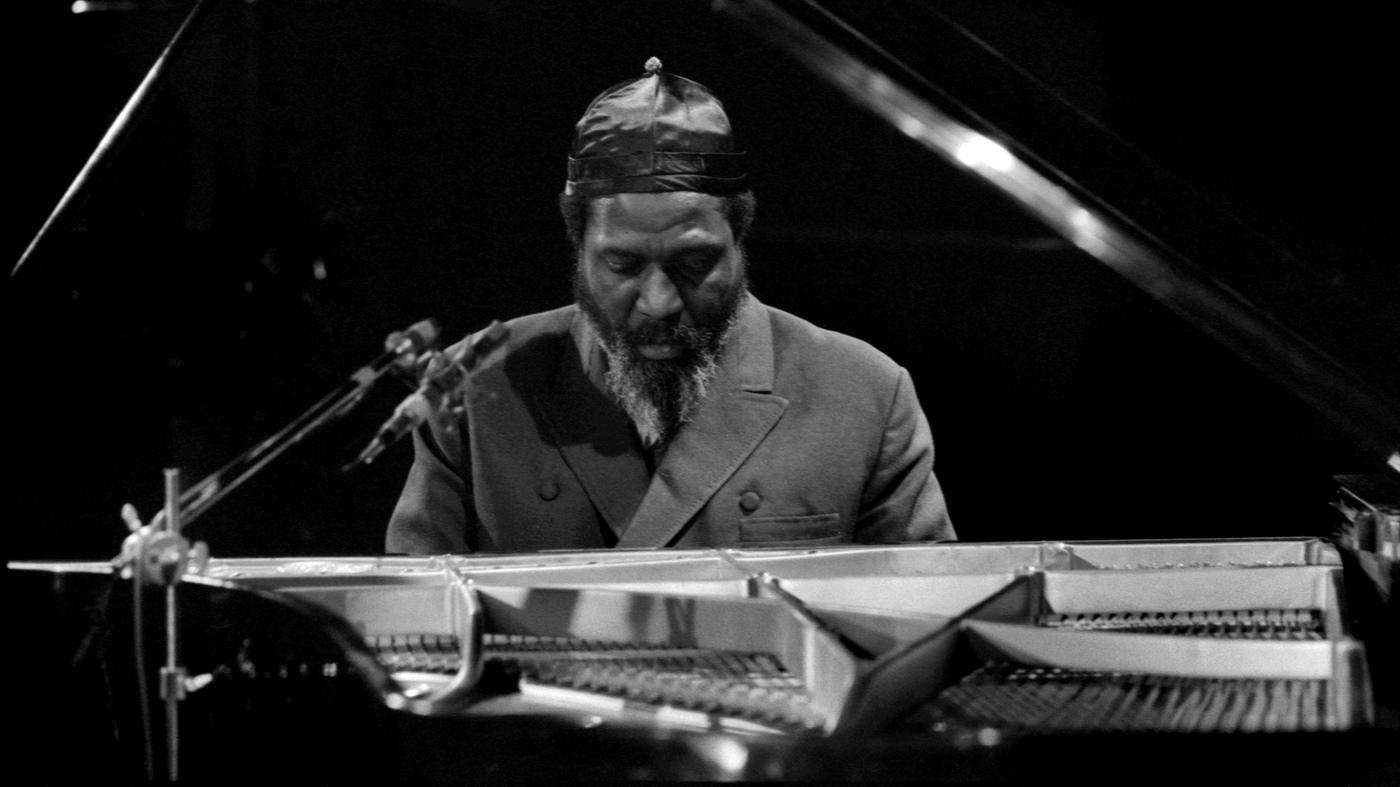
The genius of Thelonious Monk…from Oxford American

The genius of Thelonious Monk…from Oxford American

 
http://www.oxfordamerican.org/magazine/item/1331-is-this-home
 
Is This Home?
Sam Stephenson

Silence is one of Monk’s languages, everything he says laced with it. Silence is a thick brogue anybody bears when Monk speaks the other tongues he’s mastered. It marks Monk as being from somewhere other than wherever he happens to be, his offbeat accent, the odd way he puts something different in what we expect him to say. An extra something not supposed to be there, or an empty space where something usually is. 
—John Edgar Wideman, “The Silence of Thelonious Monk,” from God’s Gym.
 On Friday May 15, 1970, fifty-two­ year-old Thelonious Monk and his wife of twenty-three years, Nellie Smith Monk, flew into Raleigh-Durham Airport and took a cab to a local hotel. In that day’s edition of The News and Observer a photo of Monk ran with a caption heralding “Star Returns” and text stating:
Pianist and Composer Thelonious Monk returns to his native North Carolina for a 10-day run at Raleigh’s Frog and Nightgown beginning Friday Night. The Rocky Mount native, long in the avant garde of jazz, has written several standards, including the well-known “’Round About Midnight [sic].”
 The existence of a successful jazz club in Monk’s home state in May of 1970 was an anomaly. Woodstock (August 1969) marked the era and Led Zeppelin, the Beatles, Simon and Garfunkel, Stevie Wonder, and the Jackson 5 topped the charts. Jazz clubs were closing in bigger cities across the country while Raleigh, with a population of 120,000, wrestled with integration. But Peter Ingram—a scientist from England recruited to work in the newly formed Research Triangle Park—opened the Frog and Nightgown, a jazz club, in 1968 and his wife Robin managed it. Don Dixon, a house bassist at the club who later gained fame as the co-producer of REM’s first album, Murmur, says, “It took a naive Brit like Peter to not know that a jazz club wouldn’t work in 1968.” 
The Frog, as it was known, thrived in a small, red-brick shopping center nestled in a residential neighborhood lined with nineteenth-century oak trees. Surrounded by a barber shop, a laundry mat, a convenience store, and a service station, the Frog often attracted large crowds; lines frequently wrapped around the corner. Patrons brown­bagged their alcohol (the Frog sold food, ice, and mixers), bought cigarettes from machines, and some smoked joints in the parking lot. Ingram booked such jazz icons as Dizzy Gillespie, Clark Terry, Zoot Sims, Art Blakey, the Modem Jazz Quartet, and Stan Getz, as well as lesser-known but adventurous musicians like Booker Ervin and Woody Shaw. Due to its mixed clientele, the club came under threat of the Ku Klux Klan, but Ingram never blinked, and the Frog held on, exceeding all odds.
Six weeks earlier, Monk postponed his originally scheduled engagement at the Frog because of pneumonia, which hospitalized him from March 16 to March 31. He spent the month of April and the first half of May convalescing in his apartment in New York City. He probably had no business traveling anywhere for ten days, much less playing three sets a night, but the Frog offered his standard rate of $2,000 per week and Monk needed the money. 
Despite two decades of recordings that made him a cornerstone of jazz, Monk’s life and career were spiraling downward in 1970. Columbia Records dropped him from the label and he was nearly evicted from his long­time New York apartment. Moreover, as he battled various illnesses and chronic exhaustion, his schedule became unpredictable, making it difficult to hire and keep musicians in his band. 
 On the morning of May 15, 1970, with the flight to Raleigh later that day, Monk still didn’t have a saxophonist for the trip. Monk’s old friend and bassist at the time, Wilbur Ware, first called alto saxophonist Clarence Sharpe but he couldn’t make it. He then called tenor saxophonist Paul Jeffrey, who jumped at the offer. Jeffrey tossed a portable Uher tape recorder and a new box of reels into his bags and met the band at LaGuardia Airport. “Part of the reason I got that job at that time,” says Jeffrey, a native New Yorker who had been considered for the Monk quartet before, “is because a lot of cats were afraid to go down South then. I’d toured the South in B. B. King’s band in 1959 so I knew the ropes. Plus, I wouldn’t turn down the opportunity to play with Monk if the gig had been on the moon.”
 Over those ten days, Jeffrey recorded much of the music the quartet made at the Frog and Nightgown, and his tapes are remnants of Monk’s only major engagement in his home state. Jeffrey remembers the opening night:
 I was nervous. I mean, this is Monk we’re talking about and his music isn’t easy. I remember the first night like it was yesterday. It is emotional for me to think about now. We played “Blue Monk,” “Hackensack,” “Bright Mississippi,” “Epistrophy,” “I Mean You,” “’Round Midnight,” and “Nutty” in that order.
 Jeffrey’s recordings reveal a band in good form, driven by bassist Wilbur Ware’s familiarity with Monk’s shifting rhythms. Following a blistering, four-minute solo on “Nutty,” Jeffrey expresses a warm, deft sound on the ballad, “’Round Midnight,” bearing the influence of Dexter Gordon. Drummer Leroy Williams provides a rhythmic platform for the band. No matter his physical condition, Monk sounds remarkable. 
Monk’s arrangements blended gospel, blues, country, and jazz influences with a profound, surprising sense of rhythm, often using spaces or pauses to build momentum. The idiosyncrasies of his music made it difficult for some fans and critics who considered his playing raw and error-prone. But those criticisms came from classic European perspectives in which piano players sat still and upright in “perfect” form. Monk played with flat fingers and his feet flopped around like fish on a pier while his entire body rolled and swayed. In the middle of performances, he stood up from the piano, danced, and walked around the stage, then rushed back to the piano to play, sticking a cigarette in his mouth as he sat down.
 In a remarkable 1963 appearance with Juilliard professor and friend, Hall Overton, at the New School in New York, Monk demonstrated his technique of “bending” or “curving” notes on the piano, the most rigidly tempered of instruments. He drawled notes like a human voice and blended them (playing notes C and C-sharp at the same time, for example) to create his own dialect. Overton told the audience, “That can’t be done on piano, but you just heard it.” He then explained that Monk achieved it by adjusting his finger pressure on the keys, the way baseball pitchers do to make a ball’s path bend, curve, or dip in flight. 
 Influenced by his devoutly churchgoing mother, Monk’s music was born out of black gospel. When he was sixteen years old, he dropped out of New York’s prestigious Stuyvesant High School, where he had gained admission on merit, and soon embarked on a two-year tour playing piano for a female evangelist. This experience solidified his extraordinary musical architecture. The pianist Mary Lou Williams first met Monk in Kansas City while he was traveling with the evangelist and she reported that he was already playing the music he later brought to the jazz scene in New York. 
 The syncopated Harlem Stride style is said to be the foundation of Monk’s music and that’s not false. It’s just not the deepest root. Here is how the father of Harlem Stride, Willie “the Lion” Smith, described his own music: 
 All the different forms can be traced to Negro church music, and the Negroes have wor­shipped God for centuries, whether they lived in Africa, the Southern United Stares, or in the New York City area. You can still hear some of the older styles of jazz playing, the old rocks, stomps, and ring shouts in the churches of Harlem today.
 Lou Donaldson, a member of Monk’s band that recorded “Carolina Moon” in 1953:
 My father was an AME Zion minister in Badin, North Carolina, and the Albemarle area and one of the reasons I was so drawn to Monk’s music was because I recognized right away that all of his rhythms were church rhythms. It was very familiar to me. Monk’s brand of swing came straight out of the church. You didn’t just tap your foot, you moved your whole body. We recorded “Carolina Moon” [in 1952] as a tribute to our home state, with Max Roach on drums. Max was from Scotland Neck.
 The seventy-nine-year-old saxophonist Johnny Griffin, who played with Monk often in the 1950s and ’60s, says today, “l never knew a musician whose music was more him—I mean him—than Monk. His music was like leaves on a tree. His music grew from nowhere else but inside him.”
The jazz books agree that Monk was born in Rocky Mount, North Carolina, in 1917, but beyond that his family background is mostly unknown. His Frog and Nightgown engagement is treated as merely another entry in scholarly chronologies of his career, no more significant than gigs in Michigan or California. From the research of Gaston Monk (a retired school principal and NAACP leader in Pin County, North Carolina, whose grandfather was the half-brother of Thelonious’s grandfather), Erich Jarvis (a neurobiologist at Duke whose mother, Valeria Monk, was a cousin), and Pam Monk Kelley (an educator in Connecticut, whose father Conley Monk was a first cousin), some of Thelonious Monk’s roots emerge. 
The white patriarch James Monk came to North Carolina in a wave of migrants from Scotland around I770. In 1824, his son, Archibald, married another Scot, Harriett Hargrove in Newton Grove, North Carolina. In 1829, Harriett’s father gave his daughter and son-in-law a young female slave named Chaney, and six years later he gave them a male slave named John Jack. It is probable that Chaney and John Jack—or their parents—came from West Africa and were traded in the markets in Wilmington, North Carolina, before being brought up to Newton Grove.
By the 1860 census, with the Scotch accent fading into a Southern Anglo-Afro drawl, Archibald Monk, then in his sixties, listed nineteen slaves in his possession, ten males and nine females. Among them were John Jack’s young sons Isaac and Hinton. Isaac and Hinton would become the grandfathers of Gaston and Thelonious respectively. 
After emancipation Archibald Monk’s son, Dr. John Carr Monk, founded a Catholic church in Newton Grove. Newly constituted Methodist proclamations disallowing freed blacks from attending Methodist services (after being allowed to attend as slaves) angered John Carr. The resulting biracial Catholic church, Our Lady of Guadalupe, was consecrated in 1874 by Bishop Gibbons and still stands, its walls decorated with turn­of-the-century photographs of both black and white members of the church. (While conducting interviews with Monk elders in the 1990s, Erich Jarvis identified a number of Thelonious Monk’s relatives in these photos.) 
In 1880, Hinton Monk and his wife Sarah Ann Williams named their first son after his father, John Jack, and in 1889 they named their seventh child Thelonious. Biographer Robin D.G. Kelley, whose book Thelonious: A Life is forthcoming from the Free Press, suggests the unusual name could have come from a Benedictine monk named St. Tillo, who was also called Theau and Hillonius. Another theory is that it derived from a renowned black minister in nearby Durham, North Carolina, Fredricum Hillonious Wilkins.
Thelonious Monk, Sr., moved with several relatives to the tobacco and railroad hub of Rocky Mount, in the 1910s, where he met his wife Barbara Batts Monk, who gave birth to one of the most original musicians in American history, Thelonious, Jr., on October 10, 1917. The family lived in a neighborhood called “Around the Y,” named for the Y-shape intersection of the Atlantic Coastline Railroad roughly a hundred yards from their home on Green Street (later renamed Red Row). Henry Ramsey, who grew up in “Around the Y” before becoming a judge in Oakland, California, is writing a memoir in which he describes black railroad workers lighting campfires outside boxcars, playing harmonicas and guitars, and singing blues tunes—all marks of a tradition carried on by such North Carolina country-blues musicians as Sonny Terry, Blind Boy Fuller, and the Reverend Gary Davis. Thelonious, Sr., played harmonica and piano in almost certainly this Piedmont rag style. Three and four decades later, Thelonious Monk would write compositions mimicking train sounds such as “Little Rootie Tootie” and “Locomotive.”
The Monk family struggled. Jim Crow was in full force and, by all accounts, Thelonious, Sr., and Barbara had problems with their marriage. Barbara moved to West 63rd Street in New York City in 1922 and took Thelonious, Jr., and his older sister Marion and younger brother Thomas with her. Thelonious, Sr., tried to join the family in New York later in the 1920s but returned to North Carolina for, to us, unknown reasons. After 1930 his direct family apparently lost contact with him. Rumors in the family indicate that he was beaten beyond recovery in a mugging or, having a wicked temper, participated in a violent beating himself, or both. In any case, according to various extended relatives Thelonious, Sr., spent the last two decades of his life in a mental hospital in North Carolina before dying in 1963. Many relatives visited him, but not his wife and kids.
Barbara Monk was an only child and both of her parents died before she moved away from Rocky Mount at age thirty. The pain of those losses is one explanation for her moving to New York—to get away. But Barbara was a North Carolinian through and through. Her accent, the food she cooked, and, most profoundly for young Thelonious, the churches she attended with the family in New York were steeped in Southern culture. 
The Monks weren’t the only family in their neighborhood with ties to the South. The 1930 census shows that of the 2,083 people who lived in the immediate vicinity of the Monk’s apartment on West 63rd Street, 480 were born in North Carolina, South Carolina, or Virginia. Another 489 were born in other Southern states, the rest in the West Indies and New York. The census also shows that the Monks had a boarder named Claude Smith who was also born in North Carolina. 
When Nellie joined the family in 1947, she moved into the three-room apartment with Monk, Marion, and Barbara. “He was lucky that he lived with [us],” Marion said once. “You’ve got to have somebody behind you when you are following one road, because otherwise you can’t make it. All artists have to suffer—unless they’re at home.”
Monk lived with his mother until she died in 1955, when he was thirty-eight years old. 
Another pillar emerged for Monk in the 1950s in the form of the Baroness Pannonica de Koenigswarter, a descendant of the English branch of the Rothschild family, who was a patron of many jazz musicians. The Baroness’s role, like those of the other women in Monk’s life, paralleled the role Theo van Gogh played for Vincent.
Freed from commercial pressures, Monk was able to wait for the listening public to catch up to his unorthodox music.  
Monk rarely emerged from his apartment in New York without wearing a suit and tie and an exotic hat. (And according to Time magazine, Monk often wore a “cabbage leaf” lapel pin. Though he would have called it a collard green.) “Even when Monk and Nellie were living like paupers,” says his longtime manager, Harry Colomby, “he always looked like a king. He was only about six-feet-tall but the way he dressed and carried himself made him look six-foot-nine.”
 Monk’s royal-like aura made him an effective bandleader. Musicians weren’t sure how to act around him, so they followed him seemingly spellbound, often learning to play music they didn’t know they could play. But Monk’s demeanor sometimes worked against him in the conventional world. In 1951, police discovered heroin in a car occupied by Monk, his friend, Bud Powell, and two other passengers. Monk silently took the rap for the heroin, which by all accounts, except the cops’, wasn’t his. He spent sixty days in jail. “Every day I would plead with him,” said Nellie in an interview in 1963, “‘Thelonious, get yourself out of this trouble. You didn’t do anything.’ But he’d just say, ‘Nellie, I have to walk the streets when I get out. I can’t talk.’” When Monk got out of jail, his all-important New York City cabaret license was revoked and he wasn’t allowed to play in clubs for six years—all during the 1950s jazz heyday. He recorded several masterpieces during this period, but, without the license to play in clubs, he had limited opportunities to promote them. Nobody ever heard him complain. 
After the Baroness helped Monk regain his license to play in 1957, he held a legendary six-month engagement at the Five Spot Club with fellow North Carolinian John Coltrane. But in 1958, Monk lost his license again. He and the saxophonist Charlie Rouse were riding with the Baroness to a gig in Baltimore when they stopped at a hotel in Delaware to get a drink of water. The hotel staff didn’t like something about Monk (they probably didn’t like that two black men were traveling with a white woman in a Rolls Royce) and they called the authorities. When the police arrived, Monk sat stoically in the driver’s seat of the Rolls, refusing to take his hands off the steering wheel, muttering he’d done nothing wrong. The officers proceeded to beat him while the Baroness screamed at them to protect his hands. The Baroness rook the rap for the marijuana found in the trunk, but the scandal forced Monk to lose his license for another two years.
When judged by the workaday world—or even by the working jazz musicians of his day—Monk’s personality and social habits were eccentric. Some observers believe Monk suffered from manic depression, with tendencies for severe introversion, and perhaps some over-the-counter dependencies (alcohol, sleeping pills, amphetamines). One of Monk’s bassists, Al McKibbon, told a story about how Monk showed up at his house unannounced and sat down at his kitchen table and didn’t move or talk the whole day. He just sat and smoked cigarettes. That night McKibbon told him, “Monk, we’re going to bed now,” and he and his wife and daughter retired. The next morning when they awoke, Monk still sat at the kitchen table in the same position. He sat there for another day and night without moving or talking or seeming to care about eating, just smoking. “It was fine with me,” said McKibbon, “it was just Monk being Monk.”
On a national front, Monk’s return to North Carolina in May of 1970 coincided with a period of historic chaos during which American casualties in Vietnam officially totaled over 50,067 dead and 278,006 wounded, and college campuses, from Georgia to New Mexico, erupted in protest and violence. 
On the local front, meanwhile, two white men shot and killed Henry Marrow, a twenty-three-year-old black Vietnam veteran, in broad daylight in Oxford, North Carolina, on May 11. On Saturday May 23, the last night of Monk’s engagement at the Frog and Nightgown, seventy African-Americans were marching forty-one miles from Oxford to the State Capitol in Raleigh to protest the passive judicial treatment of Marrow’s murderers. On May 24, the day Monk flew back to New York, the caravan of protesters, led by a mule-drawn wagon carrying a symbolic coffin, grew to four hundred people and passed two blocks from the Downtowner Motor Inn, a four-story hotel near the State Capitol in Raleigh where Peter Ingram put up the Frog’s visiting musicians. 
Neither Leroy Williams nor Paul Jeffrey recall the political events of 1970 as being on their minds during their Frog engagement. The attendance in the 125-seat club was, by most accounts, solid but not overwhelming. Bruce Lightner, the son of a funeral home owner and Raleigh’s first black mayor, Clarence Lightner, came home from mortuary science school in New York that week and was stunned to find Monk playing in Raleigh. “The night I attended the band was on, really on. I took a date and we got to shake Monk’s hand and it was a thrill,” says Lightner. Paul Jervey, the son of the owner of the black newspaper in Raleigh, The Carolinian, remembers the audience as being mixed but predominantly white. Henry M. “Mickey” Michaux, a black state legislator from Durham, remembers Monk wearing a medieval robe and boots that had pointed toes that curled upward. He recalls the Frog being about half full for the set he attended. 
Leroy Williams recounts the night the Frog’s staff presented Monk with a white homecoming cake ornamented with a fez in honor of Monk’s famous passion for odd hats. “It had icing that said ‘WELCOME HOME TO NORTH CAROLINA,’ and Monk was very enthusiastic about it,” Williams says. “He was smiling and he said, ‘Thank you. I’m from Rocky Mount. Thank you.’ Monk loved it.”
Monk’s trip to Raleigh seems to be the last visit he made to North Carolina and it was one of only a handful of times, at most, that he returned to his home state. That spring, just thirty-two miles from the Downtowner, Monk’s ninety-year-old uncle, John Jack Monk, was living near Newton Grove. Seventy miles away in Pitt County lived Monk’s cousin, Gaston. ln Raleigh, maybe seven miles from the Frog and Nightgown, were cousin Almena Monk Revis, her husband, and their seventeen-year-old son. These are just a few of the many relatives who lived near Raleigh at that time. When Gaston Monk inaugurated the annual Monk family reunions in 1979, four hundred people showed up. But there is little or no evidence that any of Monk’s relatives attended the Frog and Nightgown shows, or that Thelonious and Nellie sought out the family.
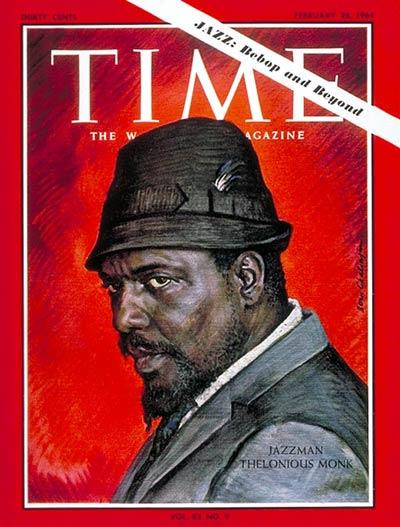
Monk’s North Carolina relatives apparently knew more about him than he knew about them. Reggie Revis, the son of Almetta Monk Revis, remembers being eleven years old and reading an issue of Time magazine in their family living room in Raleigh. The issue, published in February of 1964, featured a cover story on Monk, the first black jazz musician (and one of the first black people in general) to get that placement. “We subscribed to Time, Life, and Newsweek and I read all of them each week,” says Revis. “I was reading the article on Thelonious Monk and there was a big spread of pictures and my mother walked by and said, ‘You know he is our relative, don’t you?’ I was shocked. Nobody had ever mentioned his name to me before.”
Biographer Kelley says that at this point in Monk’s life he normally spent the entire day in bed resting for his gigs. But one wonders if it occurred to Monk or Nellie to try to track down family members in eastern North Carolina while in Raleigh. The relatives may have seen the STAR RETURNS write-up in The News and Observer or they may have seen Peter Ingram’s newspaper advertisements for the Thelonious Monk Quartet or his fifteen­second spots on Johnny Carson’s Tonight Show. On Sunday, May 17, Monk and Nellie may have had time to attend church and get back for that night’s gig at the Frog and Nightgown. 
Monk died in 1982 after a long, infirm seclusion in the New Jersey home of the Baroness, where only a few people such as Nellie, Paul Jeffrey, and another close musician friend, Barry Harris, had any contact with him. He was sixty-four years old. 
Soon after his death, Nellie and Monk’s sister Marion began attending Gaston Monk’s annual family reunions in Pitt County, North Carolina. Gaston’s son, William, picked them up at the train station in Rocky Mount, the same station where the five-year-old Thelonious had left for New York with his mother, sister, and brother in 1922. 
During the mid-1980s, one of the Monk gatherings was dedicated to the late Thelonious Monk and his family. While working on his Monk genealogy, Erich Jarvis interviewed many Monk elders, including Nellie, in 1993, when she was seventy-two. (She died in 2002.) “Nellie started coming to the reunions,” says Jarvis, “in order to feel a closer connection to her dead husband. She also knew it was important to him or else she wouldn’t have done it. She was closing a circle for Thelonious.”
 
Enjoy this story?  Subscribe to the Oxford American.


Jim Eigo Jazz Promo Services T: 845-986-1677 E-Mail: jim@jazzpromoservices.com
http://www.jazzpromoservices.com

HAVE A JAZZ EVENT, NEW CD OR IMPORTANT ANNOUNCEMENT FOR THE JAZZ COMMUNITY YOU WANT TO PROMOTE? CONTACT JAZZ PROMO SERVICES FOR PRICE QUOTE.

CHECK OUT OUR NEW YOUTUBE VIDEO

Unsubscribe | Update your profile | Forward to a friend

PLEASE NOTE: IF YOU DO NOT WISH TO BE ON THIS MAILING LIST PLEASE RESPOND WITH ‘REMOVE’ IN THE SUBJECT LINE. IF YOU ARE RECEIVING DUPLICATE EMAILS OUR APOLOGIES, JAZZ PROMO SERVICES ANNOUNCEMENT LIST IS GROWING LARGER EVERY DAY…..PLEASE LET US KNOW AND WE WILL FIX IT IMMEDIATELY!

Copyright (C) 2017 All rights reserved.

Jazz Promo Services

269 State Route 94 South

Warwick, Ny 10990

Add us to your address book

slide

Grady Tate, Jazz Drummer Turned Vocalist, Dies at 85 – The New York Times

Grady Tate, Jazz Drummer Turned Vocalist, Dies at 85 – The New York Times

https://www.nytimes.com/2017/10/12/obituaries/grady-tate-dead-jazz-drummer-turned-vocalist.html?emc=edit_tnt_20171012
 
Grady Tate, Jazz Drummer Turned Vocalist, Dies at 85
By RICHARD SANDOMIROCT. 12, 2017


Grady Tate performing at Merkin Hall in New York in 1997. Alan Nahigian
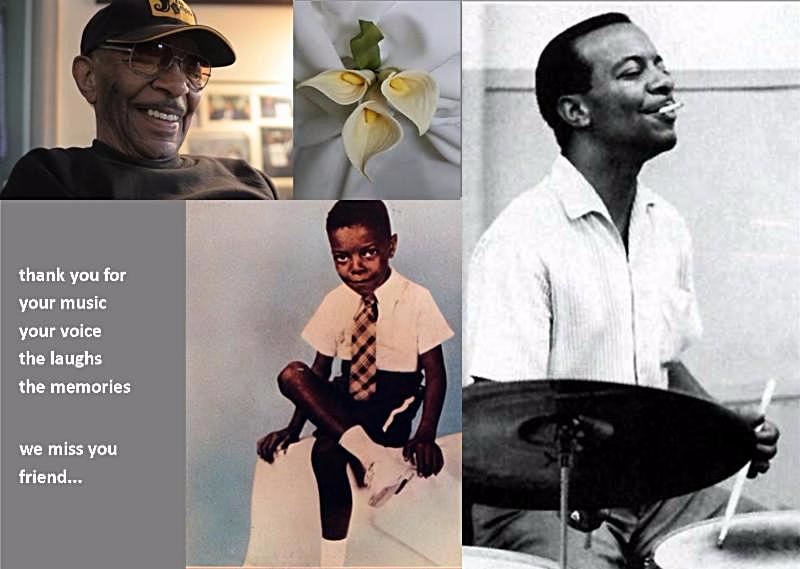
Grady Tate, a jazz drummer who was known for his work with Peggy Lee, Quincy Jones, Ella Fitzgerald and many others and whose warm baritone led to a second career as a singer, died on Sunday at his home in Manhattan. He was 85.
His wife, Vivian, confirmed the death and said he had had dementia.
Mr. Tate started drumming professionally in the late 1950s and eventually became one of the busiest sidemen in jazz, recording with stars like Jimmy Smith, Stan Getz, Clark Terry and Billy Taylor.
“Listen to Quincy Jones’s famous recording of ‘Killer Joe,’ ” Loren Schoenberg, a saxophonist and founding director of the National Jazz Museum in Harlem, said in a telephone interview. “Listen to Grady’s drums. It’s just phenomenal timing and rhythm that’s almost transparent. He was there to serve the music without the imposition of a defined personality or style.”
The bassist Christian McBride recalled the first time he saw Mr. Tate perform, at the Manhattan nightclub Indigo Blues with the pianist Sir Roland Hanna. “Mr. Tate is one of those rare, unsung heroes of the drums who you rarely kept your eye on when he played because you were busy dancing, moving and grooving,” Mr. McBride said in an email. “Like a truly great rhythm section player, you noticed his absence more than his presence.”
On records, Mr. Tate accompanied a wide range of singers, from Lena Horne and Aretha Franklin to Bette Midler and Paul Simon. He was also heard on the soundtrack to the original “Twin Peaks” series. The All Music website lists more than a thousand recording credits for him.
Peggy Lee, whom he accompanied on tour and on recordings, was a favorite of his. Mr. Tate told one of her biographers, Peter Richmond, that the real shows began after their nightclub gigs had ended, when the band jammed with her in her hotel suite.
“There were some performances you wouldn’t believe,” he was quoted as saying in “Fever: The Life and Music of Miss Peggy Lee” (2006). One night, he recalled, “I heard this voice, and the song that she was singing, whatever it was, she sounded more like Billie Holiday than Billie ever sounded.”
Miss Lee encouraged Mr. Tate’s desire to sing publicly. She had him sing “The Windmills of Your Mind” in 1968 as part of her set at the Copacabana in Manhattan.
“You know, that was not only a great thing Peggy did for me, it was also unprecedented,” Mr. Tate told Downbeat magazine in 1971. “Singers are a funny lot. The stage is all theirs and as a result, quite often they don’t want anything that has the remotest chance of upstaging them. That’s why the music is geared just so, the lights just so. But Peggy is a beautiful lady.”
He released several albums as a vocalist, starting in 1968 with “Windmills of My Mind.” He also sang “I Got Six” and “Naughty Number Nine” on “Schoolhouse Rock,” ABC’s long-running series of short educational cartoons.
“When you’re playing as a drummer, everybody’s playing and nobody cares a thing about you,” he told the pianist Marian McPartland on her NPR show “Piano Jazz” in 2009. “Everybody’s out front and the drummer’s in the back and you don’t get the play you should get.”

 
Grady Tate as a singer in an undated photograph. Alan Nahigian
In contrast, he said, singing “is something that gets directly to the person.”
Grady Bernard Tate was born on Jan. 14, 1932, in Durham, N.C. His father, also named Grady, was a stonemason. His mother, Elizabeth, was the dean of women at a local business school. He played drums and sang, but when his voice changed he stopped singing.
At 13, he had an odd if inspiring experience watching the jazz drummer Jo Jones perform at the Durham Armory, he told the website All About Jazz in 2008.
He recalled being mesmerized as Mr. Jones, “the craziest man I’ve ever seen in my life,” played with unalloyed joy. Afterward, Mr. Jones invited him onto the stage and asked if he had brought his drumsticks with him.
“No, sir,” Mr. Tate said, and Mr. Jones offered his own pair but whacked one of his hands with them. “That’s just a tiny bit of the pain that you’re going to get,” Mr. Jones said, “if you’re gonna pick these damn things up and use ’em.”
In the Air Force, Mr. Tate played in a 21-piece stateside band, where he worked with the trumpeter and arranger Bill Berry. After his discharge, he graduated from North Carolina Central University with a bachelor’s degree in English and drama and then moved to Washington, where he briefly taught at a high school and worked in the post office.
One musician he knew in Washington, the saxophonist Herschel McGinnis, took him to see the organist Wild Bill Davis play. Emboldened, Mr. Tate asked Mr. Davis if he could sit in for one number. It proved to be an epiphany.
“I hadn’t played drums in so long,” Mr. Tate said in a 2005 interview with the newspaper Port Folio Weekly. “I just exploded. When we finished, it was like the cleansing of my life, everything was out.
“The next day the phone rang. My wife said, ‘It’s Wild Bill Davis!’ He said: ‘I was wondering. Would you like to work with my band? We’re opening in Pittsburgh Tuesday night. Are you in?’ ”
He stayed with Mr. Davis for a few years and then took a detour, moving to New York City to study at the American Academy of Dramatic Arts. Ultimately, he said, although he loved acting, he did not pursue it because he felt that the instructors and other actors were insincere.
In 1962 another saxophonist, Jerome Richardson, intervened to bring Mr. Tate back to music; he was with Quincy Jones’s big band, which had lost its drummer as it prepared to go on tour. Would Mr. Tate play with the band for a while? He went to a rehearsal, where Mr. Jones “seemed to call all the tunes that I knew,” he recalled.
Working with Mr. Jones led Mr. Tate to decades of studio work. He was also a member of the “Tonight Show” band for several years before the show moved from New York to California in 1972.
In addition to his wife, he is survived by a son, Grady Jr.
In his later years, Mr. Tate sang more and played the drums less.
“I had never thought of singing as a career, which it is for me now,” he said in 2005. “I don’t know how it happened; I just go with the flow. And I find that to be totally acceptable.”
 

Jim Eigo Jazz Promo Services T: 845-986-1677 E-Mail: jim@jazzpromoservices.com
http://www.jazzpromoservices.com

HAVE A JAZZ EVENT, NEW CD OR IMPORTANT ANNOUNCEMENT FOR THE JAZZ COMMUNITY YOU WANT TO PROMOTE? CONTACT JAZZ PROMO SERVICES FOR PRICE QUOTE.

CHECK OUT OUR NEW YOUTUBE VIDEO

Unsubscribe | Update your profile | Forward to a friend

PLEASE NOTE: IF YOU DO NOT WISH TO BE ON THIS MAILING LIST PLEASE RESPOND WITH ‘REMOVE’ IN THE SUBJECT LINE. IF YOU ARE RECEIVING DUPLICATE EMAILS OUR APOLOGIES, JAZZ PROMO SERVICES ANNOUNCEMENT LIST IS GROWING LARGER EVERY DAY…..PLEASE LET US KNOW AND WE WILL FIX IT IMMEDIATELY!

Copyright (C) 2017 All rights reserved.

Jazz Promo Services

269 State Route 94 South

Warwick, Ny 10990

Add us to your address book

slide

Thelonious Monk: The Centennial of | Tom Reney New England Public Radio

Thelonious Monk: The Centennial of | Tom Reney New England Public Radio

http://nepr.net/post/thelonious-monk-centennial#stream/0
 
Thelonious Monk: The Centennial of
Tom Reney

Today is Thelonious Monk’s centennial. It’s now 35 years since his death in 1982, and over 45 since his last significant recordings were made. The pianist was 30 by the time he made his first session as a leader for Blue Note, and it took another decade before he began to develop a dedicated following and the respect of critics. 

<img src=”http://nepr.net/sites/wfcr/files/styles/default/public/201710/monk-Time.jpg” alt=”Monk/TIME, February 28, 1964″>
But good things can come to those who wait, and Monk, who enjoyed a fair measure of success in the sixties and a Time Magazine cover story in 1964, is today as iconic as any figure in jazz. His compositions, about 70 in total, are the second most recorded in jazz history, trailing only Duke Ellington, who composed about fifteen times as many works. And even after repeated listens to his substantial recorded legacy, Monk’s singular visions of beauty retain a freshness, depth, and element of surprise that will assure his continued appeal.
Here’s Thelonious in 1969 playing “Epistrophy.” Co-written in 1941 with Kenny Clarke, the drummer who was Monk’s colleague at Minton’s, the Harlem nightclub that was a staging ground for modern jazz, it was recorded by Coleman Hawkins that year under the title “Fly Right.”
 
 
Thelonious Monk – Epistrophy


<div class=”player-unavailable”><h1 class=”message”>An error occurred.</h1><div class=”submessage”><a href=”http://www.youtube.com/watch?v=yHpB4lkgeN0″ target=”_blank”>Try watching this video on www.youtube.com</a>, or enable JavaScript if it is disabled in your browser.</div></div>
From the same television appearance, he played “Crepuscule With Nellie,” his dedication to his wife Nellie who was his tireless supporter through the ups and downs of his unsteady career.
 
 
Thelonious Monk Piano Solo – Crepuscule With Nellie


<div class=”player-unavailable”><h1 class=”message”>An error occurred.</h1><div class=”submessage”><a href=”http://www.youtube.com/watch?v=uZ0WslUsk1c” target=”_blank”>Try watching this video on www.youtube.com</a>, or enable JavaScript if it is disabled in your browser.</div></div>
Here’s T.S. Monk (Thelonious Sphere Monk III) discussing the Jazz Baroness, Pannonica de Koeningswarter, for whom his father composed, “Pannonica.”
 
 
The Baroness Who Backed Thelonious Monk


<div class=”player-unavailable”><h1 class=”message”>An error occurred.</h1><div class=”submessage”><a href=”http://www.youtube.com/watch?v=orJ6y4c29Cw” target=”_blank”>Try watching this video on www.youtube.com</a>, or enable JavaScript if it is disabled in your browser.</div></div>
And here’s Monk playing the tune and discussing the Baroness’s name.
 
 
Thelonious Monk – Pannonica


<div class=”player-unavailable”><h1 class=”message”>An error occurred.</h1><div class=”submessage”><a href=”http://www.youtube.com/watch?v=aSHkPCW8dN4″ target=”_blank”>Try watching this video on www.youtube.com</a>, or enable JavaScript if it is disabled in your browser.</div></div>
Monk’s most famous and oft-recorded composition is “‘Round Midnight.” It was premiered on record by Cootie Williams, who was urged to perform it by Bud Powell, Monk’s friend who was playing piano in Cootie’s orchestra. Williams exercised a fairly common prerogative of the era in taking a co-composer credit for himself.  Here it’s played by Monk’s Quartet with Charlie Rouse, Larry Gales, and Ben Riley in Norway in 1966.
 
 
Thelonious Monk Quartet – ‘Round Midnight


<div class=”player-unavailable”><h1 class=”message”>An error occurred.</h1><div class=”submessage”><a href=”http://www.youtube.com/watch?v=-yg7aZpIXRI” target=”_blank”>Try watching this video on www.youtube.com</a>, or enable JavaScript if it is disabled in your browser.</div></div>
 

Jim Eigo Jazz Promo Services T: 845-986-1677 E-Mail: jim@jazzpromoservices.com
http://www.jazzpromoservices.com

HAVE A JAZZ EVENT, NEW CD OR IMPORTANT ANNOUNCEMENT FOR THE JAZZ COMMUNITY YOU WANT TO PROMOTE? CONTACT JAZZ PROMO SERVICES FOR PRICE QUOTE.

CHECK OUT OUR NEW YOUTUBE VIDEO

Unsubscribe | Update your profile | Forward to a friend

PLEASE NOTE: IF YOU DO NOT WISH TO BE ON THIS MAILING LIST PLEASE RESPOND WITH ‘REMOVE’ IN THE SUBJECT LINE. IF YOU ARE RECEIVING DUPLICATE EMAILS OUR APOLOGIES, JAZZ PROMO SERVICES ANNOUNCEMENT LIST IS GROWING LARGER EVERY DAY…..PLEASE LET US KNOW AND WE WILL FIX IT IMMEDIATELY!

Copyright (C) 2017 All rights reserved.

Jazz Promo Services

269 State Route 94 South

Warwick, Ny 10990

Add us to your address book

slide

“Smoke on the Water”  and “Tutu”  first DNA-saved files to be added to UNESCO’s Memory of the World Archive – Seeker

“Smoke on the Water”  and “Tutu”  first DNA-saved files to be added to UNESCO’s Memory of the World Archive – Seeker

https://www.seeker.com/health/biotech/music-was-just-encoded-on-dna-and-retrieved-for-the-first-time
 
Music Was Just Encoded on DNA and Retrieved for the First Time
 
“Smoke on the Water” by Deep Purple and “Tutu” by Miles Davis are the first DNA-saved files to be added to UNESCO’s Memory of the World Archive. 
 
BY TRACY STAEDTER  
 
OCTOBER 2, 2017
 
Even the highest quality archival medium is no match for DNA. 
 
To demonstrate this, researchers stored historic audio recordings on these molecules for the first time and then retrieved them with 100 percent accuracy. The experiment showed that DNA not only offers a place to save a dense package of information in a tiny space, but because it can last for hundreds of years, it reduces the risk that it will go out of date or degrade in the way that cassette tapes, compact discs, and even computer hard drives can. 
 
“DNA is intrinsically and exquisitely a stable molecule,” Emily Leproust, CEO of the biotech firm Twist Bioscience, which works on DNA synthesis, told Seeker. Her company collaborated with Microsoft, the University of Washington, and the Montreux Jazz Digital Project on the DNA data feat. 
 
The two performances they stored and retrieved, “Smoke on the Water” by Deep Purple and “Tutu” by Miles Davis, are the first DNA-saved files to be added to UNESCO’s Memory of the World Archive, a collection of audio and visual pieces of cultural significance. Both were performed at the Montreux Jazz Festival, an annual event in Switzerland. 
 
RELATED: DNA Robots Sort and Carry Molecular Cargo
Last week, the retrieved versions of each song were played for a different audience, this one at the ArtTech Forum in Lausanne, Switzerland, which promotes innovations at the intersection of science and culture. In digital form, the songs take up about 140 MB of hard drive space. In DNA form, they’re mere specks, much smaller than a grain of sand. 
Leproust told Seeker that if the all of music from the Montreux Jazz Digital Project — six petabytes of digital data (the equivalent of six million gigabytes) — were saved to DNA, it would fit on a grain of rice. 
Storing and retrieving files to and from DNA starts with the digital file. The researchers converted the binary code, the 1s and 0s of computer language, into the genetic code that makes up DNA, the A, C, T, and G nucleotide bases. For example, 00 could be turned into A, 10 could be turned into C, 01 could be turned into G, and 11 could be turned into T. 
They then made synthetic segments of DNA by combining the As, Cs, Ts, and Gs in the sequences that represented the binary code. The short segments each contain about 12 bytes of data as well as a sequence number, which is also made of bases to indicate the location the specific data within the overall DNA file. 
 
RELATED: Researchers Find DNA From Extinct Humans in Cave Sediments
When this work was complete, they used conventional DNA sequencing technology to make sure that the genetic bases were in the correct order. Lastly, they then decoded the As, Cs, Ts, and Gs and turned them back into digital 1s and 0s so that the data could be played like a contemporary music file. 
“In principal, it doesn’t really matter what the file is,” Leproust noted. “A movie or video or PDF file — that’s the beauty of DNA. It’s universal.” 
Copying the DNA files is done the same way DNA is typically copied, with a polymerase chain reaction machine. Because this storage strategy is a proof-of-concept that uses high-tech lab equipment, it’s not affordable for the masses. But as with all new technology, Leproust said, the cost will go down as they refine the technique and it becomes more common. 
 
To archive the DNA files over a long period of time, Leproust and her colleagues are working with chemist Robert Grass of ETH Zurich, who has developed a way to encapsulate DNA in particles of silica. If perfected, data encoded in DNA could be locked away for thousands of years. 
WATCH: We Could Back Up the Entire Internet on a Gram of DNA
 

Jim Eigo Jazz Promo Services T: 845-986-1677 E-Mail: jim@jazzpromoservices.com
http://www.jazzpromoservices.com

HAVE A JAZZ EVENT, NEW CD OR IMPORTANT ANNOUNCEMENT FOR THE JAZZ COMMUNITY YOU WANT TO PROMOTE? CONTACT JAZZ PROMO SERVICES FOR PRICE QUOTE.

CHECK OUT OUR NEW YOUTUBE VIDEO

Unsubscribe | Update your profile | Forward to a friend

PLEASE NOTE: IF YOU DO NOT WISH TO BE ON THIS MAILING LIST PLEASE RESPOND WITH ‘REMOVE’ IN THE SUBJECT LINE. IF YOU ARE RECEIVING DUPLICATE EMAILS OUR APOLOGIES, JAZZ PROMO SERVICES ANNOUNCEMENT LIST IS GROWING LARGER EVERY DAY…..PLEASE LET US KNOW AND WE WILL FIX IT IMMEDIATELY!

Copyright (C) 2017 All rights reserved.

Jazz Promo Services

269 State Route 94 South

Warwick, Ny 10990

Add us to your address book

slide

Stan Getz – Grady Tate Sweet Rain (1967) – YouTube

Stan Getz – Grady Tate Sweet Rain (1967) – YouTube

https://www.youtube.com/watch?v=3qGDF5gnjTU
 

Jim Eigo Jazz Promo Services T: 845-986-1677 E-Mail: jim@jazzpromoservices.com
http://www.jazzpromoservices.com

HAVE A JAZZ EVENT, NEW CD OR IMPORTANT ANNOUNCEMENT FOR THE JAZZ COMMUNITY YOU WANT TO PROMOTE? CONTACT JAZZ PROMO SERVICES FOR PRICE QUOTE.

CHECK OUT OUR NEW YOUTUBE VIDEO

Unsubscribe | Update your profile | Forward to a friend

PLEASE NOTE: IF YOU DO NOT WISH TO BE ON THIS MAILING LIST PLEASE RESPOND WITH ‘REMOVE’ IN THE SUBJECT LINE. IF YOU ARE RECEIVING DUPLICATE EMAILS OUR APOLOGIES, JAZZ PROMO SERVICES ANNOUNCEMENT LIST IS GROWING LARGER EVERY DAY…..PLEASE LET US KNOW AND WE WILL FIX IT IMMEDIATELY!

Copyright (C) 2017 All rights reserved.

Jazz Promo Services

269 State Route 94 South

Warwick, Ny 10990

Add us to your address book

slide

Grady Tate, Prodigious Jazz Drummer And Noted Vocalist, Dies At 85 : NPR

Grady Tate, Prodigious Jazz Drummer And Noted Vocalist, Dies At 85 : NPR

http://www.npr.org/2017/10/10/556916456/grady-tate-prodigious-jazz-drummer-and-noted-vocalist-dies-at-85
 
Grady Tate, Prodigious Jazz Drummer And Noted Vocalist, Dies At 85
Nate ChinenOctober 10, 20175:29 PM ET

Grady Tate performs on stage at the Jazz Mobile Festival on Sept. 5, 1982, in Amsterdam.
Frans Schellekens/Redferns
Grady Tate, a crisp, swinging drummer who also enjoyed crossover success as a vocalist in a prolific recording career spanning more than 50 years, died on Sunday night at his home in the Upper East Side neighborhood of Manhattan. He was 85. His death was confirmed to NPR by Wendy Oxenhorn, executive director of the Jazz Foundation of America, which provides a range of assistance to musicians. No cause was given.
Tate was one of the most versatile and in-demand jazz drummers of the ’60s and ’70s, appearing on hundreds of albums. His first major appointment was with the Quincy Jones Orchestra in ’62. Among the artists Tate backed were saxophonists Stan Getz and Stanley Turrentine, composer-orchestrators Oliver Nelson and Lalo Schifrin, and organists Shirley Scott and Jimmy Smith.
Here he is with Smith and guitarist Kenny Burrell in 1965, playing “Greensleeves” from the Verve album Organ Grinder Swing. Listen for how Tate places the beat — right on top, leaning slightly forward — and keeps things buoyant and brisk, even within the churn of a polyrhythmic waltz.
 
 
Greensleeves


<div class=”player-unavailable”><h1 class=”message”>An error occurred.</h1><div class=”submessage”><a href=”http://www.youtube.com/watch?v=zv6M-y_F_OY” target=”_blank”>Try watching this video on www.youtube.com</a>, or enable JavaScript if it is disabled in your browser.</div></div>
YouTube
The precision and ebullient feeling in Tate’s drumming made him a first call, in the studio and on tour, for many of the finest singers of the ’60s and ’70s, including Ella Fitzgerald, Tony Bennett, Lena Horne and Peggy Lee. He also had credits on some notable pop albums, like Roberta Flack‘s Killing Me Softly and Paul Simon‘s There Goes Rhymin’ Simon. He was the drummer for Simon & Garfunkel‘s famed 1981 reunion concert in Central Park, which sold millions of copies when it was released as an album the following year.
A generation of kids grew up hearing Tate’s voice on the soundtrack for Schoolhouse Rock!, the series of educational cartoons broadcast on Saturday mornings by ABC. The songs were largely composed by Bob Dorough, who sang more than a few of them himself. But Tate was featured on some choice selections, including “I Got Six” from 1973, “Fireworks” and, in a vocal performance as soulful as it is numerically instructive, “Naughty Number Nine.”
Tate’s career as a vocalist was much more than a side hustle, though, stretching back to 1968 and his debut album, Windmills of My Mind. The title track — a cover of the theme from The Thomas Crown Affair, which won the Oscar for best original song that year — presents Tate the singer in full bloom. He’s a suave, companionable stylist, with unlabored phrasing and a careful attunement to lyric and mood.
 
 
The Windmills Of Your Mind (Theme From “The Thomas Crown Affair”)


<div class=”player-unavailable”><h1 class=”message”>An error occurred.</h1><div class=”submessage”><a href=”http://www.youtube.com/watch?v=hlQwdF8q3kc” target=”_blank”>Try watching this video on www.youtube.com</a>, or enable JavaScript if it is disabled in your browser.</div></div>
YouTube
(In fact, both of Tate’s Grammy nominations were for vocal performances: Multiplication Rock was up for Best Recording For Children in 1973, and his version of “She’s Out of My Life,” from the Jimmy Smith album Go For Whatcha Know, vied for Best Jazz Vocal Performance, Male, in 1986.)
Though he had the voice of a jazz balladeer, Tate muscled easily into soul and R&B. “Be Black Baby,” released as a 7-inch single on the Skye label, is a funky exhortation that can now be found on the compilation Black & Proud Vol. 1 – The Soul Of The Black Panther Era. The song was also sampled on tracks by Big Daddy Kane and the Beastie Boys, and turned up in the 1970 cult film Hi, Mom! — an early Robert De Niro vehicle, directed by Brian De Palma.
Grady Tate was born in Durham, North Carolina on January 14, 1932, and began singing in church at age 4. Not long afterward, he began playing drums; he was entirely self-taught.
After graduating from high school, Tate served four years in the Air Force, playing in a show band whose resident arranger was the trumpeter Bill Berry. He returned to Durham to study theater arts, literature and psychology at North Carolina College. Then he moved to Washington, D.C., where he worked briefly as a postal carrier before joining the organist Wild Bill Davis on the road.
Tate moved to New York in his late 20s, but not in pursuit of a musical career: he enrolled at the American Academy of Dramatic Arts to study drama. His training as an actor was curtailed after saxophonist and flutist Jerome Richardson recommended him to Quincy Jones, who had just lost his drummer. The association with Jones led in turn to session work and a six-year stint with Doc Severinsen’s Tonight Show Band on NBC, from 1968 to ’74.
 
 
Grady Groove (feat. Grady Tate)


<div class=”player-unavailable”><h1 class=”message”>An error occurred.</h1><div class=”submessage”><a href=”http://www.youtube.com/watch?v=AcO49lv__RM” target=”_blank”>Try watching this video on www.youtube.com</a>, or enable JavaScript if it is disabled in your browser.</div></div>
YouTube
For a certain pop-culture fan base, Tate will always be legendary for his cool, undulant drumming on the soundtrack to David Lynch’s show Twin Peaks. Angelo Badalamenti, the composer, recently relayed Tate’s joke that the score only ever inhabited two tempos: “slow, and reverse.” But in addition to his delicate brushwork on the original Twin Peaks series, Tate is featured in the soundtrack to Twin Peaks: The Return, which aired this year.
One track, named in his honor, amounts to nearly two minutes of drumming in the foreground, in snappy waltz time. The track, “Grady Groove,” captures the inherent musicality in Tate’s beat, a gift both rare and so natural that it can still be easy to overlook.
Survivors include Tate’s wife, Vivian, and a son, Grady Tate, Jr.
 

Jim Eigo Jazz Promo Services T: 845-986-1677 E-Mail: jim@jazzpromoservices.com
http://www.jazzpromoservices.com

HAVE A JAZZ EVENT, NEW CD OR IMPORTANT ANNOUNCEMENT FOR THE JAZZ COMMUNITY YOU WANT TO PROMOTE? CONTACT JAZZ PROMO SERVICES FOR PRICE QUOTE.

CHECK OUT OUR NEW YOUTUBE VIDEO

Unsubscribe | Update your profile | Forward to a friend

PLEASE NOTE: IF YOU DO NOT WISH TO BE ON THIS MAILING LIST PLEASE RESPOND WITH ‘REMOVE’ IN THE SUBJECT LINE. IF YOU ARE RECEIVING DUPLICATE EMAILS OUR APOLOGIES, JAZZ PROMO SERVICES ANNOUNCEMENT LIST IS GROWING LARGER EVERY DAY…..PLEASE LET US KNOW AND WE WILL FIX IT IMMEDIATELY!

Copyright (C) 2017 All rights reserved.

Jazz Promo Services

269 State Route 94 South

Warwick, Ny 10990

Add us to your address book

slide

RIP Grady Tate

RIP Grady Tate


Having trouble viewing this email? Click here


We are very sorry that we have to share with you this sad news, 
another loss of one of our own…
 
Grady Tate
1932-2017


jazzmobile | 163 W. 125th St. | Suite 906| Harlem, NY10027 | 212.866.4900
 hot line – 212.866.3616
www.jazzmobile.org


earn more about the Constant Contact Cares4Kids program

The Constant Contact Cares for Kids program supports youth oriented nonprofit organizations. Learn more about the Cares for Kids program.

More than 600,000 small businesses and organizations trust Constant Contact to connect with their customers and members. Signup for a free 60-day trial.

 
Forward email

afe Unsubscribe
This email was sent to jim@jazzpromoservices.com, by jazzy@jazzmobile.org
Update Profile/Email Address | Instant removal with SafeUnsubscribe™ | Privacy Policy.

Jazzmobile, Inc. | 163 West 125th Street | Harlem | NY | 10027


Jim Eigo Jazz Promo Services T: 845-986-1677 E-Mail: jim@jazzpromoservices.com
http://www.jazzpromoservices.com

HAVE A JAZZ EVENT, NEW CD OR IMPORTANT ANNOUNCEMENT FOR THE JAZZ COMMUNITY YOU WANT TO PROMOTE? CONTACT JAZZ PROMO SERVICES FOR PRICE QUOTE.

CHECK OUT OUR NEW YOUTUBE VIDEO

Unsubscribe | Update your profile | Forward to a friend

PLEASE NOTE: IF YOU DO NOT WISH TO BE ON THIS MAILING LIST PLEASE RESPOND WITH ‘REMOVE’ IN THE SUBJECT LINE. IF YOU ARE RECEIVING DUPLICATE EMAILS OUR APOLOGIES, JAZZ PROMO SERVICES ANNOUNCEMENT LIST IS GROWING LARGER EVERY DAY…..PLEASE LET US KNOW AND WE WILL FIX IT IMMEDIATELY!

Copyright (C) 2017 All rights reserved.

Jazz Promo Services

269 State Route 94 South

Warwick, Ny 10990

Add us to your address book

slide

Jack Good, Who Put Rock ’n’ Roll on TV With ‘Shindig,’ Dies at 86 – The New York Times

Jack Good, Who Put Rock ’n’ Roll on TV With ‘Shindig,’ Dies at 86 – The New York Times

https://www.nytimes.com/2017/10/06/obituaries/jack-good-who-put-rock-n-roll-on-tv-in-the-60s-dies-at-86.html
 
Jack Good, Who Put Rock ’n’ Roll on TV With ‘Shindig,’ Dies at 86
By RICHARD SANDOMIROCT. 6, 2017


Jack Good on the set with the Beatles. A former assistant called him “classically trained — and a complete maniac.” Courtesy of Ron Furmanek
Jack Good, who popularized rock ’n’ roll on British television in the 1950s, then followed the British invasion to the United States, where he produced “Shindig,” a prime-time series with a frantic pace, go-go dancers and guests like the Beatles, James Brown and the Rolling Stones, died on Sept. 24 in Oxfordshire, England. He was 86.
The cause was complications of a fall, his daughter Gabriella said.
Mr. Good was an unlikely rock evangelist. He was not a musician, a record executive or a disc jockey; rather, he was an adventurous Oxford-educated actor whose proper style provided counterpoint to rock ’n’ roll’s brashness.
Wearing a bowler hat and a three-piece suit and toting an umbrella, he appeared in a commercial for “Shindig” before its debut on ABC in 1964.
“Ladies and gentlemen,” he said, quickly doffing his hat, “I’m a humble man named Jack Good and I’m also the producer of ‘Shindig.’ I thought it might amuse you to know” — he suddenly shouted and widened his eyes — “the Beatles are coming!”
David Mallet, who was hired at 19 to be Mr. Good’s assistant producer, said in a telephone interview that Mr. Good “was classically trained — and a complete maniac.” He recalled Mr. Good asking him, on his first day of work, to pin “I Dig Shindig” buttons on cardboard cutouts of one of ABC’s stars, Lawrence Welk, the maestro of “Champagne music,” outside the network’s studios in Los Angeles.
The premiere of “Shindig” ended a relatively short professional journey for Mr. Good that began in 1956 when he became transfixed by an audience’s response to the movie “Rock Around the Clock,” with Bill Haley and His Comets. In rock ’n’ roll’s energy and excitement, he recognized music’s future, especially as a fuel for adolescent rebellion.
“It’s easy to call rock ’n’ roll vulgar, but to adolescents it is a release,” he told The New York Times in 1965. “Rock ’n’ roll, if it is anything, is pure joy in sound.
“I willingly embrace vulgarity,” he continued. “I prefer vulgarity, that is, to the excessive refinement that has long stifled British society. Like St. Paul, I’m a convert, but my conversion was to rock ’n’ roll.”
A job as a trainee producer at the BBC led to his first experiment in transforming what he had seen onscreen into a live show. On “Six-Five Special,” which had its premiere in 1957 (it was named for its 6:05 p.m. start-time), he filled the studio floor with young fans bopping to the music. The formula worked: Millions watched. But he chafed at the BBC’s demands that he add sports and comedy segments.
Forced out by the network, Mr. Good resurfaced at its commercial rival, ITV, where he produced “Oh Boy!” with much greater freedom. Performers followed one another quickly, giving the show a breakneck pace. British rock stars like Cliff Richard, Marty Wilde and Billy Fury were said to have received their first national exposure there.
“The aim was hypnosis and excitement — blitzkrieg time!” Mr. Good said in “A Good Man … Is Hard to Find,” a 2005 documentary about his life made by Greg Wise. “Jumping up and down, the adrenaline, the wildness. Yes, the danger of it all!”
Nik Cohn, the British rock journalist, wrote that Mr. Good had an understanding of rock music’s importance that was rare at the time.
“Everyone else saw pop as a one-shot craze and rushed to cash in on it fast before sanity returned and everything returned to normal,” Mr. Cohn wrote in “Awopbopaloobop Alopbamboom: The Golden Age of Rock” (1969). “By contrast, Good realized it clearly as a major phenomenon. I suppose he was the first pop intellectual.”
Mr. Good was born in West London on Aug. 7, 1931. His father, Bob, sold pianos at Harrods, where his mother, Amy, was a secretary. After serving in the Royal Air Force, Mr. Good graduated from Balliol College, Oxford, where he studied philology and was president of the drama society.
“Six-Five Special,” “Oh Boy!” and two other music shows in Britain did not end Mr. Good’s dreams of acting. He left for the United States, hoping to succeed in Hollywood. But he landed only a few parts, including one in “Father Goose” (1964), with Cary Grant, and another in “Clambake” (1967), with Elvis Presley.

 
Jack Good, television producer best known for “Shindig,” in an undated photograph. Courtesy of Ron Furmanek
One day in 1962, soon after moving to the United States, while lazing around in his pajamas, he had an epiphany.
“I saw this so-called special done by a bloke, Dick Clark, and I’d already come to the conclusion that Dick Clark’s shows were hopeless and I could do better,” he said in the documentary. Mr. Clark was, at the time, the host of the long-running “American Bandstand.”
“I said to myself, like the prodigal son in the pigpen, that I’d go back to my father’s house” — referring to Mr. Haley, whom he saw as his muse — “and I devised a show, filmed it, taped it and sent it around to the networks,” he said.
That was the pilot for “Shindig,” which was picked up by ABC, but not until 1964.
“Shindig” was unlike “Bandstand” or “The Ed Sullivan Show.” It had a fast rhythm, like “Oh Boy!,” with rapid cutting and extreme close-ups. The dancers frugged, swam and twisted furiously. The house band featured Glen Campbell, Billy Preston and Leon Russell. And the guests — among them Aretha Franklin, Tina Turner, the Righteous Brothers, Roy Orbison, Johnny Cash, Bobby Sherman, the Isley Brothers, Sam Cooke and the Everly Brothers — covered a broad musical range.
The Beatles, taped in Britain, were guests on the show several months after Mr. Good produced a special with them there. The Stones appeared several times, once with the bluesman Howlin’ Wolf, one of their idols.
NBC countered with its own pop music show, “Hullabaloo,” which made its debut a few months after “Shindig.”
Donna Loren, a featured singer on “Shindig,” described Mr. Good as “the Norman Lear of rock ’n’ roll” for his insistence on booking African-American artists, against the objections of at least one executive at ABC. She said Mr. Good had resisted efforts by the network to limit the number of black performers on the pilot.
Mr. Mallet, his former assistant producer, agreed. “He was insulted by it,” he said in a telephone interview, “because at least 50 percent of his favorite people were people like Little Richard.”
Mr. Good said in the documentary that he told ABC that he would limit the number of black artists on the show if the network sent him a memo outlining its rules. (He also threatened to send it if he got it to Robert F. Kennedy, the attorney general.) He never got the memo.
He left “Shindig” after a year, exhausted by the demands of producing it but with something else in mind: a rock musical based on “Othello.” It became “Catch My Soul,” with William Marshall in the title role and Jerry Lee Lewis playing an unlikely Iago. When it played at the Ahmanson Theater in Los Angeles, Martin Bernheimer of The Los Angeles Times wrote that it was “an utterly brilliant and utterly maddening experience.”
Mr. Good also wrote the screenplay for the 1974 movie version.
In the early 1970s, Mr. Good moved to New Mexico with his family and continued to produce television programming for a few more years. But he had already begun to alter his life dramatically — mostly in service to his Roman Catholic faith.
Inspired by Rubens’s “The Descent From the Cross,” he learned to paint. And, after his divorce from the former Margit Tischer, he built a chapel beside his home in Cordova, N.M., where he lived alone and painted religious murals and icons.
One mural shows a wild-eyed, fanged devil — his head in the shape of a television set — playing an electric guitar.
In addition to his daughter, Mr. Good, who lived in Oxfordshire, is survived by another daughter, Andrea; a son, Alexander; 10 grandchildren; and a brother, Robert.
Mr. Good expressed regrets about the direction rock took in the post-“Shindig” years. He wrote in The Los Angeles Times in 1967 that the music had been “ironed into one vast, hairy, paisley-patterned uniformity.”
But Mr. Mallet said that his cheeky former boss remained dedicated to the era he helped to influence.
“His idea of heaven,” he said, “was Jerry Lee or Cliff Richard or Elvis giving it 100 percent.”
 

Jim Eigo Jazz Promo Services T: 845-986-1677 E-Mail: jim@jazzpromoservices.com
http://www.jazzpromoservices.com

HAVE A JAZZ EVENT, NEW CD OR IMPORTANT ANNOUNCEMENT FOR THE JAZZ COMMUNITY YOU WANT TO PROMOTE? CONTACT JAZZ PROMO SERVICES FOR PRICE QUOTE.

CHECK OUT OUR NEW YOUTUBE VIDEO

Unsubscribe | Update your profile | Forward to a friend

PLEASE NOTE: IF YOU DO NOT WISH TO BE ON THIS MAILING LIST PLEASE RESPOND WITH ‘REMOVE’ IN THE SUBJECT LINE. IF YOU ARE RECEIVING DUPLICATE EMAILS OUR APOLOGIES, JAZZ PROMO SERVICES ANNOUNCEMENT LIST IS GROWING LARGER EVERY DAY…..PLEASE LET US KNOW AND WE WILL FIX IT IMMEDIATELY!

Copyright (C) 2017 All rights reserved.

Jazz Promo Services

269 State Route 94 South

Warwick, Ny 10990

Add us to your address book

slide

Jimmy Owens Make Your Own Luck: Jazz Backstory

Jimmy Owens Make Your Own Luck: Jazz Backstory

http://www.billboard.com/articles/business/7990197/jazz-drummer-alvin-queen-denied-entry-us
 
Jazz Drummer Alvin Queen Denied Entry to U.S. Due to Dropped Charges From 50 Years Ago
10/6/2017 by Karen Bliss

Hans Speekenbrink
Alvin Queen
Former Oscar Peterson drummer Alvin Queen, 67, has been denied entry to the United States by Homeland Security, based on a “run-in with the law” 50 years ago, forcing him to miss a performance at Jazz Meets France in Washington, D.C. on Nov. 15 at the behest of the French-American Cultural Foundation. The charges — one a DWI, the other a minor drug offense — both resulted in dropped charges.
The concert, for which Wynton Marsalis is Honorary Chairman and Smithsonian Institution secretary Dr. David Skorton is Master of Ceremonies, commemorates the centenary of the U.S. entry into World War I and specifically honors the Harlem Hellfighters (the 369th Infantry Regiment), composed mainly of African-American soldiers who served in WWI. (Perhaps ironically, the infantry and the 369th Infantry Jazz Band, also known as the Hellfighters, helped introduce American jazz to Europeans.)
“Since I posted the communique [on Facebook], I’ve received several offers of lawyerly help, notably from Oscar Peterson’s lawyer in Los Angeles,” Queen’s manager Jean-Pierre Leduc told Billboard in an email. “However, we know these matters move at a snail’s pace unless one is a huge music superstar, therefore I doubt if this could be resolved before he was slated to go to the U.S.A. at the end of this month. Getting these things sorted quickly is usually only possible when the artist is a household name. It’s really about money, not justice. I have a call in to Senator Charles Schumer’s office, as he’s in New York, which is also Alvin’s birthplace.” 
Queen, born in Mount Vernon, New York, has held a Swiss passport for the past 30 years and was a dual citizen with the U.S. until 2016. Over the years, he’s worked with Nina Simone, Horace Silver, George Benson and Ruth Brown, among others. According to Leduc’s Facebook post, Queen has worked “numerous times” for the U.S. State Department as a cultural ambassador, touring Brazil, Africa and Japan on its behalf. He also performed at the American International Jazz Day in Paris several years ago.
“Mr. Queen has held a U.S. passport, and regularly worked under the auspices of the American government, for over 50 years of his life,” it states. “He was informed this week that, due to a run-in with the law as a youth, a half century ago, while a minor, he would have to apply for a waiver from the U.S. Dept of Homeland Security, despite the fact he was born in the U.S.A.”
“I believe it was 1967, when he was not yet 17,” Leduc tells Billboard, “He was swept up in a drug raid with other musicians, as was then common. Charges were dropped, but the information remained in FBI files, five decades later. I believe there was a DUI later on, but Alvin was never charged. What is astonishing is that suddenly, after decades of contributing as a taxpayer and after giving to the community through music, he is persona non grata, treated like a petty criminal.”
For Queen to participate in Jazz Meets France, Leduc wrote, “The U.S. State Department had only to apply for an O1B work visa in order for Mr. Queen to enter in the United States. This was done correctly, but after the process was completed, fingerprints matching a 1967 FBI file were dredged up and presented as a reason to prevent him from entering the U.S.A. So now we can see that the infamous ‘travel ban’ is not limited to citizens of Sudan, Syria and Iran. It extends to a then-16-year-old drummer who once sat in with John Coltrane.”

Read More
Trump’s Revised Travel Ban Slammed by Celebs on Twitter: ‘This Is About His Ego, Not Our Security’
In the Facebook post — more of a press release posted to Facebook, really — Queen also weighed in on his situation. “Funny thing, I gave up my U.S. passport to make life simpler at tax time. I never dreamed I would one day be denied entry, and with such ridiculous reasoning… I feel this is more about racial profiling than anything. It’s all about trying to control everyone. I am not a criminal and in fact never was. When I became a Swiss citizen, I ‘became a criminal’ again in the eyes of U.S. law enforcement. If I was undesirable 59 years ago, why have I been issued a fresh passport every 10 years for the past six decades?
“If someone wants to apologize to me and make this right, fine,” Queen continued. “But I’m not holding my breath. In the meantime, I’ll bring my music, this American art form, to every other country in the world. I know they like me in Canada. I’ll start there.”
 

Jim Eigo Jazz Promo Services T: 845-986-1677 E-Mail: jim@jazzpromoservices.com
http://www.jazzpromoservices.com

HAVE A JAZZ EVENT, NEW CD OR IMPORTANT ANNOUNCEMENT FOR THE JAZZ COMMUNITY YOU WANT TO PROMOTE? CONTACT JAZZ PROMO SERVICES FOR PRICE QUOTE.

CHECK OUT OUR NEW YOUTUBE VIDEO

Unsubscribe | Update your profile | Forward to a friend

PLEASE NOTE: IF YOU DO NOT WISH TO BE ON THIS MAILING LIST PLEASE RESPOND WITH ‘REMOVE’ IN THE SUBJECT LINE. IF YOU ARE RECEIVING DUPLICATE EMAILS OUR APOLOGIES, JAZZ PROMO SERVICES ANNOUNCEMENT LIST IS GROWING LARGER EVERY DAY…..PLEASE LET US KNOW AND WE WILL FIX IT IMMEDIATELY!

Copyright (C) 2017 All rights reserved.

Jazz Promo Services

269 State Route 94 South

Warwick, Ny 10990

Add us to your address book

slide

Jimmy Owens Make Your Own Luck: Jazz Backstory

Jimmy Owens Make Your Own Luck: Jazz Backstory

Subject: Jazz Backstory
 

Jazz Backstory


Make Your Own Luck
Posted: 06 Oct 2017 08:34 AM PDT

 
Some people believe in luck. Some people dismiss the very idea of something occurring without a specific reason. A number of celebrities have addressed the role of luck in their careers, including Oprah Winfrey who stated, “Luck is a matter of preparation meeting opportunity”; and Loretta Lynn who said, “In the long run you make your own luck—good, bad or indifferent.”
Jimmy Owens is a highly accomplished jazz trumpeter, an advocate for jazz education, and a 2012 National Endowment for the Arts Jazz Master recipient. I was recently drawn to a story he told during our interview in 2001, and in a sense it has to do with luck. Jimmy was fortunate to come from a household that appreciated music and his supportive father took him to see the Miles Davis Quintet in a club when Jimmy was 15 years old. This event occurred in 1958, a period where Miles Davis was becoming a household name and leading one of his most celebrated combos who in less than a year would record the iconic “Kind of Blue” LP. Jimmy tells the tale:
JO:  What happened was my father took me to see Miles Davis. I am fifteen years old. And Miles was working at a club called Small’s Paradise doing a matinee, and my father took me to see Miles, and when we got there, the band was off. They were on a break. So my father is at the bar and I’m next to him, and I walked over to the bandstand, which was this high off the ground you know, and I’m standing there, I’ve heard all of these stories about Miles Davis being a nasty person. I’m standing there with my hands behind  my back looking at the trumpet and the piano. I’d never seen a blue trumpet before. And he had this horn that was tinted blue. And all of a sudden someone slides down at the piano, and I see it’s Miles. And he looks up at me and he’s playing some chords, and he says, “You play trumpet, kid?” I said, “Yeah.” He played a little while, and he says, “Play me a tune.” And he gave me his horn. So I took the horn and I was going to take the mouthpiece out and I said, “Take your mouthpiece.” “What you going to do, play without a mouthpiece?” I said, “No, I’ve got my own.” I put my mouthpiece in the horn, and I played “Walkin’.” Okay? At which point the musicians were coming back on the stage. And the last person on the stage — Miles took the horn back you know — the last person on the stage was Bill Evans. And Miles said, “Hey, Bill, you hear this kid play?” “No,” he says. Miles gave me the horn and said, “Go ahead, play it again.” So I started to play “Walkin’” and the whole band joined in. And when I say the whole band, that’s Cannonball Adderley, John Coltrane, Bill Evans, Paul Chambers, and Jimmy Cobb. And I played “Walkin’,” and take a solo, you take it out and Miles says, “Go play another one.”  I play “Bags’ Groove.” And Trane takes a solo you know, Cannonball takes a solo. Oh it was unbelievable. 
There are a number of things that struck me about this story. First, the idea that Miles Davis would offer young Jimmy Owens his trumpet, mouthpiece in place. Sharing mouthpieces may have been common back then, but it certainly is not something you do today. And this is the Miles Davis who had built a reputation as the “Dark Prince,” with an aloof and sometimes irascible reputation amplified by his half-whispered, raspy voice. Perhaps Miles was tired and welcomed the opportunity for a guest to fill some time.
The other thing I recognized in this story is that the young Jimmy Owens was making his own luck. The fact that his trumpet mouthpiece was in his pocket was not “luck.” The fact that Jimmy had been working on the Miles Davis composition “Walkin’” and that he knew the tune “Bags’ Groove” was in the  band’s repertoire was also not simply lucky. Jimmy Owens was prepared. He probably thought that even speaking with Miles Davis was a pipe dream. Nonetheless, he prepared for any eventuality. So there’s a lesson to be learned.
I constantly tell my college students who pursue jazz that they have to be ready when opportunity strikes. If they’re asked to sit in they need to be ready by knowing (without music) a number of songs they can play and improvise on. I elaborated more on this on this in our blog entitled Jazz Etiquette: The Art of Sitting in, from March 19, 2013.
It would have been a wonderful, fairy tale ending if after the gig Miles had suggested that Jimmy call a fellow band leader who was looking for a trumpet player, or arranged for a recording session for the 15-year-old phenomena. That did not happen, but the confidence that Jimmy gained that night is an experience money can’t buy.
There is a noteworthy addendum to Jimmy’s story:
JO: I mentioned specifically Jimmy Cobb, because we played together many, many times. And he was teaching at the New School where I was teaching. And one day in the office I bumped into him. And I said, “Hey, Cobb, I want to ask you something. You remember working at Small’s Paradise with Miles?” He says, “I remember working there.” I said, “You remember a matinee that a kid sat in with the band and played with them?” He said, “You know I do recall that.” I said, “Man, that was me.” He said, “What!” I said, “You remember that for sure?” He says, “I really remember that night, because that was my first week working with the band and I look up and at the bar there is Philly Joe Jones and I got so nervous. Well when he told me that story, I just broke up. And he really remembered that night, me sitting in with the band, or a kid, a young kid sitting in with the band.
From the Fillius archive, here is a link to the full YouTube interview I conducted with Jimmy Owens on January 12, 2001.


You are subscribed to email updates from Jazz Backstory.
To stop receiving these emails, you may unsubscribe now.
Email delivery powered by Google
Google Inc., 1600 Amphitheatre Parkway, Mountain View, CA 94043, United States


Jim Eigo Jazz Promo Services T: 845-986-1677 E-Mail: jim@jazzpromoservices.com
http://www.jazzpromoservices.com

HAVE A JAZZ EVENT, NEW CD OR IMPORTANT ANNOUNCEMENT FOR THE JAZZ COMMUNITY YOU WANT TO PROMOTE? CONTACT JAZZ PROMO SERVICES FOR PRICE QUOTE.

CHECK OUT OUR NEW YOUTUBE VIDEO

Unsubscribe | Update your profile | Forward to a friend

PLEASE NOTE: IF YOU DO NOT WISH TO BE ON THIS MAILING LIST PLEASE RESPOND WITH ‘REMOVE’ IN THE SUBJECT LINE. IF YOU ARE RECEIVING DUPLICATE EMAILS OUR APOLOGIES, JAZZ PROMO SERVICES ANNOUNCEMENT LIST IS GROWING LARGER EVERY DAY…..PLEASE LET US KNOW AND WE WILL FIX IT IMMEDIATELY!

Copyright (C) 2017 All rights reserved.

Jazz Promo Services

269 State Route 94 South

Warwick, Ny 10990

Add us to your address book

slide

A Little Tribute To Hit Maker Jerry Ross

A Little Tribute To Hit Maker Jerry Ross

Kenny &Tommy – Some Day You’ll Be My Love (1962)
https://www.youtube.com/watch?v=VsDlDdI57Z8

https://www.youtube.com/watch?v=FUmFpbcm4_8
Dee Dee Warwick – I’m Gonna Make You Love Me

https://www.youtube.com/watch?v=LgNNFCjYBhk

The Supremes and The Temptations: I’m Gonna Make You Love Me (Gamble / Huff, 1968) – Lyrics

The Hit
bobby hebb sunny

Bonus
BOBBY HEBB & RON CARTER – SUNNY.LIVE ACOUSTIC TV PERFROMANCE 1972

https://www.youtube.com/watch?v=uRWyxzmNdJc

Apples Peaches Pumpkin Pie – Jay & the Techniques
https://www.youtube.com/watch?v=w4dLdRUwQh4

Sunday Will Never Be The Same Spanky & Our Gang HD {Stereo} 1967
https://www.youtube.com/watch?v=XAuRwNsL-bw

Shocking Blue – Venus
https://www.youtube.com/watch?v=2a5AICDKs7g


Jim Eigo Jazz Promo Services T: 845-986-1677 E-Mail: jim@jazzpromoservices.com
http://www.jazzpromoservices.com

HAVE A JAZZ EVENT, NEW CD OR IMPORTANT ANNOUNCEMENT FOR THE JAZZ COMMUNITY YOU WANT TO PROMOTE? CONTACT JAZZ PROMO SERVICES FOR PRICE QUOTE.

CHECK OUT OUR NEW YOUTUBE VIDEO

Unsubscribe | Update your profile | Forward to a friend

PLEASE NOTE: IF YOU DO NOT WISH TO BE ON THIS MAILING LIST PLEASE RESPOND WITH ‘REMOVE’ IN THE SUBJECT LINE. IF YOU ARE RECEIVING DUPLICATE EMAILS OUR APOLOGIES, JAZZ PROMO SERVICES ANNOUNCEMENT LIST IS GROWING LARGER EVERY DAY…..PLEASE LET US KNOW AND WE WILL FIX IT IMMEDIATELY!

Copyright (C) 2017 All rights reserved.

Jazz Promo Services

269 State Route 94 South

Warwick, Ny 10990

Add us to your address book

slide

Philly hitmaker Jerry J. Ross, 84, co-writer of soul hit ‘I’m Gonna Make You Love Me’

Philly hitmaker Jerry J. Ross, 84, co-writer of soul hit ‘I’m Gonna Make You Love Me’

http://www.philly.com/philly/obituaries/philly-hitmaker-jerry-j-ross-84-co-writer-of-soul-hit-im-gonna-make-you-love-me-20171006.html

Philly hitmaker Jerry J. Ross, 84, co-writer of soul hit ‘I’m Gonna Make You Love Me’
 
Dan GeringerOctober 6, 2017 — 7:17 PM EDT
 
Jerry J. Ross, 84, a hit songwriter and record producer who was inducted into the Philadelphia Music Alliance Walk of Fame in 2013, died Wednesday, Oct. 4, of prostate cancer at the Holy Redeemer Hospital hospice unit in Meadowbrook.
 
Mr. Ross co-wrote “I’m Gonna Make You Love Me” with Kenny Gamble and Leon Huff. It was a 1968 hit recorded as a duet by Diana Ross and the Supremes and the Temptations.
Mr. Ross is credited with discovering and mentoring Gamble in a relationship that goes back to the late 1950s, when he helped Gamble and Thom Bell record “Someday” for his Heritage label as Kenny and Tommy.
 
“Jerry Ross was instrumental in introducing Thom Bell and me to the music business, including signing me to my first recording artist deal with Columbia Records,” Gamble said in a statement Friday. “He mentored Thom Bell and me to write songs. He was our good friend and was key to the beginning of the Gamble, Huff and Bell legacy.”
 
Gamble pinch-hit in 2013 when Mr. Ross was unable to attend his Philadelphia Music Alliance Walk of Fame induction ceremony. “Jerry Ross is a very special person,” Gamble said then. “He had faith in me at a young age and taught me a lot of things about the music industry.”
 
 
Gamble said it was a shame Mr. Ross wasn’t able to be there because “he used to call me every year and say, ‘Try to get me in the Walk of Fame.’” Gamble smiled and said, “So, Jerry, you are in the Walk of Fame.”
 
Reading from an acceptance speech Mr. Ross had prepared, Gamble said, “Before there was Rodgers and Hammerstein, there was Rodgers and Hart. Before there was Gamble and Huff, there was Gamble and Ross.… The day that I met Kenny Gamble, our lives changed.”
 
Mr. Ross, who broke into the music business during his Temple University student days when got the booth announcer gig on Dick Clark’s American Bandstand, wrote or produced gold records including “Sunday Will Never Be the Same” (by Spanky and Our Gang), “Apples, Peaches, Pumpkin Pie” (Jay and the Techniques), “Sunny” (Bobby Hebb), and “Venus” (Shocking Blue).
 
Mr. Ross’ daughter, Cheri Dorwart, remembered growing up with a dad who was immersed in music.
 
“I’d be in my second-floor bedroom and my dad would be in his basement office, playing tapes on his reel-to-reel, and I could hear every song he was playing,” she recalled, including “‘You Gave Me Somebody to Love’ by the Dreamlovers, which he wrote for my mom.”
 
She said her father referred to himself as a musicologist or a musical architect, and was proud of his ability to discover talent, including what he called his “Dutch Invasion” trip to the Netherlands, where he found the rock band Shocking Blue and produced the million-seller “Venus.”
 
“He had this thing about him,” Dorwart said. “He would know instinctively whether a group would be successful or not. Even if they were performing a song he didn’t like, he always knew if he could do something with them.
 
“When he heard a song,” she said, “he would know within the first couple of bars whether it was a yes or a no. Sometimes, there were songs that the big companies would turn down, and my dad’s like, ‘They’re all wrong. I know this is a hit.’”
 
He told his daughter that he started his own record labels because “I’m tired of being told no by other people. They don’t hear what I hear. It’s going to be a hit and they will realize they made a mistake.” He proved it by producing the hit single “When We Get Married” by the Dreamlovers on his own Heritage label in 1961.
 
He is survived by his daughter and two grandchildren. Mr. Ross was predeceased by his wife, Janice, and son Kenneth.
 
A funeral service will be at 11:15 a.m. Sunday, Oct. 8, at Goldsteins’ Rosenberg’s Raphael Sacks Suburban North, 310 Second Street Pike, Southampton. Interment will be in King David Memorial Park, Bensalem.
 
Contributions may be made to the American Cancer Society, 1626 Locust St., Philadelphia 19103.


Jim Eigo Jazz Promo Services T: 845-986-1677 E-Mail: jim@jazzpromoservices.com
http://www.jazzpromoservices.com

HAVE A JAZZ EVENT, NEW CD OR IMPORTANT ANNOUNCEMENT FOR THE JAZZ COMMUNITY YOU WANT TO PROMOTE? CONTACT JAZZ PROMO SERVICES FOR PRICE QUOTE.

CHECK OUT OUR NEW YOUTUBE VIDEO

Unsubscribe | Update your profile | Forward to a friend

PLEASE NOTE: IF YOU DO NOT WISH TO BE ON THIS MAILING LIST PLEASE RESPOND WITH ‘REMOVE’ IN THE SUBJECT LINE. IF YOU ARE RECEIVING DUPLICATE EMAILS OUR APOLOGIES, JAZZ PROMO SERVICES ANNOUNCEMENT LIST IS GROWING LARGER EVERY DAY…..PLEASE LET US KNOW AND WE WILL FIX IT IMMEDIATELY!

Copyright (C) 2017 All rights reserved.

Jazz Promo Services

269 State Route 94 South

Warwick, Ny 10990

Add us to your address book

slide

R.I.P Philly soul legend Bunny Sigler 

R.I.P Philly soul legend Bunny Sigler 

https://www.soultracks.com/story-bunny-sigler-dies


October 6, 2017
 
See all the Upcoming Soul Music Releases!


(October 6, 2017) We are devastated to inform SoulTrackers of the death of Philadelphia soul legend Walter “Bunny” Sigler at age 76. Few songwriters and performers have influenced a genre like Bunny Sigler. 
 
The Philadelphia native and R&B pioneer was the force behind hits from the 60s and 70s. Instant Funk’s “I Got My Mind Made Up,” Patti Labelle’s “Somebody Loves You Baby,” The Whispers’ “Bingo,” Jackie Moore’s “Sweet Charlie Babe,” and The O’Jays “Sunshine” all came from the pen of Bunny Sigler.


Featured Stories


CD Review: Calvin Richardson gives a classic sound on All Or Nothing First Listen: Gerald Alston helps Willie Bradley on “In The Meantime”


Other News and Reviews


Book Review: TLC’s T-Boz tells her story in “A Sick Life
 
First Listen: Frank McComb takes it to the House on new single
 
First Listen: Mycah Chevalier takes us on a Flight
 
First Listen: James Saxsmo Gates reminds us that “Together We Can Make It”


SoulTracks Monthly Highlights


Listening Room Listening Room CD of the Month Listen Now!
Will Downing
Soul Survivor
Lizz Wright
Grace
Cecile McLorin Salvant
Dreams and Daggers
Fresh Soul
The New SoulTracks Playlist


VISIT SOULTRACKS.COM


S ike us on Facebook  ollow us on Twitter 


Soul Tracks, 201 S. Main, Ann Arbor, MI 48104
SafeUnsubscribe™ jim@jazzpromoservices.com


Forward this email | Update Profile | About our service provider


Sent by chris@soultracks.com in collaboration with
 
onstant Contact
Try it free today


Jim Eigo Jazz Promo Services T: 845-986-1677 E-Mail: jim@jazzpromoservices.com
http://www.jazzpromoservices.com

HAVE A JAZZ EVENT, NEW CD OR IMPORTANT ANNOUNCEMENT FOR THE JAZZ COMMUNITY YOU WANT TO PROMOTE? CONTACT JAZZ PROMO SERVICES FOR PRICE QUOTE.

CHECK OUT OUR NEW YOUTUBE VIDEO

Unsubscribe | Update your profile | Forward to a friend

PLEASE NOTE: IF YOU DO NOT WISH TO BE ON THIS MAILING LIST PLEASE RESPOND WITH ‘REMOVE’ IN THE SUBJECT LINE. IF YOU ARE RECEIVING DUPLICATE EMAILS OUR APOLOGIES, JAZZ PROMO SERVICES ANNOUNCEMENT LIST IS GROWING LARGER EVERY DAY…..PLEASE LET US KNOW AND WE WILL FIX IT IMMEDIATELY!

Copyright (C) 2017 All rights reserved.

Jazz Promo Services

269 State Route 94 South

Warwick, Ny 10990

Add us to your address book

slide

Watch: Recording Detroit: The Ballad of Joe Von Battle

Watch: Recording Detroit: The Ballad of Joe Von Battle

https://timeline.com/joe-von-battle-marsha-music-detroit-history-video-f24855569b46
 
Joe Von Battle was a self-made man, who followed a well-trod path from the rural South to the urban north during the Great Migration. His Detroit record shop not only sold the sounds of the black South—blues and gospel— but recorded many of the recent arrivals all around him. Artists like Aaron “Little Sonny” Willis, John Lee Hooker, Reverend C.L. Franklin, and his daughter Aretha. But the promise of Detroit wore thin for many black residents, and Joe’s Records would be caught in the middle of the tumult that overtook the city in 1967…  Continue Reading 


Jim Eigo Jazz Promo Services T: 845-986-1677 E-Mail: jim@jazzpromoservices.com
http://www.jazzpromoservices.com

HAVE A JAZZ EVENT, NEW CD OR IMPORTANT ANNOUNCEMENT FOR THE JAZZ COMMUNITY YOU WANT TO PROMOTE? CONTACT JAZZ PROMO SERVICES FOR PRICE QUOTE.

CHECK OUT OUR NEW YOUTUBE VIDEO

Unsubscribe | Update your profile | Forward to a friend

PLEASE NOTE: IF YOU DO NOT WISH TO BE ON THIS MAILING LIST PLEASE RESPOND WITH ‘REMOVE’ IN THE SUBJECT LINE. IF YOU ARE RECEIVING DUPLICATE EMAILS OUR APOLOGIES, JAZZ PROMO SERVICES ANNOUNCEMENT LIST IS GROWING LARGER EVERY DAY…..PLEASE LET US KNOW AND WE WILL FIX IT IMMEDIATELY!

Copyright (C) 2017 All rights reserved.

Jazz Promo Services

269 State Route 94 South

Warwick, Ny 10990

Add us to your address book

slide

Lang Lang, Injured, Gets a New Left Hand. And Chick Corea. – The New York Times

Lang Lang, Injured, Gets a New Left Hand. And Chick Corea. – The New York Times

https://www.nytimes.com/2017/10/03/arts/music/lang-lang-chick-corea-carnegie-gershwin.html?_r=0
 
Lang Lang, Injured, Gets a New Left Hand. And Chick Corea.
By MICHAEL COOPEROCT. 3, 2017


Maxim Lando (two hands on left) and Lang Lang (right) rehearsing in New York. Mr. Lando is filling in half of the keyboard for Carnegie Hall’s opening-night gala as Mr. Lang recovers from a left-arm injury. Vincent Tullo for The New York Times
Carnegie Hall had a problem.
Lang Lang, one of the world’s most popular pianists, was scheduled to headline its opening-night gala on Wednesday. But he has been out of commission for several months with a classical musician’s worst nightmare: an injury that has left him unable to use his left arm.

 
Mr. Lang and Mr. Lando, an alumnus of the Lang Lang International Music Foundation’s Young Scholars Program. Vincent Tullo for The New York Times
Mr. Lang and Carnegie have come up with a most unusual solution to make sure the show goes on: Mr. Lang’s 14-year-old protégé, Maxim Lando, will sit beside him at the piano and serve as his left hand as they play a rare two-piano version of Gershwin’s “Rhapsody in Blue” with another star, the jazz pianist Chick Corea.
It will be a first for Mr. Lang, who said in an interview that he had performed works for one hand, two hands, four hands and even six hands.

 
Mr. Lando and Mr. Lang, standing, with the jazz pianist Chick Corea, who is joining them for a rarely performed two-piano (and, in this case, five-hand) version of Gershwin’s “Rhapsody in Blue.” Vincent Tullo for The New York Times
“But,” he said, “never five hands.”
At a rehearsal on Friday afternoon in Manhattan, Mr. Lang’s right hand flew dexterously up and down the keyboard, while his injured left sometimes conducted; sometimes turned pages of the score; sometimes beat time on his thigh; and sometimes rested on Mr. Lando’s shoulder. Together, they traded syncopated riffs with Mr. Corea, who sat at his own piano facing them.
Mr. Corea gave Mr. Lang some suggestions on tempo (“It helps it swing a bit more”) while Mr. Lang taught Mr. Corea how to pronounce the name of the conductor Yannick Nézet-Séguin, who would be leading them and the Philadelphia Orchestra (“It’s ya-NEEK”).

 
Mr. Lang said he injured his arm earlier this year practicing Ravel’s left-hand concerto. Vincent Tullo for The New York Times
Mr. Lang, 35, one of the few classical artists to successfully break through to a broader audience, first announced in April that he would have to cancel performances because of inflammation in his left arm. He said in an interview that he had injured the arm earlier this year during what he called “a stupid practice of Ravel’s left-hand concerto,” referring to the concerto Maurice Ravel wrote in 1929 and ’30 for Paul Wittgenstein, who lost his right arm during World War I.
“I was not paying so much attention, I was already tiring, and I pushed to practice,” Mr. Lang said. He explained that several orchestras had invited him to play the piece, and he was facing a deadline to decide, so he pressed himself to learn too quickly an unfamiliar work designed for only one arm.

 
Mr. Lang and Mr. Lando trading syncopated riffs with Mr. Corea, who sat at his own piano facing them. Vincent Tullo for The New York Times
But Mr. Lang said that he was healing well and had begun returning to his normal routine. “I’m already starting to practice, every day, a very short time now — like 20 to 30 minutes a day,” he said. “So gradually it’s recovering, coming back. But I want to be back with a totally, complete recovery — I don’t want to play halfway and stop. So I’m taking it in a safe way.”
Mr. Lang and Mr. Lando, an alumnus of the Lang Lang International Music Foundation’s Young Scholars Program, which was founded in 2008, have already played concerts together with the Pittsburgh Symphony Orchestra and the Vancouver Symphony Orchestra. When they finished, Mr. Corea invited Mr. Lang to hear him that night at the Blue Note, the jazz club in Greenwich Village.
“I would invite Maxim,” he said, “but I don’t know what your mother would think.”
Then Mr. Lang had a question for Mr. Corea about the more improvisational world of jazz. “When you play something again,” he said, “do you play it almost similar, or completely different?”
“Both,” Mr. Corea said.
Mr. Lang asked whether he always remembered what he played.
“Only the mistakes,” Mr. Corea said.
 

Jim Eigo Jazz Promo Services T: 845-986-1677 E-Mail: jim@jazzpromoservices.com
http://www.jazzpromoservices.com

HAVE A JAZZ EVENT, NEW CD OR IMPORTANT ANNOUNCEMENT FOR THE JAZZ COMMUNITY YOU WANT TO PROMOTE? CONTACT JAZZ PROMO SERVICES FOR PRICE QUOTE.

CHECK OUT OUR NEW YOUTUBE VIDEO

Unsubscribe | Update your profile | Forward to a friend

PLEASE NOTE: IF YOU DO NOT WISH TO BE ON THIS MAILING LIST PLEASE RESPOND WITH ‘REMOVE’ IN THE SUBJECT LINE. IF YOU ARE RECEIVING DUPLICATE EMAILS OUR APOLOGIES, JAZZ PROMO SERVICES ANNOUNCEMENT LIST IS GROWING LARGER EVERY DAY…..PLEASE LET US KNOW AND WE WILL FIX IT IMMEDIATELY!

Copyright (C) 2017 All rights reserved.

Jazz Promo Services

269 State Route 94 South

Warwick, Ny 10990

Add us to your address book

slide

Duke Ellington’s Neverbefore Heard Songs on UNT’s Richard DeRosa’s Rediscovered Ellington | Dallas Observer

Duke Ellington’s Neverbefore Heard Songs on UNT’s Richard DeRosa’s Rediscovered Ellington | Dallas Observer

http://www.dallasobserver.com/music/duke-ellingtons-neverbefore-heard-songs-on-unts-richard-derosas-rediscovered-ellington-9921730
 
Unheard Duke Ellington Songs Given New Life on Record Produced by UNT Jazz Professor
By Brittany Nunn

Grammy-nominated UNT professor Richard DeRosa leads a class.
courtesy UNT

You’ve heard Duke Ellington, but never like this.
Richard DeRosa, Grammy nominee and professor of jazz arranging at the University of North Texas, co-produced an album of modernized works by Ellington, a jazz legend. It’s called Rediscovered Ellington.
Fans of Ellington’s toe-tapping “Hey Baby,” which he recorded with Rosemary Clooney (actor George Clooney’s aunt) in 1946, will recognize what DeRosa calls “the DNA of the song,” but with an entirely new twist. The other songs on the album are much more obscure. Even fans of Ellington’s work might not recognize some of the material. That’s because DeRosa and fellow producers Garry Dial and Dick Oatts purposely chose songs that aren’t well known.
In 2015, DeRosa was the chief conductor and arranger for the WDR Big Band in Germany. He asked Dial and Oatts to be a part of a program and mentioned that he needed help coming up with a theme. Dial had just the thing.
Dial had access to all of Ellington’s music. In 1979, Ellington’s sister, Ruth, and her son, Stephen James, hired Dial to archive Ellington’s music collection, which included his compositions as well as those of his associates.
In 1979, Garry Dial was hired by Duke Ellington’s sister to archive his music collection … Dial ended up taking the files home to record them, which is why he was in “the unique position of having these scores of Duke’s music” 38 years later.
Dial went to Ruth’s apartment to record the music — until her poodle started singing along and “was not to be silenced,” he says. He copied the files and took them home to record them, which is why he was in “the unique position of having these scores of Duke’s music” 38 years later.
“We basically rummaged through it and chose pieces that most people wouldn’t know,” DeRosa says. “Even people who know Duke Ellington might not know some of these pieces. And then we modernized them.”
They performed two live concerts in Germany in May 2016, but DeRosa didn’t want the project to end there. “I wanted to preserve this project because it’s so unique,” he explains. “We also recorded in the studio, so I remixed the project in the studio in October and took it to a record company.”
The album was released in August and has received several positive reviews from jazz enthusiasts.
This is the kind of work DeRosa does outside of his job at UNT. He’s also a drummer, and he used to perform more often, but recently he has become more of an arranger and conductor. He moved to Denton to join UNT’s faculty in 2010.
His first album, Perseverance, showcases the work he does at UNT, and he hopes it serves as an example to his students of how to create a variety of sounds. “I often stress to my students not to write the same type of music all the time,” he explains. He views it as his mission to broaden his students’ musical experiences beyond jazz, which is why he wanted each piece on Perseverance to have its a unique slant.
One of the pieces included on the album is a song DeRosa wrote as a thank you to Neil Slater, who retired in 2008 from his position as chair of the Division of Jazz Studies and director of UNT’s One O’ Clock Lab Band. DeRosa calls Slater one of his most impactful mentors. The song, called “Neil,” was nominated for a Grammy Award for best instrumental composition in 2015.
DeRosa will be arranging half of a performance for Jazz at Lincoln Center Orchestra’s “Leonard Bernstein at 100” celebration Nov. 9. Vincent Gardner, Jazz at Lincoln Center’s lead trombonist, is arranging the other half, and DeRosa will conduct the concert.
We Found People Who Know Nothing About Ambient Music on Reddit and Took Them to DAMN
NEXT
 

Jim Eigo Jazz Promo Services T: 845-986-1677 E-Mail: jim@jazzpromoservices.com
http://www.jazzpromoservices.com

HAVE A JAZZ EVENT, NEW CD OR IMPORTANT ANNOUNCEMENT FOR THE JAZZ COMMUNITY YOU WANT TO PROMOTE? CONTACT JAZZ PROMO SERVICES FOR PRICE QUOTE.

CHECK OUT OUR NEW YOUTUBE VIDEO

Unsubscribe | Update your profile | Forward to a friend

PLEASE NOTE: IF YOU DO NOT WISH TO BE ON THIS MAILING LIST PLEASE RESPOND WITH ‘REMOVE’ IN THE SUBJECT LINE. IF YOU ARE RECEIVING DUPLICATE EMAILS OUR APOLOGIES, JAZZ PROMO SERVICES ANNOUNCEMENT LIST IS GROWING LARGER EVERY DAY…..PLEASE LET US KNOW AND WE WILL FIX IT IMMEDIATELY!

Copyright (C) 2017 All rights reserved.

Jazz Promo Services

269 State Route 94 South

Warwick, Ny 10990

Add us to your address book

slide

Reggie Lavong, Smooth-Voiced D.J., Dies at 84 – The New York Times

Reggie Lavong, Smooth-Voiced D.J., Dies at 84 – The New York Times

https://www.nytimes.com/2017/09/29/obituaries/reggie-lavong-smooth-voiced-dj-dies-at-84.html?emc=edit_th_20170930
 
Reggie Lavong, Smooth-Voiced D.J., Dies at 84
By NEIL GENZLINGER  SEPT. 29, 2017
Reggie Lavong, right, with Sammy Davis Jr. at the New York radio station WWRL in the early 1960s. Lavong Family Collection
Reggie Lavong, a velvet-voiced radio personality who played rhythm and blues and more in the 1960s on WWRL-AM in New York, died on Sept. 19 in Philadelphia. He was 84.
The cause was complications of an infection, his daughter April Lavong said.
Mr. Lavong was one of a number of disc jockeys who worked under the nickname Dr. Jive, using that handle on WWRL for several years beginning in 1960. He worked at a number of other stations as well, including WHAT in Philadelphia, a station he and Miller Parker bought in 1986 and owned for three years.
Mr. Lavong presented concerts at the Apollo Theater in Harlem and elsewhere and spent several years as vice president for marketing of R&B at Capitol Records beginning in 1969. He also owned a candy store in Germantown, Pa., in the mid-1960s and started a limousine service in Philadelphia in the 1980s.
His already eclectic résumé took another turn late in his career when he became a stockbroker and financial consultant. April Lavong said her father had a description for the varied interests and vocations he mastered.
“He called them dragons to slay,” she said. “When there was a new challenge for him, there were dragons he needed to slay.”
Mr. Lavong was born Reginald Jerome Nelson on April 5, 1933, in Gainesville, Fla. His mother, Honey Nelson, died when he was 2, his daughter said. At 4 he was adopted by a cousin, Mae Lavong, a beautician, and her husband, Walter, a Pullman porter, who lived in Brooklyn.
After graduating from Boys High School, Mr. Lavong attended City College in New York and then Temple University in Philadelphia, where he studied journalism and worked at WRTI, the campus radio station. That led, during the 1950s, to jobs at WHAT and at the flagship station of Rollins Broadcasting, WAMS, in Wilmington, Del.
Rollins then sent Mr. Lavong to a station in Chicago, where he became acquainted with that city’s brand of blues, music he would later feature on the air and onstage in New York.
In the late 1950s, the disc jockey Tommy Smalls was making a name for himself at WWRL in New York as Dr. Jive; his popular afternoon show and the concerts he promoted helped established rhythm and blues in the New York market. But when Mr. Smalls was accused in a payola scandal and cast out of radio in 1960, Mr. Lavong saw an opportunity.

 
Reggie Lavong in the late 1960s. Capitol Records
Jonny Meadow, a radio historian, said in a telephone interview that Mr. Lavong called WWRL, drove to New York to audition and was installed as the new Dr. Jive.
The R&B focus of the station did not stop Mr. Lavong from varying his musical offerings, Mr. Meadow said. In the early afternoon he would play artists who appealed to an older crowd, like Nat King Cole or Sammy Davis Jr. When schools let out, he would switch to younger-skewing material. And after the late-afternoon news, when blue-collar listeners were getting off work, he’d go with the blues.
Later in the 1960s, Mr. Lavong returned to Philadelphia to work at KYW, and in 1964 he became a part owner of a television station, WPHL. In 1968 he released a recording of his own, “Skin Deep,” a spoken-word cri de coeur about racism. And in 1969, he joined Capitol Records, promoting R&B at a time when he believed that the genre was full of promise, both musical and financial.
 
 
Reggie Lavong – Skin Deep.


<div class=”player-unavailable”><h1 class=”message”>An error occurred.</h1><div class=”submessage”><a href=”http://www.youtube.com/watch?v=f31WNHd0JWA” target=”_blank”>Try watching this video on www.youtube.com</a>, or enable JavaScript if it is disabled in your browser.</div></div>
Reggie Lavong – Skin Deep. Video by tonefloater
“My challenge is to get the powers that be to recognize the dollar potential of R&B,” he told Billboard magazine in 1970, adding: “Motown owned the ’60s. It’s open as to who will own the ’70s.”
Later in the 1970s, he also worked for Island Records and for a subsidiary of MCA Records. As for his late-career switch to the financial world — he worked for Shearson Lehman Brothers — April Lavong said that her father had always been interested in the stock market as a result of his own investments, “so he decided he wanted to be a part of that.”
“Anything that he was interested in, he pursued it,” she said, and he practiced a philosophy that he also tried to instill into his children.
“He said, ‘You always have to do the work,’ ” Ms. Lavong said. “ ‘You always have to do the research.’ ”
Mr. Lavong married Joyce Hightower in 1954; she died in 2013. In addition to their daughter April, he is survived by three other children, Reginald Jr., Daryl and Jocelyn Lavong; seven grandchildren; and three great-grandchildren.
As a D.J., Mr. Meadow said, Mr. Lavong’s great strengths were his urbanity and his demeanor at the microphone, qualities that worked with a broad range of audiences.
“He wasn’t a screamer,” he said. “He did a very polished show. Very smooth. It was an easy voice to listen to.”
 

Jim Eigo Jazz Promo Services T: 845-986-1677 E-Mail: jim@jazzpromoservices.com
http://www.jazzpromoservices.com

HAVE A JAZZ EVENT, NEW CD OR IMPORTANT ANNOUNCEMENT FOR THE JAZZ COMMUNITY YOU WANT TO PROMOTE? CONTACT JAZZ PROMO SERVICES FOR PRICE QUOTE.

CHECK OUT OUR NEW YOUTUBE VIDEO

Unsubscribe | Update your profile | Forward to a friend

PLEASE NOTE: IF YOU DO NOT WISH TO BE ON THIS MAILING LIST PLEASE RESPOND WITH ‘REMOVE’ IN THE SUBJECT LINE. IF YOU ARE RECEIVING DUPLICATE EMAILS OUR APOLOGIES, JAZZ PROMO SERVICES ANNOUNCEMENT LIST IS GROWING LARGER EVERY DAY…..PLEASE LET US KNOW AND WE WILL FIX IT IMMEDIATELY!

Copyright (C) 2017 All rights reserved.

Jazz Promo Services

269 State Route 94 South

Warwick, Ny 10990

Add us to your address book

slide

CeDell Davis, Bluesman Who Played Guitar With a Knife, Dies at 91 – The New York Times

CeDell Davis, Bluesman Who Played Guitar With a Knife, Dies at 91 – The New York Times

https://www.nytimes.com/2017/10/01/obituaries/cedell-davis-bluesman-dies.html?ribbon-ad-idx=5
 
CeDell Davis, Bluesman Who Played Guitar With a Knife, Dies at 91
By JON PARELES OCT. 1, 2017
 

CeDell Davis at his home in Pine Bluff, Ark., in 2001, using a butter knife to play the guitar. Fred R. Conrad/The New York Times
CeDell Davis, a Delta bluesman from Arkansas who used a knife for a guitar slide, died on Wednesday, his Facebook page said. He was 91.
He had been hospitalized since Sept. 24th after a heart attack.
Mr. Davis spent decades performing around the South at juke joints and house parties before a broader audience got a chance to hear his electrified rural blues in the 1980s. His voice was a grainy moan as he sang about woman troubles and hard luck; his guitar could drive dancers with boogie and shuffle beats or play leads that were lean and gnarled, gliding smoothly and then coiling into a dissonant sting.
After childhood polio constricted his hands, he developed his own technique of using a knife along the fretboard of his guitar. The New York Times critic Robert Palmer called it “a guitar style that is utterly unique, in or out of the blues.”
Mr. Davis was born Ellis CeDell Davis in Helena, Ark., on June 9, 1926, though some sources say it was 1927. His mother was known as a faith healer and his father ran a juke joint. Although his mother thought the blues was devil’s music, he took to the style early, starting on diddley-bow, a one-stringed instrument made by nailing a wire to a wall. He moved on to harmonica and guitar, often sneaking into juke joints to listen to music.
He contracted polio when he was 10, leaving him with partly paralyzed arms and legs and requiring crutches to walk. But he was determined to stay with music. He told Mr. Palmer: “I was right-handed, but I couldn’t use my right hand, so I had to turn my guitar around. I play left-handed now. But I still needed something to slide with, and my mother had these knives, a set of silverware, and I kind of swiped one of them.”
He reinvented his playing using the handle of a table knife. “Almost everything that you could do with your hands, I could do it with the knife,” he told David Ramsey in the magazine The Oxford American this year. “It’s all in the way you handle it. Drag, slide, push it up and down.”
As a teenager, Mr. Davis played street corners and juke joints around Helena, which was at the time a bustling Mississippi River port, “wide open” with gamblers, bootleggers and honky-tonks, Mr. Davis recalled in the 1984 documentary “Blues Back Home.”
There he met some of the era’s leading blues musicians, and started appearing on two live blues radio shows on KFFA in Helena: “King Biscuit Time” with Sonny Boy Williamson and “Bright Star Flour” with Robert Nighthawk, a fellow slide guitarist. From 1953 to 1963, he and Mr. Nighthawk performed together, and they moved for a time to St. Louis.
In 1957, Mr. Davis was further disabled after he was trampled when a brandished gun led to a stampede at an East St. Louis bar where he and Mr. Nighthawk were performing. Multiple leg fractures left him using a wheelchair.
In “Blues Back Home,” Mr. Davis said, “Whether I could walk or not, I had to make my place in this world, and find my own way, and I found it.”
He continued to work the juke-joint circuit. In the early 1960s he moved to Pine Bluff, Ark., where he would reside for decades until he moved to a nursing home in Hot Springs, Ark. He made his first recordings in 1976 for the journalist and folklorist Louis Guida; they appeared on the 1983 collection “Keep It to Yourself: Arkansas Blues Volume 1, Solo Performances.”
Those recordings reached Mr. Palmer, who went to hear Mr. Davis at Delta juke joints in the early 1980s. In The Times in 1981, Mr. Palmer wrote about a juke-joint gig in Little Rock. Mr. Palmer called Mr. Davis “a virtuoso with the table knife.”
He continued, “The scraping of the knife along the strings of his bright yellow electric guitar makes a kind of metallic gnashing sound that conspires with his patched-together guitar amplifier and his utterly original playing technique to produce some of the grittiest music imaginable.”
Mr. Palmer befriended and championed Mr. Davis, drawing attention to him. Soon Mr. Davis was working the national and international blues circuit. Some listeners complained that he was out of tune, but Mr. Palmer observed that Mr. Davis played in a consistent, precise “alternate tuning system.” Eventually, Mr. Palmer brought the bluesman to the Mississippi label Fat Possum and produced his 1994 debut album, “Feel Like Doin’ Something Wrong.”
Mick Jagger and Yoko Ono attended Mr. Davis’s first gigs in New York City, in 1982. Other musicians became admirers and collaborators. The guitarist Peter Buck, from R.E.M., and the drummer Barrett Martin of Screaming Trees were in Mr. Davis’s studio band for his 2002 album, “When Lightnin’ Struck the Pine.”
Mr. Davis had a stroke in 2005, and could no longer play guitar. But he continued to sing, and although he was already living in a nursing home, he returned to performing in 2009. He released two more albums, “Last Man Standing” in 2015 and “Even the Devil Gets the Blues” in 2016, recorded in Seattle with Mr. Martin producing and a band that included Mike McCready from Pearl Jam.
Mr. Davis told The Oxford American he had been married twice and had two children and had helped raise some stepchildren, but was not in touch with them. He was scheduled to perform Oct. 6 at the King Biscuit Blues Festival in Helena.
“I play the blues the way it is,” Mr. Davis said in “Blues Back Home.” “It tells it all.”
 

Jim Eigo Jazz Promo Services T: 845-986-1677 E-Mail: jim@jazzpromoservices.com
http://www.jazzpromoservices.com

HAVE A JAZZ EVENT, NEW CD OR IMPORTANT ANNOUNCEMENT FOR THE JAZZ COMMUNITY YOU WANT TO PROMOTE? CONTACT JAZZ PROMO SERVICES FOR PRICE QUOTE.

CHECK OUT OUR NEW YOUTUBE VIDEO

Unsubscribe | Update your profile | Forward to a friend

PLEASE NOTE: IF YOU DO NOT WISH TO BE ON THIS MAILING LIST PLEASE RESPOND WITH ‘REMOVE’ IN THE SUBJECT LINE. IF YOU ARE RECEIVING DUPLICATE EMAILS OUR APOLOGIES, JAZZ PROMO SERVICES ANNOUNCEMENT LIST IS GROWING LARGER EVERY DAY…..PLEASE LET US KNOW AND WE WILL FIX IT IMMEDIATELY!

Copyright (C) 2017 All rights reserved.

Jazz Promo Services

269 State Route 94 South

Warwick, Ny 10990

Add us to your address book

slide

Restoring Those Old Liner Notes in Music’s Digital Era – The New York Times

Restoring Those Old Liner Notes in Music’s Digital Era – The New York Times

https://www.nytimes.com/2017/09/29/business/media/tunesmap-liner-notes.html?rref=collection%2Fsectioncollection%2Ftechnology
 
Restoring Those Old Liner Notes in Music’s Digital Era
By BEN SISARIOSEPT. 29, 2017


G. Marq Roswell, one of founders of TunesMap, laments the digital era’s loss of the sense of music coming from a particular time and place. Kendrick Brinson for The New York Times
Two decades into the era of online music, streaming has been hailed as the industry’s savior, but a complaint from the earliest days of digital services persists: What happened to the liner notes?
Much of the material that once accompanied an album has long since been stripped away — not just the lyrics and thank-you lists, but also essays, artwork and even basic details like songwriting credits — leaving listeners with little more on their screens to look at but a song title and a postage-stamp-size cover image.
One company, TunesMap, wants to return much of that lost information, and more, through an interactive display that, when cued by a song playing on a streaming service, will present a feed of videos, photographs and links to related material. After a decade of development, TunesMap is scheduled to make its debut in November as an Apple TV app that will work with Sonos, the connected speaker system.

 
TunesMap will display a feed of cultural and historical context connected to the song being played. TunesMap
The app is the brainchild of G. Marq Roswell, a Hollywood music supervisor who has worked with David Lynch and Denzel Washington. He bemoans the way early digital players and online music stores like iTunes removed all sense of music coming from a particular place and time.
Working with Nigel Grainge, an influential record executive who died in June; Erik Loyer, an app developer and media artist; and Jon Blaufarb, an industry lawyer, Mr. Roswell in 2007 began to design what he calls an interactive “context engine.” Stream a song on a Sonos speaker and, if TunesMap’s app is also fired up on Apple TV, images and historical information related to the artist or a song’s origins begin to float buy.
For a Bob Dylan song, the app shows vintage photographs of Greenwich Village, news clippings and links to related artists (like Martin Scorsese, who directed the Bob Dylan documentary “No Direction Home”). The goal is to present fans with a web of educational “rabbit holes” to explore.

 
TunesMap co-founders Erik Loyer, center left, and G. Marq Roswell, center right, inside the company’s office in Pacific Palisades, Calif. Kendrick Brinson for The New York Times
“We’re going through the prism of music,” Mr. Roswell said, “but it’s film, it’s fashion, it’s art, it’s news, it’s comedy — it’s everything that created that scene.”
The company has deals with publishers like Genesis Publications and Rock’s Backpages, a decades-deep archive of music journalism, as well as rock photographers like Jay Blakesberg; TunesMap receives a cut of any sales made through the app. (TunesMap also shows articles from The New York Times by using the paper’s programming interface.)
During its long gestation, the company secured two patents for its navigation system and raised $4.75 million from entertainment-industry veterans like Andy Summers, the guitarist for the Police, and Jerry Moss, one of the founders of A&M Records, and from the Visionary Private Equity Group.

 
For a Bob Dylan song, the app will show items like vintage photographs, handwritten lyrics and links to related artists. TunesMap
“I produced a Hank Williams film with Tom Hiddleston that took 10 years to put together,” Mr. Roswell said, referring to the 2015 biopic “I Saw the Light.” “I wouldn’t know any other way to do it. I just never let the vision die.”
The app is free, and it works when a user plays songs on Sonos from Spotify, Apple Music and other major streaming services. But in many ways, TunesMap runs counter to the trends of digital music consumption, which are moving toward simple mobile displays and programmed playlists.
Equipment costs are another potential barrier. The cheapest Sonos and Apple TV systems cost a total of $350. TunesMap said a minimal mobile version would also be available.
Reimagining liner notes for the digital age is a guiding concept, but Mr. Loyer, TunesMap’s director of user experience, said the company has tried to avoid the nostalgia of “Oh, remember when we had liner notes.”
“The real question,” Mr. Loyer said, “is how do we design the systems in such a way that values the real output of all the culture that surrounds a piece of music.”
 

Jim Eigo Jazz Promo Services T: 845-986-1677 E-Mail: jim@jazzpromoservices.com
http://www.jazzpromoservices.com

HAVE A JAZZ EVENT, NEW CD OR IMPORTANT ANNOUNCEMENT FOR THE JAZZ COMMUNITY YOU WANT TO PROMOTE? CONTACT JAZZ PROMO SERVICES FOR PRICE QUOTE.

CHECK OUT OUR NEW YOUTUBE VIDEO

Unsubscribe | Update your profile | Forward to a friend

PLEASE NOTE: IF YOU DO NOT WISH TO BE ON THIS MAILING LIST PLEASE RESPOND WITH ‘REMOVE’ IN THE SUBJECT LINE. IF YOU ARE RECEIVING DUPLICATE EMAILS OUR APOLOGIES, JAZZ PROMO SERVICES ANNOUNCEMENT LIST IS GROWING LARGER EVERY DAY…..PLEASE LET US KNOW AND WE WILL FIX IT IMMEDIATELY!

Copyright (C) 2017 All rights reserved.

Jazz Promo Services

269 State Route 94 South

Warwick, Ny 10990

Add us to your address book

slide

Was the Blues Born on a Vaudeville Stage? | PopMatters

Was the Blues Born on a Vaudeville Stage? | PopMatters

http://www.latimes.com/entertainment/music/la-et-ms-hugh-hefner-jazz-20170928-story.html
 
Hugh Hefner left a problematic legacy, but his Playboy Jazz Festival endures
Chris Barton

A figure who was as influential as he was polarizing, Hugh Hefner built an empire that was ultimately based on ideas.
Sure, the dominant ones could easily be called lascivious — as well as exploitative, and inarguably retrograde — but his Playboy brand was also built on providing a platform for ideas on liberation, literature, politics and, of course, music.
For Hefner, jazz was a frequent beneficiary of that platform in his pages, clubs and the festival that bears his publication’s name. Though an L.A. institution for decades, the Playboy Jazz Festival also has inspired mixed feelings for at times leaning more on crowd-pleasing headliners than a lineup that could fully live up to its name.
But even for purists, Playboy still offered a broad and accommodating platform for artists more commonly seen at the club level. So if you didn’t like the sound of something, tilt your head back and have a drink. The next act was only a rotation of the stage away.
As has been often cited in remembrances of Hefner since his death on Wednesday at 91, Miles Davis was the first long-form Playboy Interview published by the magazine in 1962 (he was interviewed by Alex Haley, who would go on to write “Roots”). And as Hefner’s empire grew, his Playboy Clubs and resorts became part of the touring circuit for jazz musicians.
When the then-Chicago-based magazine made the jump to syndicated TV with the swinging house party-styled show “Playboy’s Penthouse,” Hefner made room for Ella Fitzgerald and Nat “King” Cole on his roster of guests, a move that reportedly cost the series sponsors. That show ran from 1959 to 1961, but the same year it was launched, another was born and would ultimately reach much further: the Playboy Jazz Festival.
Staged over three days in the city’s Chicago Stadium in celebration of the magazine’s fifth anniversary, the lineup reads like a greatest hits collection (something else the magazine went on to produce). In addition to Davis and Fitzgerald, the inaugural festival also featured Sonny Rollins, Louis Armstrong, Dizzy Gillespie, Duke Elllington and Count Basie for a weekend that attracted upwards of 68,000 fans.
In a quote frequently circulated with the festival’s future press materials, Los Angeles Times critic Leonard Feather called it “one of the greatest single weekends in the history of jazz.”
After making such a big splash, the festival was dormant for another 20 years before making a comeback in Hefner’s new Los Angeles home in 1979. Hefner called on George Wein of the storied Newport Jazz Festival to assemble the bill, which included longtime emcee Bill Cosby as well as Herbie Hancock, Chick Corea, Dexter Gordon, Freddie Hubbard and Joni Mitchell, who was backed by Hancock.
Though Hefner’s tastes ran pretty traditional by jazz standards — he frequently spoke of his fondness for big band swing and ‘20s cornetist Bix Beiderbecke — the festival grew to cast a wide net, drawing from the worlds of pop, funk and global music. As the years went on, smooth jazz became one of the festival’s favorite subgenres, offering early exposure to a long-haired saxophonist named Kenny G.
But it’s that eclecticism that could lead to a perception that Playboy was not a “serious” jazz festival, a source for taking the temperature of the genre of any given year — like Newport. But, to be fair, that was never the festival’s goal.
“You can compare the Playboy Jazz Festival to the Los Angeles Lakers: It’s showtime!” Wein told The Times in 1988. “The Lakers are the glamour team of basketball; Playboy is the glamour festival of jazz festivals.”
“We are running the gamut on this thing,” then-festival president Dick Rosenzweig told me in 2009. As Hefner’s assistant in 1959, Rosenzweig had helped Playboy assemble that first festival. “If a reviewer, starting with Leonard [Feather], booked the show . . . we’d have, you know, 8,000 people there.”
“I think it makes more sense for Playboy to do that, considering the audience,” Hancock told me that same year. “Because it’s a cross-generational festival. That’s the good news.”
The festival has changed somewhat since the L.A. Philharmonic took over presenting the lineup in 2014. Bunny ears are still a common sight, but women in bunny outfits far less so. And the bookings, while still freely reaching across genres, are less reliant on the smooth side of things. But that communal, celebratory spirit remains.
I had never gone to the Playboy Jazz Festival until my first time covering it in 2009. True to the festival’s nature, Kenny G was on the bill, but so was Wayne Shorter, Davis’ “Kind of Blue” drummer Jimmy Cobb and Esperanza Spalding, who two years later would win the Grammy Award for best new artist and later go on to even greater heights musically.
Also on the bill was R&B powerhouse Sharon Jones, who died of pancreatic cancer last November. But on that night she was a force of nature, living up to her billing as “110 pounds of pure soul excitement,” regardless of any distraction far-flung Mardi Gras beads, beach balls or the dinner hour may have had in store.
As Jones’ set began, Hefner and his trio of “girlfriends” made their entrance, something I was made to understand was a big moment every year. And indeed, much of the crowd and their cameras turned his way. Whatever was happening onstage took a backseat.
Recognizable in his white captain’s hat, Hefner and company slowly made their way to their seats. Mid-song and a bundle of perpetual motion, Jones noticed the commotion down front and beamed as she said, without missing a beat, “Mr. Hefner, welcome to my house.”
Jones is gone now, as is Hefner. And so is Cosby after retiring from his duties in 2012 — and in the wake of later criminal charges for sexual misconduct, he too carries a deeply problematic legacy. But that house changes its beat every year. And it still stands.
chris.barton@latimes.com
Follow me over here @chrisbarton.
 
ALSO:
Playboy Jazz Festival maintains a wide-angle appeal
Inventive and influential jazz guitarist John Abercrombie dies at 72
Herbie Hancock and Kamasi Washington cross the generational divide at the Hollywood Bowl
Transcending genre labels, Vijay Iyer leads the Ojai Music Festival toward bold new territory
 

Jim Eigo Jazz Promo Services T: 845-986-1677 E-Mail: jim@jazzpromoservices.com
http://www.jazzpromoservices.com

HAVE A JAZZ EVENT, NEW CD OR IMPORTANT ANNOUNCEMENT FOR THE JAZZ COMMUNITY YOU WANT TO PROMOTE? CONTACT JAZZ PROMO SERVICES FOR PRICE QUOTE.

CHECK OUT OUR NEW YOUTUBE VIDEO

Unsubscribe | Update your profile | Forward to a friend

PLEASE NOTE: IF YOU DO NOT WISH TO BE ON THIS MAILING LIST PLEASE RESPOND WITH ‘REMOVE’ IN THE SUBJECT LINE. IF YOU ARE RECEIVING DUPLICATE EMAILS OUR APOLOGIES, JAZZ PROMO SERVICES ANNOUNCEMENT LIST IS GROWING LARGER EVERY DAY…..PLEASE LET US KNOW AND WE WILL FIX IT IMMEDIATELY!

Copyright (C) 2017 All rights reserved.

Jazz Promo Services

269 State Route 94 South

Warwick, Ny 10990

Add us to your address book

slide

Was the Blues Born on a Vaudeville Stage? | PopMatters

Was the Blues Born on a Vaudeville Stage? | PopMatters

http://www.popmatters.com/column/was-the-blues-born-on-a-vaudeville-stage-the-original-blues/
 
Was the Blues Born on a Vaudeville Stage?
 
BY MARK REYNOLDS
25 September 2017
 
The third volume in a comprehensive series on the roots of black pop sheds new light on the true birth of the blues.
 
 
We take black music for granted. Not its ability to rock us, soothe us, or otherwise move us, but its very existence.

As far back as most of us are likely to trace, there have always been artists doing amazing things and propelling their art forms, and us, forward. Before Beyoncé, for example, one might point to Mary J. Blige, and before her to Aretha Franklin, and before her to Dinah Washington. Before Kamasi Washington, Thundercat and the rest of the current Los Angeles-rooted jazz scene, one could point to the M-BASE collective in New York in the mid-‘80s (Steve Coleman, Cassandra Wilson, Greg Osby and others), or the birth of the Association for the Advancement of Creative Musicians in Chicago in the ‘60s, or maybe even the iconoclasts whose after-hours jam sessions in New York in the early ‘40s laid the foundation for bebop.
 
But even those top-of-mind trips, extending 70-plus years from front to back, assume some starting point somewhere. But they don’t establish one, not the one you find after you dig and dig until you arrive at an “a-ha!” moment and realize, after all the previous “a-ha!” moments you thought you’d found before, that this is the one that might really be it—as far as you can tell.
 
Since we’re generally too busy enjoying the music to wonder how it came to be, we owe Lynn Abbott and Doug Seroff enormous gratitude for doing that digging for us. Instead of working backward from now, they identify a starting point when the world beyond black people first discovered black people’s music, and followed the sotry from there to show how both the music and industry took shape over the course of decades.
 
Their first effort, Out of Sight: The Rise of African American Popular Music, 1889-1895 (2002), combed black newspapers and other historical documents to tell the stories of the first black performers to capture the American imagination. It begins with the Fisk Jubilee Singers, a choir trying to keep its namesake college alive that became international stars, and moves through minstrelsy and brass bands into the ascent of ragtime. Their follow-up, Ragged But Right: Black Traveling Shows, “Coon Songs” and the Dark Pathway to Blues and Jazz (2007), picked up the scent to trace how black pop evolved in the 1900s and 1910s, showing artists negotiating racist stereotypes and flipping those scripts on their own varying terms.
 
They could have sat on their laurels after either of those efforts, but there was seemingly too much still to uncover, too many dots to connect. Their research revealed the depth of the black music ecosystem, one that took shape in an almost entirely black universe parallel to the mainstream. Within that universe, black artists refined their craft and created opportunities for themselves and their colleagues, black entrepreneurs established performance venues, and black media reported the scene.
The third volume in what seems to be an accidental trilogy, The Original Blues: The Emergence of the Blues in African American Vaudeville 1899-1926, is their most expansive by time frame, and perhaps the most comprehensive by effect (its 309 pages of text contain 2,139 footnotes and citations, but who’s counting?). Not only does it take us chronologically from where Ragged But Right left off to the birth of the modern-day black music industry, it asserts two points that radically rearrange what we think we know about black music:
 

  1. Black creative and economic self-determination within the music industry didn’t begin with Chance the Rapper, or Prince, or even Motown.

 
2. Blues music likely didn’t begin when most of us think it did, whenever that was.
 
Tom Young worked between the acts and when he got done singing “The Blues” he had to hoist an umbrella to keep the money from raining on him.—An account from the 27 April 1912 Indianapolis Freeman of a performance in Jacksonville, Florida.
 
If you believe the hype, you’ll think the blues was born in 1903, when legendary songwriter W.C. Handy says he first heard something like it while waiting for a train. If you follow the recorded lineage, you’ll think the blues started in 1920, when Mamie Smith had the first hit record billed as blues music (“Crazy Blues”; her previous effort, “That Thing Called Love”, made her the first black woman to record her music).
 
Abbott and Seroff counter those assumptions by asserting the music arose from the Southern vaudeville circuit of the early 20th century. Vaudeville was less a style of performance than a packaging of performers—singers, comedians, a dramatic skit or two, some novelty acts—on an evening’s program of entertainment. The Original Blues traces the development of a network of venues from Kentucky through Florida where black performers plied their trade. Many of these venues were either owned or booked by black promoters, and black performers arranged their own tours throughout the circuit.
 
This circuit existed apart from the Northern performance circuit, dominated by the rich black entertainment scene in Chicago. As black performers made their names down south, they were able to connect gigs across both circuits and became de facto national stars.
 
But there was no radio back then, and hardly any blacks besides Bert Williams had been invited to make records. Coverage of black performance in black newspapers was critical to advancing reputations, advertising shows, and sometimes trading in beef. The Indianapolis Freeman was the main conduit at the time, via both columns and reviews by the ever-opinionated Lester Walton, arguably America’s first pop music critic of note, and submissions from out-of-state correspondents and performers acting as their own press agents.
The southern performers were considerably more ribald than the northern acts, a condition Walton didn’t much appreciate. Their jokes were more risqué, their dances more bawdy. Southern audiences loved that, but performers often found they needed to clean up their acts a bit when performing up north.
 
Into this bubbling-up-from-under world came Butler May, an irrepressible performer from Montgomery, Alabama. As a youth he gave piano concerts around town, playing on a piano in the back of a truck. He joined a black-owned road show troupe as a teenager and began developing an act and persona that would come to be known as String Beans.
May took on a female partner, Sweetie Matthews, as his foil and eventually his wife as well. The duo became a smash hit across both northern and southern circuits, powered by his good-natured gibberish and raunchy material. By the mid-1910s, newspaper accounts referred to his act (and others) as “the Blues”.
 
It’s important to note that, as best Abbott and Seroff deduce, whatever May was doing on stage was not directly related to the 12-bar blues music genre we all know and love. But traces of his original compositions would make their way into early blues music by the likes of Cow Cow Davenport and Blind Lemon Jefferson. Even Jelly Roll Morton, one of the greatest self-aggrandizers of the 20th Century, paid May a bit of acknowledgment.
 
Since there are no recordings of May (he died in 1917), we can’t say what exactly he was doing on stage, aside from making people laugh with his comic performances and original songs. But here’s a circa-1966 account Abbott and Seroff cite from someone who saw him perform:
 
Standing at full height, he reaches down to the keyboard as he sings like an early Ray Charles… As he attacks the piano, Stringbeans’ head starts to nod, his shoulders shake, and his body begins to quiver. Slowly, he sinks to the floor of the stage. Before he submerges, he is executing the Snake Hips… shouting the blues and, as he hits the deck still playing the piano performing a horizontal grind which would make today’s rock and roll dancers seem like staid citizens.”
Whether May concocted this routine on his own or cribbed bits and pieces from other performers is all but unknowable. What matters is that May was the one who brought the package to the stage—and killed with it. Whatever May’s act looked like, it clearly came out of black vernacular life, and the emerging tropes and traditions of black pop entertainment.
 
Further, such gyrations as described above would, to one degree or another, be emulated by blues and R&B piano players all the way down through time. By revealing as much about those traditions as it does, The Original Blues offers a hint of how deep black pop’s roots run.
* * *
“Not only is Miss [Bessie] Smith’s voice big, it is musical. Added to this is that peculiar strain and quality only known to our people, and which makes for what is now called blues singing. It is something on the order of what was called coon shouting, and which, in spite of the ugly name had an appeal in that it touched most of our race.
And indeed the white people fell for it as may be noted by the reception Sophie Tucker, and a few other white artists of the kind receive. The gallery gods go wild about Sophie’s singing, and yet she is imitating the Colored folk.”—Billy E. Lewis, reviewing a Bessie Smith performance in the Freeman, 25 May 1918
May isn’t the only performer Abbott and Seroff present for their long-overdue props. Baby Seals, Virginia Liston, and other stars of the era are singled out for extensive profiles about their careers and influence. Although Liston and others were on the scene long enough to record in the ‘20s, their backstories have never received this depth of treatment and discovery.
 
The same could be said for perhaps the two biggest stars to emerge from the southern vaudeville circuit, Ma Rainey and Bessie Smith. Both of them were showbiz veterans by the time they started making records, with Rainey said to have been singing the blues as early as 1913. But if we go by only the music they recorded, we have no idea about the career trajectory that landed them in a studio or the work they’d done over all those years to hone their craft.
 
We also might not realize that the woman who’s credited with kickstarting the blues craze, Mamie Smith, was a vaudeville veteran herself. Years before her “Crazy Blues” became a phenomenon, she was working the circuit singing and doing comedy acts. Her fame was due primarily to the hustle of another trouper, songwriter/performer Perry Bradford, who tapped Smith to be the voice of his original tunes (back then, the song and not a recording of it was the coin of the realm). After Smith and Bradford (who would now be considered a songwriter/producer) blew up, the floodgates opened for a string of female singers, including Ethel Waters and Trixie Smith (who in 1922 gave us, among other titles, “My Baby Rocks Me with a Steady Roll”, in case you ever wondered where that phrase came from). Curiously, however, the blues music they recorded owed less to the South and more to New York City, where they recorded and where southern black pop traditions weren’t particularly entrenched. Rainey (recording for Paramount) and Bessie Smith (Columbia) would soon change that.
 
Black music entrepreneurship also took a giant leap. The New York-based Black Swan Records, owned by Harry Pace, expanded beyond song publishing to record Waters, Trixie Smith, and other early blues singers, and mounted an unprecedented national tour of its artists. Other black-owned record labels emerged, briefly, in Kansas City and Los Angeles. And after much internecine politics and financial shakeouts, a formal structure emerged to host the national vaudeville circuit. The Theater Owners Booking Association controlled venues (mostly white-owned and black-managed) from Michigan to Alabama. But many of the facilities weren’t all that great and their proprietors not all that nice, prompting some performers to re-cast the acronym as Tough On Black Artists, or Asses.While the TOBA circuit would later give rise to the infamous “chitlin’ circuit” of black touring stops, who would have thought that a hundred years later, we’d see a far more extensive sort of consolidation known as Live Nation Entertainment?
 
Yes, everything old is new again, or was never really old in the first place—just evolving from shape to shape. By the time The Original Blues concludes, with talking movies and the Great Depression emaciating the black vaudeville world, black pop seemingly looked little like the places where it had been forged (black men singing and playing guitars, for example, was not a staple of early vaudeville). But the clues were there, even if they were already being lost to history.
* * *
”There is a haunting, pulling minor strain in the true Negro melody and jazz that the white man cannot imitate… The Negro has his art, and there is something pathetic in the picture of a true artist denied expression of his art because of a black skin.”—“Negro Art,” New Orleans Item, 3 July 1923
There is a lot in The Original Blues that’s cringe-worthy at best, at least by 2017 standards. Some of the early blues record ads placed by labels like Okeh and Paramount trade in the most obnoxious stereotypes. Some readers may share the discomfort some Northern vaudeville houses had for the riskier material of southern performers (one performer noted how he had to remove the word “pimp” from his routine). And there was no small amount of personal misconduct among the stars; Abbott and Seroff allude to published accounts of alleged abuse of female performers by their male partners, including the venerated May.
 
But there’s also much to marvel at here. Look at the pictures of performers decked out in sharp suits and outfits; musicians were style icons even then. See how much artists stayed on their grind; while playing a 1916 gig in Chicago, Estelle Harris and Anna Holt carved out time to appear in a movie (and yes, black folk were making movies back then). Note their resourcefulness; generations before hip-hop DJ’s peddled mixtapes from their cars, May rode around town playing piano on a truck. Check out how seriously and thoughtfully black writers and critics of the era took to their pens; deep journalistic engagement with black pop didn’t begin with The Source.
 
Then, wonder what Abbott and Seroff might possibly do for an encore. They could, conceivably, trace how the remnants of black vaudeville found their way like water into mid-century black pop, showing up everywhere from the gleeful jive of Louis Jordan’s r&b to comedians like Moms Mabley and Redd Foxx. (No Foxx, no Richard Pryor, no Eddie Murphy, no Dave Chappelle?). They’re historians, not cultural critics, so it’s probably not fair to ask them to opine on what it all means. But their skills as storytelling researchers would give us more than enough to move forward on that front (and they’d also have more than newspapers on microfilm to comb through).
 
Then, try to fathom how all that artistic and entrepreneurial activity was possible. These were performers navigating a landscape that, off stage and on the road, was anything but pleasant (many theaters had “midnight ramble” shows for the benefit of all-white audiences). They stayed on the road, and the road was hard. Yet their art was completely in and of black culture, it was unapologetically black entertainment for audiences who wanted their entertainment unapologetic, and the best of them did pretty well for themselves. Improbably, it’s likely that had any of it been preserved for viewing on YouTube or wherever, it might seem strangely familiar even now.
Do all that, and you might not take black music for granted ever again.
 

Jim Eigo Jazz Promo Services T: 845-986-1677 E-Mail: jim@jazzpromoservices.com
http://www.jazzpromoservices.com

HAVE A JAZZ EVENT, NEW CD OR IMPORTANT ANNOUNCEMENT FOR THE JAZZ COMMUNITY YOU WANT TO PROMOTE? CONTACT JAZZ PROMO SERVICES FOR PRICE QUOTE.

CHECK OUT OUR NEW YOUTUBE VIDEO

Unsubscribe | Update your profile | Forward to a friend

PLEASE NOTE: IF YOU DO NOT WISH TO BE ON THIS MAILING LIST PLEASE RESPOND WITH ‘REMOVE’ IN THE SUBJECT LINE. IF YOU ARE RECEIVING DUPLICATE EMAILS OUR APOLOGIES, JAZZ PROMO SERVICES ANNOUNCEMENT LIST IS GROWING LARGER EVERY DAY…..PLEASE LET US KNOW AND WE WILL FIX IT IMMEDIATELY!

Copyright (C) 2017 All rights reserved.

Jazz Promo Services

269 State Route 94 South

Warwick, Ny 10990

Add us to your address book

slide

RIP Hugh Heffner + George Benson and Earl Klugh – Brazilian Stomp at Playboy Jazz Festival 2014 – YouTube

RIP Hugh Heffner + George Benson and Earl Klugh – Brazilian Stomp at Playboy Jazz Festival 2014 – YouTube

NY Times Obit
https://www.nytimes.com/2017/09/27/obituaries/hugh-hefner-dead.html?_r=0


By LAURA MANSNERUS  SPT. 27, 2017
 
Hugh Hefner, Who Built Playboy Empire and Embodied It, Dies at 91
 
https://www.youtube.com/watch?v=oUOyAj97sH4


Jim Eigo Jazz Promo Services T: 845-986-1677 E-Mail: jim@jazzpromoservices.com
http://www.jazzpromoservices.com

HAVE A JAZZ EVENT, NEW CD OR IMPORTANT ANNOUNCEMENT FOR THE JAZZ COMMUNITY YOU WANT TO PROMOTE? CONTACT JAZZ PROMO SERVICES FOR PRICE QUOTE.

CHECK OUT OUR NEW YOUTUBE VIDEO

Unsubscribe | Update your profile | Forward to a friend

PLEASE NOTE: IF YOU DO NOT WISH TO BE ON THIS MAILING LIST PLEASE RESPOND WITH ‘REMOVE’ IN THE SUBJECT LINE. IF YOU ARE RECEIVING DUPLICATE EMAILS OUR APOLOGIES, JAZZ PROMO SERVICES ANNOUNCEMENT LIST IS GROWING LARGER EVERY DAY…..PLEASE LET US KNOW AND WE WILL FIX IT IMMEDIATELY!

Copyright (C) 2017 All rights reserved.

Jazz Promo Services

269 State Route 94 South

Warwick, Ny 10990

Add us to your address book

slide

bebop spoken here: Maurice Summerfield remembers Mike Carr

bebop spoken here: Maurice Summerfield remembers Mike Carr

http://lance-bebopspokenhere.blogspot.co.uk/2017/09/maurice-summerfield-remembers-mike-carr.html
 
Maurice Summerfield remembers Mike Carr
 

(Tribute by Maurice Summerfield).
 
I  was very sad to hear that Mike Carr had died.  My friendship and musical association with Mike go back almost 60 years. 
 
I believe we first met through our mutual friend bassist Alan Collins. Alan and I were playing in various small jazz groups in the Newcastle area.  In 1958 Mike was offered a regular Monday night jazz spot at the High Point Hotel in Whitley Bay.  He put together the Mike Carr Quintet to play there with himself on vibraphone, the late Bernie Thorp on piano, Alan Collins on bass, Ian Forbes on drums and myself on guitar.  This became a regular jazz night for the quintet for around two years.  During that time Bernie, Alan and I also played Tuesday and Thursday evenings as the ‘Bernie Thorp Trio’ in the Marimba Coffee Bar on High Bridge .  (The 1959 photo shows Mike Carr (vibes) , Alan Collins (bass) , Maurice Summerfield (guitar)  and Len Gatoff (drums).  Bernie Thorp (piano) not on photo.)
 
Mike’s High Point quintet also played a few times at the Downbeat Club in Newcastle.  Like the Marimba this venue was owned by Mike Jeffery who gained fame as Jimi Hendrix’s manager.  These were memorable gigs.  I remember the then unknown Eric Burdon and Alan Price once sat in and played during our interval.
 
By early 1960 Mike was playing piano and vibes regularly in the Newcastle area  with tenor player Gary Cox, Mike’s brother Ian on trumpet, Malcom Cecil on bass and Ronnie Stephenson on drums.  This was a formidable group indeed eventually gaining international fame as the ‘Em Cee Five’.  I was lucky enough to play with this group a couple of times at the Union Club on the West Road, Newcastle upon Tyne.
 
Mike Carr was truly a great swinging jazz musician,  and in my estimation not fully recognised for his great talents.  He went on to play his Hammond B3 organ with many jazz greats over the next 40 years.  In 1960 I gave up playing in public in order to devote my energies to my business.  However Mike and I  continued to stay in touch right up until quite recently. In 2012 he was my guest at a Musicians Company jazz evening in London.  He told me then he had not played for two years and this surprised me as he looked so well.  I now realise he was in the early stages of dementia.  In 2015 his son Robert emailed me to say Mike had dementia and it would be nice if he could arrange a Skype meeting between Mike and I to have a chat.  I agreed and we did this.  However, sadly,  it was obvious Mike did not really recognise me.
 
Despite his busy life I was always impressed that Mike was also a devoted father.  After the early death of his wife Mike was exemplary in bringing up his son and handicapped daughter alone over very many years.
On this YouTube clip Mike is with Dave Cliff (guitar) and Harold Smith (drums).
Maurice S.
 

Jim Eigo Jazz Promo Services T: 845-986-1677 E-Mail: jim@jazzpromoservices.com
http://www.jazzpromoservices.com

HAVE A JAZZ EVENT, NEW CD OR IMPORTANT ANNOUNCEMENT FOR THE JAZZ COMMUNITY YOU WANT TO PROMOTE? CONTACT JAZZ PROMO SERVICES FOR PRICE QUOTE.

CHECK OUT OUR NEW YOUTUBE VIDEO

Unsubscribe | Update your profile | Forward to a friend

PLEASE NOTE: IF YOU DO NOT WISH TO BE ON THIS MAILING LIST PLEASE RESPOND WITH ‘REMOVE’ IN THE SUBJECT LINE. IF YOU ARE RECEIVING DUPLICATE EMAILS OUR APOLOGIES, JAZZ PROMO SERVICES ANNOUNCEMENT LIST IS GROWING LARGER EVERY DAY…..PLEASE LET US KNOW AND WE WILL FIX IT IMMEDIATELY!

Copyright (C) 2017 All rights reserved.

Jazz Promo Services

269 State Route 94 South

Warwick, Ny 10990

Add us to your address book

slide

The Courage of the Soul Singer Charles Bradley | The New Yorker

The Courage of the Soul Singer Charles Bradley | The New Yorker

https://www.newyorker.com/culture/cultural-comment/the-courage-of-the-soul-singer-charles-bradley


The Courage of the Soul Singer Charles Bradley
 
Amanda Petrusich
 
The soul singer Charles Bradley died on Saturday morning, in Brooklyn. He was sixty-eight. Last year, Bradley was diagnosed with stomach cancer, but he continued to perform until just a few weeks ago, when it was finally suggested to him that he cancel the remaining dates of an international tour. Bradley shared the news with regret and optimism. “I love all of you out there that made my dreams come true,” he wrote on his Facebook page. “When I come back, I’ll come back strong, with God’s love.”
 
Bradley was born in 1948 in Gainesville, Florida. His mother split when he was a baby, and his grandmother raised him until he was eight—that’s when his mother returned, to collect Bradley and bring him to New York City. Their reunion was not harmonious. Stories of Bradley’s adolescence in Brooklyn are bleak: he ran away, he slept on subway cars, he begged, he scavenged for food. At the time, these desperate acts felt inevitable; he could either flee and try to make it work on the street, or he could face worse at home. “I was afraid that she was going to hurt me, so I left,” he explained in the documentary “Charles Bradley: Soul of America,” from 2012. “We couldn’t see eye to eye and I was getting blamed for everything, so I was very bitter.”
In 1962, when he was fourteen, his sister took him to the Apollo to see James Brown. Like almost everyone who encountered Brown in the nineteen-sixties, Bradley was a different kind of person afterward. “When they introduced him, he came flying on the stage on one leg and I said, What in the hell is this?” he told Rolling Stone in 2016. The question still feels reasonable. Brown’s “Live at the Apollo,” released the following year, is so incendiary—so hilarious and wicked—that it rearranged everything. For young performers, there was suddenly a new sense of what was possible.
Bradley internalized that challenge. By 1967, he was working as a Brown impersonator named Black Velvet. He’d mix ribbons of gin into a bottle of 7 UP and get either brazen or agitated enough to sprint onstage, shirtless, or maybe in a white sequinned cape. Brown occasionally whacked his microphone stand over, only to reach down and right it at the last possible moment, a swoop so fluid and triumphant that crowds reliably went nuts. Bradley practiced his own version of the move, using a broom tied to a length of string. There’s something hugely bolstering about Bradley’s iteration of Brown’s save; even when you think his eyes and mind are elsewhere, he’s still on it. Every fall is interrupted—every collapse, redressed. To count on rescue is what I take away from it. What a beautiful idea.
Bradley eventually took a job as a cook at a hospital for the mentally ill in Maine, where he worked for a decade. In 1977, he became itinerant again, travelling the country, taking odd jobs and playing periodic gigs, until 1994, when he returned to New York and his mother. They moved in together again. Things didn’t get any easier. His nephew killed his brother. He nearly died from an allergic reaction to penicillin.
In 2001, Bradley was introduced to Gabriel Roth, a co-founder of Daptone Records. Roth took him to the producer Tom Brenneck, then the songwriter and guitarist for the Bullets (later the Menahan Street Band); Brenneck and Bradley began collaborating, messing around in the studio. Bradley invented lyrics as he sang. They recorded a handful of 45s for Daptone. Then, in 2011, at age sixty-two, Bradley released his début LP, “No Time for Dreaming.” Two more records would follow: “Victim of Love,” in 2013, and “Changes,” in 2016.
What does it mean to come into an audience at that age? Bradley had been singing since he was a teen-ager, but it was surely a different feeling to suddenly have his face featured on the cover of an album, to perform on television, to sell out clubs. The hope, I think, is that we get a little less guarded or self-conscious as we age. You begin to see the beauty in being honest about your particular idiosyncrasies, or at least come to recognize the futility of bucking against them. My sense is that we were getting all of Bradley, unmitigated and pure. He didn’t have the time or patience to mess around.
At some point, Bradley was given a nickname, the Screaming Eagle of Soul, which suits him. There’s something indelicate about his voice. It’s not sweet or teasing, like Otis Redding or Al Green, but tough, raspy, and terrifically dense. He lands on each note squarely, like a person slowly and deliberately climbing a staircase. There’s the melody, which is delivered with precision, and then there are his shrieks, which are often so guttural as to feel unreal, animalistic. I’ve often wondered if Bradley simply endured the verses to get to the end—to the moment at which he could dissolve. Roth, who also championed the soul singer Sharon Jones (like Bradley, she released her début late in life, at forty, and also died of cancer, in 2016), seems instinctively attracted to these sorts of voices. (Anyone who believes she has a record collection that showcases unapologetic vocalists would do well to dip deeper into the Daptone catalogue.)
It’s temping to read narratives of heartache and loss as generative for artists, and to presume that our best singers are capable of metabolizing pain—of transforming it, via some mysterious alchemy, into something different. This is a dangerous reading. Compelling art doesn’t hinge on grief, and fury can devastate a person, rendering him callous, remote. But sometimes it’s also plainly true that the anguish sparks the work. In interviews, Bradley was frank about how his losses fed his music. He admitted it all the time. When he sang, he often winced, as if recalling some past slight. I remain struck by the immediacy of that ache—how close to the surface it all seemed.
In 2016, Bradley recorded a cover of Black Sabbath’s “Changes,” from 1972. “I feel unhappy, I feel so sad,” the song opens. It’s a lament: How does a person reckon with regret, and the ways in which such feelings transform us? About four minutes in, Bradley’s voice fractures in a way that feels uncharacteristic: “It took so long / to realize / I can still hear her / last goodbye.” I’m certain that some specific memory comes back to him during the “I can still hear her” part, though of course it’s impossible to say precisely what or whom he was thinking of. What’s remarkable to me is that whatever it was remained accessible to him. To survive what Bradley survived, yet to nonetheless resist the urge to suffocate it—and instead to excavate it, draw it out—requires extraordinary courage. Which is merely to say: Charles Bradley, you already came back strong.
 

Jim Eigo Jazz Promo Services T: 845-986-1677 E-Mail: jim@jazzpromoservices.com
http://www.jazzpromoservices.com

HAVE A JAZZ EVENT, NEW CD OR IMPORTANT ANNOUNCEMENT FOR THE JAZZ COMMUNITY YOU WANT TO PROMOTE? CONTACT JAZZ PROMO SERVICES FOR PRICE QUOTE.

CHECK OUT OUR NEW YOUTUBE VIDEO

Unsubscribe | Update your profile | Forward to a friend

PLEASE NOTE: IF YOU DO NOT WISH TO BE ON THIS MAILING LIST PLEASE RESPOND WITH ‘REMOVE’ IN THE SUBJECT LINE. IF YOU ARE RECEIVING DUPLICATE EMAILS OUR APOLOGIES, JAZZ PROMO SERVICES ANNOUNCEMENT LIST IS GROWING LARGER EVERY DAY…..PLEASE LET US KNOW AND WE WILL FIX IT IMMEDIATELY!

Copyright (C) 2017 All rights reserved.

Jazz Promo Services

269 State Route 94 South

Warwick, Ny 10990

Add us to your address book

slide

New Dizzy Gillespie Mural Brings Attention to Baha’i Plight – UPTOWN Magazine

New Dizzy Gillespie Mural Brings Attention to Baha’i Plight – UPTOWN Magazine

http://www.uptownmagazine.com/2017/09/dizzy-gillespie-bahai-mural-in-harlem/
 
New Dizzy Gillespie Mural Brings Attention to Baha’i Plight
Annika HarrisSep 20, 2017

Education Is Not a Crime mural
Think of Dizzy Gillespie. Jazz comes to mind. So do a trumpet and his distended cheeks. But we’re willing to bet Gillespie’s religion didn’t even enter your thoughts, but it should.
As a celebrated artist, Gillespie is known for incredible trumpet playing and being one of the founding fathers of the Afro-Cuban and/or Latin jazz tradition. But he was also known for being an outspoken member of the Baha’i Faith, a religion that grew out of the Middle East in the late-1800s and embraces the essential worth of the world’s dominant religions. Baha’i also teaches that all people are one and equal.
It was born in Iran, and members of the Baha’i Faith have faced persecution in the Islamic republic since the 1979 Islamic Revolution, despite being the largest religious minority in the country. An aspect of that persecution is the illegality of educating Baha’i people in Iran to this day. The government literally bans Baha’i from teaching and studying in Iranian universities, but these resourceful people have developed ways to educate and study — in secret of course.
#PaintTheChange, an organization that meshes street art with social justice around the world, is bringing global awareness to the plight of the Baha’i. As part of the Education Is Not a Crime movement, #PaintTheChange tapped artists Brandan “B-mike” Odums and Marthalicia “M2” Matarrita to paint a “diptych” mural of Gillespie in Harlem (229 W. 135th), across the street from Gillespie’s plaque on the Harlem Walk of Fame.
“We thought that street art would be an interesting way of talking about this issue of discrimination because it’s public, because it gets attention, because it’s positive and artistic, and it allows for a lot of different artistic expression all on the same issue,” said Saleem Vaillancourt, coordinator of Education Is Not a Crime.

Artist Brandan “B-mike” Odums
Odums’s side of the mural features a rare glimpse of Gillespie, his lips aren’t pursed and his cheeks aren’t distended, forcing air into his trumpet. At the bottom, Odums painted graffiti and street art images taken from one of Gillespie’s albums.
“The choice of painting Dizzy in this way was more about Dizzy and Harlem, and less about Dizzy and his trumpet,” explained Odums. “I wanted to paint the energy and attitude of Harlem in Dizzy’s pose and style, so that not only musicians can say ‘that’s me,’ but anyone walking the streets that claim Harlem as home.”

Artist Marthalicia “M2” Matarrita
Matarrita, whose pseudonym is pronounced M-squared, painted Gillespie in a way that is familiar to us all — him playing the trumpet — but she also hearkened back to the purpose of the mural by highlighting children, education, and elements of nature.
“I like to story-tell, so overall, I had to have constant dialogue of what education means to me personally,” explained Matarrita about how she tied music and education into her piece. “Just the idea that to learn something, you have to keep going, and that mirrors somehow nature to me … In order for nature to survive, it has to be nurtured often. The water from the rain, and the sun gives it proper energy. If you’re cultivating a garden, you definitely need other elements of care-taking. And in my opinion, that kind of tied into that whatever you put in your mind, you have to continue nurturing, whatever abilities you have or the idea that you want to be a better you.
“And when it comes to being a musician like he [Gillespie] is, I know the constant practice has to be nurtured … A daily consistency of nurturing himself via all the elements, providing his feelings to how he engages with his instrument,” she continued. “It’s almost the same way we provide a type of education with the children. The children need constant nourishment, constant support, just like the structure of a tree.”
Nobel Peace Laureates Bishop Desmond Tutu and Dr. Shirin Ebadi, along with Hollywood insiders Mark Ruffalo, Rainn Wilson, Nazanin Boniadi, Justin Baldoni, and Omid Djalili are supporters of Education Is Not a Crime. In addition to Harlem, Education Is Not a Crime has produced more than 40 murals in other parts of New York City, Atlanta, Rio de Janeiro, Salvador, Americana, Cape Town, Johannesburg, Sydney, London, and Delhi, using the skill of top street artists.

Education Is Not a Crime mural
Not only do these murals bring awareness of the Iranian government’s treatment of the Baha’i to the rest of humanity, but they also bring pride to the neighborhoods in which they’re painted. Many passersby stopped to snap pictures of the Gillespie mural, before it was even completed. They seemed appreciative of the free art highlighting one of Harlem’s greats.
“I believe street art has a responsibility to reinforce the value and identity of neighborhoods in the face of systematic changes that at its worse are happening at the expense of erasure,” said Odums. “Layering this painting with not only the theme of Education Is Not a Crime, but also about the love of Harlem as a Black mecca for artistic genius, thats what the colors, the outfit, the attitude on Dizzy’s body and the text represent. I pray when people see this mural they see the value of Harlem as it always was, and is not just the value of what it could be.”
[Images: Education Is Not a Crime]
 

Jim Eigo Jazz Promo Services T: 845-986-1677 E-Mail: jim@jazzpromoservices.com
http://www.jazzpromoservices.com

HAVE A JAZZ EVENT, NEW CD OR IMPORTANT ANNOUNCEMENT FOR THE JAZZ COMMUNITY YOU WANT TO PROMOTE? CONTACT JAZZ PROMO SERVICES FOR PRICE QUOTE.

CHECK OUT OUR NEW YOUTUBE VIDEO

Unsubscribe | Update your profile | Forward to a friend

PLEASE NOTE: IF YOU DO NOT WISH TO BE ON THIS MAILING LIST PLEASE RESPOND WITH ‘REMOVE’ IN THE SUBJECT LINE. IF YOU ARE RECEIVING DUPLICATE EMAILS OUR APOLOGIES, JAZZ PROMO SERVICES ANNOUNCEMENT LIST IS GROWING LARGER EVERY DAY…..PLEASE LET US KNOW AND WE WILL FIX IT IMMEDIATELY!

Copyright (C) 2017 All rights reserved.

Jazz Promo Services

269 State Route 94 South

Warwick, Ny 10990

Add us to your address book

slide

John Jack obituary | Music | The Guardian

John Jack obituary | Music | The Guardian

https://www.theguardian.com/music/2017/sep/24/john-jack-obituary
 
John Jack obituary
John FordhamLast modified on Sunday 24 September 2017 16.29 BST

John Jack, far right, at Dobell’s Jazz Record Shop, in Charing Cross Road, London. Its owner was Doug Dobell, seen here holding an LP
Jazz is often a noisy music, but some of the most quietly diffident people make it happen. John Jack, who has died aged 84, was one of British jazz’s most influential backroom visionaries. A fascinating source of oral jazz history, as well as a producer, promoter and enabler, John was appositely dubbed “the Zelig of British music” by his friend Mike Gavin for the nous that seemed unerringly to put him in the right place at the right time.
From his 20s to his 80s, John had his finger on the pulse of contemporary music, and of many of Britain’s wider cultural changes too. He was a trombone-playing participant in the birth of Britain’s “trad-jazz” revivalist scene as a teenager, an adventure that began with the purchase of Jelly Roll Morton’s Dr Jazz and Pinetop Smith’s Jumpsteady Blues records in Shepherd’s Bush market, west London, around 1947.
Following national service in the army, he became a bohemian habitué of the Soho nightlife that threw the ethnically diverse practitioners of jazz, African and Caribbean music together, an autodidactic British beatnik living in Paris bedsits amid the cafe intellectuals of the left bank in the 50s, an aficionado of anarchist politics in the Basque country, and later a student at the Slade School of Fine Art, London, who became an enthusiastic Gauguinesque painter of primitive art.
By the 60s, he had been a travelling salesman for early indie labels including Carlo Krahmer’s Esquire and Emil Shallit’s Melodisc, the former promoting emerging British jazz stars such as Humphrey Lyttelton, Acker Bilk and Ronnie Scott, the latter a variety of world folk forms, and calypso and mento styles from the Caribbean. He was a roadie for the Vipers skiffle band, and the sharp-eared promoter who in 1963 booked a rising young R&B quintet called the Rolling Stones to play the Manor House jazz pub in north London for a split of the door money.
From 1965 to 1968, John managed the original Ronnie Scott’s club in Gerrard Street, Chinatown, as an all-comers jamming haunt after the main venue had moved upmarket to Frith Street. The “Old Place” became a hothouse where bebop, R&B, jazz-and-poetry and South African townships jive joined hands.

John Jack set up the Cadillac record label with Mike Westbrook in 1973
In 1973, with the bandleader Mike Westbrook (who he was also managing), John set up the Cadillac record label and a distribution company of the same name. For the next three decades, his habitats changed to grubby London basements and warehouses rammed with bulging cardboard boxes. The goatee-bearded, coolly dapper and constantly preoccupied proprietor could prove an unexpectedly badtempered recipient of unscheduled phonecalls or visitors to his workplace. But the stormclouds of muttered expletives would quickly lift with peacemaking offers of tea, and murmured salutations of “What can I do for you, dear boy?”
A shy man with a big heart and profound empathy for the trials and insights of creative players, he used the role of producer/distributor to make a real difference to the accessibility of artists from many corners of contemporary music. The work of UK postbop originals such as Westbrook, Stan Tracey and Mike Osborne, the Jamaican free-jazz pioneer Joe Harriott, post-Coltrane American adventurers including the violinist Billy Bang and the saxophone virtuoso David Murray – they all found their way into the Cadillac catalogue, and they became artists who could count on John as friends.
He never found it strange to be a simultaneous fan of the 1960s Jamaican reggae-inspiration Prince Buster, the New Orleans revivalist trumpeter Bunk Johnson, and the free-improv saxophone master Evan Parker – they all chimed with his conviction that life was most usefully about seat-of-the-pants improvisation, not grand philosophical designs.
He was born and raised in Barnes, south-west London, the elder son of Don Jack, a motor engineer, and his wife, Joan, an occasional nightclub singer in her youth. As John’s youthful sociability on the music scene expanded, enthusiastic posses of guests would often find their way back to the parental home – his brother Roger recalled a 21st birthday party that lasted a week, with stray musicians, instruments and stocks of booze eventually even displacing the long-suffering Don and Joan from their own bedroom. John was a private man who followed his own muse, but that self-effacing sociability remained.
John is survived by his partner of 38 years, Shirley Thompson, and by Roger.
• John Michael Jack, jazz producer and promoter, born 25 May 1933; died 7 September 2017
 

Jim Eigo Jazz Promo Services T: 845-986-1677 E-Mail: jim@jazzpromoservices.com
http://www.jazzpromoservices.com

HAVE A JAZZ EVENT, NEW CD OR IMPORTANT ANNOUNCEMENT FOR THE JAZZ COMMUNITY YOU WANT TO PROMOTE? CONTACT JAZZ PROMO SERVICES FOR PRICE QUOTE.

CHECK OUT OUR NEW YOUTUBE VIDEO

Unsubscribe | Update your profile | Forward to a friend

PLEASE NOTE: IF YOU DO NOT WISH TO BE ON THIS MAILING LIST PLEASE RESPOND WITH ‘REMOVE’ IN THE SUBJECT LINE. IF YOU ARE RECEIVING DUPLICATE EMAILS OUR APOLOGIES, JAZZ PROMO SERVICES ANNOUNCEMENT LIST IS GROWING LARGER EVERY DAY…..PLEASE LET US KNOW AND WE WILL FIX IT IMMEDIATELY!

Copyright (C) 2017 All rights reserved.

Jazz Promo Services

269 State Route 94 South

Warwick, Ny 10990

Add us to your address book

slide

Phyllis Marshall – Canadian Jazz

Phyllis Marshall – Canadian Jazz

https://www.youtube.com/watch?v=YxtNB_uC6R0


LONESOME ROAD and ONE FOR MY BABY…two songs performed by Phyllis Marshall (1921-1996) , a great star in Canada in the 40’s (who also toured the USA with Cab Calloway). She starred in several 50’s variety shows including “Big Revue” and “Cross Canada Hit Parade.” Best known album: “That Girl” 1964. She was “Catgut” in “The Muppet Musicians of Bremen.”
 

Jim Eigo Jazz Promo Services T: 845-986-1677 E-Mail: jim@jazzpromoservices.com
http://www.jazzpromoservices.com

HAVE A JAZZ EVENT, NEW CD OR IMPORTANT ANNOUNCEMENT FOR THE JAZZ COMMUNITY YOU WANT TO PROMOTE? CONTACT JAZZ PROMO SERVICES FOR PRICE QUOTE.

CHECK OUT OUR NEW YOUTUBE VIDEO

Unsubscribe | Update your profile | Forward to a friend

PLEASE NOTE: IF YOU DO NOT WISH TO BE ON THIS MAILING LIST PLEASE RESPOND WITH ‘REMOVE’ IN THE SUBJECT LINE. IF YOU ARE RECEIVING DUPLICATE EMAILS OUR APOLOGIES, JAZZ PROMO SERVICES ANNOUNCEMENT LIST IS GROWING LARGER EVERY DAY…..PLEASE LET US KNOW AND WE WILL FIX IT IMMEDIATELY!

Copyright (C) 2017 All rights reserved.

Jazz Promo Services

269 State Route 94 South

Warwick, Ny 10990

Add us to your address book

slide

Pete Turner, Whose Color Photography Could Alter Reality, Dies at 83 – The New York Times

Pete Turner, Whose Color Photography Could Alter Reality, Dies at 83 – The New York Times

https://www.nytimes.com/2017/09/22/arts/pete-turner-dead-color-photographer.html?rref=collection%2Fsectioncollection%2Fobituaries
 
Pete Turner, Whose Color Photography Could Alter Reality, Dies at 83
With saturated colors, often on global assignments, Mr. Turner created spectacular images, some for the covers of record albums.
By RICHARD SANDOMIRSEPT. 22, 2017

Reine Turner
When the photographer Pete Turner was on assignment in Amboseli National Park in Kenya in 1964, a lone giraffe galloped across the empty plain before him, and he captured it in all its solitude, its neck rising above the horizon.
Mr. Turner’s resulting transparency was overexposed, but he saved it by rephotographing it and using filters to transform it into a spectacular and eerie new image.

 
Pete Turner
The giraffe now appeared to be part of a surreal painting, running across a purplish veld beneath a red sky.
Altering reality was nothing new for Mr. Turner. Starting in the pre-Photoshop era, he routinely manipulated colors to bring saturated hues to his work in magazines and advertisements and on album covers.
“The color palette I work with is really intense,” he said in a video produced by the George Eastman House, the photographic museum in Rochester that exhibited his work in 2006 and 2007. “I like to push it to the limit.”
 
 
Pete Turner: Empowered By Color


<div class=”player-unavailable”><h1 class=”message”>An error occurred.</h1><div class=”submessage”><a href=”http://www.youtube.com/watch?v=Svoe6M6fOAs” target=”_blank”>Try watching this video on www.youtube.com</a>, or enable JavaScript if it is disabled in your browser.</div></div>
Jerry Uelsmann, a photographer and college classmate who specializes in black-and-white work, said in an email that when he saw Mr. Turner’s intense color images, he once told him, “I felt like I wanted to lick them.”
Mr. Turner, whose career spanned 60 years, died of cancer on Sept. 18 at his home in Wainscott, N.Y., on Long Island. He was 83.
Mr. Turner’s dance of colors can be seen in the red and yellow trash can that he posed on a beach against a cerulean sky.
A Times Square street scene recast in dreamlike blue with a traffic light reflected in a wet manhole cover.

 
Pete Turner
A hot yellow antique car in a lot in Texas shot in a wide angle against a brilliantly lit background. A herd of ostriches silhouetted against a glowing golden sunrise. And a cheetah slowly walking through bamboo — yellow and black blending with green in an almost liquid way.

 
Pete Turner
In 1973, Mr. Turner, while on assignment for Esquire, was the only photographer on the Icelandic island of Heimeay shooting the eruption of the Helgafell volcano. With 7,000 people evacuated, he spent a night in an abandoned house, kept awake by lava bombs beating on the roof, he told “Photography Year 1974,” published by Time-Life Books.

 
Pete Turner
At sunup he moved to the backyard to photograph the volcanic explosion. “New Dawn,” one of Mr. Turner’s phantasmagorical pictures, portrays lava in shades of yellow, orange and red, spraying in a fluid arc as if an unseen hand were directing it leftward over the volcano. By underexposing his shots, he made the colors become more saturated.
“It was like being in the center of a science fiction movie,” he said on his website.
Donald Peter Turner was born in Albany on May 30, 1934. His father, Donald, was the leader of a 23-piece touring band that was based for a while in Montreal. His mother, the former Ruth Murray, was a homemaker. Fascinated by photography from a young age, he was developing color pictures by age 14.
“I love black and white photography, but somehow I got seduced by color,” he told Photo District News in 2000. “I remember going to the art supply store as a kid and looking at watercolor paint boxes and thinking, ‘These are beautiful.’ ”
After graduating from the Rochester Institute of Technology, where Mr. Uelsmann was among his classmates, Mr. Turner was drafted into the Army. He served primarily at a combat photographic center in Astoria, Queens, where he ran the photo lab and experimented with a new type of color printing. He was occasionally sent by the Army on assignments, like photographing rockets in Florida; he also found subjects to photograph in Manhattan on weekends.
After his discharge, he joined the Freelance Photographers Guild and went on a monthslong assignment for the Airstream trailer company, following a caravan of 43 vehicles traveling from South Africa to Egypt. The sojourn whetted his appetite for more work in Africa and gave him a vivid portfolio that helped him secure assignments from Esquire, Look, Sports Illustrated and Holiday magazines, as well as from advertisers and Hollywood films — he was on set for “Cleopatra” (1963) and “The Night of the Iguana” (1964).

 
Pete Turner
He also became aligned with the record producer Creed Taylor at various labels, most notably CTI. The relationship began when Mr. Turner was still in the Army. While rummaging through record store bins in Manhattan, he discovered that the albums that got his attention — particularly their covers — had been produced by Mr. Taylor.
Mr. Turner called Mr. Taylor, and soon they were working together. Sometimes Mr. Turner photographed artists like Count Basie, Wes Montgomery and John Coltrane; at other times Mr. Taylor used pictures from Mr. Turner’s archive. The giraffe photo became the cover of “Wave,” a 1967 album by the Brazilian songwriter and musician Antonio Carlos Jobim, and the shot of the ostriches at sunrise was used for “Sunflower,” a 1972 album by the vibraphonist Milt Jackson.
For the cover of “Trust in Me,” a 1968 album on A&M by the group Soul Flutes, Mr. Turner could not find anything appropriate in his portfolio.
“I said to Creed, ‘What about shooting a beautiful pair of lips? Not the kind you see in Vogue,’ ” he told the website JazzWax in 2008. “ ‘Let’s get a black model with great lips, and we’ll paint them so we’ll have a really different look.’ Creed said, ‘I love it.’ ”

 
Pete Turner
A collection of more than 80 of Mr. Turner’s album covers, “The Color of Jazz,” was published in 2006. The cover photo, of glazed peaches with an eyeball inside one of them, had been the cover of “Canned Funk” (1975), an album by the saxophonist and flutist Joe Farrell.
Reviewing that book for The New York Times, Steve Coates wrote that while Mr. Turner’s cover photos were “gorgeous and haunting,” some jazz fans might prefer more traditional portraits of the artists. Mr. Coates noted that Mr. Turner’s “nervous, smoky silhouette of Jobim, shot by subterfuge for the gatefold of ‘Stone Flower’ (1971), is likely to be part of jazz culture long after the anonymously kinetic blur of the motorcyclist on Joe Farrell’s ‘Penny Arcade’ (1973) has vanished beyond the horizon.”
Mr. Turner is survived by his wife, the former Reine Angeli; a son, Alex, who confirmed the death, and two grandchildren.
Colors took Mr. Turner into another dimension, whether they were natural or added through filters, using double-exposures, slide duplication and other techniques. In Mozambique, for example, he turned a cannonball and a whitewashed fort into an otherworldly blue landscape. In France, the trees and shrubbery in a French garden appear to be suffused in a weak orange fog.

 
Pete Turner
“I’ve always been drawn to the colors of nature, and nature is a wonderful teacher,” he told Popular Photography in 2008. “Look at the color coding of a bee — yellow and black stripes — or of a cardinal with different shades of red.
“It is rare that nature is in color harmony,” he continued. “Go out there and look. Although a lot of my pictures are not taken from nature, I use nature as a color source.”

Jim Eigo Jazz Promo Services T: 845-986-1677 E-Mail: jim@jazzpromoservices.com
http://www.jazzpromoservices.com

HAVE A JAZZ EVENT, NEW CD OR IMPORTANT ANNOUNCEMENT FOR THE JAZZ COMMUNITY YOU WANT TO PROMOTE? CONTACT JAZZ PROMO SERVICES FOR PRICE QUOTE.

CHECK OUT OUR NEW YOUTUBE VIDEO

Unsubscribe | Update your profile | Forward to a friend

PLEASE NOTE: IF YOU DO NOT WISH TO BE ON THIS MAILING LIST PLEASE RESPOND WITH ‘REMOVE’ IN THE SUBJECT LINE. IF YOU ARE RECEIVING DUPLICATE EMAILS OUR APOLOGIES, JAZZ PROMO SERVICES ANNOUNCEMENT LIST IS GROWING LARGER EVERY DAY…..PLEASE LET US KNOW AND WE WILL FIX IT IMMEDIATELY!

Copyright (C) 2017 All rights reserved.

Jazz Promo Services

269 State Route 94 South

Warwick, Ny 10990

Add us to your address book

slide

With Its ‘No Dancing’ Law Verging On Repeal, New York Legitimizes Its Nightlife : The Record : NPR

With Its ‘No Dancing’ Law Verging On Repeal, New York Legitimizes Its Nightlife : The Record : NPR

http://www.npr.org/sections/therecord/2017/09/20/552292586/with-its-no-dancing-law-verging-on-repeal-new-york-legitimizes-its-nightlife
 
With Its ‘No Dancing’ Law Verging On Repeal, New York Legitimizes Its Nightlife
Jane Lerner September 20, 201710:06 AM ET

A scene from The Roxy in New York.
Kevin Fleming/Corbis/VCG/Getty Images
Last night, at the nightclub and circus-arts space House of Yes in the Bushwick neighborhood of Brooklyn, Mayor Bill de Blasio signed into law legislation that establishes an Office of Nightlife and a Nightlife Advisory Board. Joined on stage by punk icon Marky Ramone and the prolific jazz artist Ron Carter, and surrounded by a packed crowd of club owners, DJs, dance activists and city employees, de Blasio joked that the soon-to-be-appointed Night Mayor of New York is “one of the coolest job titles you could ever hope to have.” The Office of Nightlife and its advisory group will act as liaisons between various aspects of the nightlife industry and local communities, and are modeled after similar initiatives in London, Amsterdam and other European cities.
Drafted by Brooklyn Council Member Rafael Espinal (D-37), a Bed-Stuy native first elected to the New York State Assembly at the age of 26 and currently in his first term as a council member, the bill is the first in a docket of legislation that aims to support the city’s vibrant nightlife culture. De Blasio’s signature was the culmination of advocacy that has spanned decades.
But there is one more bill, also from Espinal and also dealing with nightlife in the city — No. 1652 — to push through City Hall, with the potential to address a pernicious, racially motivated law that has followed “fringe” musical scenes in the city for nearly a century.
 
 
When Mercedes Ellington, granddaughter of jazz great Duke, stood in front of the New York City Council last Thursday, it was to testify in support of No. 1652. Introduced by Espinal earlier this year, the proposal would repeal the so-called “Cabaret Law,” a New York City rule established in 1926 that disallows dancing in cabarets and public halls without a special license. “The freedom to be beyond category, to explore and express, through music and dance, is our human responsibility,” Ellington said. “The current cabaret laws were designed to restrict, curtail and separate those freedoms.”
In parallel to, and urged on by Espinal’s presentation of these bills, outcry over the Cabaret Law has boiled over. At last week’s hearing, Brooklyn nightclub owner John Barclay, a founder of the pro-repeal Dance Liberation Network, characterized the law as being “absurd, antiquated, racist and extremely embarrassing for our city.”
For anyone who likes to go out at night in New York City, whatever their musical pleasure, this Prohibition-era rule has long been a running, if not especially funny, joke. Signs reading “NO DANCING” still hang in barrooms throughout the city — and while the law’s effect is paraphrased as making it “illegal to dance” in New York, that description is technically untrue. What is unlawful is for a New York City establishment to host dancing without the proper license from the Department of Consumer Affairs.
The current law, as explained on the City of New York’s website, states that “a place that is open to the public and sells food or drinks must have a Cabaret License to allow customers to dance.” But according to nightlife professionals, obtaining this license is onerous, expensive and redundant, adding extra layers of paperwork to a process that already requires approval from the Department of Buildings, Fire Department, State Liquor Authority, Department of Health, commercial insurance companies and community boards, among other entities.
In a departure from past administrations, the one currently in office has pledged its unequivocal backing to the repeal. “The Mayor strongly supports repealing the law, while retaining several security requirements key to the public’s safety. We feel there are better ways than the current law to create a strong nightlife economy that doesn’t endanger those involved,” Ben Sarle, deputy press secretary for Mayor de Blasio, told NPR.
New York City’s dance-music culture is especially thriving of late, and a number of key players in the scene have rallied hard for the law’s repeal. Under the larger banner of Let NYC Dance, groups like Dance Liberation Network, Dance Parade, NYC Artist Coalition and others have mobilized their masses, uniting with representatives of multiple musical genres and social justice nonprofits. Council Member Espinal has connected with many of these groups, drafted progressive nightlife-related legislation and gained the support of the Mayor’s office along the way.
 
 
On Dec. 7, 1926, at a meeting of the Municipal Assembly of the City of New York during which the Cabaret Law was decided upon, the minutes read: “There has been altogether too much running ‘wild’ in some of these night clubs and, in the judgment of your Committee, the ‘wild’ stranger and the foolish native should have the check-rein applied a little bit. … Your Committee believes that these ‘wild’ people should not be tumbling out of these resorts at six or seven o’clock in the morning to the scandal and annoyance of decent residents on their way to daily employment.” It’s widely understood that the Cabaret Law was written with the intent to impose control over black clubs in Harlem and impede miscegenation.

Dancing in a Harlem nightclub, sometime in the late 1930s. The Cabaret Law was originally intended as a tool for cracking down on jazz clubs in the Manhattan neighborhood.
Bettmann/Getty Images
Last week’s hearing was held in the same room as that assembly 90 years prior. (Surely the fashion in the current-day chambers tends more colorful — one speaker sported transparent, four-inch-tall platform boots and sky-blue hair.) In her testimony last week, Frankie Decaiza Hutchinson, a cofounder of the DJ collective Discwoman, promoter, booking agent and leader of Dance Liberation Network, posed a question both rhetorical and actual: “Why are we hanging onto a law that has been used historically and systematically to oppress black folks and other marginalized communities?”
The law, as it was originally written, inflicted strict curfews and specific rules upon a burgeoning jazz scene. No more than three musicians were allowed to play onstage without the venue securing the proper license, making most jazz bands verboten (that rule was declared unconstitutional in 1988). The “cabaret card” aspect of the law, which stood from the early ’40s till 1967, demanded that all cabaret workers — from the bartender to the piano player — be fingerprinted, photographed and subject to a background check. The city capriciously revoked cards for bad behavior — Thelonious Monk and Billie Holiday were banned from gigging in NYC for periods of time because of minor drug offenses.
Historically, it wasn’t just jazz that bore the brunt of the city’s enforcements. News articles from the ’60s detail the licensing struggles suffered by folk clubs in Greenwich Village, and the famed discotheques of the ’70s and ’80s often operated along the edges of legality. Following the Happy Land arson tragedy in 1990, policing stepped up at underground social clubs uptown.
But it was under Mayor Rudolph Giuliani’s term where the weaponization of the law was most severe. Giuliani’s MARCH (Multi-Agency Response to Community Hotspots) task force worked to squelch NYC’s nightlife, in reaction to grisly reports of deaths and drugs in clubland. MARCH agents would patrol bars and clubs looking for infractions such as patrons moving their bodies to music; if the venue hadn’t secured the proper cabaret license, it was cause for fines, and could lead to closure.
Dance-music aficionados and music-industry professionals have previously tried, and failed, to strike the law. Though Giuliani’s Broken Windows tactics made the city safer, it also caused some of New York’s cultural capital to drain away. “There was a moment in the late ’90s when electronic-music culture was emerging into the global mainstream,” says Eric Demby, founder of the Brooklyn Flea and Smorgasburg, and a cofounder of Legalize Dancing NYC, a group formed around 1999. “We were going to places like Berlin, Detroit, London and San Francisco, and everyone had this cool version of the dance-music scene. But we would come home to New York, the greatest city in the world, and the city was holding back the culture.”
Attempts to repeal the law floundered in City Hall in the mid-2000s; ultimately, it wasn’t the right political moment, says Norman Siegel, a civil rights lawyer and former director of the NYCLU. In 2005, Siegel brought a case to NYS Supreme Court, to judicially challenge the Cabaret Law by arguing that expressive dancing is a constitutional right. He lost. Siegel still feels that the decision in that case was wrong. The Cabaret Law is “bad for New York,” he says. “Every denial of expressive activity is a serious infringement. You can’t give the government an inch because then they take a foot, then they take a yard, and you wake up one morning and you don’t have expressive rights any more. Dancing is a fundamental civil right.”
Though no doubt significant, “removing the cabaret license is first a symbolic gesture to right a historical wrong,” says Espinal. Yet there is work to be done to fine-tune the bill, and properly communicate to the public exactly what the repeal will accomplish. “It’s good symbolism, and symbolism we agree with,” says Rob Bookman, a lawyer, lobbyist and counsel for the NYC Hospitality Alliance, an industry group. But Bookman cautions that “repealing the cabaret law will not increase by one space, by one place, where you can legally dance.” (The only people who might resent the law’s removal are the 104, at the time of this writing, establishments in NYC who already went through the arduous licensing process.)

New York City Mayor Bill de Blasio signs a bill establishing the Office of Nightlife at the House of Yes in Bushwick, Brooklyn. Right, Marky Ramone.
 
Jane Lerner
 
Nightclubs in NYC are severely limited by zoning restrictions and street-level quality of life concerns, and their existences remain contingent upon the approval of numerous state and city agencies. Indeed, if the Cabaret Law disappears, the city will continue to impose a serious set of rules on nightclub operators who host dance parties.
 
“Dancing equals security and surveillance,” says Barclay, the bar owner. In fact, the language around security staff and surveillance cameras that exists in the current version of the Cabaret Law will remain in the city’s administrative code. “We don’t have an issue with safety regulations,” Barclay says, but he points out that 200 people dancing in a club legally requires more security measures than a group of 1,000 watching MMA fighting at a sports bar. The creation of the Office of Nightlife is intended to address and rectify such concerns.
 
After decades of attempts by activists, lawyers, and industry groups, why is the city agreeing to this reformation? A more diverse and left-leaning city government is one factor, and the current crews of pro-dance advocates have been organized and relentless, actively inspired by the national political climate. “We’re all looking for a light and this was one that felt hopeful,” Hutchinson tells NPR. “Even if dancing in bars isn’t the most pressing issue, it’s still part of the same oppressive system.” All the players admit that finishing off the Cabaret Law, once and for all, is the right move.
 
Council Member Espinal sees this work as part of a larger political picture. “At a time when we are discussing the removal of statues with repressive history, it would only make sense [to] support removing a historically discriminatory law,” he says.
 
Jamie Burkart, a founding member of NYC Arts Coalition, agrees. “This is a time where we need our community spaces more than ever,” Burkart says. “I feel confident in 2017 that our city leaders can stand up and say that a law that was created to discriminate, a law that we have the complete power to change, is not going to stand.”

Jim Eigo Jazz Promo Services T: 845-986-1677 E-Mail: jim@jazzpromoservices.com
http://www.jazzpromoservices.com

HAVE A JAZZ EVENT, NEW CD OR IMPORTANT ANNOUNCEMENT FOR THE JAZZ COMMUNITY YOU WANT TO PROMOTE? CONTACT JAZZ PROMO SERVICES FOR PRICE QUOTE.

CHECK OUT OUR NEW YOUTUBE VIDEO

Unsubscribe | Update your profile | Forward to a friend

PLEASE NOTE: IF YOU DO NOT WISH TO BE ON THIS MAILING LIST PLEASE RESPOND WITH ‘REMOVE’ IN THE SUBJECT LINE. IF YOU ARE RECEIVING DUPLICATE EMAILS OUR APOLOGIES, JAZZ PROMO SERVICES ANNOUNCEMENT LIST IS GROWING LARGER EVERY DAY…..PLEASE LET US KNOW AND WE WILL FIX IT IMMEDIATELY!

Copyright (C) 2017 All rights reserved.

Jazz Promo Services

269 State Route 94 South

Warwick, Ny 10990

Add us to your address book

slide

Harold Ashby – Born To Swing – Columbia 33SX 1257 | eBay GBP 1,249.00

Harold Ashby – Born To Swing – Columbia 33SX 1257 | eBay GBP 1,249.00

http://www.ebay.com/itm/Harold-Ashby-Born-To-Swing-Columbia-33SX-1257-/182776927120?hash=item2a8e5a9390:g:~bkAAOSw-9xZwYSM

Jim Eigo Jazz Promo Services T: 845-986-1677 E-Mail: jim@jazzpromoservices.com
http://www.jazzpromoservices.com

HAVE A JAZZ EVENT, NEW CD OR IMPORTANT ANNOUNCEMENT FOR THE JAZZ COMMUNITY YOU WANT TO PROMOTE? CONTACT JAZZ PROMO SERVICES FOR PRICE QUOTE.

CHECK OUT OUR NEW YOUTUBE VIDEO

Unsubscribe | Update your profile | Forward to a friend

PLEASE NOTE: IF YOU DO NOT WISH TO BE ON THIS MAILING LIST PLEASE RESPOND WITH ‘REMOVE’ IN THE SUBJECT LINE. IF YOU ARE RECEIVING DUPLICATE EMAILS OUR APOLOGIES, JAZZ PROMO SERVICES ANNOUNCEMENT LIST IS GROWING LARGER EVERY DAY…..PLEASE LET US KNOW AND WE WILL FIX IT IMMEDIATELY!

Copyright (C) 2017 All rights reserved.

Jazz Promo Services

269 State Route 94 South

Warwick, Ny 10990

Add us to your address book

slide

Percy Dovetonsils – “Autumn” – YouTube

Percy Dovetonsils – “Autumn” – YouTube

https://www.youtube.com/watch?v=OWL_NFyO3BI

Jim Eigo Jazz Promo Services T: 845-986-1677 E-Mail: jim@jazzpromoservices.com
http://www.jazzpromoservices.com

HAVE A JAZZ EVENT, NEW CD OR IMPORTANT ANNOUNCEMENT FOR THE JAZZ COMMUNITY YOU WANT TO PROMOTE? CONTACT JAZZ PROMO SERVICES FOR PRICE QUOTE.

CHECK OUT OUR NEW YOUTUBE VIDEO

Unsubscribe | Update your profile | Forward to a friend

PLEASE NOTE: IF YOU DO NOT WISH TO BE ON THIS MAILING LIST PLEASE RESPOND WITH ‘REMOVE’ IN THE SUBJECT LINE. IF YOU ARE RECEIVING DUPLICATE EMAILS OUR APOLOGIES, JAZZ PROMO SERVICES ANNOUNCEMENT LIST IS GROWING LARGER EVERY DAY…..PLEASE LET US KNOW AND WE WILL FIX IT IMMEDIATELY!

Copyright (C) 2017 All rights reserved.

Jazz Promo Services

269 State Route 94 South

Warwick, Ny 10990

Add us to your address book

slide

Concord Music Acquires the Renown Savoy Label Group

Concord Music Acquires the Renown Savoy Label Group


September 20, 2017
For Immediate Release
Contact: Michael Quinlin 
617 973-8503
michael.quinlin@state.ma.us
 
 
NEW MASSJAZZ GUIDE PROMOTES VIBRANT JAZZ SCENE IN MASSACHUSETTS
Free MassJazz Magazine is Year-Round Resource for Visitors


(Boston) – The Massachusetts Office of Travel & Tourism (MOTT) has released its 2017-2018 MassJazz Guide showcasing the Bay State’s vibrant year-round jazz scene of festivals, concerts, night clubs, jazz brunches, college courses and radio programs.
 
The free, 40-page MassJazz Guide includes stories on celebrated jazz musicians such as bassist Esperanza Spalding and pianist Yoko Miwa, jazz singer and radio executive Amanda Carr of WICN-FM and the New England Jazz Hall of Fame in Worcester.  Berklee College of Music’s new partnership with the Shanghai Conservatory in China is covered, along with the upcoming Beantown Jazz Festival and other festivals in Massachusetts this fall.  
 
Jazz promoters such as Fred Taylor, Berkshires Jazz, Woods Hole Jazz Series, Northampton Jazz Series, John Coltrane Memorial Concert and Mandorla Music are profiled, along with WGBH-FM’s award-winning jazz programs. 
 
The 2017-2018 issue features notable Boston jazz clubs such as Les Zygomates Wine Bar, Darryl’s Corner Kitchen + Bar and Slade’s Bar & Grill, while also listing jazz brunches throughout the state.
 
The free MassJazz Guide is available at visitor kiosks, college campuses, and venues where live jazz is performed.
 
Read the digital 2017 MassJazz Guide online, and find ongoing information on live jazz in Massachusetts at MassJazz.com and the Mass Jazz blog.  For more information about visiting Massachusetts, go to MassVacation.com
 
###
 
About the Massachusetts Office of Travel and Tourism
 
MOTT’s mission is to promote Massachusetts as both a leisure and business travel destination for domestic and international visitors.  MOTT highlights the state’s culture, history, cuisine and outdoor resources, working closely with 16 regional tourism councils across the state and with larger tourism alliances such as Discover New England and BrandUSA. 


Jim Eigo Jazz Promo Services T: 845-986-1677 E-Mail: jim@jazzpromoservices.com
http://www.jazzpromoservices.com

HAVE A JAZZ EVENT, NEW CD OR IMPORTANT ANNOUNCEMENT FOR THE JAZZ COMMUNITY YOU WANT TO PROMOTE? CONTACT JAZZ PROMO SERVICES FOR PRICE QUOTE.

CHECK OUT OUR NEW YOUTUBE VIDEO

Unsubscribe | Update your profile | Forward to a friend

PLEASE NOTE: IF YOU DO NOT WISH TO BE ON THIS MAILING LIST PLEASE RESPOND WITH ‘REMOVE’ IN THE SUBJECT LINE. IF YOU ARE RECEIVING DUPLICATE EMAILS OUR APOLOGIES, JAZZ PROMO SERVICES ANNOUNCEMENT LIST IS GROWING LARGER EVERY DAY…..PLEASE LET US KNOW AND WE WILL FIX IT IMMEDIATELY!

Copyright (C) 2017 All rights reserved.

Jazz Promo Services

269 State Route 94 South

Warwick, Ny 10990

Add us to your address book

slide

NEW MASSJAZZ GUIDE PROMOTES VIBRANT JAZZ SCENE IN MASSACHUSETTS

NEW MASSJAZZ GUIDE PROMOTES VIBRANT JAZZ SCENE IN MASSACHUSETTS


September 20, 2017
For Immediate Release
Contact: Michael Quinlin 
617 973-8503
michael.quinlin@state.ma.us
 
 
NEW MASSJAZZ GUIDE PROMOTES VIBRANT JAZZ SCENE IN MASSACHUSETTS
Free MassJazz Magazine is Year-Round Resource for Visitors


(Boston) – The Massachusetts Office of Travel & Tourism (MOTT) has released its 2017-2018 MassJazz Guide showcasing the Bay State’s vibrant year-round jazz scene of festivals, concerts, night clubs, jazz brunches, college courses and radio programs.
 
The free, 40-page MassJazz Guide includes stories on celebrated jazz musicians such as bassist Esperanza Spalding and pianist Yoko Miwa, jazz singer and radio executive Amanda Carr of WICN-FM and the New England Jazz Hall of Fame in Worcester.  Berklee College of Music’s new partnership with the Shanghai Conservatory in China is covered, along with the upcoming Beantown Jazz Festival and other festivals in Massachusetts this fall.  
 
Jazz promoters such as Fred Taylor, Berkshires Jazz, Woods Hole Jazz Series, Northampton Jazz Series, John Coltrane Memorial Concert and Mandorla Music are profiled, along with WGBH-FM’s award-winning jazz programs. 
 
The 2017-2018 issue features notable Boston jazz clubs such as Les Zygomates Wine Bar, Darryl’s Corner Kitchen + Bar and Slade’s Bar & Grill, while also listing jazz brunches throughout the state.
 
The free MassJazz Guide is available at visitor kiosks, college campuses, and venues where live jazz is performed.
 
Read the digital 2017 MassJazz Guide online, and find ongoing information on live jazz in Massachusetts at MassJazz.com and the Mass Jazz blog.  For more information about visiting Massachusetts, go to MassVacation.com
 
###
 
About the Massachusetts Office of Travel and Tourism
 
MOTT’s mission is to promote Massachusetts as both a leisure and business travel destination for domestic and international visitors.  MOTT highlights the state’s culture, history, cuisine and outdoor resources, working closely with 16 regional tourism councils across the state and with larger tourism alliances such as Discover New England and BrandUSA. 


Jim Eigo Jazz Promo Services T: 845-986-1677 E-Mail: jim@jazzpromoservices.com
http://www.jazzpromoservices.com

HAVE A JAZZ EVENT, NEW CD OR IMPORTANT ANNOUNCEMENT FOR THE JAZZ COMMUNITY YOU WANT TO PROMOTE? CONTACT JAZZ PROMO SERVICES FOR PRICE QUOTE.

CHECK OUT OUR NEW YOUTUBE VIDEO

Unsubscribe | Update your profile | Forward to a friend

PLEASE NOTE: IF YOU DO NOT WISH TO BE ON THIS MAILING LIST PLEASE RESPOND WITH ‘REMOVE’ IN THE SUBJECT LINE. IF YOU ARE RECEIVING DUPLICATE EMAILS OUR APOLOGIES, JAZZ PROMO SERVICES ANNOUNCEMENT LIST IS GROWING LARGER EVERY DAY…..PLEASE LET US KNOW AND WE WILL FIX IT IMMEDIATELY!

Copyright (C) 2017 All rights reserved.

Jazz Promo Services

269 State Route 94 South

Warwick, Ny 10990

Add us to your address book

slide

Sarah McLawler & Richard Otto – Caravan: YouTube

Sarah McLawler & Richard Otto – Caravan: YouTube

https://www.youtube.com/watch?v=o-D1ovoHyRE

Jim Eigo Jazz Promo Services T: 845-986-1677 E-Mail: jim@jazzpromoservices.com
http://www.jazzpromoservices.com

HAVE A JAZZ EVENT, NEW CD OR IMPORTANT ANNOUNCEMENT FOR THE JAZZ COMMUNITY YOU WANT TO PROMOTE? CONTACT JAZZ PROMO SERVICES FOR PRICE QUOTE.

CHECK OUT OUR NEW YOUTUBE VIDEO

Unsubscribe | Update your profile | Forward to a friend

PLEASE NOTE: IF YOU DO NOT WISH TO BE ON THIS MAILING LIST PLEASE RESPOND WITH ‘REMOVE’ IN THE SUBJECT LINE. IF YOU ARE RECEIVING DUPLICATE EMAILS OUR APOLOGIES, JAZZ PROMO SERVICES ANNOUNCEMENT LIST IS GROWING LARGER EVERY DAY…..PLEASE LET US KNOW AND WE WILL FIX IT IMMEDIATELY!

Copyright (C) 2017 All rights reserved.

Jazz Promo Services

269 State Route 94 South

Warwick, Ny 10990

Add us to your address book

slide

R.I.P. Sarah McLawler: Saint Peter’s Church

R.I.P. Sarah McLawler: Saint Peter’s Church


Dear faithful people of Saint Peter’s Church:
Just before last Wednesday’s Mass of the Resurrection and inurnment liturgy, Pastor Stahler and I received a visitor who told as that one of our members, Sarah McLawler, had died earlier that day at Amsterdam Nursing Home where she had been a resident for the past two years.  Sarah was 91 years old. 
 
Sarah was a long-time member of our jazz community and an active participant in life at Saint Peter’s Church.  Sarah was instantly recognizable with her color dresses and large matching hat.  Although she regularly played organ at other churches, over the past ten years she regularly attended jazz vespers and always received holy communion at our jazz mass.  She continued receiving communion every time I visited her at Amsterdam House. She was a faithful and exemplary Christian.  Although she was a well-known musician in her own right, Sarah was also instrumental in advocating for the rights of women jazz musicians and regularly performed with an outstanding group of jazz musicians who formed Les Femmes Jazz.  


The following biography is by Richard Skelly and can be found on the All Music website (www.allmusic.com).
 
Born in Louisville, Kentucky, Hammond B-3 organist Sarah McLawler was raised in the church with gospel music. She studied organ at an Indiana Conservatory. Influenced heavily by the music of the big bands. 
 
McLawler used to sneak into clubs in Indianapolis to hear Lucky Millinder’s big band. She ended up going on the road with the bandleader, and later formed an ahead-of-its-time all-woman band, the Syn-Co-Ettes. They spent some time as a house band at Chicago’s Savoy Club.
After meeting Richard Otto, a classical violinist who liked to play jazz, at a residency at a Brooklyn club, she married him and the two spent years touring and recording together. As fixtures on the New York jazz scene in the 1950s, they became friends with the likes of Milt Jackson, Errol Garner, Dinah Washington, Cab Calloway, Nat Cole, Tony Bennett, Sammy Davis, Jr. and others. Washingtonwas so taken with her playing, she once offered to be her manager.
 
McLawler’s singles for the King and Brunswick labels, recorded in the 1950s, are now collectors’ items, and they include sides like “I Can’t Stop Loving You” “Love, Sweet Love,” both for King, as well as “Red Light” “Tipping In” “Let’s Get the Party Rocking” and “Blue Room.” Her recordings with violinist Ottoinclude “Somehow,” “Yesterday” “Body & Soul” for Brunswick, and “Babe in the Woods” “Relax, Miss Frisky” “Flamingo” “Canadian Sunset” and “At the Break of Day” for Vee-Jay.
 
Sarah McLawler-Kimes’ funeral service will be held on Wednesday, September 20 at 11:00 a.m. at Benta’s Funeral Home, 630 Saint Nicholas Avenue, New York.  Visitation begins at 10:00 a.m. that morning.  Sarah will be buried beside her husband at Calverton National Cemetery.  A memorial service for Sarah will be planned at Saint Peter’s Church in the coming months.
 
Please join me in commending Sarah to God’s wide embrace. 

Into your hands, O merciful Savior, we commend your servant Sarah. Acknowledge, we humbly beseech you, a sheep of your own fold, a lamb of your own flock, a sinner of your own redeeming.  Receive her into the arms of your mercy, into the blessed rest of everlasting peace, and into the glorious company of the saints in light.  Amen
 
Please pray for one another too.
 
O Lord, support us all the day long of this troubled life, until the shadows lengthen and the evening comes and the busy world is hushed, the fever of life is over, and our work is done.  Then, in your mercy, grant us a safe lodging, and a holy rest, and peace at the last; through Jesus Christ our Savior and Lord. Amen
 
Rest eternal grant her, O Lord; and let light perpetual shine upon her.
 
Peace and Courage,
 
 
Amandus J. Derr
Senior Pastor


A Reconciling in Christ Congregation of the
Evangelical Lutheran Church in America
 
619 Lexington Avenue at 54th Street
In the City of New York
www.saintpeters.org
@SaintPetersNYC


Saint Peter’s Church, 619 Lexington Avenue, New York, NY 10022
SafeUnsubscribe™ jazzpromo@earthlink.net


Forward this email | Update Profile | About our service provider


Sent by administrator@saintpeters.org in collaboration with
 
onstant Contact
Try it free today


Jim Eigo Jazz Promo Services T: 845-986-1677 E-Mail: jim@jazzpromoservices.com
http://www.jazzpromoservices.com

HAVE A JAZZ EVENT, NEW CD OR IMPORTANT ANNOUNCEMENT FOR THE JAZZ COMMUNITY YOU WANT TO PROMOTE? CONTACT JAZZ PROMO SERVICES FOR PRICE QUOTE.

CHECK OUT OUR NEW YOUTUBE VIDEO

Unsubscribe | Update your profile | Forward to a friend

PLEASE NOTE: IF YOU DO NOT WISH TO BE ON THIS MAILING LIST PLEASE RESPOND WITH ‘REMOVE’ IN THE SUBJECT LINE. IF YOU ARE RECEIVING DUPLICATE EMAILS OUR APOLOGIES, JAZZ PROMO SERVICES ANNOUNCEMENT LIST IS GROWING LARGER EVERY DAY…..PLEASE LET US KNOW AND WE WILL FIX IT IMMEDIATELY!

Copyright (C) 2017 All rights reserved.

Jazz Promo Services

269 State Route 94 South

Warwick, Ny 10990

Add us to your address book

slide

A New Mural Rising to Honor John Coltrane | WRTI

A New Mural Rising to Honor John Coltrane | WRTI

http://wrti.org/post/new-mural-rising-honor-john-coltrane
 
A New Mural Rising to Honor John Coltrane
Susan Lewis
Listen to the radio feature.
A 12-year-old mural of John Coltrane near his North Philadelphia house was destroyed in 2014 to make way for real estate development. WRTI’s Susan Lewis reports on a new mural now rising just blocks away, restoring the jazz giant to his old neighborhood.
Mural Arts Executive Director Jane Golden talks with WRTI’s Susan Lewis about how the Coltrane mural came to be.
I wanted the mural to reflect his humanity, more than anything else.- Ernel Martinez
Artist Ernel Martinez talks with WRTI’s Susan Lewis about the new Coltrane mural at 29th and Diamond streets.
Radio script:
Music: Coltrane, My Favorite Things
Susan Lewis: Coltrane bought a home on North 33rd street in 1952, when the area was populated by jazz clubs. A mural created in 2002 by John Lewis showed a contemplative Coltrane in front of dreamy blue images of his house and music-making. It was beloved, and mourned when it disappeared.

<img src=”http://wrti.org/sites/wrti/files/styles/default/public/201709/Coltrane2010-Restoration1200px.jpg” alt=”The original John Coltrane mural, designed by artist John Lewis, was created in 2002.”>
Jane Golden: When the mural went away, there were people who reached out to me, scholars from Los Angeles, Chicago. There was a universal outcry.
SL: Mural Arts Executive Director Jane Golden partnered with the developer to raise funds for a new mural at 29th and Diamond. Artist Ernel Martinez built on the original composition, with background images depicting the neighborhood outside, and in the clubs.
Music: Coltrane, Giant Steps
Ernel Martinez: I wanted it to be rich and vibrant, similar to his music, but also layered and complex.
SL: Martinez used bold colors to depict a confident Coltrane with his shining sax, his figure looming large in the warm light of a setting sun.
When the mural went away, there were people who reached out to me, scholars from Los Angeles, Chicago. There was a universal outcry.-Jane Golden
EM: I wanted the mural to reflect his humanity, more than anything else: his eyes, the love of this music and his instrument. I wanted to evoke that warmth, that emotion, that glow you get through his music in the mural.
Music: Coltrane, My Favorite Things
SL: The mural also depicts a historical marker telling Coltrane’s story. Pictures and words—conjuring timeless music and the man who made it, and who for a time called this neighborhood home.  
Check out all of our amazing content about John Coltrane at the bottom of this post!
 

Jim Eigo Jazz Promo Services T: 845-986-1677 E-Mail: jim@jazzpromoservices.com
http://www.jazzpromoservices.com

HAVE A JAZZ EVENT, NEW CD OR IMPORTANT ANNOUNCEMENT FOR THE JAZZ COMMUNITY YOU WANT TO PROMOTE? CONTACT JAZZ PROMO SERVICES FOR PRICE QUOTE.

CHECK OUT OUR NEW YOUTUBE VIDEO

Unsubscribe | Update your profile | Forward to a friend

PLEASE NOTE: IF YOU DO NOT WISH TO BE ON THIS MAILING LIST PLEASE RESPOND WITH ‘REMOVE’ IN THE SUBJECT LINE. IF YOU ARE RECEIVING DUPLICATE EMAILS OUR APOLOGIES, JAZZ PROMO SERVICES ANNOUNCEMENT LIST IS GROWING LARGER EVERY DAY…..PLEASE LET US KNOW AND WE WILL FIX IT IMMEDIATELY!

Copyright (C) 2017 All rights reserved.

Jazz Promo Services

269 State Route 94 South

Warwick, Ny 10990

Add us to your address book

slide

Frank Capp, 1931-2017 : Jazz Backstory

Frank Capp, 1931-2017 : Jazz Backstory


Subject: Jazz Backstory


Jazz Backstory

http://jazzbackstory.blogspot.com/2017/09/frank-capp-1931-2017.html?utm_source=feedburner&utm_medium=email&utm_campaign=Feed%3A+JazzBackstory+%28Jazz+Backstory%29


Frank Capp, 1931-2017
Posted: 14 Sep 2017 09:40 AM PDT

 
–> 
Drummer Frank Capp passed away after a long and successful career on September 12. Frank had an arc to his career that was similar to many interviewees from the Fillius Jazz Archive collection. Musicians like guitarist Bucky Pizzarelli, pianist Dick Hyman, and saxophonist Ernie Watts began their career playing jazz and swing with big bands and small combos. When the big bands faded from the scene in the 1950s many of these musicians found lucrative work in the recording studios on both the east and west coasts. Their versatility enabled them to play on every kind of recording imaginable. The drums you hear on Sonny & Cher’s “The Beat Goes On” and “I Got You Babe” were played by Frank Capp. He could go from a rock & roll date to a movie soundtrack stage, and in our interview he described such a session:
MR:   Give us a little idea of what a typical studio date would be like. 
FC:   Well let me example something like a motion picture session. You’d be given a call by a contractor to be at Warner Brothers Studio or Universal or MGM, whatever, and you’d go to the studio at 9 o’clock in the morning, and there would be 60, 70 musicians, depending. It could be a small group too, but a lot of pictures used at that time, large orchestras. And you walk in, and the librarian hands out the music. You open it to page one and play. Here it is: one-two-three play. And you have to play that music like you wrote it, or like you’ve been playing it for — rarely in those days did you get a chance to play it more than twice. Maybe three times. You’d run it down for notes, to make sure there was no copying errors. And then you begin recording. And if it was a tight budget picture, which is the case now, you don’t get a second chance. You’re on the edge of your seat at all times.
Around 1976 Frank left the 9-5 recording studio life and returned to his first love, which was big band jazz.  His passion was shared by his friend, pianist Nat Pierce. The well known big band named Juggernaut came about serendipitously as many musical ventures do.
FC:   Our first album was just called Juggernaut. And the reason it was called Juggernaut is because Nat and I put the band together for a one-night situation to help a guy who was running big bands at a club called King Arthur’s in the San Fernando Valley. And he had hired Neal Hefti’s band and Neal disbanded before the engagement came up. And I was contracting for Neal, so the club owner asked me to put a big band together. I did. I got Nat, we went out, and we called it “A Tribute to Count Basie.” And we worked that first night, and that was all it was going to be. And the crowd liked it so much, and the club owner liked it so much, he said, “You’ve got to come back next week.” Well we did and we came back subsequent weeks for a couple of months, and Leonard Feather, the jazz critic for the L.A. Times at that point, came out to review the band. And the next day in his article it said, “A juggernaut on Basie Street.” That was the title of the review. So at that particular time, everybody had a name to the band. Buddy Rich had the Big Band Machine, and Louie Bellson had Big Band Explosion, and everybody, they were putting a tag on all of it. So I said, “Nat, let’s use the name ‘Juggernaut.’” So we subsequently recorded that first album, and Carl Jefferson from Concord said, “Let’s call the album ‘Juggernaut.’” I kind of wish that we never used the word quite frankly, because people don’t know how to spell it. They are forever asking me what is a Juggernaut, and a lot of people call it “Juggernauts” and it’s not a plural.
The Webster dictionary defines Juggernaut as “an irresistible force” and the Capp-Pierce big band was certainly that. Their second album, “Live at the Century Plaza,” featured our favorite singer, Joe Williams, in an spontaneously-created 11-minute tune called “Joe’s Blues.”
Frank was a man of strong opinions, especially about the role of music, and jazz in particular:
FC:   This country’s got its values all screwed up. Musicians who spend and devote their life to become really facile on their instruments and help create pleasure for people, make nothing. And some athletic dummy, you know, goes out and bangs his head against somebody else’s helmet and they make millions and millions. But that’s another story.
MR:   Well we feel that this music is such a big part of this country.
FC:   It is, it is. Thank God — I could kiss you for saying that. I mean it’s America’s heritage, you know?
From the Fillius archive, here is a link to the full YouTube interview I conducted with Frank on September 3, 1995.


You are subscribed to email updates from Jazz Backstory.
To stop receiving these emails, you may unsubscribe now.
Email delivery powered by Google
Google Inc., 1600 Amphitheatre Parkway, Mountain View, CA 94043, United States


Jim Eigo Jazz Promo Services T: 845-986-1677 E-Mail: jim@jazzpromoservices.com
http://www.jazzpromoservices.com

HAVE A JAZZ EVENT, NEW CD OR IMPORTANT ANNOUNCEMENT FOR THE JAZZ COMMUNITY YOU WANT TO PROMOTE? CONTACT JAZZ PROMO SERVICES FOR PRICE QUOTE.

CHECK OUT OUR NEW YOUTUBE VIDEO

Unsubscribe | Update your profile | Forward to a friend

PLEASE NOTE: IF YOU DO NOT WISH TO BE ON THIS MAILING LIST PLEASE RESPOND WITH ‘REMOVE’ IN THE SUBJECT LINE. IF YOU ARE RECEIVING DUPLICATE EMAILS OUR APOLOGIES, JAZZ PROMO SERVICES ANNOUNCEMENT LIST IS GROWING LARGER EVERY DAY…..PLEASE LET US KNOW AND WE WILL FIX IT IMMEDIATELY!

Copyright (C) 2017 All rights reserved.

Jazz Promo Services

269 State Route 94 South

Warwick, Ny 10990

Add us to your address book

slide

At 30, What Does Jazz at Lincoln Center Mean? – The New York Times

At 30, What Does Jazz at Lincoln Center Mean? – The New York Times

https://www.nytimes.com/2017/09/13/arts/music/jazz-at-lincoln-center-30th-anniversary.html?emc=edit_tnt_20170913
 
At 30, What Does Jazz at Lincoln Center Mean?
By GIOVANNI RUSSONELLOSEPT. 13, 2017


Jazz at Lincoln Center’s gala in November. The organization’s 30th anniversary season debuts this week. Rebecca Smeyne for The New York Times
When the curtain rises on Thursday on the opener of Jazz at Lincoln Center’s 30th season, its flagship orchestra will debut arrangements of Jelly Roll Morton’s compositions, some of which are a century old. That’s no surprise: The organization has never wavered from its commitment to jazz’s thickest roots.
But recently, Jazz at Lincoln Center has embraced plenty of contemporary tactics. In the last five years, its education operation has blossomed, and now reaches thousands of schools nationwide. Its multimedia offerings — including hundreds of educational videos and streams of most concerts — have been accessed millions of times.
It has been busily pioneering new angles of engagement and outreach, even as it holds the line against broader artistic changes sweeping the jazz world. At a time when canon-busting is nearly the national consensus, Jazz at Lincoln Center’s founding artistic director, Wynton Marsalis, maintains that jazz is a classical music with a fixed roster of heroes, and a nonnegotiable rhythmic foundation.
“There’s always going to be new things that people do,” Mr. Marsalis said in a recent interview. “Inasmuch as these forms have jazz at their root, we’ll try to bring them to Lincoln Center.
“We are a music that is constantly asked to abandon its own identity to become another thing. Why? What’s wrong with our identity?” he added. “We’re not going to do that at Jazz at Lincoln Center as long as I’m here.” (In 2015 the organization took over the URL jazz.org, echoing Mr. Marsalis’s decades-old argument that his definition — and now, his programmatic choices — divides “what jazz is — and isn’t.”)
Almost all of the artists set to perform this coming year on Jazz at Lincoln Center’s two major stages — the Rose Theater and the Appel Room — are over 50. Most will be playing a kind of jazz that’s in close contact with traditional bop, swing or New Orleanian jazz, and many concerts are focused on the repertoire of 20th-century figures like Morton, Thelonious Monk and Benny Goodman.
There will be one performance from Henry Threadgill, the avant-garde composer and Pulitzer Prize winner, but the point of the season is to establish a record, not to gaze at artistic horizons. (Mr. Marsalis does not personally book the acts at Dizzy’s Club Coca-Cola, the on-site venue that hosts smaller shows in abundance throughout the year; there is a bit more stylistic and generational breadth at that venue.)
Jazz at Lincoln Center typically sells out more than 90 percent of its seats for these major shows, so there is clearly a New York audience still interested in standard-issue jazz. Still, other performing arts centers have expanded their approach more willingly. In Washington, under the direction of the pianist Jason Moran, the Kennedy Center now books classic jazz heroes like Ron Carter alongside the rapper Q-Tip and the electric trio Harriet Tubman, whose improvised music sounds more like bluesy doom metal than bebop. In San Francisco, the SFJazz Center takes a similar tack.
Jazz at Lincoln Center’s decision to stay the traditionalist course has left a wide opening for other New York presenters — even as its nearly $50 million endowment gobbles up most of the city’s philanthropic jazz funding. This heterophony is, in fact, a good thing. It means diversity of artistic growth, and more points of contact for the public.

 
Jon Batiste, left, with Wynton Marsalis in a New York studio. Mr. Batiste studied a jazz canon Mr. Marsalis helped define. Michelle V. Agins/The New York Times
Revive Music produces concerts that engage a double helix of jazz and hip-hop. Arts for Art, now in its third decade, presents avant-garde shows throughout the year and at the annual Vision Festival. And Winter Jazzfest, celebrating its 14th year in January, is now the city’s most renowned jazz festival; it includes artists from all over jazz’s spiritual spectrum, and has little time for conservatism.
Mr. Marsalis hit the scene in the early 1980s with a mind to clean house. For over 15 years, jazz had been fraying into attenuated alliances: free improvisers and avant-garde composers; jazz-rock fusion musicians; and, in Los Angeles more than New York, studio musicians combining soul-jazz with easy listening. He helped organize Lincoln Center’s first series of jazz concerts, Classical Jazz, in 1987, and in 1996 Jazz at Lincoln Center became its own independent organization.
It bought its own building in Columbus Circle, leading to a period of precipitous but difficult growth. Greg Scholl came on as executive director five years ago, dedicated to uniting his staff around specific priorities. “We restated the mission to be refocused on three things: education; performance; and advocacy, creating a global community,” Mr. Scholl said in a phone interview.
Most of Jazz at Lincoln Center’s concerts are now live-streamed online, and it has filmed roughly 1,000 educational videos for its YouTube channel. Mr. Scholl hopes to use live streams to establish a network of jazz-appreciation societies nationwide. What might start as gatherings to watch videos from New York could spawn a network of makeshift venues. “If we could get a thousand places to commit to hosting webcast parties once a month, we could build a network of effective jazz clubs for touring jazz talent,” he said.
In 2015 Jazz at Lincoln Center started a label, Blue Engine Records, to release concert recordings from its archive; on Friday it will publish “Handful of Keys,” an orchestral recording focused on innovations in jazz piano style from across the 20th century.

 
Henry Threadgill, the avant-garde composer and Pulitzer Prize winner, will perform during Jazz at Lincoln Center’s 30th season. Caitlin Ochs for The New York Times
Its education work has an even more widespread impact. The Essentially Ellington program, which provides jazz curriculums to high schools, now reaches almost 5,000 schools nationwide, more than double its total a few years ago. Jazz at Lincoln Center’s orchestra often visits some of those schools when touring the country.
The Let Freedom Swing program brings professional performers directly into public and charter schools across the country. Nine in 10 are in-need, Title 1 institutions. And in the New York area, Jazz at Lincoln Center has a thriving Middle School Jazz Academy, and a new High School Jazz Academy and a Summer Jazz Academy that were added in the past few years. All are tuition-free.
Many of the musicians who come through its programs as youngsters treat Marsalisite traditionalism as a launchpad, rather than an ideal. And that’s the big difference between the factious jazz world that Mr. Marsalis came up against in the 1980s and today’s new culture of fusion: The young experimenters of 2017 learned jazz in an educational establishment heavily influenced by the canon Mr. Marsalis helped define.
Consider Jon Batiste, 30, the New Orleans-born pianist: He graduated from Juilliard’s jazz program — which was set up by Mr. Marsalis and is still loosely affiliated with Jazz at Lincoln Center — where he honed his chops as a bop instrumentalist. As he studied, though, he was leading a group, Stay Human, that bounced around in a potpourri of rock and funk; today it’s the house band on “The Late Show With Stephen Colbert.”
“With our younger students, we tell them: Hey, when you come up and you play these arrangements and you do these things — then they can do what they want” with those skills, Mr. Marsalis said. “We encourage them to be socially conscious and to speak with their voice, and then to do their thing.”

Jim Eigo Jazz Promo Services T: 845-986-1677 E-Mail: jim@jazzpromoservices.com
http://www.jazzpromoservices.com

HAVE A JAZZ EVENT, NEW CD OR IMPORTANT ANNOUNCEMENT FOR THE JAZZ COMMUNITY YOU WANT TO PROMOTE? CONTACT JAZZ PROMO SERVICES FOR PRICE QUOTE.

CHECK OUT OUR NEW YOUTUBE VIDEO

Unsubscribe | Update your profile | Forward to a friend

PLEASE NOTE: IF YOU DO NOT WISH TO BE ON THIS MAILING LIST PLEASE RESPOND WITH ‘REMOVE’ IN THE SUBJECT LINE. IF YOU ARE RECEIVING DUPLICATE EMAILS OUR APOLOGIES, JAZZ PROMO SERVICES ANNOUNCEMENT LIST IS GROWING LARGER EVERY DAY…..PLEASE LET US KNOW AND WE WILL FIX IT IMMEDIATELY!

Copyright (C) 2017 All rights reserved.

Jazz Promo Services

269 State Route 94 South

Warwick, Ny 10990

Add us to your address book

slide

It Started With a Pig By Will Friedwald – WSJ

It Started With a Pig By Will Friedwald – WSJ

https://www.wsj.com/articles/it-started-with-a-pig-1505247702?mg=prod/accounts-wsj
 
It Started With a Pig
More than just cartoons, the early Porky Pig one-reelers signify a major shift in the history of animation.

Porky Pig in 1939’s ‘The Film Fan,’ directed by Bob Clampett PHOTO: WARNER BROS. HOME ENTERTAINMENT
 
By Will Friedwald
 
Sept. 12, 2017 4:21 p.m. ET
 
9 COMMENTS
 
‘I only hope that we don’t lose sight of one thing,” Walt Disney famously said, “that it was all started by a mouse.” True enough. But in 1937, just when Disney was about to release the first of the classic features that would establish his dominance over the animated film industry, an underpaid, ragtag group of cartoonists on the other side of Hollywood was beginning to challenge Uncle Walt by formulating the style that would represent the first viable, enduring alternative to Disney.
And for the Warner Bros. cartoon studio, it all started with a pig.
Those groundbreaking results—the Looney Tunes starring Porky Pig, produced between 1935 and 1943—have just been released as “Porky Pig 101,” a five-DVD package from the Warner Archive Collection featuring 101 black-and-white one-reelers (as well as three bonus films and numerous commentary tracks). It is the last significant group of Warners cartoons never to have been comprehensively released before on home video.
 
Apart from being very funny and highly entertaining cartoons, these rarely shown one-reelers signify a major shift in the history of animation, film and the larger culture. They also show how three of the greatest directors in the history of comedy—Tex Avery, Frank Tashlin and Bob Clampett —all jump started their careers with Porky Pig.
The cartoons are also a time capsule of the late Depression and early wartime years, with the period’s vintage songs, references to cultural figures from radio, the movies and even politics—and also, alas, long-outdated racial attitudes.
There were essentially two modes of expression in the Hollywood studio cartoon: the Disney style and that of Warner Bros. Disney strove for believable narrative and overwhelming naturalism—even in a fantasy like his 1937 milestone, “Snow White and the Seven Dwarfs.” Conversely, the Warners style, which is often conflated with that of Avery, its most innovative director, came to mean uproarious, fast-paced and often transgressively violent humor in which characters frequently violate the fourth wall and confront you with their artificiality.

 
When Warners began releasing cartoon shorts in 1930, its earliest efforts were understandably in the Disney mold, primarily because they were the work of two of Disney’s former key collaborators, Hugh Harman and Rudolf Ising. By 1935 a new team was in place, only loosely supervised by studio owner Leon Schlesinger, a laissez-faire capitalist who was inclined to give his creative staff a free hand. That year, Warners released a cartoon called “I Haven’t Got a Hat” introducing a group of animal schoolchildren, and the one who began to attract notice was a certain pig with a speech impediment. Within a year, he was starring in his own series of shorts, and before 1936 was over, Porky Pig was rapidly becoming the embodiment of a whole new kind of animated film.
Avery rightfully gets most of the credit for this “second wave” of Hollywood animation, and his innovations are unmistakable even in his first film—Porky’s second appearance—“Gold Diggers of ’49” (1935): There’s already a much faster tempo and a heightened, wise-guy attitude.
 
 
Still, the first major director to guide Porky to greatness was Tashlin, later a respected director of live-action feature films (“Will Success Spoil Rock Hunter”). His Porky vehicles were ingeniously patterned on genre tropes like wilderness adventure (“Porky in the North Woods”), mystery (“The Case of the Stuttering Pig”), musical (“Porky at the Crocadero”), and love story (“Porky’s Romance”), the last giving the series its first masterpiece. Tashlin uses super-fast cross-cutting and positions his “camera” like a director of live-action films. “Porky’s Romance” is a heightened romantic comedy that introduces Porky’s love interest, Petunia Pig, and tells its story more effectively in eight minutes than could be done in two or three times that length in any other medium.
By 1938-39, Clampett had become the dominant directorial influence in Porky’s career. On his watch, Porky became considerably cuter, thanks equally to Mel Blanc, who now provided the pig’s voice and made the stutter more adorable than grotesque. Clampett’s characters are like cuddly, bouncy balloons being manipulated by a maniacal genius. Such surrealist epics as “Porky in Wackyland” and “The Daffy Doc” revel in absurdity in a unique form of Looney Tune-ist Dada. In “Naughty Neighbors” and “Wise Quacks,” Clampett seems determined to contrast exaggerated cuteness with even more extreme violence, as if throwing a hand grenade in the middle of a Disney Silly Symphony.
The final disc includes “Porky’s Preview,” Avery’s meta-masterpiece cartoon-within-a-cartoon. We reach a finale with Tashlin’s “Porky Pig’s Feat,” which combines screwball comedy with high slapstick, as if Preston Sturges were directing Chaplin and Keaton. This concluding 1943 episode also includes the two characters who had already succeeded Porky as the studio’s biggest breadwinners, Daffy Duck and Bugs Bunny. As popular as Porky had been a few years earlier, he was essentially a passive character—like Laurel & Hardy, things happened to him. He couldn’t compete with the brash, aggressive stars of the World War II era, like Bugs and Daffy, who belonged to the age of Abbott & Costello. “Porky Pig 101” is not only a 13-hour pig-out of classic cartoons but a significant document of cultural change.
Mr. Friedwald writes about music and popular culture for the Journal.
 

Jim Eigo Jazz Promo Services T: 845-986-1677 E-Mail: jim@jazzpromoservices.com
http://www.jazzpromoservices.com

HAVE A JAZZ EVENT, NEW CD OR IMPORTANT ANNOUNCEMENT FOR THE JAZZ COMMUNITY YOU WANT TO PROMOTE? CONTACT JAZZ PROMO SERVICES FOR PRICE QUOTE.

CHECK OUT OUR NEW YOUTUBE VIDEO

Unsubscribe | Update your profile | Forward to a friend

PLEASE NOTE: IF YOU DO NOT WISH TO BE ON THIS MAILING LIST PLEASE RESPOND WITH ‘REMOVE’ IN THE SUBJECT LINE. IF YOU ARE RECEIVING DUPLICATE EMAILS OUR APOLOGIES, JAZZ PROMO SERVICES ANNOUNCEMENT LIST IS GROWING LARGER EVERY DAY…..PLEASE LET US KNOW AND WE WILL FIX IT IMMEDIATELY!

Copyright (C) 2017 All rights reserved.

Jazz Promo Services

269 State Route 94 South

Warwick, Ny 10990

Add us to your address book

slide

Novella Nelson – Lilac Wine – YouTube + Rolling Stone Article From 1974 Novela & Linda: A Tale Of Two Sisters

Novella Nelson – Lilac Wine – YouTube + Rolling Stone Article From 1974 Novela & Linda: A Tale Of Two Sisters

https://www.youtube.com/watch?v=MVaUkg3OzVY

Rolling Stone Article From 1974 Novela & Linda: A Tale Of Two Sisters

Jim Eigo Jazz Promo Services T: 845-986-1677 E-Mail: jim@jazzpromoservices.com
http://www.jazzpromoservices.com

HAVE A JAZZ EVENT, NEW CD OR IMPORTANT ANNOUNCEMENT FOR THE JAZZ COMMUNITY YOU WANT TO PROMOTE? CONTACT JAZZ PROMO SERVICES FOR PRICE QUOTE.

CHECK OUT OUR NEW YOUTUBE VIDEO

Unsubscribe | Update your profile | Forward to a friend

PLEASE NOTE: IF YOU DO NOT WISH TO BE ON THIS MAILING LIST PLEASE RESPOND WITH ‘REMOVE’ IN THE SUBJECT LINE. IF YOU ARE RECEIVING DUPLICATE EMAILS OUR APOLOGIES, JAZZ PROMO SERVICES ANNOUNCEMENT LIST IS GROWING LARGER EVERY DAY…..PLEASE LET US KNOW AND WE WILL FIX IT IMMEDIATELY!

Copyright (C) 2017 All rights reserved.

Jazz Promo Services

269 State Route 94 South

Warwick, Ny 10990

Add us to your address book

Call Now Button