Specializing in Media Campaigns for the Music Community, Artists, Labels, Venues and Events

slide

Remembering Joe Fields, Jazz Producer Extraordinaire (1929–2017) | KCRW Music Blog

Remembering Joe Fields, Jazz Producer Extraordinaire (1929–2017) | KCRW Music Blog

http://blogs.kcrw.com/music/2017/07/remembering-joe-fields/
 
Remembering Joe Fields, Jazz Producer Extraordinaire (1929–2017)
July 18, 2017
I am saddened by the passing of one of the most prolific producers of jazz records: Joe Fields passed away last Wednesday, July 12, 2017. He was 88 years young.

Joe Fields at the SESAC 2012 Jazz Awards Luncheon at Jazz Standard on March 19, 2013 in New York City. (Photo courtesy of Barney Fields/HighNote)
When I called HighNote/Savant Records last year, it was Joe himself who answered the phone. His commitment to shepherding his labels and promoting his musicians’ music was what he lived for.
I had known Joe for a long time. When I first returned from France in late 1976 looking for work, I started writing liner notes. Joe hired me for one of my first jobs, which was to pen the notes for vibraphonist Dave Pike’s lp, Let the Minstrels Play On. I also profiled the late super jazz vocalist Mark Murphy (who was one of Joe’s artist’s) for Downbeat magazine. Most recently, Joe asked me to write the liner notes for Tom Harrell’s Colors of a Dream.
After graduating from college, Fields pursued several business ventures but found his true calling in the music business. He sold records in Brooklyn and then worked for London Records picking singles for the U.S. market, before working for MGM, Verve, Prestige, Sue and Buddha Records. While at Buddha, Fields opened their jazz division, Cobblestone Records, which later became Muse Records.
During its long run from 1973–1996, the prolific Muse Records provided an outlet for many jazz musicians and released successful records by artists such as Pat Martino, Mark Murphy, Woody Shaw, and Cedar Walton. In the mid-1980’s, Muse acquired the legendary Savoy label, along with its recordings by Charlie Parker, Lucky Thompson, and others. Muse also eventually acquired the Landmark Records label.

(Standing, L–R) Barney Fields, Joe Fields, trumpeter David Weiss and producer Todd Barkan (seated) at the High Note Records office in New York City, June 2014. (Photo by Brian McMillen/CC BY-SA 4.0 via Wikimedia Commons.)
In 1997, Joe and his son, Barney, launched HighNote and Savant Records. They spent the next twenty years producing topflight jazz recordings by Kenny Burrell, Wallace Roney, Eric Alexander, Tom Harrell, Russell Malone, and other jazz heavyweights.
Joe was a lifetime athlete. After his college days, he ran marathons and co-founded the Police Boys Club Lacrosse program in Manhasset, New York, and helped organize the Manhasset Lacrosse “Day of Champions” yearly event. Fields was eventually inducted into Manhasset’s Lacrosse Hall of Fame.
Joe Fields’ dedication to Muse and later HighNote and Savant Records has brought jazz fans everywhere countless hours of music pleasure. He will be remembered by many as a jazz hall of fame producer. He was our Muse, a true Savant capable of hitting those High Notes every time.


Jim Eigo Jazz Promo Services T: 845-986-1677 E-Mail: jim@jazzpromoservices.com
http://www.jazzpromoservices.com

HAVE A JAZZ EVENT, NEW CD OR IMPORTANT ANNOUNCEMENT FOR THE JAZZ COMMUNITY YOU WANT TO PROMOTE? CONTACT JAZZ PROMO SERVICES FOR PRICE QUOTE.

CHECK OUT OUR NEW YOUTUBE VIDEO

Unsubscribe | Update your profile | Forward to a friend

PLEASE NOTE: IF YOU DO NOT WISH TO BE ON THIS MAILING LIST PLEASE RESPOND WITH ‘REMOVE’ IN THE SUBJECT LINE. IF YOU ARE RECEIVING DUPLICATE EMAILS OUR APOLOGIES, JAZZ PROMO SERVICES ANNOUNCEMENT LIST IS GROWING LARGER EVERY DAY…..PLEASE LET US KNOW AND WE WILL FIX IT IMMEDIATELY!

Copyright (C) 2017 All rights reserved.

Jazz Promo Services

269 State Route 94 South

Warwick, Ny 10990

Add us to your address book

slide

Ornette Coleman’s Innovations Are Celebrated at Lincoln Center – The New York Times

Ornette Coleman’s Innovations Are Celebrated at Lincoln Center – The New York Times

https://www.nytimes.com/2017/07/17/arts/music/ornette-coleman-lincoln-center.html?emc=edit_tnt_20170717
 
Ornette Coleman’s Innovations Are Celebrated at Lincoln Center
By GIOVANNI RUSSONELLOJULY 17, 2017


From left, Wallace Roney, Al MacDowell, Joshua Redman and Kenny Wessel during an Ornette Coleman festival at Alice Tully Hall. Ian Douglas for The New York Times
In Ornette Coleman’s most mythic period, from the late 1950s into the early ’60s, he released a run of albums for Atlantic Records that bent the blues-based sound of Charlie Parker into a looser and more inclusive style — all molded around Coleman’s bright and pure alto saxophone sound. These were years of intense creative release; by their end, Coleman had established an understanding of what’s now called free jazz.
But it was also a time of frustration. Coleman was arguably the jazz scene’s most important star, but he was not earning much money from his albums or performances, and he felt that his audience was being circumscribed by promoters. In 1962 he left Atlantic and fired his booking agent. Before long, Coleman had done more than revolutionize acoustic jazz: He had offered proof positive that a black musician could self-determine off the bandstand, too, turning the gentle utopianism of his artistic persona into a life ethic.
Over the past week, Lincoln Center presented “Ornette Coleman: Tomorrow Is the Question,” a broad celebration of Coleman’s life’s work — the first of its kind since his death in 2015. Notably, it sped right past the Atlantic years, instead elevating the broad range of work that defined Coleman’s later career.
Starting in 1962, Coleman began writing for chamber ensembles and collaborating with filmmakers; hosting his own concerts; and eventually releasing albums on his own labels. All of this work was represented at the week’s events. Each was self-contained, without much overlap or imposed cohesion, but all together, they were a reminder that Coleman long ago embodied the kind of interdisciplinary entrepreneurship that’s taken for granted today.
The festival included a reunion show featuring two formations of Prime Time, Coleman’s keyed-up avant-funk band from the 1970s and ’80s; a screening of the film “Naked Lunch,” with a live performance of the score that Coleman and Howard Shore wrote together; a concert featuring some of Coleman’s compositions for chamber ensemble, drawn from the late 1960s through the ’80s; and a screening of the filmmaker Shirley Clarke’s experimental portrait “Ornette: Made in America.”
Coleman’s son, Denardo, a drummer who helped plan the events, intends to continue presenting similar engagements, upholding his father’s legacy by engaging with its breadth. (He recently founded the label Song X, which this year put out a live recording from his father’s final concert.)
“I’m on a mission to keep his energy going,” Denardo Coleman said, then switched to the future tense: “His inventions are going to change our perception of what music can do, and the impact music can have.”
At Sunday’s closing concert, standing onstage with members of Ensemble Signal at the Stanley Kaplan Penthouse, the conductor Brad Lubman explained that the best way to get to know a classical composer was through his chamber work. Whether or not that’s true for someone like Coleman, his writing for small classical ensembles does convey a lot of the same features that define his improvised music — in particular, a détente between individualism and symbiosis.
On “Forms and Sounds,” from 1967, for woodwind quintet, the stippled, tense energy of the oboe and the clarinet spritzed the curious lines of Max Grube’s bassoon. No key or gravitational center asserted itself. The work culminated in a fast, punching phrase, played in five-part unison; it was almost ludic, but landed with a jolt.
“In Honor of NASA and the Planetary Soloists,” for string quartet and oboe, featured violins and viola engaged in gently dissonant, softly sinking harmonies. It was music of disappearance and atrophy, but not pathos: There was an inevitable logic of regeneration about the piece. It culminated on the upswing, with a passage of slowly rising chords reminiscent of the irresolute, parallel motion in “Skies of America,” Coleman’s major concerto. Finally, a vigorous passage of sharp polyphony heralded the end.
There were lines to be drawn between that afternoon’s concert and what had transpired earlier in the week. In Clarke’s masterly film, which features footage of Coleman in 1968 and again in 1983, he explains the thinking behind harmolodics — the enigmatic term he coined to signify a utopic vision of music-making. “Each being’s imagination has its own unison,” he says, “and there are as many unisons as there are stars in the sky.”
On Friday, both of Prime Time’s major iterations reunited in a concert dedicated to the memory of Bern Nix, a guitarist with the group who died in May. (He was originally expected to perform at the event.) The group’s mid-1980s incarnation played first, with Kenny Wessel on guitar and Dave Bryant on keyboards; Denardo Coleman on drums; Badal Roy on tabla; and the bassists Al MacDowell and Chris Walker.
As both improviser and composer, Coleman conveyed a genius-level innocence, tinted by undeniable beauty and Southern dignity. Prime Time, his first entree into electrified music, warped that without upending it. The band made a kind of tangled funk that was always racing and outpacing itself. By the time it formed in the mid-1970s, Coleman had been in New York for over 15 years, fighting eviction and the occasional violent mugging. Prime Time made “Ford to City: Drop Dead” music; dangerous joy music; post-industrial and high-flash. Coleman didn’t use two basses to add low-end heft: He was creating the illusion of unsteady ground.
That’s a lot to communicate in a half-empty Alice Tully Hall, which in any case is built for orchestral music, not for speed. The first set on Friday had more than a few moments of startling success, particularly a duet between Mr. Roy and the guest saxophonist Joshua Redman, and some arresting drum breaks by Denardo Coleman. But the second set never got entirely off the ground, largely because of issues with the sound. It’s a shame, because that band — featuring the subtly propulsive clang of Charles Ellerbee’s guitar and the double drums of Denardo Coleman and Calvin Weston, as well as Jamaaladeen Tacuma and Mr. MacDowell on basses — had a longer and more multifaceted career than the later version of Prime Time.
The whole celebration began on the previous Tuesday, with the screening and performance of “Naked Lunch.” Two pre-eminent saxophonists — Henry Threadgill on alto, and Ravi Coltrane on tenor — played with Denardo Coleman and the bassist Charnett Moffett, covering the material played on the soundtrack by Ornette Coleman’s trio. The full iteration of Ensemble Signal handled orchestral duties, playing Mr. Shore’s score.
This was the series’s most cleanly successful event, though it didn’t have the heavy historical gravitas of the Prime Time reunion, or the charmed revelation of the chamber music show. Mr. Threadgill — a Pulitzer Prize winner himself, and the only alto saxophonist on the festival — brought his own brand of bluesy acridity. Over cool, dark-toned string arrangements, he let out shivery cries that harked to the influence of Coleman, but had their own wry relationship to the surrealism of the film.
In the festival’s program notes, Denardo Coleman quotes his father discussing the pivotal 1962 concert he organized at Town Hall, when he had first decided to split from his booking agent and manage his own live shows. “On that day in New York City, there was a snowstorm,” Coleman recalled, adding, “and a newspaper strike.” But I didn’t lose any money.” It’s a quintessentially Ornette Coleman way of speaking. He circles the point, illustrates it, doesn’t get too explicit. The listeners can draw their own conclusions.


Jim Eigo Jazz Promo Services T: 845-986-1677 E-Mail: jim@jazzpromoservices.com
http://www.jazzpromoservices.com

HAVE A JAZZ EVENT, NEW CD OR IMPORTANT ANNOUNCEMENT FOR THE JAZZ COMMUNITY YOU WANT TO PROMOTE? CONTACT JAZZ PROMO SERVICES FOR PRICE QUOTE.

CHECK OUT OUR NEW YOUTUBE VIDEO

Unsubscribe | Update your profile | Forward to a friend

PLEASE NOTE: IF YOU DO NOT WISH TO BE ON THIS MAILING LIST PLEASE RESPOND WITH ‘REMOVE’ IN THE SUBJECT LINE. IF YOU ARE RECEIVING DUPLICATE EMAILS OUR APOLOGIES, JAZZ PROMO SERVICES ANNOUNCEMENT LIST IS GROWING LARGER EVERY DAY…..PLEASE LET US KNOW AND WE WILL FIX IT IMMEDIATELY!

Copyright (C) 2017 All rights reserved.

Jazz Promo Services

269 State Route 94 South

Warwick, Ny 10990

Add us to your address book

slide

In New Orleans, There’s A Piece Of Music History Around Every Corner : NPR

In New Orleans, There’s A Piece Of Music History Around Every Corner : NPR

http://www.npr.org/2017/07/15/537224556/in-new-orleans-theres-a-piece-of-music-history-around-every-corner
 
 
In New Orleans, There’s A Piece Of Music History Around Every Corner
Scott SimonJuly 15, 20178:52 AM ET

It may look nondescript now, but New Orleans’ Congo Square is where the musical foundations of jazz were laid down.
Kevin McCaffrey/Courtesy of “A Closer Walk”
It’s well known that New Orleans has a rich and extraordinary music history, but it’s more difficult to know where to start. To help with that is the new website “A Closer Walk,” an interactive map that provides information about dozens of spots that are part of New Orleans’ music history, including bars, clubs, recording studios and the homes of famous musicians.
“A Closer Walk” is a partnership between a number of different organizations and individuals, one of whom is writer and philanthropist Randy Fertel. He joined NPR’s Scott Simon to introduce three historical locations marked on the virtual map.
Congo Square
“There are several places that are considered the birthplace for jazz,” Fertel says. “But the real roots are at Congo Square, where the enslaved peoples under the French code were allowed to gather on Sundays. They had Sundays off, and they were allowed to have a market there and sell their wares. They were allowed to use their native instruments. So there were these drum-and-dance things that happened under the oaks in Congo Square. And so the foundational elements of jazz were in that native music — the call-and-response rhythms, the vocalizations, the syncopations, the habanera rhythm that Jelly Roll Morton said, ‘If you don’t have that, it ain’t jazz.’ The great New Orleans composer [Louis Moreau] Gottschalk wrote a piece called ‘Bamboula’ that drew on those rhythms.”
 
 
Bamboula – Louis Moreau Gottschalk


<div class=”player-unavailable”><h1 class=”message”>An error occurred.</h1><div class=”submessage”><a href=”http://www.youtube.com/watch?v=mOYnuC6twfI” target=”_blank”>Try watching this video on www.youtube.com</a>, or enable JavaScript if it is disabled in your browser.</div></div>
YouTube
The home of Charles “Buddy” Bolden
Buddy Bolden is considered by many the father of jazz,” Fertel says, “but we have no recordings and only one photograph. There’s a rumor, a legend of a cylinder that was recorded of him in the mid-1890s. It’s considered the holy grail for jazz fans. If someone could just find that cylinder, we’d know what he sounded like. But he was famous for how loud he played the cornet. He was said to have played loud enough you could hear him across the river. He was also known for his sweet playing. His sister-in-law Dora Bass once said that he broke his heart when he played. And apparently, he did, because he didn’t fare too well. By 1907, he was suffering from schizophrenia and had a breakdown during a parade.”

Cosimo Matassa outside the J&M Studio building, years after the landmark recordings there.
Courtesy of the Matassa family
J&M Recording Studio
“Now it’s just a laundromat, but in 1945 a man named Cosimo Matassa — he and his father had started a record store at that address, and he saw the need for a studio,” Fertel says. “So he slapped together some odds and ends and started recording local music. He recorded ‘The Fat Man’ by Fats Domino in 1949, one of the songs that is considered the first rock ‘n’ roll song.”


Jim Eigo Jazz Promo Services T: 845-986-1677 E-Mail: jim@jazzpromoservices.com
http://www.jazzpromoservices.com

HAVE A JAZZ EVENT, NEW CD OR IMPORTANT ANNOUNCEMENT FOR THE JAZZ COMMUNITY YOU WANT TO PROMOTE? CONTACT JAZZ PROMO SERVICES FOR PRICE QUOTE.

CHECK OUT OUR NEW YOUTUBE VIDEO

Unsubscribe | Update your profile | Forward to a friend

PLEASE NOTE: IF YOU DO NOT WISH TO BE ON THIS MAILING LIST PLEASE RESPOND WITH ‘REMOVE’ IN THE SUBJECT LINE. IF YOU ARE RECEIVING DUPLICATE EMAILS OUR APOLOGIES, JAZZ PROMO SERVICES ANNOUNCEMENT LIST IS GROWING LARGER EVERY DAY…..PLEASE LET US KNOW AND WE WILL FIX IT IMMEDIATELY!

Copyright (C) 2017 All rights reserved.

Jazz Promo Services

269 State Route 94 South

Warwick, Ny 10990

Add us to your address book

slide

Bob Dylan Cover Song Of The Day Arthur Lyman Blowin’ in the Wind

Bob Dylan Cover Song Of The Day Arthur Lyman Blowin’ in the Wind

https://www.youtube.com/watch?v=nBzFY6JQxNI


AllMusic Review by Lindsay Planer  [-]
 
Exotica renaissance man Arthur Lyman (vibraphone/marimba/bandleader) leads Alan Soares (piano), John Kramer (bass/guitar/flute), and Harold Chang (percussion) through updates of a dozen popular titles on Blowin’ in the Wind (1963), although the cover of Bob Dylan‘s anthemic folk statement is as potentially subversive as it gets. Continuing in his trend away from the overblown trappings of tropical tiki fare, Lyman lends his seasoned sense of musicality into a comparatively jazzier direction. His refined and stylish arrangement of “(I’ve Been Workin’ on The) Railroad” takes on an upscale sensibility, as his tidy and brisk vibes hammer out well-developed phrases. The even-tempered interpretation of “Blowin’ in the Wind” is clearly informed by Peter, Paul & Mary‘s melody-driven version, as opposed to Dylan‘s ragged acoustic original. Modern listeners might question that decision, however in the light of 1963, it isn’t surprising since the trio were the ones who had the survey-topping adult contemporary hit. Never too far from their native roots, Lyman heads back into the jungle atmosphere for an outstanding rendition of “Nature Boy” Eden Ahbez‘s native bohemian classic “Eden’s Island.” Chang‘s unmistakable handiwork recalls his often underappreciated contributions to the combo — especially as they move away from the quirky and passé space age bachelor pad style and into a less obtrusive approach. However — as revealed in the Lyman scored “Arri Rang” — the unit is easily able to return to its roots. Soares‘ strident piano even goes so far as sounding modish à la Dave Brubeck. A similar disposition drives the raucous “Brazilleros,” as well as the impish groove permeating their spin of Herbie Hancock‘s “Watermelon Man.” The romantic side of Blowin’ in the Wind surfaces on the languid and lovely revision of “My Coloring Book” and perhaps of most significance the Mack Gordon/Harry Revel‘s ballad “Sweet Someone” as it would become a staple for Hawaiian artist Don HoLyman and Soares each get a final chance to shine on the rhythm & blues fueled “Suzy’s Waltz” — which bears a striking resemblance to Ray Charles‘ soulful standard “What’d I Say.” Lyman and crew likewise look to the silver screen for the Viva Zapata (1952) selection “Fantasia Mexicana.” In 2008, Collectors Choice Music coupled Blowin’ in the Wind with the album Cotton Fields (1962) onto a single CD as part of their complete reassessment of Lyman‘s Hi-Fi Records output.
 
Jim Eigo
Jazz Promo Services
272 State Route 94 South #1
Warwick, NY 10990-3363
Ph: 845-986-1677 / Fax: 845-986-1699
Cell / text: 917-755-8960
Skype: jazzpromo
jim@jazzpromoservices.com
www.jazzpromoservices.com
“Specializing in Media Campaigns for the music community, artists, labels, venues and events.”
NARAS VOTING MEMBER SINCE 1994


Jim Eigo Jazz Promo Services T: 845-986-1677 E-Mail: jim@jazzpromoservices.com
http://www.jazzpromoservices.com

HAVE A JAZZ EVENT, NEW CD OR IMPORTANT ANNOUNCEMENT FOR THE JAZZ COMMUNITY YOU WANT TO PROMOTE? CONTACT JAZZ PROMO SERVICES FOR PRICE QUOTE.

CHECK OUT OUR NEW YOUTUBE VIDEO

Unsubscribe | Update your profile | Forward to a friend

PLEASE NOTE: IF YOU DO NOT WISH TO BE ON THIS MAILING LIST PLEASE RESPOND WITH ‘REMOVE’ IN THE SUBJECT LINE. IF YOU ARE RECEIVING DUPLICATE EMAILS OUR APOLOGIES, JAZZ PROMO SERVICES ANNOUNCEMENT LIST IS GROWING LARGER EVERY DAY…..PLEASE LET US KNOW AND WE WILL FIX IT IMMEDIATELY!

Copyright (C) 2017 All rights reserved.

Jazz Promo Services

269 State Route 94 South

Warwick, Ny 10990

Add us to your address book

slide

Why Copenhagen is becoming the jazz capital of the world | PBS NewsHour

Why Copenhagen is becoming the jazz capital of the world | PBS NewsHour

 http://www.pbs.org/newshour/bb/copenhagen-becoming-jazz-capital-world/

The Copenhagen Jazz Festival ends this weekend in Denmark’s capital. The organizers claim it’s the world’s biggest such event. Some musicians from the U.S. express envy that this quintessential American genre now thrives abroad, thanks to Danish government investment. Special correspondent Malcolm Brabant reports on why the city’s jazz is attracting international attention.


Jim Eigo Jazz Promo Services T: 845-986-1677 E-Mail: jim@jazzpromoservices.com
http://www.jazzpromoservices.com

HAVE A JAZZ EVENT, NEW CD OR IMPORTANT ANNOUNCEMENT FOR THE JAZZ COMMUNITY YOU WANT TO PROMOTE? CONTACT JAZZ PROMO SERVICES FOR PRICE QUOTE.

CHECK OUT OUR NEW YOUTUBE VIDEO

Unsubscribe | Update your profile | Forward to a friend

PLEASE NOTE: IF YOU DO NOT WISH TO BE ON THIS MAILING LIST PLEASE RESPOND WITH ‘REMOVE’ IN THE SUBJECT LINE. IF YOU ARE RECEIVING DUPLICATE EMAILS OUR APOLOGIES, JAZZ PROMO SERVICES ANNOUNCEMENT LIST IS GROWING LARGER EVERY DAY…..PLEASE LET US KNOW AND WE WILL FIX IT IMMEDIATELY!

Copyright (C) 2017 All rights reserved.

Jazz Promo Services

269 State Route 94 South

Warwick, Ny 10990

Add us to your address book

slide

Thelonious Monk’s surreally strange and spartan genius gets its due | Music | The Guardian

Thelonious Monk’s surreally strange and spartan genius gets its due | Music | The Guardian

https://www.theguardian.com/music/2017/jul/12/thelonious-monk-sureally-strange-and-spartan-genius-gets-its-due-john-fordham?utm_source=esp
 
Thelonious Monk’s surreally strange and spartan genius gets its due
John Fordham Wednesday 12 July 2017 07.00 BST

Thelonious Monk, Photograph: Gilles Petard/Redferns
Just for his name alone, the presence of Thelonious Monk on the planet between 1917 and 1982 has probably registered with more people who know little and care less about jazz than almost any other of its legends. To have been fortunate enough to have actually heard and seen the piano-playing and composing genius from Rocky Mount, Carolina on stage feels like the jazz equivalent of watching Picasso paint.
In performance, Monk was a taciturn, preoccupied figure, with a predilection for goatee beards and headgear from fedoras to fezes that gave him the air of the quintessential hipster, but his approach to a piano, with his inelegant splayed-finger manner of striking the keyboard, was his alone. His feet appeared to operate independently to the rest of his anatomy, flapping wildly to the summons of his bumpy rhythms, sometimes bearing him away from the piano stool and across the stage in halting rhythmic staggers and shuffles, while his companions played on.

Landmarks of jazz history that make sense to today’s audiences… John Beasley’s Monkestra at Ronnie Scott’s in London. Photograph: Steven Cropper
Monk’s improvisations were not graceful or conventionally virtuosic, but they were gems of concision and unexpected phrasing. In their jagged shapes and jarring dissonances, they sometimes sounded more like avant-garde classical music than jazz, but the impression was misleading – Monk’s music was rooted in African-American forms and the variations took wing only from his wayward imagination.
To have seen the piano-playing and composing genius on stage feels the jazz equivalent of watching Picasso paint.
His compositions echoed early-jazz piano styles that looked back to ragtime, hymnal harmonies (he was a church pianist early on) or were peppered with zigzagging bebop themes that resolved in startled, dissonant hoots. His tunes often slammed to sudden halts, or would unfold in slow dirges hanging across chasms of mysterious silences. But however surreally strange Monk’s music could be, his knotty themes always exhibited a kind of spartan beauty, and his piano-playing as an improviser was of a piece with a composing sensibility that still fascinates and influences musicians today.
This centenary year of Monk’s birth has already seen the Monkathon – a nine-day multi-artist recital of all his compositions, a festival in New York’s Lincoln Center, and, in October, the Thelonious Monk Insitute of Jazz hosts a special edition of its world-famous jazz competition for rising stars.

Wayward imagination… Thelonious Monk (1917-1982) Photograph: David Redfern/DAVID REDFERN / Redferns
But one of the most intriguing bands dedicated to the late composer’s work is the 15-piece MONK’estra big band from Los Angeles, led by the 56-year-old pianist, composer and arranger John Beasley, in London to celebrate the centenary with two shows at Ronnie Scott’s this week. Beasley, whose CV embraces work with Rihanna and Slumdog Millionaire composer AR Rahman as well as jazz celebrities including Miles Davis and Dianne Reeves, draws on a wealth of references from across contemporary music. He fervently wants the landmarks of jazz history to make sense for today’s audiences, particularly young ones – but he’s also a dedicated and technically erudite Monk fan to the tips of his fingers – which was incandescently evident on Monday’s show.
Beasley approach is to thread Monk’s famous and lesser-known tunes into new orchestral settings while leaving Monk’s tightly edited original themes strictly alone. He changes the harmonies and the instrumental textures as if holding them up to constantly changing angles of light, stretching the rhythms with hip-hop beats and funk, presenting the results in more audience-friendly ways than Monk would ever have done.
Monday’s set opened with the 1941 Monk classic Epistrophy – originally a steadily repeated rising and falling phrase with a punchily contrasting rhythmic swagger to the countermelody, reworked almost as a piece of modern minimalism, building out of intertwining woodwind lines and hip-hop and Latin grooves morphing into sleazy brass hooks and torchy slow glides. The lyrical Ask Me Now was a delectable purr of flugelhorns and bass clarinets into which the leader stroked the tender melody on the melodica, and the lesser-known Brake’s Sake was an assertive rap vehicle, touching on aspects of Monk’s life, for dreadlocked trumpeter Dontae Winslow.

John Beasley and the MONK’estra. Photograph: Eric Wolfinger
One of the composer’s most delightfully headlong melodies, the manically spiralling Skippy, slyly opened as an austerely abstract free-improv trombone overture, before turning funky and then swinging under soprano saxophonist Bob Sheppard’s eloquent break, while Beasley steered the crowd’s hand-clapping through the treacherous groove shifts. The show wound up on Monk’s best-known theme, ’Round Midnight – here with added soul-horn hooks and hip-hop backbeat. But in the leader’s quiet reminders of the famous melody as a piano undertow to drifting clouds of trombone and flute harmonies punctuated by trumpet flares, it caught the original’s mood of bluesily soulful late-night melancholy uncannily well.
The trick to a Monk update is to make it sound like Monk – rather than a set of urban grooves with a few generically jazz-hip inflections tacked on that aren’t specific to the identity of one of the 20th century’s most remarkable composers. John Beasley and his MONK’estra pull off that tough task with devotion, vision and awesome technique.
•The Big Band season at Ronnie Scott’s continues until October. MONK’estra Vol 2 is out on 1 September on Mack Avenue.


Jim Eigo Jazz Promo Services T: 845-986-1677 E-Mail: jim@jazzpromoservices.com
http://www.jazzpromoservices.com

HAVE A JAZZ EVENT, NEW CD OR IMPORTANT ANNOUNCEMENT FOR THE JAZZ COMMUNITY YOU WANT TO PROMOTE? CONTACT JAZZ PROMO SERVICES FOR PRICE QUOTE.

CHECK OUT OUR NEW YOUTUBE VIDEO

Unsubscribe | Update your profile | Forward to a friend

PLEASE NOTE: IF YOU DO NOT WISH TO BE ON THIS MAILING LIST PLEASE RESPOND WITH ‘REMOVE’ IN THE SUBJECT LINE. IF YOU ARE RECEIVING DUPLICATE EMAILS OUR APOLOGIES, JAZZ PROMO SERVICES ANNOUNCEMENT LIST IS GROWING LARGER EVERY DAY…..PLEASE LET US KNOW AND WE WILL FIX IT IMMEDIATELY!

Copyright (C) 2017 All rights reserved.

Jazz Promo Services

269 State Route 94 South

Warwick, Ny 10990

Add us to your address book

slide

South African Jazz Musician Ray Phiri dies at 70 | Billboard

South African Jazz Musician Ray Phiri dies at 70 | Billboard

http://www.billboard.com/articles/news/obituary/7865088/south-african-jazz-musician-ray-phiri-obit
 
South African Jazz Musician Ray Phiri dies at 70

Lefty Shivambu/Gallo Images
Ray Phiri of Sitmela performs on stage during the Standard Bank Joy of Jazz 2007 held in Newtown on Aug. 25, 2007 in Johannesburg, South Africa. 
Ray Phiri, a South African jazz musician who founded the band Stimela and became internationally known while performing on Paul Simon’s Graceland tour, died of cancer on Wednesday at age 70.
Phiri, a vocalist and guitarist known for his versatility in jazz fusion, indigenous South African rhythms and other styles, received many music awards in his home country. His death was met with nationwide tributes.
“He was a musical giant. This is indeed a huge loss for South Africa and the music industry as a whole,” President Jacob Zuma said in a statement.
Political parties also expressed condolences, saying Phiri’s songs resonated among many South Africans, particularly during the era of white minority rule that ended in 1994.

Read More
Gone But Not Forgotten: Musicians In Memoriam 2017
“An immensely gifted composer, vocalist and guitarist, he breathed consciousness and agitated thoughts of freedom through his music,” said the ruling African National Congress party, which was the main movement against apartheid until it took power in the country’s first all-race elections.
South Africa’s main opposition party, the Democratic Alliance, said many people grew up with Phiri’s music. “In the 1970s, Phiri’s music spoke to issues that are still affecting our people today,” the party said.
Stimela’s best-known albums include Fire, Passion and Ecstasy and Look, Listen and Decide, and Phiri contributed as a guitarist to Simon’s Graceland album in the 1980s. The album evolved from Simon’s interest in indigenous South African music.
Niall Horan: One Day In Laurel Canyon


Jim Eigo Jazz Promo Services T: 845-986-1677 E-Mail: jim@jazzpromoservices.com
http://www.jazzpromoservices.com

HAVE A JAZZ EVENT, NEW CD OR IMPORTANT ANNOUNCEMENT FOR THE JAZZ COMMUNITY YOU WANT TO PROMOTE? CONTACT JAZZ PROMO SERVICES FOR PRICE QUOTE.

CHECK OUT OUR NEW YOUTUBE VIDEO

Unsubscribe | Update your profile | Forward to a friend

PLEASE NOTE: IF YOU DO NOT WISH TO BE ON THIS MAILING LIST PLEASE RESPOND WITH ‘REMOVE’ IN THE SUBJECT LINE. IF YOU ARE RECEIVING DUPLICATE EMAILS OUR APOLOGIES, JAZZ PROMO SERVICES ANNOUNCEMENT LIST IS GROWING LARGER EVERY DAY…..PLEASE LET US KNOW AND WE WILL FIX IT IMMEDIATELY!

Copyright (C) 2017 All rights reserved.

Jazz Promo Services

269 State Route 94 South

Warwick, Ny 10990

Add us to your address book

slide

Ada Lee – Moanin’ – YouTube

Ada Lee – Moanin’ – YouTube

https://www.youtube.com/watch?v=4X-3qds1ulw
 
Ada Lee is a singer from Springfield, Ohio, who has performed jazz, blues, gospel and soul music on stage and record in the United States and Canada since the late 1950s.
https://en.wikipedia.org/wiki/Ada_Lee


Jim Eigo Jazz Promo Services T: 845-986-1677 E-Mail: jim@jazzpromoservices.com
http://www.jazzpromoservices.com

HAVE A JAZZ EVENT, NEW CD OR IMPORTANT ANNOUNCEMENT FOR THE JAZZ COMMUNITY YOU WANT TO PROMOTE? CONTACT JAZZ PROMO SERVICES FOR PRICE QUOTE.

CHECK OUT OUR NEW YOUTUBE VIDEO

Unsubscribe | Update your profile | Forward to a friend

PLEASE NOTE: IF YOU DO NOT WISH TO BE ON THIS MAILING LIST PLEASE RESPOND WITH ‘REMOVE’ IN THE SUBJECT LINE. IF YOU ARE RECEIVING DUPLICATE EMAILS OUR APOLOGIES, JAZZ PROMO SERVICES ANNOUNCEMENT LIST IS GROWING LARGER EVERY DAY…..PLEASE LET US KNOW AND WE WILL FIX IT IMMEDIATELY!

Copyright (C) 2017 All rights reserved.

Jazz Promo Services

269 State Route 94 South

Warwick, Ny 10990

Add us to your address book

slide

Bobby Sherwood & His All-Bobby Sherwood Orchestra – Yes Indeed – YouTube

Bobby Sherwood & His All-Bobby Sherwood Orchestra – Yes Indeed – YouTube

Coral 61390 (1955). Written by Sy Oliver. Recorded at Rudy Van Gelder’s studio on 11 September 1954 with Sherwood playing all the instruments and singing the vocal parts. The other musicians booked for the session could not make it because of Hurricane Edna.
 
https://www.youtube.com/watch?v=Cbm3vQZ2cSs


Jim Eigo Jazz Promo Services T: 845-986-1677 E-Mail: jim@jazzpromoservices.com
http://www.jazzpromoservices.com

HAVE A JAZZ EVENT, NEW CD OR IMPORTANT ANNOUNCEMENT FOR THE JAZZ COMMUNITY YOU WANT TO PROMOTE? CONTACT JAZZ PROMO SERVICES FOR PRICE QUOTE.

CHECK OUT OUR NEW YOUTUBE VIDEO

Unsubscribe | Update your profile | Forward to a friend

PLEASE NOTE: IF YOU DO NOT WISH TO BE ON THIS MAILING LIST PLEASE RESPOND WITH ‘REMOVE’ IN THE SUBJECT LINE. IF YOU ARE RECEIVING DUPLICATE EMAILS OUR APOLOGIES, JAZZ PROMO SERVICES ANNOUNCEMENT LIST IS GROWING LARGER EVERY DAY…..PLEASE LET US KNOW AND WE WILL FIX IT IMMEDIATELY!

Copyright (C) 2017 All rights reserved.

Jazz Promo Services

269 State Route 94 South

Warwick, Ny 10990

Add us to your address book

slide

The Unfinished Work of Alan Lomax’s Global Jukebox – The New York Times

The Unfinished Work of Alan Lomax’s Global Jukebox – The New York Times

 
https://www.nytimes.com/2017/07/11/arts/music/alan-lomax-global-jukebox-digital-archive.html?em_pos=small
 
The Unfinished Work of Alan Lomax’s Global Jukebox
By GIOVANNI RUSSONELLOJULY 11, 2017


Alan Lomax, the musicologist and musician, with microphone, and Pete Seeger, right, practicing for a performance at Carnegie Hall in 1959. John Cohen/Getty Images
There’s a fundamental contradiction to the life and work of Alan Lomax, the prolific collector of American folk songs. He encouraged Western audiences to appreciate rural and indigenous traditions as true art, on the same level as classical music. Meanwhile, he wanted to help those marginalized societies maintain distinct cultural identities, empowering them against the encroaching influence of mass media.
So how does that work? How can we bring these traditions into a cosmopolitan world without compromising them? When a culture comes under the anthropologist’s gaze, can it still write its own history?
In 1983 Lomax established the Association for Cultural Equity, known as ACE, a nonprofit dedicated to addressing that tension, largely by making sure the communities he had recorded reaped some reward. This spring, the organization unveiled the Global Jukebox, a free, interactive web portal with recordings of more than 6,000 folk songs from around the world that Lomax recorded or acquired. Most have never been publicly available.
It’s still imperfect, but the jukebox is a huge achievement. It will ensure that his work lives on in a single, broadly accessible collection, under the stewardship of an organization whose mission he helped define. Yet there are some questions it still must answer. What is it doing to further the creative life of the communities that created this music? As Lomax put it in a dispatch from 1976, how can the jukebox “make culture again grow on the periphery — where culture has always grown”? And does the Global Jukebox resist the false notion that homegrown expression in nonurban areas is a thing of the past — or does it feed into it?
On the Global Jukebox website, the recordings are plotted on a world map. Using a system called cantometrics, devised by Lomax and the ethnomusicologist Victor Grauer, each song has been analyzed according to 41 variables, such as vocal inflection and ensemble size. Users can sort songs from around the world and sift for commonalities, finding clues to migration patterns, or the ways that societies with similar structures share modes of expression.
 
 
Charles Kuralt interviews Alan Lomax, part 3 of 4 (1991)


<div class=”player-unavailable”><h1 class=”message”>An error occurred.</h1><div class=”submessage”><a href=”http://www.youtube.com/watch?v=9r6FxXrWJjI” target=”_blank”>Try watching this video on www.youtube.com</a>, or enable JavaScript if it is disabled in your browser.</div></div>
Alan Lomax discusses his system of cantometrics in an interview with Charles Kuralt. Video by Alan Lomax Archive
Lomax first envisioned creating something like this in the 1980s and worked for years to make it a reality, often adopting new methods and machinery as technologies advanced.
“The idea was that young people of the world were losing interest in their own traditions, and that had a lot to do with TV and the radio,” Dr. Grauer said. “It was an overwhelming project. All the recordings in his archive needed to be digitized.”
Lomax died in 2001, before the project could be completed, and his daughter, the anthropologist Anna Lomax Wood, has seen it through since then.
The Global Jukebox, in its current form, is not quite ready for prime time. It’s virtually unusable on a mobile device. The tools that offer guided tours and invite user interaction are difficult to find. It doesn’t readily show up on search engines.

A screenshot from the Global Jukebox. Global Jukebox
Still, it amounts to an unprecedented compendium of worldwide musical heritage — in terms of its scope and its accessibility. And it invites further inquiry. Within five minutes, you’re likely to find yourself Googling the name of a region you didn’t know, or diving into the deep cuts of an album of old songs on Spotify.
Part of what’s missing is contextualizing content. There are brief, boilerplate descriptions of most societies, plus a few essays and lesson plans written by anthropologists and ethnomusicologists. But beyond the songs themselves, we do not hear from the cultures that created the music.
“Music has a life. It’s telling the lives of migration, and whatever else people are doing,” said Diana Taylor, a professor of performance studies at New York University and director of the Hemispheric Institute of Performance and Politics. “There’s something very rich about putting that music in context — which means the people’s context.”
“I would love to know what they think their music is doing in their communities,” she said.
Lomax saw archives as tools to ward off cultural erasure. He meant to help populations maintain and expand on their traditions. At a time of high modernism, that meant capturing traditions on tape and establishing their own standard repertories. But to uphold and honor any population in the present day, it’s crucial to avoid freezing it in place. (Even the Delta blues, which first inspired Lomax to make folk music his career, was an evolving form that had existed for only a few decades.)
 
 
Mississippi Fred McDowell – 61 Highway


<div class=”player-unavailable”><h1 class=”message”>An error occurred.</h1><div class=”submessage”><a href=”http://www.youtube.com/watch?v=kW_kNOmwSCg” target=”_blank”>Try watching this video on www.youtube.com</a>, or enable JavaScript if it is disabled in your browser.</div></div>
Mississippi Fred McDowell – 61 Highway Video by MuseOBlues
With the Global Jukebox, ACE can actually foster a continuing conversation. The quintessential image of Lomax is one of a smiling man holding a microphone up to a singer. The image of today’s folkloric inquiry might be one of the artist recording herself while she repurposes the tools of past generations, using new instruments and technologies.

 
Alan Lomax with his wife, Elizabeth, in 1939 preparing for a White House performance. Associated Press
In the 1960s and ’70s, Lomax worked on various projects to ensure that rural communities would remain aware of their own traditions and the social contracts they reflected. He advocated for region-specific public TV programs as a way to make sure local communities “grow from their own roots,” as he once wrote. He pushed Unesco — and then Sony — to put recording equipment into the hands of artists in small communities across the world.
With ACE, Lomax said his main purpose was to “repatriate” the audio and video materials he had captured across the globe — placing them back within their places of origin and incorporating them into local education initiatives. He also hoped to help people in those areas continue documenting themselves.
The association has led about 100 such projects. “We try to document cultures that are threatened, and provide a platform for them to participate in scholarly and general intellectual discourse,” said Jorge Arévalo Mateus, ACE’s executive director. “The Global Jukebox is really the centerpiece; everything will now feed back into that.”
For now, that last statement remains an aspiration. But there are plenty of opportunities for it to become a reality. Last month the organization received a National Endowment for the Arts grant to digitize Lomax’s blues recordings from the Mississippi Delta, house them at the Mississippi Department of Archives and History and create grade-school lesson plans using the recordings.
In Montemarano, Italy, the music enthusiast Luigi D’Agnese has worked with Dr. Wood, ACE’s president, to create a museum dedicated to Lomax’s recordings in the area. He wants to keep young people in touch with their local musical traditions. The organization recently supported a project documenting styles of traditional singing that have survived in refugee housing in South Sudan.
 
 
Tu Rondinella (Love Song)


<div class=”player-unavailable”><h1 class=”message”>An error occurred.</h1><div class=”submessage”><a href=”http://www.youtube.com/watch?v=rKGD9XipNqA” target=”_blank”>Try watching this video on www.youtube.com</a>, or enable JavaScript if it is disabled in your browser.</div></div>
Tu Rondinella (Love Song) Video by Three seventeen year old girls – Topic
Other groups are doing similar work: In Peru, the vocalist Susana Baca helps run the Instituto Negro Continuo, which works to record and teach Afro-Peruvian music and dance traditions, making that repertoire available to young musicians so that it can take root it in their expressions.

 
Recordings by Jelly Roll Morton and Fred McDowell in the archive of the Association for Cultural Equity. Ozier Muhammad/The New York Times
“Young people want to experiment, they want to mix things and they play what they want,” Ms. Baca said. “But it’s also important to really drink up your own culture, to go to the source, to hear the old singers.”
What would a Global Jukebox look like if it made space for a record of these evolving musical engagements?
 
 
Jaimeo Brown Transcendence – Be So Glad (Official video)


<div class=”player-unavailable”><h1 class=”message”>An error occurred.</h1><div class=”submessage”><a href=”http://www.youtube.com/watch?v=Q5mMNAf69yY” target=”_blank”>Try watching this video on www.youtube.com</a>, or enable JavaScript if it is disabled in your browser.</div></div>
Jaimeo Brown Transcendence – Be So Glad (Official video) Video by Jaimeo Brown Transcendence
Rather than focusing on only cantometrics and scholarly overviews, it could include personal histories and writings that explore the modern-day resonance of traditional recordings — in the cultures that ride their wake. And there is plenty of new music and art being created that draws on these traditions.
 
 
Kab’awil Maltioxinem


<div class=”player-unavailable”><h1 class=”message”>An error occurred.</h1><div class=”submessage”><a href=”http://www.youtube.com/watch?v=olEbnuuJZfA” target=”_blank”>Try watching this video on www.youtube.com</a>, or enable JavaScript if it is disabled in your browser.</div></div>
Kab’awil Maltioxinem Video by Juan es Guachiac
Take Jaimeo Brown’s album of nouveau blues, using Lomax’s old recordings, or the rock music of young Maya musicians in Central America, drawing on traditional instruments and indigenous languages. Is it folklore, or just contemporary art? Perhaps the divide was never so stark in the first place.


Jim Eigo Jazz Promo Services T: 845-986-1677 E-Mail: jim@jazzpromoservices.com
http://www.jazzpromoservices.com

HAVE A JAZZ EVENT, NEW CD OR IMPORTANT ANNOUNCEMENT FOR THE JAZZ COMMUNITY YOU WANT TO PROMOTE? CONTACT JAZZ PROMO SERVICES FOR PRICE QUOTE.

CHECK OUT OUR NEW YOUTUBE VIDEO

Unsubscribe | Update your profile | Forward to a friend

PLEASE NOTE: IF YOU DO NOT WISH TO BE ON THIS MAILING LIST PLEASE RESPOND WITH ‘REMOVE’ IN THE SUBJECT LINE. IF YOU ARE RECEIVING DUPLICATE EMAILS OUR APOLOGIES, JAZZ PROMO SERVICES ANNOUNCEMENT LIST IS GROWING LARGER EVERY DAY…..PLEASE LET US KNOW AND WE WILL FIX IT IMMEDIATELY!

Copyright (C) 2017 All rights reserved.

Jazz Promo Services

269 State Route 94 South

Warwick, Ny 10990

Add us to your address book

slide

Farewell to Arnold “Spider” Rondinelli who passed peacefully early July 10, 2017. – Pittsburgh Jazz Network

Farewell to Arnold “Spider” Rondinelli who passed peacefully early July 10, 2017. – Pittsburgh Jazz Network

http://jazzburgher.ning.com/group/obituaries/forum/topic/show?id=1992552%3ATopic%3A411224
 
It’s with a sad heart that I write this post, to inform everyone that Spider passed away this morning at 12:30am.
I sat by his side and held his hand and watched him peacefully take his last breath.
I thank God for the 48 years we lived our lives together,and I’ll miss him everyday.

He’ll be laid out at S.M. Finney Funeral Home at 432 North 6th St. Clairton,PA.
Thursday 2-4 and 6-8 A memorial service will be on Friday morning at the Funeral home.

Frank Greenlee photo

L-R: Two Arnolds – Arnold “Spider” Rondinell and Arnie Lawrence, saxophonist with Dizzy Gillespie et al and Founder of The New School in NYC.  (Photo courtesy of Erik Lawrence)


Jim Eigo Jazz Promo Services T: 845-986-1677 E-Mail: jim@jazzpromoservices.com
http://www.jazzpromoservices.com

HAVE A JAZZ EVENT, NEW CD OR IMPORTANT ANNOUNCEMENT FOR THE JAZZ COMMUNITY YOU WANT TO PROMOTE? CONTACT JAZZ PROMO SERVICES FOR PRICE QUOTE.

CHECK OUT OUR NEW YOUTUBE VIDEO

Unsubscribe | Update your profile | Forward to a friend

PLEASE NOTE: IF YOU DO NOT WISH TO BE ON THIS MAILING LIST PLEASE RESPOND WITH ‘REMOVE’ IN THE SUBJECT LINE. IF YOU ARE RECEIVING DUPLICATE EMAILS OUR APOLOGIES, JAZZ PROMO SERVICES ANNOUNCEMENT LIST IS GROWING LARGER EVERY DAY…..PLEASE LET US KNOW AND WE WILL FIX IT IMMEDIATELY!

Copyright (C) 2017 All rights reserved.

Jazz Promo Services

269 State Route 94 South

Warwick, Ny 10990

Add us to your address book

slide

Record Rendezvous: Cleveland cradle of rock ‘n’ roll sits empty, awaits new life (photos) | cleveland.com

Record Rendezvous: Cleveland cradle of rock ‘n’ roll sits empty, awaits new life (photos) | cleveland.com

http://www.cleveland.com/entertainment/index.ssf/2017/07/record_rendezvous_cleveland_cr.html
 
Record Rendezvous: Cleveland cradle of rock ‘n’ roll sits empty, awaits new life (photos)
John Petkovic, The Plain Dealer
Updated on July 9, 2017 at 7:31 PM Posted on July 9, 2017 at 6:04 AM


CLEVELAND, Ohio — Amid the revival of this once-forlorn area sits perhaps the most important piece in downtown Cleveland’s comeback. 
You wouldn’t it know it walking past 300 Prospect Avenue.
After all, the building that once housed the legendary Record Rendezvous sits empty, in darkness, so close yet so far away from the bright lights and celebrity chefs of East Fourth.
The facade is grimy. The windows are black. The door and ground floor are fortified from the street with a thick metal bars. 
There isn’t even a plaque memorializing it as the cradle of rock ‘n’ roll, where Record Rendezvous owner Leo Mintz gave the music a name and plotted its rise and the first rock ‘n’ roll concert with Cleveland disc jockey Alan Freed.
The only reminder of its legendary role  – and the basis for Cleveland having the Rock and Roll Hall of Fame and Museum — is a beat up, dingy welcome mat. Look closely through the dirt and grime: There’s an “RR” embossed on it that goes back to, well, at least 1987, the year the record store shut down.
Some would find that ironic, some tragic. Most don’t think twice about it on the way to dinner or a show or a game or the casino.
“Record Rendezvous has been closed for so many years that most people have forgotten all about it,” says Terry Stewart, former CEO of the Rock and Roll Hall of Fame and Museum, via phone from Arkansas. “But there would be no Rock Hall in Cleveland without it.”
Looking back at things we call “legendary” often results in mythmaking. But you can’t overplay Record Rendezvous, says noted disc jockey and scholar Norm N. Nite.
Not just because he was always hanging out there in the 1950s, picking up sides of wax as a teenager as Elvis Presley was hitting the charts. Nite also remembers the bus ride decades later that helped reverse the fading fortunes of downtown.
“It was 1985 and I was involved in the early planning of the Rock and Roll Hall of Fame,” says Nite, a Cleveland native who was working as a marquee DJ in New York at the time. “When I heard there were plans to do it in New York, I thought, ‘Hey, why not Cleveland?'”
So he set up a meeting with Ahmet Ertegun, the co-founder of Atlantic Records and an early driving force in the early planning of the museum.
“He told me, ‘No way, not Cleveland,” says Nite. “And then I told him, ‘But don’t you remember, this is where rock ‘n’ roll was born?'”
It all came back to Ertegun when the Rock Hall steering committee made a visit to Cleveland – out of courtesy — and a bus taking them around town started coming up on 300 Prospect Avenue.
“He told the driver to stop when he saw Record Rendezvous,” says Nite. “And he walked in and just started buying records.”
A simple act, but one that brought history full circle.
Ground zero for rock ‘n’ roll 
If you go to google.com and type in “Why is the rock” the search engine will fill in the rest of the question… “Why is the rock hall in Cleveland”
It’s a question music fans around the world continue to ask decades after Cleveland was chosen, in 1986, to host Rock Hall.
For good reason. There is no Graceland or Sun Studios, no Cult of Elvis. Nothing like Haight-Ashbury or anything remotely resembling a record industry.
But there are fans — rabid ones that Mintz would notice combing the aisles of his record store. Among them were a whole lot of white kids buying “race records” — 78 rpm discs that were marketed to black America – and he could sense which way the cultural winds were blowing. 
Ertegun, a pioneering New York label guy, would travel to Cleveland to sell his discs to the store and noticed it too.
“Cleveland was an important part of the music business in those days and you’d have Ahmet coming in from New York with all these sample 78s asking my dad, ‘So what do you think of these?'” says Stuart Mintz, who started working in his dad’s store in 1950, at the age of 5. “My dad liked music, but it was a means to an end… He was a businessman who took pride in having the elite of record stores.”
Leo Mintz, a tall, lanky man who had a soft spot for Scotch, opened Record Rendezvous in 1939 to sell used 78 rpm jukebox singles.
By the late 1940s, the store’s location and accessibility to black and white record-buying audiences made it the perfect spot for kids coming together to get those “race records,” which were forerunners to the genre he coined.
“I remember one night, a rainy Tuesday in 1950. My dad was in the basement catching up on his paper work and there was a knock on the door and a guy named Harvey who worked at the store answered it,” recalls Stuart Mintz. “And he yells to my dad, ‘You know an Alan Freed?'”
By 1951, Freed started playing the music on his radio show WJW-AM, “The Moondog Rock & Roll House Party.” Mintz not only sponsored the show, he also sat alongside Freed, feeding him slabs of wax to play.
 “Sometime  they’d play stuff people weren’t buying,” says Stuart Mintz. “My dad would say, ‘We  gotta start playing this stuff so I can get rid of all these records at the store.'”
Rock ‘n’ roll was born – or, at least, branded.
“My dad wasn’t aware of what was really going on,” says Mintz’ daughter, Lesley Mintz Trattner. “He just saw all these kids jiving and jitterbugging and dancing in the aisles or, as he called it, ”rockin’ and rollin’.'”
Mintz had music play in the store and encouraged dancing. He also installed boxes that customers could browse through and listening booths where they could preview discs – both firsts in the music business.
“My dad just wanted people to have fun, like when he was hanging out with them in a bar or at the record store,” she adds. “He didn’t care about convention, he followed his own rules.”
Iconoclasts, outlaws and riots
The foundation of rock ‘n’ roll was built by iconoclasts and Mintz was among the first, says former Rock Hall CEO Terry Stewart.
“You had all these little hillbilly and race and R& B and rock ‘n’ roll labels putting these records out,” says Stewart. “It was a world of outlaws operating outside of the big companies.”
The Moondog Coronation Ball almost turned Mintz and Freed into real-life outlaws.
The March 21, 1952 show at the now-closed Cleveland Arena is regarded as the first rock concert — even if it was shut down by authorities after it had barely begun.
Nearly 20,000 fans tried to crowd into the 11,000-capacity Arena.
“The result was a near brawl as thousands of angry ticket holders milled about outside and others demanded admission, breaking down a door in the rush,” The Plain Dealer reported on March 23, 1952. “Police ended the ball at 10:45 p.m., observing the place was so filled that nobody could dance or hear the music.”
An “ill-fated” show, wrote the paper. A riot, said the Cleveland Police Department. A scandal, complained community leaders.
Perhaps, but the Moondog Coronation Ball turned Freed into a star. It also revealed the rising power of rock ‘n’ roll and cemented Cleveland’s role as a breakout city.
“Rock ‘n’ roll wouldn’t exist if that show didn’t happen and things didn’t go that way,” says Stuart Mintz. “It made rock ‘n’ roll rebellious.”
Leo Mintz didn’t even attend the concert. After it had sold out, he decided to take his family on a trip to Florida.
“He got a call the afternoon of the show and was told that people were starting to riot, so he hopped on a plane to get back to Cleveland,” says Stuart Mintz. “A cabbie picked him up at the airport and took him to the Arena and then when he saw what was going on he told the cabbie to take him to a bar.”
Even though Freed would leave for New York City in 1954, Cleveland’s reputation as a rock ‘n’ roll city kept on growing thanks to its rabid fans and vibrant radio scene.
The ‘Vous was in the middle of it all.
“I remember we had the Capitol Records guy come in with this promo of a single by a band he was trying to get us to carry,” says Stuart Mintz. “We couldn’t stop laughing at the name.”
They stopped laughing after the Beatles made their 1964 debut on “The Ed Sullivan Show” two days later.
The store became a popular stop for stars as well as shoppers – from Milton Berle and Lawrence Welk to Keith Moon, Barry White, Sam Kinison, Tom Waits, Elvis Costello and David Byrne.
“Southside Johnny would always come in to check out the old 78s we had stored upstairs,” says former store manager Randy Meggitt. “They were the leftovers from the old days and weren’t for sale, but he was always welcome to them.”
Meggitt was hired by Mintz months before the rock pioneer passed away in 1976.
“Leo was hilarious — this tall, skinny Jewish guy who would cuss you out in Yiddish and would step out to the bar next door, where the bartender seemed to always have a shot of Scotch ready for him,” he says. “He’d do one shot, then another and then come back to work, until it was time to step out again.”
Record Rendezvous expanded to three other locations —  in Public Square, Richmond Mall and Randal Park Mall — but 300 Prospect Avenue remained the anchor.
“It was the place downtown for music,” says Meggitt, who worked at the store until 1987. “We appealed to gospel audiences and punk and new wave audiences alike.”
The latter occurred in no small part due to popular Cleveland musician Jim Jones, who played in legendary bands such as Pere Ubu, Mirrors and Easter Monkeys.
“We called Jim The Phonologue,” says Meggitt. “People would hum a few notes of a song they didn’t know the title of – and I’m talking any style of music — and he would walk right to the record bin and grab it.”
Reversal of fortune
While the store was popular with musicians – including Peter Laughner and Chrissie Hynde and members of Pere Ubu and the Cramps – it saw a decline in white shoppers.
“The ’70s were tough years for downtown and it really started affecting retail,” says Charlotte Pressler, who worked in the store in the latter part of the decade. “The department stores were still functioning, but once you got on Prospect it was a different world and an edgy one – and suburban audiences started disappearing.”
The business was also changing.                                           
“You had the rise of these big-box retailers and chains that were selling records for less than we could get them for,” says Stuart Mintz, who took over the business in 1976 after Leo’s death.
The ‘Vous merged with an area distributor, which used the store to sell less-desirable titles.
“I ended up walking out and the store closed for good in 1987,” says Stuart Mintz, who now resides in Scottsdale, Az. and works in the computer industry.
For years, the space operated as a sports apparel store. It was purchased by developer and restaurateur Bobby George, who has partnered with local real estate company Weston Inc. to develop the property.
“We’ve been trying to assemble and develop the entire block,” says George. “But it’s tough when you have three different owners.”
The block runs from East Second to East Fourth streets and includes four buildings. Two of them, on the west end, were part of the iconic Goldfish Army & Navy Store, which closed in 2005 after an 80-year run.
“Three of the four buildings are on the National Register of Historic Places which qualifies them for historic tax credits,” says Tom Yablonsky, executive director of Historic Gateway District, a Community Development Corporation that has played a vital role in the development of the area. “You can get on that list for different reasons and it can be architectural – but in this case it’s the social history that took place at Record Rendezvous.”
There are three different plans that could be viable to revive the block, he says. It comes down to the owners – the George-Weston partnership, Stark Enterprises (owner of the eastern most building) and Ike Simmons (the Mr. Albert’s Men’s World owner who owns the old Goldfish location) – working together.
“When you have multiple owners it always takes time,” says Yablonsky. “But it’s going to happen –  this place is so important to Cleveland history.”
So was Mintz, even if the fun-loving father of rock ‘n’ roll didn’t know it at the time.
Neither did his family.
“To me he was just my grandfather and  this cool guy,” says Douglas Trattner, a Cleveland writer who was 9 when Leo Mintz passed away. “Even at his funeral he had people laughing and celebrating, because that’s what he was all about.”
“Then I noticed the line of cars and people – and I’d never seen that many cars,” he adds. “And I realized, ‘You know, my grandpa really was special…'”


Jim Eigo Jazz Promo Services T: 845-986-1677 E-Mail: jim@jazzpromoservices.com
http://www.jazzpromoservices.com

HAVE A JAZZ EVENT, NEW CD OR IMPORTANT ANNOUNCEMENT FOR THE JAZZ COMMUNITY YOU WANT TO PROMOTE? CONTACT JAZZ PROMO SERVICES FOR PRICE QUOTE.

CHECK OUT OUR NEW YOUTUBE VIDEO

Unsubscribe | Update your profile | Forward to a friend

PLEASE NOTE: IF YOU DO NOT WISH TO BE ON THIS MAILING LIST PLEASE RESPOND WITH ‘REMOVE’ IN THE SUBJECT LINE. IF YOU ARE RECEIVING DUPLICATE EMAILS OUR APOLOGIES, JAZZ PROMO SERVICES ANNOUNCEMENT LIST IS GROWING LARGER EVERY DAY…..PLEASE LET US KNOW AND WE WILL FIX IT IMMEDIATELY!

Copyright (C) 2017 All rights reserved.

Jazz Promo Services

269 State Route 94 South

Warwick, Ny 10990

Add us to your address book

slide

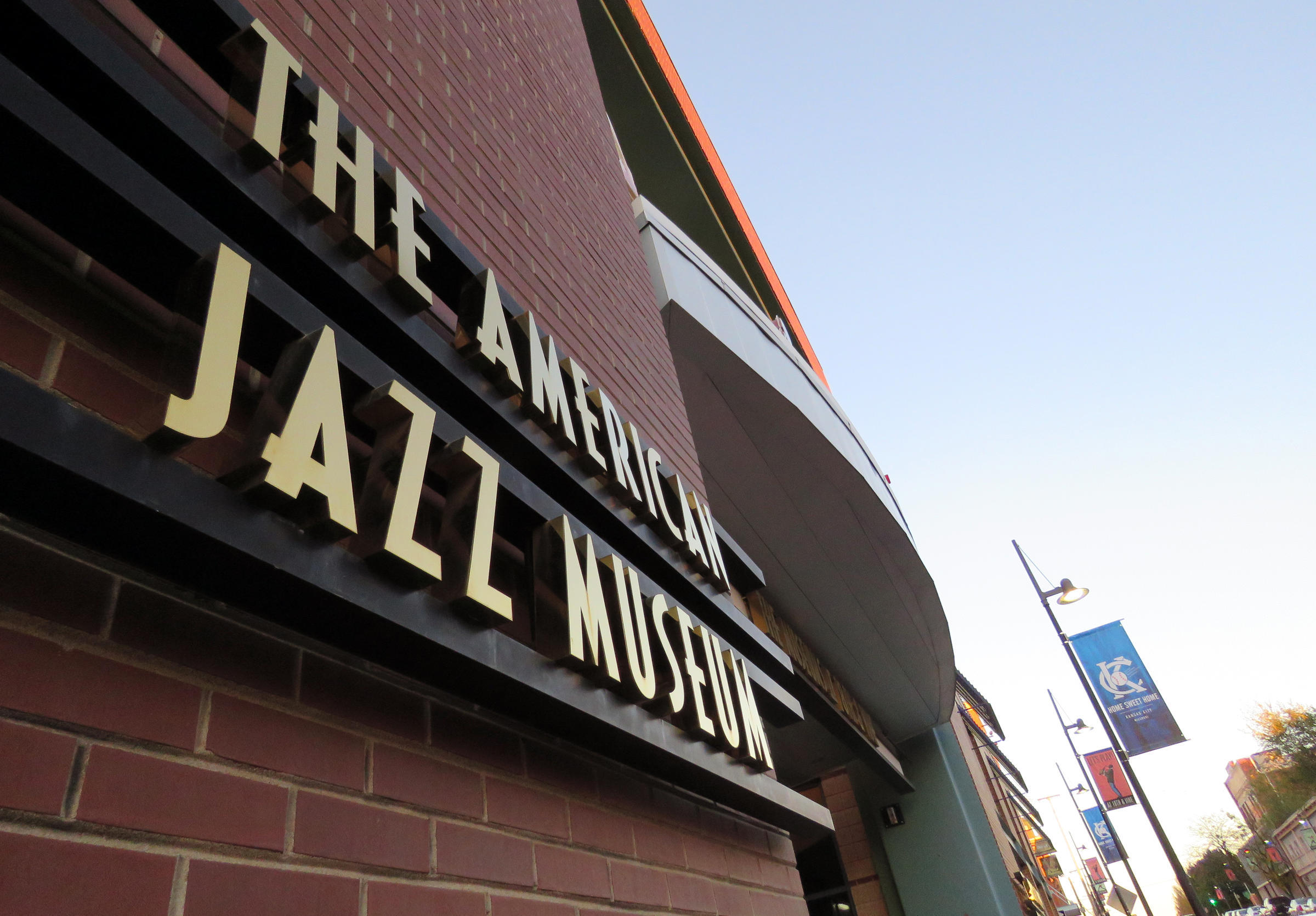
Kansas City’s American Jazz Museum Should Belong To The Entire City, Officials Say | KCUR

Kansas City’s American Jazz Museum Should Belong To The Entire City, Officials Say | KCUR

 
http://kcur.org/post/kansas-citys-american-jazz-museum-should-belong-entire-city-officials-say?mc_cid=a794e1a60a
 
Kansas City’s American Jazz Museum Should Belong To The Entire City, Officials Say
By LAURA SPENCER JUL 8, 2017
Tweet
Share
Google+
Email

  •                          The American Jazz Museum opened its doors 20 years ago this year.
ANDREA TUDHOPE / KCUR 89.3 


Financial woes at the American Jazz Museum aren’t sitting well with city and state officials. 
“I’m concerned, like a lot of other people, about what’s going on,” says Missouri Rep. Emanuel Cleaver. “I don’t think we ought to ignore this, ignore the problems, or dismiss them lightly.”
Over Memorial Day weekend, attendance at the museum’s inaugural Kansas City Jazz and Heritage Festival was disappointing. When it came time to pay the bills, 10 musicians, including eight from the Kansas City metro area, were issued checks that bounced.
Last week, an unpaid Kansas City musician brought the issue to public attention when he vented on social media. He’s since been issued a new check.
“I think it’s fair for anyone to say that this is significant,” says City Councilman Quinton Lucas, who represents the city’s 3rd District at-large and serves on the museum’s board of directors. “It’s disappointing.”
To meet payroll, the museum got an advance of $117,000 in city funds, extended its line of credit, and asked board members to chip in.
“The weather impacted us. On Saturday, it rained, so it impacted our income,” executive director Cheptoo Kositany-Buckner told The Kansas City Star on Thursday. 
According to Kositany-Buckner, the organization is “really digging deep” into the difficulties of this year’s festival. She said a strategic plan is in the works to seek more community support. 
“This museum is not a 3rd District museum,” she said. “It is the entire city’s museum.”
But Cleaver, who was instrumental in redeveloping the 18th and Vine Jazz District, says that is not the public perception. 
“The American Jazz Museum is viewed as a 3rd District museum, or project, or attraction,” Cleaver says. “And nothing else in the city is viewed that way.”
The museum is housed in a city-owned building, and its artifacts belong to the city. And the organization has relied on taxpayer dollars for two decades; about one-third of the museum’s budget comes from city subsidies.
Cleaver served as mayor of Kansas City, Missouri, from 1991 to 1999, and celebrated the opening of the district’s museums two decades ago. But, he says, in those early years he “made a mistake” with the American Jazz Museum that still reverberates, by defining its mission as tied to its location. 
“At the time, this was 20 years ago remember, my fear was that when I left office, we might not have an advocate for the museum, or for 18th and Vine, for that matter. And that it could eventually become ignored and collapse,” he says. “And that has to change.”
Cleaver says he expects to talk to city leaders about a mindset shift, “by having this as a project that the entire city is responsible for and committed to. If we do that, I think we can help solve some of the problems that we have right now.”
Lucas says the museum should seek out ideas from a variety of perspectives. 
“I think when you look at the successful museums in Kansas City, those that have broader buy-in from a larger community are the ones that are successful,” he says. 
“I think an ongoing challenge for the jazz museum is to consider itself as independent,” Lucas adds. “And I would say independent from the 3rd City Council district, independent from the city of Kansas City, Missouri.”
According to Lucas, the board and the administration need to get “on the right side of our financial books, make sure we’re cutting administrative costs, and enhancing our fundraising abilities and our revenue-generation.”
Plans call for hiring a chief financial officer to get the museum’s fiscal house in order.  
“This is the sort of thing that should never happen again,” Lucas says.
“When there’s something wrong, something like this, we got to fix it,” Cleaver adds.
The next board of directors meeting is scheduled for July 18. Museum officials are also expected to address financial concerns at the City Council’s finance and governance committee meeting on July 19.
Laura Spencer is an arts reporter at KCUR 89.3. You can reach her on Twitter @lauraspencer.


Jim Eigo Jazz Promo Services T: 845-986-1677 E-Mail: jim@jazzpromoservices.com
http://www.jazzpromoservices.com

HAVE A JAZZ EVENT, NEW CD OR IMPORTANT ANNOUNCEMENT FOR THE JAZZ COMMUNITY YOU WANT TO PROMOTE? CONTACT JAZZ PROMO SERVICES FOR PRICE QUOTE.

CHECK OUT OUR NEW YOUTUBE VIDEO

Unsubscribe | Update your profile | Forward to a friend

PLEASE NOTE: IF YOU DO NOT WISH TO BE ON THIS MAILING LIST PLEASE RESPOND WITH ‘REMOVE’ IN THE SUBJECT LINE. IF YOU ARE RECEIVING DUPLICATE EMAILS OUR APOLOGIES, JAZZ PROMO SERVICES ANNOUNCEMENT LIST IS GROWING LARGER EVERY DAY…..PLEASE LET US KNOW AND WE WILL FIX IT IMMEDIATELY!

Copyright (C) 2017 All rights reserved.

Jazz Promo Services

269 State Route 94 South

Warwick, Ny 10990

Add us to your address book

slide

Kelan Phil Cohran, influential Chicago composer-bandleader, dies at 90 – Chicago Tribune

Kelan Phil Cohran, influential Chicago composer-bandleader, dies at 90 – Chicago Tribune

http://www.chicagotribune.com/entertainment/music/reich/ct-kelan-phil-cohran-obit-ent-0630-20170629-column.html
 
Kelan Phil Cohran, influential Chicago composer-bandleader, dies at 90


Jim Eigo Jazz Promo Services T: 845-986-1677 E-Mail: jim@jazzpromoservices.com
http://www.jazzpromoservices.com

HAVE A JAZZ EVENT, NEW CD OR IMPORTANT ANNOUNCEMENT FOR THE JAZZ COMMUNITY YOU WANT TO PROMOTE? CONTACT JAZZ PROMO SERVICES FOR PRICE QUOTE.

CHECK OUT OUR NEW YOUTUBE VIDEO

Unsubscribe | Update your profile | Forward to a friend

PLEASE NOTE: IF YOU DO NOT WISH TO BE ON THIS MAILING LIST PLEASE RESPOND WITH ‘REMOVE’ IN THE SUBJECT LINE. IF YOU ARE RECEIVING DUPLICATE EMAILS OUR APOLOGIES, JAZZ PROMO SERVICES ANNOUNCEMENT LIST IS GROWING LARGER EVERY DAY…..PLEASE LET US KNOW AND WE WILL FIX IT IMMEDIATELY!

Copyright (C) 2017 All rights reserved.

Jazz Promo Services

269 State Route 94 South

Warwick, Ny 10990

Add us to your address book

slide

Capturing the Birth of Rock ‘n’ Roll – The New York Times

Capturing the Birth of Rock ‘n’ Roll – The New York Times

https://lens.blogs.nytimes.com/2017/07/06/capturing-the-birth-of-rock-n-roll-eddie-rocco/?action=click

View Slide Show9 Photographs
Credit
Eddie Rocco/Kicks Books
Capturing the Birth
of Rock ‘n’ Roll
By John Leland Jul. 6, 2017
Jul. 6, 2017
 
Eddie Rocco’s rock ‘n’ roll photos, taken in the 1950s and early 1960s for magazines like Sepia, Hep and Rhythm and Blues, seem to have had one aim: to let the good times roll. Not for him the brooding pose, the soulful gaze, the glimpse into the inner life of the creative artist. His was an aesthetic of action: hips swinging, pipes roaring, fingers popping, taffeta crumpling. Even when his subjects were lying down, as in his shot of the Carolina fireball Esquerita recumbent at a Texas diner (slide 2), they’ve got bounce by the ounce.
Mr. Rocco was a pro in a profession that had not yet come into its own, working as an in-house photographer for several rhythm and blues clubs, or for magazines riding a wave they thought might not last the year. It was music of the moment, and he captured the exhilaration of being in that moment, when the rest of the world ceases to exist and the frame captures life as a honking sax.
The Depression-era lexicon “American Tramp and Underworld Slang” says that the vernacular use of the word hip comes from “having one’s hip boots on — i.e., the way in which they protect the wearer from bad weather or dangerous currents is analogous to the way in which awareness or sophistication arms one against social perils.” By that definition, these pictures are the embodiment of hip. Inside these images social perils do not exist.
Photo

 
Chubby Checker giving Eddie Rocco a dance lesson.
Credit
Courtesy of Eddie Rocco/Kicks Books
Rock, it turned out, was here to stay, but not so Sepia or Ebony Song Parade magazines or the clubs where Mr. Rocco plied his trade. When Miriam Linna and Billy Miller of Kicks Books and Norton Records tracked him down and published “The Great Lost Photographs of Eddie Rocco” in 1997, most of his work had gone unseen for more than three decades, if it was ever seen at all. His name popped up in the Kennedy assassination literature because he had photographed in Jack Ruby’s Carousel Club in Dallas shortly before the shooting, and several of his images showed a man who looked like Lee Harvey Oswald — proof, some amateur sleuths said, that Ruby and Oswald were in cahoots. If the man was really Oswald, Mr. Rocco thought, the photos were worth a lot of money. But in the end, all he got was an unsuccessful lawsuit against Life magazine, which he claimed had accepted his negatives but neither published nor returned them.
After that, Ms. Linna said, Mr. Rocco vowed to never again work for American publications. He continued to shoot for European magazines into the 1970s but lived out his days modestly in Los Angeles — a heartbeat away from unimaginable fame, never to taste it for himself.


Jim Eigo Jazz Promo Services T: 845-986-1677 E-Mail: jim@jazzpromoservices.com
http://www.jazzpromoservices.com

HAVE A JAZZ EVENT, NEW CD OR IMPORTANT ANNOUNCEMENT FOR THE JAZZ COMMUNITY YOU WANT TO PROMOTE? CONTACT JAZZ PROMO SERVICES FOR PRICE QUOTE.

CHECK OUT OUR NEW YOUTUBE VIDEO

Unsubscribe | Update your profile | Forward to a friend

PLEASE NOTE: IF YOU DO NOT WISH TO BE ON THIS MAILING LIST PLEASE RESPOND WITH ‘REMOVE’ IN THE SUBJECT LINE. IF YOU ARE RECEIVING DUPLICATE EMAILS OUR APOLOGIES, JAZZ PROMO SERVICES ANNOUNCEMENT LIST IS GROWING LARGER EVERY DAY…..PLEASE LET US KNOW AND WE WILL FIX IT IMMEDIATELY!

Copyright (C) 2017 All rights reserved.

Jazz Promo Services

269 State Route 94 South

Warwick, Ny 10990

Add us to your address book

slide

Vintage Concert Flyer: 42 nights of jazz, folk, roc and pop in Wollman Rink Jun 11, 1967

Vintage Concert Flyer: 42 nights of jazz, folk, roc and pop in Wollman Rink Jun 11, 1967

v\:* {behavior:url(#default#VML);}
o\:* {behavior:url(#default#VML);}
w\:* {behavior:url(#default#VML);}
.shape {behavior:url(#default#VML);}

96

Normal
0

false
false
false

EN-US
X-NONE
X-NONE

/* Style Definitions */
table.MsoNormalTable
{mso-style-name:”Table Normal”;
mso-tstyle-rowband-size:0;
mso-tstyle-colband-size:0;
mso-style-noshow:yes;
mso-style-priority:99;
mso-style-parent:””;
mso-padding-alt:0in 5.4pt 0in 5.4pt;
mso-para-margin:0in;
mso-para-margin-bottom:.0001pt;
mso-pagination:widow-orphan;
font-size:10.0pt;
font-family:”Times New Roman”;}

With thanks to  Sid Gribetz for sharing


Jim Eigo Jazz Promo Services T: 845-986-1677 E-Mail: jim@jazzpromoservices.com
http://www.jazzpromoservices.com

HAVE A JAZZ EVENT, NEW CD OR IMPORTANT ANNOUNCEMENT FOR THE JAZZ COMMUNITY YOU WANT TO PROMOTE? CONTACT JAZZ PROMO SERVICES FOR PRICE QUOTE.

CHECK OUT OUR NEW YOUTUBE VIDEO

Unsubscribe | Update your profile | Forward to a friend

PLEASE NOTE: IF YOU DO NOT WISH TO BE ON THIS MAILING LIST PLEASE RESPOND WITH ‘REMOVE’ IN THE SUBJECT LINE. IF YOU ARE RECEIVING DUPLICATE EMAILS OUR APOLOGIES, JAZZ PROMO SERVICES ANNOUNCEMENT LIST IS GROWING LARGER EVERY DAY…..PLEASE LET US KNOW AND WE WILL FIX IT IMMEDIATELY!

Copyright (C) 2017 All rights reserved.

Jazz Promo Services

269 State Route 94 South

Warwick, Ny 10990

Add us to your address book

slide

NO MAPS ON MY TAPS – Leonard Maltin’s Movie Crazy

NO MAPS ON MY TAPS – Leonard Maltin’s Movie Crazy

v\:* {behavior:url(#default#VML);}
o\:* {behavior:url(#default#VML);}
w\:* {behavior:url(#default#VML);}
.shape {behavior:url(#default#VML);}

96

Normal
0

false
false
false

EN-US
X-NONE
X-NONE

/* Style Definitions */
table.MsoNormalTable
{mso-style-name:”Table Normal”;
mso-tstyle-rowband-size:0;
mso-tstyle-colband-size:0;
mso-style-noshow:yes;
mso-style-priority:99;
mso-style-parent:””;
mso-padding-alt:0in 5.4pt 0in 5.4pt;
mso-para-margin:0in;
mso-para-margin-bottom:.0001pt;
mso-pagination:widow-orphan;
font-size:10.0pt;
font-family:”Times New Roman”;}

 
http://leonardmaltin.com/no-maps-on-my-taps/
 
NO MAPS ON MY TAPS
CREATOR: gd-jpeg v1.0 (using IJG JPEG v80), quality = 90
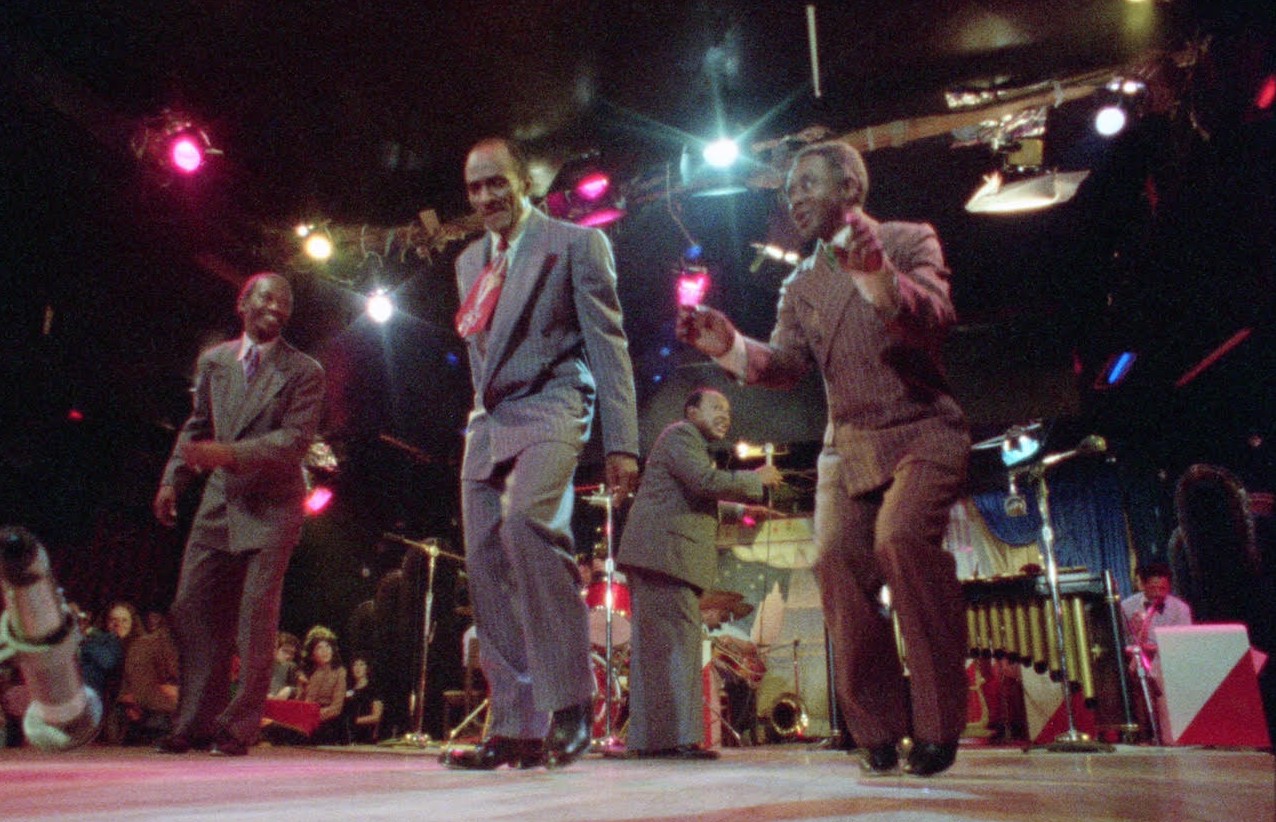
From LEFT: Howard “Sandman” Sims, Chuck Green and Bunny Briggs, co-stars of NO MAPS ON MY TAPS, on stage. NO MAPS ON MY TAPS a film by George T. Nierenberg and restored by Milestone Films
I can’t believe it’s been almost forty years since I first saw this enchanting documentary. Now, thanks to Milestone Films, I’ve had a chance to revisit it and I’ve fallen in love with it all over again. Filmmaker George T. Nierenberg presents a poignant, intimate portrait of three gifted men who represent a bygone era of tap dancing: Chuck Green, Bunny Briggs, and Sandman Sims. They worked in vaudeville and nightclubs but for the most part they acquired their skills on the sidewalks of New York. An older generation of dancers were generous with advice and know-how, and they are also part of this story. No documentary about tap dancing would be complete without footage of Bill “Bojangles” Robinson, but the clip that blows me away features John Bubbles in the 1937 feature Varsity Show. Bubbles was a huge influence on a generation who followed in his (literal) footsteps; he appears in this film in a telephone conversation, as a stroke put an end to his dancing career.

The framework for No Maps on My Taps is a performance at the legendary Small’s Paradise nightclub in Harlem, where the exuberant Lionel Hampton and his band provide backup for a “challenge dance” competition. Green, Briggs and Sims have entirely different approaches to the art of tap dancing, and in candid interviews they tell their stories—the hard-knock experiences that shaped them and came out in their work. They thrive on competition but there is no venom in what they do—just pure, unadulterated joy.
My wife and I were lucky enough to see all these artists, and others of their generation, in person in the 1970s and 80s. Thank goodness George Nierenberg captured them, both on and off-stage, in this glorious film where they will live forever.
Accompanying No Maps on My Taps is a half-hour film called About Tap where we meet other masters of Terpsichore: Jimmy Slyde, the incredible Steve Condos, and the man who carried on their tradition, the late, great Gregory Hines. It is a fitting sidebar to the main attraction and another reminder of an art form that was too often taken for granted.
No Maps on My Taps and About Tap open today at the Quad Cinema in Manhattan. To learn more, click HERE.


Jim Eigo Jazz Promo Services T: 845-986-1677 E-Mail: jim@jazzpromoservices.com
http://www.jazzpromoservices.com

HAVE A JAZZ EVENT, NEW CD OR IMPORTANT ANNOUNCEMENT FOR THE JAZZ COMMUNITY YOU WANT TO PROMOTE? CONTACT JAZZ PROMO SERVICES FOR PRICE QUOTE.

CHECK OUT OUR NEW YOUTUBE VIDEO

Unsubscribe | Update your profile | Forward to a friend

PLEASE NOTE: IF YOU DO NOT WISH TO BE ON THIS MAILING LIST PLEASE RESPOND WITH ‘REMOVE’ IN THE SUBJECT LINE. IF YOU ARE RECEIVING DUPLICATE EMAILS OUR APOLOGIES, JAZZ PROMO SERVICES ANNOUNCEMENT LIST IS GROWING LARGER EVERY DAY…..PLEASE LET US KNOW AND WE WILL FIX IT IMMEDIATELY!

Copyright (C) 2017 All rights reserved.

Jazz Promo Services

269 State Route 94 South

Warwick, Ny 10990

Add us to your address book

slide

Woody Allen & His New Orleans Jazz Band – a musician of ‘awful dreadfulness’? Not at all | Music | The Guardian

Woody Allen & His New Orleans Jazz Band – a musician of ‘awful dreadfulness’? Not at all | Music | The Guardian

v\:* {behavior:url(#default#VML);}
o\:* {behavior:url(#default#VML);}
w\:* {behavior:url(#default#VML);}
.shape {behavior:url(#default#VML);}

96

Normal
0

false
false
false

EN-US
X-NONE
X-NONE

/* Style Definitions */
table.MsoNormalTable
{mso-style-name:”Table Normal”;
mso-tstyle-rowband-size:0;
mso-tstyle-colband-size:0;
mso-style-noshow:yes;
mso-style-priority:99;
mso-style-parent:””;
mso-padding-alt:0in 5.4pt 0in 5.4pt;
mso-para-margin:0in;
mso-para-margin-bottom:.0001pt;
mso-pagination:widow-orphan;
font-size:10.0pt;
font-family:”Times New Roman”;}

Woody Allen & His New Orleans Jazz Band – a musician of ‘awful dreadfulness’? Not at all | Music | The Guardian
John Fordham  Monday 3 July 2017 12.22 BST
 

Relaxed and loquacious … Woody Allen. Photograph: Marc Broussely/Redferns
Back in his standup days in the 1960s, Woody Allen used to tell audiences that his grandfather was a man of such insignificance that at his funeral his hearse followed the other cars. Now 81, Allen takes much the same deferential view of his status in the vintage jazz band he’s played clarinet with in upmarket New York bars for over 35 years. Allen recently told the Today programme that “a musician of my awful dreadfulness” could only fill such an august establishment as the Royal Albert Hall by having international moviestardom for a day job. As his band genially swung and mournfully wailed its way through early 20th-century jazz vehicles on Sunday afternoon in a rammed Albert Hall, it was hard to disagree. Allen’s early contributions felt rather stilted and bleaty, but once he settled down it was, for the most part, apparent that his clarinet playing was closer to the superior-amateur than the awful-dreadfulness class.
Allen has been a jazz fan since his teens, which came in a postwar world where the nervy, virtuosic intricacies of bebop were dominant. But he preferred the singalong melodies and vivacious ragtime rhythms of the Jazz Age, before he was born, perhaps suggesting, as movies like Zelig or Sweet and Lowdown do, that he finds a romanticised past a more hospitable place than the present.
Indeed, Allen’s only nod to the present day was his opening statement, “I didn’t vote for him”, after which he made it plain that an entertaining faithfulness to jazz’s source material rather than bowler-hats-and-waistcoats showbiz was the point of the gig. For much of the show, Allen adopted an impassive seated pose, one beige-trousered leg slung over the other, grounded foot firmly tapping the beat, but he was more relaxed and loquacious with the audience – a strikingly diverse crowd – than he has been on previous London trips with the band.

‘I didn’t vote for him!’ Woody Allen and his clarinet at the Royal Albert Hall. Photograph: Marc Broussely/Redferns
Allen’s phrasing more frequently suggests the quirks and voicelike mannerisms of such clarinetists as Louis Armstrong’s 1920s partner Johnny Dodds rather than his first teenage model, Sidney Bechet. In his purer-toned moments, Allen’s clarinet glimpses the lyricism of New Orleans pioneer George Lewis. His band was polished and warmly attuned to the mix of bright dance tunes, racy bordello songs, street-marches and melancholy spirituals on which it draws. Trumpeter Simon Wettenhall was a standout soloist, bridging the bar-lines and embroidering the fills with an unhurried eloquence that packed far more improv into the tight confines of the tunes than they seemed to allow. WC Handy’s Aunt Hagar’s Blues was sung with economical affection by singer-banjoist Eddy Davis; the darkly shimmering Old Rugged Cross and the Latin-tinged Puerto Rico represented contrasts of mood the concert could have used a little more of (both drew Allen out of his defensively staccato phrasing into some expressive long-tone lyricism); bassist Greg Cohen showed how effortlessly he makes the transition from Tom Waits’ and the late Ornette Coleman’s music to this contrasting scenario; and the much-travelled Sweet Georgia Brown was delivered over a slinky groove with an affecting tenderness rather than the freneticism it often receives.

Polished and warm… Woody Allen and his New Orleans Jazz Band at the Royal Albert Hall. Photograph: Andy Hall for the Observer
The US gave the world the art forms of cinema and jazz in the 20th century; Woody Allen has been a brilliant practitioner of the first, and a high-profile if technially unsteady flag-waver for the often overlooked early history of the second. Though jazz coalesced in New Orleans, the most cosmopolitan of towns, African Americans gave it some of its most vivid nuances – a contribution Allen doesn’t altogether emphasise in either his bands or the jazz stories in his films. But he devotedly loves the music of African American giants such as Armstrong, Bechet and Jelly Roll Morton – and as this show confirmed, he picks pretty good company to help him express it.


Jim Eigo Jazz Promo Services T: 845-986-1677 E-Mail: jim@jazzpromoservices.com
http://www.jazzpromoservices.com

HAVE A JAZZ EVENT, NEW CD OR IMPORTANT ANNOUNCEMENT FOR THE JAZZ COMMUNITY YOU WANT TO PROMOTE? CONTACT JAZZ PROMO SERVICES FOR PRICE QUOTE.

CHECK OUT OUR NEW YOUTUBE VIDEO

Unsubscribe | Update your profile | Forward to a friend

PLEASE NOTE: IF YOU DO NOT WISH TO BE ON THIS MAILING LIST PLEASE RESPOND WITH ‘REMOVE’ IN THE SUBJECT LINE. IF YOU ARE RECEIVING DUPLICATE EMAILS OUR APOLOGIES, JAZZ PROMO SERVICES ANNOUNCEMENT LIST IS GROWING LARGER EVERY DAY…..PLEASE LET US KNOW AND WE WILL FIX IT IMMEDIATELY!

Copyright (C) 2017 All rights reserved.

Jazz Promo Services

269 State Route 94 South

Warwick, Ny 10990

Add us to your address book

slide

Pierre Henry, Innovative Musique Concrète Composer, Dead at 89 | SPIN

Pierre Henry, Innovative Musique Concrète Composer, Dead at 89 | SPIN

v\:* {behavior:url(#default#VML);}
o\:* {behavior:url(#default#VML);}
w\:* {behavior:url(#default#VML);}
.shape {behavior:url(#default#VML);}

96

Normal
0

false
false
false

EN-US
X-NONE
X-NONE

/* Style Definitions */
table.MsoNormalTable
{mso-style-name:”Table Normal”;
mso-tstyle-rowband-size:0;
mso-tstyle-colband-size:0;
mso-style-noshow:yes;
mso-style-priority:99;
mso-style-parent:””;
mso-padding-alt:0in 5.4pt 0in 5.4pt;
mso-para-margin:0in;
mso-para-margin-bottom:.0001pt;
mso-pagination:widow-orphan;
font-size:10.0pt;
font-family:”Times New Roman”;}

 
http://www.spin.com/2017/07/pierre-henry-obituary/
 
Pierre Henry, Innovative French Composer, Dead at 89


Pierre Henry, the influential French composer of electronic and electroacoustic music and sampling pioneer, has passed away at the age of 89.
 
Henry, a trained composer who studied with legendary French composer Olivier Messiaen, is known for establishing the GRMC (Groupe de Recherche de Musique Concrète). The group, which translates to “Research Group into Concrete Music,” was founded in 1951 along with his early colleague and radio professional Pierre Schaeffe. The group was a hub for experimenting with making tape music in which found sounds and music transferred from turntables and phonographs were manipulated to create new pieces of noise-heavy music.
 
Henry composed the first work of musique concrete to be used in a commercial film, his 1952 work Astrologie ou le miroir de la vie. Later, Henry would establish the first private electronic music studio in France, the Apsone-Cabasse Studio, in 1960.
 
Henry’s style evolved with changing trends, and in the 1960s and 1970s, he experimented with rock. In 1970, he released a collaborative album with UK psych band Spooky Tooth and working with the Violent Femmes on “The Story” from their 2000 album Freak Magnet. His own bells-and-guitar-driven 1967 rock experiment “Psyché Rock” is perhaps his best-known piece. Borrowed from a longer ballet score he wrote, it was remixed by Fatboy Slim and formed the basis for composer Christopher Tyng’s theme song for Futurama.
Listen to some of Henry’s works below. [Le Monde]
 
 
Pierre Schaeffer & Pierre Henry – Symphonie Pour Un Homme Seul (1949–1950)


<div class=”player-unavailable”><h1 class=”message”>An error occurred.</h1><div class=”submessage”><a href=”http://www.youtube.com/watch?v=zpOD7GQbd8Q” target=”_blank”>Try watching this video on www.youtube.com</a>, or enable JavaScript if it is disabled in your browser.</div></div>
 
 
Pierre Henry – Messe Pour Le Temps Present 1967


<div class=”player-unavailable”><h1 class=”message”>An error occurred.</h1><div class=”submessage”><a href=”http://www.youtube.com/watch?v=t4kh9OVFaJc” target=”_blank”>Try watching this video on www.youtube.com</a>, or enable JavaScript if it is disabled in your browser.</div></div>
 
 
Pierre Henry: Prismes (1973)


<div class=”player-unavailable”><h1 class=”message”>An error occurred.</h1><div class=”submessage”><a href=”http://www.youtube.com/watch?v=EiwyZtR6Pk4″ target=”_blank”>Try watching this video on www.youtube.com</a>, or enable JavaScript if it is disabled in your browser.</div></div>
 
 
Spooky Tooth with Pierre Henry – Prayer


<div class=”player-unavailable”><h1 class=”message”>An error occurred.</h1><div class=”submessage”><a href=”http://www.youtube.com/watch?v=rXzNWFw1btA” target=”_blank”>Try watching this video on www.youtube.com</a>, or enable JavaScript if it is disabled in your browser.</div></div>


Jim Eigo Jazz Promo Services T: 845-986-1677 E-Mail: jim@jazzpromoservices.com
http://www.jazzpromoservices.com

HAVE A JAZZ EVENT, NEW CD OR IMPORTANT ANNOUNCEMENT FOR THE JAZZ COMMUNITY YOU WANT TO PROMOTE? CONTACT JAZZ PROMO SERVICES FOR PRICE QUOTE.

CHECK OUT OUR NEW YOUTUBE VIDEO

Unsubscribe | Update your profile | Forward to a friend

PLEASE NOTE: IF YOU DO NOT WISH TO BE ON THIS MAILING LIST PLEASE RESPOND WITH ‘REMOVE’ IN THE SUBJECT LINE. IF YOU ARE RECEIVING DUPLICATE EMAILS OUR APOLOGIES, JAZZ PROMO SERVICES ANNOUNCEMENT LIST IS GROWING LARGER EVERY DAY…..PLEASE LET US KNOW AND WE WILL FIX IT IMMEDIATELY!

Copyright (C) 2017 All rights reserved.

Jazz Promo Services

269 State Route 94 South

Warwick, Ny 10990

Add us to your address book

slide

FOLMC | Vintage Vinyl Record Auction

FOLMC | Vintage Vinyl Record Auction

v\:* {behavior:url(#default#VML);}
o\:* {behavior:url(#default#VML);}
w\:* {behavior:url(#default#VML);}
.shape {behavior:url(#default#VML);}

96

Normal
0

false
false
false

EN-US
X-NONE
X-NONE

/* Style Definitions */
table.MsoNormalTable
{mso-style-name:”Table Normal”;
mso-tstyle-rowband-size:0;
mso-tstyle-colband-size:0;
mso-style-noshow:yes;
mso-style-priority:99;
mso-style-parent:””;
mso-padding-alt:0in 5.4pt 0in 5.4pt;
mso-para-margin:0in;
mso-para-margin-bottom:.0001pt;
mso-pagination:widow-orphan;
font-size:10.0pt;
font-family:”Times New Roman”;}

 
https://www.folmc.org/events-calendar/vinyl-record-auction/
 
Vintage Vinyl Record Auction

Rockville Bookstore
Saturday, July 15, 2017 @ 12 p.m.
The inaugural auction was such a success that the Rockville Bookstore will hold another record auction.
On the block are collectibles such as:

  • Thriller picture disc
  • Half-speed masters
  • Cannonball Adderley, Herbie Hancock, and others on Blue Note
  • Jack McDuff on Prestige
  • David Bowie in shrink
  • White-label promos
  • Dylan, Sinatra, Springsteen
  • Soul Station by Hank Mobley

Preview will be held on Friday, July 14 from 10 a.m to 6 p.m. Proxy and remote bids are welcome. Email bookstores@folmc.org to inquire about proxy bidding and for more information.
Click here to view the catalog.
Optimized by JPEGmini 3.9.20.0L Internal 0x2a49db8b     
 
JOIN THE RECORDS MAILING LIST
Whether you’re just discovering vinyl or are a die hard collector, we encourage you to join our Records mailing list, which will have updates on vinyl at the bookstores, including upcoming Vintage Vinyl Record Auctions. To join the mailing list, please send an email to bookstores@folmc.org.


Jim Eigo Jazz Promo Services T: 845-986-1677 E-Mail: jim@jazzpromoservices.com
http://www.jazzpromoservices.com

HAVE A JAZZ EVENT, NEW CD OR IMPORTANT ANNOUNCEMENT FOR THE JAZZ COMMUNITY YOU WANT TO PROMOTE? CONTACT JAZZ PROMO SERVICES FOR PRICE QUOTE.

CHECK OUT OUR NEW YOUTUBE VIDEO

Unsubscribe | Update your profile | Forward to a friend

PLEASE NOTE: IF YOU DO NOT WISH TO BE ON THIS MAILING LIST PLEASE RESPOND WITH ‘REMOVE’ IN THE SUBJECT LINE. IF YOU ARE RECEIVING DUPLICATE EMAILS OUR APOLOGIES, JAZZ PROMO SERVICES ANNOUNCEMENT LIST IS GROWING LARGER EVERY DAY…..PLEASE LET US KNOW AND WE WILL FIX IT IMMEDIATELY!

Copyright (C) 2017 All rights reserved.

Jazz Promo Services

269 State Route 94 South

Warwick, Ny 10990

Add us to your address book

slide

The Rarest, Most Expensive Vinyl Records In The World | Digital Trends

The Rarest, Most Expensive Vinyl Records In The World | Digital Trends

v\:* {behavior:url(#default#VML);}
o\:* {behavior:url(#default#VML);}
w\:* {behavior:url(#default#VML);}
.shape {behavior:url(#default#VML);}

96

Normal
0

false
false
false

EN-US
X-NONE
X-NONE

/* Style Definitions */
table.MsoNormalTable
{mso-style-name:”Table Normal”;
mso-tstyle-rowband-size:0;
mso-tstyle-colband-size:0;
mso-style-noshow:yes;
mso-style-priority:99;
mso-style-parent:””;
mso-padding-alt:0in 5.4pt 0in 5.4pt;
mso-para-margin:0in;
mso-para-margin-bottom:.0001pt;
mso-pagination:widow-orphan;
font-size:10.0pt;
font-family:”Times New Roman”;}

 
https://www.digitaltrends.com/music/most-expensive-vinyl-records/
 
These drool-worthy albums are among the most expensive vinyl records on Earth
By Parker Hall — Updated July 5, 2017 9:23 am

As more and more listeners embrace the vinyl resurgence, vinyl fans around the world are increasingly on the hunt for the coolest wax to spin on their newly acquired analog hi-fis. We’d all love to find that hidden first pressing of Sgt. Peppers at the local record shop. But the rarest, most expensive vinyl records in the world aren’t for playing — unless you’re just that baller. Worth hundreds of thousands of dollars in some cases, the world’s most sought after records aren’t just antiques or even works of art, they’re tangible time stamps of rock ‘n roll history, each with its own story to tell.
To tell those stories we’ve compiled a list of some of the most expensive and drool-worthy vinyl records on the planet. And while none of us will likely get our paws on any of these gems, a vinyl fan can dream. So follow us below for the rarest, strangest, and just plain coolest cuts ever pressed. While you’re at it, be sure to check out our vinyl tips on everything from how to buy and store your first vinyl collection, to which are the best record players and phono preamps to nab so you can build a killer turntable setup of your own.
Elvis Presley, My Happiness acetate — $300,000
 
 
Elvis’ 1st Recording Digitally Transferred at the Country Music Hall of Fame


<div class=”player-unavailable”><h1 class=”message”>An error occurred.</h1><div class=”submessage”><a href=”http://www.youtube.com/watch?v=wvtSMMaYUug” target=”_blank”>Try watching this video on www.youtube.com</a>, or enable JavaScript if it is disabled in your browser.</div></div>
The earliest known pressing of the King himselfMy Happiness was recorded at Sun Studios in Memphis well before Elvis became a worldwide sensation. Famed rock and roller Jack White quietly purchased the one-off pressing for $300,000 in January of 2015, but unlike some collectors he used his purchase for the good of all. White had the record professionally reproduced for Record Store Day that year by his label, Third Man Records. Now collectors around the world can (sort of) own a piece of history.
Long Cleve Reed & Little Harvey Hill, Original Stack O’Lee Blues 78 rpm in plain sleeve — $50,000
 
 
Long Cleeve Reed & Little Harvey Hull-Down Home Boys Original Stack O’Lee Blues BLACK PATTI 8030


<div class=”player-unavailable”><h1 class=”message”>An error occurred.</h1><div class=”submessage”><a href=”http://www.youtube.com/watch?v=9CfmZ1-CQbo” target=”_blank”>Try watching this video on www.youtube.com</a>, or enable JavaScript if it is disabled in your browser.</div></div>
Famed record collector Joe Brussard was reportedly once offered $70,000 for this incredibly rare 78-rpm single by Long Cleve Reed & Little Harvey Hill, a classic blues cut with beautiful vocal harmonies of which there is only one known copy. Albums in the 78-rpm category are often sought after by collectors for their rarity and because they were the first records that showcased electrical recording technology, where sound was recorded via microphone, amplified by vacuum tubes, and then cut to vinyl.
The Sex Pistols, God Save The Queen cancelled single — $10,000-20,000

Only nine known copies of A&M Records’ 25,000-run pressing of God Save the Queen survived the Sex Pistols’ short-lived tenure on the label, the vast majority having been destroyed by the label itself shortly after their creation. The iconic punk band reportedly only lasted six days on the label before their antics — which apparently included frontman Sid Vicious cutting his foot and getting blood all over the label’s corporate offices — got them axed. The single was later released by Virgin and did well on British charts, but was deemed unplayable by the BBC for its controversial lyrics and album cover. Now that’s rock ‘n roll.
Frank Wilson, Do I Love You (Indeed I Do) 45 rpm in plain sleeve — $37,000

There are only two known copies of this rare 45-rpm northern soul track by Frank Wilson, Do I Love You (Indeed I Do), one of which sold for $37,000 in 2009. Because of its extremely niche status in Northern England — and the fact that most artists were signed to American soul outlets like Motown — many northern soul records are so rare that only a handful of copies ever existed of each, making them prime targets for serious collectors.
Aphex Twin, Caustic Window test pressing — $46,000

One of five extremely rare test pressings of renowned British electronic musician Richard D. James’ (Aphex Twin) abandoned early-’90s album, Caustic Window, this record was originally purchased on Discogs in 2014 and distributed digitally via a Kickstarter campaign. While the original release was scuttled, the album received much critical praise upon re-release, with many fans sighting James’ prescient look into the future of dance music. The disc was eventually sold to Minecraft creator and ridiculous high roller, Markus Persson.
Bob Dylan, The Freewheelin’ Bob Dylan (withdrawn version) — $35,000

Any Bob Dylan fan knows the musician’s acclaimed album The Freewheelin’ Bob Dylan, but not many know there was originally a U.S.-only version with four extra songs on it. The original release was retracted, and includes rare versions of Rocks and Gravel, Let Me Die in My Footsteps, Gamblin’ Willie’s Dead Man’s Head, and Talkin’ John Birch Blues alongside the classic release we all know and love. The inclusion makes this record much more than just a rarity to hang on the wall.
The Quarrymen, That’ll Be The Day/In Spite of Anger acetate — $250,000

This 78-rpm acetate of John Lennon and Paul McCartney’s pre-Beatles band The Quarrymen playing That’ll Be the Day and In Spite of All the Danger is the only one of its kind. Valued by Record Collector magazine in 2012 at around $250,000, the original disc from the early days of one of the greatest songwriting teams in history currently sits in the private collection of McCartney himself. However, McCartney did press 50 copies in the early ’80s, each of which is still worth a hefty (though less astonishing) sum of around $10,000-$13,000. According to Discogs, McCartney gave them out to friends as a Christmas present — a kingly gift that’s just one more reason we wish Sir Paul would answer our evites.
Jean Michel Jarre, Music for Supermarkets — $14,000-33,500

Only a single copy of famed French electronic musician Jean Michel Jarre’s Musique Pour Supermarche (Music For Supermarkets in English) was ever pressed, made as part of a supermarket-themed art exhibit in Paris in 1983. The single vinyl disc was sold for $14,000 that year (approximately $33,500 in today’s market). It’s notable in that it was designed to be treated as a work of art, rather than something to be reproduced — the artist purposefully had the master plates destroyed in order to keep it as a one-of-a-kind release, making the title especially ironic.
Velvet Underground & Nico, The Velvet Underground & Nico acetate in plain sleeve with alternate tracks — $25,000

This 1966 acetate pressing contains early versions of songs that would end up on acclaimed classic The Velvet Underground & Nico, and is the only copy known to exist. Originally purchased at a New York record store for 75 cents in 2002, this is a rare case of finding that vinyl pot of gold among the rubble: The album was later sold on eBay for $25,200. The classic songs were recorded by engineer Norman Dolph, who was traded an original Andy Warhol painting by the man himself (Warhol was the band’s manager at the time) in lieu of cash.
The Beatles, The Beatles (White Album) No. 0000001 — $790,000

We’ll finish the list off with a bang, in the form of the most expensive record ever made. Band members and executives associated with The Beatles received special, serial-numbered versions of the band’s acclaimed self-titled “White” album when it was first released. Though they are each extremely valuable, this particular record — number 0000001 — is the rarest of the bunch. Originally owned and stored by Ringo Starr, the record was sold by the Beatle at auction for $790,000 in 2015 according to Guinness, a sum that remains the most ever paid for a commercial album.


Jim Eigo Jazz Promo Services T: 845-986-1677 E-Mail: jim@jazzpromoservices.com
http://www.jazzpromoservices.com

HAVE A JAZZ EVENT, NEW CD OR IMPORTANT ANNOUNCEMENT FOR THE JAZZ COMMUNITY YOU WANT TO PROMOTE? CONTACT JAZZ PROMO SERVICES FOR PRICE QUOTE.

CHECK OUT OUR NEW YOUTUBE VIDEO

Unsubscribe | Update your profile | Forward to a friend

PLEASE NOTE: IF YOU DO NOT WISH TO BE ON THIS MAILING LIST PLEASE RESPOND WITH ‘REMOVE’ IN THE SUBJECT LINE. IF YOU ARE RECEIVING DUPLICATE EMAILS OUR APOLOGIES, JAZZ PROMO SERVICES ANNOUNCEMENT LIST IS GROWING LARGER EVERY DAY…..PLEASE LET US KNOW AND WE WILL FIX IT IMMEDIATELY!

Copyright (C) 2017 All rights reserved.

Jazz Promo Services

269 State Route 94 South

Warwick, Ny 10990

Add us to your address book

slide

Cornelia Street Café Celebrates 40 Years, With Some Concerns – The New York Times

Cornelia Street Café Celebrates 40 Years, With Some Concerns – The New York Times

v\:* {behavior:url(#default#VML);}
o\:* {behavior:url(#default#VML);}
w\:* {behavior:url(#default#VML);}
.shape {behavior:url(#default#VML);}

96

Normal
0

false
false
false

EN-US
X-NONE
X-NONE

/* Style Definitions */
table.MsoNormalTable
{mso-style-name:”Table Normal”;
mso-tstyle-rowband-size:0;
mso-tstyle-colband-size:0;
mso-style-noshow:yes;
mso-style-priority:99;
mso-style-parent:””;
mso-padding-alt:0in 5.4pt 0in 5.4pt;
mso-para-margin:0in;
mso-para-margin-bottom:.0001pt;
mso-pagination:widow-orphan;
font-size:10.0pt;
font-family:”Times New Roman”;}

 
https://www.nytimes.com/2017/07/05/arts/music/cornelia-street-cafe-40th-anniversary.html?nl=todaysheadlines
 
Cornelia Street Café Celebrates 40 Years, With Some Concerns
By GIOVANNI RUSSONELLOJULY 5, 2017


Sheila Jordan and Robin Hirsch at the Cornelia Street Café’s 40th anniversary show. Hilary Swift for The New York Times
On Tuesday evening, the vocalist Sheila Jordan stood with her feet squarely planted on the Cornelia Street Café’s underground stage and a bright and teasing expression on her face. She had just launched into “Sheila’s Blues,” her signature tune, a half-spoken paean to the powers and infatuations of bebop.
At 88, Ms. Jordan’s voice still has the qualities that made it startling in the 1950s: A little dusty, a little callow, it’s not broad of tone and doesn’t naturally fill a room; instead she commands the space with vim and style. On Tuesday there was plenty of space: Her only accompanists on the club’s stage were the bassist Cameron Brown and the trumpeter John McNeil, who took a couple of deliberate, bop-inflected solos.
A National Endowment for the Arts Jazz Master, Ms. Jordan has played this basement, which fits about 80, for a little more than a decade. On Tuesday she was there to kick off a night celebrating the club’s 40th anniversary. She capped it with an entreaty to support the space, which is celebrating the milestone cautiously as it watches its rent climb and establishments close along its one-block street in the West Village.
Ms. Jordan sang three songs, then handed the microphone to the club’s owner, Robin Hirsch, who proceeded to M.C. a nightlong revue featuring a number of Cornelia Street Café regulars. The comedian and storyteller Jennifer Rawlings narrated her experiences doing stand-up comedy at military bases in Iraq. The singer and Appalachian dulcimer player David Massengill performed a song he’d written decades ago as part of the Songwriters Exchange, an informal workshop housed at the club in the 1970s and ’80s; it was a happy jumble of ribald metaphors, tinged with a youthful vulnerability that still seemed to suit him. Zero Boy, a vocal sound-effects maestro, detonated peals of laughter across the audience. The pianist Ellen Mandel, with help from the vocalists Verena McBee and Jessica Crandall, performed a composition of slow and lapping harmonies, using verses by the Irish poet Seamus Heaney.
From its inception, the Cornelia Street Café has claimed a liberated identity, equally linked to the worlds of folk music, literature, Off Off Broadway and jazz. The club opened on the Fourth of July weekend in 1977, in what had been a broken-down storefront. Three artists — an Italian-Canadian visual artist, an Irish writer and director, and an English actor whose parents had escaped the Holocaust in Germany — rented the space and set about refurbishing it themselves. In its earliest days, the cafe offered little more than coffee and tea; its kitchen was a toaster. (Today, the ground floor has a creditable restaurant; the entertainment moved downstairs in the 1980s.)
Even at the start, the cafe was already something of an anachronism. Its heavy doses of poetry and folk music recalled the folk revival and beat scene of the 1950s and early ’60s. The folk singer and songwriter Suzanne Vega gave some of her first public performances at the cafe, where she took part in the Songwriters Exchange, and Eve Ensler read her “Vagina Monologues” there for the first time. Jazz became a mainstay too, and since the 1980s the cafe has been a refuge for many left-of-center improvisers, even as neighborhood clubs like Sweet Basil and the Village Gate have folded.
Mr. Hirsch and his team are sweating now, though. Their rent for the restaurant and basement space, at $33,000 a month, is 77 times what it was when the club opened (that’s not adjusting for inflation — but, in the name of consistency, they’re not charging $77 for a croissant). This year saw the closure of two longstanding restaurants on the block: Home and Pó, which had been Mario Batali’s first eatery.
But on Tuesday, there was an air of continuity. For the last 12 years, the storied composer and multi-instrumentalist David Amram, 86, has held down a monthly residency. He performs every first Monday of the month, and on Tuesday afternoon he followed the previous night’s marathon show with a two-hour set under the baking sun on the Cornelia Street sidewalk.

 
David Amram performing outside the cafe. Hilary Swift for The New York Times
In a sense Mr. Amram is the perfect avatar of the club’s offbeat ecumenicalism. He played French horn with Charles Mingus and Dizzy Gillespie, as well as the National Symphony Orchestra; he was Leonard Bernstein’s first composer in residence at the New York Philharmonic, and has composed over 100 works for orchestra and chamber ensemble; he wrote the music for “Pull My Daisy,” the short film derived from Jack Kerouac’s play “Beat Generation.”
On Tuesday afternoon he alternated between keyboard and flutes, performing with three percussionists and a bass player. Avuncular and masterfully idiosyncratic, he played with a nostalgic whimsy, leaping from the title composition he wrote for Arthur Miller’s “After the Fall” to “What a Wonderful World” — a nod to Louis Armstrong’s apocryphal birth date of July 4, 1900. Mr. Amram was not trying to prove very much, but the crowd of a few dozen — which included the jazz pianist Matthew Shipp, all three of the club’s original owners (two of whom departed years ago) and a smattering of other regulars — was in an indulgent mood.
Between songs, Mr. Amram told of meeting Woody Guthrie, and gave brief philosophical orations in a beatnik patter. “Instead of wondering where else you should have been if you weren’t here right now, look around and appreciate all the beauty that’s right here around us,” he said, declaring his allegiance to the alleyways of Lower Manhattan and pulling on the last syllable like a trombonist finishing a solo.
The routine has its appeal, but it wore thin eventually. Just in time, he called up Elizabeth Aklilu, a server at the cafe, still clad in her all-black uniform and apron, to sing “Summertime.” The band didn’t have all the chord changes worked out, and couldn’t quite settle on a rhythmic feel, but Ms. Aklilu’s voice — melismatic and commanding, construction-paper thick in the middle register and syrupy down low — took you by surprise. In a time of peak branding, there’s something to be said for a club whose only pledge is unpredictability.

 
Michael McGuigan, center, outside the cafe, with the Shinbone Alley Stilt Band, part of the nearby Bond Street Theater. Hilary Swift for The New York Times


Jim Eigo Jazz Promo Services T: 845-986-1677 E-Mail: jim@jazzpromoservices.com
http://www.jazzpromoservices.com

HAVE A JAZZ EVENT, NEW CD OR IMPORTANT ANNOUNCEMENT FOR THE JAZZ COMMUNITY YOU WANT TO PROMOTE? CONTACT JAZZ PROMO SERVICES FOR PRICE QUOTE.

CHECK OUT OUR NEW YOUTUBE VIDEO

Unsubscribe | Update your profile | Forward to a friend

PLEASE NOTE: IF YOU DO NOT WISH TO BE ON THIS MAILING LIST PLEASE RESPOND WITH ‘REMOVE’ IN THE SUBJECT LINE. IF YOU ARE RECEIVING DUPLICATE EMAILS OUR APOLOGIES, JAZZ PROMO SERVICES ANNOUNCEMENT LIST IS GROWING LARGER EVERY DAY…..PLEASE LET US KNOW AND WE WILL FIX IT IMMEDIATELY!

Copyright (C) 2017 All rights reserved.

Jazz Promo Services

269 State Route 94 South

Warwick, Ny 10990

Add us to your address book

slide

Finding Afro-Kola at the Library of Congress | In The Muse: Performing Arts Blog

Finding Afro-Kola at the Library of Congress | In The Muse: Performing Arts Blog

v\:* {behavior:url(#default#VML);}
o\:* {behavior:url(#default#VML);}
w\:* {behavior:url(#default#VML);}
.shape {behavior:url(#default#VML);}

96

Normal
0

false
false
false

EN-US
X-NONE
X-NONE

/* Style Definitions */
table.MsoNormalTable
{mso-style-name:”Table Normal”;
mso-tstyle-rowband-size:0;
mso-tstyle-colband-size:0;
mso-style-noshow:yes;
mso-style-priority:99;
mso-style-parent:””;
mso-padding-alt:0in 5.4pt 0in 5.4pt;
mso-para-margin:0in;
mso-para-margin-bottom:.0001pt;
mso-pagination:widow-orphan;
font-size:10.0pt;
font-family:”Times New Roman”;}

 
http://blogs.loc.gov/music/2017/07/finding-afro-kola-at-the-library-of-congress/?loclr=eapab
 
Finding Afro-Kola at the Library of Congress
July 6, 2017 by Nicholas A. Brown
The following is a guest blog by 2016-2017 Library of Congress Jazz Scholar Ingrid Monson.
“Finding Afro-Kola at the Library of Congress” 
Ingrid Monson, Harvard University
2016-2017 Library of Congress Jazz Scholar
For scholars and researchers interested in jazz, a visit to the Music Division of the Library of Congress can be a rewarding improvisation in its own right. A solid foundation of special collections—the papers of Max Roach, Charles Mingus, Gerry Mulligan, Ella Fitzgerald, Anita O’Day, Oliver Lake, Gunther Schuller and many more; the contents of letters, scores, and unissued recordings—all open avenues of research and networks of unexpected connection. Just begin with a finding aid and start requesting boxes. They are quickly and professionally delivered by Library of Congress librarians and staff, whose expertise should be made a part of the research effort as it extends not only to the materials that have been catalogued, but the rich treasure trove of materials in process. In my own case Senior Music Reference Librarian Larry Appelbaum guided me to materials I otherwise never would have found including letters and photographs of Abbey Lincoln, Eric Dolphy’s manuscript scores, lines of inter-connection not immediately apparent in the Max Roach Papers, and a collection of notated copyright deposits that would have taken me six months to compile through direct requests to the Copyright Office.
The Library of Congress librarians thoroughly enjoy seeing the collections being used, not just by the usual suspects—academics, biographers, journalists—but by the general public with an interest in music. Users with no research background need not be intimidated by the request procedures because the librarians and staff are genuinely interested in helping you.
On my first day at the Music Division, Larry Appelbaum told me about a jingle that Max Roach had written in 1970 for a product called Afro-Kola. Intrigued, I headed to box 140, folder 20 where I learned that Afro-Kola was a beverage distributed by Max Roach’s friend Frank Mabry, Jr., who owned a company called Afro-American distributors. On June 1, 1970, at Nola Studios in New York, Max Roach recorded three versions of a radio advertisement for Afro-Kola—10 second, 30 second, and 60 second versions. From the papers filed with AFTRA and the American Federation of Musicians it can be seen that the singer was Brock Peters and the band included Reggie Workman, Montego Joe, Warren Smith, and Charles Williams.
The lyrics of the sixty second version highlight Afro-Kola as a black owned product with the potential to contribute to broader community goals.
Afro-Kola
The taste of freedom
The soul drink
Right on (repeated 8 times, accompanied by a 16 bar piano solo)
The soul drink
Afro-Kola
Right on
The score to the sixty second version shows a B flat minor melody in 6/8 meter accompanied by a familiar Afro-Cuban bell pattern. The lead vocal part is accompanied by a small choir, piano, bass, and percussion (Images 1 and 2).
CREATOR: gd-jpeg v1.0 (using IJG JPEG v62), quality = 82
Image 1. Afro-Kola Jingle. Sixty seconds. Max Roach Papers. Library of Congress. Box 37, folder 1.
CREATOR: gd-jpeg v1.0 (using IJG JPEG v62), quality = 82
Image 2. Afro-Kola Jingle. Sixty seconds. Max Roach Papers. Library of Congress. Box 37, folder 1.
Charles Stewart made posters for Afro-Kola and designed a logo. The jingle was translated into Spanish and arrangements were made for broadcast on three local radio stations: five weeks on WLIB, four weeks on WWRLL, and two weeks on WADO. The total cost of the recording of the jingle and its broadcast was $13,015.79 billed to Afro-American Distributors by Abbey Lincoln, Inc. Advertising.  The recordings of the three versions of the jingle can also be heard at the Library of Congress.
The ambitions of Afro-Kola were high. Frank Mabry wrote to the heads of Safeway Stores, Grand Union, and Seven-Eleven in the hopes of getting Afro-Kola and its related flavors of Afro-Orange and Afro-Grape stocked on the shelves of major supermarkets, but it was an uphill battle. Afro-Kola clearly did not become a household word, but the hopeful ambitions for African American entrepreneurship resound.
In archival research one thing leads to another with an unpredictable rhythm. A tip provided by Larry Appelbaum led me to a chain of discoveries—Afro-Kola, Afro-American Distributors, Abbey Lincoln Inc. Advertising and the catchy tune of the jingle. The improvisational ethos of the day and the hopes and dreams of a generation for black empowerment, enrich our understanding of Max Roach’s life in music, that previously published documents do not. The fantastic librarians and staff at the Library of Congress can help everyone find their own research groove.
***
About Ingrid Monson
Ingrid Monson is the Quincy Jones Professor of African American music at Harvard University. She has served as chair of the Department of Music and as Interim Dean of Arts and Humanities at Harvard. She is the author of Freedom Sounds: Civil Rights Call Out to Jazz and Africa (Oxford University Press, 2007) and Saying Something: Jazz Improvisation and Interaction (Chicago: University of Chicago Press, 1996). Monson is editor of a volume entitled the African Diaspora: A Musical Perspective (Garland/Routledge 2000). Her books have received the Woody Guthrie Award from the International Association for the Study of Popular Music and the Irving Lowens Book Award from the Society for American Music. Monson’s article, “Hearing, Seeing, and Perceptual Agency” (Critical Inquiry 2008) explores the implications of work on cognition and perception for poststructural theoretical issues in the humanities. She was a Guggenheim Fellow (2009-10), a Marta Sutton Weeks Fellow at Stanford Humanities Center (2009-2010), a Walter Channing Cabot Fellow (2008), and a Radcliffe Institute Fellow in 2012-2013. She is currently finishing a book called Kenedugu Visions about Malian balafonist Neba Solo. Monson’s articles have appeared in Ethnomusicology, Critical Inquiry, Journal of the American Musicological Society, Black Music Research Journal, Women and Music, and several edited volumes. She began her career as a trumpet player. She also plays piano and Senufo balafon.
***
Library of Congress Jazz Scholars
The Library of Congress Jazz Scholars program, made possible by the Reva and David Logan Foundation, provides leading jazz experts with the opportunity to spend extended periods conducting research in the Library’s jazz collections. Library of Congress Jazz Scholars participate in interviews and deliver lectures to present the results of their research. Recent scholars to hold the title include Ingrid Monson, John Szwed, Dan Morgenstern and Abdullah Ibrahim.


Jim Eigo Jazz Promo Services T: 845-986-1677 E-Mail: jim@jazzpromoservices.com
http://www.jazzpromoservices.com

HAVE A JAZZ EVENT, NEW CD OR IMPORTANT ANNOUNCEMENT FOR THE JAZZ COMMUNITY YOU WANT TO PROMOTE? CONTACT JAZZ PROMO SERVICES FOR PRICE QUOTE.

CHECK OUT OUR NEW YOUTUBE VIDEO

Unsubscribe | Update your profile | Forward to a friend

PLEASE NOTE: IF YOU DO NOT WISH TO BE ON THIS MAILING LIST PLEASE RESPOND WITH ‘REMOVE’ IN THE SUBJECT LINE. IF YOU ARE RECEIVING DUPLICATE EMAILS OUR APOLOGIES, JAZZ PROMO SERVICES ANNOUNCEMENT LIST IS GROWING LARGER EVERY DAY…..PLEASE LET US KNOW AND WE WILL FIX IT IMMEDIATELY!

Copyright (C) 2017 All rights reserved.

Jazz Promo Services

269 State Route 94 South

Warwick, Ny 10990

Add us to your address book

slide

Iconic SF Keystone Korner club getting all-star tributes

Iconic SF Keystone Korner club getting all-star tributes

v\:* {behavior:url(#default#VML);}
o\:* {behavior:url(#default#VML);}
w\:* {behavior:url(#default#VML);}
.shape {behavior:url(#default#VML);}

96

Normal
0

false
false
false

EN-US
X-NONE
X-NONE

/* Style Definitions */
table.MsoNormalTable
{mso-style-name:”Table Normal”;
mso-tstyle-rowband-size:0;
mso-tstyle-colband-size:0;
mso-style-noshow:yes;
mso-style-priority:99;
mso-style-parent:””;
mso-padding-alt:0in 5.4pt 0in 5.4pt;
mso-para-margin:0in;
mso-para-margin-bottom:.0001pt;
mso-pagination:widow-orphan;
font-size:10.0pt;
font-family:”Times New Roman”;}

 
http://www.mercurynews.com/2017/07/05/stars-turning-out-for-tributes-to-famed-sf-nightclub-keystone-korner/
 
Stars turning out for tribute to famed SF nightclub Keystone Korner


Courtesy of Charles McPherson Famed Saxophonost Charles McPherson, who performed the final show at the Keystone Korner, will perform during a series of concerts this week honoring the iconic San Francisco club.
By ANDREW GILBERT | Correspondent
PUBLISHED: July 5, 2017 at 8:30 am | UPDATED: July 6, 2017 at 8:59 am
As a child growing up in Columbus, Ohio, Todd Barkan dreamed of San Francisco, inspired by the mercenary Paladin from the 1950s television Western “Have Gun — Will Travel.”
But the hippie era was in full swing by the time he settled in the city after graduating from Oberlin College, and rather than embracing the ethic of the lone gunman Barkan ended up creating Keystone Korner, the North Beach jazz club that became a familial home base for a multi-generational cast of master musicians during its meteoric run from 1972-1983.
Part of what made Keystone such a vital cultural hub was that it brought together visionaries of all strands. Beat poets and stand up comics, political activists, visual artists and rock stars like Jerry Garcia and Carlos Santana were all regulars.
ADVERTISING
 
 
Replay
“Red Foxx, Robin Williams, Richard Pryor and Angela Davis were intermingling with the musicians,” says Barkan, who’s orchestrated a series of concerts around the region to celebrate the 45th anniversary of Keystone’s opening. “There was a collegiality in the artistic community that brought together musicians, artists, poets and writers with the people who made the music on the bandstand, a situation that doesn’t exist today for the most part.”
The key ingredient in Keystone’s success of course was the action on stage, which showcased just about every jazz giant of the era. Miles Davis, Sonny Rollins, Max Roach, Dexter Gordon, Freddie Hubbard, Bobby Hutcherson, Joe Henderson, Stan Getz all played the room. Many Keystone gigs ended up on essential live albums, including classic sessions by Rahsaan Roland Kirk, McCoy Tyner and pianist Bill Evans.
The 45th anniversary concerts draw on the extraordinary pool of talent associated with the club. The festivities start Thursday July 6 at San Jose’s Café Stritch with Bay Area drum master Akira Tana leading an organ combo featuring top jazz musicians from Japan.
Tana first played Keystone in the early 1980s with the Heath Brothers but his most vivid Keystone memories came from a seat in the audience when he caught a New Year’s gig with Max Roach, Bobby Hutcherson and Dexter Gordon.

The Keystone Korner in San Francisco drew A-List performers and equally famous guests in its heyday. Courtesy of Todd Barkan
“It was not fancy but it was a thriving, incredible club,” Tana says. “Todd had the foresight to record this stuff. He’s a visionary in terms of realizing how important this music is.”
The celebration expands exponentially July 7 at Kuumbwa Jazz Center with an all-star roster of players, including bassist Ray Drummond and percussionist Kenneth Nash (part of the first quartet that Barkan booked at the club), and alto sax great Charles McPherson, who played the last Keystone set before the IRS shut the venue down.
 
 
Resurgent saxophonist Azar Lawrence and bassist Juini Booth, who both played on McCoy Tyner’s Keystone-recorded 1975 album “Atlantis,” are part of the program, as are Akira Tana, saxophonist Gary Bartz, drum great Roy McCurdy, pianist Theo Saunders, saxophonist Mel Martin, guitarist Calvin Keys, and others.
The party moves to Bach Dancing and Dynamite Society on July 8, with piano great Denny Zeitlin and powerhouse vocalist Kenny Washington joining the players named above. The celebration concludes later that day at Pier 23 in San Francisco with many of the same musicians (minus Tana, Washington, Zeitlin and McPherson).
For Barkan, who was named a 2018 NEA Jazz Master last month, Keystone is part of a Bay Area cultural continuum. “Bill Graham was a mentor to me,” he says. “He loved what Keystone was all about.”
 
 
Todd Barkan / Keystone Korner Slideshow 1971-2011


<div class=”player-unavailable”><h1 class=”message”>An error occurred.</h1><div class=”submessage”><a href=”http://www.youtube.com/watch?v=SRVokXwa-e8″ target=”_blank”>Try watching this video on www.youtube.com</a>, or enable JavaScript if it is disabled in your browser.</div></div>
Kuumbwa co-founder Tim Jackson and SFJazz founder Randall Kline both credit Keystone as paving the way for their organizations. SFJazz started as the Jazz in the City concert series in 1983, “the same year we ended,” Barkan notes. “They’re standing on our shoulders and I’m proud of that, just as I’m very beholden to Both/And and the Black Hawk,” San Francisco’s essential jazz clubs of the 1950s and ‘60s that preceded Keystone.
Keystone’s purview extended far beyond the Bay Area as Barkan helped open a Keystone Korner Tokyo in the early 1990s. Akira Tana connected with him again when Barkan booked him at the club and produced several albums Tana played on released by Japanese record labels (Barkan has produced more than 800 albums, including Arturo O’Farrill and the Afro Latin Jazz Orchestra’s 2014 Grammy Award-winning “Offense of the Drum”).
Featuring the Hammond B-3 ace Atsuko Hashimoto and her husband guitarist Yutaka Hashimoto, the band that Tana brings to Stritch on Thursday also plays the Stanford Jazz Festival on Friday July 7 and Piedmont Piano in Oakland Saturday July 8 (with special guest Kenny Washington on vocals).
“I was talking with Todd and we thought it would be great to have Japanese musicians involved,” Tana says. “And they were so tickled to be included, to be able to play and hobnob with these musicians they revere.”
Contact Andrew Gilbert at jazzscribe@aol.com.
 
KEYSTONE KORNER’S 45TH ANNIVERSARY CELEBRATION
When & where: 8:30 p.m. July 6 at Café Stritch, 374 S. 1st St., San Jose; $10; www.cafestritch.com; 7 p.m. July 7 at Kuumbwa Jazz Center, Santa Cruz; $30-$35; www.kuumbwajazz.org; 2 p.m. July 8 at Bach Dancing & Dynamite Society, Half Moon Bay; $45-$50; www.bachddsoc.org;  6 p.m. July 8 at Pier 23 Cafe, San Francisco; $20; pier23cafe.com.


Jim Eigo Jazz Promo Services T: 845-986-1677 E-Mail: jim@jazzpromoservices.com
http://www.jazzpromoservices.com

HAVE A JAZZ EVENT, NEW CD OR IMPORTANT ANNOUNCEMENT FOR THE JAZZ COMMUNITY YOU WANT TO PROMOTE? CONTACT JAZZ PROMO SERVICES FOR PRICE QUOTE.

CHECK OUT OUR NEW YOUTUBE VIDEO

Unsubscribe | Update your profile | Forward to a friend

PLEASE NOTE: IF YOU DO NOT WISH TO BE ON THIS MAILING LIST PLEASE RESPOND WITH ‘REMOVE’ IN THE SUBJECT LINE. IF YOU ARE RECEIVING DUPLICATE EMAILS OUR APOLOGIES, JAZZ PROMO SERVICES ANNOUNCEMENT LIST IS GROWING LARGER EVERY DAY…..PLEASE LET US KNOW AND WE WILL FIX IT IMMEDIATELY!

Copyright (C) 2017 All rights reserved.

Jazz Promo Services

269 State Route 94 South

Warwick, Ny 10990

Add us to your address book

slide

Morello Clinic: Can you name them

Morello Clinic: Can you name them

v\:* {behavior:url(#default#VML);}
o\:* {behavior:url(#default#VML);}
w\:* {behavior:url(#default#VML);}
.shape {behavior:url(#default#VML);}

96

Normal
0

false
false
false

EN-US
X-NONE
X-NONE

/* Style Definitions */
table.MsoNormalTable
{mso-style-name:”Table Normal”;
mso-tstyle-rowband-size:0;
mso-tstyle-colband-size:0;
mso-style-noshow:yes;
mso-style-priority:99;
mso-style-parent:””;
mso-padding-alt:0in 5.4pt 0in 5.4pt;
mso-para-margin:0in;
mso-para-margin-bottom:.0001pt;
mso-pagination:widow-orphan;
font-size:10.0pt;
font-family:”Times New Roman”;}

Photo Courtesy of Adam Nussbaum
 
Somebody was paying attention!
   
Can you name some of the other folks (beside the obvious)?


Jim Eigo Jazz Promo Services T: 845-986-1677 E-Mail: jim@jazzpromoservices.com
http://www.jazzpromoservices.com

HAVE A JAZZ EVENT, NEW CD OR IMPORTANT ANNOUNCEMENT FOR THE JAZZ COMMUNITY YOU WANT TO PROMOTE? CONTACT JAZZ PROMO SERVICES FOR PRICE QUOTE.

CHECK OUT OUR NEW YOUTUBE VIDEO

Unsubscribe | Update your profile | Forward to a friend

PLEASE NOTE: IF YOU DO NOT WISH TO BE ON THIS MAILING LIST PLEASE RESPOND WITH ‘REMOVE’ IN THE SUBJECT LINE. IF YOU ARE RECEIVING DUPLICATE EMAILS OUR APOLOGIES, JAZZ PROMO SERVICES ANNOUNCEMENT LIST IS GROWING LARGER EVERY DAY…..PLEASE LET US KNOW AND WE WILL FIX IT IMMEDIATELY!

Copyright (C) 2017 All rights reserved.

Jazz Promo Services

269 State Route 94 South

Warwick, Ny 10990

Add us to your address book

slide

Jazz Scholar John Szwed on Visiting the Library | In The Muse: Performing Arts Blog

Jazz Scholar John Szwed on Visiting the Library | In The Muse: Performing Arts Blog

v\:* {behavior:url(#default#VML);}
o\:* {behavior:url(#default#VML);}
w\:* {behavior:url(#default#VML);}
.shape {behavior:url(#default#VML);}

96

Normal
0

false
false
false

EN-US
X-NONE
X-NONE

/* Style Definitions */
table.MsoNormalTable
{mso-style-name:”Table Normal”;
mso-tstyle-rowband-size:0;
mso-tstyle-colband-size:0;
mso-style-noshow:yes;
mso-style-priority:99;
mso-style-parent:””;
mso-padding-alt:0in 5.4pt 0in 5.4pt;
mso-para-margin:0in;
mso-para-margin-bottom:.0001pt;
mso-pagination:widow-orphan;
font-size:10.0pt;
font-family:”Times New Roman”;}

 
http://blogs.loc.gov/music/2017/07/jazz-scholar-john-szwed-on-visiting-the-library/?loclr=eapab
 
Jazz Scholar John Szwed on Visiting the Library
July 3, 2017 by Nicholas A. Brown
The following is a guest blog by 2016-2017 Library of Congress Jazz Scholar John Szwed.
Notes on My Visit to the Music Division
By John Szwed

Courtesy of John Szwed
I’ve visited the Library of Congress a number of times over the years for many different reasons, sometimes for research on a writing project, at others just out of curiosity. When I was very young, like many people I thought that the Library contained all the books ever written in the United States, all the films, recordings, magazines, everything, really, and that it was something endless, like Jorge Luis Borges’ short story, “The Library of Babel.” I soon learned that not only was this untrue, but also that it was impossible, even though it seemed that some of its librarians had given it a try. When he was Director of the Archive of American Folk Song Alan Lomax persuaded recording companies to deliver copies of all their folk and country records to the Library. Soon the staff was overwhelmed, not just with cataloging the new acquisitions, but with the large and weighty boxes of 78 rpm records that were piling up on the loading dock. Though I now know better, there are still times when I wish that all the knowledge of America might yet be in there, waiting for someone to discover it.
At least that’s what I felt when I stumbled across something in the Library like an unknown recording by jazz saxophonist Lee Konitz made for a Haitian record company; I had the same thought when I learned that the Library had a copy of The Experimenters, a rare 1965 NET television program on which Ralph Ellison introduced the avant-jazz of Cecil Taylor and Charles Mingus, only to then express his misgivings about what he saw as the intrusion of European art music into jazz; it was the Library where I found in the copyright files that novelist and folklorist Zora Neale Hurston had once written blues songs. On another occasion I saw a microphone used by early jazz pianist Jelly Roll Morton when he recorded there in 1938, and where I discovered that playwright Arthur Miller had written scripts and collected folksongs for the Library’s radio programs in 1945. I also found there unknown artworks by the folklorist, filmmaker, and painter Harry Smith. That same sense of serendipity still occurs when I meet librarians who are themselves bearers of rare knowledge, things unknown to specialists, scholars, or fans.
Recently I was given the opportunity for a more extended stay at the Library as a Jazz Scholar, and I was able to look closer at the treasures in the Music Division. My first thought was to further explore the trove of scores, lead sheets, arrangements, and solo piano manuscripts written in the clear and precise hand of Sun Ra, the mysterious and inventive musician whose biography I had written. But what caught my eye and kept me busy for days was the recently fully catalogued Max Roach Papers. And how could it not? It’s one of the largest collections of materials about a single jazz musician, with close to 100,000 items, filling 106 linear feet of shelving with writings, manuscripts of compositions, correspondence, business papers, photographs, programs, sound recordings, videos, and other materials.
Anyone interested in jazz will likely know that Roach was one of jazz’s greatest drummers, a founding figure of bebop, a composer and bandleader, and they might also be aware that he was a college professor and a tireless and passionate advocate for social justice and cultural equity. A few minutes of looking through the contents list of the Max Roach Papers can be an education for even the most serious student of jazz. Roach wrote extensively on many subjects and gave interviews that were among the most informative and revealing by any musician in any style or era of music. The collection also contains a variety of materials pertaining to his wife, jazz singer Abbey Lincoln, and many other jazz artists, including Miles Davis, Dizzy Gillespie, and Charlie Parker.
Among the many things about the Roach collection that fascinated me was learning that Charlie Parker, Roach, and others among the first bebop musicians, were deeply affected by Walt Disney’s 1940 film Fantasia, and had gone back to see it again and again. Or that Roach and Parker were thrilled to hear in the music of Paul Hindemith that a prominent classical composer was using some of the same harmonic devices that were being dismissed as wrong notes by critics when they appeared in bebop. “He was our ally,” Roach said.
Other surprises: Roach wrote the scores for Eugene O’Neil’s The Hairy Ape, for a Los Angeles production of Shakespeare’s A Midsummer’s Night Dream, for plays by Amiri Baraka and Wole Soyinka, and music for Alvin Ailey’s dancers. In 1985 he was awarded an Obie for the music he did for Sam Shepard’s plays Back Bog Beast Bait, Suicide in B-flat, and Angel City. Roach also did soundtracks for a number of films and TV productions, and appeared in a number of them. Most notably, he was as an actor and musician in Otto Preminger’s film Carmen Jones.
Roach was scrupulous about what he said and wrote and kept notes and drafts of his interviews, essays, and lectures. His various publications show him continually formulating and revising a history of jazz that he wanted to communicate to others. But in that history Roach never let the reader or listener forget that jazz is music with international origins and is part of the history of slavery, segregation, and social inequity. He was an active participant in efforts to end colonialism in Africa, and was always at the front of the struggle for civil rights in the United States. His 1960 recording We Insist! Max Roach’s Freedom Now Suite shook even the jazz world, and moved the music into political headlines. The Roach collection documents that music and the controversy that followed by including original scores, notes, and critical reviews.
Late in life he worked (with the help of Amiri Baraka) on an autobiography to be called Making a Way Out of No Way, and though it was never finished, Baraka’s interviews with him and the drafts of chapters give a deep understanding of Roach’s life, and his views on art and society.
It’s exceedingly rare to find in a musician’s papers the letters, contracts, and legal documents that reveal the workings of the music business, matters like salaries, royalties, and copyright. The commercial side of the music has always been and still is a well-guarded secret and neither the musicians nor their audiences have much knowledge of how it works. The Roach papers, like those of Dexter Gordon (whose collection is also in the Music Division) offer rare insights into the economics of being a musician, and who owns music.
Throughout this material there are notes about Charles Mingus, with whom he often played, and a co-founder of Debut Records, one of the first music companies owned by jazz musicians. The Music Division also holds a Charles Mingus collection, rich with his scores and recordings, his financial and business dealings, and several versions of his remarkable meta-autobiography, Beneath the Underdog.  There are also letters from Mingus to Roach that deal with their musical and social lives, and the chance to read about the interaction between musicians in their own words offers a valuable experience to those who want a deeper sense of the lives of musicians within the community of performers.
The Library of Congress may not contain everything American, but what it does have is collections such as Roach’s that can take us from his birthplace in Dismal Swamp, North Carolina (the site of refuge for escaped slaves) through hardships to triumph – the professorships, MacArthur grants, honorary degrees, and the world’s recognition of a distinguished body of artistic work. This is more than a Horatio Alger story of success. It’s a key piece of the story of the United States. With documents such as these in hand I’m reminded of lines from an old blues song: “I got the world in a jug and the stopper in my hand.”
***
About John Szwed
John Szwed is an adjunct senior research scholar and former professor of music and director of the Center for Jazz Studies at Columbia University. He is the John M. Musser Professor Emeritus of Anthropology, African American Studies, and Film Studies at Yale University, and previously was Director of the Center for Urban Ethnography and Chair of the Department of Folklore at the University of Pennsylvania. He has received fellowships from the Guggenheim Foundation and the Rockefeller Foundation, and in 2006 he was awarded a Grammy for Doctor Jazz, a book on Jelly Roll Morton, and in 2016 received the Jazz Journalists Association’s book award for Billie Holiday: The Musician and the Myth. Szwed has written a number of other books, among them biographies of Sun Ra, Miles Davis, and Alan Lomax, and from 1979 to 2006 he wrote on music, performance art, and dance for the Village Voice. He served as Library of Congress Jazz Scholar during the 2016-2017 season of Concerts from the Library of Congress.
***
Library of Congress Jazz Scholars
The Library of Congress Jazz Scholars program, made possible by the Reva and David Logan Foundation, provides leading jazz experts with the opportunity to spend extended periods conducting research in the Library’s jazz collections. Library of Congress Jazz Scholars participate in interviews and deliver lectures to present the results of their research. Recent scholars to hold the title include Ingrid Monson, John Szwed, Dan Morgenstern and Abdullah Ibrahim.


Jim Eigo Jazz Promo Services T: 845-986-1677 E-Mail: jim@jazzpromoservices.com
http://www.jazzpromoservices.com

HAVE A JAZZ EVENT, NEW CD OR IMPORTANT ANNOUNCEMENT FOR THE JAZZ COMMUNITY YOU WANT TO PROMOTE? CONTACT JAZZ PROMO SERVICES FOR PRICE QUOTE.

CHECK OUT OUR NEW YOUTUBE VIDEO

Unsubscribe | Update your profile | Forward to a friend

PLEASE NOTE: IF YOU DO NOT WISH TO BE ON THIS MAILING LIST PLEASE RESPOND WITH ‘REMOVE’ IN THE SUBJECT LINE. IF YOU ARE RECEIVING DUPLICATE EMAILS OUR APOLOGIES, JAZZ PROMO SERVICES ANNOUNCEMENT LIST IS GROWING LARGER EVERY DAY…..PLEASE LET US KNOW AND WE WILL FIX IT IMMEDIATELY!

Copyright (C) 2017 All rights reserved.

Jazz Promo Services

269 State Route 94 South

Warwick, Ny 10990

Add us to your address book

slide

Kelan Phil Cohran, influential Chicago composer-bandleader, dies at 90 – Chicago Tribune

Kelan Phil Cohran, influential Chicago composer-bandleader, dies at 90 – Chicago Tribune

v\:* {behavior:url(#default#VML);}
o\:* {behavior:url(#default#VML);}
w\:* {behavior:url(#default#VML);}
.shape {behavior:url(#default#VML);}

96

Normal
0

false
false
false

EN-US
X-NONE
X-NONE

/* Style Definitions */
table.MsoNormalTable
{mso-style-name:”Table Normal”;
mso-tstyle-rowband-size:0;
mso-tstyle-colband-size:0;
mso-style-noshow:yes;
mso-style-priority:99;
mso-style-parent:””;
mso-padding-alt:0in 5.4pt 0in 5.4pt;
mso-para-margin:0in;
mso-para-margin-bottom:.0001pt;
mso-pagination:widow-orphan;
font-size:10.0pt;
font-family:”Times New Roman”;}

 
http://www.chicagotribune.com/entertainment/music/reich/ct-kelan-phil-cohran-obit-ent-0630-20170629-column.html
 
Kelan Phil Cohran, influential Chicago composer-bandleader, dies at 90

Kelan Phil Cohran is seen playing his harp on Thursday, Jan. 22, 2015, in an exhibit at the DuSable Museum of African American History in Chicago celebrating the 50th anniversary of the foundation of the AACM (Association for the Advancement of Creative Musicians). (Terrence Antonio James / Chicago Tribune)

Howard ReichContact Reporter
Chicago Tribune

 
Chaka Khan and Earth, Wind & Fire’s Maurice White studied with him.
The globally influential Association for the Advancement of Creative Musicians (AACM) was co-founded by him.
And generations of musicians drew inspiration from the pioneering work of Chicago composer and multi-instrumentalist Kelan Phil Cohran. He died Wednesday at the University of Chicago Hospital at 90, said his son Tycho Cohran.
“He was a major contributor to the whole structure and the idea” of the AACM, said Muhal Richard Abrams, another co-founder of an organization that changed the course of music starting in 1965.


Jim Eigo Jazz Promo Services T: 845-986-1677 E-Mail: jim@jazzpromoservices.com
http://www.jazzpromoservices.com

HAVE A JAZZ EVENT, NEW CD OR IMPORTANT ANNOUNCEMENT FOR THE JAZZ COMMUNITY YOU WANT TO PROMOTE? CONTACT JAZZ PROMO SERVICES FOR PRICE QUOTE.

CHECK OUT OUR NEW YOUTUBE VIDEO

Unsubscribe | Update your profile | Forward to a friend

PLEASE NOTE: IF YOU DO NOT WISH TO BE ON THIS MAILING LIST PLEASE RESPOND WITH ‘REMOVE’ IN THE SUBJECT LINE. IF YOU ARE RECEIVING DUPLICATE EMAILS OUR APOLOGIES, JAZZ PROMO SERVICES ANNOUNCEMENT LIST IS GROWING LARGER EVERY DAY…..PLEASE LET US KNOW AND WE WILL FIX IT IMMEDIATELY!

Copyright (C) 2017 All rights reserved.

Jazz Promo Services

269 State Route 94 South

Warwick, Ny 10990

Add us to your address book

slide

Vinyl records are so popular that Sony plans to make them again – The Washington Post

Vinyl records are so popular that Sony plans to make them again – The Washington Post

v\:* {behavior:url(#default#VML);}
o\:* {behavior:url(#default#VML);}
w\:* {behavior:url(#default#VML);}
.shape {behavior:url(#default#VML);}

96

Normal
0

false
false
false

EN-US
X-NONE
X-NONE

/* Style Definitions */
table.MsoNormalTable
{mso-style-name:”Table Normal”;
mso-tstyle-rowband-size:0;
mso-tstyle-colband-size:0;
mso-style-noshow:yes;
mso-style-priority:99;
mso-style-parent:””;
mso-padding-alt:0in 5.4pt 0in 5.4pt;
mso-para-margin:0in;
mso-para-margin-bottom:.0001pt;
mso-pagination:widow-orphan;
font-size:10.0pt;
font-family:”Times New Roman”;}

 
https://www.washingtonpost.com/news/morning-mix/wp/2017/06/30/vinyl-records-are-so-popular-that-sony-plans-to-make-them-again/?utm_term=.c08f5c8e84fe
 
Vinyl records are so popular that Sony plans to make them again

A vinyl record is played outside a store during Record Store Day in Paris in 2015. (Etienne Laurent/European Pressphoto Agency)
Philips invented the cassette tape in 1962, first introducing it to music fans a year later. Thanks to its compactness, portability and sound quality, it quickly began to surpass the vinyl record in popularity.
In 1989, Sony Music decided to stop producing the outdated, cumbersome records. Since then, music has enjoyed many formats, including the compact disc, the digital MP3 and, finally, streaming.
Somehow, though, the vinyl record hung on. Now, after a 28-year hiatus, Sony announced it will resume production of the vinyl record.
The details are scant, but the pressing plant will be in a factory southwest of Tokyo, CNN Money reported. It’s unclear what genres of music the company will be producing.
Sony’s move might sound stranger than a Frank Zappa tune, but it isn’t particularly shocking.
Vinyl record sales have been skyrocketing. More than 9.2 million records were sold in 2014, according to Time. In 2015, that number reached nearly 12 million, Hugh McIntyre wrote in Forbes. That year’s sales were the highest since 1988, pulling in $416 million, Fortune reported.
They even gave digital a run for its money. As The Post’s Thomas Heath wrote in December, “In Britain, vinyl sales ($3.02 million) — those petroleum-based discs that you hold gingerly by the edges — eclipsed digital music downloads ($2.6 million) for week 48 of this year.”
“That a format nearly a century old generated 3.6 percent of total global revenues is remarkable,” wrote NPR’s Andrew Flanagan of the vinyl record’s performance in 2016. And “vinyl could account for up to 18% of all physical music revenue this year,” CNN Money said, citing a recent report by consulting firm Deloitte.
While the music industry surely enjoyed the profitable surge, it faced an immediate problem. Some, such as Sony, no longer pressed vinyl records. Those that still did couldn’t press them quickly enough to keep up with demand.
The biggest issue is that most record presses closed down when it seemed vinyl was a commercial goner. NPR reported that only about 16 operating presses remain in the United States, most of which are overloaded with demand.
Pitchfork’s Vish Khanna wrote of a common issue plaguing the recording industry: “An artist celebrates a record release show, booked months in advance, but doesn’t actually have the record available at the merch table because of some mysterious hold-up.”
“It’s becoming bad,” Ben Blackwell of Third Man Records told Pitchfork. “There’s two things that are happening: There’s more people than ever pressing vinyl since it hasn’t been the predominant format. That’s coupled with the fact that people who’ve always pressed vinyl — folks like Jack White, Daft Punk, and Radiohead — are pressing more vinyl than ever.”
The reasons for this rise are, of course, personal to each consumer.
Fortune’s Chris Morris wrote, “Vinyl, initially, saw a resurgence as hipsters in their 20s and early 30s sought a way to differentiate their music listening. Albums were old school, filled with hisses and pops that digital music had erased. But those flaws added a depth and warmth to the music that even people who once owned extensive album collections had forgotten after years of listening to digital music.”
In a staunch defense of the vinyl record titled “Why Vinyl Is the Only Worthwhile Way to Own Music,” Gizmodo’s Mario Aguilar argued a different attraction to the medium:
Vinyl has always offered a more intimate experience. The large format feels more substantial and turns the design of the cover and the inserts into satisfying artworks in their own right in a way that a CD never could. There’s something wonderfully interactive about putting on a record, listening to a side, and then flipping it over to hear the other side. It makes the listening experience something in which you are constantly physically and emotionally involved. It’s social, and fun, a far cry from the passive aural experience of CDs or digital.
Whatever the cause, it seems as if the vinyl record’s shelf life has proven far longer than once thought.
Morning Mix newsletter
Stories that will be the talk of the morning.
Sony, for one, is giving it a spin.
More from Morning Mix
Kendall and Kylie Jenner are accused of cultural appropriation, this time by Notorious B.I.G.’s mom
In lawsuit against Tupac biopic, former Vibe journalist makes startling revelation
Some white ‘Star Trek’ fans are unhappy about remake’s diversity


Jim Eigo Jazz Promo Services T: 845-986-1677 E-Mail: jim@jazzpromoservices.com
http://www.jazzpromoservices.com

HAVE A JAZZ EVENT, NEW CD OR IMPORTANT ANNOUNCEMENT FOR THE JAZZ COMMUNITY YOU WANT TO PROMOTE? CONTACT JAZZ PROMO SERVICES FOR PRICE QUOTE.

CHECK OUT OUR NEW YOUTUBE VIDEO

Unsubscribe | Update your profile | Forward to a friend

PLEASE NOTE: IF YOU DO NOT WISH TO BE ON THIS MAILING LIST PLEASE RESPOND WITH ‘REMOVE’ IN THE SUBJECT LINE. IF YOU ARE RECEIVING DUPLICATE EMAILS OUR APOLOGIES, JAZZ PROMO SERVICES ANNOUNCEMENT LIST IS GROWING LARGER EVERY DAY…..PLEASE LET US KNOW AND WE WILL FIX IT IMMEDIATELY!

Copyright (C) 2017 All rights reserved.

Jazz Promo Services

269 State Route 94 South

Warwick, Ny 10990

Add us to your address book

slide

At 102, a ‘Triple-Digit’ Jazzman Plays On – The New York Times

At 102, a ‘Triple-Digit’ Jazzman Plays On – The New York Times

v\:* {behavior:url(#default#VML);}
o\:* {behavior:url(#default#VML);}
w\:* {behavior:url(#default#VML);}
.shape {behavior:url(#default#VML);}

96

Normal
0

false
false
false

EN-US
X-NONE
X-NONE

/* Style Definitions */
table.MsoNormalTable
{mso-style-name:”Table Normal”;
mso-tstyle-rowband-size:0;
mso-tstyle-colband-size:0;
mso-style-noshow:yes;
mso-style-priority:99;
mso-style-parent:””;
mso-padding-alt:0in 5.4pt 0in 5.4pt;
mso-para-margin:0in;
mso-para-margin-bottom:.0001pt;
mso-pagination:widow-orphan;
font-size:10.0pt;
font-family:”Times New Roman”;}

 
https://www.nytimes.com/2017/06/29/nyregion/fred-staton-jazz-saxophonist-plays-on.html?emc=edit_tnt_20170629
 
At 102, a ‘Triple-Digit’ Jazzman Plays On
By COREY KILGANNON JUNE 29, 2017

The tenor saxophonist Fred Staton playing at the Penn Club in Manhattan, with Bertha Hope on the piano. Will Glaser/The New York Times
During the cocktail portion of a dinner for tax experts in Midtown Manhattan on Monday evening, the jazz saxophonist Fred Staton sat off to the side and played through a set of standards as the guests mingled and scouted their tables.
“They don’t know they’re hearing the oldest working jazz musician in the world,” said Phil Stern, a jazz fan who slipped in specifically to hear Mr. Staton, who still performs regularly. “I mean, how many triple-digit musician are still gigging?”
Mr. Staton played in a relaxed, uncluttered style that recalled later Lester Young recordings, reeling off song after song.
“I’ve been playing them all my life,” said Mr. Staton, who before starting on Monday night, discarded five different saxophone reeds before selecting one that suited him.
“I have to go through a half a box of reeds before I find one I like,” he said.
His pianist for the engagement was Bertha Hope, 80, the widow of the jazz pianist and composer Elmo Hope.
“He’s still very meticulous about his sound,” she said. “He just amazes and inspires me. I learn something new every time I play with him. He just swings.”
Mr. Staton started into “Satin Doll,” the staple Duke Ellington wrote with Billy Strayhorn, who attended high school with Mr. Staton in Pittsburgh.
Mr. Staton is a walking history of jazz, having known and played with jazz greats who shared his Pittsburgh roots, such as Art Blakey, Roy Eldridge, Erroll Garner and Earl Hines.
These days, he plays with the Harlem Blues and Jazz Band, a group of veteran sidemen assembled in 1973 by Al Vollmer, 88, a Westchester County orthodontist and jazz fan. The band includes Zeke Mullins, 91, on piano and Jackie Williams, 84, on drums.
Last week, Mr. Staton sat in an easy chair in his apartment, his alto saxophone by his side and the radio tuned to the jazz station WBGO.
A widower who has outlived his siblings and several of his five children, Mr. Staton said he was born on Valentine’s Day in 1915, and grew up in a poor family with no money for music lessons and no radio in the house.
Mr. Staton’s younger sister, Dakota Staton, became a prominent jazz and blues singer. She died in 2007, at 76.
Mr. Staton said he began singing in a church gospel group and initially took up the drums but found them frustrating to deal with while his bandmates dashed off to socialize.
“I was 17 and I was girl-crazy — the other guys were out getting the girls while I’m still packing up the drums,” he recalled, adding that one day, he picked up a silver Buescher tenor saxophone that had been left behind, and began fooling around with it. “I said, ‘The heck with this,’ and I took up the sax.”
Enamored of saxophonists such as Mr. Young, Coleman Hawkins and, especially, Ben Webster, he began leading jazz combos such as the Three Tempos. During World War II, he worked as a welder in a military shipyard.
Mr. Staton always had a day job at various restaurants, even after moving to New York in 1952. The restaurant work helped support his family, but also kept him from flourishing as a jazz musician until later in life, when he retired.
“I didn’t wait — it just happened,” said Mr. Staton who in recent decades has led groups such as the Jazz Gents, and a gospel-tinged combo called Sounds of Deliverance that played gospel brunches at Copeland’s in Harlem.
Mr. Staton never became a jazz headliner. When the music grew more modern, he adhered to a traditional swing style that remains respected by colleagues.
“I love his playing,” said the saxophonist Jimmy Heath, who at a comparatively youthful 90 is still playing a busy schedule. “He stuck with his same style, and he just keeps going.”
Mr. Staton said of Mr. Heath, “When I see Jimmy, he tells me, ‘When I grow up, I want to be you.’”
Unable to explain his longevity — he drank for much of his life and was a smoker until he was 60 — Mr. Staton said he just kept playing, even with arthritic hands and barely enough strength to practice.
“I’m grateful and blessed that I can do it,” said Mr. Staton, who is scheduled to play on Wednesday at 7 p.m. at the Central Library on Grand Army Plaza in Brooklyn; and on July 10 at 7 p.m. at Local 802 of the Associated Musicians of New York on 322 West 48th Street for Mr. Mullins’s 92nd birthday.
At the Monday night gig, a dinner organized by Louis Feinstein, an accountant and jazz fan, for the New York Tax Study Group, Mr. Staton bent forward with emotion as he soloed on “Mood Indigo” and then played “Perdido” and “C Jam Blues.”
Afterward, his grandson Richard Staton eased him carefully into a yellow cab.


Jim Eigo Jazz Promo Services T: 845-986-1677 E-Mail: jim@jazzpromoservices.com
http://www.jazzpromoservices.com

HAVE A JAZZ EVENT, NEW CD OR IMPORTANT ANNOUNCEMENT FOR THE JAZZ COMMUNITY YOU WANT TO PROMOTE? CONTACT JAZZ PROMO SERVICES FOR PRICE QUOTE.

CHECK OUT OUR NEW YOUTUBE VIDEO

Unsubscribe | Update your profile | Forward to a friend

PLEASE NOTE: IF YOU DO NOT WISH TO BE ON THIS MAILING LIST PLEASE RESPOND WITH ‘REMOVE’ IN THE SUBJECT LINE. IF YOU ARE RECEIVING DUPLICATE EMAILS OUR APOLOGIES, JAZZ PROMO SERVICES ANNOUNCEMENT LIST IS GROWING LARGER EVERY DAY…..PLEASE LET US KNOW AND WE WILL FIX IT IMMEDIATELY!

Copyright (C) 2017 All rights reserved.

Jazz Promo Services

269 State Route 94 South

Warwick, Ny 10990

Add us to your address book

slide

At 90, jazz legend George Freeman preps his next album – Chicago Tribune

At 90, jazz legend George Freeman preps his next album – Chicago Tribune

v\:* {behavior:url(#default#VML);}
o\:* {behavior:url(#default#VML);}
w\:* {behavior:url(#default#VML);}
.shape {behavior:url(#default#VML);}

96

Normal
0

false
false
false

EN-US
X-NONE
X-NONE

/* Style Definitions */
table.MsoNormalTable
{mso-style-name:”Table Normal”;
mso-tstyle-rowband-size:0;
mso-tstyle-colband-size:0;
mso-style-noshow:yes;
mso-style-priority:99;
mso-style-parent:””;
mso-padding-alt:0in 5.4pt 0in 5.4pt;
mso-para-margin:0in;
mso-para-margin-bottom:.0001pt;
mso-pagination:widow-orphan;
font-size:10.0pt;
font-family:”Times New Roman”;}

 
https://www.nytimes.com/2017/06/27/arts/music/geri-allen-dead-jazz.html?emc=edit_tnt_20170627
 
Geri Allen, Pianist Who Reconciled Jazz’s Far-Flung Styles, Dies at 60
By GIOVANNI RUSSONELLOJUNE 27, 2017


Geri Allen in 2012. She gained prominence in the 1980s. Chester Higgins Jr./The New York Times
Geri Allen, an influential pianist and educator whose dense but agile playing reconciled far-flung elements of the jazz tradition, died on Tuesday at a hospital in Philadelphia. She was 60.
The cause was cancer, said Maureen McFadden, Ms. Allen’s publicist.
Perhaps more than that of any other pianist, Ms. Allen’s style — harmonically refracted and rhythmically complex — formed a bridge between jazz’s halcyon midcentury period and its diffuse present.
She accomplished this by holding some things constant: a farsighted approach to the piano, which she used both to guide and to goad her bandmates; an ability to fit into a range of scenarios without warping her own sound; and a belief that jazz ought to maintain contact with its kindred art forms across the African-American tradition.

 
Geri Allen at the Village Vanguard in Manhattan in 2012. Joshua Bright for The New York Times
Reviewing a performance by Ms. Allen’s trio in 2011, Nate Chinen wrote in The New York Times: “Her brand of pianism, assertive and soulful, has long suggested a golden mean of major postwar styles. She just as easily deploys the slipstream whimsy of Herbie Hancock, the earthy sweep of McCoy Tyner and the swarming agitation of Cecil Taylor.”
Ms. Allen first came to prominence in the 1980s, when she moved to New York after completing a master’s degree in ethnomusicology. She soon became a part of the loosely configured M-Base Collective, which united rhythms from across the African diaspora with a commitment to experimental improvising.
She also established a long association with the bassist Charlie Haden and the drummer Paul Motian, both veterans of the jazz avant-garde of the 1960s and ’70s, and played with Tony Williams and Ron Carter, former members of Miles Davis’s quintet.
Later, she became the first pianist since the 1950s to record with the free-jazz pioneer Ornette Coleman, who typically resisted playing with pianists, finding them too harmonically restrictive.
A full obituary will be published soon.


Jim Eigo Jazz Promo Services T: 845-986-1677 E-Mail: jim@jazzpromoservices.com
http://www.jazzpromoservices.com

HAVE A JAZZ EVENT, NEW CD OR IMPORTANT ANNOUNCEMENT FOR THE JAZZ COMMUNITY YOU WANT TO PROMOTE? CONTACT JAZZ PROMO SERVICES FOR PRICE QUOTE.

CHECK OUT OUR NEW YOUTUBE VIDEO

Unsubscribe | Update your profile | Forward to a friend

PLEASE NOTE: IF YOU DO NOT WISH TO BE ON THIS MAILING LIST PLEASE RESPOND WITH ‘REMOVE’ IN THE SUBJECT LINE. IF YOU ARE RECEIVING DUPLICATE EMAILS OUR APOLOGIES, JAZZ PROMO SERVICES ANNOUNCEMENT LIST IS GROWING LARGER EVERY DAY…..PLEASE LET US KNOW AND WE WILL FIX IT IMMEDIATELY!

Copyright (C) 2017 All rights reserved.

Jazz Promo Services

269 State Route 94 South

Warwick, Ny 10990

Add us to your address book

slide

Geri Allen, Pianist Who Reconciled Jazz’s Far-Flung Styles, Dies at 60 – The New York Times

Geri Allen, Pianist Who Reconciled Jazz’s Far-Flung Styles, Dies at 60 – The New York Times

v\:* {behavior:url(#default#VML);}
o\:* {behavior:url(#default#VML);}
w\:* {behavior:url(#default#VML);}
.shape {behavior:url(#default#VML);}

96

Normal
0

false
false
false

EN-US
X-NONE
X-NONE

/* Style Definitions */
table.MsoNormalTable
{mso-style-name:”Table Normal”;
mso-tstyle-rowband-size:0;
mso-tstyle-colband-size:0;
mso-style-noshow:yes;
mso-style-priority:99;
mso-style-parent:””;
mso-padding-alt:0in 5.4pt 0in 5.4pt;
mso-para-margin:0in;
mso-para-margin-bottom:.0001pt;
mso-pagination:widow-orphan;
font-size:10.0pt;
font-family:”Times New Roman”;}

 
https://www.nytimes.com/2017/06/27/arts/music/geri-allen-dead-jazz.html?emc=edit_tnt_20170627
 
Geri Allen, Pianist Who Reconciled Jazz’s Far-Flung Styles, Dies at 60
By GIOVANNI RUSSONELLOJUNE 27, 2017


Geri Allen in 2012. She gained prominence in the 1980s. Chester Higgins Jr./The New York Times
Geri Allen, an influential pianist and educator whose dense but agile playing reconciled far-flung elements of the jazz tradition, died on Tuesday at a hospital in Philadelphia. She was 60.
The cause was cancer, said Maureen McFadden, Ms. Allen’s publicist.
Perhaps more than that of any other pianist, Ms. Allen’s style — harmonically refracted and rhythmically complex — formed a bridge between jazz’s halcyon midcentury period and its diffuse present.
She accomplished this by holding some things constant: a farsighted approach to the piano, which she used both to guide and to goad her bandmates; an ability to fit into a range of scenarios without warping her own sound; and a belief that jazz ought to maintain contact with its kindred art forms across the African-American tradition.

 
Geri Allen at the Village Vanguard in Manhattan in 2012. Joshua Bright for The New York Times
Reviewing a performance by Ms. Allen’s trio in 2011, Nate Chinen wrote in The New York Times: “Her brand of pianism, assertive and soulful, has long suggested a golden mean of major postwar styles. She just as easily deploys the slipstream whimsy of Herbie Hancock, the earthy sweep of McCoy Tyner and the swarming agitation of Cecil Taylor.”
Ms. Allen first came to prominence in the 1980s, when she moved to New York after completing a master’s degree in ethnomusicology. She soon became a part of the loosely configured M-Base Collective, which united rhythms from across the African diaspora with a commitment to experimental improvising.
She also established a long association with the bassist Charlie Haden and the drummer Paul Motian, both veterans of the jazz avant-garde of the 1960s and ’70s, and played with Tony Williams and Ron Carter, former members of Miles Davis’s quintet.
Later, she became the first pianist since the 1950s to record with the free-jazz pioneer Ornette Coleman, who typically resisted playing with pianists, finding them too harmonically restrictive.
A full obituary will be published soon.


Jim Eigo Jazz Promo Services T: 845-986-1677 E-Mail: jim@jazzpromoservices.com
http://www.jazzpromoservices.com

HAVE A JAZZ EVENT, NEW CD OR IMPORTANT ANNOUNCEMENT FOR THE JAZZ COMMUNITY YOU WANT TO PROMOTE? CONTACT JAZZ PROMO SERVICES FOR PRICE QUOTE.

CHECK OUT OUR NEW YOUTUBE VIDEO

Unsubscribe | Update your profile | Forward to a friend

PLEASE NOTE: IF YOU DO NOT WISH TO BE ON THIS MAILING LIST PLEASE RESPOND WITH ‘REMOVE’ IN THE SUBJECT LINE. IF YOU ARE RECEIVING DUPLICATE EMAILS OUR APOLOGIES, JAZZ PROMO SERVICES ANNOUNCEMENT LIST IS GROWING LARGER EVERY DAY…..PLEASE LET US KNOW AND WE WILL FIX IT IMMEDIATELY!

Copyright (C) 2017 All rights reserved.

Jazz Promo Services

269 State Route 94 South

Warwick, Ny 10990

Add us to your address book

slide

Geri Allen, Brilliantly Expressive Pianist, Composer and Educator, Dies at 60 | WBGO

Geri Allen, Brilliantly Expressive Pianist, Composer and Educator, Dies at 60 | WBGO

v\:* {behavior:url(#default#VML);}
o\:* {behavior:url(#default#VML);}
w\:* {behavior:url(#default#VML);}
.shape {behavior:url(#default#VML);}

96

Normal
0

false
false
false

EN-US
X-NONE
X-NONE

/* Style Definitions */
table.MsoNormalTable
{mso-style-name:”Table Normal”;
mso-tstyle-rowband-size:0;
mso-tstyle-colband-size:0;
mso-style-noshow:yes;
mso-style-priority:99;
mso-style-parent:””;
mso-padding-alt:0in 5.4pt 0in 5.4pt;
mso-para-margin:0in;
mso-para-margin-bottom:.0001pt;
mso-pagination:widow-orphan;
font-size:10.0pt;
font-family:”Times New Roman”;}

 
http://wbgo.org/post/geri-allen-brilliantly-expressive-pianist-composer-and-educator-dies-60#stream/0
 
Geri Allen, Brilliantly Expressive Pianist, Composer and Educator, Dies at 60
Michael Bourne

Geri Allen, a widely influential jazz pianist, composer and educator who defied classification while steadfastly affirming her roots in the hard-bop tradition of her native Detroit, died on Tuesday in Philadelphia. She was 60, and lived for the last four years in Pittsburgh.
The cause was cancer, said Ora Harris, her manager of 30 years. The news shocked Allen’s devoted listeners as well as her peers, and the many pianists she directly influenced.
In addition to her varied and commanding work as a leader, Allen made her mark as a venturesome improviser on notable albums with the saxophonist-composers Ornette Coleman, Oliver Lake, Steve Coleman and Charles Lloyd; drummer Ralph Peterson, Jr.; bassist Charlie Haden and drummer Paul Motian; and many others. Her recent collaborations with drummer Terri Lyne Carrington, in separate trios featuring bassist Esperanza Spalding and tenor saxophonist David Murray, found her in a ceaselessly exploratory mode, probing new harmonic expanses and dynamic arcs.
Allen’s solo piano work, from Home Grown in 1985 to Flying Toward the Sound in 2010, reveals an uncommon technical prowess and kaleidoscopic tonal range. The subtitle of Flying Toward the Sound claims inspiration from Cecil Taylor, McCoy Tyner and Herbie Hancock specifically, but on this and other recordings we hear Allen, unfailingly distinctive. From Home Grown, the track “Black Man,” with its looping, interlocking pulses and forward momentum, points clearly toward a rhythmic sensibility heard today from such celebrated pianists as Craig Taborn and Vijay Iyer.
 
 
Black Man


<div class=”player-unavailable”><h1 class=”message”>An error occurred.</h1><div class=”submessage”><a href=”http://www.youtube.com/watch?v=z27W_1BcfR0″ target=”_blank”>Try watching this video on www.youtube.com</a>, or enable JavaScript if it is disabled in your browser.</div></div>
Geri Antoinette Allen was born on June 12, 1957 in Pontiac, Michigan, and raised in Detroit. Her father, Mount V. Allen, Jr., was a principal in the Detroit public school system, and her mother, Barbara Jean, was a defense contract administrator for the U.S. Government.
Allen took up the piano at age seven and went on to graduate from Cass Technical High School, the alma mater of jazz greats on the order of Paul Chambers, Wardell Gray, Gerald Wilson and Donald Byrd. 
While in school Allen became a protégé of the late trumpeter Marcus Belgrave, who directed the Jazz Development Workshop and also mentored saxophonist Kenny Garrett and violinist Regina Carter, among many others. (Belgrave would go on to appear on Allen’s albums The Nurturer and Maroons in the early 1990s.) From another mentor, the late drummer Roy Brooks, Allen developed a deep love for Thelonious Monk, whose compositions she masterfully interpreted.
Allen graduated from Howard University in 1979, as one of the first students to complete a jazz studies degree there. She earned an M.A. in ethnomusicology from the University of Pittsburgh in 1982. For part of a year she sustained herself touring with former Supreme Mary Wilson. In 1984 she debuted with The Printmakers, a tight, imaginative trio session with bassist Anthony Cox and drummer Andrew Cyrille.
Soon afterward, Allen made a series of statements with the vanguardist M-Base Collective, spearheaded by Steve Coleman. She appeared on his debut album, Motherland Pulse, in 1985, and on several subsequent releases by his flagship band, Five Elements. Her own album Open on All Sides in the Middle, from ’86, featured Coleman in a bustling electro-acoustic ensemble, alongside other players including Belgrave and trombonist Robin Eubanks.
Trio summits followed with Ron Carter, a fellow Cass Tech alum, and Tony Williams (Twenty One); with Haden and Motian (Etudes, Live at the Village Vanguard); and with Dave Holland and Jack DeJohnette (The Life of a Song). In each setting, Allen proved more than a virtuoso able to marshal the greatest rhythm sections; she was a musical partner with prodigious ears, motivated by the percussive energy of the avant-garde, the elusive unified spark of straight-ahead swing, and the expressive truth of piano balladry. 

<img src=”http://wbgo.org/sites/wbgo/files/styles/default/public/201706/R-2146370-1266609117.jpeg.jpg” alt=””>
Allen’s 1996 encounter with Ornette Coleman, documented on the albums Sound Museum: Hidden Man and Sound Museum: Three Women, stands out in part for its historical significance: this was the first time since Walter Norris on Somethin’ Else!!!! in 1958 that an acoustic pianist had recorded with Coleman.
The piano had little use in his free-floating music because it tended to impose a conventional chordal fixity. Not with Allen on the bandstand. She played a multifaceted textural and contrapuntal role, her ocean-deep harmonic knowledge guiding but never limiting her, from gorgeous and evocative rubato episodes to urgent free blowing. Her melodic voice, too, sometimes moving in unison with Coleman, brought a clarion intensity that remains unique in his output.
Along with her rare qualities as a player, Allen had significant impact as an educator for 10 years at the University of Michigan. She began as director of jazz studies at the University of Pittsburgh, her alma mater, in 2013, succeeding one of her mentors, Nathan Davis. Three years later she became artistic director of the Carr Center — characterized by Mark Stryker, author of the forthcoming book Made in Detroit: Jazz from the Motor City, as “a downtown Detroit arts organization that primarily champions African-American culture and has a strong arts education program.”
In both her institutional work and her musical projects, Allen engaged in a serious way with jazz as part of a larger African-American continuum in the arts. Her 2013 album Grand River Crossings: Motown & Motor City Inspirations was a hometown homage but also a reflection on the porous boundaries of black music. Last year the artist Carrie Mae Weems welcomed Allen and her trio to the Guggenheim Museum for part of a performance series called “Past Tense/Future Perfect.”
 
 
Geri Allen Trio performance


<div class=”player-unavailable”><h1 class=”message”>An error occurred.</h1><div class=”submessage”><a href=”http://www.youtube.com/watch?v=gkCHb5R43XI” target=”_blank”>Try watching this video on www.youtube.com</a>, or enable JavaScript if it is disabled in your browser.</div></div>
In her own work, Allen often sought to broaden her reference points and sonic palette, featuring the Atlanta Jazz Chorus on Timeless Portraits and Dreams (2006); the electric and acoustic guitar of Living Colour’s Vernon Reid on The Gathering (1998); and tap dancers Lloyd Storey, on Open on All Sides in the Middle, and Maurice Chestnut, on Geri Allen & Time Line Live (2010). She shed light on the legacy of the still underappreciated pianist and composer Mary Lou Williams on Zodiac Suite: Revisited, credited to the Mary Lou Williams Collective, with bassist Buster Williams and drummers Billy Hart and Andrew Cyrille.
Allen is survived by her father; her brother, Mount Allen III; and three children, Laila Deen, Wallace Vernell, and Barbara Ann. Her marriage to the trumpeter Wallace Roney ended in divorce.

<img src=”http://wbgo.org/sites/wbgo/files/styles/default/public/201706/Geri-Allen-01-262×300.jpg” alt=””>
Along with a Guggenheim Fellowship, in 2008, Allen received the African American Classical Music Award from Spellman College, and a Distinguished Alumni Award from Howard. In 1995 became the first recipient of Soul Train’s Lady of Soul Award for jazz album of the year, for Twenty-One. The following year she became the first woman to win the Jazzpar Prize, a highly prestigious Danish honor. 
Over years of seeing Allen live, it’s striking to recall her at Caramoor in 1994, when she shared a solo piano bill with the great Kenny Barron. She parsed Monk and other material, including her own, and encored in a riotous two-piano showdown with Barron on “Tea for Two,” dealing impressively with a tune of older vintage. Years later, at the Village Vanguard, she led an engrossing quartet with Hart, bassist (and Cass Tech alum) Robert Hurst, and percussionist Mino Cinelu.
In terms of the unexpected, however, don’t for a moment discount Allen’s 2011 Christmas album, A Child Is Born. She plays not just piano but also Farfisa organ, celeste, clavinet and Fender Rhodes, taking “Angels We Have Heard On High” and “O Come, O Come, Emmanuel” to harmonic places they’ve likely never been. Even at its most searching, complex and sonically novel, there’s a contemplative quality in the music that makes this a worthy listen as we mourn Allen’s untimely passing.


Jim Eigo Jazz Promo Services T: 845-986-1677 E-Mail: jim@jazzpromoservices.com
http://www.jazzpromoservices.com

HAVE A JAZZ EVENT, NEW CD OR IMPORTANT ANNOUNCEMENT FOR THE JAZZ COMMUNITY YOU WANT TO PROMOTE? CONTACT JAZZ PROMO SERVICES FOR PRICE QUOTE.

CHECK OUT OUR NEW YOUTUBE VIDEO

Unsubscribe | Update your profile | Forward to a friend

PLEASE NOTE: IF YOU DO NOT WISH TO BE ON THIS MAILING LIST PLEASE RESPOND WITH ‘REMOVE’ IN THE SUBJECT LINE. IF YOU ARE RECEIVING DUPLICATE EMAILS OUR APOLOGIES, JAZZ PROMO SERVICES ANNOUNCEMENT LIST IS GROWING LARGER EVERY DAY…..PLEASE LET US KNOW AND WE WILL FIX IT IMMEDIATELY!

Copyright (C) 2017 All rights reserved.

Jazz Promo Services

269 State Route 94 South

Warwick, Ny 10990

Add us to your address book

slide

Keystone Korner’s 45th Anniversary to be Celebrated in Northern California, July 7-8 – Jazz Police

Keystone Korner’s 45th Anniversary to be Celebrated in Northern California, July 7-8 – Jazz Police

v\:* {behavior:url(#default#VML);}
o\:* {behavior:url(#default#VML);}
w\:* {behavior:url(#default#VML);}
.shape {behavior:url(#default#VML);}

96

Normal
0

false
false
false

EN-US
X-NONE
X-NONE

/* Style Definitions */
table.MsoNormalTable
{mso-style-name:”Table Normal”;
mso-tstyle-rowband-size:0;
mso-tstyle-colband-size:0;
mso-style-noshow:yes;
mso-style-priority:99;
mso-style-parent:””;
mso-padding-alt:0in 5.4pt 0in 5.4pt;
mso-para-margin:0in;
mso-para-margin-bottom:.0001pt;
mso-pagination:widow-orphan;
font-size:10.0pt;
font-family:”Times New Roman”;}

 
http://jazzpolice.com/archives/5262
 
Keystone Korner’s 45th Anniversary to be Celebrated in Northern California, July 7-8
Ken Vermes
*
Todd Barkan (middle) with musicians at Keystone Corner (photo from Todd Barkan)

Todd Barkan © John Abbott (courtesy of Todd Barkan)
Legendary jazz club owner and  new NEA Jazz Master Todd Barkan will be making a quick run through Northern California with three concerts in early July celebrating the 45th anniversary of Keystone Korner.  Featuring Charles McPherson, Gary Bartz, Azar Lawrence, Akira Tana, vocalist Kenny Washington, Atsusuko Hoshimoto, and Roy McCurdy, among others, the shows will be at Kuumbwa Jazz Center on Friday, July 7 at 7 pm, the Bach Dancing and Dynamite Society in Half Moon Bay on Saturday, July 8, 2 pm, and the Pier 23 Café on July 8 at 8 pm.
Barkan purchased the Keystone Korner in San Francisco’s North Beach district in 1972 after he learned the club was for sale. The club closed in 1983. Over the course of eleven years, some of the greatest names in jazz appeared and Todd began to record shows. The recording, Bright Moments, with Rashaan Roland Kirk and his band, is one of the most notable. After the closing of the Keystone Korner, Barkan moved to New York City where he became the manager of the Boys Club of Harlem. In 1990 he returned to the Bay Area to manage Yoshi’s Oakland, and left that role in 1993. He then became a record producer for many jazz labels, including some in Japan. In 2000, he was hired as the director of Dizzy’s Club Coca-Cola at Jazz at Lincoln Center, a position he held until 2012.
CREATOR: gd-jpeg v1.0 (using IJG JPEG v80), quality = 82
Todd Barkan and Charles McPherson, 1980 at Keystone Korner
Todd Barkan remains a major promoter of jazz music and the group of musicians he worked with during his San Francisco years. This year he was awarded the National Endowment of the Arts Jazz Masters award for 2018, and will receive a grant of $25,000.  Both Bay Area fans who visited the Keystone Korner and those who missed the shows will be able to re-live the experience with this series of celebratory shows. Check the venue websites for more details.
Kuumbwa Jazz Center is located at 320 Cedar St # 2, Santa Cruz, www.kuumbwajazz.org; the Bach Dancing and Dynamite Society is located at 311 Mirada Rd, Half Moon Bay, www.bachddsoc.org; Pier 23 Cafe is located at Pier 23 on The Embarcadaro in San Francisco, http://pier23cafe.com


Jim Eigo Jazz Promo Services T: 845-986-1677 E-Mail: jim@jazzpromoservices.com
http://www.jazzpromoservices.com

HAVE A JAZZ EVENT, NEW CD OR IMPORTANT ANNOUNCEMENT FOR THE JAZZ COMMUNITY YOU WANT TO PROMOTE? CONTACT JAZZ PROMO SERVICES FOR PRICE QUOTE.

CHECK OUT OUR NEW YOUTUBE VIDEO

Unsubscribe | Update your profile | Forward to a friend

PLEASE NOTE: IF YOU DO NOT WISH TO BE ON THIS MAILING LIST PLEASE RESPOND WITH ‘REMOVE’ IN THE SUBJECT LINE. IF YOU ARE RECEIVING DUPLICATE EMAILS OUR APOLOGIES, JAZZ PROMO SERVICES ANNOUNCEMENT LIST IS GROWING LARGER EVERY DAY…..PLEASE LET US KNOW AND WE WILL FIX IT IMMEDIATELY!

Copyright (C) 2017 All rights reserved.

Jazz Promo Services

269 State Route 94 South

Warwick, Ny 10990

Add us to your address book

slide

 New York Today: Celebrating the Strand

 New York Today: Celebrating the Strand

v\:* {behavior:url(#default#VML);}
o\:* {behavior:url(#default#VML);}
w\:* {behavior:url(#default#VML);}
.shape {behavior:url(#default#VML);}

96

Normal
0

false
false
false

EN-US
X-NONE
X-NONE

/* Style Definitions */
table.MsoNormalTable
{mso-style-name:”Table Normal”;
mso-tstyle-rowband-size:0;
mso-tstyle-colband-size:0;
mso-style-noshow:yes;
mso-style-priority:99;
mso-style-parent:””;
mso-padding-alt:0in 5.4pt 0in 5.4pt;
mso-para-margin:0in;
mso-para-margin-bottom:.0001pt;
mso-pagination:widow-orphan;
font-size:10.0pt;
font-family:”Times New Roman”;}

My alma mater:
 
Before ‘I got into the record’ business way back in the early 1970s I worked for the legendary Strand Bookstore.
The krew when I was there was quite amazing:

Writers, actors, authors, musicians, bibliomaniacs….

Craig Anderson the son of Maxwell Anderson, Dick Komar Jr the son of Dorthory Killgallen and the actor Richard Komar, Tommy Miller aka Tommy Verlaine who founded the band Television lots of as writers like Tony Scherman who penned Backbeat: Earl Palmer’s Story to name a few.
Patty Smith was there too, just as I was departing.  Her sister worked there also and married the Strand shipping clerk

One of my Strand jobs was to go around to all the critics and magazines and pick up review books and galley’s (btw- the Strand had contracts with most if not all the magazines and many writers to purchase all their review copies. They pretty much had a lock on that market).  Life magazine was one of my stops.  I’d hit maybe 10 or more different departments from their Sixth Ave headquarters.  My last stop was Loudon S. Wainwright, Loudon Wainwright III’s father.   He was the editor for the popular ‘Miscellanyfeature that always closed every issue of Life Magazine.  His office walls were covered with the original photographs they used.  He always gave me a ‘tip’ of free records and books.

I also picked up from Nat Hentoff.

I’d go to his West 12th St apartment through the service entrance. I could hear him banging away on his manual typewriter.
He had books and records piled up outside his service entry door…tons of stuff.

After I announced myself he told me to take everything on the left and help myself to whatever records I wanted on the right as a tip.
 
He’s me performing an important Strand Bookstore task:


https://www.nytimes.com/2017/06/27/nyregion/new-york-today-celebrating-the-strand.html?rref=collection%2Fcolumn%2Fny-today-daily-briefings&action=click&contentCollection=nyregion&region=stream&module=stream_unit&version=latest&contentPlacement=1&pgtype=collection

New York Today: Celebrating the Strand

By  JONATHAN WOLFE JUNE 27, 2017


A book among millions. George Etheredge for The New York Times 

Updated 10:46 a.m.

Good morning on this drizzly Tuesday.

Another New York institution is turning 90 this month: the Strand Book Store. (Coney Island’s Cyclone hit the milestone yesterday.)

The shop was founded by Benjamin Bass in 1927, as part of a cluster of booksellers on Fourth Avenue.

And while it’s not our city’s oldest bookstore still in operation (that distinction is claimed by Argosy Books in Midtown, founded in 1925), it may be one of the more fortunate.

History was not kind to the 30 or so purveyors of pamphlets, old maps and dog-eared books that lined Fourth Avenue, mostly between Astor Place and 13th Street, a stretch that was then known as Book Row. Rent increases in the 1930s scattered many of them.

The Strand remained even as rents doubled for neighboring bookstores. The landlord who controlled the area had developed a close relationship with Mr. Bass.

Rents continued to rise in the 1950s, and the old bookstores that had survived on Fourth Avenue again faced eviction. When an agent from the Department of Commerce and Public Events visited in 1956, “the antiquarians wept, dustily, on his neck,” The New York Times reported. They begged the city to find a new row for them. (It never did.)

A year later, Mr. Bass’s son, Fred Bass, moved the Strand to Broadway and 12th Street, where it has remained and expanded.

Today, the bookstore, named after a street in London, offers around 2.5 million new, used and rare volumes, and it is run by Nancy Bass Wyden, a granddaughter of Benjamin Bass, and by her father, Fred Bass.

The most expensive item on hand? A $38,000 copy of “Ulysses” by James Joyce, signed by the author and illustrated by Matisse. The oldest is an edition of “Magna Moralia” published in 1496 ($4,500).

In the age of Amazon, Ms. Wyden said shops like hers offer New Yorkers something different.

They’re places for discovery, conversation, to meet someone new or to pop the question (which, she said, she sees quite a bit).

“When customers come in, time slows down for them,” she said, “and in our chaotic city, New Yorkers need that.”

What are your favorite bookstores in the city? And what are your most treasured moments there? Tell us about them in the comments.

Here’s what else is happening:


Jim Eigo Jazz Promo Services T: 845-986-1677 E-Mail: jim@jazzpromoservices.com
http://www.jazzpromoservices.com

HAVE A JAZZ EVENT, NEW CD OR IMPORTANT ANNOUNCEMENT FOR THE JAZZ COMMUNITY YOU WANT TO PROMOTE? CONTACT JAZZ PROMO SERVICES FOR PRICE QUOTE.

CHECK OUT OUR NEW YOUTUBE VIDEO

Unsubscribe | Update your profile | Forward to a friend

PLEASE NOTE: IF YOU DO NOT WISH TO BE ON THIS MAILING LIST PLEASE RESPOND WITH ‘REMOVE’ IN THE SUBJECT LINE. IF YOU ARE RECEIVING DUPLICATE EMAILS OUR APOLOGIES, JAZZ PROMO SERVICES ANNOUNCEMENT LIST IS GROWING LARGER EVERY DAY…..PLEASE LET US KNOW AND WE WILL FIX IT IMMEDIATELY!

Copyright (C) 2017 All rights reserved.

Jazz Promo Services

269 State Route 94 South

Warwick, Ny 10990

Add us to your address book

slide

Digging Through The Stacks at The Thing | Red Bull Music Academy Daily

Digging Through The Stacks at The Thing | Red Bull Music Academy Daily

v\:* {behavior:url(#default#VML);}
o\:* {behavior:url(#default#VML);}
w\:* {behavior:url(#default#VML);}
.shape {behavior:url(#default#VML);}

96

Normal
0

false
false
false

EN-US
X-NONE
X-NONE

/* Style Definitions */
table.MsoNormalTable
{mso-style-name:”Table Normal”;
mso-tstyle-rowband-size:0;
mso-tstyle-colband-size:0;
mso-style-noshow:yes;
mso-style-priority:99;
mso-style-parent:””;
mso-padding-alt:0in 5.4pt 0in 5.4pt;
mso-para-margin:0in;
mso-para-margin-bottom:.0001pt;
mso-pagination:widow-orphan;
font-size:10.0pt;
font-family:”Times New Roman”;}

 
http://daily.redbullmusicacademy.com/2017/06/the-thing
 
Digging Through The Stacks at The Thing
William Burnett AKA Willie Burns shares anecdotes plucked from life in the trenches of this one-of-a-kind record shop

Maxwell Schiano
The Thing is, for all intents and purposes, a junk shop – the Greenpoint, Brooklyn institution is piled high with scuffed-up furniture, moth-eaten clothes, vintage porno magazines and scrap-heap stereo components. But since opening in the late ‘90s, the Thing has also developed a reputation as a gargantuan record-digging spot, with a back room and basement that could house as many as a million records; there’s no stock list to speak of, so no one knows for sure. Whatever your estimate, the collection is awe-inspiring, as much for its size as its sheer disorganization and griminess. (Regular customers know that surgical gloves and dust masks are a must for those planning to do more than a walk-through.)
William Burnett, who’s been in charge of vinyl at the Thing since the mid-’00s (in addition to running W.T. Records and producing under names like Willie Burns, Speculator and Black Deer), maintains a kind of willful ignorance about the contents of the collection he oversees – since every record costs $2 regardless of what it’s trading for on Discogs, he sees it as his duty to treat all of them exactly the same. In this interview with Jordan Rothlein for Red Bull Radio’s Counter Intelligence, Burnett remembers his first encounter with the imposing basement, estimates the collection’s total number and shares stories of the good, bad and ugly clientele that make working at the Thing a continuously interesting proposition.

Maxwell Schiano
Origins
In the 1940s and ’50s this store, 1001 Manhattan Avenue in Brooklyn, New York, was an ice cream shop. Then it was a junk store, and then I think somewhere around ’96, ’97, a new owner bought this place. He kept some of the junk in here, and then started filling it up with extra records from his record store, extra books and other stuff that he had bought in auctions. They had all the records on pallets in the basement stacked on their side. Then Angry Jay, he’s the DJ in the rollerskating thing in Central Park, built all the shelves. It slowly became a store after that.
One day I was walking down the street carrying some records and I ran into this guy, he was a soul DJ and he said, “Oh, do you know about this place?” I came straight here and was like, “Holy moly. This is quite a few records.” I started coming here every day. I always left it clean and I organized all the records. At that time one of my best friends had just moved here from Spain and he needed a job, so I suggested they hire him. He got a job and I kept coming as a customer and then one day I finally met the owner. He was like, “Oh yeah, this guy’s okay.”
The Employees
The people that work at The Thing are a strange group. We fly under the radar. Some of the people prefer to use fake names. Frankenstein, one of the guys that’s been here longer than me, is kinda the manager, [or] as we like to say, the main guy. He’s in some classic punk rock bands but he would never tell you that unless you hold him down. He comes in and he climbs around on the junk and throws stuff everywhere and runs around and whistles and listens to Poison and Primus and Guns N’ Roses and stuff like that.
There have been discussions about how many records there are and I think there’s close to 750,000.
There’s a couple other rocker guys – one’s Duff, one’s Jack. Duff does the clothes – not willingly, but he just likes to hide in the clothes. We’re both from Texas so we’re the only ones that actually work. Jack’s a newer addition, he’s in a band with Duff. He’s from Long Island or Queens or one of those, I get them mixed up. He’s a rocker/drummer dude. I think he drinks [that] Marky Mark water.
The Collection
There have been discussions about how many records there are [here] and I think there’s close to 750,000. Some people say, “No way, that’s way too much,” [but] if you think about it, a crate is about 100 records depending on how stuffed it is. Ten crates is 1000 records. You start doing the math and then see how filled up the entire back of the store is, walled in. Two rows out of the bottom are just solid records, plus the ones on the shelves and the ones in the aisles. I would guess between 500,000 and 750,000 records.
I’ve been trying to implement a system where there’s kind of a flow where newest arrivals arrive upstairs in the back. I kind of try to go through them and take out the complete garbage, the destroyed records, and put [in] some more interesting stuff. There’s a bin in the back for people who don’t feel like moving crates, you can flip through [it] easily. I put the newest and most interesting stuff in there. After that the records go from outside of the room into the back where the listening station is, to downstairs on the side by the 45s room and then they kind of slowly shift towards the back where the exit to the street is. There’s kind of a flow but sometimes I’m not here for a little bit and they’ll just put them wherever.

Maxwell Schiano

Maxwell Schiano
When people come to ask if they can find something, I just say, “Records are two dollars.” There’s no answer. Maybe by chance I put it in the bin, but generally there’s no organization at all. There’s a couple things like if someone’s looking for Latin records I know there’s a guy who has a Latin record stash and I know where he puts them all together when he finds them, which is I guess kind of helpful, and I send people there. That’s about it. I know where the 45s are. I know where the 78s are. It’s too many.
The gist of the record collection tends to be more DJ collections. You get more of a focus on 12″ singles, but it could be any type of music that someone would DJ with. You get disco, ’80s, ’80s dance, ’90s house and now we’re starting to get ’90s trance. Then you get 2000s hip-hop, but then in between there will still be Barbra Streisand, Johnny Mathis, Rod Stewart, Donna Summer, all the million-sellers in there.
Every single 12″ disc is two dollars. 7″s are two for a dollar. 78s depends on who’s working; they could be one dollar, they could be two. Maybe if you buy a whole lot you get some bucks off, but if you’re a jerk then you don’t.
The interesting thing for me is that these are records that people do not want. To bring them back to life and get this second life out of them, it’s really special for me. You know you go through these major label records that were pressed, maybe they have a hit on them, but maybe Farley “Jackmaster” Funk has a remix on it. That’s kind of what I think is the most interesting stuff out here. Also, you can just really educate yourself. You can get every single ’70s and ’80s R&B, soul, Motown, they’re all here. You can go through and listen to them all. Maybe there’s an album cut that nobody’s playing, the Pointer Sisters or Patti LaBelle. These million-sellers that you would play at an underground party. My aunt would know the song, but the kid at the party in Berlin thinks it’s the most underground, obscure disco cut ever. That’s kind of what the Thing is about for me.
The Clientele
The regular customers are the people from the neighborhood who come in for the junk and books and bric-á-brac, and dealers that come in to buy a lot of stuff and spend a lot of money, or neighborhood people who come in to buy books. Then you have the record people. There’s several types. Lately it seems like mostly people are here to resell records. They’re buying records that are valuable, not records of the music they like. There’s a split there between the dealers and the consumers. The dealers have their whole set-up going, their masks and their bags and their turntables and their phone and their extra battery. They sit there and they go through everything and look for stuff in perfect condition. They know what it is right away and they don’t need to look it up, or instead of listening to it they look them up on the phone to see if it’s worth money. Then there’s DJs and and home collectors who enjoy music, regular people [who] come in to buy records and sit at home and listen to or play for their friends.
There’s a really terrible guy that comes once a year from Montréal. This year he wore an entire spacesuit, dust suit, and he put bags on his shoes and taped them and had a full mask, like asbestos removal-style.
As far as [well-known DJs] that shop at the Thing the only one that still comes quite regularly is Frankie Bones. He’s been here slinging records, like Discogs, batches of records. He comes in, he’s polite, he goes hard, buys $50 or $100 worth of records every time, goes back to Jersey. I think he’s been coming here since the beginning. There’s a few regulars. There’s a guy, Paul, who even worked here for a little while. He doesn’t work here anymore but he comes and he’s got his mask on and he goes pretty hard, too. Hip-hop and classical are now in the field for resale where people can actually make money. There’s a lot of Latin guys buying Latin records now. I can sort of talk to them but I haven’t gotten deep into them, a lot of them only speak Spanish. That seems to be a bigger thing now.
There’s a really terrible guy that comes once a year from Montréal. He rides the bus and he sits here all day. This year he wore an entire spacesuit, dust suit, and he put bags on his shoes and taped them and had a full mask, like asbestos removal-style. He made a huge mess and you would go and tell him to clean up and he would say, “Yeah, I’m cleaning it up” and then he just wouldn’t. After four days he scared everyone away because it looked like a hazardous environment. He came up and tried to buy the records and I was really hard on him with the price because he’s such a jerk, he’s kind of a man-baby, like most people that shop here. He finally somehow miraculously came up with an extra hundred dollar bill and was able to leave with all his records.
In this neighborhood there used to be a hotel where there were murders and stuff like that. Those people would come by. They were kind of like one step above homeless. When they get their check once a month they’ll buy something stupid that they shouldn’t buy, for whatever reason. We also have a halfway house for people who don’t have anywhere to go after they get out of jail five blocks away. Those people always think we’re a pawn shop. Other bad things [have happened], like finding gross stuff in the basement. Someone had gone number two on the floor and then thought it was a good idea to put a record on top and then put a crate on top. I’m down there cleaning and I’m like, “Why is this record stuck to the floor?”
Lately I’ve been working on the weekends [and] there’s a new brunch place next door, so we get the brunch crowd. They stand around and hold their coffee or their phone and take pictures of stuff and giggle at the porno and maybe they buy a ’60s Playboy or a book. Other neighborhood people? Plenty of nice people, but you don’t ever remember them, you know.
A Number Of Names – Sharevari
The Value
The thing about finding records that are super expensive is that I don’t know what records are super expensive. It’s kind of stupid that I don’t, but I don’t. The one record that I was looking for for a long time that I knew was in here was the Quality [Records] pressing of [A Number of Names’] “Sharevari.” I kept seeing people pull it out of here and I never had it, and one day I pulled one of it and it was sealed and I was like, “Yes, finally.”
I have no idea what stuff is worth. I don’t ever go home and look [it up] because if I started doing that then I would maybe develop a conflict of [interest] kind of thing, start looking for expensive records myself and going home and slanging them. I don’t know, it wouldn’t be right. It’s not really my forte, plus I could never sell records online. The most terrible people buy records online. “Oh my God, there’s a pencil mark on my label.” Get out of here. I just wouldn’t be able to say polite things back to them.


Jim Eigo Jazz Promo Services T: 845-986-1677 E-Mail: jim@jazzpromoservices.com
http://www.jazzpromoservices.com

HAVE A JAZZ EVENT, NEW CD OR IMPORTANT ANNOUNCEMENT FOR THE JAZZ COMMUNITY YOU WANT TO PROMOTE? CONTACT JAZZ PROMO SERVICES FOR PRICE QUOTE.

CHECK OUT OUR NEW YOUTUBE VIDEO

Unsubscribe | Update your profile | Forward to a friend

PLEASE NOTE: IF YOU DO NOT WISH TO BE ON THIS MAILING LIST PLEASE RESPOND WITH ‘REMOVE’ IN THE SUBJECT LINE. IF YOU ARE RECEIVING DUPLICATE EMAILS OUR APOLOGIES, JAZZ PROMO SERVICES ANNOUNCEMENT LIST IS GROWING LARGER EVERY DAY…..PLEASE LET US KNOW AND WE WILL FIX IT IMMEDIATELY!

Copyright (C) 2017 All rights reserved.

Jazz Promo Services

269 State Route 94 South

Warwick, Ny 10990

Add us to your address book

slide

Jazz Guitarist Eddie Diehl – RIP: Jazz Guitar Life

Jazz Guitarist Eddie Diehl – RIP: Jazz Guitar Life

v\:* {behavior:url(#default#VML);}
o\:* {behavior:url(#default#VML);}
w\:* {behavior:url(#default#VML);}
.shape {behavior:url(#default#VML);}

96

Normal
0

false
false
false

EN-US
X-NONE
X-NONE

/* Style Definitions */
table.MsoNormalTable
{mso-style-name:”Table Normal”;
mso-tstyle-rowband-size:0;
mso-tstyle-colband-size:0;
mso-style-noshow:yes;
mso-style-priority:99;
mso-style-parent:””;
mso-padding-alt:0in 5.4pt 0in 5.4pt;
mso-para-margin:0in;
mso-para-margin-bottom:.0001pt;
mso-pagination:widow-orphan;
font-size:10.0pt;
font-family:”Times New Roman”;}

 
http://www.jazzguitarlife.com/jazz-guitarist-eddie-diehl-rip/
 
Jazz Guitarist Eddie Diehl – RIP
June 22, 2017 admin Blog, News 0

 
Jazz Guitar Life laments the passing of Jazz Guitarist Eddie Diehl, who passed away on June 20th, 2017. Sadly, I was not aware of Eddie and only found out about him when I noticed a few Facebook statuses from Vic Juris, Royce Campbell and David O’Rourke mentioning that he had passed. There were a few YouTube videos posted as well which I checked out immediately. Turns out that Eddie was a wonderful player in the tradition of Jimmy Raney, Grant Green and George Benson. In fact, I just read that Eddie replaced Grant in Brother Jack McDuff’s Organ trio back in 1961 before being replaced by George a couple of years later! How’s that for history!!
 
If you would like to learn more about Eddie Diehl, then check out this YouTube link where filmmaker Bart Thrall documents Eddie’s life in a touching and very personal series of filmed interviews.
 
https://www.youtube.com/watch?v=cuZiS2ELlXM
 
If you have/had any stories of Eddie, please feel free to tell us in the comments section below.
 
To Eddie’s family and friends, if you’re reading this, my condolences on your loss.


Jim Eigo Jazz Promo Services T: 845-986-1677 E-Mail: jim@jazzpromoservices.com
http://www.jazzpromoservices.com

HAVE A JAZZ EVENT, NEW CD OR IMPORTANT ANNOUNCEMENT FOR THE JAZZ COMMUNITY YOU WANT TO PROMOTE? CONTACT JAZZ PROMO SERVICES FOR PRICE QUOTE.

CHECK OUT OUR NEW YOUTUBE VIDEO

Unsubscribe | Update your profile | Forward to a friend

PLEASE NOTE: IF YOU DO NOT WISH TO BE ON THIS MAILING LIST PLEASE RESPOND WITH ‘REMOVE’ IN THE SUBJECT LINE. IF YOU ARE RECEIVING DUPLICATE EMAILS OUR APOLOGIES, JAZZ PROMO SERVICES ANNOUNCEMENT LIST IS GROWING LARGER EVERY DAY…..PLEASE LET US KNOW AND WE WILL FIX IT IMMEDIATELY!

Copyright (C) 2017 All rights reserved.

Jazz Promo Services

269 State Route 94 South

Warwick, Ny 10990

Add us to your address book

slide

100 Great Jazz 45s

100 Great Jazz 45s

v\:* {behavior:url(#default#VML);}
o\:* {behavior:url(#default#VML);}
w\:* {behavior:url(#default#VML);}
.shape {behavior:url(#default#VML);}

96

Normal
0

false
false
false

EN-US
X-NONE
X-NONE

/* Style Definitions */
table.MsoNormalTable
{mso-style-name:”Table Normal”;
mso-tstyle-rowband-size:0;
mso-tstyle-colband-size:0;
mso-style-noshow:yes;
mso-style-priority:99;
mso-style-parent:””;
mso-padding-alt:0in 5.4pt 0in 5.4pt;
mso-para-margin:0in;
mso-para-margin-bottom:.0001pt;
mso-pagination:widow-orphan;
font-size:10.0pt;
font-family:”Times New Roman”;}

 
http://www.udiscovermusic.com/playlists/100-great-jazz-45s
 
100 Great Jazz 45s
By Richard Havers  
May 27, 2015


Jazz is not normally associated with hit singles, or even singles. The album, the long playing record and latterly the CD have been the preferred medium for jazz musicians to stretch out and produce some of their finest work.
 
But there was a time when releasing singles was all important. For record labels it was all about gaining exposure through radio plays and on the juke boxes that were keen to swallow up dimes in bars or anywhere and everywhere that people gathered. By 1956 there were 750,000 juke boxes in America; 1956 was a year when some of the finest classic jazz albums were released, and by default singles too.
 
From the 1930s through 1940s the juke box defined what young people listened to. The late Tommy LiPuma, producer, and the former boss of Verve Records in the 1990s, remembers the impact the juke box had on him as a young man:
 
‘In the 1950s the jukebox was the deal. As a saxophone player I was gigging, although still at school. I’d sit in with black musicians; the jukeboxes in “the hood” were outrageous. One day I’m sitting there making myself scarce, because I was under-age, and suddenly out of the jukebox comes this record. It was “Just Friends” by Charlie Parker, that first time I heard it I couldn’t believe it.’
 
We’ve put together a playlist of 100 of the finest jazz 45s, and a few 78s, to show you just how important it was to get your records out there to be heard. It of course includes Bird and ‘Just Friends’, but it also includes just about every famous name in jazz. From ‘Trane to Getz, from Ella to Louis and Brownie, Pres, Hawk, Frog, along with Jimmy Smith, Donald Byrd, Stanley Turrentine and a host of others.


Jim Eigo Jazz Promo Services T: 845-986-1677 E-Mail: jim@jazzpromoservices.com
http://www.jazzpromoservices.com

HAVE A JAZZ EVENT, NEW CD OR IMPORTANT ANNOUNCEMENT FOR THE JAZZ COMMUNITY YOU WANT TO PROMOTE? CONTACT JAZZ PROMO SERVICES FOR PRICE QUOTE.

CHECK OUT OUR NEW YOUTUBE VIDEO

Unsubscribe | Update your profile | Forward to a friend

PLEASE NOTE: IF YOU DO NOT WISH TO BE ON THIS MAILING LIST PLEASE RESPOND WITH ‘REMOVE’ IN THE SUBJECT LINE. IF YOU ARE RECEIVING DUPLICATE EMAILS OUR APOLOGIES, JAZZ PROMO SERVICES ANNOUNCEMENT LIST IS GROWING LARGER EVERY DAY…..PLEASE LET US KNOW AND WE WILL FIX IT IMMEDIATELY!

Copyright (C) 2017 All rights reserved.

Jazz Promo Services

269 State Route 94 South

Warwick, Ny 10990

Add us to your address book

slide

Thelonious Monk’s Little-Known ‘Liaisons’ – WSJ

Thelonious Monk’s Little-Known ‘Liaisons’ – WSJ

v\:* {behavior:url(#default#VML);}
o\:* {behavior:url(#default#VML);}
w\:* {behavior:url(#default#VML);}
.shape {behavior:url(#default#VML);}

96

Normal
0

false
false
false

EN-US
X-NONE
X-NONE

/* Style Definitions */
table.MsoNormalTable
{mso-style-name:”Table Normal”;
mso-tstyle-rowband-size:0;
mso-tstyle-colband-size:0;
mso-style-noshow:yes;
mso-style-priority:99;
mso-style-parent:””;
mso-padding-alt:0in 5.4pt 0in 5.4pt;
mso-para-margin:0in;
mso-para-margin-bottom:.0001pt;
mso-pagination:widow-orphan;
font-size:10.0pt;
font-family:”Times New Roman”;}

 
https://www.wsj.com/articles/thelonious-monks-little-known-liaisons-1497096001
 
Thelonious Monk’s Little-Known ‘Liaisons’
Thelonious Monk recorded the soundtrack for Roger Vadim’s ‘Les Liaisons Dangereuses’ in the summer of 1959. In honor of the pianist’s centenary it’s being released for the first time.
 
Larry Blumenfeld June 10, 2017 8:00 a.m. ET
 

This year marks the centenary of Thelonious Monk Photo: Arnaud Boubet Private Collection
 
Pianist Thelonious Monk was born in Rocky Mount, N.C., on Oct. 10, 1917. The centenary of this moment will likely inspire a wave of celebratory concerts and recordings. Since Monk’s death, in 1982, the influence of his compact body of compositions has grown with each passing decade; once considered radical, they are now as elemental to modern jazz as are Bach’s to classical music. The characteristics of his piano playing—jarring rhythmic displacements, clotted chords, flat-fingered runs and spiky dissonances—still sound distinct even as they shape our ideas of contemporary music’s possibilities.
The first commemoration of Monk’s centenary comes early, a posthumous gift from the master himself. “Thelonious Monk: Les Liaisons Dangereuses 1960” (Sam Records/Saga), available as a deluxe double-CD or LP set, contains Monk’s studio recordings for the soundtrack of Roger Vadim’s French film of the same name. This music has never been available outside the context of the film. The master tapes of Monk’s soundtrack were discovered in 2014, in the archives of Marcel Romano, the French promoter who introduced Vadim to Monk’s music. Romano, who had brought Miles Davis to director Louis Malle to score “Ascenseur pour l’échafaud,” also managed French tenor saxophonist Barney Wilen, who here joined Monk’s quartet for several takes.

The recording of ‘Les Liaisons Dangereuses’ at Nola Penthouse Studios in New York on July 27, 1959. Photo: Arnaud Boubet Private Collection
 
Vadim’s adaptation of Pierre Choderlos de Laclos’s 18th-century novel embraced a story of bourgeois infidelity and seduction as transposed to 20th-century France, with a jazz soundtrack. (Cocktail-party scenes featured Duke Jordan’s tunes played by Art Blakey and the Jazz Messengers, later released on the Fontana label.) Though commercially successful in France, the film is memorable now mostly for its nudity and risqué tone. Monk’s music—recorded in Manhattan, in the summer of 1959—is, however, timeless musical expression that documents a significant moment.
 
The list of classics recorded in 1959—as transformative a year as jazz has known—includes Miles Davis’s “Kind of Blue,” John Coltrane’s “Giant Steps” and Ornette Coleman’s “The Shape of Jazz to Come.” It was also a heady time in Monk’s career. Months earlier, he had played a landmark large-ensemble concert at Town Hall. His working quartet had just recorded a fine album with cornetist Thad Jones and, shortly before this soundtrack session, had played the Newport Jazz Festival to rave reviews. This quartet, excellent though short-lived, included bassist Sam Jones, drummer Art Taylor and tenor saxophonist Charlie Rouse, who had just begun a decade-long association with Monk.
 
Yet as Monk’s biographer Robin D.G. Kelley observes in an insightful liner note, Vadim had “approached Monk at the absolute worst time.” A dizzying professional schedule along with some setbacks, especially the loss of his cabaret card following an unjust arrest, had left Monk in the grip of severe emotional instability. He was, as Mr. Kelley writes, “overcommitted, tired, and ill.” Thus, Monk wrote no new compositions or arrangements; these tracks seem more the stuff of a jazz-club performance or record date than a movie score.

‘Thelonious Monk: Les Liaisons Dangereuses 1960’ (Sam Records/Saga) is available as a deluxe double-CD or LP set. Photo: Arnaud Boubet Private Collection
 
Still, Mr. Kelley writes, “Monk chose the repertoire based on his understanding of the story, and played around with the tempos in order to capture the character’s emotional state or circumstance.” Indeed, the always-inventive Monk here emphasizes the emotional content of his music. A version of “Crepuscule With Nellie,” used for opening credits, contains noticeably pregnant pauses. Four versions of “Pannonica,” two as solo piano, reveal subtly shifting shades of feeling. For a scene in which the innocent Marianne and her seducer, Valmont, meet in a church, Monk, perhaps as irony, played a straightforward version of the Rev. Charles A. Tindley’s hymn “By and By (We’ll Understand It Better By and By),” which he likely learned as a teenager while playing for a traveling Pentecostal preacher.
 
Nothing sounds revolutionary in these tracks, yet they reveal Monk during a dynamic year, in the midst of turmoil, seeming relaxed, playful and at the top of his game. His version of “Well, You Needn’t” bristles with the particular energy afforded by this brief rhythm-section alliance with Jones and Taylor. “Rhythm-a-Ning” is notable for Monk’s differing interplay with each saxophonist. An improvised blues, originally untitled, listed here as “Six in One,” sounds like a sketch of what Monk recorded three months later as “Round Lights.” Here also is the only known studio recording of Monk’s “Light Blue” (two versions, in fact). On the second, a 14-minute version credited as “Light Blue (Making Of),” Monk implores Taylor, against his protestations, to “keep on doing what you’re doing”—to extend a three-beat pattern that forms a countermelody. Whether Monk was thinking about advancing Vadim’s cinematic tale or simply telling his own story is anyone’s guess.
 
—Mr. Blumenfeld writes about jazz for the Journal. He also blogs at blogs.artinfo.com/blunotes.


Jim Eigo Jazz Promo Services T: 845-986-1677 E-Mail: jim@jazzpromoservices.com
http://www.jazzpromoservices.com

HAVE A JAZZ EVENT, NEW CD OR IMPORTANT ANNOUNCEMENT FOR THE JAZZ COMMUNITY YOU WANT TO PROMOTE? CONTACT JAZZ PROMO SERVICES FOR PRICE QUOTE.

CHECK OUT OUR NEW YOUTUBE VIDEO

Unsubscribe | Update your profile | Forward to a friend

PLEASE NOTE: IF YOU DO NOT WISH TO BE ON THIS MAILING LIST PLEASE RESPOND WITH ‘REMOVE’ IN THE SUBJECT LINE. IF YOU ARE RECEIVING DUPLICATE EMAILS OUR APOLOGIES, JAZZ PROMO SERVICES ANNOUNCEMENT LIST IS GROWING LARGER EVERY DAY…..PLEASE LET US KNOW AND WE WILL FIX IT IMMEDIATELY!

Copyright (C) 2017 All rights reserved.

Jazz Promo Services

269 State Route 94 South

Warwick, Ny 10990

Add us to your address book

slide

Boxed Sets Are Bigger Than Ever—But Who Buys Them? – WSJ

Boxed Sets Are Bigger Than Ever—But Who Buys Them? – WSJ

v\:* {behavior:url(#default#VML);}
o\:* {behavior:url(#default#VML);}
w\:* {behavior:url(#default#VML);}
.shape {behavior:url(#default#VML);}

96

Normal
0

false
false
false

EN-US
X-NONE
X-NONE

/* Style Definitions */
table.MsoNormalTable
{mso-style-name:”Table Normal”;
mso-tstyle-rowband-size:0;
mso-tstyle-colband-size:0;
mso-style-noshow:yes;
mso-style-priority:99;
mso-style-parent:””;
mso-padding-alt:0in 5.4pt 0in 5.4pt;
mso-para-margin:0in;
mso-para-margin-bottom:.0001pt;
mso-pagination:widow-orphan;
font-size:10.0pt;
font-family:”Times New Roman”;}

 
https://www.wsj.com/articles/boxed-sets-are-bigger-than-everbut-who-buys-them-1497992774
 
Boxed Sets Are Bigger Than Ever—But Who Buys Them?
The new ‘Jazz & Blues Art Box’ comes with 230 DVDs, roughly 400 hours of music and a $8,400 price tag.
Will Friedwald June 20, 2017 5:06 p.m. ET
 

The massive set comes in a cabinet; only 5,000 are being produced. Photo: Hank O’Neal
 
Back in the days when music was sold only on LP or CD, a large-format package was merely expected to serve as a delivery system for the performances themselves. (Perhaps that’s why one of the first big sets that I ever owned, the 20-CD “Frank Sinatra —The Complete Reprise Studio Recordings” from 1995, was housed in a small suitcase.) Now, in the age of sound files and streaming music, any kind of physical medium seems like a fetish object, and the package in which it is contained even more so. Clearly, size matters, and the past few years have seen huge boxed sets covering the complete catalogs of such legacy artists as Elvis Presley (60 CDs), Johnny Cash (62), Miles Davis (72) and Tony Bennett (76).
 
But these pop, country and jazz packages pale besides those collecting the works of classical superstars, such as instrumentalists Yo Yo Ma (90 CDs) and Arthur Rubinstein (94). And even they are dwarfed by packages representing composers, such as “ Mozart 225: The New Complete Edition” (200 CDs) released last fall. With 240 CDs dedicated to the conductor and a $1,330 list price, “ Herbert von Karajan : Complete Recordings on Deutsche Grammophon,” issued in Japan, is surely a contender for the biggest and most expensive package yet.
 
The latest entry in the big-box stakes is “The Jazz & Blues Artbox,” produced by the Swiss jazz impresario, trumpeter and entrepreneur Hans Zurbrügg with the cooperation of Swiss TV. Here are the numbers: 230 DVDs containing that many concerts from the Bern Jazz Festival from 1983 to 2002, a total of roughly 400 hours of music, as well as 96 interviews with the artists (included on the DVDs as bonus material), 20 booklets (one for each year), and, as the press release puts it, one 344-page “large format” book, all housed in a “tasteful cabinet.” Only 5,000 copies are being produced. More than ever before, you’re not just buying music (and video). You’re buying furniture—even real estate. The list price is $8,400; no, it’s not exactly an impulse purchase. (You’ll also need a home theater; watching this on a standard-size computer monitor or TV set just won’t do.)
 
Excerpts shown in a teaser trailer on YouTube and at a launch event at the New School earlier this month are enough to make this jazz fan’s mouth water: Joe Williams challenging Dizzy Gillespie to a blues/scat battle with the full Count Basie Orchestra as backdrop; Art Blakey appearing with an all-star version of his Jazz Messengers including Freddie Hubbard and Benny Golson ; Sarah Vaughan reacting to the presence of trumpet great Clark Terry in her audience. While the earlier concerts showcase already established greats, like Benny Carter and Woody Herman, gradually more younger stars become visible, like Bill Charlap playing piano with Gerry Mulligan’s last great quartet and Wynton Marsalis leading his 1990 sextet with Wycliffe Gordon.
 
The interviews are also priceless, such as Mulligan explaining the origin of his famous “pianoless” quartet, and Art Blakey recalling how he was originally forced to switch from piano to drums by a gangster at gunpoint. (When the lights came back on at the New School after an excerpt from this interview, Mr. Marsalis, who was also present at the launch event, told the house, “Yeah, Art liked to make up stories like that.”)
 
Still, this boxed set raises the question of whether some of these packages have now grown so large as to be parodies of themselves. I personally don’t know any jazz fan who has the means to purchase such a package. Then there’s the time factor: Only younger jazz fans are likely to have the time left in their lives to watch, listen to, and enjoy all this amazing music. (As of this writing, 156 of the sets have been sold.)
 
Seeing as they’ve released remarkable performances in a package that’s so enormous and overwhelmingly expensive that virtually no one can afford it, one has to wonder what purpose it actually serves.
 
Whatever the motivation, unless the producers start to release some of the music in smaller sets or find some other way of distributing the music, like through streaming or subscription services—which Mr. Zurbrügg has said that they do not intend to do—the best that dedicated listeners can do is hope our local libraries invest in a set and pray that no other jazz fan gets there before we do.
 
—Mr. Friedwald writes about music and popular culture for the Journal.


Jim Eigo Jazz Promo Services T: 845-986-1677 E-Mail: jim@jazzpromoservices.com
http://www.jazzpromoservices.com

HAVE A JAZZ EVENT, NEW CD OR IMPORTANT ANNOUNCEMENT FOR THE JAZZ COMMUNITY YOU WANT TO PROMOTE? CONTACT JAZZ PROMO SERVICES FOR PRICE QUOTE.

CHECK OUT OUR NEW YOUTUBE VIDEO

Unsubscribe | Update your profile | Forward to a friend

PLEASE NOTE: IF YOU DO NOT WISH TO BE ON THIS MAILING LIST PLEASE RESPOND WITH ‘REMOVE’ IN THE SUBJECT LINE. IF YOU ARE RECEIVING DUPLICATE EMAILS OUR APOLOGIES, JAZZ PROMO SERVICES ANNOUNCEMENT LIST IS GROWING LARGER EVERY DAY…..PLEASE LET US KNOW AND WE WILL FIX IT IMMEDIATELY!

Copyright (C) 2017 All rights reserved.

Jazz Promo Services

269 State Route 94 South

Warwick, Ny 10990

Add us to your address book

slide

Diana Krall on Handling Grief, and ‘Finding Romance in Everything’ – The New York Times

Diana Krall on Handling Grief, and ‘Finding Romance in Everything’ – The New York Times

v\:* {behavior:url(#default#VML);}
o\:* {behavior:url(#default#VML);}
w\:* {behavior:url(#default#VML);}
.shape {behavior:url(#default#VML);}

96

Normal
0

false
false
false

EN-US
X-NONE
X-NONE

/* Style Definitions */
table.MsoNormalTable
{mso-style-name:”Table Normal”;
mso-tstyle-rowband-size:0;
mso-tstyle-colband-size:0;
mso-style-noshow:yes;
mso-style-priority:99;
mso-style-parent:””;
mso-padding-alt:0in 5.4pt 0in 5.4pt;
mso-para-margin:0in;
mso-para-margin-bottom:.0001pt;
mso-pagination:widow-orphan;
font-size:10.0pt;
font-family:”Times New Roman”;}

 
https://www.nytimes.com/2017/06/19/arts/music/diana-krall-turn-up-the-quiet-interview.html?emc=edit_tnt_20170619
 
Diana Krall on Handling Grief, and ‘Finding Romance in Everything’
By ELYSA GARDNERJUNE 19, 2017
 

Diana Krall’s latest record, “Turn Up the Quiet,” was the last one produced with her champion, Tommy LiPuma, who died in March. Jesse Dittmar for The New York Times
On a spring afternoon, Diana Krall sat in an empty Café Carlyle, quoting lines from Woody Allen’s “Hannah and Her Sisters” in a respectable New Yawk accent. Ms. Krall, the jazz pianist and singer, mentioned a scene in which Mr. Allen’s character takes a date to see Bobby Short, the Carlyle’s longtime cultural ambassador.
Ms. Krall met Mr. Short more than two decades ago, while still an aspiring musician. At the time, she was too shy to tell him she played the piano. “I would just sit in the background, in that chair,” she said, pointing toward the back of the room, as far from the stage as the intimate space allows.
The Diana Krall of today isn’t hiding in any corners. Now 52, she is easily the most high-profile female jazz artist of her generation, with a string of gold and platinum albums as well as film and TV projects, including an upcoming Amazon series adapting the children’s book series “Pete the Cat.” (Ms. Krall and her husband, Elvis Costello, voice Pete’s parents.) Ms. Krall is now eager to engage that veteran stature by mentoring younger musicians the way Rosemary Clooney, Marian McPartland and others encouraged her. And on Wednesday she will perform at the Beacon Theater, supporting her latest album, “Turn Up the Quiet,” a collection of standards released in May that was firmly guided by her artistic authority.
“If she had an idea for something, and it felt definite, she would let us know,” said the drummer Jeff Hamilton, a frequent collaborator who played on the record, “whereas in the past she might have said, ‘Is this O.K. with you guys?’”
“Turn Up the Quiet” is also her last album with her champion, the producer Tommy LiPuma, who died at 80 in March. Mr. LiPuma, who first worked with Ms. Krall on her 1995 sophomore album, “Only Trust Your Heart,” produced “Quiet” with her, and was indefatigable to the end, she said; his death was completely unexpected. “He wasn’t a frail old man,” she said, adding that he was the one who would stay in the studio “as late as possible.”

 
Ms. Krall at Café Carlyle. Jesse Dittmar for The New York Times
Though the shock hasn’t worn off, Ms. Krall has come to see “Quiet,” which includes songs by Cole Porter, Irving Berlin and Johnny Mercer, as a testament to the values Mr. LiPuma embodied for her, and not just in their working relationship. “He took such joy in life,” she said. “He had a tremendous sense of humor, and he taught me the importance of taking time to be with my family.”
Since Ms. Krall began a recording career in the early 1990s, her screen-siren looks and alluring alto — a voice at once cool and sultry, wielded with a rhythmic sophistication and discretion culled from years of leading with her other instrument — have provided, for some, an aura of almost unapproachable glamour. In person, though, Ms. Krall will bluntly point out that she is “hopeless in a gown, because when you sit down at the piano, everything shifts and you just get so frustrated.” When she is recording, visions of Lauren Bacall and Bette Davis may dance in Ms. Krall’s head, but she feels more of a kinship to a goofier goddess (and onetime muse of Mr. Allen), Diane Keaton.
“I can’t finish sentences; I go all over the place,” Ms. Krall said, which is true, to the extent that in her enthusiasm about any given subject — movies, photography and family are consuming interests — she seems eager to leave nothing and no one out, deflecting any praise directed toward her in the process. Discussing the artists she has admired, or has been lucky to work with or would like to work with more often — all three lists are endless — she’s less a name-dropper than a breathless music nerd, quietly geeking out over Joe Lovano and Wynton Marsalis, or Julie London and Ms. McPartland, whom Ms. Krall first phoned when she was 17. (Ms. McPartland returned the call when Ms. Krall wasn’t home; her father took the message.)
 
 
Isn’t It Romantic


<div class=”player-unavailable”><h1 class=”message”>An error occurred.</h1><div class=”submessage”><a href=”http://www.youtube.com/watch?v=Z09BAAVxWik” target=”_blank”>Try watching this video on www.youtube.com</a>, or enable JavaScript if it is disabled in your browser.</div></div>
“Isn’t It Romantic” Video by Diana Krall – Topic
Over more than two decades in the public eye, during which she has become half of an atypically durable celebrity couple, and a mother — she and Mr. Costello have twin boys, now 10 — she has lost a stream of close relatives and mentors, and the album is a reflection of her progress in dealing with grief.
“It gets to the point where you need to laugh,” she said. “And we had so much fun making this record; that’s what I hope comes through.”
Ms. Krall recruited and led three ensembles for the album, one of them featuring the bassist John Clayton and Mr. Hamilton, who both began working with Ms. Krall when she was 19. In Ms. Krall’s early days, Mr. Hamilton recalled, “Ray Brown would call her ‘Foot,’ because she would stomp her feet when she played the piano — not tap them, but stomp them. She knew when it was time to get hot, to turn it on.”
 
 
Diana Krall – Night And Day (Audio)


<div class=”player-unavailable”><h1 class=”message”>An error occurred.</h1><div class=”submessage”><a href=”http://www.youtube.com/watch?v=OaZdj1ZgiP4″ target=”_blank”>Try watching this video on www.youtube.com</a>, or enable JavaScript if it is disabled in your browser.</div></div>
Diana Krall – “Night And Day” Video by DianaKrallVEVO
For Ms. Krall, the jazz and pop standards on “Quiet,” like the many others she has performed through the years, represent not the past but the enduring. “It’s not about a period of time or a demographic. It’s about finding romance in everything, in beauty or in things that are sad.”
She sees great American songs as living documents, endlessly open to reinterpretation: “Listen to how Bill Evans and Oscar Peterson and Teddy Wilson played the same music, or how Sheila Jordan and Rosemary Clooney and Al Jarreau sang the same song. Charlie Parker invented bebop over these songs. That’s what makes me feel completely satisfied, the freedom in it.”
If motherhood and loss have made Ms. Krall more aware of her mortality, she’s not preoccupied with it. “Someone the other day said to me, ‘I can’t believe you’re 52!’ And I thought, ‘It’s O.K., dude.’ Then you think, ‘I wonder if Joni Mitchell went through this.’ But it’s liberating, in a way,” she said. “I think I’m more comfortable in myself than I’ve ever been.”


Jim Eigo Jazz Promo Services T: 845-986-1677 E-Mail: jim@jazzpromoservices.com
http://www.jazzpromoservices.com

HAVE A JAZZ EVENT, NEW CD OR IMPORTANT ANNOUNCEMENT FOR THE JAZZ COMMUNITY YOU WANT TO PROMOTE? CONTACT JAZZ PROMO SERVICES FOR PRICE QUOTE.

CHECK OUT OUR NEW YOUTUBE VIDEO

Unsubscribe | Update your profile | Forward to a friend

PLEASE NOTE: IF YOU DO NOT WISH TO BE ON THIS MAILING LIST PLEASE RESPOND WITH ‘REMOVE’ IN THE SUBJECT LINE. IF YOU ARE RECEIVING DUPLICATE EMAILS OUR APOLOGIES, JAZZ PROMO SERVICES ANNOUNCEMENT LIST IS GROWING LARGER EVERY DAY…..PLEASE LET US KNOW AND WE WILL FIX IT IMMEDIATELY!

Copyright (C) 2017 All rights reserved.

Jazz Promo Services

269 State Route 94 South

Warwick, Ny 10990

Add us to your address book

Call Now Button