Specializing in Media Campaigns for the Music Community, Artists, Labels, Venues and Events

slide

New Film: Sidemen: Pinetop Perkins, Willie “Big Eyes” Smith and Hubert Sumlin 

New Film: Sidemen: Pinetop Perkins, Willie “Big Eyes” Smith and Hubert Sumlin 

http://www.sidemenfilm.com/

SOME JOURNEYS TAKE A LIFETIME
In the summer of 2008, a group of legendary bluesmen, some of the last surviving members of the Howlin’ Wolf and Muddy Waters bands, were brought together by director Scott Rosenbaum for a cameo appearance in his feature film, The Perfect Age of Rock ‘n’ Roll. Pinetop Perkins, Willie “Big Eyes” Smith and Hubert Sumlin were cast for their authenticity and ability to underscore the film’s critical subplot, the evolution of rock ‘n’ roll through the blues. During breaks in production, these bluesmen thrilled Rosenbaum with their tales of a lifetime spent on the road. First hand accounts of experiences with the mythical Robert Johnson, the larger-than-life Howlin’ Wolf, the seminal Muddy Waters and disciples such as Jimi Hendrix and The Rolling Stones got the director’s creative wheels spinning. Between takes, Sumlin called Rosenbaum over to the bandstand and prophetically told him of his feeling that they would be working together again. In an instant, an idea that had been germinating with the director for years took root. 
 
PREMIERES AUGUST 18 IN NYC
Landmark Sunshine Cinema
143 East Houston Street
New York, NY 10002


Jim Eigo Jazz Promo Services T: 845-986-1677 E-Mail: jim@jazzpromoservices.com
http://www.jazzpromoservices.com

HAVE A JAZZ EVENT, NEW CD OR IMPORTANT ANNOUNCEMENT FOR THE JAZZ COMMUNITY YOU WANT TO PROMOTE? CONTACT JAZZ PROMO SERVICES FOR PRICE QUOTE.

CHECK OUT OUR NEW YOUTUBE VIDEO

Unsubscribe | Update your profile | Forward to a friend

PLEASE NOTE: IF YOU DO NOT WISH TO BE ON THIS MAILING LIST PLEASE RESPOND WITH ‘REMOVE’ IN THE SUBJECT LINE. IF YOU ARE RECEIVING DUPLICATE EMAILS OUR APOLOGIES, JAZZ PROMO SERVICES ANNOUNCEMENT LIST IS GROWING LARGER EVERY DAY…..PLEASE LET US KNOW AND WE WILL FIX IT IMMEDIATELY!

Copyright (C) 2017 All rights reserved.

Jazz Promo Services

269 State Route 94 South

Warwick, Ny 10990

Add us to your address book

slide

WEMU Music Director, Linda Yohn Wins National Jazz Presenter Of The Year | WEMU

WEMU Music Director, Linda Yohn Wins National Jazz Presenter Of The Year | WEMU

Jim Eigo Jazz Promo Services T: 845-986-1677 E-Mail: jim@jazzpromoservices.com
http://www.jazzpromoservices.com

HAVE A JAZZ EVENT, NEW CD OR IMPORTANT ANNOUNCEMENT FOR THE JAZZ COMMUNITY YOU WANT TO PROMOTE? CONTACT JAZZ PROMO SERVICES FOR PRICE QUOTE.

CHECK OUT OUR NEW YOUTUBE VIDEO

Unsubscribe | Update your profile | Forward to a friend

PLEASE NOTE: IF YOU DO NOT WISH TO BE ON THIS MAILING LIST PLEASE RESPOND WITH ‘REMOVE’ IN THE SUBJECT LINE. IF YOU ARE RECEIVING DUPLICATE EMAILS OUR APOLOGIES, JAZZ PROMO SERVICES ANNOUNCEMENT LIST IS GROWING LARGER EVERY DAY…..PLEASE LET US KNOW AND WE WILL FIX IT IMMEDIATELY!

Copyright (C) 2017 All rights reserved.

Jazz Promo Services

269 State Route 94 South

Warwick, Ny 10990

Add us to your address book

slide

Internet Archive release 25,000 digitised 78RPM records for download

Internet Archive release 25,000 digitised 78RPM records for download

https://www.theinquirer.net/inquirer/news/3015406/internet-archive-released-25-000-digitised-78rpm-records-for-download
 
Internet Archive releases 25,000 digitised 78RPM records for download
But it’s the tip of the iceberg
10 August 2017
‘No Betsy, I don’t want to listen to Alexander’s Ragtime Band’ again?’
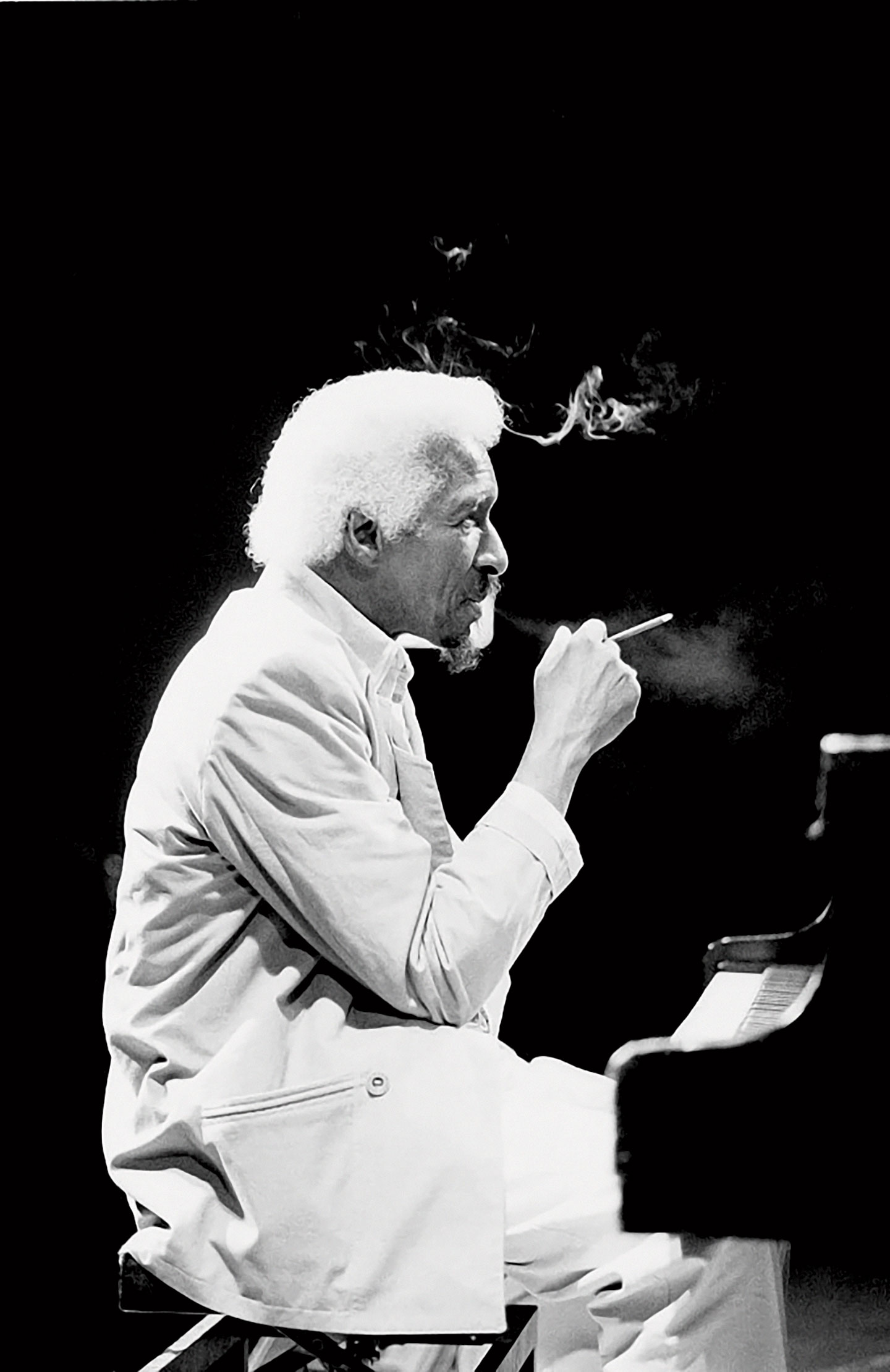
 
THE INTERNET ARCHIVE, which has been quietly caching web pages for the past two decades, also has a few more strings to its bow.
 
Previously, we’ve told you about classic video games now playable in-browser as a result of archiving by the team. But the latest release goes back a little further.
 
The Archive has released 25,000 (count ’em!) digital versions of 78RPM records that were otherwise virtually unplayable and certainly otherwise unavailable.
 
Working with the Archive of Contemporary Music and preservation specialists George Blood LP, alongside a group of individual volunteers, the discs have been carefully digitised from the originals.
 
The most popular material for 78s (described by eighties magazine Smash Hits as ‘records that break when you tread on them’) was shellac – beetle resin. As a result, they’re extremely brittle, and many are now so fragile that simply removing them from the sleeve can break them.
 
The project has over 200,000 pieces of 78RPM to go through, but the first 25,000 are there.
 
It’s thought, as well as preserving them for future generations, the discs, with their hiss and scratch, will provide interesting research opportunities for researchers looking into the history of recording, but also the nature of sound itself.
 
The Internet Archive explains: “We aim to bring to light the decisions by music collectors over the decades and a digital reference collection of underrepresented artists and genres. The digitisation will make this less commonly available music accessible to researchers in a format where it can be manipulated and studied without harming the physical artefacts. 
 
“We have preserved the often very prominent surface noise and imperfections and included files generated by different sizes and shapes of stylus to facilitate different kinds of analysis.”
The ‘Great 78’ Project runs alongside but separately to the National Jukebox managed by the Library of Congress.
 
The team are keen to emphasise that it can’t have too many 78s, so if you have some to offer, they’ll gladly take them and preserve them for future generations – including safely storing the original disc.
 
The news comes a day after the Internet Archive was blocked by ISPs in India, on the orders of the government, who is yet to explain why. µ
 

Jim Eigo Jazz Promo Services T: 845-986-1677 E-Mail: jim@jazzpromoservices.com
http://www.jazzpromoservices.com

HAVE A JAZZ EVENT, NEW CD OR IMPORTANT ANNOUNCEMENT FOR THE JAZZ COMMUNITY YOU WANT TO PROMOTE? CONTACT JAZZ PROMO SERVICES FOR PRICE QUOTE.

CHECK OUT OUR NEW YOUTUBE VIDEO

Unsubscribe | Update your profile | Forward to a friend

PLEASE NOTE: IF YOU DO NOT WISH TO BE ON THIS MAILING LIST PLEASE RESPOND WITH ‘REMOVE’ IN THE SUBJECT LINE. IF YOU ARE RECEIVING DUPLICATE EMAILS OUR APOLOGIES, JAZZ PROMO SERVICES ANNOUNCEMENT LIST IS GROWING LARGER EVERY DAY…..PLEASE LET US KNOW AND WE WILL FIX IT IMMEDIATELY!

Copyright (C) 2017 All rights reserved.

Jazz Promo Services

269 State Route 94 South

Warwick, Ny 10990

Add us to your address book

slide

Mal Waldron’s Ecstatic Minimalism | The Nation

Mal Waldron’s Ecstatic Minimalism | The Nation

https://www.thenation.com/article/mal-waldrons-ecstatic-minimalism/
 
Free at Last
Mal Waldron’s ecstatic minimalism.
By Adam Shatz July 26, 2017
 

Mal Waldron performing in Amsterdam in 1995. (Frans Schellekens / Redferns)
Want to Fight Back?
Sign up for Take Action Now and get three actions in your inbox every Tuesday.
On July 17, 1959, Frank O’Hara, shaken by the news of Billie Holiday’s death, wrote a poem, “The Day Lady Died.” In the last two lines, he remembers leaning against the bathroom door at the Five Spot, a jazz club in the East Village, “while she whispered a song along the keyboard / to Mal Waldron and everyone and I stopped breathing.” Seldom has the power of jazz performance been conveyed with such speed and grace. Holiday and Waldron, her pianist, are having a conversation so quiet and so intimate that listening to it feels like eavesdropping. I have always loved this poem for what it reveals not only about Holiday’s stagecraft, but also about her affection for Waldron, who accompanied her from 1957 until her death. Holiday and Waldron were close friends as well as collaborators. Waldron helped her write the autobiographical ballad “Left Alone,” an account of romantic desolation that she never had the chance to record. He had known of Holiday’s addiction, but, as he put it, “Lady Day had an awful lot to forget,” and his debt to her was incalculable. She taught him the importance of a song’s lyrics: Words, as much as notes, could lend themselves to musical improvisation. The magic she worked with them rubbed off. To listen to Waldron is to feel as if he is speaking to you, and only you, because he never forgets the lyrical content of a song.
Waldron was 33 when Lady died. He would live another 44 years, but for many jazz fans he would always remain Holiday’s accompanist. He frequently recorded her songs, spoke of their friendship in interviews, and insisted that if she had moved to Europe, as he did, she would have lived a much longer life. Waldron’s devotion to her memory reflected not only his love for her, but also the knowledge that he had been given a second chance: Four years after her death, he survived a near-fatal nervous breakdown after a heroin overdose. He experienced his survival as a rebirth, but was left with a piercing sense of life’s fragility. “When you take our life span and measure it against eternity it is only a small dot,” he wrote. “In this time we must realize, if possible, our fullest self potential.”
Waldron used his time well, creating one of the most distinctive bodies of work in postwar music. He wrote hundreds of songs, most famously “Soul Eyes,” a lush 32-bar ballad dedicated to John Coltrane (who liked it so much that he recorded it no fewer than three times). Waldron had a big sound and loved the resonances of his instrument, but he worked almost exclusively in small-group settings, preferring their chamber-like intimacy to larger, brassier ensembles. The best way to hear him is either in a duet with one of his favorite partners (his recordings with the saxophonists Steve Lacy and Marion Brown are especially memorable) or by himself.
BOOKS IN REVIEW
Waldron was a lifelong student of classical piano—he often played sonatas for pleasure, and recorded pieces by Chopin, Brahms, Satie, and Bartók—and he brought a classical sense of form and introspection to his solo work. Two long-out-of-print solo-concert albums—The Opening and Meditations—were recently reissued, and they bear witness, in different ways, to the dark, wintry beauty of Waldron’s art. The Opening, a fiery 1970 concert at the American Cultural Center in Paris, features six original compositions, mostly based on ostinatos—vamps that Waldron plays over and again—with small but engrossing variations in tempo, dynamics, timbre, and rhythmic articulation. (One is called “Of Pigs and Panthers,” an allusion to the war back home between the police and the Black Panther Party.) Meditations, recorded two years later at a jazz club in Tokyo, is a more contemplative affair, bookended by two of Waldron’s best-known pieces on solitude, “All Alone” and “Left Alone.”
Waldron’s style is invariably described as “brooding”—almost all of his pieces are in a minor key—but it could also be described as analytical. Most jazz pianists work to create an effect of outward motion when they improvise. Swing, after all, is a musical analogue of dance, and its aim is to make the body more expansive and supple. Waldron’s music appears to work in nearly the opposite direction, burrowing ever more deeply into its materials: He seems to be on an inward journey. In “The Blues Suite,” for example, the slow, winding song that takes up more than a third of Meditations, there’s an extraordinary moment where Waldron plays a descending figure in the lower registers of the piano; as it recedes, a sample from the Negro spiritual “Wade in the Water” rises in its wake, suggesting a shadowy recollection, or the previously erased layer of a palimpsest.
Waldron “played every piece as if he were X-raying it,” as Edward Said once observed of Glenn Gould. He turned to music as a kind of mental exercise, a way of figuring out what he thought; his pieces were almost all “meditations.” “I want to be able to see what I am doing,” he explained, “and in order to be very clear in my mind where I am going I have to repeat it.” His search for what he called the “one note that goes for the entire piece” gives his music an almost uniquely obsessive sense of propulsion—the feeling of being in a trance.
The son of West Indian immigrants, Malcolm Waldron was born in 1925 in Harlem and moved shortly after with his family to Jamaica, Queens. His father worked for the Long Island Rail Road and his mother was a nurse; both were middle-class strivers. They wanted, as Waldron later recalled, to “keep me off the streets” and forced him to take piano lessons from the age of 6. He was a quick study: “Fear is a great motivator,” he said.
Current Issue

Waldron was drafted into the Army in 1943 and was stationed at West Point, where he worked in the equestrian services. Whenever he was on leave, he made the scene, going to the clubs on 52nd Street and in Harlem, where he heard the pianists Art Tatum and Bud Powell, both of whom would be important influences. After the war, Waldron enrolled at Queens College on the GI Bill. There, he studied composition with Karol Rathaus, an exiled Jewish Austrian composer who recoiled from the orthodoxies of both tonal music and Schoenbergian serialism. Rathaus was also an admirer of jazz and the author of an essay, “Jazzdämmerung?” (“The Twilight of Jazz?”), that accused George Gershwin and the swing-band leader Paul Whiteman of “cultural larceny” for Europeanizing black music.
Under Rathaus’s tutelage, Waldron listened to Bach, Stravinsky, and Ravel; he also began to write his first scores. In the evenings, he received a different sort of education at the Paradiso, a Harlem club not far from Minton’s Playhouse, headquarters of the bebop movement. At the time, Waldron was playing alto saxophone, not piano: He had picked up the horn after hearing Charlie Parker, whom, like other young bop musicians, he worshipped. By his mid-20s, however, he’d returned to the piano. The saxophone, he realized, was “a very exhibitionist instrument, and you had to be extroverted, and I was very introverted.” In A Portrait of Mal Waldron, a 1997 documentary by the Belgian filmmaker Tom Van Overberghe, Waldron describes how the piano allowed him to hide, to “play very quietly and work out your changes. It’s a very beautiful instrument for a person like me.”
In the early 1950s, Waldron paid his dues in a style of music that could hardly have been less introverted, accompanying soul-jazz bands led by the down-home saxophonists Ike Quebec and George Walker “Big Nick” Nicholas. But he was also studying the work of bebop’s most original pianist and composer, Thelonious Monk. At first, Monk’s style sounded, to Waldron, “so strange, the way he hit the piano,” but “it just grew on me,” and he became one of the few pianists to absorb Monk’s innovations—his flat-fingered attack; his way of “bending” notes by striking two adjacent keys but only releasing one; his radical use of space—without sounding like a Monk imitator.
Waldron’s ability to combine Bud Powell’s fleet, lyrical approach to “comping”—the art of playing behind a soloist—with Monk’s more angular and idiosyncratic style made him a favorite pianist of the most sophisticated hard-bop musicians. Charles Mingus recruited him in 1954 to his Jazz Workshop and featured him on his landmark 1956 album, Pithecanthropus Erectus. The same year, Waldron was hired as the house pianist at Prestige Records, where he played on albums by Jackie McLean, John Coltrane, and other stars of the era. A young father, Waldron also had to find other work, and he supported his family by laying down tracks for Music Minus One, a maker of sing-along and play-along records. Each morning, he reported for work at Music Minus One in a suit and tie, looking more like an accountant than a musician. At night he was out gigging, sometimes with Billie Holiday; sometimes with the many reedmen who appreciated his discreet yet forceful comping; and sometimes with beatniks like Allen Ginsberg and Lenny Bruce.
But Waldron hungered for something more than work as a sideman. A talented sheet composer, he wanted to write his own music. While he was careful to avoid the often arid contrivances of third-stream jazz, he shared its ambition to incorporate classical compositional ideas into jazz, and to move beyond the formulaic theme-solos-theme structure of hard bop. His 1959 album Impressions, a trio recording with Addison Farmer on bass and Albert “Tootie” Heath on drums, was his first great statement as a leader, revealing a probing young modernist composer and a daring improviser. Holiday’s influence can be keenly felt in his reading of Jimmy van Heusen’s “All the Way,” a song she loved, and in Waldron’s own composition, “Overseas Suite,” which was inspired by his recent European tour with her.
But in Impressions we also hear the accompanist emerging from Lady’s shadow. In it, Waldron depends less on chord changes—the foundation of bebop improvisation—than on clusters of notes and “whatever enriches the sound.” He was somewhat more tentative than Miles Davis and Ornette Coleman, both of whom released revolutionary albums in 1959, Kind of Blue and The Shape of Jazz to Come. But Waldron was just as eager to embrace the new freedoms. As he saw it, they went hand in hand with being a black musician in the era of civil rights. The bar lines in a song were, he recalled, like “going to jail for us.” “We were talking about freedom, and getting out of jails…. So everyone wanted to escape from that.”
Waldron cut an alluring figure for the new jazz modernism emerging in the 1950s: He was slender, with regal features, an elegant bearing, and haunting eyes. Along with Sidney Poitier and Miles Davis, he was one of the original black male sex symbols of the 1950s, a precursor of the “Black is beautiful” era. On the cover of Impressions, Waldron, wearing a suit, tie, and rain jacket, stands behind a ladder against a dark, purple-tinted backdrop. He looks backward, with a somewhat nervous expression: an image of the dissident energies gathering force at the end of the Eisenhower era.
Billie Holiday died a few months after Impressions was released. Waldron was devastated. She was his young daughter’s godmother, and “such a warm person I began to feel she was like my sister.” A year later, Waldron released Left Alone, a tribute to Holiday’s work, whose title track featured a gorgeous performance by Jackie McLean. Released from his duties as an accompanist, Waldron began over the next few years to come into his own. He played a historic two-week date at the Five Spot with one of the most exciting bands of the 1960s, a quintet led by the multi-reedman Eric Dolphy and the trumpeter Booker Little, which also featured the drummer Ed Blackwell (of the Ornette Coleman Quartet) and the bassist Richard Davis. He also contributed to some of the great civil-rights jazz albums made by the drummer Max Roach and his partner, the singer Abbey Lincoln. (Waldron wrote the music to Lincoln’s protest song “Straight Ahead,” in which she sang, with bitter eloquence: “If you got to use the back roads / Straight ahead can lead nowhere.”) He demonstrated his gifts as a composer of small-ensemble jazz on the ambitious 1961 album The Quest, which explored waltzes, ballads, bop syncopation, even 12-tone serialism. The modal composition “Warm Canto,” a miniature jewel that showcased Dolphy’s clarinet and Ron Carter’s pizzicato work on cello, looked forward to the epic tone poems Waldron would write in the 1970s. On The Quest, he also developed what the singer Jeanne Lee later described as his “orchestral way of hearing.”
But Holiday’s death caught up with him—or rather, her habits did. Waldron had been horrified to see the Lady “treated like a criminal” rather than the victim of a disease, an experience that “broke her down.” It broke him down, too. Many Americans assumed that he must be a drug addict, simply because he was a jazz musician, and “it got to the point where if you had the name you just had to have the game, too.” In 1963, while on tour with Roach and Lincoln, he went onstage loaded on heroin, and froze. For the next six months, he was hospitalized at East Elmhurst Hospital and subjected to shock therapy and spinal taps. He could scarcely remember who he was, much less how to play piano. Yet he was grateful: The alternative was worse. And in the wake of his overdose and nervous breakdown, Waldron bit by bit began to come back to life.
His hands trembled, and he had lost his sense of time. But he applied himself with diligence, listening to his recordings and writing out his earlier improvisations on paper. His work as a composer of sheet music would sustain him for the next two years, until he was ready to perform again. He wrote scores for Shirley Clarke’s The Cool World and Herbert Danska’s Sweet Love, Bitter (loosely inspired by Charlie Parker’s last years, and starring Dick Gregory). But there were rumors that he was dead, and Waldron wasn’t sure they were false. He was surrounded by casualties of the jazz life: Booker Little had died of kidney failure, at 23, in 1961; three years later, Eric Dolphy died, at 36, of an undiagnosed diabetic coma in a Berlin hospital, where doctors mistook him for a drug addict and left him in bed so the drugs could run their course.
During these years, work in the New York clubs became increasingly hard to come by because, as he recalled, “the white musicians got the jobs, and the black musicians didn’t get the jobs even if they had more talent.” When Marcel Carné, the director of Le Jour Se Lève, asked him to come to Paris to write the soundtrack for his Three Bedrooms in Manhattan, an adaptation of a moody 1946 novel by Georges Simenon, he had no trouble making up his mind. “In America if you were black and a musician at the time, it was two strikes against you,” Waldron said. “In Europe…it was two strikes for you.” He found “so much respect and love” there that he “didn’t need any drugs.”
Waldron flew to Paris in 1965 and never looked back. He didn’t return to the States, even to perform, until 1975. After scoring Carné’s film, in which he also made a cameo as a barroom pianist, he bounced around France and Italy before settling, in 1967, in Munich. Two years later, he released one of his most important albums, the trio recording Free at Last, which also launched a new, Munich—based label, Editions of Contemporary Music (ECM), founded by a young German bassist, Manfred Eicher, who would become one of the great champions of the American jazz avant-garde.
On Free at Last, we hear a musician who has emancipated himself not only from America but from the overbearing influence of his mentors, particularly Bud Powell. Waldron’s writing is simpler, stripped down to vamps of a few notes, “calls” designed to provoke improvisatory responses. Before the breakdown, he explained, he had “started out with a big tree and I tried shaving and shaving and shaving…to find the perfect toothpick, but…I was nowhere near the toothpick at that moment.” His rhythms, meanwhile, became denser and more complex, his touch harder and more percussive, more “African.” The mood of Free at Last was dark and fierce, radiating identity and purpose. Its idiosyncratic flow came from the drone-like effects that Waldron created by pounding chords with his left hand. They gave the music an expansive sense of space, as if it, too, could breathe more freely in exile.
The jazz historian John Litweiler has characterized Waldron’s post-breakdown style as “repetition/transformation,” a phrase that may remind some of Steve Reich and Philip Glass, who were experimenting at the same time with repetitive structures in the early works of Minimalism. But Waldron arrived at his version of Minimalism on his own, through sounds and techniques specific to African-American music—above all, the plaintive, ringing sound known as a “blues cry.” An attempt to approximate the sound of a human voice with an instrument, the blues cry is a common expressive flourish in jazz, but Waldron transformed it into a structural device: He repeated it with different shadings, inflections, and intonations throughout his improvisations.
In Free at Last and Black Glory, a thrilling 1971 trio album, there are echoes of the free-jazz pianist Cecil Taylor—for whom Waldron would later write two tributes, “Free for C.T.” and “Variations on a Theme by Cecil Taylor”—but the resemblance reflects kinship rather than influence: Waldron had not left behind hard bop to become anyone’s disciple. Waldron meant “free at last” not only from American racism, or from chord structures, but from any restrictive influences—-including the pianist he had been before his breakdown. One of the reasons that “I feel it necessary to play freer is that I believe no one is ever exactly the same as he was a moment ago,” he explained at the time. “The change from moment to moment can be and usually is very small, almost unmeasurable, but nevertheless it is there. And since I’m definitely not the same person I was five years ago, I cannot pretend that nothing has changed by playing the same old way.”
It’s almost impossible to listen to Free at Last or any of the music that followed without thinking of the trial he had to survive to make it, just as one can hardly listen to The Quartet for the End of Time without reflecting on Olivier Messiaen’s time in a prisoner-of-war camp, or The Basement Tapes without being reminded of Dylan’s motorcycle accident. Survival is essential to its pathos, and to its consolatory power. Here is the sound of a man who has no intention of returning home, who has found not only a sanctuary, but renewal: a “second life,” he called it.
Waldron would continue to explore his newfound freedoms in such rip-roaring anthems as “Sieg Haile” (dedicated to Haile Selassie), “La Gloire du Noir,” and “Snake Out”; but he would also do so in ballads of disarming vulnerability and, not least, in his tributes to his late employer, notably Blues for Lady Day, recorded in 1972 in Holland. His melodic phrasing on the album, particularly in the stark, chilling interpretation of “Strange Fruit,” is slow, stately, and unadorned, as if he were waiting for Holiday to join him. Few purely instrumental albums have been so effective at conjuring the absent lyrics of its songs.
That Waldron not only reinvented himself but produced his greatest music outside of the States, in conditions of comparative dignity and respect, challenges a widespread assumption of jazz history: that the music diminishes in power the further it is removed from its vernacular sources. In 1949, Miles Davis bid farewell to the freedoms of post-liberation Paris to return to a segregated country, because “musicians who moved over there seemed to me to lose something, an energy, an edge, that living in the States gave them.” The unspoken, nostalgie de la boue corollary of this belief is that adversity is the yeast of jazz creativity, that the comforts of expatriate life make musicians go soft. But for many jazz musicians, life abroad has meant exposure to new experiences and ideas. And more than any of his peers, Waldron embraced the perspective of exile within his music. A number of his compositions were postcards from places he had visited; his masterpiece was an ode to flight, inspired by a visit in the early 1970s to the Norwegian island city of Kristiansund, where each morning he had awakened to “watch the seagulls perform a ballet.” He captured their dance in a languid reverie, “Seagulls of Kristiansund,” built around two tone centers, E minor and A minor, recalling the French Impressionist composers he admired.
Like Debussy and Satie, Waldron was drawn to the pentatonic scale and to East Asian aesthetics, whose minimalism and refinement of gesture struck a chord. When he came to Tokyo for the first time in 1970 to record an album, he was already big in Japan, thanks to his 1959 tribute to Billie Holiday, Left Alone, which had been enormously popular there, and he returned many times, recording dozens of albums on Japanese labels. That many of the tunes Waldron wrote in Japan have Japanese titles indicates the strength of his attachment. A “natural mystic,” as the singer Jeanne Lee described him, Waldron felt as if he had been there before, perhaps in a previous life. As it turned out, Japan’s interest in his work meant less to him than his own interest in Japan. “They think I’m here for the gigs, but I’m really here for the temples,” he once told a friend.
Waldron was particularly impressed by Ryoanji (“Temple of the Peaceful Dragon”), a 15th-century Zen Buddhist temple in north Kyoto. Ryoanji is famous for its rock garden, a classical example of karesansui, or dry landscape. Fifteen stones of varying sizes, composed into five groups, lie on a bed of white sand, which is raked each day by monks. The stones are arranged in such a way that only 14 can be seen at once; according to a proverb, only through attaining wisdom can one see the elusive 15th stone. For some, the garden depicts a group of islands floating on an ocean; for others, a mother tiger transporting her cubs over the sea. In its understated play of sameness and difference, movement and serenity, symmetry and asymmetry, Waldron found an analogue to his own music. The garden embodied what in Japanese is called wabi-sabi, an aesthetic of refined austerity, based on the beauty of imperfection and the acceptance of transience. John Cage, who first visited Ryoanji in 1962 with Yoko Ono and the pianist David Tudor, produced a series of compositions inspired by it, as well as dozens of drawings.
Ready to Fight Back? Sign Up For Take Action Now
Waldron’s tribute, “The Stone Garden of Ryoanji,” on the recently reissued Meditations, was recorded in July 1972 at the Dug, a club in Tokyo. Located in the basement of an old building between two high-rises, the Dug was a sanctuary for music lovers, writers, and bohemians; it was the kind of place where, as a young woman in Haruki Murakami’s novel Norwegian Wood remarks, “They don’t make you feel embarrassed to be drinking in the afternoon.” The song begins with a simple, almost childlike theme, suggestive of Japanese folk music as filtered through Satie, but it moves into a richly involving set of blues variations, examined and observed from every conceivable angle, as if Waldron were in search of the invisible 15th stone. Its beauty comes from the rapt, almost relentless attention to melodic line that was Waldron’s signature, and because the song won’t let him go, it won’t let us go, either. Much of the music that Waldron made in Japan in the early 1970s can be heard as the expression of an impossible farewell, “forecasting my feelings about leaving this island paradise,” as he wrote of his ballad “Sayonara,” which appeared on his 1970 album Tokyo Reverie.
A self-described “born gypsy,” Waldron was used to farewells. He spent most of his time on the road, returning now and then to Munich and Brussels, where he moved in the late 1980s. But Japan would always have a special claim on his imagination, and he went there as often as he could. He met his second wife, Hiromi, with whom he had three children, on a visit to Tokyo in the early 1980s. And in 1995, he went to Japan on an official invitation for the 50th anniversary of the atomic bombings of Hiroshima and Nagasaki. He was joined by the entire Waldron clan, including Hiromi’s two children from her first marriage; his first wife, Elaine; and their two adult daughters. Waldron performed in a trio with Jeanne Lee and the flutist Toru Tenda at temples, concert halls, and community centers from Tokyo to Okinawa. Lee, in her liner notes to Travellin’ in Soul-Time, the album that came out of this tour, remembers that “at one point, there were more Waldrons on the train than other passengers.”
Like John Coltrane, who visited Japan in 1966, Waldron was overwhelmed by the Hiroshima Peace Memorial. It was not just the evidence of destruction but the story it told of resilience, atonement, and rebuilding—one for which, as another kind of survivor, he felt a great affinity. For the 50th anniversary, he composed a suite based on “The White Road,” a poem by Syo Ito, a 14-year-old survivor of Hiroshima, and on Black Rain, a novel by Masuji Ibuse about the radioactive rain that fell after the bombings. The harrowing, almost unspeakable words of the White Road/Black Rain Suite for Improvisers were sung by Lee, with whom Waldron had already made a remarkable duo album of standards, After Hours. It was one of their last performances together: She died in 2000, at 61; he died two years later, at 77.
Not since his work with Holiday had Waldron formed such a close partnership with a singer. An heir of both Holiday and Abbey Lincoln, Lee was the finest singer to emerge from the ranks of the free-jazz movement; she had performed with everyone from Archie Shepp to John Cage, and spent much of her career as an expatriate. Like Waldron, she was a blues modernist, steeped both in African-American tradition and in contemporary new music. She understood, too, that concert music is always theater, and she and Waldron brilliantly evoked the terror of the bombings, much as he and Holiday had once evoked the terror of lynching in “Strange Fruit.”
Perhaps the most striking words that Lee sings on Travellin’ in Soul-Time, however, belong to Waldron himself, in a vocal setting of his song “Seagulls of Kristiansund.” He imagines the birds diving into the sea from the sky, “so near, yet so high”:
They’re wond’rously free
They live happily.
They know from the past,
a life cannot last,
So they live for today
for tomorrow they may not
Be able to dive from the sky.
The birds know what Waldron had to learn from his near-death experience. Lee bends and stretches his words with warm, melismatic accents, at one point mimicking the sounds of seagulls. And as she sings to Waldron, one feels as if the lyrics had always been there; the story they tell is as much a self-portrait as a tone poem about a flock of seagulls. Freedom and flight were the themes that gave shape to Waldron’s style after his breakdown. An ecstatic minimalism, it spoke of survival, rebirth, and the longing for transcendence. Its means were simple, but the stakes were not. Through his hypnotic repetitions, Waldron chased down that single, elusive note, as if his life depended on it.
Adam Shatz dedicates this essay to the memory of Geri Allen.
 

Jim Eigo Jazz Promo Services T: 845-986-1677 E-Mail: jim@jazzpromoservices.com
http://www.jazzpromoservices.com

HAVE A JAZZ EVENT, NEW CD OR IMPORTANT ANNOUNCEMENT FOR THE JAZZ COMMUNITY YOU WANT TO PROMOTE? CONTACT JAZZ PROMO SERVICES FOR PRICE QUOTE.

CHECK OUT OUR NEW YOUTUBE VIDEO

Unsubscribe | Update your profile | Forward to a friend

PLEASE NOTE: IF YOU DO NOT WISH TO BE ON THIS MAILING LIST PLEASE RESPOND WITH ‘REMOVE’ IN THE SUBJECT LINE. IF YOU ARE RECEIVING DUPLICATE EMAILS OUR APOLOGIES, JAZZ PROMO SERVICES ANNOUNCEMENT LIST IS GROWING LARGER EVERY DAY…..PLEASE LET US KNOW AND WE WILL FIX IT IMMEDIATELY!

Copyright (C) 2017 All rights reserved.

Jazz Promo Services

269 State Route 94 South

Warwick, Ny 10990

Add us to your address book

slide

Metropolitan Room LEAVING 22ND STREET in September

Metropolitan Room LEAVING 22ND STREET in September

 
_logo_EMAIL.jpg

FOR IMMEDIATE RELEASE                                Contact: Beck Lee (718) 403-0939 beckblitz@aol.com
 
METROPOLITAN ROOM TRANSITIONING TO NEW LOCATION, PLANS TO OPEN NEW CLUB IN EARLY 2018
 
CLOSING 22ND STREET ON SEPTEMBER 30, WILL SHARE SPACE WITH THE TRIAD UNTIL NEW CLUB IS COMPLETE
 
CELEBRATES 11-YEAR RUN IN FLATIRON DISTRICT WITH 24-HOUR MARATHON ON SEPTEMBER 24-25
 
The Metropolitan Room, a New York entertainment mainstay since it opened its doors in May 2006, will be moving to larger and more elegant quarters — including a restaurant, piano bar and two performance rooms — managing partner Bernie Furshpan is announcing today. 
 
“We’re designing our future Metropolitan Room in midtown to be a bigger, better and more flexible venue,” states Furshpan, “but the extensive renovations will take several months to complete.  Happily, when we bid farewell to our current home on September 30, the Metropolitan Room will partner with The Triad on West 72nd Street, sharing its venue until our new spot is ready to open.  This will allow us to present most of our scheduled shows and continue to serve our longtime performers.”

Furshpan adds, “I can’t thank The Triad enough for supporting us and the cabaret world by lending a hand like this.  We hope the transition period will be brief, and we look forward to announcing the date of the grand opening of the new club and restaurant.”

To celebrate its storied 11-year residency on West 22nd Street, the Metropolitan Room will stage a 24-hour performance marathon featuring scores of its highly-praised headliners, starting on Sunday September 24 at 9pm, and continuing non-stop to Monday September 25 at 9pm. The event recalls the Metropolitan Room’s 60-hour entertainment marathon, in January 2015, that shattered the Guinness World Record for longest variety show ever. The club’s last performances at 34 West 22nd Street will be on Saturday September 30.

Known as a prime launchpad for emerging talents in jazz and cabaret, as well as a showplace for a range of established artists in the theatre, film or television, the club was dubbed “the best of New York’s smaller clubs” by The New York Times’s Stephen Holden. The Metropolitan Room has recently been home to Ed Asner, Leslie JordanTom Wopat and regular headliner Baby Jane Dexter.  Other Broadway actors who have had major engagements at the club include Liz Callaway, Vivian Reed, Linda Lavin, and Euan Morton.  Actress Sheryl Lee Ralph just concluded a sold-out run at the room. The Metropolitan Room is also celebrated for re-introducing nightclub legend Marilyn Maye to New York audiences after a 15-year hiatus, and was the first to bring British singing sensation Barb Jungr to the attention of New York audiences. 

The club’s famed annual MetroStar Talent Challenge — the contest that helped propel prior winners such as T. Oliver Reid and Marissa Mulder to public recognition, is currently running at the Metropolitan Room.  The 2017 contest — the 10th annual edition — plays Mondays at 6:30pm through August 21.


Jim Eigo Jazz Promo Services T: 845-986-1677 E-Mail: jim@jazzpromoservices.com
http://www.jazzpromoservices.com

HAVE A JAZZ EVENT, NEW CD OR IMPORTANT ANNOUNCEMENT FOR THE JAZZ COMMUNITY YOU WANT TO PROMOTE? CONTACT JAZZ PROMO SERVICES FOR PRICE QUOTE.

CHECK OUT OUR NEW YOUTUBE VIDEO

Unsubscribe | Update your profile | Forward to a friend

PLEASE NOTE: IF YOU DO NOT WISH TO BE ON THIS MAILING LIST PLEASE RESPOND WITH ‘REMOVE’ IN THE SUBJECT LINE. IF YOU ARE RECEIVING DUPLICATE EMAILS OUR APOLOGIES, JAZZ PROMO SERVICES ANNOUNCEMENT LIST IS GROWING LARGER EVERY DAY…..PLEASE LET US KNOW AND WE WILL FIX IT IMMEDIATELY!

Copyright (C) 2017 All rights reserved.

Jazz Promo Services

269 State Route 94 South

Warwick, Ny 10990

Add us to your address book

slide

Jimmy Webb, Writer of Glen Campbell Classics, Remembers His Friend | Variety

Jimmy Webb, Writer of Glen Campbell Classics, Remembers His Friend | Variety

http://variety.com/2017/music/news/jimmy-webb-remembers-glen-campbell-songwriter-1202520456/
 
Jimmy Webb, Writer of Glen Campbell Classics, Remembers ‘My Big Brother, My Co-Culprit’
August 8, 2017 08:37PM PT

Anonymous/AP/REX/Shutterstock
Jimmy Webb wrote the songs that lofted Glen Campbell to stardom in the late 1960s — “By the Time I Get to Phoenix,” “Wichita Lineman,” “Galveston,”  “Where’s the Playground, Susie?” — and the two remained friends for the five decades that followed. While both had bigger hits with other collaborators, in many ways Campbell’s was the definitive voice for Webb’s songs, and vice versa. (For more on Campbell’s life and career, see this and Error! Hyperlink reference not valid..)
Campbell died Tuesday afternoon (Aug. 8) after a long battle with Alzheimer’s disease. A rep for Webb said he was not up to the many interviews that had been requested, but as the tribute to his friend below shows, he was not at a loss for words.
Well, that moment has come that we have known was an inevitable certainty and yet stings like a sudden catastrophe.  Let the world note that a great American influence on pop music, the American Beatle, the secret link between so many artists and records that we can only marvel, has passed and cannot be replaced. He was bountiful.  His was a world of gifts freely exchanged: Roger Miller stories, songs from the best writers, an old Merle Haggard record or a pocket knife.
He gave me a great wide lens through which to look at music. The cult of The Players? He was at the very center. He loved the Beach Boys and in subtle ways helped mold their sound. He loved Don and Phil [Everly], Bill Medley and Bobby Hatfield [the Righteous Brothers], Flatt and Scruggs. This was the one great lesson that I learned from him as a kid: Musically speaking nothing is out of bounds. Of course, he lavished affection and gifts on his kids, family and friends. His love was a deep mercurial thing and once committed he was a tenacious friend as so many in Nashville and Phoenix, L.A. and New York, compadres all over the world would testify. One of his favorite songs was “Try A Little Kindness” in which he sings “shine your light on everyone you see.” My God. Did he do that or what? Just thinking back I believe suddenly that the “raison d’etre” for every Glen Campbell show was to bring every suffering soul within the sound of his voice up a peg or two. Leave ’em laughin.’ Leave them feeling just a little tad better about themselves; even though he might have to make them cry a couple of times to get ’em there. What a majestically graceful and kind, top rate performer was Glen on his worst night!
When it came to friendship Glen was the real deal. He spoke my name from ten thousand stages. He was my big brother, my protector, my co-culprit, my John crying in the wilderness. Nobody liked a Jimmy Webb song as much as Glen! And yet he was generous with other writers: Larry Weiss, Allen Toussaint, John Hartford. You have to look hard for a bad song on a Glen Campbell album. He was giving people their money’s worth before it became fashionable.
I am full of grief. I am writing because I think you deserve some sort of message from me but I am too upset to write very well or at any great length. It’s like waking up in the morning in some Kafkaesque novella and finding that half of you is missing. Laura and I would call upon you to rest your sympathy with Kim Campbell and her children Cal, Shannon and Ashley; his older children Debby, Kelli, Travis, Kane, and Dillon; grandchildren, great- and great-great-grandchildren.  Perhaps you could throw in a prayer for the Webb kids, Chris, Justin, Jamie, Corey, Charles and Camila who looked upon him as a kind of wondrous uncle who was a celebrated star and funnier than old dad.
This I can promise.  While I can play a piano he will never be forgotten. And after that someone else will revel in his vast library of recordings and pass them on to how many future generations? Possibly to all of them.
Jimmy
 

Jim Eigo Jazz Promo Services T: 845-986-1677 E-Mail: jim@jazzpromoservices.com
http://www.jazzpromoservices.com

HAVE A JAZZ EVENT, NEW CD OR IMPORTANT ANNOUNCEMENT FOR THE JAZZ COMMUNITY YOU WANT TO PROMOTE? CONTACT JAZZ PROMO SERVICES FOR PRICE QUOTE.

CHECK OUT OUR NEW YOUTUBE VIDEO

Unsubscribe | Update your profile | Forward to a friend

PLEASE NOTE: IF YOU DO NOT WISH TO BE ON THIS MAILING LIST PLEASE RESPOND WITH ‘REMOVE’ IN THE SUBJECT LINE. IF YOU ARE RECEIVING DUPLICATE EMAILS OUR APOLOGIES, JAZZ PROMO SERVICES ANNOUNCEMENT LIST IS GROWING LARGER EVERY DAY…..PLEASE LET US KNOW AND WE WILL FIX IT IMMEDIATELY!

Copyright (C) 2017 All rights reserved.

Jazz Promo Services

269 State Route 94 South

Warwick, Ny 10990

Add us to your address book

slide

Jason Moran Fats Waller Newport August 6, 2017 – YouTube

Jason Moran Fats Waller Newport August 6, 2017 – YouTube

https://www.youtube.com/watch?v=cFI8JBQsf7I
 
Jason Moran: Fats Waller Dance Party
Newport Jazz Fest August 6, 2017


Jim Eigo Jazz Promo Services T: 845-986-1677 E-Mail: jim@jazzpromoservices.com
http://www.jazzpromoservices.com

HAVE A JAZZ EVENT, NEW CD OR IMPORTANT ANNOUNCEMENT FOR THE JAZZ COMMUNITY YOU WANT TO PROMOTE? CONTACT JAZZ PROMO SERVICES FOR PRICE QUOTE.

CHECK OUT OUR NEW YOUTUBE VIDEO

Unsubscribe | Update your profile | Forward to a friend

PLEASE NOTE: IF YOU DO NOT WISH TO BE ON THIS MAILING LIST PLEASE RESPOND WITH ‘REMOVE’ IN THE SUBJECT LINE. IF YOU ARE RECEIVING DUPLICATE EMAILS OUR APOLOGIES, JAZZ PROMO SERVICES ANNOUNCEMENT LIST IS GROWING LARGER EVERY DAY…..PLEASE LET US KNOW AND WE WILL FIX IT IMMEDIATELY!

Copyright (C) 2017 All rights reserved.

Jazz Promo Services

269 State Route 94 South

Warwick, Ny 10990

Add us to your address book

slide

History in the air at Newport Jazz Festival – The Boston Globe

History in the air at Newport Jazz Festival – The Boston Globe

https://www.bostonglobe.com/arts/music/2017/08/06/history-air-newport-jazz-festival/AQuoKelSdvxaQIcYx3SmFL/story.html
 
History in the air at Newport Jazz Festival
Saturday was typical of the latter-day, nonprofit fest — in which young and old and various adjacent genres rubbed shoulders.
By Jon Garelick Globe Staff  August 06, 2017

EVA HAMBACH/AFP/Getty Images
From left: Danilo Pérez, Chris Potter, and Avishai Cohen play during the “Jazz 100” tribute to the centenaries of Dizzy Gillespie, Thelonious Monk, and Mongo Santamaria at the Newport Jazz Festival.
NEWPORT, R.I. — Jazz is history. Not in the sense of “over,” but in the sense of a living tradition — the music is always paying that history homage, consciously or not.
Saturday, the middle day of the weekend-long Newport Jazz Festival, had history in abundance. Most explicitly, it had Benny Golson, now 88, one of the living legends of the music, author of some of its indelible classics, playing a few of them and talking about them just as much. No matter, it was great talk, and great playing. John Coltrane, Jimmy Heath, Dizzy Gillespie, and Miles Davis were all colleagues. Golson’s tenor sax on uptempo numbers was fleet and imaginative, but it was his cadenza on the ballad “I Remember Clifford” (for trumpeter Clifford Brown), floating with elegiac tenderness, that held the heart.
Saturday was typical of the latter-day, nonprofit Newport Jazz Festival — in which young and old and various adjacent genres rubbed shoulders, including student ensembles and the folk-blues singer Rhiannon Giddens.
Another elder statesmen, Henry Threadgill, a Pulitzer Prize-winning composer, obliterated strict jazz categories long ago. His band Zooid (who played on the recording of his Pulitzer-winning composition) laid down an evocative web of counterlines — tuba/trombone and acoustic guitar, with drums, and Threadgill, 73, on flutes and alto sax. You could argue about whether this was jazz, but you couldn’t imagine anyone but jazz musicians playing it. Likewise for trumpeter Peter Evans, who played a solo set in the smallest of the four venues at Fort Adams, a room in the Fort’s museum, dubbed Storyville, after festival cofounder George Wein’s long-ago Boston club. (Wein, now 91, could be seen checking out the acts from his golf cart.)
Get The Weekender in your inbox:
The Globe’s top picks for what to see and do each weekend, in Boston and beyond.
Evans specializes in solo trumpet, which he augments not only with various extended techniques created with tongue, fingers, and vocal cords, but also with electronic enhanced percussive effects. Like the best solo artists, Evans does indeed “contain multitudes,” riffing with himself in different registers. It works.
There were other, more familiar displays of the jazz tradition. The chorus of horns in bassist Christian McBride’s big band caressed soloists Warren Wolf (vibes), Sean Jones (trumpet), and Ron Blake (tenor saxophone) in a style traceable back to Basie, Ellington, and Fletcher Henderson, though the tunes (Joe Henderson’s “Black Narcissus” and McBride’s own “The Shade of the Cedar Tree”) were of more recent vintage.
Pianist-composer Danilo Pérez’s “Jazz 100” was also unabashed in looking back — the project was a tribute to the centenaries of Gillespie, Thelonious Monk, and Mongo Santamaria, but Pérez’s arrangements of chestnuts like Santamaria’s “Afro Blue” were fresh and unhindered by reverence.
Firmly in the now was Vijay Iyer’s sextet, which built off of the pianist-composer’s angular lines and odd-metered rhythms with a visceral charge. Surprisingly, the band moved closer to a hard funk groove by mid-set (anchored by bassist Stephan Crump and drummer Tyshawn Sorey). Equally challenging, with stronger grooves still, was drummer Antonio Sanchez and his band Migration, with its mix ofAfro-Latin and swing beats, exploring Sanchez’s impressive writing in long forms, not to mention at least one particularly skronky excursion from pianist John Escreet on Fender Rhodes.
Bassist Esperanza Spalding and drummer Terri Lyne Carrington had originally been scheduled to play in their trio with pianist Geri Allen, but Allen, who had battled cancer, died in June. In her stead, Iyer, Jason Moran, and Christian Sands alternated at the keyboard. It was an apt celebration of Allen’s life to see the three pianists take turns mid-song sliding on and off the piano bench.
A couple of other snapshots from Saturday (when 20 separate performances were scheduled): the Branford Marsalis Quartet, equal parts brawn and finesse, and trumpeter Dominick Farinacci’s band, with a startling take on “I Put a Spell On You” from singer Shenel Johns. History in the making.
Newport Jazz Festival
At Fort Adams State Park, Newport, R.I., Saturday
Jon Garelick can be reached at jon.garelick@globe.com. Follow him on Twitter @jgarelick.
Continue Reading
 

Jim Eigo Jazz Promo Services T: 845-986-1677 E-Mail: jim@jazzpromoservices.com
http://www.jazzpromoservices.com

HAVE A JAZZ EVENT, NEW CD OR IMPORTANT ANNOUNCEMENT FOR THE JAZZ COMMUNITY YOU WANT TO PROMOTE? CONTACT JAZZ PROMO SERVICES FOR PRICE QUOTE.

CHECK OUT OUR NEW YOUTUBE VIDEO

Unsubscribe | Update your profile | Forward to a friend

PLEASE NOTE: IF YOU DO NOT WISH TO BE ON THIS MAILING LIST PLEASE RESPOND WITH ‘REMOVE’ IN THE SUBJECT LINE. IF YOU ARE RECEIVING DUPLICATE EMAILS OUR APOLOGIES, JAZZ PROMO SERVICES ANNOUNCEMENT LIST IS GROWING LARGER EVERY DAY…..PLEASE LET US KNOW AND WE WILL FIX IT IMMEDIATELY!

Copyright (C) 2017 All rights reserved.

Jazz Promo Services

269 State Route 94 South

Warwick, Ny 10990

Add us to your address book

slide

History in the air at Newport Jazz Festival – The Boston Globe

History in the air at Newport Jazz Festival – The Boston Globe

https://www.bostonglobe.com/arts/music/2017/08/06/history-air-newport-jazz-festival/AQuoKelSdvxaQIcYx3SmFL/story.html
 
History in the air at Newport Jazz Festival
Saturday was typical of the latter-day, nonprofit fest — in which young and old and various adjacent genres rubbed shoulders.
By Jon Garelick Globe Staff  August 06, 2017

EVA HAMBACH/AFP/Getty Images
From left: Danilo Pérez, Chris Potter, and Avishai Cohen play during the “Jazz 100” tribute to the centenaries of Dizzy Gillespie, Thelonious Monk, and Mongo Santamaria at the Newport Jazz Festival.
NEWPORT, R.I. — Jazz is history. Not in the sense of “over,” but in the sense of a living tradition — the music is always paying that history homage, consciously or not.
Saturday, the middle day of the weekend-long Newport Jazz Festival, had history in abundance. Most explicitly, it had Benny Golson, now 88, one of the living legends of the music, author of some of its indelible classics, playing a few of them and talking about them just as much. No matter, it was great talk, and great playing. John Coltrane, Jimmy Heath, Dizzy Gillespie, and Miles Davis were all colleagues. Golson’s tenor sax on uptempo numbers was fleet and imaginative, but it was his cadenza on the ballad “I Remember Clifford” (for trumpeter Clifford Brown), floating with elegiac tenderness, that held the heart.
Saturday was typical of the latter-day, nonprofit Newport Jazz Festival — in which young and old and various adjacent genres rubbed shoulders, including student ensembles and the folk-blues singer Rhiannon Giddens.
Another elder statesmen, Henry Threadgill, a Pulitzer Prize-winning composer, obliterated strict jazz categories long ago. His band Zooid (who played on the recording of his Pulitzer-winning composition) laid down an evocative web of counterlines — tuba/trombone and acoustic guitar, with drums, and Threadgill, 73, on flutes and alto sax. You could argue about whether this was jazz, but you couldn’t imagine anyone but jazz musicians playing it. Likewise for trumpeter Peter Evans, who played a solo set in the smallest of the four venues at Fort Adams, a room in the Fort’s museum, dubbed Storyville, after festival cofounder George Wein’s long-ago Boston club. (Wein, now 91, could be seen checking out the acts from his golf cart.)
Get The Weekender in your inbox:
The Globe’s top picks for what to see and do each weekend, in Boston and beyond.
Evans specializes in solo trumpet, which he augments not only with various extended techniques created with tongue, fingers, and vocal cords, but also with electronic enhanced percussive effects. Like the best solo artists, Evans does indeed “contain multitudes,” riffing with himself in different registers. It works.
There were other, more familiar displays of the jazz tradition. The chorus of horns in bassist Christian McBride’s big band caressed soloists Warren Wolf (vibes), Sean Jones (trumpet), and Ron Blake (tenor saxophone) in a style traceable back to Basie, Ellington, and Fletcher Henderson, though the tunes (Joe Henderson’s “Black Narcissus” and McBride’s own “The Shade of the Cedar Tree”) were of more recent vintage.
Pianist-composer Danilo Pérez’s “Jazz 100” was also unabashed in looking back — the project was a tribute to the centenaries of Gillespie, Thelonious Monk, and Mongo Santamaria, but Pérez’s arrangements of chestnuts like Santamaria’s “Afro Blue” were fresh and unhindered by reverence.
Firmly in the now was Vijay Iyer’s sextet, which built off of the pianist-composer’s angular lines and odd-metered rhythms with a visceral charge. Surprisingly, the band moved closer to a hard funk groove by mid-set (anchored by bassist Stephan Crump and drummer Tyshawn Sorey). Equally challenging, with stronger grooves still, was drummer Antonio Sanchez and his band Migration, with its mix ofAfro-Latin and swing beats, exploring Sanchez’s impressive writing in long forms, not to mention at least one particularly skronky excursion from pianist John Escreet on Fender Rhodes.
Bassist Esperanza Spalding and drummer Terri Lyne Carrington had originally been scheduled to play in their trio with pianist Geri Allen, but Allen, who had battled cancer, died in June. In her stead, Iyer, Jason Moran, and Christian Sands alternated at the keyboard. It was an apt celebration of Allen’s life to see the three pianists take turns mid-song sliding on and off the piano bench.
A couple of other snapshots from Saturday (when 20 separate performances were scheduled): the Branford Marsalis Quartet, equal parts brawn and finesse, and trumpeter Dominick Farinacci’s band, with a startling take on “I Put a Spell On You” from singer Shenel Johns. History in the making.
Newport Jazz Festival
At Fort Adams State Park, Newport, R.I., Saturday
Jon Garelick can be reached at jon.garelick@globe.com. Follow him on Twitter @jgarelick.
Continue Reading
 

Jim Eigo Jazz Promo Services T: 845-986-1677 E-Mail: jim@jazzpromoservices.com
http://www.jazzpromoservices.com

HAVE A JAZZ EVENT, NEW CD OR IMPORTANT ANNOUNCEMENT FOR THE JAZZ COMMUNITY YOU WANT TO PROMOTE? CONTACT JAZZ PROMO SERVICES FOR PRICE QUOTE.

CHECK OUT OUR NEW YOUTUBE VIDEO

Unsubscribe | Update your profile | Forward to a friend

PLEASE NOTE: IF YOU DO NOT WISH TO BE ON THIS MAILING LIST PLEASE RESPOND WITH ‘REMOVE’ IN THE SUBJECT LINE. IF YOU ARE RECEIVING DUPLICATE EMAILS OUR APOLOGIES, JAZZ PROMO SERVICES ANNOUNCEMENT LIST IS GROWING LARGER EVERY DAY…..PLEASE LET US KNOW AND WE WILL FIX IT IMMEDIATELY!

Copyright (C) 2017 All rights reserved.

Jazz Promo Services

269 State Route 94 South

Warwick, Ny 10990

Add us to your address book

slide

Love, Tony | Television Academy by Will Friedwald

Love, Tony | Television Academy by Will Friedwald

http://www.emmys.com/news/features/love-tony
 
Love, Tony
Since he started his career on national television in 1951, Tony Bennett has been a constant presence on the small screen.
That legacy climaxed — but hardly concluded — last year with the NBC special Tony Bennett Celebrates 90: The Best Is Yet to Come

Sitting in his studio on Central Park South, Bennett is watching vintage clips of his television performances, going back to the beginning, on a laptop. The obvious point comes up: when he started appearing on television, the medium itself was brand-spanking new. The idea that one could watch video on a portable device was undreamed of, even in science-fiction stories.
It also would have been impossible to predict that Bennett, only 25 when he made his debut on The Ed Sullivan Show, would become the elder statesman of the American popular song, a nonagenarian cultural ambassador who still brings classic tunes to each new generation.

As if to illustrate the continuity between the young Tony of the 1950s and ’60s and the living legend of 2017, Bennett proudly offers, “I’m still singing the same way today.” He repeatedly sings along with his younger self.  “How do you like that,” he says, laughing. “I’m still in the same key!”
What was it like to be an important part of the first generation of young  singers to work in this new medium? Bennett answers that question with an anecdote. “I could have made movies, but I preferred to work in front of live audiences, and TV was part of that — there was always a live audience.” 

He then tells a story about meeting the legendary actor Cary Grant many years later. “He told me that what he didn’t like about the movies was that you had to wait months and months before you knew whether the audience approved of your performance or not. He said that he was jealous of me, because he would have preferred to be working in front of live audiences. Can you imagine? Cary Grant was jealous of me!”

THE ED SULLIVAN SHOW, 1951–71

Bennett had been on other TV shows before September 23, 1951, when he made his debut on the most-watched program of its day, Toast of the Town (well before the title was officially changed to The Ed Sullivan Show). But Sullivan, he points out, “was a big deal then. The biggest! When you were on Ed Sullivan, everybody in the whole country was watching you.
There is no looking at it any other way. It made many seasons for me — he had always had me on at least once a year, sometimes more.”

Watching that first Sullivan appearance today, Bennett approves of the way he started with what was his first huge pop hit, “Because of You,” done with the full CBS Orchestra, and followed it with a swinging jazz number, “Sing, You Sinners,” performed with just his touring trio (featuring his mentor Billy Exiner on drums).

“You can see that I wanted to show the world that there was more to me than my big chart hits, that I could do a lot of different things, like a jazz song. I kept on singing ‘Sing, You Sinners’ in my act until very recently.
You can also see that I’m really working hard to entertain the people here — not just to stand there and sing.” His jazz side would be spotlighted on Sullivan for decades to come. Future Sullivan shows would see him sharing the stage with Woody Herman, Bobby Hackett, Count Basie and Duke Ellington.

PURINA’S GRAND OLE OPRY, 1956

Bennett takes great pride in being the first mainstream pop singer to record — and score a huge hit with — a song by country star Hank Williams. In fact, his 1951 recording of “Cold, Cold Heart” went a long way toward helping country-and-western music gain respect and mass-market visibility.

Bennett tells the story of how Williams called him up and confronted him, asking, “What’s the idea of ruining my song?” As Bennett tells it, this was well before he had done much traveling in the South, and at the time he was unaware of the fine Alabama tradition of ironically affectionate insults. The greater truth was that Williams, who died in 1953 at age 29, loved the record and appreciated what Bennett had done for him.

A few years later, the Nashville music fraternity made Bennett one of the first mainstream artists to appear on the flagship program of the country-music world, the Grand Ole Opry .
In a surviving kinescope, he sings and banters with such iconic artists as Ernest Tubb, Ray Price and the 25-year-old June Carter. “What I learned from that experience was that a great song is a great song,” Bennett says. “It doesn’t matter if it’s by Richard Rodgers or Hank Williams. I based my whole career on the premise of only doing good songs.”

THE STEVE ALLEN SHOW, 1958

“Steve was one of the pioneers of television, in terms of the presentation of music, as well as comedy,” Bennett says. “Plus, he was an excellent songwriter and a musician himself. And on top of that, he was a sensational guy. It was always an honor to do his show.”

One of the richest parts of Bennett’s television legacy is his collection of appearances on Steve Allen’s various programs, especially the classic Sunday-night series NBC ran against CBS’s ratings champ, Ed Sullivan. In 1958, Bennett sang “Pennies From Heaven” in the middle of an elaborately staged production number filmed on the streets outside the NBC studio.
In 1960, Allen, always a jazz fan, had Bennett singing with jazz greats Bobby Hackett and Bob Wilber. Later that year, on the day after Halloween, Bennett performed “Sing, You Sinners” as a spontaneous duet with Frankenstein’s monster (played by king-sized comic Louis Nye).

THE TONY BENNETT SHOW, 1956, and PERRY PRESENTS, 1959 

In the late ‘50s, Bennett starred in and hosted two weekly variety series, both of which were summer replacement shows that placed him smack dab in the middle of two legends.
The first was Perry Como, whose time slot Bennett was taking over for the summer. Upon meeting Bennett for the first time, the veteran TV star marched him straight to a little church around the corner from the NBC studio and insisted that he give his confession. The other was Frank Sinatra, whom he also had never previously met.

“I was so nervous — I had never done anything like this before — that when someone told me Frank Sinatra was in town, I got the idea of asking him for advice. It was a great gamble, but I went to the Paramount Theater, where he was playing, unannounced. I found his dressing room and knocked on the door. He said, ‘Hello, Tony, come on in.’
“I was surprised because I had no idea he even knew who I was. But he told me something that I’ve never forgotten. I told him that I was nervous, and he said that was a good thing. He said, ‘The audience likes it when you’re nervous. It means that you really care and that you want to give a good show.’ We were close friends from that day forward.”
The Tony Bennett Show ran for five weeks, in August and September 1956. It was followed three years later by Perry Presents, which starred Bennett and several singing female cohosts (including Theresa Brewer, Peggy King and future Gong Show panelist Jaye P. Morgan) and ran from June to August 1959.

THE TONIGHT SHOW STARRING JOHNNY CARSON, 1962–92 

“I was on the very first Tonight Show with Johnny Carson [October 1, 1962] and he kept having me back on for the whole 30 years that he was on the air.” On that premiere episode, Bennett shared the famous Carson couch with Mel Brooks, Rudy Vallee and Joan Crawford. (Alas, that episode hasn’t survived. It’s probably the most valuable piece of missing Tony Bennett footage there is — or, rather, isn’t.)
For the next three decades, Bennett made regular appearances alongside Carson, announcer-pitchman Ed McMahon and trumpeter-bandleader Doc Severinsen.

Over the course of those years, he would sing virtually every notable song in his catalog, from “I Left My Heart in San Francisco” in 1962, to “The Good Life” in 1963, to “For Once in My Life” in 1968, to his big numbers of the 1980s, like “How Do You Keep the Music Playing?” and “When Do the Bells Ring for Me.”

One especially memorable moment in the show’s history occurred on October 27, 1975, when Bennett brought along collaborator Bill Evans to per-form two classic songs from their groundbreaking duets album. (Bennett and Evans also appeared together, doing no fewer than eight numbers, on a half- hour special produced by the Canadian Broadcasting Corporation in 1976.)

THE JUDY GARLAND SHOW, 1963

Few would deny that Garland was a great entertainer but she proved to be too intense, too high-maintenance, too in-your-face for the low-key medium of television. The variety-show format was better suited to more casual performers, such as Perry Como or Dinah Shore.
Still, all 26 episodes of The Judy Garland Show — CBS’s noble experiment of the 1963–64 season — are considered classics, especially the December 15, 1963, outing with Bennett. The episode peaks in a spectacular duet medley of songs about American cities and states, including “Lullaby of Broadway” and “Kansas City,” building to Bennett’s then-recent blockbuster hit, “I Left My Heart in San Francisco.”

Bennett vividly remembers that he and Garland were in particularly high spirits on the day that number was videotaped. They were not only overjoyed to be in each other’s company, but also highly amused by the antics of the dancers pirouetting around them.
“I’m proud to say that I was close to Judy in the last 10 years of her life. We were friends through good times and bad — mostly good. It was an honor to work with her, or even just to be in her presence.”

SINGER PRESENTS TONY BENNETT, 1966

In 1965, Frank Sinatra made his first A Man and His Music TV special and opened up a whole new format for popular singers: half variety show and half concert. When Bennett followed suit a few months later, he did it his own way, making his special a showcase not just for himself but also for a half-dozen jazz greats, including Milt Jackson, Buddy Rich and Candido.
Bennett fondly remembers this special because of the amazing cornet work of one of his heroes, Bobby Hackett, who played with him on his first big hit, “Because of You.”

“Watching this clip reminds me of the days when I would hang out with Bobby and Louis Armstrong at his place in Queens — I got to watch them play together. They were both just the greatest. Everybody loved Bobby — Pops [Armstrong] used to say, ‘I may be the coffee, but Bobby’s the cream!’”

TONY AND LENA, 1973

Produced in England by Lew Grade’s ITV network, this special was another groundbreaker. What could be better than a great singer performing his greatest songs? How about two great singers performing together and solo? Bennett began working regularly with Lena Horne around 1969, when they performed on Kraft Music Hall together on NBC.
Throughout the 1970s, they toured extensively during a very difficult time for the great diva, not long after she’d lost all three of the most important men in her life: her father, her son and her husband, all within a year of each other.

“Lena’s professionalism was so intense that it literally was scary,” Bennett remembers. “She focused all of her grief into her music, and her concentration was amazing. I was both thrilled and even scared to come to work every night.” Their amazing chemistry is captured beautifully in this sequence of solos and duets, in which the two principals spend the bulk of their screen time on stage together.

MTV UNPLUGGED, 1994

Bennett points out that, in his childhood, it was possible for an entire family to listen to the same music together. He remembers huddling around the radio with his siblings and cousins, as well as his aunts and uncles and grandparents, to enjoy Bing Crosby or the Mills Brothers. But by the time his own kids were growing up, things had changed.
In the 1960s and ’70s, adults listened to one sort of music, and teenagers listened to something entirely different. It became Bennett’s mission to reunify listeners.

“I didn’t want to create music just for this group or that one, but I wanted to sing for everybody, for all the generations.” Bennett proved his point rather spectacularly with his 1994 performance on the cable series MTV Unplugged, which was released as an album shortly afterward.
On the cusp of 70, he made one of the best-selling albums of his career and won Album of the Year, the most significant of his 19 Grammy Awards — proving that his music could be loved by everyone, from World War II veterans like himself to kids the age of his grandchildren.

SATURDAY NIGHT LIVETHE MUPPETS AND MORE

In his 70s, 80s and 90s, Bennett continued to appear on late-night talk shows (hosted by the likes of David Letterman and Stephen Colbert) as well as morning and daytime magazine shows (The Today Show, CBS This Morning, The View ). He also did a lot of programs aimed at young people, including The Simpsons, Saturday Night Live and Muppets Tonight.
In fact, cast members from all three shows made appearances on his 90th-birthday special in 2016. Bennett takes pride in being the first major “celebrity guest voice” on The Simpsons, having taped his guest shot there just as the show was exploding, during the second season, in 1990.

His team-ups with the Muppets have thus far involved not only television (the 1996 series Muppets Tonight), but also albums (1998’s The Playground) and movies (2014’s Muppets Most Wanted). For the past 10 years or so, Bennett has been a recurring character on Saturday Night Live. Sometimes he appears in person, but more often in a loving impersonation by actor Alec Baldwin, who portrays Bennett as a hip-talking, hard-swinging talk-show host.

TONY BENNETT CELEBRATES 90: THE BEST IS YET TO COME, 2016

Bennett celebrated his 90th birthday with a gala concert at Radio City Music Hall. That concert served as the basis for a top-rated special that began with his most famous contemporary collaborator, Lady Gaga.
Bennett’s legacy was honored by music stars (including Elton John, Paul McCartney, Stevie Wonder and Billy Joel), actors (Robert De Niro, Kevin Spacey and Alec Baldwin) and cultural icons ranging from the late Don Rickles to Regis Philbin to Celine Dion to Homer Simpson to Miss Piggy.

It was a remarkably star-studded lineup, but the high point was when Bennett took to the stage for his signature song, “I Left My Heart in San Francisco.” He bookended “San Francisco” with two songs that seemed especially appropriate for the occasion: “The Best Is Yet to Come” and “How Do You Keep the Music Playing?” Although he sang them in that order, the question of the final song had already been answered by the title of the first.


This article originally appeared in emmy magazine, Issue No. 6, 2017


Jim Eigo Jazz Promo Services T: 845-986-1677 E-Mail: jim@jazzpromoservices.com
http://www.jazzpromoservices.com

HAVE A JAZZ EVENT, NEW CD OR IMPORTANT ANNOUNCEMENT FOR THE JAZZ COMMUNITY YOU WANT TO PROMOTE? CONTACT JAZZ PROMO SERVICES FOR PRICE QUOTE.

CHECK OUT OUR NEW YOUTUBE VIDEO

Unsubscribe | Update your profile | Forward to a friend

PLEASE NOTE: IF YOU DO NOT WISH TO BE ON THIS MAILING LIST PLEASE RESPOND WITH ‘REMOVE’ IN THE SUBJECT LINE. IF YOU ARE RECEIVING DUPLICATE EMAILS OUR APOLOGIES, JAZZ PROMO SERVICES ANNOUNCEMENT LIST IS GROWING LARGER EVERY DAY…..PLEASE LET US KNOW AND WE WILL FIX IT IMMEDIATELY!

Copyright (C) 2017 All rights reserved.

Jazz Promo Services

269 State Route 94 South

Warwick, Ny 10990

Add us to your address book

slide

The Hidden History of 24 Bond Street, the Birthplace of NYC’s DIY Scene | Untapped Cities

The Hidden History of 24 Bond Street, the Birthplace of NYC’s DIY Scene | Untapped Cities

http://untappedcities.com/2014/05/15/the-hidden-history-of-24-bond-street-the-birthplace-of-nycs-diy-scene/
 
The Hidden History of 24 Bond Street, the Birthplace of NYC’s DIY Scene
  douglas capraro 05/15/2014   Arts & Culture, New York

Facade of the Gene Frankel Theater by Instagrammer lilyangrui
Over the course of the 21st century, NYC’s DIY music scene has transformed into one of the city’s most thriving artistic institutions. Although it may not share the visibility of such lofty institutions as PS1, many of the city’s grassroots performance spaces have gone on to influence music and contemporary culture at large. Yet many people may not realize that NYC’s DIY tradition was born out of an unlikely crossing of artistic paths. 
It all began at 24 Bond Street, a building that was once owned by the painter Virginia Admiral, who also happened to be the mother of Robert DeNiro. It was originally designated as an artist residency and to this day, the building remains relatively untouched by NoHo’s rampant gentrification. In fact, it remains very close to how it would have originally looked after its construction in 1893.
The only drastic difference now are the series of gold acrobats that wrap around the building’s second floor windows. These statues were built from 2006 to 2010 by artist Bruce Williams, though the work entitled “Dreams of Hyperion” is not related to Gene Frankel Theater, an influential theater space that’s still in operation as a workshop for young actors on the off-off-Broadway scene. But what many people may not know is that what began as jazz musician Sam Rivers‘ Bond Street loft in 1969 would soon become an equally influential haven for like-minded musicians.
Avant-garde jazz still faced a great deal of adversity during the 1970s and many musicians who wished to push the conventions of their craft could not find the same work or acceptance in NYC as other, more traditional players. Rivers, who was in the midst of pushing jazz towards its outer limits, was frustrated with this situation. As a result, Rivers transformed his loft into Studio Rivbea, arguably one of NYC’s first DIY performance spaces.
AppleMark
A view of Sam Rivers and Joe Daley from inside Studio Rivbea, Rivbea Fest 1976. Image via Flickr: Tom Marcello
Named in part after his wife, Beatrice, Studio Rivbea was the first in a series of small converted performance spaces that would comprise what’s now considered NYC’s loft-jazz scene. John Coltrane’s drummer Rashied Ali had also converted his apartment into what was referred to as Ali’s Alley.
According to Will Hermes, who wrote an amazing account of  NYC’s diverse music scene during the 1970s called “Love Goes to Buildings on Fire,” Studio Rivbea was “ground zero for the loft scene.” By bypassing the conventional means of support and promotion, Studio Rivbea set a new standard of creative freedom and acceptance that can still be felt in today’s underground musical climate.

Donations were given at the door to pay rent as well as to help support the night’s musicians. Impromptu performances were the norm and often proceeded well into the early morning hours. This led to many unlikely experiments and one-off collaborations that could have never occurred in any other environment.  Everybody from Anthony Braxton to former Coltrane collaborator Marion Brown could be found jamming together on any given day of the week if you were lucky enough to catch it. Thankfully, some of these spontaneous jam sessions could be heard on Wildflowers, a five LP compilation recorded at Studio Rivbea’s 1976 festival. According to Will Hermes, Wildflowers is “the best document of the loft scene on record.”
Although both Studio Rivbea and Sam Rivers are now gone, the survival of the 24 Bond Street that we see today can mostly be attributed to the efforts of the Gene Frankel Theater. As a result of the theater’s artistic significance, the original building was saved from becoming a condo after it was recognized by the NYC Landmarks Preservation Commission in 2008. It is also not surprising to note that the man behind the theater, actor Gene Frankel, was also behind the Mercer Arts Center in Greenwich Village, a venue that set the stage for NYC’s DIY scene in many ways. The New York Dolls and the Modern Lovers are two of the many unconventional rock groups that were welcomed at the Mercer Arts Center during its operation.
CREATOR: gd-jpeg v1.0 (using IJG JPEG v62), quality = 90
But perhaps the most recognizable name connected with the building is the late Robert Mapplethorpe. The New York photographer, responsible for such iconic images as the cover of “Horses” by Patti Smith, had actually kept his studio at 24 Bond Street all the way up until his death in the 1980s. According to Will Hermes, he would even come down to check out the music. But even though Mapplethorpe’s name has been rightfully etched into the annals of history, perhaps it is Studio Rivbea that has had the most lasting impact on the city.
Studio Rivbea lives on in today’s increasingly influential DIY scene and has set the stage for the kind of creative autonomy that many of today’s young musicians take for granted. Even though CBGBs is often lauded as NYC’s original hotbed of creativity, Brooklyn’s thriving loft scene can attest to how Rivers’ even more unconventional approach to providing us with cutting edge artists has helped change the way the city listens to music.
Did this interest you? Find out more by contacting the author @douglascapraro.
 Bond Street, DIY, Gene Frankel Theatre, Music, NoHo, Robert Mapplethorpe
 

Jim Eigo Jazz Promo Services T: 845-986-1677 E-Mail: jim@jazzpromoservices.com
http://www.jazzpromoservices.com

HAVE A JAZZ EVENT, NEW CD OR IMPORTANT ANNOUNCEMENT FOR THE JAZZ COMMUNITY YOU WANT TO PROMOTE? CONTACT JAZZ PROMO SERVICES FOR PRICE QUOTE.

CHECK OUT OUR NEW YOUTUBE VIDEO

Unsubscribe | Update your profile | Forward to a friend

PLEASE NOTE: IF YOU DO NOT WISH TO BE ON THIS MAILING LIST PLEASE RESPOND WITH ‘REMOVE’ IN THE SUBJECT LINE. IF YOU ARE RECEIVING DUPLICATE EMAILS OUR APOLOGIES, JAZZ PROMO SERVICES ANNOUNCEMENT LIST IS GROWING LARGER EVERY DAY…..PLEASE LET US KNOW AND WE WILL FIX IT IMMEDIATELY!

Copyright (C) 2017 All rights reserved.

Jazz Promo Services

269 State Route 94 South

Warwick, Ny 10990

Add us to your address book

slide

Newport Jazz Festival Begins a New Era, With History as a Guide – The New York Times

Newport Jazz Festival Begins a New Era, With History as a Guide – The New York Times

https://www.nytimes.com/2017/08/07/arts/music/newport-jazz-festival-christian-mcbride.html?_r=0
 
Newport Jazz Festival Begins a New Era, With History as a Guide
By GIOVANNI RUSSONELLOAUG. 7, 2017


Christian McBride, artistic director of the Newport Jazz Festival, brought kindred sounds to the event, and performed with his own big band. Steve Benoit/Boston Concert Photography
NEWPORT, R.I. — Christian McBride’s big band had just finished a bustling rendition of “The Shade of the Cedar Tree” on the main stage of the Newport Jazz Festival here on Saturday afternoon when the bandleader felt compelled to speak.
“I’m partial to jazz with a little bit of grease in it,” Mr. McBride told the audience in his affable baritone, as the applause died down. “Sometimes we get a little too into this gluten-free lifestyle.”
In March 2016, Mr. McBride became artistic director of the now 63-year-old festival — taking the reins directly from its 91-year-old co-founder, George Wein — so his metaphors matter. Mr. McBride, the 45-year-old bassist, is one of jazz’s uncontainable talents, able and eager to play almost anything, but he’s also one if its traditionalist standard-bearers. When he talks about grease, or carbs, he’s talking about the blues.
Lots of comparable festivals across the United States book pop acts as headliners, using jazz for its credibility and paramusical value. But Newport hasn’t stretched its rope very far, relying on its identity as the pre-eminent presenter of improvised music, and enjoying a reliable audience.
Mr. McBride wants to talk about how that role can be used. He’s sensitive about jazz becoming a marketing device, but also about the idea that it might be seen as a broad-brush label for experimentalism in American music. To him, jazz means something more like blues tradition, boldly extrapolated. Speaking backstage after the end of his set, Mr. McBride explained that he thinks a jazz festival in 2017 ought to include some kindred sounds from around the way.
Henry Threadgill or Naturally 7 or One For All or DJ Logic, whoever it is — there’s some sort of a spiritual, unspoken, musical bond there with all of it,” he said, naming an avant-garde pioneer, a gospel-tinged a cappella group, a straight-ahead jazz sextet and a turntablist, all of whom were on the bill at this year’s festival.
The Roots — not likely to have been booked by Mr. Wein — closed the festival on Sunday afternoon, charging from Herbie Hancock acid-funk (“Actual Proof”) to a hard-bitten original (“Get Busy”) to a rollicking “Jungle Boogie.” More than in years past, the main stage featured music to move to. The pianist Jason Moran brought his Fats Waller Dance Party, making a ricocheting funk jam out of old repertoire and allowing the vocalist Lisa Harris to reinhabit the classic self-possession anthem “Ain’t Nobody’s Business If I Do,” paring down the lyrics, letting her sighs and her body movements communicate her pride.
And the saxophonist Maceo Parker reprised a handful of tunes from the James Brown songbook, playing whiplash funk with an eight-piece group that was locked like lattice.

 
Maceo Parker performed with an eight-piece group at the Newport Jazz Festival. Steve Benoit/Boston Concert Photography
Mr. McBride’s choices made other arguments too. He elevated a number of musicians from his native Philadelphia, where jazz’s inheritance machinery is especially strong; the music there retains an intergenerational coherence without passing through the filter of the academy.
The pianist Orrin Evans, a Philadelphia native, made his first appearance as a band leader at Newport. (That fact should astonish you; he’s been worthy for about 20 years.) He finished a set of characteristically chunky and waggish solo piano at the sole indoor stage with a tender reading of Trudy Pitts’s “Blessed Ones the Eternal Truth,” a plea for sanctified fellowship; Mr. Evans sang guilelessly, drawing up chords from the keys in a simple, quarter-note rhythm. As the song progressed, more treble and sunlight crept in; by the end the room was silent and rapt around him.
On Sunday afternoon, Mr. McBride reassembled the Philadelphia Experiment, a trio of cross-pollinated talent, featuring Questlove, the Roots’ drummer, and Uri Caine, the keyboardist. (DJ Logic joined on turntables as a special guest.) The group dug a trench of groove and hardly ever emerged, though it switched the feel and redialed the intensity level often.
A spilling crowd showed up for this show, though it overlapped with both Mr. Moran’s set and one from the young soul-jazz trumpeter Theo Croker. The Experiment’s audience was remarkably young, reflecting Newport’s recent emphasis on selling discounted tickets to students. All told, there were more student buyers than in any recent year, organizers said. The festival drew upward of 9,000 total attendees on Saturday, slightly fewer on Sunday and roughly 4,000 on Friday. No stage ever lacked a quorum.
The festival is held each year at Fort Adams State Park, a Civil War citadel on a bluff in the Narragansett Bay.It’s exposed to the elements, but after some early rain on Saturday cleared up, the weekend became bucolic. The setting is a draw, but the festival — with four stages across the fort, and a total runtime of over 20 hours — doesn’t fit as a simple line item on a vacation itinerary.
Since the 1950s, it has offered a reliable read on the spinal center of jazz. Considering that, the slightly younger (and, to a lesser degree, more racially mixed) faces this year felt like a part of a broader trend in jazz — and therefore, even more auspicious. It also made the hunger for fresh talent onstage — long a trope of jazz consumerism — seem more apt, less despairing. Amir ElSaffar, the Iraqi trumpeter and santur player, has played Newport before, but never with his Rivers of Sound orchestra, an intercontinental group with improvisations wafting up from loping, odd-meter melodies.
And the pianist Christian Sands, 28, a habitual McBride sideman, led his own slashing quartet, delivering airtight compositions and punctilious improvising. His instrumentation of piano, electric guitar, acoustic bass and drums gives Mr. Sands’s music — groove-drenched, gospelly and smartly plotted — a balance of physical body and electric charge. The band opened its Friday afternoon set with “Song of the Rainbow People” and “Pointing West,” both originals, leaving enough on the field to sidestep the accusation of flawlessness (yes, Mr. Sands is that kind of player).
On Saturday afternoon, the bassist and vocalist Esperanza Spalding and the drummer Terri Lyne Carrington brought together Mr. Sands, Mr. Moran and Vijay Iyer for a tribute to the influential pianist Geri Allen, who died this year, and who had been their trio-mate. The three pianists took turns; on Allen’s “Unconditional Love,” Mr. Sands’s quick runs and sharply articulated arpeggios cut a stark contrast with Ms. Spalding, whose playing and singing were like two flushes of wind.

 
Esperanza Spalding performed at the Newport Jazz Festival on Sunday as part of a tribute to the pianist Geri Allen. Eva Hambach/Agence France-Presse — Getty Images
She sang a solo in her distinctive style, a kind of vowel-dominant scatting, all open, airy sounds; for punctuation, she uses a hard “e,” not a “p” or a “k.” There’s something childlike and dreamy about it,not bratty or teasing or seductive, like jazz singing is often meant to be. That she’s doing all this while accompanying herself on bass is almost unreasonable.
Ms. Carrington’s unceasing lift on the ride cymbal can be seen as a constant homage to Allen, whose playing was effortlessly propulsive. But it wasn’t until Mr. Moran took the piano chair that Allen’s spirit seemed to almost re-enter the park. On the ballad “Lucky to Be Me” and a mid-tempo reading of “Nothing Like You,” his left hand painted in misty watercolor, and the band fell into a dream state, past and future entwined.
Correction: August 7, 2017
An earlier version of this story misstated the day the Geri Allen tribute was performed. It was Saturday afternoon, not Sunday.
 

Jim Eigo Jazz Promo Services T: 845-986-1677 E-Mail: jim@jazzpromoservices.com
http://www.jazzpromoservices.com

HAVE A JAZZ EVENT, NEW CD OR IMPORTANT ANNOUNCEMENT FOR THE JAZZ COMMUNITY YOU WANT TO PROMOTE? CONTACT JAZZ PROMO SERVICES FOR PRICE QUOTE.

CHECK OUT OUR NEW YOUTUBE VIDEO

Unsubscribe | Update your profile | Forward to a friend

PLEASE NOTE: IF YOU DO NOT WISH TO BE ON THIS MAILING LIST PLEASE RESPOND WITH ‘REMOVE’ IN THE SUBJECT LINE. IF YOU ARE RECEIVING DUPLICATE EMAILS OUR APOLOGIES, JAZZ PROMO SERVICES ANNOUNCEMENT LIST IS GROWING LARGER EVERY DAY…..PLEASE LET US KNOW AND WE WILL FIX IT IMMEDIATELY!

Copyright (C) 2017 All rights reserved.

Jazz Promo Services

269 State Route 94 South

Warwick, Ny 10990

Add us to your address book

slide

Garvin Bushell talks about early jazz and recording with Bunk Johnson with musical example – YouTube

Garvin Bushell talks about early jazz and recording with Bunk Johnson with musical example – YouTube

https://www.youtube.com/watch?v=zaUwd_lTNoA

Garvin Bushell interviewed by Joe Williams on the program “Jump For Jazz.” Garvin Bushell talks about early jazz and recording with Bunk Johnson in 1947. A musical example of “The Entertainer”, a recording by Bunk Johnson’s band made in 1947 in New York City with Garvin Bushell on clarinet is included.

Jim Eigo Jazz Promo Services T: 845-986-1677 E-Mail: jim@jazzpromoservices.com
http://www.jazzpromoservices.com

HAVE A JAZZ EVENT, NEW CD OR IMPORTANT ANNOUNCEMENT FOR THE JAZZ COMMUNITY YOU WANT TO PROMOTE? CONTACT JAZZ PROMO SERVICES FOR PRICE QUOTE.

CHECK OUT OUR NEW YOUTUBE VIDEO

Unsubscribe | Update your profile | Forward to a friend

PLEASE NOTE: IF YOU DO NOT WISH TO BE ON THIS MAILING LIST PLEASE RESPOND WITH ‘REMOVE’ IN THE SUBJECT LINE. IF YOU ARE RECEIVING DUPLICATE EMAILS OUR APOLOGIES, JAZZ PROMO SERVICES ANNOUNCEMENT LIST IS GROWING LARGER EVERY DAY…..PLEASE LET US KNOW AND WE WILL FIX IT IMMEDIATELY!

Copyright (C) 2017 All rights reserved.

Jazz Promo Services

269 State Route 94 South

Warwick, Ny 10990

Add us to your address book

slide

‘Sinatra & Jobim @ 50’ and ‘Portrait of Joni’ Reviews: Celebrating Pop’s Past: Will Friedwald WSJ

‘Sinatra & Jobim @ 50’ and ‘Portrait of Joni’ Reviews: Celebrating Pop’s Past: Will Friedwald WSJ

‘Sinatra & Jobim @ 50’ and ‘Portrait of Joni’ Reviews: Celebrating Pop’s Past
John Pizzarelli and Jessica Molaskey pay homage to a storied collaboration and the songbook of a musical matriarch.
Will Friedwald Aug. 2, 2017 3:04 p.m. ET
 

John Pizzarelli’s new album is ‘Sinatra & Jobim @ 50’ Photo: Jacob Blickenstaff
 
A half-century ago, there were major changes afoot in the conjoined worlds of popular music and jazz: In 1967, Frank Sinatra, long an industry leader, made one of the most remarkable—and different—albums of his career, “ Frances Albert Sinatra & Antonio Carlos Jobim. ” A year later, Joni Mitchell released her debut album, “Song to a Seagull,” thereby establishing herself as the first major female singer-songwriter of the rock era. The two are linked by more than chronology; both releases were on Reprise Records, the label founded by Sinatra in 1960. And before 1968 was over, Sinatra had recorded one of Ms. Mitchell’s classic songs, “Both Sides, Now,” even before the composer could release her own version.
In John Pizzarelli’s “Sinatra & Jobim @ 50” and Jessica Molaskey’s “Portrait of Joni,” an exceptional pair of married musical auteurs, who work both together and separately, are celebrating the Sinatra-Jobim collaboration and the songbook of Joni Mitchell. They are credited as co-producers of each other’s albums, which have just been released. (A part of the albums’ launch, Mr. Pizzarelli and Mr. Molaskey will play a week-long residency at New York’s Birdland beginning Aug. 8.)
One of today’s best jazz guitarists, Mr. Pizzarelli also sings with a comparatively small but musicianly voice—most reminiscent of Nat King Cole in his early trio period. Although he’s already done one Chairman tribute album (the excellent “Dear Mr. Sinatra” in 2006), the aspect of Sinatra’s career most appropriate for Mr. Pizzarelli’s voice is the group of 20 tracks that Sinatra and Jobim recorded in 1967 and 1969. This was a softer, sweeter Sinatra, set to an undulating bossa nova rhythm, and though they seemed like a radical departure at the time for him, the two Sinatra-Jobim albums have long been regarded as milestones in his storied career.
Mr. Pizzarelli starts with 10 of those songs, and though he employs the same samba groove, he doesn’t slavishly re-create the original orchestrations. There are no strings; instead he utilizes the highly expressive tenor saxophone of Harry Allen, whose playing evokes Stan Getz, the Bronx-born jazz star who helped make the bossa nova an international phenomenon. There’s also a backing vocal trio on several tracks featuring Ms. Molaskey. But the most prominent guest star is Daniel Jobim, the composer’s grandson, who supplies the accompanying vocal obligatos that his grandfather sang on the original sessions. Messrs. Pizzarelli and Jobim’s voices suit each other especially well on a medley that begins with the Brazilian singing “If You Never Come to Me” and leads into the American singing Irving Berlin’s “Change Partners.”
“Sinatra & Jobim @ 50” is most successful when it’s at its most original, as when the fundamental Sinatra-Jobim approach is applied to other songs. Michael Franks’s dedication to the late composer, “Antonio’s Song,” and two worthwhile new originals by Mr. Pizzarelli and Ms. Molaskey, “She’s So Sensitive” and “Canto Casual,” are all highlights.

Jessica Molaskey’s new album is ‘Portrait of Joni’ Photo: Bill Westmoreland
Ms. Molaskey is best known as a Broadway performer, with credits in almost a dozen shows, yet she has a warm, husky voice that works wonderfully in folk and jazz projects with her husband. Throughout “Portrait of Joni,” she perfectly captures the spirit of the source material—especially on “Marcie,” the most folkish track, a duet with Mr. Pizzarelli’s acoustic guitar.
As Herbie Hancock showed in his 2007 album, “River: The Joni Letters,” the songs of Ms. Mitchell appeal to jazz performers much more than those of other folk-rock singer-songwriters of her generation. Many of the settings on the new album are highly jazzy, in both a North and South American vein.
The Carioca percussionist Duduka Da Fonseca is a steady presence on both new Pizzarelli-Molaskey albums, which in many spots sound like they could have been taped during the same sessions. On “Portrait of Joni,” “A Case of You” features Mr. Allen again summoning up the spirit of Getz, while “Chelsea Morning” sounds more like Rio than Manhattan. “The Circle Game” is even more Brazilian, being fitted into in a mashup with Jobim’s “Waters of March,” sung by Mr. Pizzarelli; the two songs go perfectly together, both musically and metaphorically.
“The Dry Cleaner From Des Moines,” with Ms. Mitchell’s lyrics to a tune by Charles Mingus, steers clear of Brazil, instead evoking the legendary jazz vocal group Lambert, Hendricks & Ross. It’s also set to a swinging 4/4 beat and, overall, could be a bonus track from Cole’s “After Midnight,” with a muted trumpet solo by Randy Brecker that evokes Harry “Sweets” Edison.
Both albums succeed at maintaining a tricky balance: staying true to the originals while, at the same time, creating something new and exciting out of music already considered classic.
Mr. Friedwald writes about music and popular culture for the Journal.


Jim Eigo Jazz Promo Services T: 845-986-1677 E-Mail: jim@jazzpromoservices.com
http://www.jazzpromoservices.com

HAVE A JAZZ EVENT, NEW CD OR IMPORTANT ANNOUNCEMENT FOR THE JAZZ COMMUNITY YOU WANT TO PROMOTE? CONTACT JAZZ PROMO SERVICES FOR PRICE QUOTE.

CHECK OUT OUR NEW YOUTUBE VIDEO

Unsubscribe | Update your profile | Forward to a friend

PLEASE NOTE: IF YOU DO NOT WISH TO BE ON THIS MAILING LIST PLEASE RESPOND WITH ‘REMOVE’ IN THE SUBJECT LINE. IF YOU ARE RECEIVING DUPLICATE EMAILS OUR APOLOGIES, JAZZ PROMO SERVICES ANNOUNCEMENT LIST IS GROWING LARGER EVERY DAY…..PLEASE LET US KNOW AND WE WILL FIX IT IMMEDIATELY!

Copyright (C) 2017 All rights reserved.

Jazz Promo Services

269 State Route 94 South

Warwick, Ny 10990

Add us to your address book

slide

Jackie Shane – Walking The Dog – 1965 R&B – YouTube

Jackie Shane – Walking The Dog – 1965 R&B – YouTube

https://www.youtube.com/watch?v=yUYW2iwimBw


Jim Eigo Jazz Promo Services T: 845-986-1677 E-Mail: jim@jazzpromoservices.com
http://www.jazzpromoservices.com

HAVE A JAZZ EVENT, NEW CD OR IMPORTANT ANNOUNCEMENT FOR THE JAZZ COMMUNITY YOU WANT TO PROMOTE? CONTACT JAZZ PROMO SERVICES FOR PRICE QUOTE.

CHECK OUT OUR NEW YOUTUBE VIDEO

Unsubscribe | Update your profile | Forward to a friend

PLEASE NOTE: IF YOU DO NOT WISH TO BE ON THIS MAILING LIST PLEASE RESPOND WITH ‘REMOVE’ IN THE SUBJECT LINE. IF YOU ARE RECEIVING DUPLICATE EMAILS OUR APOLOGIES, JAZZ PROMO SERVICES ANNOUNCEMENT LIST IS GROWING LARGER EVERY DAY…..PLEASE LET US KNOW AND WE WILL FIX IT IMMEDIATELY!

Copyright (C) 2017 All rights reserved.

Jazz Promo Services

269 State Route 94 South

Warwick, Ny 10990

Add us to your address book

slide

The history of calling artists “sellouts.”

The history of calling artists “sellouts.”

http://www.slate.com/articles/arts/culturebox/2017/07/the_history_of_calling_artists_sellouts.html
 
 
The Rise and Decline of the “Sellout”
A history of the epithet, from its rise among leftists and jazz critics and folkies to its recent fall from favor.
By Franz Nicolay
 

Sellouts through the years: Duke Ellington, Bob Dylan, and Kurt Cobain.
Photo illustration by Slate. Photos by Publicity photo of Duke Ellingto, Stringer/AFP/Getty Images, P.B. Rage from USA.
It’s been so long since musicians have been criticized for corporate sponsorship or licensing that it’s conspicuous when it happens. “When I hear Grizzly Bear in a Volkswagen commercial, it kind of bums me out,” said Trent Reznor—a representative of, arguably, the last generation that worried about such things—in an interview with Vulture this week. “[S]omewhere along the line it became okay to get in bed with a sponsor. More specifically it became okay for rock bands to talk about. When I started to hear musicians talking about their sponsorship deals as something to be almost proud of, it bothered me.”
The once-explosive accusation of calling someone a sellout, aimed at artists who make accommodations with commercial industry, has come to seem obsolete and a little naïve, but it once had career-threatening power. Anxiety over the interplay of art and commerce is evergreen—Shakespeare’s Sonnet 110 laments, “Alas! ’tis true, I have gone here and there/ And made myself a motley to the view/ Gored mine own thoughts, sold cheap what is most dear”—and the condemnation of monetary compensation for abandoning one’s values goes back as far as the Bible and Judas’ 30 pieces of silver. Musicians had depended on patronage for centuries, though, and until the rise of the mass culture industries, the relationship between artist and patron was considered pragmatic and natural.
Want to listen to this article out loud? Hear it on Slate Voice.
Listen to an audio recording of this article
Get Slate Voice, the spoken edition of the magazine, made exclusively for Slate Plus members. In addition to this article, you’ll hear a daily selection of our best stories, handpicked by our editors and voiced by professional narrators.
Start your free 2-week trial
Sellout—as applied to musicians—was a slur that had a birth. It rose to prominence in the late 1950s and early 1960s, when two communities in which the term was common came together at the intersection of politics and music.
The use of the verb to sell to mean “to betray” is as old as the English language. The Oxford English Dictionary cites examples stretching as far back as the 10th century. In Henry V, the Duke of Exeter expresses disbelief that one of the king’s friends would “for a foreign purse, so sell/ His sovereign’s life to death and treachery!” Similarly, sell has been used as a noun to refer to a con since at least Charles Dickens’ 1838 novel Oliver Twist, in which the fence Mr. Lively exclaims to the con artist Fagin, “What a time this would be for a sell!” The phrase to sell out and the noun sell-out, meanwhile, were until the late 19th century reserved for such business as stock transactions, which these terms described without any implicit judgment—for example, one sold out one’s interest in a company for cash.
The pejorative usage, as a prostitution of ideals or a betrayal of principle, seems to be specifically American, as befits a country young enough to retain a faith in its own ideals. The OED’s first citation is a private, colloquial use in a Civil War–era diary, in which the Southerner Mary Chesnut lamented “Another sellout to the devil.” The usage soon popped up in “Sam Bass,” a cowboy song written in the wake of an 1877 train robbery, which contains the stanza:
He sold out Sam and Barnes and left their friends to mourn
Oh, what a scorching Jim will get when Gabriel blows his horn
Perhaps he’s gone to heaven, there’s none of us can say
But if I’m right in my surmise, he’s gone the other way.
But sell-out appears to have entered the political vocabulary, appropriately, in the Gilded Age. “The Tariff Act … was an ungodly and unblushing sell-out to the Sugar Trust … [and to] greedy manufacturing interests generally,” raged one magazine in 1906. The populist, leftist tone of the term was established, as progressives fought against the growing influence of money and industry in government. But in the 1930s, after the stock market crash of 1929, the term spread along with an explosion of economic resentment: “He sold out Pat fer thirty-six hunderd a year” (1939); “He sold out franchises, privileges, properties, protection, and licenses to business contributors and bribers” (1931); “‪He Sold Out the Workers: ‪An Open Letter from Andre Marty, French Communist Deputy to Leon Blum, Socialist Leader‪” (1939).
This anti-corporate usage became concentrated in the emerging labor union movement, paranoid about loyalty. “You, as a Communist party-liner, probably think I am a softie, a sellout to the capitalist world, a Trotskyite, a rat, et cetera,” wrote critic John Chamberlain in a book review in Scribner’s magazine in 1938. “I say it’s a sellout. These sons of bitching union leaders, they ain’t no better than the bosses,” says an anonymous “man on the tire machine” in Ruth McKenney’s 1939 novel Industrial Valley. “Bill’s still down there smoking the Boss’ cigars. It looks like a ‘sellout,’ ” says “one of the boys on the floor” in the International Stereotypers’ and Electrotypers’ Union Journal in 1939.
In the 1960s, with the foregrounding of radical left politics and its language, the use of sellout became promiscuous. The pejorative use overtook the all-tickets-sold meaning for the first time in the 1970s, even for the most anodyne topics. (The Princeton Alumni Journal reported on the “Return of Short Hair” in 1972, quoting a newly-shorn student to the effect that “I guess it was pretty much a sellout—but it’s sure a relief not to have to use two towels to dry my hair in the morning.”) Both sides of the political spectrum hurled it at each other: Conservatives could call a withdrawal from Vietnam a “sellout” of the American-backed regime in Saigon or warn of a “sellout” of “old friends in Taiwan” if the U.S. recognized the People’s Republic of China. Leftists applied it to causes around the globe: Sadat, for example, was “sell[ing] out” the Palestinian cause by making peace with Israel. Even the narrator in Judy Blume’s 1971 Then Again, Maybe I Won’t imagines berating her brother: “You’re a sellout. You’ve gone soft—just like Mom—just like Pop—just like Angie!”
In one edition of Musician magazine, one could find both Tone Loc and the Replacements defending themselves against the charge.
In the context of the music industry, the term was used exclusively to trumpet success in ticket sales until the 1950s. It was already familiar in discourse around civil rights: NAACP house organ the Crisis called a “Republican role in [a] Senate rules maneuver a ‘sellout’ ” in 1949. And it appears to have been first applied to musicians by black audiences and fellow musicians criticizing black gospel and jazz performers who were perceived as having tailored their acts to appeal to white audiences. Reflecting later on the commercial successes of saxophonist Cannonball Adderley, jazz critic Doug Ramsey wrote, “Cannonball was subjected to the standard abuse of jazz artists who win public acceptance; he was called a sellout. Show me a solvent jazz band and I’ll show you a band accused of selling out.”
Politics were part of this conversation, too. Jazz writer Eric Porter points out that “[m]any of the young men writing about jazz either had direct connections to the left or were more generally invested in left-liberal politics.” As a result, they had a tendency not only to analyze the music through the lens of whether it fulfilled an image of “the pluralistic and democratic America they idealized” but also to import invective terminology from the political front lines. Duke Ellington was attacked, wrote musician Randall Sandke, by roots-music producer and civil rights activist John Hammond for “losing the distinctive flavor [his music] once had, both because of the fact that he has added slick, un-negroid musicians to his band and because he himself is aping Tin Pan Alley composers for commercial reasons.” Ellington, in an unusually heated response, said that Hammond was acting in “his role an ‘ardent propagandist’ with connections to the Communist Party.”
It was in the folk-revival circuit, where older black artists met white purists with ties to the old left and (perhaps exaggerated) ideas about authenticity, that the tinder really caught. No one was attacked as personally or virulently as Bob Dylan in the wake of what critic Nat Hentoff called “the newest commercial boom, ‘folk-rock’ … an outgrowth, in large part, of Dylan’s recent decision—decried as a ‘sellout’ by folknik purists—to perform with a rock ’n’ roll combo.” When he was asked in one 1965 interview about the hate mail he received after going electric, Dylan described being called a “Sellout, fink, Fascist, Red, everything in the book.”
Musicians for the next few decades found themselves in the paradoxical role of having to self-consciously manage perceptions of their authenticity. (The Who’s 1967 The Who Sell Out, with its ironic faux-endorsements and jingles, may be the first example of a backlash from the performers themselves.) It was a perfect confluence of the mainstreaming of both incendiary leftist political language and the mass production of countercultural musical merchandise. Class identification remained a crucial undercurrent: In 1968, the jazz musician David Amram said, defensively, “My erudition didn’t make me a sellout.”

By the 1980s, sellout was in common use not just in informal conversation but in print, as the 1960s generation took over the levers of the publishing and commentary industries. Musicians as varied as Pavarotti, Herbie Hancock, McCoy Tyner, the Clash, Leopold Stokowski, Miles Davis, and Quincy Jones were either attacked or defended or both. The term was even used retroactively, to label musicians as varied as Tchaikovsky and Gene Autry. Artists were defensive: In one 1989 edition of Musician magazine, one could find both Tone Loc and the Replacements defending themselves against the charge. “People get panicky when you’re not their little pocket group anymore—their favorite little group that only they know about,” said the Replacements’ Paul Westerberg, “People panic whenever things change,” added guitarist Slim Dunlap. “If you try and stay pigeonholed and please the old fans, that’s the kiss of death. You can’t please everybody. But we didn’t sell out, I know that … What is a sellout, anyway?
Already, exhaustion with the term had begun to set in. In 1984, Harper’s called it “an old Stalinist term, redolent of class struggle.” By 1989, one letter-writer to the fundamentalist punk zine Maximum Rocknroll had grown sick of it, even as the editors and contributors circled their wagons: “One of the most obnoxious terms around has to be ‘selling out.’ This along with ‘trendy’ needs to be retired. If a band that is considered ‘underground’ gets played on a big city San Francisco radio station then they’ve ‘sold out.’ That’s really weak.”
In the 1990s, the idealists of the rock underground went mainstream, and sellout got a second wind. With the parallel rise of a hip-hop world sensitive about authenticity, the culture swelled with discussions of “selling out”—who did, who didn’t, who never would. “L7 remains too rowdy to ever be a sell out” wrote one critic in CMJ New Music Monthly in 1999. “A sell-out is someone who does shit that they can’t fuckin’ stand doing just to make money … I’d be a sell-out if all I did was hardcore hip-hop” said P.M. Dawn’s Prince Be in Option magazine in 1995. Nirvana’s Kurt Cobain, meanwhile, sympathized with critics. “I don’t blame the average seventeen-year-old punk-rock kid for calling me a sellout. I understand that,” he told Rolling Stone, before adding, “And maybe when they grow up a little bit, they’ll realize there’s more things to life than living out your rock & roll identity so righteously.” Boff Whalley, of the band Chumbawamba (its members themselves poster children for punk backlash against alleged sellouts) later called Cobain’s suicide note “a damning verdict [on] the power of credibility.”
After its ’90s peak, the stigma of “selling out” went into remission. The commercial licensing of all 18 tracks on Moby’s 1999 album Play is often cited as the tipping point, as the collapse of the music industry sent artists looking for new licensing revenue and corporate touring partnerships. (Critic Steven Hyden has noted that the year of Play’s ascendancy coincided with the launch of Napster.) The idealist indie rockers of the 1980s and ’90s hit middle age and confronted long-delayed “ ‘financial realities’ that go along with adulthood—such as supporting children, paying for housing or saving for future security,” wrote Joanna Ruth Davis in a 2006 sociology dissertation entitled The Scene is Dead, Long Live the Scene: Music, Identity, and the Transition to Adulthood, adding, “Most older punks maintain that one must have some sort of career to meet those needs.” “Today,” wrote James Wolcott in Vanity Fair in 2007, “ ‘selling out’ is so commonplace it doesn’t even seem like a syndrome.”
Post-Napster, the music world’s self-righteousness dried up along with its giant pools of money, and the patronage model was revived in the forms of commercial licensing and Kickstarter. Stravinsky, for one, would have approved: “Let me say, once and for all,” he wrote in 1966, “that I have never regarded poverty as attractive; that I do not wish to be buried in the rain, unattended, as Mozart was; that the very image of Bartok’s poverty-stricken demise, to mention only one of my less fortunate colleagues, was enough to fire my ambition to earn every penny that my art would enable me to extract from the society that had failed in its duty toward Bartok as it had earlier failed with Mozart.” On that, both artists and labor organizers could surely agree.
R. Kelly Cancels Tour Dates Amid Allegations That He Is Keeping Women in an Abusive “Cult”
 
By Austin Elias-de Jesus


Jim Eigo Jazz Promo Services T: 845-986-1677 E-Mail: jim@jazzpromoservices.com
http://www.jazzpromoservices.com

HAVE A JAZZ EVENT, NEW CD OR IMPORTANT ANNOUNCEMENT FOR THE JAZZ COMMUNITY YOU WANT TO PROMOTE? CONTACT JAZZ PROMO SERVICES FOR PRICE QUOTE.

CHECK OUT OUR NEW YOUTUBE VIDEO

Unsubscribe | Update your profile | Forward to a friend

PLEASE NOTE: IF YOU DO NOT WISH TO BE ON THIS MAILING LIST PLEASE RESPOND WITH ‘REMOVE’ IN THE SUBJECT LINE. IF YOU ARE RECEIVING DUPLICATE EMAILS OUR APOLOGIES, JAZZ PROMO SERVICES ANNOUNCEMENT LIST IS GROWING LARGER EVERY DAY…..PLEASE LET US KNOW AND WE WILL FIX IT IMMEDIATELY!

Copyright (C) 2017 All rights reserved.

Jazz Promo Services

269 State Route 94 South

Warwick, Ny 10990

Add us to your address book

slide

Chuck Loeb, Guitarist and Composer, Dies at 61 – JazzTimes

Chuck Loeb, Guitarist and Composer, Dies at 61 – JazzTimes

https://jazztimes.com/news/chuck-loeb-guitarist-composer-dies-61/
 
Chuck Loeb, Guitarist and Composer, Dies at 61
Versatile guitarist, composer and producer worked with Stan Getz, Steps Ahead, Fourplay and others
By JazzTimesPublished 08/01/2017

Sandrine Lee
Guitarist Chuck Loeb
Chuck Loeb, a versatile guitarist, composer and producer best known for his associations with Stan Getz and Steps Ahead, and whose compositions have been recorded by a variety of smooth jazz and pop acts, died at 9 pm on July 31, according to his family. Loeb was 61 years old. He had suffered from cancer for several years.
A full obituary to follow soon.


Jim Eigo Jazz Promo Services T: 845-986-1677 E-Mail: jim@jazzpromoservices.com
http://www.jazzpromoservices.com

HAVE A JAZZ EVENT, NEW CD OR IMPORTANT ANNOUNCEMENT FOR THE JAZZ COMMUNITY YOU WANT TO PROMOTE? CONTACT JAZZ PROMO SERVICES FOR PRICE QUOTE.

CHECK OUT OUR NEW YOUTUBE VIDEO

Unsubscribe | Update your profile | Forward to a friend

PLEASE NOTE: IF YOU DO NOT WISH TO BE ON THIS MAILING LIST PLEASE RESPOND WITH ‘REMOVE’ IN THE SUBJECT LINE. IF YOU ARE RECEIVING DUPLICATE EMAILS OUR APOLOGIES, JAZZ PROMO SERVICES ANNOUNCEMENT LIST IS GROWING LARGER EVERY DAY…..PLEASE LET US KNOW AND WE WILL FIX IT IMMEDIATELY!

Copyright (C) 2017 All rights reserved.

Jazz Promo Services

269 State Route 94 South

Warwick, Ny 10990

Add us to your address book

slide

Is Jazz Dead? | The answer seems to be yes and no | By Reese Erlich

Is Jazz Dead? | The answer seems to be yes and no | By Reese Erlich

http://themonthly.com/leftsideofthebalcony1708.html
 
Is Jazz Dead? The answer seems to be yes and no |  By Reese Erlich
 
In recent years, eight Bay Area jazz clubs have folded. Yoshi’s in Oakland, one of the leading jazz venues in the United States, now books less jazz and more blues, R&B, and other popular music. Jazz sales account for about 1 percent of all recordings sold in the United States. These facts lead some to declare the death of jazz as a popular art form.
 
Not so fast, say others. Bebop jazz from the 1960s may attract mainly older, white folks, but the art form is evolving, and some of it appeals to younger and more diverse audiences.
And that’s important, because jazz is not just any musical genre. Jazz makes a unique contribution to U.S. and world culture. The African roots of jazz, combined with the history of oppression of African Americans, has produced a social and political element not found in many other musical styles. It’s no coincidence that jazz artists played an important role in the civil rights and black power movements and support today’s groups fighting police brutality and aggression abroad.
 
“As a musician, we have a social responsibility,” said jazz pianist Danilo Perez, interviewed at the Montreal Jazz Festival. “Jazz is a very hopeful music. [Composer and saxophonist] Wayne Shorter told me, ‘write and play music in the way you want this world to be.'”
 
“Things are harder in the jazz business, harder now than 20 years ago,” admitted saxophonist Joshua Redman, who lives in Berkeley when not headlining jazz concerts around the world. He noted that, unlike in the past, musicians these days don’t make much money from CDs or streaming audio. Redman earns a living from touring, an option available only to those at the top of the profession.
 
Of course, he noted, it’s never been easy to earn a living as a jazz musician. But there used to be broader efforts to educate young people about jazz. Redman attended Berkeley public schools and got a solid jazz education.
 
“When I started playing sax in the fifth grade,” he said, “I was able to play in a little jazz ensemble. That was very rare at the time.” 
 
Berkeley High had a roster of music teachers who groomed new students for the jazz band, much like football coaches develop their players.
 
“If you are a kid growing up in Texas, and your school has this great football team, it inspires you,” said Redman. “It was kind of like that with jazz in Berkeley.”
 
While Berkeley schools continue jazz education, music classes at most other school districts have been drastically cut back or eliminated altogether.
 
Redman sees some bright spots, however. He is encouraged by those who fuse jazz with other musical styles, whether Latin or hip-hop.
 
“Jazz had always been invigorated by music outside of jazz,” he said. It’s a very open-ended music. It’s outward looking.”
Stanley Clarke, a bassist who shot to fame fusing jazz and rock in the 1970s, agreed with Redman.
 
Jazz “will never go back” to the 1960s era, he told me during an interview in Montreal. “History has proven in art nothing ever goes back. It just keeps moving.”
 
Years ago, Clarke stirred controversy when he played rock riffs on his electric bass during jazz performances. Now the fusion pioneered by Miles Davis, Clarke, and others has joined the pantheon of classic jazz. 
 
At some point, if there’s enough individuals playing the style, Clarke said, “then that will be the definition of jazz.”
 
In his experience, jazz “musicians like anything that’s good, whether it’s rock, jazz, or hip-hop. What you decide to make [into a music performance] is a little more calculated.”
Jazz musicians calculate what types styles attract audiences and sell recordings and adjust their playing accordingly.
“Musicians don’t like to say this,” said Clarke, “it’s always a commercial decision.”
 
Whether due to commercial or artistic decisions, the world of jazz is already changing. People can’t even agree on a definition of jazz anymore, laughed Laurent Saulnier, vice president for programming at the Montreal Jazz Festival. “There are some jazz ayatollahs who decide if something is jazz or not. Jazz is always evolving with new blood, new ideas, and new ways of playing.”
He reels off the names of half a dozen new jazz groups that combine jazz with soul and R&B. My favorite in the new name category is a jazz hip-hop group Snarky Puppy. 
These groups, he said, “are making jazz like they live in 2017.”
 
In the Bay Area, the jazz scene continues to evolve. SF Jazz opened a wonderful venue in San Francisco that presents big name jazz artists and gives them lots of creative freedom. Small venues like The Sound Room in Oakland present local artists. And the California Jazz Conservatory in Berkeley has seen jazz audiences increase by about 10 percent over the past year, according to Conservatory President Susan Muscarella
 
“The music builds bridges, which is something the world needs right now, given political, social, and economic crises.”
 
Pianist Perez said jazz artists have to be creative in finding ways to expand the jazz audience. He oversees the Panama Jazz festival every year, which draws up to 30,000 Panamanians, most of whom are unfamiliar with jazz. They come to hear salsa and other popular Latin music—and then stay for the jazz.
“I am convinced that people need access to the music. They need to be able to hear it.”
———
The Museum of Capitalism opened for a trial run of several months, and it ends in August. Better described as a “Museum of Anti-Capitalism,” it features exhibits, photos, and audio-visual presentations looking at the shortcomings of capitalism. One of my favorite exhibits was a map of the world showing domination by oil, financial, pharmaceutical, and other major corporations. The museum temporarily rented space in Jack London Square at 55 Harrison St. I hope the museum gets funding to find a permanent location. www.MuseumOfCapitalism.org

————
This is Reese Erlich’s last column for The Monthly. Visit his home page www.reeseerlich.com, or follow him on Twitter @ReeseErlich and on Facebook (Facebook.com/reese.erlich).


Jim Eigo Jazz Promo Services T: 845-986-1677 E-Mail: jim@jazzpromoservices.com
http://www.jazzpromoservices.com

HAVE A JAZZ EVENT, NEW CD OR IMPORTANT ANNOUNCEMENT FOR THE JAZZ COMMUNITY YOU WANT TO PROMOTE? CONTACT JAZZ PROMO SERVICES FOR PRICE QUOTE.

CHECK OUT OUR NEW YOUTUBE VIDEO

Unsubscribe | Update your profile | Forward to a friend

PLEASE NOTE: IF YOU DO NOT WISH TO BE ON THIS MAILING LIST PLEASE RESPOND WITH ‘REMOVE’ IN THE SUBJECT LINE. IF YOU ARE RECEIVING DUPLICATE EMAILS OUR APOLOGIES, JAZZ PROMO SERVICES ANNOUNCEMENT LIST IS GROWING LARGER EVERY DAY…..PLEASE LET US KNOW AND WE WILL FIX IT IMMEDIATELY!

Copyright (C) 2017 All rights reserved.

Jazz Promo Services

269 State Route 94 South

Warwick, Ny 10990

Add us to your address book

slide

D.L. Menard, ‘the Cajun Hank Williams,’ Is Dead at 85 – The New York Times

D.L. Menard, ‘the Cajun Hank Williams,’ Is Dead at 85 – The New York Times

https://www.nytimes.com/2017/07/30/arts/music/dl-menard-the-cajun-hank-williams-is-dead-at-85.html?mabReward=CTM3
 
D.L. Menard, ‘the Cajun Hank Williams,’ Is Dead at 85
By JON PARELES JULY 30, 2017


D.L. Menard at the New Orleans Jazz and Heritage Festival in 2009. His song “The Back Door” became a Cajun standard. Cheryl Gerber for The New York Times
D. L. Menard, the Cajun singer and songwriter who wrote “The Back Door,” a ubiquitous bayou standard, died on Thursday at his granddaughter’s home in Scott, La. He was 85.
His death was confirmed by Terry Huval, the fiddler and leader of the band Jambalaya, which performed with Mr. Menard during the past two decades. Mr. Menard had multiple ailments, including cancer and heart problems.
Mr. Menard was widely known as “the Cajun Hank Williams” for the country twang in his voice and the concise poetry of his songs.
“The Back Door,” sung in French as “La Porte d’en Arriere,” is a Cajun transformation of Williams’s “Honky Tonk Blues,” with Mr. Menard’s lyrics about a man who sneaks back home through the back door after a long night drinking at honky-tonks. Three verses later he gets into a brawl and lands in jail, also through the back door. Recorded in 1962, the song is still performed constantly around the Gulf Coast.
Floyd Soileau, whose Swallow Records released Mr. Menard’s original recording, has estimated that “The Back Door” and many cover versions have sold a million copies. At a tribute to Mr. Menard on July 2 in Erath, La., for the 55th anniversary of the song, the folklorist Barry Ancelet said “La Porte d’en Arriere” should be the “Cajun national anthem,” adding that “almost every young aspiring French musician learns how to play it.”
Mr. Menard garnered listeners worldwide. Two of his albums were nominated for Grammy Awards, and he was a member of the Louisiana Music Hall of Fame. In 1994 the National Endowment for the Arts named him to a National Heritage Fellowship, the highest award in traditional arts.
“He was a consistently excellent songwriter and a consistently excellent musician,” Mr. Ancelet said in a telephone interview. “He was a prolific oral poet who had a remarkable knack for turning an observation, something he observed in our society, into a little nugget of poetry.”
Doris Leon Menard was born on April 14, 1932, in the sugar cane and cotton farm countryside of Erath. He grew up listening to country music on a battery-powered radio. He was 16 when his family moved into the town of Erath and he saw live Cajun music.
“That was the most exciting thing I had ever seen,” he told the journalist Tom Graves. “I couldn’t believe my eyes and ears that they were playing Cajun music and singing in French.”
At the time, Cajun French was forbidden in Louisiana schools, although the Menard family spoke it at home.
Mr. Menard ordered an $11 guitar from the Montgomery Ward catalog, learned to play rhythm chords and soon joined Elias Badeaux and the Louisiana Aces; later he became the band’s leader. He met Hank Williams at a club in New Iberia, La., in 1951; Williams gave him songwriting advice and urged him to prize Cajun culture. (Mr. Menard recorded Williams’s songs with country musicians in Nashville on his 1984 album, “Cajun Saturday Night,” his only one featuring songs in English.)
In 1952, Mr. Menard married Lou Ella Abshire, who died in 2001.
Mr. Menard is survived by a daughter, Rebecca Moreland; and six sons, Doris Menard (called Boze); Kurt; Larry; Dick; Todd and Darrel; 17 grandchildren and 27 great-grandchildren.
Mr. Menard wrote “The Back Door” during one workday at a Phillips 66 gas station. “I had to fix flats and pump gas and serve the people,” he recalled, “so I was only able to get to the song between jobs.”
He paid $175 for a recording session and a pressing of 300 discs of “The Back Door,” which sold quickly enough to repay the investment within days. Dancers were soon demanding that the Louisiana Aces play the song multiple times at each gig. Other songs by Mr. Menard, among them “Un Homme Marie” (“A Married Man”) and “En Bas du Chêne Vert” (“Under a Green Oak Tree”), also became Cajun standards.
He found fans beyond the Cajun circuit after appearing at the 1973 National Folk Festival at Wolf Trap Farm Park in Vienna, Va., which led to bookings nationwide. The State Department also sent him on international tours promoting American culture. Eventually Mr. Menard performed in 38 countries.
He often collaborated with other top Cajun musicians, recording with the fiddler Dewey Balfa and the accordionist Marc Savoy in the 1970s on the Arhoolie label.
In the 1980s and 1990s he made albums for Rounder Records. His most recent album, “Happy Go Lucky,” was released in 2010 on Swallow and was nominated for a Grammy Award. Mr. Menard continued to perform, even from a wheelchair, until his last public show on July 2 in Erath.
Alongside his musical career, Mr. Menard built handmade rockers, chairs and stools in his D. L. Menard Chair Factory. He often appeared at folk festivals as both a performer and a craftsman. Mr. Menard worked the ash wood; Lou Ella wove the seats.
Correction: July 31, 2017
Because of an editing error, an earlier version of this obituary misstated the gender of one of Mr. Menard’s children. Doris Menard is a son, not a daughter.


Jim Eigo Jazz Promo Services T: 845-986-1677 E-Mail: jim@jazzpromoservices.com
http://www.jazzpromoservices.com

HAVE A JAZZ EVENT, NEW CD OR IMPORTANT ANNOUNCEMENT FOR THE JAZZ COMMUNITY YOU WANT TO PROMOTE? CONTACT JAZZ PROMO SERVICES FOR PRICE QUOTE.

CHECK OUT OUR NEW YOUTUBE VIDEO

Unsubscribe | Update your profile | Forward to a friend

PLEASE NOTE: IF YOU DO NOT WISH TO BE ON THIS MAILING LIST PLEASE RESPOND WITH ‘REMOVE’ IN THE SUBJECT LINE. IF YOU ARE RECEIVING DUPLICATE EMAILS OUR APOLOGIES, JAZZ PROMO SERVICES ANNOUNCEMENT LIST IS GROWING LARGER EVERY DAY…..PLEASE LET US KNOW AND WE WILL FIX IT IMMEDIATELY!

Copyright (C) 2017 All rights reserved.

Jazz Promo Services

269 State Route 94 South

Warwick, Ny 10990

Add us to your address book

slide

For Jazz Pianist Dave Frishberg, Music And Wit Go Hand In Hand : NPR

For Jazz Pianist Dave Frishberg, Music And Wit Go Hand In Hand : NPR

http://www.npr.org/2017/07/28/539997870/for-jazz-pianist-dave-frishberg-music-and-wit-go-hand-in-hand
 
For Jazz Pianist Dave Frishberg, Music And Wit Go Hand In Hand
 
July 28, 20172:23 PM ET
 
Frishberg’s playful songs include “Peel Me a Grape” and “A Little Taste.” To mark the publication of his new memoir, My Dear Departed Past, we listen back to a 1991 interview with the songwriter.


Jim Eigo Jazz Promo Services T: 845-986-1677 E-Mail: jim@jazzpromoservices.com
http://www.jazzpromoservices.com

HAVE A JAZZ EVENT, NEW CD OR IMPORTANT ANNOUNCEMENT FOR THE JAZZ COMMUNITY YOU WANT TO PROMOTE? CONTACT JAZZ PROMO SERVICES FOR PRICE QUOTE.

CHECK OUT OUR NEW YOUTUBE VIDEO

Unsubscribe | Update your profile | Forward to a friend

PLEASE NOTE: IF YOU DO NOT WISH TO BE ON THIS MAILING LIST PLEASE RESPOND WITH ‘REMOVE’ IN THE SUBJECT LINE. IF YOU ARE RECEIVING DUPLICATE EMAILS OUR APOLOGIES, JAZZ PROMO SERVICES ANNOUNCEMENT LIST IS GROWING LARGER EVERY DAY…..PLEASE LET US KNOW AND WE WILL FIX IT IMMEDIATELY!

Copyright (C) 2017 All rights reserved.

Jazz Promo Services

269 State Route 94 South

Warwick, Ny 10990

Add us to your address book

slide

A Lost Classic: Milt Hinton Good Time Charlie- YouTube

A Lost Classic: Milt Hinton Good Time Charlie- YouTube

https://www.youtube.com/watch?v=DaE3VDkcrfg


Jim Eigo Jazz Promo Services T: 845-986-1677 E-Mail: jim@jazzpromoservices.com
http://www.jazzpromoservices.com

HAVE A JAZZ EVENT, NEW CD OR IMPORTANT ANNOUNCEMENT FOR THE JAZZ COMMUNITY YOU WANT TO PROMOTE? CONTACT JAZZ PROMO SERVICES FOR PRICE QUOTE.

CHECK OUT OUR NEW YOUTUBE VIDEO

Unsubscribe | Update your profile | Forward to a friend

PLEASE NOTE: IF YOU DO NOT WISH TO BE ON THIS MAILING LIST PLEASE RESPOND WITH ‘REMOVE’ IN THE SUBJECT LINE. IF YOU ARE RECEIVING DUPLICATE EMAILS OUR APOLOGIES, JAZZ PROMO SERVICES ANNOUNCEMENT LIST IS GROWING LARGER EVERY DAY…..PLEASE LET US KNOW AND WE WILL FIX IT IMMEDIATELY!

Copyright (C) 2017 All rights reserved.

Jazz Promo Services

269 State Route 94 South

Warwick, Ny 10990

Add us to your address book

slide

Clem Moorman Charmin Commercial – YouTube

Clem Moorman Charmin Commercial – YouTube

https://www.youtube.com/watch?v=qmLLrlrMsz8


Jim Eigo Jazz Promo Services T: 845-986-1677 E-Mail: jim@jazzpromoservices.com
http://www.jazzpromoservices.com

HAVE A JAZZ EVENT, NEW CD OR IMPORTANT ANNOUNCEMENT FOR THE JAZZ COMMUNITY YOU WANT TO PROMOTE? CONTACT JAZZ PROMO SERVICES FOR PRICE QUOTE.

CHECK OUT OUR NEW YOUTUBE VIDEO

Unsubscribe | Update your profile | Forward to a friend

PLEASE NOTE: IF YOU DO NOT WISH TO BE ON THIS MAILING LIST PLEASE RESPOND WITH ‘REMOVE’ IN THE SUBJECT LINE. IF YOU ARE RECEIVING DUPLICATE EMAILS OUR APOLOGIES, JAZZ PROMO SERVICES ANNOUNCEMENT LIST IS GROWING LARGER EVERY DAY…..PLEASE LET US KNOW AND WE WILL FIX IT IMMEDIATELY!

Copyright (C) 2017 All rights reserved.

Jazz Promo Services

269 State Route 94 South

Warwick, Ny 10990

Add us to your address book

slide

Passaic’s Clem Moorman dies, but his musical legacy lives on

Passaic’s Clem Moorman dies, but his musical legacy lives on

http://www.northjersey.com/story/entertainment/2017/07/27/passaics-clem-moorman-dies-but-his-musical-legacy-lives/513242001/
 
Passaic’s Clem Moorman dies, but his musical legacy lives on
Kelly NicholaidesUpdated 5:44 p.m. ET July 27, 2017

Clem Moorman, 101, performed at piano bars, lounges, clubs, restaurants and churches since he was 13. Wochit/Kelly Nicholaiides
A 101-year-old pianist whose tireless live jazz, blues and classics performances peppered with foot tapping and crowd chatting died on July 21, but he left a music legacy spanning eight decades.  
Clem Moorman charmed crowds with his musical talent, smiling eyes, humor, hearty laugh and raspy voice. His song “Don’t Stop Now” with the Bunny Banks Trio made it on the Harlem Hit Parade chart in the 1940s.   
“He was an old school performer and gentleman, dressed in a tuxedo, always prim and proper,” recalls friend Tom Stabile, who was a patron at Bareli’s Restaurant in Secaucus where Moorman played for a decade before Stabile bought the restaurant.
The two forged a close friendship, going to the same salon, Design V in Nutley, where they chatted during haircuts.   

Clem Moorman playing in Clifton in 1997. (Photo: NorthJersey.com file photo)
Moorman was a Newark native and Passaic resident who was also an Equity-SAG-AFTRA actor, singer, composer and recording artist. He died peacefully at home surrounded by his family following a brief illness. 
Regardless of the music industry’s evolution, Moorman stayed true to his piano bar style live performance preferences at venues like Bareli’s, Cortina in Paterson and Martha’s Vineyard in Clifton. 
“I’m outdated,” Moorman joked in 2013. “So I do my own thing, have my own taste, and do what I’ve been doing. My favorite part is talking to people, making jokes in between singing and playing. With session work, you play what you see and there isn’t too much freedom.”
 
 
Clem Moorman


<div class=”player-unavailable”><h1 class=”message”>An error occurred.</h1><div class=”submessage”><a href=”http://www.youtube.com/watch?v=LjXdrqqtl7M” target=”_blank”>Try watching this video on www.youtube.com</a>, or enable JavaScript if it is disabled in your browser.</div></div>
The youngest of 13, Moorman was born on March 20, 1916 and built success backed by a stern, yet loving mother, Louise, who instilled the value of discipline in daily piano practice, while sister Hazel provided lessons. His professional music career started at age 13 with the Sunday School of Newark’s Thirteenth Avenue Presbyterian Church. At age 22, he was part of Johnny Jackson’s Society Orchestra, playing at the Terrace Ballroom at Newark Symphony Hall.
Through the ’40s and ’50s, Moorman and his bands recorded for the Savoy, Apollo, Decca and Columbia Record labels. His song “Don’t Stop Now” was No. 1 for five weeks on the Harlem Hit Parade. Moorman performed through the Petrillo Ban, which forced musicians to hide their union status or risk losing work.
As a young musician, Moorman performed with orchestras such as Johnny Jackson’s Society Orchestra, and in trios. Early influences were Teddy Wilson and Emory Lucas.

Moorman is pictured performing at Martha’s Vineyard in Clifton in 1997. (Photo: Don Smith)
Lucas was a Washington, D.C.-based music teacher who taught Moorman about harmony, scales and arrangements – the technical side of music. Moorman added the heart and soul. Learning from Lucas, Moorman initially wanted to be an arranger, and studied it with correspondence courses. “He taught me harmony,”Moorman says in a DVD on his life. “Melody is only harmony spread out over a bar [of music].”
Numerous bands and orchestras were part of his life. In 1939, he formed the Dictators, a nine-member orchestra. Newark record shop owner Herman Lubinsky recorded them at an audition session, which produced four masters: Lubinsky released them in 1942, under the name “Savoy Dictators” on his Savoy label, after the group disbanded.
Moorman went incognito when the Petrillo Ban in 1942 forced union musicians to hide their union status or risk losing work.
At the Picadilly Club in Newark, The Piccadilly Pipers trio included Moorman, bassist Henry “Pat” Padgett, and guitarist Ernie Ransome. The group had two female singers, including Melba Smith, and played at Herman Lubinsky’s record store, where Lubinsky got the group into the studio in 1942. Lubinsky dreamed up the name “Bunny Banks Trio” and bootlegged and recorded the union act under the new name.
Savoy seemed to be stockpiling masters. The Piccadilly Pipers recorded 14 songs, in five sessions, including “Don’t Stop Now” with the Bunny Banks Trio in 1943. Savoy released their two debut tunes featuring “Don’t Stop Now” and “Paratroop Boogie” (a Moorman piano solo, which credits “Bunny Banks at the piano”). “Don’t Stop Now” became their only hit. Lubinsky paid the band $75 for the song that put Savoy Records on the map.
 
 
Clem Moorman plays Kansas City


<div class=”player-unavailable”><h1 class=”message”>An error occurred.</h1><div class=”submessage”><a href=”http://www.youtube.com/watch?v=pqzmnFYpPEQ” target=”_blank”>Try watching this video on www.youtube.com</a>, or enable JavaScript if it is disabled in your browser.</div></div>
His widow, Kris, says Moorman’s legacy is one of constant learning and interacting with people through music. 
“Live music performances were his thing, especially when piano bars were big all over. He was an entertainer,” Kris said. “He didn’t realize the extent of his impact. He enjoyed life and had so much humility, was never boastful.” 
The entertainer was a quintessential crowd pleaser. “He told old vaudeville style jokes and took requests. People kept coming to see Clem, and he knew the songs they wanted to hear individually and would start playing them when they walked in. He had a way with people, a connection,” Kris said. 
Even though he was set in his formula as an entertainer, Moorman was not afraid to try new ways of earning a living. He carried tunes as a saloon singer and took the role of music director for the national tour of Broadway Musical “Blues in the Night” with Della Reese and later Eartha Kitt. He was also conductor and pianist in “Ain’t Misbehavin” at the Pioneer Theater in Salt Lake City. In Maine and Texas, Moorman and Paula Newsome costarred in the two-person play “Lady Day at Emerson’s Bar and Grill” about the last days in the life of Billie Holiday. 
Radio and TV appearances were plentiful, as Moorman appeared on the Tonight Show starring Johnny Carson, the David Frost show, America’s Most Wanted, Chris Rock’s HBO show, Arthur Godfrey Talent Scouts, and the Robert Q. Lewis and Gary Moore variety series. He made several cabaret and TV appearances with his stepdaughter Melba Moore. Moorman appeared in commercials for Budweiser, Benson & Hedges, Oppenheimer, and Jackson Hewitt, and his distinctive voice could be heard in many voice-overs.
Film appearances included “Down to Earth” starring Rock, “Bringing out the Dead,” directed by Martin Scorsese, “Loose Cannons” starring Gene Hackman, “Legal Eagles” starring Robert Redford and “Trading Places” starring Eddie Murphy and Dan Aykroyd.

Clem Moorman (Photo: Special to NorthJersey.com)
Whether he was in a church setting to feed his deep spirituality or in a restaurant or bar lounge, Moorman was equally at ease. He was pianist in residence at six upscale New Jersey restaurants and was organist and choir director at Trinity Presbyterian Church in Montclair. He composed, arranged music, performed vocal and instrumental duets, and worked with the Sunday School and adult choirs at First Presbyterian Church of Rutherford until after his 101st birthday.
For Moorman, there was no “the end,” but rather “the next thing.”
Moorman is survived by his wife of 45 years Kristin B. Moorman and his children and stepchildren: Clementine Bettis, Melba Moore, Elliott Moorman, Gerard Moorman, Kathy Romano (Gary), Randy Bigness (Kate Ulichny), and Kerry Martin (Paul). He is predeceased by his son Dennis. Moorman is also loved by a large family of grandchildren and great grandchildren. 
A celebration of Moorman’s life will be held at the First Presbyterian Church of Rutherford, 1 East Passaic Ave., on Saturday at 1 p.m. Donations in his memory may be made to the music fund of the Rutherford church.
Email: nicholaides@northjersey.com


Jim Eigo Jazz Promo Services T: 845-986-1677 E-Mail: jim@jazzpromoservices.com
http://www.jazzpromoservices.com

HAVE A JAZZ EVENT, NEW CD OR IMPORTANT ANNOUNCEMENT FOR THE JAZZ COMMUNITY YOU WANT TO PROMOTE? CONTACT JAZZ PROMO SERVICES FOR PRICE QUOTE.

CHECK OUT OUR NEW YOUTUBE VIDEO

Unsubscribe | Update your profile | Forward to a friend

PLEASE NOTE: IF YOU DO NOT WISH TO BE ON THIS MAILING LIST PLEASE RESPOND WITH ‘REMOVE’ IN THE SUBJECT LINE. IF YOU ARE RECEIVING DUPLICATE EMAILS OUR APOLOGIES, JAZZ PROMO SERVICES ANNOUNCEMENT LIST IS GROWING LARGER EVERY DAY…..PLEASE LET US KNOW AND WE WILL FIX IT IMMEDIATELY!

Copyright (C) 2017 All rights reserved.

Jazz Promo Services

269 State Route 94 South

Warwick, Ny 10990

Add us to your address book

slide

Roger Tilton – Jazz Dance, 1954 Filmed at the Central Plaza Dance Hall in New York City

Roger Tilton – Jazz Dance, 1954 Filmed at the Central Plaza Dance Hall in New York City

Filmed at the Central Plaza Dance Hall in New York City. Featuring Jimmy McPartland (trumpet, vocals), Jimmy Archey (trombone), Pee Wee Russell (clarinet), Willie “The Lion” Smith (piano) George “Pops” Foster (bass) and George Wettling (drums) performing “When the Saints Go Marching In,” “Ballin’ the Jack,” “Royal Garden Blues” and “Jazz Me Blues.”
Dancers: Al Minns and Leon James
 

https://www.youtube.com/watch?v=fYdo_J3Puns


Jim Eigo Jazz Promo Services T: 845-986-1677 E-Mail: jim@jazzpromoservices.com
http://www.jazzpromoservices.com

HAVE A JAZZ EVENT, NEW CD OR IMPORTANT ANNOUNCEMENT FOR THE JAZZ COMMUNITY YOU WANT TO PROMOTE? CONTACT JAZZ PROMO SERVICES FOR PRICE QUOTE.

CHECK OUT OUR NEW YOUTUBE VIDEO

Unsubscribe | Update your profile | Forward to a friend

PLEASE NOTE: IF YOU DO NOT WISH TO BE ON THIS MAILING LIST PLEASE RESPOND WITH ‘REMOVE’ IN THE SUBJECT LINE. IF YOU ARE RECEIVING DUPLICATE EMAILS OUR APOLOGIES, JAZZ PROMO SERVICES ANNOUNCEMENT LIST IS GROWING LARGER EVERY DAY…..PLEASE LET US KNOW AND WE WILL FIX IT IMMEDIATELY!

Copyright (C) 2017 All rights reserved.

Jazz Promo Services

269 State Route 94 South

Warwick, Ny 10990

Add us to your address book

slide

June Foray: Voiced Natasha, Rocky the Squirrel in Bullwinkle Cartoons | Variety

June Foray: Voiced Natasha, Rocky the Squirrel in Bullwinkle Cartoons | Variety

http://variety.com/2017/tv/people-news/june-foray-dead-dies-rocky-natasha-bullwinkle-1202508180/
 
June Foray, Voice of ‘Bullwinkle Show’s’ Natasha and Rocky, Dies at 99
July 26, 2017 09:32PM PT
Copyright Rex Features Limited 2011;11543230;2304;3456;1321221361;Sun, 13 Nov 2011 21:56:01 GMT;0
Jim Smeal/BEI/BEI/Shutterstock
June Foray, the voice of “The Rocky and  Bullwinkle Show’s” Rocky the Flying Squirrel and his nemesis Natasha Fatale of Boris and Natasha fame in the early 1960s and a key figure in the animation industry, died Thursday. She was 99.
Her close friend Dave Nimitz, confirmed her death on Facebook, writing “With a heavy heart again I want to let you all know that we lost our little June today at 99 years old.”
Foray was also the voice behind Looney Tunes’ Witch Hazel, Nell from “Dudley Do-Right,” Granny in the “Tweety and Sylvester” cartoons and Cindy Lou Who in Chuck Jones’ “How the Grinch Stole Christmas,” among hundreds of others.
The first lady of voice acting, one of the original members of animation organization ASIFA-Hollywood and founder of the annual Annie Awards, was also instrumental in the creation of the Oscars’ animated feature category.
“We are all saddened by the news of June’s passing,” said ASIFA-Hollywood executive director Frank Gladstone, who noted that she would have celebrated her 100th birthday in September. “Although it didn’t come as a shock, it has really taken us back a bit.”
Gladstone noted her instrumental role in starting the Annie Awards. “It was part of her legacy and a testament to her enduring love for animation and the animation industry.”
Said ASIFA president Jerry Beck: “On behalf of ASIFA-Hollywood, of which June was a founder, we are mourning the passing of animation’s best friend. She has touched so many lives: with her voice that of so many classic cartoon character, her efforts to create ASIFA, to maintain the Academy’s Oscar for Best Animated Short and her leadership in crafting the category of Best Animated Feature. She was one of a kind. A trailblazer, a great talent and a truly wonderful person. We will never forget her.”
Recently elected Academy board member and animation veteran Tom Sito said of Foray: “She was a mainstay of the animation community in Hollywood and the queen of voice talent.”
Foray continued to work late in life, reprising her role as Rocky in director Gary Trousdale’s short “Rocky and Bullwinkle,” released by DreamWorks Animation in 2014. In a 2013 interview with Variety, Foray said: “I’m still going. It keeps you thinking young. My body is old, but I think the same as I did when I was 20 years old.”
Foray is credited with coming up with the idea for the Annie Awards, which started out as a dinner honoring the year’s best in animation in 1972, and she presided over what has become a gala event in the animation industry every year since. The Annies created a juried award named for Foray in 1995 that honors individuals who have made significant or benevolent contributions to the art and industry of animation, and she was its first recipient.
Foray told Variety that she had been working in the animation business for about 20 years before the group that would eventually become ASIFA-Hollywood casually came to be. “We never did anything. Sometimes we’d have lunch together and call each other on the phone,” she said. Foray was a founding member of what was then called ASIFA West Coast in the early 1960s with fellow animation professionals Les Goldman, Bill Littlejohn, Ward Kimball, John Wilson, Carl Bell and Herbert Kasower.
In the early 1970s Foray pitched the idea for an awards show. “I was thinking that there were the Grammys, the Tonys, the Oscars, but nobody recognizes animation,” Foray said. So she suggested the board host a dinner, and though other board members said no one would show up to such an event, they rented space in the Sportsmen’s Lodge in the San Fernando Valley to honor animation pioneers Max and Dave Fleischer. “And 400 people showed up,” boasted Foray.
A longtime cheerleader for the animation industry, Foray lobbied for many years to have animated films recognized by the Academy of Motion Picture Arts & Sciences. “I was on the board of governors for 26 years and I tried for 20 years” to convince the Academy to have a category for animated features, she told Variety. Finally the Academy created the category in 2001, and DreamWorks Animation’s “Shrek” won the first Oscar for animated feature. Afterward, Foray said, “Jeffrey Katzenberg called me to thank me because he was aware of what I had done.”
Though not a superstar in the traditional sense, Foray had an impressive list of fans, as Leonard Maltin relayed in his forward to Foray’s 2009 autobiography “Did You Grow Up With Me, Too?” He wrote: “When I was fortunate enough to attend the Oscar nominees’ luncheon in 2007, I asked director Martin Scorsese who he was excited to have met that day, among the hundred-or-so contenders and Academy guests. He smiled and said, ‘June Foray.’”
Foray was born June Lucille Forer in Springfield, Mass., and she was doing vocal work in local radio dramas by the time she was 12. She continued working in radio after her family moved to Los Angeles after she graduated from high school, following her dream of becoming an actress. She even had her own “Lady Make Believe” radio show that showcased her vocal talents, and she appeared regularly on network shows such as “Lux Radio Theater” and “The Jimmy Durante Show.”
She met her future husband, writer and director Hobart Donavan, while working on “Smilin’ Ed’s Buster Brown Show,” then moved on to work with Steve Allen on morning radio show “Smile Time,” in which she’d play “everyone and everything. It was there that I perfected my Spanish accent and where my booming Marjorie Main-type voice got a good workout,” she recalled in her autobiography.
After “Smile Time,” Foray found work with Capitol Records, where she recorded many children’s albums and where she first met and worked with Stan Freberg and Daws Butler, with whom she recorded several comedy records, including “Dragnet” parody “St. George and the Dragonet.” Later she was a regular cast member of “The Stan Freberg Show” on CBS Radio.
Foray got her start in the animation business when someone from the Walt Disney studio called her to ask if she could do the voice of a cat. “Well, I could do anything,” recalled Foray in an interview with Variety. “So he hired me as Lucifer the cat in ‘Cinderella,’ and then I started to work for Disney.” Much of her work for Disney was uncredited, including work as a mermaid and squaw in “Peter Pan.” But she starred as the voice of Hazel the Witch in the 1952 Donald Duck short “Trick or Treat,” using a voice that would later morph into “Looney Tunes” character Witch Hazel. She would often say that she voiced a long litany of cartoon witches, many of them named Hazel.
About the same time, the 1950s, Foray worked on a series of cartoons by such animation pioneers as Tex Avery and Walter Lantz. For Warner Bros., she became Granny in the “Tweety and Sylvester” cartoons and Alice Crumden in the cartoon parody of “The Honeymooners,” “The Honey-Mousers.” At Warner Bros. she met Chuck Jones, for whom she worked on several “Looney Tunes” cartoons, starting with “Broom-Stick Bunny” in 1956. She would later star as Cindy Lou Who in Jones’ cartoon adaptation of Dr. Seuss’ “How the Grinch Stole Christmas.”
She also voiced Mother Magoo in the “Mister Magoo” series.
But her greatest fame came with Jay Ward’s satirical “Rocky and His Friends,” which would later become “The Bullwinkle Show,” eventually known collectively as “The Rocky and Bullwinkle Show,” which ran from 1959 through 1964. Foray did most of the female voices for the show, including the voice of Russian villain Natasha Fatale, as well as that of Rocket J. Squirrel. She also voiced characters for other Jay Ward cartoons, such as “Dudley Do-Right” (Nell Fenwick), “George of the Jungle” (Jane) and “Tom Slick” (Marigold).
It wasn’t only in animation that Foray got to use her myriad vocal talents. She voiced the demonic doll Talky Tina in “The Twilight Zone” episode entitled “Living Doll” in 1963.
Despite her prolific career, she had to wait until 2012 for an Emmy nomination; she went on to win a Daytime Emmy for her performance as Mrs. Cauldron on Cartoon Network’s “The Garfield Show.”
A documentary about her life, “The One and Only June Foray,” was produced in 2013.
Foray was married to Bernard Barondess from 1941 to 1945. She was married to Donavan from 1954 until his death in 1976.


Jim Eigo Jazz Promo Services T: 845-986-1677 E-Mail: jim@jazzpromoservices.com
http://www.jazzpromoservices.com

HAVE A JAZZ EVENT, NEW CD OR IMPORTANT ANNOUNCEMENT FOR THE JAZZ COMMUNITY YOU WANT TO PROMOTE? CONTACT JAZZ PROMO SERVICES FOR PRICE QUOTE.

CHECK OUT OUR NEW YOUTUBE VIDEO

Unsubscribe | Update your profile | Forward to a friend

PLEASE NOTE: IF YOU DO NOT WISH TO BE ON THIS MAILING LIST PLEASE RESPOND WITH ‘REMOVE’ IN THE SUBJECT LINE. IF YOU ARE RECEIVING DUPLICATE EMAILS OUR APOLOGIES, JAZZ PROMO SERVICES ANNOUNCEMENT LIST IS GROWING LARGER EVERY DAY…..PLEASE LET US KNOW AND WE WILL FIX IT IMMEDIATELY!

Copyright (C) 2017 All rights reserved.

Jazz Promo Services

269 State Route 94 South

Warwick, Ny 10990

Add us to your address book

slide

Trying To Identify this Jazz Mosiac

Trying To Identify this Jazz Mosiac

I picked this up at garage sale in the Hudson Valley.
 
 
Any info appreciated.
 
 
Seller said it came from an antique store in Montreal and was once in a jazz club in Montreal in the 1920s.

Artist Signature


Jim Eigo
Jazz Promo Services
272 State Route 94 South #1
Warwick, NY 10990-3363
Ph: 845-986-1677 / Fax: 845-986-1699
Cell / text: 917-755-8960
Skype: jazzpromo
jim@jazzpromoservices.com
www.jazzpromoservices.com
“Specializing in Media Campaigns for the music community, artists, labels, venues and events.”


Jim Eigo Jazz Promo Services T: 845-986-1677 E-Mail: jim@jazzpromoservices.com
http://www.jazzpromoservices.com

HAVE A JAZZ EVENT, NEW CD OR IMPORTANT ANNOUNCEMENT FOR THE JAZZ COMMUNITY YOU WANT TO PROMOTE? CONTACT JAZZ PROMO SERVICES FOR PRICE QUOTE.

CHECK OUT OUR NEW YOUTUBE VIDEO

Unsubscribe | Update your profile | Forward to a friend

PLEASE NOTE: IF YOU DO NOT WISH TO BE ON THIS MAILING LIST PLEASE RESPOND WITH ‘REMOVE’ IN THE SUBJECT LINE. IF YOU ARE RECEIVING DUPLICATE EMAILS OUR APOLOGIES, JAZZ PROMO SERVICES ANNOUNCEMENT LIST IS GROWING LARGER EVERY DAY…..PLEASE LET US KNOW AND WE WILL FIX IT IMMEDIATELY!

Copyright (C) 2017 All rights reserved.

Jazz Promo Services

269 State Route 94 South

Warwick, Ny 10990

Add us to your address book

slide

Jazz musicians use social media to bring the genre to a younger generation | abc7ny.com

Jazz musicians use social media to bring the genre to a younger generation | abc7ny.com

http://abc7ny.com/entertainment/jazz-musicians-use-social-media-to-bring-the-genre-to-youths/2248720/

Sandy Kenyon reports on the efforts jazz musicians are taking to expose young people to jazz.
 
By Sandy Kenyon
 
Tuesday, July 25, 2017 05:26PM
 
NEW YORK CITY (WABC) – 
 
Jazz is a uniquely American form of music and the source of so much of what we listen to and enjoy today. Yet, it’s a genre young people don’t know much about. The 92nd Street Y in Manhattan is looking to change that, through the power of social media. But it all starts first in Queens.

Little Tyler Faddis is already a big jazz fan. His father, Jon Faddis, is a famous trumpeter, so he is growing up listening to jazz music. Unfortunately, that is not the case for most young people.

“Our audience has dwindled over the years,” Jon Faddis said. “It’s great to reach out to youth.”

That’s why Faddis found himself using Facebook Live and talking into a phone from jazz legend Louis Armstrong’s house in Corona, Queens.

“The more I come here, the more I learn about Louis Armstrong,” Faddis said. “And I see different things.”

The post came through the Facebook page of the 92nd Street Y, where a program called “Jazz in July” is run by pianist Bill Charlap.

Charlap said the Armstrong home is the perfect venue for young people to be introduced to jazz.

“Everything came out of Louis,” Charlap said. “Absolutely everything. So no matter whether you’re listening to rock and roll or hip-hop or jazz, Louis Armstrong is there.”

Armstrong’s home is now a museum owned by a non-profit organization, and his legend is kept alive by ambassadors who do what it takes to keeps “Pops” relevant along with the jazz that is the foundation of so much music many of us enjoy.

“Once young people get connected with this music, they end up loving it,” Faddis said. “And that was something Louis Armstrong was always doing here in the neighborhood. He was reaching out to young people.”

Modern music services like Spotify also play a part in keeping the genre alive. A jazz standard recorded by Charlap on the piano has been streamed more than 17 million times, helping to ensure that jazz is alive and well.


Jim Eigo Jazz Promo Services T: 845-986-1677 E-Mail: jim@jazzpromoservices.com
http://www.jazzpromoservices.com

HAVE A JAZZ EVENT, NEW CD OR IMPORTANT ANNOUNCEMENT FOR THE JAZZ COMMUNITY YOU WANT TO PROMOTE? CONTACT JAZZ PROMO SERVICES FOR PRICE QUOTE.

CHECK OUT OUR NEW YOUTUBE VIDEO

Unsubscribe | Update your profile | Forward to a friend

PLEASE NOTE: IF YOU DO NOT WISH TO BE ON THIS MAILING LIST PLEASE RESPOND WITH ‘REMOVE’ IN THE SUBJECT LINE. IF YOU ARE RECEIVING DUPLICATE EMAILS OUR APOLOGIES, JAZZ PROMO SERVICES ANNOUNCEMENT LIST IS GROWING LARGER EVERY DAY…..PLEASE LET US KNOW AND WE WILL FIX IT IMMEDIATELY!

Copyright (C) 2017 All rights reserved.

Jazz Promo Services

269 State Route 94 South

Warwick, Ny 10990

Add us to your address book

slide

Dexter Gordon – Norway 1978 – YouTube

Dexter Gordon – Norway 1978 – YouTube

Dexter Gordon-tn, George Cables-p, Rufus Reid-bs, Eddie Gladden-ds
 
https://www.youtube.com/watch?v=M4SnO1zvYig


Jim Eigo Jazz Promo Services T: 845-986-1677 E-Mail: jim@jazzpromoservices.com
http://www.jazzpromoservices.com

HAVE A JAZZ EVENT, NEW CD OR IMPORTANT ANNOUNCEMENT FOR THE JAZZ COMMUNITY YOU WANT TO PROMOTE? CONTACT JAZZ PROMO SERVICES FOR PRICE QUOTE.

CHECK OUT OUR NEW YOUTUBE VIDEO

Unsubscribe | Update your profile | Forward to a friend

PLEASE NOTE: IF YOU DO NOT WISH TO BE ON THIS MAILING LIST PLEASE RESPOND WITH ‘REMOVE’ IN THE SUBJECT LINE. IF YOU ARE RECEIVING DUPLICATE EMAILS OUR APOLOGIES, JAZZ PROMO SERVICES ANNOUNCEMENT LIST IS GROWING LARGER EVERY DAY…..PLEASE LET US KNOW AND WE WILL FIX IT IMMEDIATELY!

Copyright (C) 2017 All rights reserved.

Jazz Promo Services

269 State Route 94 South

Warwick, Ny 10990

Add us to your address book

slide

Portrait of a jazz player: Remembering John Coltrane | Local News | greensboro.com

Portrait of a jazz player: Remembering John Coltrane | Local News | greensboro.com

http://www.greensboro.com/news/local_news/portrait-of-a-jazz-player-remembering-john-coltrane/article_34fb5a91-8604-5dff-bad1-366e0d948542.html
 
Portrait of a jazz player: Remembering John Coltrane

  •                   By Tom Steadman News & Record Jul 16, 2017 (7)
  •                   

  •                   

  •                   


Jazz legend John Coltrane grew up in High Point.
Bob Mahoney/ABC Inc.

  •                   


Years before John Coltrane became a genius and died young, he skittered away Christmas mornings with the other children along Underhill Street, testing new roller skates against the paved slope and fearing only skinned knees and parents’ tempers.
Even then, he was called John, or simply Coltrane. Never Johnny. He was quiet, a husky boy with big, serious eyes and an aura of gravity that camouflaged a playful nature. Neighbors spoke well of young Coltrane, but they had no hint he would become an international god of jazz music, a saxophonist who would help redefine both his instrument and his genre in a supernova of a career that ended, legend-like, with his death at age 40.
How big was Coltrane in the jazz world? He was Babe Ruth and Michael Jordan rolled into one. What Charlie Parker was to the alto horn, Coltrane was to the tenor saxophone, and then he took up the soprano and swung for the fences. Even among jazz giants such as Louis Armstrong, Duke Ellington and Miles Davis, John Coltrane was the real deal.
 
“Nobody has ever come up to what he did musically,” says Paul Jeffrey, a student of Coltrane’s who went on to become a prominent saxophonist. “Guys are still playing Coltrane, and they’re playing it the same way he did.
“He was the last major stylist we’ve had.”
l l l
All that came later, though. First there was cozy, unpretentious Underhill Street, where the Coltranes moved when John was only a few months old. His first home had been in Hamlet, but his memories were of High Point.
Here, the Coltranes shared a home built by John’s grandfather, the Rev. Walter Blair, venerable pastor of St. Stephens African Methodist Episcopal Zion Church. John’s father, J.R. Coltrane, a short, dapper man who played both the violin and the ukulele, had met Blair’s daughter, Alice, in Hamlet, where they began married life. The move to High Point brought them instant respectability.
This was the East Side, the Griffin Park neighborhood, the heart of Middle America for black High Pointers who aspired to own property, start a small business or build a solid reputation. And plenty aspired.
The Coltranes, who owned outright the modest, two-story frame home that had been built by John’s grandfather, survived better than most.
“We weren’t rich — that was for sure — but we were very happy,” says Mary Lyerly Alexander, Coltrane’s cousin, who now lives in Philadelphia and operates the John Coltrane Cultural Society, a nonprofit group that promotes jazz and commemorates the artist’s glory years in Philly.
Philadelphia has not hesitated to claim Coltrane as its own. In 1986, the city’s Historic Commission designated Coltrane’s home at 1511 N. 33rd St. a historic building. A year ago, the Philadelphia City Council put up a historic marker at the house, where Coltrane had lived with his mother and Mary.
Now his cousin is among those who wonder why Coltrane has been so little recognized by his true hometown of High Point.
His old neighborhood, located not far from the well-trimmed campus of High Point College, has grown shabbier since the days when Coltrane and his buddies were wearing knickers and coveting cars, comics and girls, maybe in that order. Today, no children play in the street.
The city has erected no signs directing tourists to Coltrane’s boyhood house, which is still a private residence, still standing neat and sturdy at 118 Underhill. There is no Coltrane collection at the High Point Historical Museum, only a poster dating from the ‘70s and a postcard depicting his birth city of Hamlet.
“It was very striking to me that a person and world-known artist of the caliber of John Coltrane could grow up in High Point, yet there be nothing here to commemorate the fact he’s a native son,” says John Morton, an international banker for BB&T and a jazz buff who came to High Point in 1980.
It’s not as though Coltrane has been forgotten here. Just not remembered.
l l l
Few seem to have photos of Coltrane the boy. Betty Leach Jackson, a schoolmate at Leonard Street Elementary, can produce a third-grade class photo that shows a stolid John, presumably around age 8, standing in the back row. Even cousin Mary can’t lay her hands at the moment on a family album with photos that chronicle his formative years. “But they’re around somewhere,” she says.
Even at the height of his fame, even on the nights in New York when he’d pack the fans into Birdland or the Village Vanguard, Coltrane often would come off stage and greet a friend who turned up from Carolina.
John Hammond, a boyhood chum who moved to New York while John and the other Underhill kids were still in high school, recalls walking into a jazz club years later and being startled to see a fellow from down home playing horn with Earl Bostic’s band.
“With his background, I had thought he would be a minister,” Hammond says. Hammond says he approached Coltrane after the set, and they talked of old times.
“He asked when was the last time I’d been to High Point, about different people we knew,” Hammond says. “We were just two homeboys. Had I seen anybody who had moved from High Point to New York? Was I married? We talked about home cooking — collard greens and black-eyed peas, that sort of thing.”
Hammond made it a point from then on to look up Coltrane when he could catch a jazz show. “His ego never got too big,” Hammond says.
As an adult, Coltrane was apt to brush aside questions about a cutting-edge jazz riff he had just played, shrugging his shoulders and calling it “just something, I guess.” He was never much of one for explaining himself to the world, but he did tell Down Beat magazine in 1958 that it was wrong to consider himself an “angry young tenor.”
“If it is interpreted as angry, it is taken wrong,” Coltrane said. “The only one I’m angry at is myself when I don’t make what I’m trying to play.”
Even back in High Point, Coltrane was known for finishing what he started.
“I remember John being a very fine little boy, a very conscientious type child,” says Grayce Yokely, who was Coltrane’s music teacher during his elementary years. “He was interested in wanting to learn and he always showed great potential for music. ”
Bertha and Walter Williamson, still living in their childhood home on Underhill Street, remember all those skating parties in the street, those picnics down at Dan Gray’s Springs, where a man of that name owned a wooded lot through which bubbled the coldest water anywhere around. In the days before refrigeration, Dan Gray’s water could get you through a hot summer day.
Theirs was a neighborhood where everyone literally knew everyone else, and where all the children ran together as in a giant extended family.
Time and memory tend to smooth rough edges. Friends say that John must have gotten into his share of childhood scrapes, but no one can truly recall any.
“You’d have those boy fights, where the next minute everybody is friends again,” Bertha Williamson says. “Just boy stuff.”
The High Point years had their bad times, too. When John was 12, his father was hospitalized and died suddenly. That same year, his grandmother died, as did Mary’s father. John’s mother went to work as a domestic, then got a job at the country club. Mary is remembered as the one who was publicly distraught; John remained stoic, on the surface almost unaffected.
No matter what, he kept up with his music. Inspired, perhaps, by his father’s abilities, the boy had gotten his first organized music experience in a small community band put together by the Rev. Warren Steele, a pastor of St. Stephen’s church. John was 13 and quickly picked up the clarinet.
After high school graduation, Coltrane headed north. John’s surviving family already had relocated to Philadelphia. He stayed behind to graduate at William Penn High School. Once in Philly, Coltrane got a job as a laborer in a sugar-refining factory and studied at the Ornstein School of Music.
Then, in 1945, Coltrane was drafted and assigned to the Navy band. He played clarinet in the service’s marching and dance bands, still practicing saxophone on the side.


Then things happened quickly. Coltrane began to attract notice, playing with the likes of Eddie Vinson, Dizzy Gillespie, Earl Bostic, Charlie “Bird” Parker and the other masters of American jazz.
In 1955, Miles Davis, a trumpeter who was in the process of redefining modern jazz, hired Coltrane as saxophonist for his quintet. Together, they produced “Kind of Blue,” possibly the most acclaimed jazz album of all time and a cornerstone of every serious LP collection.
Also in 1955, Coltrane married Naima, the first of his two wives. During their eight-year marriage, Naima’s Muslim faith helped him kick a heroin and alcohol habit, but too late to avoid the long-term liver damage that later would kill him.
Drug abuse helped other jazz stars, Parker among them, to premature deaths. Jazz, after all, was an out-of-wedlock American child, reared in clubs and juke joints, not symphony halls.
“It was an entertainment facet for illicit pleasures, considered to be music to copulate by,” says Jeffrey, the former Coltrane student.
And since almost all jazz performers, no matter their stature, were overworked, underpaid and usually uninsured, few were dreaming of living to a healthy old age.
Before his death in 1967, however, Coltrane spent years using his own ensemble to push jazz far beyond mainstream comfort. Already, he had developed a “sheets of sound” approach, in which the horn would spew forth a torrent of intricate, intense arpeggios. Now he continued the experiments with chords and tonal quality that kept him in the forefront of avant-garde jazz. His second wife, Alice, was a musician herself who played with his band for a year and a half before he died.
Coltrane had a small estate when he died, but he never got rich or even really wealthy. Jeffrey recalls taking the subway over to Coltrane’s first apartment, on 103rd Street in Manhattan, during the late ‘50s and finding the legendary saxophonist living in a clean but modest three-room walk-up.
Usually, he would find Coltrane playing the horn. Most of his waking hours seemed to be spent with a saxophone. During gigs, the band might take a break, but not Coltrane.
“While everybody was at the bar having a drink or socializing, John would be back in the kitchen at the Vanguard practicing his horn,” Jeffrey says. “There would be all sorts of noise going on, but Coltrane would be over in a corner somewhere practicing something he wanted to get better.”
His patience and practice regimen have become legend. One story has it that Coltrane once played a single saxophone solo for three hours. On stage. At home, he practiced and practiced, then played some more.
“If you wanted to see him, you waited until he got finished practicing,” Jeffrey says. “He’d be playing, so Naima would let you in, and she would make you some tea or you could watch television. Maybe after two or three hours, he’d come out. It wasn’t like you would knock on his door and he would stop what he was doing. He was too bored into the music.”
Coltrane became a student of Eastern religion, toured abroad frequently and acquired a fanatical following throughout Europe and Asia.
After he died of liver cancer on July 17, 1967, his memorial service packed more than 700 people, including some of the world’s most famous musicians, into St. Peter’s Lutheran Church in New York. He was buried in Pinelawn Memorial Park in Farmingdale, N.Y.
Back home in North Carolina, the High Point Enterprise announced the death three days later — a short story on Page D7.
Still, Coltrane never forgot High Point. Even during those years of stardom, he would visit occasionally when his band would be playing somewhere within driving distance. He would just show up on Underhill Street, still acting like the respectful little boy who had read comic books, had walked Mary to dance lessons, had been the star of Rev. Steele’s community band, the one who couldn’t go to bed at night unless he had practiced the horn enough.
“John was always the same,” says Bertha Williamson, his boyhood friend.
Even when he was something special, driving a big car and wearing a fancy new suit, Coltrane would arrive in the neighborhood and go from house to house, knocking on doors and greeting old friends. Talking quietly about the old days, the classmates, who was still alive and who wasn’t, who had moved away and who hadn’t. Talking about home.


Jim Eigo Jazz Promo Services T: 845-986-1677 E-Mail: jim@jazzpromoservices.com
http://www.jazzpromoservices.com

HAVE A JAZZ EVENT, NEW CD OR IMPORTANT ANNOUNCEMENT FOR THE JAZZ COMMUNITY YOU WANT TO PROMOTE? CONTACT JAZZ PROMO SERVICES FOR PRICE QUOTE.

CHECK OUT OUR NEW YOUTUBE VIDEO

Unsubscribe | Update your profile | Forward to a friend

PLEASE NOTE: IF YOU DO NOT WISH TO BE ON THIS MAILING LIST PLEASE RESPOND WITH ‘REMOVE’ IN THE SUBJECT LINE. IF YOU ARE RECEIVING DUPLICATE EMAILS OUR APOLOGIES, JAZZ PROMO SERVICES ANNOUNCEMENT LIST IS GROWING LARGER EVERY DAY…..PLEASE LET US KNOW AND WE WILL FIX IT IMMEDIATELY!

Copyright (C) 2017 All rights reserved.

Jazz Promo Services

269 State Route 94 South

Warwick, Ny 10990

Add us to your address book

slide

How Cool Works in America Today – The New York Times

How Cool Works in America Today – The New York Times

https://www.nytimes.com/2017/07/25/opinion/how-cool-works-in-america-today.html?emc=edit_tnt_20170725
 
How Cool Works in America Today
David BrooksJULY 25, 2017


Al Drago/The New York Times
If you grew up in the 20th century, there’s a decent chance you wanted to be like Miles Davis, Billie Holiday, Humphrey Bogart, Albert Camus, Audrey Hepburn, James Dean or Jimi Hendrix. In their own ways, these people defined cool.
The cool person is stoical, emotionally controlled, never eager or needy, but instead mysterious, detached and self-possessed. The cool person is gracefully competent at something, but doesn’t need the world’s applause to know his worth. That’s because the cool person has found his or her own unique and authentic way of living with nonchalant intensity.
In his entertaining book “The Origins of Cool in Postwar America,” Tulane historian Joel Dinerstein traces the diverse sources of this style — from the West African concept of “itutu,” which means mystic coolness, to the British stiff upper lip mentality. Jazz musicians, especially people like Lester Young, brought these influences together into what we now call the cool style. Jazz influenced the film noir directors, and then carried cool over to France, where it was embraced by existentialists like Camus.
Dinerstein shows that cool isn’t just a style, it’s an “embodied philosophy” that is anchored in a specific generational circumstance. Cool was first of all a form of resistance and rebellion, a rejection of the innocence, optimism and consumer cheeriness that marked the mainstream postwar experience.
It emerged specifically within African-American culture, among people who had to withstand the humiliations of racism without losing their temper, and who didn’t see any way to change their political situation. Cool culture in that context said, you can beat me but I am not beaten, you can oppress me but you can’t own me. It became a way of indicting society even if you were powerless, a way of showing your untrammeled dignity. It was then embraced by all those who felt powerless, whether they were dissident intellectuals or random teenagers.
Cool had other social meanings. It was a way of showing you weren’t playing the whole Horatio Alger game; you weren’t a smarmy career climber. It was a way to assert the value of the individual in response to failed collectivisms — to communism and fascism, to organized religion. The cool person is guided by his or her own autonomous values, often on the outskirts of society.
To be cool was to be a moral realist. The cruelties of the wars had exposed the simplistic wholesomeness of good and evil middle-class morality. A character like Rick Blaine in “Casablanca” is trying to live by his own honor code in an absurd moral world.
In an interview, I asked Dinerstein if cool was dead. He said that cool may not be dead, but it is rare. You can see cool figures like Kendrick Lamar and Lorde, but it’s hard to think of any contemporary cool movie icons in the manner of Bogart and Dean. Perhaps Robert Downey Jr. could have become one, Dinerstein said, but these days Hollywood pushes actors into the blockbuster mainstream.
The big difference, he continued, is technological. Fans viewed Miles Davis from afar. He was mysterious. Today because of social media, everybody is close up, present 24/7, familiar and un-iconic. That makes a huge difference in how public personalities are received.
I started to look around to see if there might be another contemporary ethos that has replaced the cool ethos. You could say the hipster ethos you find in, say, Brooklyn qualifies. But that strikes me as less of a cultural movement and more of a consumer aesthetic.
A better candidate is the “woke” ethos. The modern concept of woke began, as far as anybody can tell, with a 2008 song by Erykah Badu. The woke mentality became prominent in 2012 and 2013 with the Trayvon Martin case and the rise of Black Lives Matter. Embrace it or not, B.L.M. is the most complete social movement in America today, as a communal, intellectual, moral and political force.
The woke mentality has since been embraced on the populist right, by the conservative “normals” who are disgusted with what they see as the thorough corruption of the Republican and Democratic establishments. See Kurt Schlichter’s Townhall essay “We Must Elect Senator Kid Rock” as an example of right-wing wokedness.
To be woke is to be radically aware and justifiably paranoid. It is to be cognizant of the rot pervading the power structures. The woke manner shares cool’s rebel posture, but it is the opposite of cool in certain respects.
Cool was politically detached, but being a social activist is required for being woke. Cool was individualistic, but woke is nationalistic and collectivist. Cool was emotionally reserved; woke is angry, passionate and indignant. Cool was morally ambiguous; woke seeks to establish a clear marker for what is unacceptable.
Culture is the collective response to the core problems of the times. Today’s general disgust with institutions is producing a new style of collective action. It remains to be seen how substantive, rigorous and effective this new collective action will be.


Jim Eigo Jazz Promo Services T: 845-986-1677 E-Mail: jim@jazzpromoservices.com
http://www.jazzpromoservices.com

HAVE A JAZZ EVENT, NEW CD OR IMPORTANT ANNOUNCEMENT FOR THE JAZZ COMMUNITY YOU WANT TO PROMOTE? CONTACT JAZZ PROMO SERVICES FOR PRICE QUOTE.

CHECK OUT OUR NEW YOUTUBE VIDEO

Unsubscribe | Update your profile | Forward to a friend

PLEASE NOTE: IF YOU DO NOT WISH TO BE ON THIS MAILING LIST PLEASE RESPOND WITH ‘REMOVE’ IN THE SUBJECT LINE. IF YOU ARE RECEIVING DUPLICATE EMAILS OUR APOLOGIES, JAZZ PROMO SERVICES ANNOUNCEMENT LIST IS GROWING LARGER EVERY DAY…..PLEASE LET US KNOW AND WE WILL FIX IT IMMEDIATELY!

Copyright (C) 2017 All rights reserved.

Jazz Promo Services

269 State Route 94 South

Warwick, Ny 10990

Add us to your address book

slide

Thoughts For Jimmy Bruno : Jazz Guitar Life

Thoughts For Jimmy Bruno : Jazz Guitar Life


Jazz Guitar Life


Thoughts For Jimmy Bruno
Posted: 24 Jul 2017 05:11 PM PDT

Regardless of one’s spiritual or religious beliefs, Jimmy Bruno is in need of our positive thoughts and if possible, prayers as well. According to Benedetto President Howard Paul: “Jimmy’s been in the hospital in critical condition for the last few day after hitting his head and succumbing to seizures and pneumonia. Please send you best thoughts to his wife Peg and family.”
My thoughts and prayers go out to Jimmy and his family at this trying time and I hope for a speedy recovery!
ED’s note: I just found out that there is a Go Fund Me page to help out Jimmy’s family in their time of need: https://www.gofundme.com/support-for-jimmy-bruno


Jim Eigo Jazz Promo Services T: 845-986-1677 E-Mail: jim@jazzpromoservices.com
http://www.jazzpromoservices.com

HAVE A JAZZ EVENT, NEW CD OR IMPORTANT ANNOUNCEMENT FOR THE JAZZ COMMUNITY YOU WANT TO PROMOTE? CONTACT JAZZ PROMO SERVICES FOR PRICE QUOTE.

CHECK OUT OUR NEW YOUTUBE VIDEO

Unsubscribe | Update your profile | Forward to a friend

PLEASE NOTE: IF YOU DO NOT WISH TO BE ON THIS MAILING LIST PLEASE RESPOND WITH ‘REMOVE’ IN THE SUBJECT LINE. IF YOU ARE RECEIVING DUPLICATE EMAILS OUR APOLOGIES, JAZZ PROMO SERVICES ANNOUNCEMENT LIST IS GROWING LARGER EVERY DAY…..PLEASE LET US KNOW AND WE WILL FIX IT IMMEDIATELY!

Copyright (C) 2017 All rights reserved.

Jazz Promo Services

269 State Route 94 South

Warwick, Ny 10990

Add us to your address book

slide

A Closer Walk NOLA – A New Orleans Music Map

A Closer Walk NOLA – A New Orleans Music Map

https://acloserwalknola.com/


Jim Eigo Jazz Promo Services T: 845-986-1677 E-Mail: jim@jazzpromoservices.com
http://www.jazzpromoservices.com

HAVE A JAZZ EVENT, NEW CD OR IMPORTANT ANNOUNCEMENT FOR THE JAZZ COMMUNITY YOU WANT TO PROMOTE? CONTACT JAZZ PROMO SERVICES FOR PRICE QUOTE.

CHECK OUT OUR NEW YOUTUBE VIDEO

Unsubscribe | Update your profile | Forward to a friend

PLEASE NOTE: IF YOU DO NOT WISH TO BE ON THIS MAILING LIST PLEASE RESPOND WITH ‘REMOVE’ IN THE SUBJECT LINE. IF YOU ARE RECEIVING DUPLICATE EMAILS OUR APOLOGIES, JAZZ PROMO SERVICES ANNOUNCEMENT LIST IS GROWING LARGER EVERY DAY…..PLEASE LET US KNOW AND WE WILL FIX IT IMMEDIATELY!

Copyright (C) 2017 All rights reserved.

Jazz Promo Services

269 State Route 94 South

Warwick, Ny 10990

Add us to your address book

slide

The Poetics of Jazz | The Nation

The Poetics of Jazz | The Nation

https://www.thenation.com/article/the-poetics-of-jazz/
 
The Poetics of Jazz
A new book presents an alternative aesthetic history of jazz—and is also a challenge to all music critics.
By David B. Hobbs July 20, 2017
 

Thelonious Monk, 1963. (AP PHOTO)
Get The Nation Daily.
Independent news is more important than ever. Get The Nation in your inbox every weekday.
Ornette Coleman’s 1972 album Skies of America is more often discussed for what it could have been. The famous free-jazz pioneer’s first orchestral recording, it was conceived as a suite for his quartet with backing from the London Symphony Orchestra, but a misunderstanding with the British musicians’ union prevented the other three players from joining. The resulting 41-minute cut, recorded in notoriously poor quality, features Coleman soloing above the full orchestra rather than the concerto-grosso dynamic that he had intended. Nevertheless, there is brilliance.
Coleman takes over for nearly 10 minutes on the album’s second side, at one point slowing down over a memorable cadenza until he seems to be addressing the listener directly instead of his anxious supporting strings and winds. This slice of the composition is titled “Poetry.”
In 1997, Coleman sat down for an interview with Jacques Derrida, during which the saxophonist, composer, and bandleader spoke candidly about his well-developed aesthetic vision and the practice of jazz. The interview took place ahead of Coleman’s residency at La Villette, where he was presenting “Civilization,” a program of concerts that included his first performance of Skies of America in many years. Responding to a question about the title “Civilization,” Coleman says: “I’m trying to express a concept according to which you can translate one thing into another. I think that sound has a much more democratic relationship to information, because you don’t need the alphabet to understand music.”
Derrida is curious about the ways in which jazz can inform political action, asking, “When you say that sound is more ‘democratic,’ what do you make of that as a composer? You write music in a coded form all the same.” Coleman turns back to “Poetry,” saying, “In 1972 I wrote a symphony called Skies of America and that was a tragic event for me, because I didn’t have such a good relationship with the music scene: like when I was doing free jazz, most people thought that I just picked up my saxophone and played whatever was going through my head, without following any rule, but that wasn’t true.”
Derrida enthusiastically agrees: “But if I translate what you are doing into a domain that I know better, that of written language, the unique event that is produced only one time is nevertheless repeated in its very structure. Thus there is a repetition, in the work, that is intrinsic to the initial creation—that which compromises or complicates the concept of improvisation.” In short, a word isn’t a word until it’s repeated, and it doesn’t exist without that hope of repetition—and just so with musical sequences. Almost conspiratorially, Derrida and Coleman argue that it is the promise of repetition that provides order where many people hear chaos.
It is this attention to form—and particularly to the exchange across artistic forms—that the scholar and writer Brent Hayes Edwards celebrates in his new book Epistrophies: Jazz and the Literary Imagination. The conversation between Coleman and Derrida represents the sort of interplay between jazz and literature that Edwards has written about for more than a decade. Indeed, the title of his book is an allusion to another embodiment of the same.
For most, “epistrophe” may be an unfamiliar word for a familiar poetic maneuver. Borrowed from the ancient Greek, it literally means “turn around,” and denotes a repetition at the end of a line or stanza. Often encountered in religious call-and-response, in poetry it gives a sense of ritual or incantation, establishing a refrain that can hold other statements in relief or become troubled by shifts in context. Think of T.S. Eliot’s Prufrock repeatedly asking what he should “presume” after descriptions that become unnervingly abstract. This uneasiness is, perhaps, what Thelonious Monk and Kenny Clarke had in mind when they came to call their most famous composition “Epistrophy.”
In the introduction to Epistrophies, Edwards explains that the song title’s “turning about” might refer to its rotating melody as well as to Monk’s movements onstage, an “unusual little dance…that Monk would often do during his concerts, standing up and leaving the piano while his sidemen soloed.” This is a context that would likely elude even devoted listeners, unless they’d caught Monk at Minton’s Playhouse. But, Edwards implies, it wasn’t missed by the poet Amiri Baraka, who wrote a 1964 poem called “Epistrophe” (which, curiously, doesn’t employ its namesake device). Edwards sees Monk’s tromping chords as the tonal counterpoint for Baraka’s awkward conclusion—“I wish some weird looking animal / would come along”—demonstrating that “a resonant figure of musical immanence can be the impetus behind an innovative poetics.” Edwards is more interested in Baraka’s exchange with Monk, and the passage of an idea from poetry to jazz and back again, than he is with the poetic device itself.
Ready to Fight Back? Sign Up For Take Action Now
Epistrophies spends only a few pages on this artistic exchange, and neither Baraka nor Monk receives a chapter-length treatment, but we can discern a methodology from Edwards’s choice of title. A remarkable intellectual with many affiliations, Edwards is above all an archivist, excavating art and its history to make arguments about the innovation and complexity of black avant-gardes. His first book, The Practice of Diaspora (2003), showed how English-centric criticism has limited our understanding of the Harlem Renaissance: “Diaspora is a term that marks the ways that internationalism is pursued by translation. This is not to say that internationalism is doomed to failure, but instead to note that it necessarily involves a process of linking or connecting across gaps—a practice we might term articulation.” The story that Edwards went on to articulate in that book, focusing on the transnational and translinguistic inspirations for Alain Locke, Claude McKay, and George Padmore, clarified the intertwined histories of literary experimentation and black radicalism obscured by the American tendency to concentrate on national or even state-oriented struggles for civil rights—as well as on struggle itself being the foremost experience of blackness. Edwards is more interested in what he calls, quoting Locke, “cosmopolitan humanism.”
Which is also to say that Edwards typically allows his subjects to supply the terms of his theorization. His chapter in Epistrophies on the dueling historicist and experimental impulses of the pianist Mary Lou Williams borrows the title of her 1974 album Zoning to explain the way she situates her work: “Williams ‘zones’ the avant-garde, containing its infectious threat and pulling it back into its place within a blues-based pianistic tradition.” He draws on correspondence, diaries, and small magazines to explain how (and why) artists describe their work and experience, and he provides lively accounts of how he came to them. This commitment is doubly rewarding for the reader: Every section teems with multifaceted asides and comes with a grounded critical vocabulary. Almost conspiratorially, Edwards, by way of Monk, Baraka, and others, works to “argue that pseudomorphosis—working one medium in the shape of or in the shadow of another—is the paradigm of innovation in black art.”
In Epistrophies, both of those mediums—jazz and poetry—are broadly imagined. For instance, the chapter on Henry Threadgill, who won the Pulitzer Prize for Music in 2016 for In for a Penny, In for a Pound, investigates the “micropoetics of the song title.” And each section of the book balances deep dives into the past with sensitive investigations of popular misconceptions. Part of Edwards’s impetus for the Threadgill chapter is the mistaken “preconception that the title can or must have a programmatic function in relation to the music.” Instead, Edwards argues that, in jazz, the title of a song is better understood as an aperture, an opening that gives signals as to how to hear the song, as opposed to a prescription for what the work is about.
In Threadgill’s case, his titles often provide openings into the long history of jazz that his songs then extend or confront; or they supply a “demystifying irony” to defang his recondite arrangements. As Edwards writes, “Rather than ‘Toilet Paper,’ an ode to hygiene or a paean to the excremental throne, Threadgill gives us a tune entitled ‘Paper Toilet’: suddenly, a sculpture, no longer porcelain, but a tree’s leavings. A fragile access to the septic, even a place of inscription—write the slate clean? A utilitarian seat that is perhaps itself temporary and disposable, even combustible.” For Edwards, Threadgill’s titles are best understood as stimulants: They “‘contaminate’ the musical medium with the poetic in order to amplify its call to be taken up elsewhere—its demand for the sugar of a tainted retort.”
Related Articles
Edwards’s tone is similarly sweet, rarely disparaging other, earlier critical works at length. For instance, rather than make a big deal of them, Edwards chooses to dismiss Theodor Adorno’s notoriously condescending comments on jazz in a footnote: “This is not the place to rehash the heated debates around Adorno’s castigation of ‘jazz,’ but it is worth noting (as many other scholars have) that it is not at all clear what music Adorno is referring to with the term.” Fred Moten, whose 2003 book In the Break: The Aesthetics of the Black Radical Tradition uses the relationship between jazz and radical politics to argue that all black performance is improvisation, is Edwards’s most likely contemporary counterpoint. But Moten’s work is guided by a Delphic theoretical abstraction, with turns to Heidegger and Marx, that contrasts with Edwards’s patient and comprehensive archivism. Instead of sending us to the philosophers, Edwards would have us sharpen our attention to the minutiae of reading and listening—after all, the units of exchange between them are often portably small.
But this doesn’t mean that Edward’s writing lacks grip. To the contrary, he exhibits what I can only call intellectual glamour. He joins syntax and sentiment with élan, demonstrating a charismatic brilliance that persuades in parallel with, as well as through, his argumentation and evidence. There are stretches of his book that summary would fail, because it could not adequately account for the sheer pleasure in watching him go there. Here, for instance, is a section in his first chapter that examines the etymology of “scat” and “scatological,” in light of Louis Armstrong’s evangelical attachment to a laxative called Swiss Kriss:
One shouldn’t lose too easily the fact that this is a metaphor and not a homology. But if the figure describes the effects of the laxative, it also reflects on the status of music in Armstrong’s aesthetics. A music where the action of words and music falling away from each other might best be described as a release, a sought-out condition of flow. An ethics of discard (“Leave It All behind Ya”) that also provides the foundation for a poetics. This should make us hear that excursion in “Lazy River,” where Pops explodes the lyrics with a glorious run of sixteenth notes (ending with a spoken aside, commenting on his own invention: “If I ain’t riffin’ this evening I hope something”), in a slightly different way. Novelist Ralph Ellison supposedly told Albert Murray, “Man, sometimes ole Louie shows his ass instead of his genius.” I’d put it rather differently, though. Sometimes it seemed that Armstrong thought his genius was his ass.
Hilarious and trenchant at once, Edwards would be a beguiling writer in any field. He doesn’t shy away from the bawdy or bodily but won’t use that engagement as an excuse to introduce shallow thinking. Instead, he’s that rare academic whose work demands attention outside of experts in the field, without sacrificing tone or complexity. Almost conspicuously, William Empson comes to mind.
Edwards’s missteps are few, and modest. I am not clear, for instance, why he grants Northrop Frye responsibility for dividing lyric poetry into melos (melodic, aspiring to music), opsis (optical, aspiring to sight), and so forth, when Ezra Pound had done something similar and with a greater impact on the “literary imagination” 40 years earlier. Louis Zukofsky’s definition of poetry as “approach[ing] in varying degrees the wordless art of music,” which Edwards cites a few pages earlier, borrows from the same Pound schema. Yes, Edwards’s stated interest is in black art, but this swerve away from a white American (albeit problematic) modernism forecloses an opportunity for deeper insights.
In the chapter in which these attributions appear, Edwards discusses James Weldon Johnson’s prefaces to The Books of American Negro Spirituals (1925 and 1926), folkloric anthologies that Johnson collected and transcribed. Edwards is interested in Johnson’s “poetics of transcription”: how the challenge of fixing dialect speech into typed words corresponds with representing improvised melodies in standard notation, and how Johnson’s prefaces account for them. Johnson “posits the ‘elusive’ quality of the spirituals as exactly what must be transcribed,” Edwards writes. “This pushes transcription toward its necessary future realization in a performance; it is incomplete on the page, he says, and the performer must ‘play what is not written down.’” It is one of Edwards’s most compelling chapters, a bravura analysis that uses a fascinating correspondence between poetry and music to ask why form is so often absent from African-American cultural criticism.
As an alternative aesthetic history, Epistrophies is immensely satisfying, but Edwards’s sustained attention to form might have helped us to understand the mechanics of cultural appropriation as well. The correspondences between poetry and jazz extend beyond racial bounds, indeed beyond markers of genre, and have influenced white poets whom white critics are insufficiently retheorizing. For example, Robert Crawford’s recent biography, Young Eliot: From St. Louis to “The Waste Land” (2016), makes the “Prufrock” poet’s debt to ragtime plain, but doesn’t ask how that sits beside his obvious racism. I can’t shake the sense that there’s an unspoken argument in here about claiming cultural spaces—we should remember that the metalanguage of rhetoric, including terms like “epistrophe,” first emerged to teach jury persuasion in ancient Greece during a rise in property disputes.
For his part, Edwards frames his work on Johnson, epistrophe, Louis Armstrong, and the rest as an argument for a shift in music criticism. “And if a major element of what I have been tracking throughout this book is experimentation in pseudomorphosis—new possibilities found by hearing across media—then jazz criticism would have to hear across media, as well, and find itself transformed in the process.” And perhaps because of that predetermined point, Epistrophies can read more like an episodic work than a unified one. Edwards has been working on this message for a while—three of the chapters appeared in academic journals more than 15 years ago—and he doesn’t clearly demarcate the new territory he discovers along an obvious critical through-line. Still, what makes Epistrophies such a singular work is the vividness and rigor of Edwards’s storytelling.
As with Coleman’s Skies of America, there exists a temptation to discuss Epistrophies for what it could have been. Nevertheless, there is brilliance.  


Jim Eigo Jazz Promo Services T: 845-986-1677 E-Mail: jim@jazzpromoservices.com
http://www.jazzpromoservices.com

HAVE A JAZZ EVENT, NEW CD OR IMPORTANT ANNOUNCEMENT FOR THE JAZZ COMMUNITY YOU WANT TO PROMOTE? CONTACT JAZZ PROMO SERVICES FOR PRICE QUOTE.

CHECK OUT OUR NEW YOUTUBE VIDEO

Unsubscribe | Update your profile | Forward to a friend

PLEASE NOTE: IF YOU DO NOT WISH TO BE ON THIS MAILING LIST PLEASE RESPOND WITH ‘REMOVE’ IN THE SUBJECT LINE. IF YOU ARE RECEIVING DUPLICATE EMAILS OUR APOLOGIES, JAZZ PROMO SERVICES ANNOUNCEMENT LIST IS GROWING LARGER EVERY DAY…..PLEASE LET US KNOW AND WE WILL FIX IT IMMEDIATELY!

Copyright (C) 2017 All rights reserved.

Jazz Promo Services

269 State Route 94 South

Warwick, Ny 10990

Add us to your address book

slide

Bobby Taylor, Singer Who Discovered Jackson 5, Dead at 83 – Rolling Stone

Bobby Taylor, Singer Who Discovered Jackson 5, Dead at 83 – Rolling Stone

http://www.rollingstone.com/music/news/bobby-taylor-singer-who-discovered-jackson-5-dead-at-83-w493643
 
Bobby Taylor, Motown Singer Who Discovered Jackson 5, Dead at 83
Vancouvers singer found Jackson 5 after they opened for his band, brought group to Motown
23 hours ago

Bobby Taylor (middle), the veteran singer and producer who brought the Jackson 5 to Motown in the late Sixties, died Saturday at the age of 83. GAB Archive Redferns
Bobby Taylor, the veteran singer and producer who brought the Jackson 5 to Motown in the late Sixties, died Saturday morning at a hospital in Hong Kong, where he’d been living for the last several years. He was 83 and had been undergoing treatment for leukemia and tumors in his spine. “Bobby was a producer, creator and mentor to all of the greats in the early Motown days,” says Suzy Michelson, a longtime family friend and fellow producer who confirmed Taylor’s death to Rolling Stone.
“Bobby had a range that exceeded even Patti LaBelle,” recalls Tommy Chong, who played guitar in Bobby Taylor and the Vancouvers, a Motown band famous for 1968’s Number Five R&B hit “Does Your Mama Know About Me.” 
“He used to do ‘Danny Boy’ and make everybody cry in the audience. He would hit notes that were unbelievably high and he could sound like anybody he wanted to sound like—Marvin Gaye, Stevie Wonder, Smokey [Robinson]. I’ve been with a lot of singers, but nothing like Bobby.”
Although Motown and the Jacksons gave credit for years to superstar singer Diana Ross for discovering the family band that made “I Want You Back” and “ABC,” it was Taylor who spotted them at Chicago’s Regal Theatre in 1968. The still-unknown Jackson 5 had been opening for Taylor’s Vancouvers.
“I saw this little kid spinning and stuff and said, ‘Dang, send him upstairs. When he finishes, I want to talk to this kid,'” Taylor said in a 2011 interview.
Taylor, who acted as a sort of Motown scout by the late Sixties, wound up producing the Jackson 5’s earliest recordings for the label, including a version of the Smokey Robinson-penned “Who’s Lovin’ You,” with the Funk Brothers house band in Detroit. Taylor once said he had to pull a gun on the Jacksons’ controlling father, Joe, to prevent interference.
“I’d say [to Michael], ‘You want to check the key out?’ He’d say, ‘No, that’s OK, what key is it in now?’ I’d tell him and he’d say, ‘Yeeeeah!'” Taylor told Rolling Stone recently in an unpublished phone interview from Hong Kong, just before he became ill. “And he’d go in and do it. Everything I gave him to sing, he could sing it right back.”
But Gordy, who felt the Jackson 5’s early Motown songs were “too old-fashioned,” replaced Taylor with The Corporation, a production group of Deke Richards, Fonce Mizell, Freddie Perren and Gordy himself, for the band’s biggest hits. “I’m not an ass-kisser. I’ll tell you what I think. I was running things my way and didn’t want any interference,” Taylor said in an interview for the 1995 Jackson 5 box Soulsation! “I was turning the Jackson 5 into a classic soul act… BG didn’t like that. He had ideas of his own. He wanted Michael doing more bubblegum material. He sent me packing.”
Born in Washington, D.C., to parents of Puerto Rican and Native American heritage, Taylor lived in the same neighborhood as the late singer Marvin Gaye when they were both kids. He told friends his mother sang with Marian Anderson, the great opera singer, and her best friend had been Billie Holiday, so Taylor met Miles Davis, Nat King Cole and other stars when he was growing up. He served as a cook in the military for the Korean War, as he told the South China Morning Post.
He’d been in several bands, including Little Daddie and the Bachelors and one he provocatively called “Four Niggers & A Chink”— its guitarist was Tommy Chong, who would go on to partner with fellow stoner-comic “Cheech” Marin.
Taylor was an outspoken character given to bright-purple suits. He once called Chong from the road and asked him to transfer his pet lion from his apartment to a wild-life shelter. “When Bobby Taylor walked into Motown, the switchboard would alert everybody and they would lock their [office] doors,” Chong says. “There was no filter on Bobby’s mouth. He would tell Berry Gordy: ‘Nappy-headed little n—–, what’s happening?’ He would talk to Berry like he would talk to me.”
Taylor had a habit of “Donald Trumpifying everything,” Chong says, so he exaggerated biographical details like the time Jimi Hendrix played with the Vancouvers but was fired for over-soloing. The truth is Hendrix had heard about the band, showed up for a gig in the U.K. and played bass for a lengthy set while Taylor sang and Chong played guitar.
“[Taylor’s] greatest talent was teaching people how to sing: ‘Come on, motherfucker, you can hit that note. Come on! Just hit it!'” Chong recalls, in a phone interview from Tacoma, Washington, a tour stop with Cheech and Chong. “That’s the way he was.”
Eventually Motown eased Taylor into a solo career, and he scored minor hits such as “I Am Your Man” and “Malinda” before encountering the Jackson 5. After the group moved on from Taylor, he put out “Taylor Made Soul” on Motown in 1969, but it sold little and the company didn’t release the follow-up. He overcame throat cancer in the Seventies, then worked with various musicians, including Ian Levine on “Cloudy Day.”
He moved to Beijing for a job roughly 15 years ago, then relocated to Hong Kong, where he sang at friends’ nightclubs. His last known recording was the unreleased “Humanity,” a tribute to the late rock guitarist Dick Wagner. 
As Taylor told the South China Morning Post: “I have 12 kids, met three presidents and, in general, I wouldn’t change a thing.” Adds Chong: “St. Peter’s going, ‘Bobby Taylor’s in heaven now, notify everybody!'”
 
 
Bobby Taylor – Does Your Mama Know About Me


<div class=”player-unavailable”><h1 class=”message”>An error occurred.</h1><div class=”submessage”><a href=”http://www.youtube.com/watch?v=BBxOm-dhoek” target=”_blank”>Try watching this video on www.youtube.com</a>, or enable JavaScript if it is disabled in your browser.</div></div>


Bobby Taylor And The Vancouvers – I’m Your Man


<div class=”player-unavailable”><h1 class=”message”>An error occurred.</h1><div class=”submessage”><a href=”http://www.youtube.com/watch?v=wTiMmWmGL68″ target=”_blank”>Try watching this video on www.youtube.com</a>, or enable JavaScript if it is disabled in your browser.</div></div>


Jim Eigo Jazz Promo Services T: 845-986-1677 E-Mail: jim@jazzpromoservices.com
http://www.jazzpromoservices.com

HAVE A JAZZ EVENT, NEW CD OR IMPORTANT ANNOUNCEMENT FOR THE JAZZ COMMUNITY YOU WANT TO PROMOTE? CONTACT JAZZ PROMO SERVICES FOR PRICE QUOTE.

CHECK OUT OUR NEW YOUTUBE VIDEO

Unsubscribe | Update your profile | Forward to a friend

PLEASE NOTE: IF YOU DO NOT WISH TO BE ON THIS MAILING LIST PLEASE RESPOND WITH ‘REMOVE’ IN THE SUBJECT LINE. IF YOU ARE RECEIVING DUPLICATE EMAILS OUR APOLOGIES, JAZZ PROMO SERVICES ANNOUNCEMENT LIST IS GROWING LARGER EVERY DAY…..PLEASE LET US KNOW AND WE WILL FIX IT IMMEDIATELY!

Copyright (C) 2017 All rights reserved.

Jazz Promo Services

269 State Route 94 South

Warwick, Ny 10990

Add us to your address book

slide

Why Vinyl’s Boom Is Over – WSJ

Why Vinyl’s Boom Is Over – WSJ

https://www.wsj.com/articles/why-vinyls-boom-is-over-1500721202?mg=prod/accounts-wsj#livefyre-toggle-SB12141162201879033940804583275960769789462
 
Why Vinyl’s Boom Is Over
As purists complain about low quality and high prices, vinyl sales taper off; Gillian Welch and David Rawlings cut their own records.
Neil Shah  July 22, 2017 7:00 a.m. ET
By
Neil Shah
Folk music duo Gillian Welch and David Rawlings were frustrated by the quality of vinyl LPs being produced today. So they decided to cut their records themselves.
“What people do nowadays is take a digital file and just run vinyl off that,” says Mr. Rawlings, a lanky musician who plays a 1935 Epiphone Olympic guitar. “In my mind, if we were going to do it, I wanted to do it the way the records I love were made—from analog tapes.”

Inside Dave Rawlings and Gillian Welch’s studio in East Nashville. Photo: David McClister for The Wall Street Journal
The Nashville-based singer-songwriters, who gained fame with “O Brother, Where Art Thou” in 2000, spent $100,000 to buy their own record-cutting contraption in 2013. The cutting lathe makes the master copy of a record—the one sent to a pressing plant for mass reproduction. The couple’s first LP, a re-issue of their 2011 Grammy-nominated “The Harrow & the Harvest,” arrives July 28.
Ms. Welch and Mr. Rawlings have gone to extreme lengths to solve a problem many music aficionados say is an open secret in the music industry: Behind the resurgence of vinyl records in recent years, the quality of new LPs often stinks.
Old LPs were cut from analog tapes—that’s why they sound so high quality. But the majority of today’s new and re-issued vinyl albums—around 80% or more, several experts estimate—start from digital files, even lower-quality CDs. These digital files are often loud and harsh-sounding, optimized for ear-buds, not living rooms. So the new vinyl LP is sometimes inferior to what a consumer hears on a CD.
“They’re re-issuing [old albums] and not using the original tapes” to save time and money, says Michael Fremer, editor of AnalogPlanet.com and one of America’s leading audio authorities. “They have the tapes. They could take them out and have it done right—by a good engineer. They don’t.”

 
As more consumers discover this disconnect, vinyl sales are starting to slow. In the first half of 2015, sales of vinyl records jumped 38% compared to the same period the prior year, to 5.6 million units, Nielsen Music data show. A year later, growth slowed to 12%. This year, sales rose a modest 2%. “It’s flattening out,” says Steve Sheldon, president of Los Angeles pressing plant Rainbo Records. While he doesn’t see a bubble bursting—plants are busy—he believes vinyl is “getting close to plateauing.”
When labels advertise a re-issued classic as mastered from the original analog tapes, the source can be more complicated. Sometimes they are a hodge-podge of digital and analog. Often “labels are kind of hiding what’s really happening,” says Russell Elevado, a veteran studio engineer and producer who has earned two Grammys working with R&B singer D’Angelo.
Mr. Rawlings says a Netherlands-based label, Music On Vinyl, used a CD to make vinyl copies of Ms. Welch’s 2003 album “Soul Journey,” getting a license from Warner Music Group. Ms. Welch and Mr. Rawlings, who didn’t have rights to release the album in the U.K., found out when fans saw the vinyl selling on the Internet. They successfully convinced Music On Vinyl to destroy the 500 copies that had been pressed, reimbursing the firm 3,300 euros for its costs. “This is commonplace,” Mr. Rawlings says. A representative of Music On Vinyl could not be reached.
Major labels say they use original analog masters when possible. Sometimes tapes are too brittle to be used to make a vinyl master. Low-quality re-issues may be the result of less-reputable labels that can’t afford to shell out big bucks for engineering and record-pressing, says Billy Fields, a veteran vinyl expert at Warner Music Group. Universal Music Group and Sony Music Entertainment, the two other leading music companies, didn’t make anyone available to comment.

Control room detail from Dave Rawlings and Gillian Welch’s studio in East Nashville. Photo: David McClister for The Wall Street Journal
Today’s digital files can sound fantastic—especially for hip-hop and dance music. But engineers say they need to be mastered separately for vinyl in order to have the right sound. To meet deadlines for releasing new albums, labels can’t always cut vinyl to the absolute best audio quality, says Mr. Fields, who declined to discuss specific examples on the record because it might alienate others in the industry.
Another culprit for vinyl’s slowdown is cost: Mr. Sheldon estimates vinyl has gone up four to six dollars per album in recent years. So-called “180-gram” or “audiophile” records, marketed as higher quality, can cost $30 to $40. Their heaviness makes them more stable during playing, Mr. Sheldon says, and such records might last longer. But any sound differences are “very marginal.”
As low-quality vinyl proliferates, Ms. Welch and Mr. Rawlings are taking the high road.
It took five years to get their record-cutting equipment up and running. Once they bought their lathe, they found a tech who gave up his job at a particle accelerator for the new job. “The scientists who developed how to cut good stereo were the brightest people in our country at that time,” Mr. Rawlings says. With their trusted mastering engineer Stephen Marcussen, the team customized the lathe for Ms. Welch and Mr. Rawlings’ sparse, haunting acoustic music.
Songs are generally recorded in a studio digitally today. (In Ms. Welch and Mr. Rawlings’ case, they chose to record using analog tape.) A mastering engineer then fine-tunes the recorded music to ensure the album, often the product of myriad studios, sounds consistent. Using a lathe, the music is engraved onto a “lacquer,” the technical term for the master copy from which copies are pressed in plants.

A cutting lathe, like this one, is a rare, arcane piece of equipment. It makes a ‘lacquer,’ or original copy of a record, which is sent to a pressing plant to be duplicated. Only a few technicians still know how to fix cutting lathes. Most of them have died. Photo: Bishop Marcussen
The goal is to put as much sonic information on the record as possible. A high-quality LP can give listeners the sensation of instruments or sounds occupying different points in space—a “three-dimensional” quality that Mr. Fremer says evokes a live performance. Ms. Welch likens it to the difference between “fresh basil and dried basil.”
The vinyl version of “The Harrow & the Harvest” is “mesmerizing,” says Mr. Fremer, who heard a test copy. On Aug. 11, the couple, which often records as “Gillian Welch,” will release a new album, “Poor David’s Almanack,” under the “David Rawlings” name, before re-releasing more old albums. Having launched a label and souped up a derelict Nashville studio years ago, they may cut and re-issue albums by other artists, they said, effectively becoming a full-service, vertically-integrated—if tiny—old-school music company.
Ms. Welch and Mr. Rawlings, whose careers took off as the CD era crashed into the age of iTunes, feel like putting out vinyl now brings them full circle. “It’s like an author who has only ever released an e-Book,” Mr. Rawlings says. “You see a book in print and bound and you feel like you’ve finally done what you were aiming to do.”

Gillian Welch and David Rawlings in their studio in Nashville. Photo: David McClister for The Wall Street Journal
Write to Neil Shah at neil.shah@wsj.com
Appeared in the July 24, 2017, print edition as ‘Why Vinyl’s Latest Boom Is Over.’


Jim Eigo Jazz Promo Services T: 845-986-1677 E-Mail: jim@jazzpromoservices.com
http://www.jazzpromoservices.com

HAVE A JAZZ EVENT, NEW CD OR IMPORTANT ANNOUNCEMENT FOR THE JAZZ COMMUNITY YOU WANT TO PROMOTE? CONTACT JAZZ PROMO SERVICES FOR PRICE QUOTE.

CHECK OUT OUR NEW YOUTUBE VIDEO

Unsubscribe | Update your profile | Forward to a friend

PLEASE NOTE: IF YOU DO NOT WISH TO BE ON THIS MAILING LIST PLEASE RESPOND WITH ‘REMOVE’ IN THE SUBJECT LINE. IF YOU ARE RECEIVING DUPLICATE EMAILS OUR APOLOGIES, JAZZ PROMO SERVICES ANNOUNCEMENT LIST IS GROWING LARGER EVERY DAY…..PLEASE LET US KNOW AND WE WILL FIX IT IMMEDIATELY!

Copyright (C) 2017 All rights reserved.

Jazz Promo Services

269 State Route 94 South

Warwick, Ny 10990

Add us to your address book

slide

A New Biography Looks at Sarah Vaughan, the Singer Known as Sassy – The New York Times

A New Biography Looks at Sarah Vaughan, the Singer Known as Sassy – The New York Times

https://www.nytimes.com/2017/07/20/books/review/queen-of-bebop-sarah-vaughan-biography-elaine-m-hayes-.html?emc=edit_bk_20170721
 
A New Biography Looks at Sarah Vaughan, the Singer Known as Sassy
 
By JAMES GAVIN  JULY 20, 2017
 

Sarah Vaughan, circa 1945. Metronome/Getty Images
 
QUEEN OF BEBOP
The Musical Lives of Sarah Vaughan
By Elaine M. Hayes
Illustrated. 419 pp. Ecco/HarperCollins Publishers. $27.99.
 
1990, had a chocolate-mousse contralto that dipped into bass territory and soared to birdlike highs. Vaughan improvised extravagantly melodic lines; she heard all the harmonic choices in a chord and breezed through them at will. Her voice had the textures and colors of an orchestra. And she swung.
With so much splendor at her disposal, she was like a child in a candy store; less was seldom more. Her nicknames, “Sassy” and “the Divine One,” suggest the vast range of her musical personality, from playful coyness to diva hauteur.
She sang about love, but it had not been good to her, and she avoided revelation; Vaughan took an instrumental approach with even the most candid lyrics. Occasionally a song pierced her reserve. In “Send In the Clowns,” from Stephen Sondheim’s “A Little Night Music, an actress views her failed love life in terms of a play that ends tragically. This originally calm confession so moved Vaughan that she gave it the sweep of grand opera. The opening of her version is as hymnlike as a funeral dirge. Later, her voice trembles as she sings, “no one is there.” Reaching the climactic phrase, “maybe next year,” she intones it over and over with a gospel fervor, climbing ever higher in an agonized grasp for the unattainable.
There’s more than enough back story here for a compelling biography. Fans were hoping for a better one than Leslie Gourse’s sloppily written, musically flimsy effort from 1993, “Sassy: The Life of Sarah Vaughan.” Now comes the far more scholarly “Queen of Bebop: The Musical Lives of Sarah Vaughan,” by Elaine M. Hayes, a Seattle-based jazz historian. It reads like a graceful doctoral dissertation, sensitive to Vaughan’s technical gifts and the development of her art. But it goes awry in its attempt to politicize her as a civil rights and feminist groundbreaker — as though her artistic stature alone would not have justified this book.
 

The title itself is questionable. Although Vaughan had flowered through the language of bebop, it was just one feather in her plumage. Hayes calls Vaughan “the first vocalist to introduce bebop singing to the world”; but that crown is better worn by Fitzgerald, who released her first bop single through a major company, Decca, in 1945, when Vaughan was recording for tiny New York jazz labels. Vaughan herself said she hated being categorized. What she wanted most, it seems, was to sing with musicians she liked and feel the love of a good man.
Born in Newark in 1924, she focused at first on piano. But she wasn’t satisfied, for reasons explained astutely by Hayes: “The piano, with its fixed pitch and strict adherence to half and whole steps, simply cannot produce the microtones, nuanced slides and dramatic swoops that soon became a trademark of her vocal style.”
Vaughan’s singing went on fabled display in 1942, when she won the Apollo Theater’s renowned amateur contest in Harlem. The pianist Earl Hines hired her to join his band, which included Charlie Parker and Dizzy Gillespie, two of the budding masterminds of bop. Vaughan absorbed their innovations, adding to them her uncommonly beautiful sound. What she lacked was spelled out in a review: “She is not exactly handsome to look at.”
Enter the trumpeter George Treadwell, Vaughan’s Svengali and first husband. Seeing her potential, he invested in a complete makeover — coiffure, teeth straightening, gowns — and ingeniously guided her into the spotlight. Over many labored pages, Hayes analyzes the marriage in terms of the Pygmalion story and of fairy tales: expressions of “patriarchal values” used to “control women and undermine their individuality and accomplishments.” Treadwell, she adds, had a “savvy understanding” of the fact that audiences of the day, especially white ones, “needed Vaughan to seem silent, submissive, powerless and not disruptive so that, ironically enough, they could hear her voice, with its vitality, humanity, beauty and ability to challenge racial boundaries.” Might the story simply be that of an obscure sideman who wed a rising star and, knowing the realities of showbiz, exploited them to both his and her advantage?
Overtheorizing also strains her study of the featherweight hits Vaughan recorded in the ’50s for her new label, Mercury. The flirty “Make Yourself Comfortable,” the author writes, “reflected postwar views on domesticity and the acceptable role of women.” To Hayes, “How Important Can It Be” (“That I tasted other lips? / That was long before you came to me / With the wonder of your kiss”) was “a story line in harmony with contemporary gender roles and sexual mores.”
Skillfully as Vaughan rendered them, those tunes were picked with just one motive — to make a buck — and cannot withstand the weight Hayes heaps upon them. Along the way, she sails past many of the outstanding albums Vaughan’s hits helped pay for, including “Sarah Vaughan in the Land of Hi-Fi,” “Great Songs From Hit Shows” and “Sassy Swings the Tivoli.” Hayes goes on to write of how Vaughan’s singles “helped set the stage for the advances of the civil rights movement” by proving “that black women were not flat or one-dimensional and that a single black voice could sound multifaceted and complex.” For Vaughan to have sung for the love and the art of it apparently isn’t enough; music, Hayes insists, was how her subject “expressed herself in the face of intolerance and the way she brought about social change.”
Vaughan would probably have rolled her eyes at these claims. Hurtful as her early brushes with racism were — Hayes recounts several — they neither defined her nor held her back. Despite what the author states, Vaughan was no “race woman”; she was not inclined to march, campaign or crusade. Her racial significance is more that of a high-achieving, abundantly talented black woman who inspired by example.
The singer’s main battles were romantic, and Hayes details the post-Treadwell ones movingly. Vaughan kept inviting the men she fell for to manage her, which caused problems. In 1958, she married Clyde B. Atkins, an abusive charlatan who gambled away her money. She lived in the ’70s with the solid Marshall Fisher, who got her faltering career back on track. But in 1978, Vaughan switched to a giddy romance, then a brief marriage, with a much younger man, the trumpeter Waymon Reed, whom friends described as controlling and violent.
Her instrument, at least, had never let her down, and Vaughan took it for granted, smoking and snorting coke. In 1989, she learned she had lung cancer. At the Blue Note in New York, where she sang for the last time, her voice sounded magically untouched. She died six months later at the age of 66.
To imitate Vaughan, as many have, seems nothing but phony; her sound and style were her thumbprint, nontransferable. Her true legacy was summed up to me by the jazz singer Dianne Reeves, who recalled her first response to Vaughan: “You mean, there are those kinds of possibilities?” On that score, “Queen of Bebop” leaves no doubt.


Jim Eigo Jazz Promo Services T: 845-986-1677 E-Mail: jim@jazzpromoservices.com
http://www.jazzpromoservices.com

HAVE A JAZZ EVENT, NEW CD OR IMPORTANT ANNOUNCEMENT FOR THE JAZZ COMMUNITY YOU WANT TO PROMOTE? CONTACT JAZZ PROMO SERVICES FOR PRICE QUOTE.

CHECK OUT OUR NEW YOUTUBE VIDEO

Unsubscribe | Update your profile | Forward to a friend

PLEASE NOTE: IF YOU DO NOT WISH TO BE ON THIS MAILING LIST PLEASE RESPOND WITH ‘REMOVE’ IN THE SUBJECT LINE. IF YOU ARE RECEIVING DUPLICATE EMAILS OUR APOLOGIES, JAZZ PROMO SERVICES ANNOUNCEMENT LIST IS GROWING LARGER EVERY DAY…..PLEASE LET US KNOW AND WE WILL FIX IT IMMEDIATELY!

Copyright (C) 2017 All rights reserved.

Jazz Promo Services

269 State Route 94 South

Warwick, Ny 10990

Add us to your address book

slide

Tenor Battle: Tina Brooks & David Fathead Newman with Ray Charles Orchestra – YouTube

Tenor Battle: Tina Brooks & David Fathead Newman with Ray Charles Orchestra – YouTube

https://www.youtube.com/watch?v=dwQVYbVIp5o


Jim Eigo Jazz Promo Services T: 845-986-1677 E-Mail: jim@jazzpromoservices.com
http://www.jazzpromoservices.com

HAVE A JAZZ EVENT, NEW CD OR IMPORTANT ANNOUNCEMENT FOR THE JAZZ COMMUNITY YOU WANT TO PROMOTE? CONTACT JAZZ PROMO SERVICES FOR PRICE QUOTE.

CHECK OUT OUR NEW YOUTUBE VIDEO

Unsubscribe | Update your profile | Forward to a friend

PLEASE NOTE: IF YOU DO NOT WISH TO BE ON THIS MAILING LIST PLEASE RESPOND WITH ‘REMOVE’ IN THE SUBJECT LINE. IF YOU ARE RECEIVING DUPLICATE EMAILS OUR APOLOGIES, JAZZ PROMO SERVICES ANNOUNCEMENT LIST IS GROWING LARGER EVERY DAY…..PLEASE LET US KNOW AND WE WILL FIX IT IMMEDIATELY!

Copyright (C) 2017 All rights reserved.

Jazz Promo Services

269 State Route 94 South

Warwick, Ny 10990

Add us to your address book

slide

Thrush birds are caught singing like jazz musicians | Daily Mail Online

Thrush birds are caught singing like jazz musicians | Daily Mail Online

http://www.dailymail.co.uk/sciencetech/article-4697086/Thrush-birds-caught-singing-like-jazz-musicians.html?mc_cid=9f160a400d
 
‘It’s like a Miles Davis trumpet solo’: ‘Swinging’ birds are caught singing off-beat like jazz musicians

  • A few species of birds can sing in an off-beat ‘swing time’ like jazz musicians 
  • The birds may do this to make their calls to mates more noticeable 
  • It could help male thrushes to dance during their mating rituals
  • Some experts claim the birds simply get excited and lose control of their rhythm 

By Harry Pettit For Mailonline
Published: 14:00 EDT, 14 July 2017 | Updated: 14:00 EDT, 14 July 2017
A few species of birds can sing in an off-beat ‘swing time’ like jazz musicians, researchers have found.
Some male thrushes may do this to make their calls to mates more noticeable or even to help them ‘dance’ during their mating rituals.
Some experts suggest that the birds embellish their tunes simply because they get excited in mating season and lose control of their rhythm.
Scroll down for video
Optimized by JPEGmini 3.14.2.84235 0x8dafb005
<img id=”i-ba230087113abd7b” src=”http://i.dailymail.co.uk/i/pix/2017/07/14/15/4255DE4100000578-4697086-image-a-14_1500043899371.jpg” height=”422″ width=”634″ alt=”The thrush nightingale’s (file photo) song deviates slightly in its note timing, making it ‘expressive’ like a jazz swing track, researchers have found” class=”blkBorder img-share”/>
The thrush nightingale’s (file photo) song deviates slightly in its note timing, making it ‘expressive’ like a jazz swing track, researchers have found
BIRD SWING 
The Max Planck team looked into the ‘amplitude envelope’ of the thrush nightingale’s song – its note timing, duration, and intensity – for expressiveness.
They used a mathematical technique called multifractal analysis to study the rhythms of a series of recorded nightingale songs.
The computerised analysis detected fluctuations between predictable and unpredictable states on multiple factors of each song, for instance, the timescales or notes.
Their results showed that the rhythms of the nightingale’s song are patterned by fluctuations between predictable and unpredictable patterns, much like the timings of an improvising jazz musician.
The ‘swinging’ birds were found after scientists used mathematical analysis to study the song of the thrush nightingale. 
The nightingale’s song deviates slightly in its note timing, making it more ‘expressive’ like a jazz swing track, the researchers, from the Max Planck Institute in Frankfurt, Germany, found. 
Adding expressions to birdsong may help some avians stand out to potential mates, the researchers wrote in their paper.
‘Birdsong shares with music the goal to attract and hold its listeners’ attention and might make use of similar strategies to achieve this goal,’ the team wrote. 
Music expert and composer Emily Doolittle added: ‘They could be introducing subtle variations in an effort to attract the interest of the song recipient.
‘But it could also be that as they get excited they lose strict rhythmic control, or that they become less regular as their muscles fatigue,’ she told New Scientist.
Ms Doolittle has previously worked with scientists to show that the hermit thrush uses a number of the fundamental musical intervals found in human music in its songs.
Some of the males dance as they sing as part of their mating display, and some researchers believe the thrush’s swing beats may help their movements.
The Max Planck team looked into the ‘amplitude envelope’ of the thrush nightingale’s song – its note timing, duration, and intensity – for ‘expressiveness’.
‘Swinging’ thrush birds captured singing like jazz musicians
 
Optimized by JPEGmini 3.14.2.84235 0xde500c56
<img id=”i-f2626631f08dbc4a” src=”http://i.dailymail.co.uk/i/pix/2017/07/14/15/4255DE2600000578-4697086-image-a-16_1500043941360.jpg” height=”424″ width=”634″ alt=”The nightingale is not the only species to have been found to improvise a tune, with the veery thrush (file photo) of North America also picked out as a swing singer. Birds may sing off-beat to attract mates or even to help them dance during their mating ritual” class=”blkBorder img-share”/>
The nightingale is not the only species to have been found to improvise a tune, with the veery thrush (file photo) of North America also picked out as a swing singer. Birds may sing off-beat to attract mates or even to help them dance during their mating ritual
‘Music is thought to engage its listeners by driving feelings of surprise, tension, and relief through a dynamic mixture of predictable and unpredictable patterns, a property summarised here as “expressiveness”,’ the team said. 
They used a mathematical technique called multifractal analysis to study the rhythms of a series of recorded nightingale songs.
The computerised analysis detected fluctuations between predictable and unpredictable states on multiple factors of each song, for instance, the timescales or notes.
Their results showed that the rhythms of the nightingale’s song are patterned by fluctuations between predictable and unpredictable patterns, much like the timings of an improvising jazz musician.
‘This suggests that birds render their songs more expressive by subtly modifying note timing patterns, similar to musical operations like accelerando or ritardando,’ the researchers said.
The nightingale is not the only species to have been found to improvise a tune, with the veery thrush of North America also picked out as a swing singer. 
The veery thrush has the most swinging birdsong of all, Professor David Rothenberg, a music expert at the New Jersey Institute of Technology, told New Scientist.
When slowed down the bird can be heard playing a long note followed by a short one in a repeating pattern.
‘It’s like a Miles Davis trumpet solo,’ Professor Rothenberg said.
Clever claws!: Cockatoo’s tool making skills are impressive
 
Share or comment on this article
Most watched News videos
Embed this


Jim Eigo Jazz Promo Services T: 845-986-1677 E-Mail: jim@jazzpromoservices.com
http://www.jazzpromoservices.com

HAVE A JAZZ EVENT, NEW CD OR IMPORTANT ANNOUNCEMENT FOR THE JAZZ COMMUNITY YOU WANT TO PROMOTE? CONTACT JAZZ PROMO SERVICES FOR PRICE QUOTE.

CHECK OUT OUR NEW YOUTUBE VIDEO

Unsubscribe | Update your profile | Forward to a friend

PLEASE NOTE: IF YOU DO NOT WISH TO BE ON THIS MAILING LIST PLEASE RESPOND WITH ‘REMOVE’ IN THE SUBJECT LINE. IF YOU ARE RECEIVING DUPLICATE EMAILS OUR APOLOGIES, JAZZ PROMO SERVICES ANNOUNCEMENT LIST IS GROWING LARGER EVERY DAY…..PLEASE LET US KNOW AND WE WILL FIX IT IMMEDIATELY!

Copyright (C) 2017 All rights reserved.

Jazz Promo Services

269 State Route 94 South

Warwick, Ny 10990

Add us to your address book

slide

Remembering a Record Man: Joe Fields, Label Executive, Dies at 88 | Bob Porter WBGO

Remembering a Record Man: Joe Fields, Label Executive, Dies at 88 | Bob Porter WBGO

http://wbgo.org/post/remembering-record-man-joe-fields-label-executive-dies-88
 
Remembering a Record Man: Joe Fields, Label Executive, Dies at 88
Bob Porter

“Hey Bob Porter, this is Joe Fields. I’ve got a Grant Green album and I need some liner notes.” That phone call was my introduction to one of the genuine good guys in the jazz business.
The year was 1967, and I was living in California, writing the occasional liner note for Prestige Records. Joe was the sales manager of Prestige, but this was a project of his own.
We didn’t meet until a few years later, when he was National Sales Manager of Buddah Records and had formed the Cobblestone label. As Buddah fell apart, Joe acquired the Cobblestone masters and founded Muse Records. From that point forward, he was a jazz guy exclusively.
Fields, who died on July 12, at 88, was an industry character out of the old school. Joe was a salesman and a promotion guy, although I doubt that he ever separated things that way. He was a record man — someone who knew all facets of the business. See the distributor. Take the DJ to lunch. Show up at the record store. He loved his work.
He was born in 1929 in Jersey City, N.J., and raised mostly in Brooklyn. He attended Syracuse University, where he played football (Al Davis, former owner of the Oakland Raiders, was a classmate) before graduating from the University of Bridgeport.
His first job was with Columbia Records, where he received formative training. He worked for London Records, and bounced around other New York labels including MGM, Verve, Sue and Prestige, before landing at Buddha and later founding Muse.
 
 
We’ll Be Together Again


<div class=”player-unavailable”><h1 class=”message”>An error occurred.</h1><div class=”submessage”><a href=”http://www.youtube.com/watch?v=UI4PLCefWcQ” target=”_blank”>Try watching this video on www.youtube.com</a>, or enable JavaScript if it is disabled in your browser.</div></div>
Muse succeeded where many others failed because Joe had a firm grasp of the bottom line. Artists like guitarist Pat Martino, singer Etta Jones, pianist Cedar Walton, trumpeter Woody Shaw, and saxophonist Sonny Stitt were longtime roster acts. In 1983, Joe acquired Savoy Records, which he later sold to Denon of Japan. He also acquired Landmark Records from Orrin Keepnews.
When Joe sold Muse in 1996, he did not have a non-compete clause in his deal. The following year he and his son, Barney, formed HighNote/Savant.

<img src=”http://wbgo.org/sites/wbgo/files/styles/default/public/201707/1179580.jpg” alt=””>
One of the first albums on HighNote was by Houston Person, the tenor saxophonist. Person was a longtime Muse artist — he’d made his debut for that label, Stolen Sweets, in 1976 — and he is still on HighNote today. Asked about his relationship with Joe Fields, Person offered the following:
“Joe was a wonderful guy, and we had great rapport. I learned about producing other artists and he gave me an understanding of how the record business operated. He trusted me, and I had complete freedom to do things my own way. I have never regretted my dealings with Joe.”
Person has a new album ready for release on HighNote. Among the most recent releases on the label are albums by guitarists Kenny Burrell and Russell Malone, trumpeter Wallace Roney, saxophonist Eric Alexander, and singer and pianist Freddie Cole.
Fields is survived by his wife, the former Joan Nancy Boyd; daughters Christine Jenne, Suzanne Fields and Laura Tralongo; a granddaughter and a great-grandson; and his son, Barney Fields, who will continue to operate HighNote/Savant.
Bob Porter’s book SOUL JAZZ: Jazz in the Black Community, 1945-1975 was recently published by Xlibris.


Jim Eigo Jazz Promo Services T: 845-986-1677 E-Mail: jim@jazzpromoservices.com
http://www.jazzpromoservices.com

HAVE A JAZZ EVENT, NEW CD OR IMPORTANT ANNOUNCEMENT FOR THE JAZZ COMMUNITY YOU WANT TO PROMOTE? CONTACT JAZZ PROMO SERVICES FOR PRICE QUOTE.

CHECK OUT OUR NEW YOUTUBE VIDEO

Unsubscribe | Update your profile | Forward to a friend

PLEASE NOTE: IF YOU DO NOT WISH TO BE ON THIS MAILING LIST PLEASE RESPOND WITH ‘REMOVE’ IN THE SUBJECT LINE. IF YOU ARE RECEIVING DUPLICATE EMAILS OUR APOLOGIES, JAZZ PROMO SERVICES ANNOUNCEMENT LIST IS GROWING LARGER EVERY DAY…..PLEASE LET US KNOW AND WE WILL FIX IT IMMEDIATELY!

Copyright (C) 2017 All rights reserved.

Jazz Promo Services

269 State Route 94 South

Warwick, Ny 10990

Add us to your address book

slide

Dolores Ferdinand Marsalis, mother of jazz greats, dies at 80 | NOLA.com

Dolores Ferdinand Marsalis, mother of jazz greats, dies at 80 | NOLA.com

http://www.nola.com/music/index.ssf/2017/07/dolores_ferdinand_marsalis_wyn.html
 
Dolores Ferdinand Marsalis, mother of jazz greats, dies at 80
Doug MacCash
Updated on July 19, 2017 at 9:10 PM Posted on July 19, 2017 at 8:24 PM
Dolores Ferdinand Marsalis, mother of jazz greats, has died. St. Peter Claver Jazz extravaganza St. Peter Claver’s pastor’s home 1923 St. Philip Street Saturday, February 1, 2003 (Matt Roppolo)
Dolores Ferdinand Marsalis, matriarch of one of New Orleans’ great musical families died Tuesday (July 18) of pancreatic cancer. She was 80 years old. Dolores Marsalis was the wife of the influential New Orleans jazz pianist Ellis Marsalis, and mother of six sons: Branford, Wynton , Ellis III, Delfeayo , Mboya Kinyatta, and Jason, four of whom are jazz musicians.
In a telephone conversation Wednesday, Ellis Marsalis said that Dolores was born in New Orleans and attended St. Mary’s Academy High School and Grambling State University, where she studied home economics. Ellis met Dolores at Lincoln Beach in 1956, he said. Both were there to attend a Dinah Washington concert with friends. Later, he asked her out. She lived in the St. Bernard housing development at the time, he said.
“She really liked music,” Ellis said. “I didn’t know many girls who liked jazz at that time.”
It was no wonder, really.
In a 2014 story written by Henry Louis Gates, to accompany the PBS television series “Finding Your Roots,” Ellis said that his sons’ musicianship may have come from Dolores’s side of the family tree.
“A lot of people think it came from my side, which it did not,” he said. “There was nobody on my side of the family that I ever heard of that performed or even sang; didn’t even sing in church. Now on Dolores’s side there were several musicians, lots of them.”
Her uncle, Wellman Braud, was a bassist in Duke Ellington’s orchestra, Ellis said. She was also descended from renowned New Orleans clarinetist Alphonse Picou and sibling trombonists Homer and Wendell Eugene.
In 1959 Ellis and Dolores were married.
Dolores’s second son Wynton Marsalis, whose mastery of both jazz and classical trumpet earned him a Pulitzer Prize and a position as director of Jazz at Lincoln Center in New York City, recalled that his mother reigned over a rambunctious household. In a 2014 article by Jeff Korbelik in the Lincoln Journal Star, Wynton said:
“Oh my, we drove her absolutely crazy, with all the running up and down, and the fights, and playing ball in the house, picking on our little brothers — all the stuff that people do.”
Ellis Marsalis III said that his mother “ran the roost and she was New Orleans through and through.” From time to time, he said, city life would cause her to consider moving out of New Orleans for good, Ellis III said. “But then it would be crawfish season and she’d have to stay.”  
Dolores’s first born, Branford Marsalis, an international jazz star in his own right, said that his mother could be counted on for honestly whether he liked it or not.
In the “Finding Your Roots” story mentioned above, he said: “She doesn’t play music but she has a great ear for music. She knows when we’re playing good and she knows when we’re playing bad.”
Ellis said that in addition to her career as mother, homemaker, and grandmother to 15, Dolores adored gardening and arranging the flowers she grew.
Dolores’s two brothers, Lawrence Ferdinand and Delfeayo Ferdinand have died, Ellis said.
He said that arrangements for a memorial at Rhodes Funeral Home have not been completed. 


Jim Eigo Jazz Promo Services T: 845-986-1677 E-Mail: jim@jazzpromoservices.com
http://www.jazzpromoservices.com

HAVE A JAZZ EVENT, NEW CD OR IMPORTANT ANNOUNCEMENT FOR THE JAZZ COMMUNITY YOU WANT TO PROMOTE? CONTACT JAZZ PROMO SERVICES FOR PRICE QUOTE.

CHECK OUT OUR NEW YOUTUBE VIDEO

Unsubscribe | Update your profile | Forward to a friend

PLEASE NOTE: IF YOU DO NOT WISH TO BE ON THIS MAILING LIST PLEASE RESPOND WITH ‘REMOVE’ IN THE SUBJECT LINE. IF YOU ARE RECEIVING DUPLICATE EMAILS OUR APOLOGIES, JAZZ PROMO SERVICES ANNOUNCEMENT LIST IS GROWING LARGER EVERY DAY…..PLEASE LET US KNOW AND WE WILL FIX IT IMMEDIATELY!

Copyright (C) 2017 All rights reserved.

Jazz Promo Services

269 State Route 94 South

Warwick, Ny 10990

Add us to your address book

Call Now Button