Specializing in Media Campaigns for the Music Community, Artists, Labels, Venues and Events

slide

This King of Jazz Happens to Run a Top IP Law Firm | Law.com

This King of Jazz Happens to Run a Top IP Law Firm | Law.com

https://www.law.com/sites/almstaff/2018/01/09/this-king-of-jazz-happens-to-run-a-top-ip-law-firm/?slreturn=20180010144537
 
This King of Jazz Happens to Run a Top IP Law Firm
In straddling two worlds, Jonny King, the chairman of Cowan, Liebowitz & Latman, belongs to a small circle of jazz musicians who’ve led accomplished dual-track careers.
By Allan Ripp UPDATEDJan 09, 2018 at 11:04 PM
 

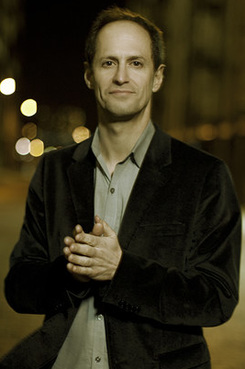
Jonny King.
When Jonny King was 10 years old, his parents took him on a jazz cruise to the Bahamas, with trumpeter Dizzy Gillespie headlining. It was 1975.
Ed and Ruth King preferred classical symphonies. But they were struck by their son’s early tilt toward jazz and his ability to plunk out songs by ear on the piano, or make them up on the spot.
Having hung out at clubs around New York (his mom befriended a lot of bartenders and managers to get him in), he met greats like Oscar Peterson and Cannonball Adderley, announcing himself as a jazz pianist. But even Ruth King was surprised when, during one evening’s show aboard ship, Jonny King rushed the stage in response to Gillespie’s call-out for audience members to join in a jam. “I tried grabbing his sleeve but there was no keeping him from the bandstand,” she remembers.
“I played some boogie-woogie and a 10-year-old’s idea of bebop—whatever it was, I seemed to kill it,” King recalled recently. “The rest of the trip people were asking for my autograph, and I got to pal around with Dizzy and the band. I pretty much knew at that point I was meant to be a jazz musician.”
Four decades later, King has more than delivered on that promise. Sitting in with heavyweight drummer Art Blakey while in his teens, and later owning a slot at storied jazz bar Bradley’s in Greenwich Village, King went on to play with the leading Young Turks of his era. That includes saxophonists Joshua Redman, Kenny Garrett and Joe Lovano, trumpeters Randy Brecker and Roy Hargrove, vibraphonists Joe Locke and Steve Nelson, guitarist Freddie Green, bassist Christian McBride and drummers Billy Drummond and Peter Washington. Reviewing an early CD, Downbeat magazine called King “one of the strongest piano voices of a new generation and a bandleader who kicks ass.”
King also became a prolific composer, despite limited formal training and poor sight-reading skills. Alto saxophonist Steve Wilson, recently touring worldwide with pianist Chick Corea, says, “I could record an entire album of Jonny’s songs—make that a double album—and be happy. All his tunes are hip and well thought out, they’re challenging and playable and full of surprises, rhythmically and harmonically. It’s amazing what he doesn’t know, because he knows so much.”
But for all the success there are noticeable gaps in King’s output. His website lists sporadic performance dates, with months falling between gigs and rarely beyond smaller New York venues like Small’s and Mezzrow in Greenwich Village. And he’s recorded only four albums as a leader, the last in 2012, leaving an extensive original songbook uncaptured. As Wilson, who appeared on King’s 1997 CD The Meltdown, puts it: “Even after all these years of playing at a high level, Jonny may be the best-kept jazz secret in New York—not among fellow musicians, but among the listening public.”
King is well aware of his lower profile. “Some people think I was sick or they come up after a set and ask, how come we never heard of you before?” he says. In fact, it’s remarkable he can sustain any musical career given that he leads a double, unmusical life—as a trademark and copyright litigator for one of the country’s top intellectual property law firms.
 

Jonny King.
While most of his peers are touring, rehearsing, recording or teaching, King—whose day-job name is Jonathan Z. King—is prepping witnesses for deposition, reviewing expert reports and arguing in court or before the Trademark Trial and Appeal Board on behalf of major drug companies, brand-name apparel firms and music conglomerates. He’s notched landmark wins, including cases involving trademarking internet search terms and copyrighting the resale of digital files.
As if his trial practice isn’t consuming enough, in 2013 the partners of King’s firm in New York—Cowan, Liebowitz & Latman, where he started as an associate in 1994—elected him chairman. The elevation pulled him into oversight of administrative matters on compensation, hiring, policy and recently, a move into fancy new digs on West 47th Street. Although a boutique with only 40 lawyers, Cowan Liebowitz represents name clients like Major League Baseball, Donna Karan, Aventis Pharmaceuticals, J. Crew and Universal Music, giving King’s left-side brain a lot to keep track of.
King’s modest corner office gives no hint of his musical persona—though it also doesn’t display his framed diplomas from Princeton University (Phi Beta Kappa) and Harvard Law School (where he was classmates with Barack Obama). A recent visit found stacked boxes of fruit roll-ups, evidence in a trade secret case he’s been handling for longtime client Promotion in Motion, makers of Welch’s Fruit Snacks. On his desk sat bound briefs filed before the U.S. Court of Appeals for the Second Circuit; on the wall hung an artist’s sketch of King delivering his opening statement to jurors in a novel trademark case involving dashboard car fresheners (he won).
King’s colleagues are unfazed by his jazz commitments. Cowan partner Richard Mandel has heard King play only once in 23 years of working together and admits jazz is not his thing. But he calls King, with whom he’s double-teamed on numerous cases, “a brilliant lawyer—the total package. He’s a superb brief writer and great strategist who also has outstanding courtroom skills handling witnesses, juries and judges.”
King’s clients likewise give him four-star reviews. Ellen Horowitz Dale, general counsel at Allendale, New Jersey-based confectionary manufacturer Promotion in Motion, has worked closely with King in several major trade secrets cases involving the company’s signature fruit snack products, including a dispute against Hershey and another matter against a global candy brand.
“Cowan is by far the best firm we’ve worked with and Jonny is the principal reason,” she says. “In our case against Hershey the company threw a ton of money and resources against us, with a large trial team from Kaye Scholer, but Jonny simply ripped them apart with his courtroom abilities and his sharp analysis of trademark law supporting our case. He’s so smart and really understands our business, but is also incredibly unpretentious and down-to-earth. If there’s such a thing as a swinging trial lawyer, Jonny is it.”
In straddling two worlds, King belongs to a small circle of jazz musicians who’ve led accomplished dual-track careers. Best known is pianist Denny Zeitlin, a Johns Hopkins-educated psychiatrist who for decades has maintained a thriving practice and teaching load in San Francisco while producing three dozen albums and touring to international acclaim.
There was drummer Pete La Roca, a firebrand who played with John Coltrane, Sonny Rollins and Freddie Hubbard but disappeared from the scene in 1968 to pursue a law degree at New York University. He returned a decade later, performing under his given name, Peter Sims, and even won a copyright lawsuit against a record label for re-releasing one of his albums under Chick Corea’s name. And these days, clubs in Washington feature a pianist-lawyer named Andrew Adair, who’s also a Capitol Hill lobbyist for a physicians’ trade group.
More than a performer, King is also a gifted writer about jazz, having authored a highly praised “insider’s guide” called “What Jazz Is” (Walker Books). It begins with an enticing scene-setter:
Years ago, I returned to my college dorm room, nearly comatose from another insufferable Renaissance history class. I put on “Relaxin’ with the Miles Davis Quintet,” dropped the needle on “If I Could Write a Book,” and lay down on our secondhand sofa. Red Garland’s eight-bar intro, Miles’ muted statement of the melody, John Coltrane’s roaring solo—I was instantly transported away from lectures, exams and crummy furniture, and my head was bobbing with the pulse of Paul Chambers’ bass beat. Something about that record has always rescued me, no matter from where or what.
One could be forgiven for wondering whether the demands of King’s legal career or hobbies, which include fly-fishing excursions to Oregon, Colorado, Belize and elsewhere, have dimmed his piano chops or his rapport with other musicians. One would be dead wrong. During his most recent appearance at Mezzrow in late October, performing with a trio that included bassist Ira Coleman and veteran drummer Victor Lewis, King’s playing was fluid and fiery, his technique in top form, with storytelling solos that zigged and zagged in sync with his bandmates, never mind that they’d had only one rehearsal. He burned through sets in which his own intricate tunes mixed with classics by Horace Silver and Herbie Hancock, along with an inspired solo mash-up of “Danny Boy”-meets-”Fiddler on the Roof” and “Shenandoah” that would have pleased the great Bill Evans.
“Jonny’s not big on rehearsing,” says bassist Coleman, noting he hadn’t worked with King for years prior to their Mezzrow reunion. “But his playing is so evolved and proficient, his command of styles so strong and his stage presence so relaxed, that you’re in the flow together from the first bar. It put a smile on my face to reconnect with him. There was that wonderful combination of familiarity and newness you can only achieve with a first-rate musician. That’s Jonny.”
King never considers which of his callings is the A-side or B-side. “Practicing law is my vocation, but I never stop playing piano or thinking about music, any more than I could stop breathing oxygen or speaking English,” he says.
King grew up in four-child household on New York’s Upper East Side. His father was a family physician and mother Ruth King a travel agent (her entrée into booking that fateful jazz cruise). Like his two older sisters, Jonny King started lessons on the family’s Baldwin spinet but blew them off after teaching himself Scott Joplin’s “The Entertainer” from “The Sting” when he was nine. “We were addled at first he wasn’t interested in classical, but learned to love jazz watching how excited he got discovering the music on his own,” Ruth King says.
By the time he got to high school, Jonny King was polished enough to perform frequently, first at school assemblies, then at bar mitzvahs and weddings. He was booked on a BBC show playing alongside piano legends Earl Hines and Mary Lou Williams.
“I wasn’t a prodigy but could improvise and find my way around chord structures, mostly from reconstructing what I heard on records,” he says. It helped that a friend was the daughter of Modern Jazz Quartet pianist John Lewis—King used the MJQ rehearsal studio to tool around, though he took instruction from a teacher named Tony Eless, an alumnus of Woody Herman’s band who helped him with theory, chordal harmony and how to transcribe tunes.
“Tony instilled that reverence for the language of jazz—I got to appreciate the oral history of the music and find my voice,” he says.
It was at Princeton that his performing flourished. “I was as much a professional musician as a college student, gigging constantly at clubs in Philadelphia, Trenton and Newark, as well as Princeton’s eating clubs,” he recounts, getting name pros from New York to join him and earning $800 a night for his groups. And yet his grades never suffered, even when working five nights a week. He credits that feat with being an English major and an ability to produce papers on little sleep.
Law school was no surprise. King had the professional drive, and he notes, “jazz conservatory programs didn’t interest me.” But he took a year’s deferment from Harvard to return home and focus on music, including studying with one of his idols, pianist Mulgrew Miller.
“We never looked at a sheet of music, but sat side by side at the Baldwin in our apartment and shared lines,” he says. “I’d watch him play bass and riff on top and then we’d switch positions. It was a magical connection, and my parents loved him. Mulgrew was a gentle, wonderful person.”
As the year advanced, more opportunities fell into place, including a tour in Spain and then suddenly, an invitation to audition for singer Betty Carter for an upcoming national tour. Known as a stern taskmaster, Carter helped launch many pianists’ careers—among them, Cyrus Chestnut and Benny Green. A stint as her accompanist would be a major-league ticket, but King had to decline the tryout.
“My parents had just sent our first tuition installment to Harvard and the law school didn’t have a two-year deferral, so it didn’t make sense to go see Betty, even knowing what I might have passed on,” he says. Not that the music stopped. Even as an overworked 1L, King secured a Thursday-Friday stint at the Charles Hotel’s Regatta Bar in Harvard Square, for $90 a set. “I was actually getting more playing time than a lot of guys I met from Berklee,” he says, referring to Boston’s renowned jazz college.
King also made a mark at Harvard, and not just for performing with the Black History Month band. By his third year, developing an interest in intellectual property law, he identified a legal gap he felt personally: the lack of copyright protection for improvisational jazz.
The fact that jazz involved spontaneous composition, along with styles and phrasing co-opted from other musicians who quoted one another, and was also a collaborative art form created by contributing authors (soloists), made it harder to assign copyright than other forms of music.
King wrote a paper, “The Anatomy of a Jazz Recording,” in which he outlined how a jazz quintet’s version of an old standard tune could contain nine separate copyrightable elements, only one of which reflected the original composer or publisher. The article drew interest from the American Society of Composers, Authors and Publishers, which published it in its annual Copyright Law Symposium, heady validation for a fledgling IP lawyer.
(For the record, King recalls taking classes with Barack Obama and seeing the future president at some of his gigs, though they weren’t friends.)
After graduating cum laude in 1991, King spent a year clerking for Massachusetts federal Judge Douglas Woodlock (who now holds senior status on the bench), then decided to try the straight-and-narrow as a litigation associate at one of Boston’s old-line firms, which he prefers not to name. He knew instantly it was a mistake. “A morbidly obese partner yelled at me to fetch him files and everyone seemed shell-shocked,” he recalls.
But something else triggered him to quit after less than a year. King’s live-in girlfriend Rosanna Graham, who was pursuing graduate studies at Harvard Divinity School, was battling breast cancer (the two had met at Princeton). “Rosanna died on July 27, 1993, and I packed it in right then and quit.” Having saved $20,000 from his playing, King “blew it all” on an extended fly-fishing trip to South America before returning to New York later that fall.
“I needed to produce something creatively, for Rosanna, and to prove that I had it,” he says. The result was an album on upstart label Criss Cross called, aptly enough, “In From the Cold.” Released in January 1994, it featured mostly his own compositions with a quintet fronted by two emerging saxophonists, altoist Mark Turner and tenor Vincent Herring. Not a blockbuster, ”Cold” did receive favorable reviews. One critic called King “a player and composer to watch.”
Clubbing around New York he found a recurring spot at Bradley’s on University Place, the primo hang-out for the city’s top pianists. King would glance up from his bench and see the likes of Cedar Walton, Kenny Barron, Tommy Flanagan, John Hicks, Joe Zawinul and other heroes sitting at the bar. Still, he acknowledges, “Those gigs didn’t cover the rent,” which is why he felt lucky to hook up with Cowan Liebowitz, where he was assigned to copyright and trademark cases.
“It was nuts at the beginning,” he recalls. “Bradley’s last set might end around 3:30 a.m, I’d rush home for a couple of hours sleep and get to the office by 8:30.” It got even nuttier when eight months into his job King was approached by tenor sax phenom Joshua Redman—himself a Harvard grad who had turned down Yale Law School—to join him on tour when his standing pianist couldn’t make the trip. Rounding out the quartet would be up-and-comers Christian McBride and Brian Blade on bass and drums.
“I couldn’t turn this one down,” King says, especially since Redman had helped research his “Anatomy of a Jazz Recording” article when they were friends in Boston. “I went to our chairman and asked for a leave of absence, which I knew was over the line. Cowan was already being awfully flexible around my music. But shockingly his response was, ‘We want you to be happy.’”
The tour with Redman (a four-month, three-continent whirlwind that included consecutive-night shows in Sao Paulo, Brazil, and Paris), was a triumph of three rising jazz superstars and one second-year associate. It gave King the nerve to go back to his boss when he returned to propose a part-time work schedule: eight months in the office, four months on music.
“I guess that was an unusual request, but our firm was ahead of the curve in encouraging a work-life balance, plus Jonny was an exceptional talent,” remembers Bill Borchard, Cowan’s former chair who still practices as senior counsel. “He was so passionately involved with his music, I believe it helped him become a better lawyer. The thing about Jonny is, he never looks like he’s actually working.”
With that unexpected blessing, King was able to take months-long breaks each year to concentrate on jazz, securing dates at the Blue Note, Smoke, Iridium, Jazz Standard, Birdland, Sweet Basil and other top New York clubs, as well as colleges, festivals and concert venues across the United States, Europe and Asia. He played with tenor sax legends George Coleman and Eddie Harris and was called as a sideman for friends’ albums. Thumbs-up reviews piled up from The New Yorker, The New York Times and various jazz sites. He saw his tunes recorded by respected players including bassist Dave Holland, pianist Renee Rosnes and vibist Steve Nelson. The rest of the year he was full-throttle on litigation and client work, although he continued to compose constantly.
“I don’t know what I would have done had the firm said no—probably turned total jazz pro,” he says. “They certainly won my loyalty and gave me the best of both worlds. My first year as a full-time lawyer wasn’t until 2006.” By then, he had two young daughters, Cece and Lila. King met his wife, Jacqueline Sailer—where else?—at Bradley’s. A former securities class action lawyer, she quit practice in 2011 to become a professional photographer and currently teaches yoga to inmates at Riker’s Island.
“Once the girls were born, I stopped hanging out so much at clubs, and didn’t like being away for stretches,” King says, a key reason his appearances shrunk to a tighter radius of venues closer to home. After a while, the scales started to lean toward the Cowan side.
One thing that hasn’t slipped is King’s plugging away at the shortcomings of copyright law as applied to jazz. Updating his original Harvard paper, King gives frequent presentations through CLE programs, most recently to a group of 100 trial lawyers at the Federal Bar Council Fall Retreat in October. Moderated by Denny Chin, senior judge of the U.S. Court of Appeals for the Second Circuit, the event was a performance of sorts, with King and trio mates Ira Coleman and Victor Lewis demonstrating the ways in which jazz still falls through the cracks of conventional copyright framework. One of King’s record label clients has asked for an in-house workshop on “Copyrighting America’s Classical Music.”
King continues to contend that copyright law has “somehow forgotten about jazz,” because of “both the idiosyncrasies of jazz—an improvised, collaborative form of music—and the Copyright Act’s rigid inability to adjust to those idiosyncrasies,” he writes his paper. “In truth, the business of jazz has evolved almost in spite of copyright law, so that pragmatic concerns of getting paid for your gig or recording overwhelm what the law technically provides.”
“That was an eye-opener for me,” says Coleman of the Bar Council session. “Jonny showed the lawyers how, by laying down a different beat, harmony or melody, jazz musicians are reinventing a work in every performance, even on a well-known standard. How do you protect a solo, an arrangement, or a rhythm in a broadcast or recording? So much of the legal language around music copyright is still tied to a traditional classical or pop perspective, not from the artistic standpoint of the improvisers, who likely are not being remunerated for their contributions. I came away half-thinking, maybe I should have gone to law school, too.”
With a heavy trial load and law firm to run, King nonetheless plans to be more visible at the keyboard in 2018, starting with a regular gig the last Tuesday of every month at Luca’s Jazz Corner, housed in a cozy Upper East Side restaurant called Cavatappo Grill.
“It’s just an upright piano but they have a nice scene and it’s a block from my apartment—I’ll do trios and mixed group sets,” he says. He hopes to do another album, nudged on by his publisher, eager to get more of his many tunes into circulation. And he already has another two-night appearance set in April at the super-intimate Mezzrow on West 10th Street.
However, there is one standing gig King continues to wave off, as he’s done year after year: Cowan’s annual holiday party. “I think we have budget to hire someone else for that,” he says. “Of course, I like to say it’s because the firm can’t afford me.”
Allan Ripp is principal at Ripp Media, a press relations firm in New York. He has not represented people or firms included in this piece.

Jim Eigo Jazz Promo Services T: 845-986-1677 E-Mail: jim@jazzpromoservices.com
http://www.jazzpromoservices.com

HAVE A JAZZ EVENT, NEW CD OR IMPORTANT ANNOUNCEMENT FOR THE JAZZ COMMUNITY YOU WANT TO PROMOTE? CONTACT JAZZ PROMO SERVICES FOR PRICE QUOTE.

CHECK OUT OUR NEW YOUTUBE VIDEO

Unsubscribe | Update your profile | Forward to a friend

PLEASE NOTE: IF YOU DO NOT WISH TO BE ON THIS MAILING LIST PLEASE RESPOND WITH ‘REMOVE’ IN THE SUBJECT LINE. IF YOU ARE RECEIVING DUPLICATE EMAILS OUR APOLOGIES, JAZZ PROMO SERVICES ANNOUNCEMENT LIST IS GROWING LARGER EVERY DAY…..PLEASE LET US KNOW AND WE WILL FIX IT IMMEDIATELY!

Copyright (C) 2018 All rights reserved.

Jazz Promo Services

269 State Route 94 South

Warwick, Ny 10990

Add us to your address book

slide

“Queen of the Blues” Denise LaSalle dies at 78 | SoulTracks

“Queen of the Blues” Denise LaSalle dies at 78 | SoulTracks

https://www.soultracks.com/story-denise-lasalle-dies


“Queen of the Blues” Denise LaSalle dies at 78
 
(January 9, 2018) For nearly two years SoulTrackers were praying for the health of R&B great Denise LaSalle, who suffered from congestive heart failure and later had her leg amputated. Sadly, we report today that the “Queen of the Blues” has died at a hospital in Nashville. She was 78.
 
LaSalle, born Ora Denise Allen, was raised in Mississippi but became a star in the blues world after moving to Chicago and signing with the legendary Chess Records in the late 60s. Her success then blossomed – and Denise LaSalle became a household name – in 1971 when she wrote and performed the #1 smash, “Trapped By A Thing Called Love.”
 
LaSalle proved over that decade that she was not only a great singer, but also a top notch songwriter and producer. She continued to chart big for two decades with hits like “Man Sized Job,” “Now Run And Tell That” “My Toot Toot” and “Love Me Right.”
 
While her commercial success had peaked by 1990, LaSalle continued to record and perform regularly around the world, and continued to connect with blues and Southern soul audiences. She also became a restauranteur through her Blues Legend Café. She won countless awards and is a member of the Rhythm & Blues Hall of Fame.
 
Denise LaSalle was a one of a kind performer, who also paved the way for future artists with her compelling writing and production work. She will be greatly missed.

Jim Eigo Jazz Promo Services T: 845-986-1677 E-Mail: jim@jazzpromoservices.com
http://www.jazzpromoservices.com

HAVE A JAZZ EVENT, NEW CD OR IMPORTANT ANNOUNCEMENT FOR THE JAZZ COMMUNITY YOU WANT TO PROMOTE? CONTACT JAZZ PROMO SERVICES FOR PRICE QUOTE.

CHECK OUT OUR NEW YOUTUBE VIDEO

Unsubscribe | Update your profile | Forward to a friend

PLEASE NOTE: IF YOU DO NOT WISH TO BE ON THIS MAILING LIST PLEASE RESPOND WITH ‘REMOVE’ IN THE SUBJECT LINE. IF YOU ARE RECEIVING DUPLICATE EMAILS OUR APOLOGIES, JAZZ PROMO SERVICES ANNOUNCEMENT LIST IS GROWING LARGER EVERY DAY…..PLEASE LET US KNOW AND WE WILL FIX IT IMMEDIATELY!

Copyright (C) 2018 All rights reserved.

Jazz Promo Services

269 State Route 94 South

Warwick, Ny 10990

Add us to your address book

slide

Maurice Peress, Conductor Who Worked With Ellington, Dies at 87 – The New York Times

Maurice Peress, Conductor Who Worked With Ellington, Dies at 87 – The New York Times

https://www.nytimes.com/2018/01/04/obituaries/maurice-peress-conductor-who-worked-with-ellington-dies-at-87.html
 
Maurice Peress, Conductor Who Worked With Ellington, Dies at 87
By NEIL GENZLINGERJAN. 4, 2018


Maurice Peress leading the Queens College Aaron Copland School of Music orchestra in 2012. Julie Glassberg for The New York Times
Maurice Peress, a conductor who worked closely with both Leonard Bernstein and Duke Ellington, and whose twin passions for jazz and classical music were reflected in his penchant for reconstructing important concerts from the past, died on Sunday at his home in Manhattan. He was 87.
His son, Paul, said the cause was leukemia.
Mr. Peress spent the last 33 years conducting the student orchestra at the Queens College Aaron Copland School of Music, where he established a master’s degree in conducting. But before settling into that role he led major orchestras, conducted the premieres of important works by Bernstein and others, and helped Ellington orchestrate some of his signature compositions.
Mr. Peress (pronounced PER-ess) also examined the historical underpinnings of American music, most notably in his book “Dvorak to Duke Ellington: A Conductor Explores America’s Music and Its African American Roots,” published in 2004.
Antonin Dvorak, the Czech composer, spent three years in the United States beginning in 1892, urging the development of an American musical tradition and famously saying, “In the Negro melodies of America I discover all that is needed for a great and noble school of music.”
Mr. Peress noted that two men who studied under Dvorak — Will Marion Cook and Rubin Goldmark — went on to be teachers of Ellington, Copland and George Gershwin. For Mr. Peress, perpetually interested in intersections between American jazz and the classical tradition, it was a pivotal connection.
“All the stories in my book are about the transfer of the center of creative power from Europe to America,” he wrote, “Dvorak being the prophet and Ellington its fulfillment.”
Mr. Peress might have seemed an unlikely champion of the importance of music drawn from the black experience. He was born on March 18, 1930, in Manhattan, the son of Jewish immigrants. His father, Henry, had been born in Baghdad into a family of traders and used to relax by playing the oud and singing in Arabic. His mother, the former Elsie Tygier, sang Yiddish and Polish folk songs to Maurice.
His parents owned a lingerie shop in Washington Heights in Manhattan. Young Maurice took up the bugle, playing reveille at scout camps. He made himself a hybrid instrument by cobbling two bugles together, and the noise from his practicing in his apartment apparently either annoyed or impressed an upstairs neighbor. One day, he recalled in his memoir, “Maverick Maestro” (2015), the neighbor, a mustachioed man in his 80s named Nell Speck, rang his doorbell.
“I played cornet for John Philip Sousa,” the man said. “What kind of cornet are you playing?”
When Mr. Peress showed him the contraption, the man brought him a better instrument — and gave him lessons to boot.

 
Mr. Peress conducting the American Jazz Orchestra at the Cooper Union in Manhattan at a rehearsal for a concert of Duke Ellington’s music. Vic DeLucia/The New York Times
He kept at it, playing in a dance band in the Catskills for a time and entering New York University as a music major. He graduated in 1952, in the midst of the Korean War, and was drafted into the Army the next year.
He spent most of his almost two years in the service assigned to a regimental band that had historically been black; President Harry S. Truman’s desegregation of the military was slowly integrating the unit. Mr. Peress’s children said they thought his love of jazz and interest in African-American influences in music really took hold when he was surrounded by black musicians in the Army.
While teaching at N.Y.U. and continuing to play, Mr. Peress was also studying conducting at the Mannes School of Music.
“I wanted to be in the music, not just one part of it,” he explained years later to The New York Times. “I wanted to be in the middle of it.”
In 1961, he auditioned for a one-year appointment as one of Bernstein’s three assistant conductors and was chosen, along with Seiji Ozawa and John Canarina. As part of a Carnegie Hall program in May 1962, Bernstein turned the New York Philharmonic over to Mr. Peress and Mr. Ozawa, who jointly conducted Charles Ives’s “Central Park in the Dark,” as the composer specified.
“Mr. Ozawa and Mr. Peress did their brief stint with thorough professionalism,” Harold C. Schonberg wrote in The Times.
Bernstein became something of a mentor to Mr. Peress, and a decade later would give him what he regarded as one of his most memorable assignments: In September 1971, Mr. Peress conducted the premiere of Bernstein’s “Mass” to open the Kennedy Center in Washington. He revisited the work in 2014, conducting it at Queens College.
After his year as Bernstein’s assistant conductor, Mr. Peress led the orchestra in Corpus Christi, Tex., for a dozen years, simultaneously conducting Austin’s orchestra for part of that time. He led the Kansas City Philharmonic from 1974 to 1980, which proved to be an unhappy period.
“The audience didn’t want to hear much new music,” he told The Christian Science Monitor in 1989. “I would introduce a new piece, and they would start booing and hissing.”
Parallel to his conducting career, Mr. Peress was working with Ellington, whom he met during a cultural festival at the White House in 1965; Mr. Peress was conducting a performance by the Joffrey Ballet there.
“Polite applause covered our exit,” he recalled in “Dvorak to Duke.” And then Ellington came on with his band and brought what had been a rather stiff crowd alive.

 
Mr. Peress, left, and Leonard Bernstein in 1975. Four years earlier, Mr. Peress conducted the premiere of Bernstein’s “Mass” to open the Kennedy Center in Washington. Paul Peress
“I was fired up,” Mr. Peress wrote, “wondering how a symphony conductor like myself could take part in this important music, music that spoke to me as profoundly as any other, music that reached out and embraced everyone.”
Afterward, he asked Ellington whether he had ever considered scoring his extended composition “Black, Brown and Beige” for symphony orchestra. The two worked together on that and other projects, capturing works that in some cases were ephemeral, tailored only to Ellington’s own band.
One piece they worked on was “Queenie Pie,” a musical that remained unfinished at Ellington’s death in 1974. In 1986, Mr. Peress joined with collaborators, including George C. Wolfe and Ellington’s son, Mercer, to complete the work and stage its world premiere at the American Music Theater Festival in Philadelphia. Robert Palmer, reviewing the production in The Times, called it “a wonderfully vital and coherent work.”
The “Queenie Pie” project drew on Mr. Peress’s talent for reconstructing and salvaging, which he displayed on a number of occasions.
In July 1989, he recreated the 1943 Carnegie Hall debut concert of Ellington and his orchestra for the hall’s Landmark Jazz series. In February 2014, at Town Hall, he marked the 90th anniversary of the program, which had included the premiere of Gershwin’s “Rhapsody in Blue,” by restaging it.
“I’m a re-creative artist,” Mr. Peress once said. “I’m not a creative artist, so to speak.”
Mr. Peress’s first marriage, to Gloria Vando, ended in divorce in 1980. His second wife, the former Ellen Waldron, whom he married in 1989, died in 2010. In addition to his son, a drummer and composer, he is survived by two daughters, Lorca Peress, a theater director, and Anika Paris, a singer; a brother, Herbert; two stepdaughters, Jennifer Waldron and Wendy Waldron; a granddaughter; and four step-grandchildren.
Mr. Peress’s musical curiosity was not limited to jazz and the black experience. In 1968, when he was leading the Corpus Christi orchestra, he was asked by the Bureau of Indian Affairs to be the project director for an initiative to bring performances to American Indian reservations that merged classical and tribal influences.
“We are looking for a project director, preferably American Indian, to lead a new music program,” he said he was told, someone having mistaken his last name for “Perez.” “Being that you are of Mexican origin and from Texas, we thought you might be our man.”
Mr. Peress, always quick with the witticism, responded efficiently.
“I replied, ‘I have only one word for you — Shalom!’ ” he recalled in his memoir.
Then he took the job.

Jim Eigo Jazz Promo Services T: 845-986-1677 E-Mail: jim@jazzpromoservices.com
http://www.jazzpromoservices.com

HAVE A JAZZ EVENT, NEW CD OR IMPORTANT ANNOUNCEMENT FOR THE JAZZ COMMUNITY YOU WANT TO PROMOTE? CONTACT JAZZ PROMO SERVICES FOR PRICE QUOTE.

CHECK OUT OUR NEW YOUTUBE VIDEO

Unsubscribe | Update your profile | Forward to a friend

PLEASE NOTE: IF YOU DO NOT WISH TO BE ON THIS MAILING LIST PLEASE RESPOND WITH ‘REMOVE’ IN THE SUBJECT LINE. IF YOU ARE RECEIVING DUPLICATE EMAILS OUR APOLOGIES, JAZZ PROMO SERVICES ANNOUNCEMENT LIST IS GROWING LARGER EVERY DAY…..PLEASE LET US KNOW AND WE WILL FIX IT IMMEDIATELY!

Copyright (C) 2018 All rights reserved.

Jazz Promo Services

269 State Route 94 South

Warwick, Ny 10990

Add us to your address book

slide

The Healing Power of Jazz | The New Yorker

The Healing Power of Jazz | The New Yorker

https://www.newyorker.com/culture/culture-desk/the-healing-power-of-jazz


The Healing Power of Jazz
Nicolas Niarchos
The jazz drummer Phil Young turned seventy last year. He still plays every Thursday, at the Lenox Saphire, in Harlem, from seven until eleven, at an event he calls “The Gathering of the Harlem Hip.” “Music has a very healing energy,” he tells the filmmakers Jay Dockendorf and Kenny Sule in this short film. “It deals with a force. It’s vibrations.” Young has a broad face that frequently creases into a smile. When you meet him, he looks at you with a wide, childlike grin, his head tilted slightly forward, carefully watching how his words affect you. But when he’s playing drums in bars and restaurants, or in schools, or on the street in Harlem, his expression is different: he puckers his face, eyes crimped, lips stretched into a broad oval, tongue flattened across the bottom of his open mouth in a cry that’s either silent or drowned out in a righteous swell of jazz.
 
Young has been playing drums on and off since Bobby (Blue) Bland spotted him at an amateur night at the Apollo Theatre, when he was fifteen, and invited him to come play in black night clubs across the South. Since then, he has toured internationally and played with greats such as Stanley Turrentine, George Benson, and Dizzy Gillespie. “There are times when insecurity creeps in,” Young admits. “Music has helped me to heal myself. Sometimes you don’t want to believe your press, but in fact I do make people happy.” In the film, Young tells two stories of how he’s watched his music heal people.
 
Witnessing the power of his music firsthand is a singular experience. I have seen unhappy couples reconcile at Phil’s nights. I have seen people exhausted from a day’s work uncoil into their evenings. I have seen a hundred-and-something-year-old woman launch from her seat and dance in front of his band.
 
I once spoke to Rodney Jones, the jazz guitarist, about Young. “He is the keystone of a musical arch that spans generations,” Jones said. He spoke about some of the jazz giants whom Phil has learned from and played with—Gillespie, Turrentine, Lee Morgan, Art Blakey. “If you think of jazz as a tree, they’re the rings around the trunk of the tree. Phil is a particularly beautiful branch of the tree. He is a throwback—and I mean that in the best possible way—to an earlier time, when the music was about what you felt,” Jones said. “In every generation, there are the unsung heroes, those people who get up in the morning wanting to leave the world a better place than they found it. Everyone that Phil has touched has felt it. He’s changed their lives. I mean, how do you quantify changing one person’s life? And Phil has changed so many.”
 

Jim Eigo Jazz Promo Services T: 845-986-1677 E-Mail: jim@jazzpromoservices.com
http://www.jazzpromoservices.com

HAVE A JAZZ EVENT, NEW CD OR IMPORTANT ANNOUNCEMENT FOR THE JAZZ COMMUNITY YOU WANT TO PROMOTE? CONTACT JAZZ PROMO SERVICES FOR PRICE QUOTE.

CHECK OUT OUR NEW YOUTUBE VIDEO

Unsubscribe | Update your profile | Forward to a friend

PLEASE NOTE: IF YOU DO NOT WISH TO BE ON THIS MAILING LIST PLEASE RESPOND WITH ‘REMOVE’ IN THE SUBJECT LINE. IF YOU ARE RECEIVING DUPLICATE EMAILS OUR APOLOGIES, JAZZ PROMO SERVICES ANNOUNCEMENT LIST IS GROWING LARGER EVERY DAY…..PLEASE LET US KNOW AND WE WILL FIX IT IMMEDIATELY!

Copyright (C) 2018 All rights reserved.

Jazz Promo Services

269 State Route 94 South

Warwick, Ny 10990

Add us to your address book

slide

A eulogy for “Mad” Harold Cardwell, jazz drumming legend | Music | nuvo.net

A eulogy for “Mad” Harold Cardwell, jazz drumming legend | Music | nuvo.net

https://www.nuvo.net/music/a-eulogy-for-mad-harold-cardwell-jazz-drumming-legend/article_414e6fc2-f0a0-11e7-b43c-d78ae72a66c3.html
 
A eulogy for “Mad” Harold Cardwell, jazz drumming legend

  •                   Kyle Long Jan 4, 2018 Updated Jan 4, 2018 (0)


The end of 2017 didn’t pass without losses, and Indianapolis lost one of its greatest jazz legends last month when “Mad” Harold Cardwell passed away at the age of 77 in late December. In the days following Cardwell’s death, dozens of his friends and fellow musicians have stepped up to describe the drummer’s unique contribution to music. But none have captured the essence of Cardwell as succinctly as the late NEA Jazz Master and IU professor David Baker.
“Harold is the closest Indiana has to Elvin Jones,” quoted Baker in the bio of Cardwell’s press kit. 
 
 
Grant Green : “Maybe tomorrow” from LP “Visions” -1971


<div class=”player-unavailable”><h1 class=”message”>An error occurred.</h1><div class=”submessage”><a href=”http://www.youtube.com/watch?v=QfxNlFEVESg” target=”_blank”>Try watching this video on www.youtube.com</a>, or enable JavaScript if it is disabled in your browser.</div></div>
Cardwell was born in Cincinnati, Ohio in 1940, but grew up in Buffalo, New York. Cardwell began performing professionally at age 15 playing with the legendary R&B group Hank Ballard and the Midnighters. During the ‘60s, Cardwell’s career kicked into high gear as he landed gigs with some of the biggest names in jazz. During the ’60s and ’70s Cardwell performed with artists including Eddie Harris, Dr. Lonnie Smith and Melvin Sparks. But the biggest break of Cardwell’s career came from jazz guitar icon Grant Green. Cardwell spent several years touring with Green, and recorded on a few of the guitarist’s classic albums for Blue Note, including Visions (1971), Shades of Green (1971), and The Final Comedown (1972).
In addition to the notoriety he gained from recording with Green on the prestigious Blue Note label, Cardwell picked up a couple defining elements of his career during his time with the guitarist. First being his nickname. I always assumed the title “Mad” Harold was a reference to Cardwell’s larger-than-life personality, but according to Cardwell’s bio, Green coined the name as an acronym for “master at drumming.”
Green also provided Cardwell with an opportunity to form one of his most significant musical partnerships when vibraphonist Billy Wooten joined Green’s touring band in 1969. After leaving Green’s band, Cardwell and Wooten formed a wildly popular Indianapolis-based group that prompted Cardwell to officially move to Indy in 1974. You can hear some incredible drumming from Cardwell on two classic Wooten-led LPs, The Nineteenth Whole’s Smilin’ (1972, Eastbound Records), and Wooden Glass’ Recorded Live (1972, Interim Records). 
 
 
Billy Wooten – “You Are Everything”


<div class=”player-unavailable”><h1 class=”message”>An error occurred.</h1><div class=”submessage”><a href=”http://www.youtube.com/watch?v=Sut0hmXu1f4″ target=”_blank”>Try watching this video on www.youtube.com</a>, or enable JavaScript if it is disabled in your browser.</div></div>
It’s worth noting that Cardwell was the last surviving member of Wooden Glass. Cardwell’s performance on the LP represents the best recorded document of his work. The album was recorded live at Indianapolis’ 19th Hole nightclub and has developed a huge cult following among soul and jazz fans around the world. Original copies of the record are considered a “holy grail” among vinyl collectors, and routinely sell for upwards of $1,000. 
Over the years Billy Wooten has received the lion’s share of attention for the success of Wooden Glass, but I would offer that Cardwell deserves equal recognition. For fans of Wooden Glass, the centerpiece of Recorded Live is a haunting instrumental version of The Dramatics’ soul classic “In The Rain.” In my opinion, it’s Cardwell’s drumming that make this version truly distinct. Cardwell’s taut rhythmic patterns anticipate the percussive boom bap pulse of Golden Era ‘90s hip-hop. It’s no surprise that Recorded Live has been sampled multiple times on tracks by rappers like Mos Def and Denmark Vesey. The beloved underground producer Madlib even created an eight-minute tribute to Wooden Glass  titled “6 Variations Of In The Rain.”
I regret that I never had a chance to interview Cardwell, but I did recently speak with one of his colleagues. Pianist Kenny Simms was leader of the acclaimed Indianapolis fusion group Merging Traffic. Simms remembers Cardwell playing a few gigs with Merging Traffic during the early 1970s. “He was a different guy, and a different drummer,” Simms said. “He left an impression on all the musicians here. If you didn’t know him in his early days, you missed the real Mad, the real player, the real fiery guy. As the cancer started taking its toll, he kind of wound down.” 
 
 
WE’VE ONLY JUST BEGUN – THE WOODEN GLASS feat. BILLY WOOTEN


<div class=”player-unavailable”><h1 class=”message”>An error occurred.</h1><div class=”submessage”><a href=”http://www.youtube.com/watch?v=RBQk2w-ulxE” target=”_blank”>Try watching this video on www.youtube.com</a>, or enable JavaScript if it is disabled in your browser.</div></div>
Simms described Cardwell’s style as “flowing,” and shared a memory of his last performance with the drummer. “The last gig he did with me was at a fundraiser. I was trying to get him to play a song in 5/4, and he couldn’t even hear 5/4. That’s how flowing his style was. But once we started playing the song, whatever he put in there, it worked. But it wasn’t 5/4, and I don’t know what it was! [laughs] Now that’s Mad Harold. He was a water-fill-the-glass type of guy.”
Cardwell’s induction into the Indianapolis Jazz Hall of Fame is long overdue, as is further recognition in Indianapolis. But the music Cardwell recorded with Grant Green and Wooden Glass continues to move jazz fans around the world.

Jim Eigo Jazz Promo Services T: 845-986-1677 E-Mail: jim@jazzpromoservices.com
http://www.jazzpromoservices.com

HAVE A JAZZ EVENT, NEW CD OR IMPORTANT ANNOUNCEMENT FOR THE JAZZ COMMUNITY YOU WANT TO PROMOTE? CONTACT JAZZ PROMO SERVICES FOR PRICE QUOTE.

CHECK OUT OUR NEW YOUTUBE VIDEO

Unsubscribe | Update your profile | Forward to a friend

PLEASE NOTE: IF YOU DO NOT WISH TO BE ON THIS MAILING LIST PLEASE RESPOND WITH ‘REMOVE’ IN THE SUBJECT LINE. IF YOU ARE RECEIVING DUPLICATE EMAILS OUR APOLOGIES, JAZZ PROMO SERVICES ANNOUNCEMENT LIST IS GROWING LARGER EVERY DAY…..PLEASE LET US KNOW AND WE WILL FIX IT IMMEDIATELY!

Copyright (C) 2018 All rights reserved.

Jazz Promo Services

269 State Route 94 South

Warwick, Ny 10990

Add us to your address book

slide

60s Soul Singer Betty Willis murdered in California | SoulTracks – Soul Music Biographies, News and Reviews

60s Soul Singer Betty Willis murdered in California | SoulTracks – Soul Music Biographies, News and Reviews

https://www.soultracks.com/story-betty-willis-dies
 
60s Soul Singer Betty Willis murdered in California

Like1.3K


(January 3, 2018) We are extremely sad to inform SoulTrackers that 60s soul singer Betty Willis was killed on the morning of New Year’s Day in Santa Ana, California. 22 year old Rosendo Xo Pec has been charged with murder and sexual assault, after he allegedly attacked Willis in a shopping mall parking lot, killing her. Willis was 76, and was reportedly homeless, living on the streets of Santa Ana.
After she left the music business, Ms. Willis worked for several years for the US Postal Service in Santa Ana.
It is a tragic event ending the life of a talented singer who had several modest hits in the 1960s, including “Take Your Heart,” “Act Naturally” and “Ain’t Gonna Do You No Good.”
We send our prayers along to Ms. Willis’s family and share the grief of fans for this inexplicable, senseless taking of her life.
 
 
BETTY WILLIS – TAKE YOUR HEART


<div class=”player-unavailable”><h1 class=”message”>An error occurred.</h1><div class=”submessage”><a href=”http://www.youtube.com/watch?v=XZNSmM0l7yA” target=”_blank”>Try watching this video on www.youtube.com</a>, or enable JavaScript if it is disabled in your browser.</div></div>
Thanks to SoulTracker Colton for letting us know

Jim Eigo Jazz Promo Services T: 845-986-1677 E-Mail: jim@jazzpromoservices.com
http://www.jazzpromoservices.com

HAVE A JAZZ EVENT, NEW CD OR IMPORTANT ANNOUNCEMENT FOR THE JAZZ COMMUNITY YOU WANT TO PROMOTE? CONTACT JAZZ PROMO SERVICES FOR PRICE QUOTE.

CHECK OUT OUR NEW YOUTUBE VIDEO

Unsubscribe | Update your profile | Forward to a friend

PLEASE NOTE: IF YOU DO NOT WISH TO BE ON THIS MAILING LIST PLEASE RESPOND WITH ‘REMOVE’ IN THE SUBJECT LINE. IF YOU ARE RECEIVING DUPLICATE EMAILS OUR APOLOGIES, JAZZ PROMO SERVICES ANNOUNCEMENT LIST IS GROWING LARGER EVERY DAY…..PLEASE LET US KNOW AND WE WILL FIX IT IMMEDIATELY!

Copyright (C) 2018 All rights reserved.

Jazz Promo Services

269 State Route 94 South

Warwick, Ny 10990

Add us to your address book

slide

Fred Bass, Who Made the Strand Bookstore a Mecca, Dies at 89 – The New York Times

Fred Bass, Who Made the Strand Bookstore a Mecca, Dies at 89 – The New York Times

https://www.nytimes.com/2018/01/03/obituaries/fred-bass-strand-bookstore-dies-at-89.html?rref=collection%2Fsectioncollection%2Fobituaries
 
Fred Bass, Who Made the Strand Bookstore a Mecca, Dies at 89
By WILLIAM GRIMES JAN. 3, 2018


Fred Bass, on the phone, at the Strand Bookstore in the early 1970s. The Strand Bookstore
Fred Bass, who transformed his father’s small used-book store, the Strand, into a mammoth Manhattan emporium with the slogan “18 Miles of Books,” died on Wednesday at his home in Manhattan. He was 89.
The cause was congestive heart failure, said Leigh Altshuler, the Strand’s director of communications.
Mr. Bass was 13 when he began working at the Strand, founded by his father, Benjamin. At the time, it was one of nearly 50 such stores concentrated along Fourth Avenue.

 
Mr. Bass at the Strand in June 2016. George Etheredge for The New York Times
Except for two years in the Army, he never left, until retiring in November 2017.
A year after taking over as manager of the store in 1956, he moved it from Fourth Avenue to its present location, on Broadway at 12th Street, where it occupied half the ground floor of what had been a clothing business. He set the Strand on a path of unstoppable expansion, taking over the entire first floor, then, in the 1970s, the top three floors, adding an antiquarian department along the way.
Following his father’s playbook, he pursued a policy of aggressive acquisition.
“At first I used to think he was crazy,” Mr. Bass told the cable news channel NY1 in 2015. “Why are we buying extra books? We haven’t sold all these. But we just kept buying and buying. It was a fact — you can’t sell a book you don’t have.”
The 70,000 books in the Fourth Avenue store swelled, at the Broadway site, to half a million by the mid-1960s and 2.5 million by the 1990s, requiring the purchase of a storage warehouse in Sunset Park, Brooklyn. By the time Mr. Bass bought the building for $8.2 million in 1997, the Strand had become the largest used-book store in the world.
Into his late 80s, Mr. Bass stood behind a counter, appraising books and authorizing payment on the spot to book-laden sellers cleaning out their apartments, critics offloading surplus review copies and the down-at-heel looking to collect a few dollars.

 
The Strand bookstore in 2016. When he took over, Mr. Bass set the store on a path of unstoppable expansion. Tony Cenicola/The New York Times
“We’re the last place left besides a pawnshop where you can walk in the door and sell stuff,” he told the newspaper The Villager in 2010. When he was not behind the counter he sat on a stool at the front of the store, a perch that allowed him, as he put it, “to promote smooth traffic flow.” On weekends he attended estate sales, amassing even more books.
“It’s a disease,” he told New York magazine in 1977. “I get an attack, something like a panic, of book-buying. I simply must keep fresh used books flowing over my shelves. And every day the clerks weed out the unsalable stuff from the shelves and bins and we throw it out. Tons of dead books go out nightly. And I bought ’em. But I just have to make room for fresh stock to keep the shelves lively.”
Fred Bass was born on June 28, 1928, in Manhattan, a year after his father, an immigrant from Lithuania, had opened the Pelican Book Shop on Eighth Street, near Greene Street. Ben Bass had developed book fever browsing the stores on Fourth Avenue during lunch breaks from his job in a nearby fabric store. Fred’s mother, the former Shirley Vogel, was an immigrant from Poland who died of cancer when he was 6.
Ben Bass, who died in 1978, did not thrive in his new occupation. He was forced out of his Eighth Street premises in 1929 and opened the Strand on Fourth Avenue with $300 in savings and another $300 in borrowed money. The cash register was a cigar box. In the early days, to keep expenses down, he slept on a cot in the back of the shop.

 
The Strand in 1938. The Strand Bookstore
It was not a successful concern, and the onset of the Depression made it even less so. Destitute, he placed Fred and his daughter, Dorothy, in foster care with a couple in the East Village.
After graduating from DeWitt Clinton High School in the Bronx, Fred enrolled in Brooklyn College, earning a degree in English in 1949. He attended classes by day and worked for his father in the afternoons, as he had since the age of 13. He swept the floor, organized the shelves and visited private homes to scout out books, which he carried on the subway to the Strand, by then at 81 Fourth Avenue, between 10th and 11th Streets.
“I got the dust in my blood and I never got it out,” he told McCandlish Phillips, a reporter for The New York Times and the author of “City Notebook: A Reporter’s Portrait of a Vanishing New York” (1974).
Mr. Bass was drafted into the Army in 1950 and posted to West Germany. In 1952, while serving stateside in New Jersey, he married Patricia Miller. She survives him, as do their daughter, Nancy Bass Wyden, who now owns the business; his sister, Dorothy Bass; a half sister, Eleanor Allen; and three grandchildren.

 
Fred Bass and his father, Benjamin, outside the family store in an undated photograph. The Strand Bookstore
Ms. Wyden, whose husband is Senator Ron Wyden, Democrat of Oregon, took over the store on her father’s retirement.
The Fourth Avenue book district, which ran from Union Square to Astor Place, was flavorful, its dozens of bookstores run by eccentrics who often seemed to regard customers as an intrusion. Many a patron left with the distinct impression that his or her purchase had been grudgingly tolerated rather than encouraged. Rising rents inexorably thinned the ranks, leaving the Strand the sole survivor of what had been one of New York’s most distinctive neighborhoods.
Mr. Bass offered another reason for the demise of Booksellers’ Row to NY1. “What happened to Fourth Avenue, essentially, it was run by a lot of very interesting, strong, self-centered individuals, including my dad, and very few of them imparted knowledge to the younger generation,” he said.
Competition was not friendly. When the Strand moved to Broadway, booksellers on Fourth Avenue refused to tell confused customers where to find it.

 
A young Fred Bass at the store in an undated photo. The Strand Bookstore
After taking over management of the store, Mr. Bass introduced a number of innovations. He established satellite Strands in kiosks outside the entrance to Central Park on Fifth Avenue at Grand Army Plaza and downtown in the South Street Seaport. In 2013, the Strand opened an outpost in the Flatiron district. In 2016, the Strand opened a summer-season kiosk in Times Square.
Test Your Book Smarts
Can you pass the Strand’s literary quiz? Match each book with its author.

 
Most famously, Mr. Bass created a literary quiz for prospective Strand employees to take when filling out their applications. “I thought it was a quick way to find if somebody had any knowledge of books,” he told The Times in 2016. Applicants had to match 10 authors with 10 titles, and maneuver around one trick question, in an exercise that became a cherished bit of New York lore.
Prodded by his daughter, who joined the business in 1986, Mr. Bass consented to a major renovation and expansion of the store in 2005, adding an elevator and air-conditioning and streamlining the floors to make browsing easier. The Strand began selling merchandise like T-shirts and tote bags, which now account for about 15 percent of total revenues, and, tentatively at first, began offering new books at a discount.
Mr. Bass was fond of telling journalists that the Strand, just one of many bookstores in its infancy, contained more books and had more employees than the rest of the stores along Booksellers’ Row combined in that district’s heyday.
“My dream was to get a big bookstore, which I’ve achieved,” he told NY1. “I’m very happy about that.”
Correction: January 3, 2018
An earlier version of this obituary omitted the name of one of Mr, Bass’s survivors. In addition to those named, he is survived by a sister, Dorothy Bass.

Jim Eigo Jazz Promo Services T: 845-986-1677 E-Mail: jim@jazzpromoservices.com
http://www.jazzpromoservices.com

HAVE A JAZZ EVENT, NEW CD OR IMPORTANT ANNOUNCEMENT FOR THE JAZZ COMMUNITY YOU WANT TO PROMOTE? CONTACT JAZZ PROMO SERVICES FOR PRICE QUOTE.

CHECK OUT OUR NEW YOUTUBE VIDEO

Unsubscribe | Update your profile | Forward to a friend

PLEASE NOTE: IF YOU DO NOT WISH TO BE ON THIS MAILING LIST PLEASE RESPOND WITH ‘REMOVE’ IN THE SUBJECT LINE. IF YOU ARE RECEIVING DUPLICATE EMAILS OUR APOLOGIES, JAZZ PROMO SERVICES ANNOUNCEMENT LIST IS GROWING LARGER EVERY DAY…..PLEASE LET US KNOW AND WE WILL FIX IT IMMEDIATELY!

Copyright (C) 2018 All rights reserved.

Jazz Promo Services

269 State Route 94 South

Warwick, Ny 10990

Add us to your address book

slide

American Songwriter : Lyric of the Week | Son House, “Death Letter”

American Songwriter : Lyric of the Week | Son House, “Death Letter”


Lyric of the Week
Son House, “Death Letter”


View this email in your browser
Forward to a Friend >>


LYRIC OF THE WEEK

Son House, “Death Letter”

Click here to go Behind the Lyric.


Sponsor


NEWS
Rick Hall, Legendary R&B Producer at FAME Studios, Dies at 85
Hall produced such iconic R&B acts as Wilson Pickett, Aretha Franklin, Otis Redding, Arthur Alexander and Etta James, among myriad others. Early in his career, he had songs recorded by George Jones, Brenda Lee and Roy Orbison. “I had a tremendous work ethic and I had a God-given music talent,” Hall told American Songwriter in 2015. Read more.


NEWS
New Album, Man Of The Woods, On The Way From Justin Timberlake
Justin Timberlake has already announced one of the more exciting pieces of news for the typically sleepy first quarter of music releases. Read more and watch the trailer for the album here.


CONTESTS
Enter the March/April 2018 Lyric Contest
Want a chance to win this beautiful Paul Reed Smith A30E guitar and more? Submit your original lyrics here


Copyright © 2017, All rights reserved.
You are receiving this email because you opted in.
unsubscribe from this list    update subscription preferences 


Jim Eigo Jazz Promo Services T: 845-986-1677 E-Mail: jim@jazzpromoservices.com
http://www.jazzpromoservices.com

HAVE A JAZZ EVENT, NEW CD OR IMPORTANT ANNOUNCEMENT FOR THE JAZZ COMMUNITY YOU WANT TO PROMOTE? CONTACT JAZZ PROMO SERVICES FOR PRICE QUOTE.

CHECK OUT OUR NEW YOUTUBE VIDEO

Unsubscribe | Update your profile | Forward to a friend

PLEASE NOTE: IF YOU DO NOT WISH TO BE ON THIS MAILING LIST PLEASE RESPOND WITH ‘REMOVE’ IN THE SUBJECT LINE. IF YOU ARE RECEIVING DUPLICATE EMAILS OUR APOLOGIES, JAZZ PROMO SERVICES ANNOUNCEMENT LIST IS GROWING LARGER EVERY DAY…..PLEASE LET US KNOW AND WE WILL FIX IT IMMEDIATELY!

Copyright (C) 2018 All rights reserved.

Jazz Promo Services

269 State Route 94 South

Warwick, Ny 10990

Add us to your address book

slide

Rose Marie, Showbiz Veteran and ‘Dick Van Dyke Show’ Star, Dies at 94 – The New York Times

Rose Marie, Showbiz Veteran and ‘Dick Van Dyke Show’ Star, Dies at 94 – The New York Times

https://www.nytimes.com/2017/12/28/obituaries/rose-marie-dead.html?rref=collection%2Fsectioncollection%2Fobituaries
 
Rose Marie, Showbiz Veteran and ‘Dick Van Dyke Show’ Star, Dies at 94
By ALISON J. PETERSONDEC. 28, 2017


Rose Marie in 2001 at a ceremony honoring her with a star on the Hollywood Walk of Fame. Rose Prouser/Reuters
Rose Marie, who became a radio star as a toddler in the 1920s and a television star on the hit sitcom “The Dick Van Dyke Show” in the 1960s — and who continued performing into the 21st century — died on Thursday in the Van Nuys neighborhood of Los Angeles. She was 94.
Her death was announced on her website and confirmed by her longtime publicist, B. Harlan Boll.
Originally known as Baby Rose Marie, she is probably best remembered for her “Dick Van Dyke Show” role as Sally Rogers, one of three comedy writers — the others were Rob Petrie (Mr. Van Dyke) and Buddy Sorrell (Morey Amsterdam) — who worked for the fictional series-within-a-series, “The Alan Brady Show.”
Sally was witty, wisecracking and independent-minded, but she was also perpetually on the hunt for a husband; though tough as nails, she was not immune to romantic misadventures. Her main significance, though, was that she worked as a comedy writer, a rarity for women at the time. (One inspiration for the role was said to be Selma Diamond, who had written for Sid Caesar in the 1950s.)
The action on “The Dick Van Dyke Show,” seen on CBS from 1961 to 1966, mostly alternated between the team’s Manhattan office and Rob’s home in New Rochelle, where his wife, Laura, was played by Mary Tyler Moore, who died in January. Created by Carl Reiner (who based it on his own experience writing for Mr. Caesar and played the part of Alan Brady), it was widely praised for its smart writing and its gifted ensemble, of which Rose Marie was an integral part. It consistently shows up on lists of television’s best comedies ever.
Rose Marie was nominated for three Emmy Awards for her work on the show, which itself was nominated for a total of 25 and won 15.

 
Rose Marie in 1961 on “The Dick Van Dyke Show” with Morey Amsterdam and Dick Van Dyke. CBS Photo Archive, via Getty Images
After “The Dick Van Dyke Show” ended, she had a recurring role on the second and third seasons of the sitcom “The Doris Day Show,” playing Ms. Day’s friend and co-worker, and appeared on “The Love Boat,” “Cagney & Lacey,” “Murphy Brown,” “Wings,” “Suddenly Susan” and many other shows.
She was also seen frequently — from the first episode, in 1966, to the last, in 1980 — on the original version of “Hollywood Squares,” the game show on which celebrities answered questions (and made jokes) to help contestants score X’s or O’s on a giant tick-tack-toe board. There, with her trademark bow in her hair, she flaunted the persona she had perfected: a feisty, witty, outspoken spinster (although she was actually a widow) who refused to grow old without a fight.
Rose Marie Mazzetta was born on Aug. 15, 1923, in Manhattan, the first of two children of Frank Mazzetta, a vaudeville performer known professionally as Frank Curley, who later appointed himself her manager, and Stella Gluscak. Her parents never married; according to her memoir, “Hold the Roses” (2003), her father was married to another woman when she was born.
Shortly after winning a talent contest at age 3 at the Mecca Theater in Manhattan, she began her professional career as Baby Rose Marie. By the time she was 4 she was starring on a local radio show, and within a year after that she had her own national show on NBC.
Her initial success was met with some skepticism: Baby Rose Marie belted her songs (some of them with very grown-up lyrics) in a mature, bluesy voice, and many listeners did not believe she was a child. To prove that she was indeed a young girl and not a petite adult, NBC organized a national tour for her. She sang at RKO movie theaters across the country, trying to dodge child labor laws as she went. In her memoir, she said her father was arrested more than 100 times for breaking such laws.

 
Baby Rose Marie in 1930, the year she turned 7. She began performing under that name after winning a talent competition at age 3 and became an NBC radio star two years later. NBC
In 1929 she performed three songs in an early sound film, the eight-minute Vitaphone short “Baby Rose Marie the Child Wonder.” In 1933 she appeared in the movie “International House,” whose all-star cast also included W. C. Fields and the team of George Burns and Gracie Allen.
In this first phase of her career, she performed with Rudy Vallee, Benny Goodman and Milton Berle, among many others. She had at least one famous friend outside show business as well: Through her father she met Al Capone, who took an interest in her career, often driving her to and from shows. She referred to him as “Uncle Al” in her memoir and quoted him saying, “If you ever need me for anything, tell your father to call me.”
She continued to perform as Baby Rose Marie until she was a teenager, when she took a brief break from show business to finish high school. She then began working as both a singer and a comedian in nightclubs across the country, billed as just plain Rose Marie.
She was on the all-star bill at the opening night of the Flamingo Hotel in Las Vegas in 1946. She appeared on Broadway in the Phil Silvers musical “Top Banana” in 1951. And then came television.
Appearances on numerous variety shows, as well as recurring roles on the sitcoms “My Sister Eileen” and “The Bob Cummings Show” and even the occasional dramatic part, established her as a familiar presence on the small screen. “The Dick Van Dyke Show” made her a star all over again.
In 1946 Rose Marie married Bobby Guy, a trumpeter with Kay Kyser’s big band who went on to work with the NBC orchestra. He died in 1964, and she never remarried. They had one daughter, Georgiana Guy, who survives her.
In the late 1970s and early ’80s, Rose Marie toured the country alongside the singers Rosemary Clooney, Helen O’Connell and Margaret Whiting with an act called “4 Girls 4.” Reviewing it in The New York Times in 1979, John S. Wilson described her as “primarily a comedienne, shooting out one-liners as she sprawls over a piano and shouting out a few lines of song in a husky, gravel-edged voice.”
She never stopped working. Among her later credits was a return to the role of Sally Rogers on the hourlong special “The Dick Van Dyke Show Revisited” in 2004.
Last month, she was the subject of a documentary, “Wait for Your Laugh,” directed by Jason Wise. Reviewing it for The New York Times, Jason Zinoman wrote, “In between the successes of Lucille Ball and Carol Burnett, Rose Marie, this movie argues, was one of the most important female comic voices in America.”
Throughout her career, Rose Marie’s fellow performers marveled at how hard she worked to win over an audience — and how consistently she succeeded.
In a 2011 interview with the show business historian Kliph Nesteroff, she talked about being visited backstage in Las Vegas, after a typically triumphant performance, by Sheldon Leonard and Danny Thomas, who were so impressed that they ended up hiring her for “The Dick Van Dyke Show,” which they were producing.
“They said, ‘Don’t you ever bomb?’” she recalled. “I said, ‘I try not to.’”
 

Jim Eigo Jazz Promo Services T: 845-986-1677 E-Mail: jim@jazzpromoservices.com
http://www.jazzpromoservices.com

HAVE A JAZZ EVENT, NEW CD OR IMPORTANT ANNOUNCEMENT FOR THE JAZZ COMMUNITY YOU WANT TO PROMOTE? CONTACT JAZZ PROMO SERVICES FOR PRICE QUOTE.

CHECK OUT OUR NEW YOUTUBE VIDEO

Unsubscribe | Update your profile | Forward to a friend

PLEASE NOTE: IF YOU DO NOT WISH TO BE ON THIS MAILING LIST PLEASE RESPOND WITH ‘REMOVE’ IN THE SUBJECT LINE. IF YOU ARE RECEIVING DUPLICATE EMAILS OUR APOLOGIES, JAZZ PROMO SERVICES ANNOUNCEMENT LIST IS GROWING LARGER EVERY DAY…..PLEASE LET US KNOW AND WE WILL FIX IT IMMEDIATELY!

Copyright (C) 2018 All rights reserved.

Jazz Promo Services

269 State Route 94 South

Warwick, Ny 10990

Add us to your address book

slide

Larry Harris, Promoter of a Risk-Taking Record Label, Dies at 70 – The New York Times

Larry Harris, Promoter of a Risk-Taking Record Label, Dies at 70 – The New York Times

https://www.nytimes.com/2017/12/28/obituaries/larry-harris-dead-casablanca-records.html?rref=collection%2Fsectioncollection%2Fobituaries
 
Larry Harris, Promoter of a Risk-Taking Record Label, Dies at 70
By NEIL GENZLINGERDEC. 28, 2017


Larry Harris of Casablanca Records backstage with Gene Simmons of Kiss in Detroit in 1975. Kiss was one of the mainstays of Casablanca’s roster, along with Donna Summer, Cher and the funk band Parliament. Fin Costello/Redferns, via Getty Images
Larry Harris, who helped his second cousin Neil Bogart found Casablanca Records, a flamboyant company that brought Kiss, Donna Summer and other splashy acts to the mainstream spotlight in the 1970s, died on Dec. 18 in Port Angeles, Wash. He was 70.
His son, Morgan, said the cause was an abdominal aneurysm.
Casablanca, whose parties and other stimulant-enhanced antics are part of music industry lore, rose and fell with the disco craze and is often identified with that genre. But its roster was wide-ranging, encompassing not only Kiss, the makeup-encrusted rock band, but also Cher, the funk band Parliament and stand-up comics like Robin Williams and Rodney Dangerfield.
Mr. Harris was the No. 2 man at the company behind Mr. Bogart, who had what Mr. Harris called a “sky’s the limit” approach to promoting the label’s acts.
“Publicity, promotion, advertising, tour support — we went the distance on everything we could,” Mr. Harris told the website Legendary Rock Interviews in 2011. “We flew everyone first class, and limos all over the place. We wanted to stand out as the funnest label ever, and I think we accomplished that.”
Larry Alan Harris was born on May 31, 1947, in Brooklyn. His father, Oscar, was a salesman, and his mother, the former Gertrude Gilbert, was a homemaker. He received a bachelor’s degree from the New York Institute of Technology.
In his 2009 book, “And Party Every Day: The Inside Story of Casablanca Records,” written with Curt Gooch and Jeff Suhs, Mr. Harris recalled an early, unexpected brush with the music business. He and some friends headed to the Woodstock festival in the summer of 1969, but they were more prepared than many — he had booked a hotel room nearby. When he arrived he was surprised to find that the hotel was the de facto headquarters for the festival’s organizers and that many of the performers were staying there. Arlo Guthrie, he said, helped him push his car out of the mud after the famous rainstorm.
“Of the hundreds of thousands camped out on Yasgur’s farmland, I’m not sure that any could claim to have gotten more out of Woodstock than I did,” he wrote.
In 1971, Mr. Harris interviewed for a job with Mr. Bogart, whom he had met only briefly a decade earlier. Mr. Bogart, four years older than Mr. Harris, was already general manager of the Buddah and Kama Sutra record labels, which had enjoyed some success, especially with bubblegum pop. Mr. Bogart hired him as a promotion man, responsible for building relationships with retail outlets and radio stations in the New York area.
By 1973 Mr. Bogart was growing restless. He founded his own label, Casablanca (the movie of that name, of course, starred Humphrey Bogart), and took Mr. Harris with him. The two had auditioned Kiss for Buddah, and they quickly signed the band to the new label, though it would take several albums and several years before the band’s attention-getting stage show translated into significant record sales with “Alive!,” a live double album released in 1975.

Mr. Harris in an undated family photograph.
Casablanca’s no-holds-barred approach was evident early: In February 1974, the label staged an elaborate party at the Century Plaza Hotel in Los Angeles to introduce itself and Kiss. The event had a Casablanca — and “Casablanca” — theme.
“There was a live camel,” Mr. Harris recalled in an interview for the 2013 book “Nothin’ to Lose: The Making of KISS, 1972-1975.” “Palm trees were brought in, real and fake.”
Though it took Kiss a while to generate record sales, Casablanca had quicker success with a relatively unknown singer it signed in 1975, Donna Summer. Her first album for the label, “Love to Love You Baby,” was released that year and became a huge hit, as did its title song, full of the sounds of sexual ecstasy.
Ms. Summer’s music largely defined the disco era for the rest of the decade. Among other disco acts on Casablanca were the Village People, an eclectically costumed bunch whose hits included “Macho Man” and “Y.M.C.A.”
Casablanca, though, also had failures, most notably four solo albums by the members of Kiss that it released simultaneously in 1978. The company expected four hits; instead the albums quickly landed in the discount bins.
If Casablanca had oversaturated the market with Kiss material, disco too was proving to have its limits. By the end of the 1970s the genre was dying out, and Casablanca was feeling the effects. Mr. Harris left the company at the end of the decade, as did Mr. Bogart, who died of cancer two years later. Casablanca was absorbed by PolyGram and later went dormant, although the label name has been revived several times since.
In 1989, Mr. Harris, who had married Mary Candice Hill in 1975, moved to Bellevue, Wash., where he worked for the Track Record Company. In 2002, he moved to Port Angeles, Wash. That same year he opened a comedy club, the Seattle Improv.
In addition to his wife and son, he is survived by a daughter, Emily Harris, and two sisters, Patricia Lusthaus and Arlene Hauser.
The 1970s at Casablanca’s headquarters in Los Angeles were full of cocaine and extreme behavior, but Mr. Harris bristled at a passage in a 1990 book by Fredric Dannen, “Hit Men: Power Brokers and Fast Money Inside the Music Business,” which claimed that the offices closed at 3 p.m. every day so that the wildness could begin.
“While I can appreciate overstatement for humor’s sake,” Mr. Harris wrote in his book, “the comment is very misleading. We had a ton of fun at Casablanca, and we indulged in all the vices you’d expect, but that never kept us from working hard and putting in long hours.”
 

Jim Eigo Jazz Promo Services T: 845-986-1677 E-Mail: jim@jazzpromoservices.com
http://www.jazzpromoservices.com

HAVE A JAZZ EVENT, NEW CD OR IMPORTANT ANNOUNCEMENT FOR THE JAZZ COMMUNITY YOU WANT TO PROMOTE? CONTACT JAZZ PROMO SERVICES FOR PRICE QUOTE.

CHECK OUT OUR NEW YOUTUBE VIDEO

Unsubscribe | Update your profile | Forward to a friend

PLEASE NOTE: IF YOU DO NOT WISH TO BE ON THIS MAILING LIST PLEASE RESPOND WITH ‘REMOVE’ IN THE SUBJECT LINE. IF YOU ARE RECEIVING DUPLICATE EMAILS OUR APOLOGIES, JAZZ PROMO SERVICES ANNOUNCEMENT LIST IS GROWING LARGER EVERY DAY…..PLEASE LET US KNOW AND WE WILL FIX IT IMMEDIATELY!

Copyright (C) 2018 All rights reserved.

Jazz Promo Services

269 State Route 94 South

Warwick, Ny 10990

Add us to your address book

slide

Louisiana in Los Angeles: How New Orleans Jazz Traveled to California – Los Angeles Review of Books

Louisiana in Los Angeles: How New Orleans Jazz Traveled to California – Los Angeles Review of Books

https://lareviewofbooks.org/article/louisiana-los-angeles-new-orleans-jazz-traveled-california/?mc_cid=b2185ad988
 
Louisiana in Los Angeles: How New Orleans Jazz Traveled to California
By Lynell George
 
 
DECEMBER 27, 2017

This piece appears in the LARB Print Quarterly Journal: No. 16,  Art
To receive the LARB Quarterly Journal, become a member  or  donate here.
¤
Gold might be hiding in plain sight; some small stowaway that’s been overlooked, or somehow dislodged, knocked into plain view. I’m always hoping for some sliver of a remnant.
I knew better, but I tossed my notebook and camera into the car anyway and threaded out the driveway. A few years back, sparked by a couple of sentences I couldn’t shake, I slipped out just after dawn for a little Sunday morning ghost chasing. I’d gotten midway through Howard Reich and William Gaines’s vivid 2003 biography: Jelly’s Blues: The Life, Music, and Redemption of Jelly Roll Morton, my imagination adrift in the descriptions of Morton’s rollicking Los Angeles years. The broadcasting-24-hour Ferdinand Joseph LaMothe Morton (better known as Ferd or simply “Jelly Roll”) was his own sky-sweeping searchlight and publicity department; Los Angeles was just another stop along the frenzied nonstop press tour that was his entire life. As the self-proclaimed “inventor of jazz,” Morton, despite his ornate yet delicate polyphonic piano stylings, was as much a genius as he was bombastic.
The reporter in me wanted more. The night before, I’d dashed out a couple of addresses and some approximations based on the narrative’s descriptions, and had them at the ready when I snaked south down the 110 Freeway to Central Avenue. I wasn’t aiming for the area we Angelenos consider “Jazz Street,” but a corridor further north, closer to downtown’s heart. I was looking for the site of the old Cadillac Café, as well as the Hotel Anita (named for Morton’s paramour, Anita Gonzalez) — where Morton had taken up residence for a time in Los Angeles. I knew to expect little, but what I found was exactly nothing. Numerical gaps, absent street addresses, a parking lot, and a deserted strip mall. Somewhere in this jumble I realized I’d scared up more questions than answers. It hadn’t been my first try. So many times, I’d hoped to locate some vestige, some sense of former place, a hint of that wild, wide-open California that Morton and his Louisiana cohort had tumbled into. (Phil Pastras’s 2001 book, Dead Man’s Blues: Jelly Roll Morton Way Out West, fully embraces this chapter — Morton’s West Coast years — Los Angeles and beyond — “an odyssey within an odyssey.”)
But what I wanted to understand most: What did he and so many see when they arrived here, tired but exhilarated, finally unburdened of their pasts? What was their first glimpse? How did California suit them? How did it find its way into their creative imagination, their melodies?
For them, California may have just as well been a lyric in a song. Not simply the word — the way the syllables tumbled across the tongue, the stresses, lifts, and pauses — but the very region itself, poetry. The physicality, its varied climates, diverse terrains, and the mysteries that come with vastness could be stanzas or choruses in and of themselves. For African Americans dreaming of opportunity in the early part of 20th century, that lure, the music in California’s new-start promise, was embedded into the consciousness. It burrowed deep. It was the necessary fuel — inspiration — to carry onward beyond known possibilities.
Roughly between 1910 and 1970, in two great waves of migration, six million African Americans would journey out of the nightmare of the American South, fleeing post-slavery horrors: Jim Crow segregation, lynching, nonexistent or stunted economic opportunities. The sentence of a still-circumscribed life set families in motion. My family was one of them, tipped toward a musical-sounding myth.
Migrants carved paths across the country, pointing northeast, midwest, and way west to make a way for themselves: assembly-line jobs, mining, steel mills, skilled labor, railroad work, and later, aerospace. But they weren’t the only laborers looking to flee the constraints and hazards of the South. From early on, artists were leaving too: the chroniclers who would write the poems, who would lay paint on canvas, or who would compose and perform the music that filled in the spaces between work and home chores. So many of these migrant forebears had at least one California chapter.
California was a prayer.
“California … is a flim-flam town.”
Buildings rise and fall, but vivid stories endure, can resuscitate and reanimate memory. The great guitarist, banjo player, and expansive raconteur Danny Barker was nothing if not a living, breathing story, absolutely encyclopedic in scope. Born in New Orleans, Louisiana in 1909, Barker led a peripatetic life. Part of the legendary Barbarin family of musicians (among them, his grandfather Isidore, his older uncles Louis and Paul), Barker’s matriculation into music was as expected as learning to walk and talk. “Naturally, I was entangled in this scene” he said. His playing and sense of time was inflected with the idiosyncratic syncopation of his native place. From an early age, he knew that that first line of New Orleans jazz players, those players who laid the groundwork, needed to tell their stories. The long days and the itinerant nature of the work — a no-curfew town, life on the road — meant you might not necessarily be there to relate the details, not to mention to guard the particulars of history.
A Life in Jazz, Barker’s expansive autobiography (recently reissued by the Historic New Orleans Collection) showcases his keen ear and eye for story down to the most minute detail. Barker was not only part of an early generation of musicians who would shape and guide the music that we would come to know as the “New Orleans sound,” but he was also, as the book’s editor Alyn Shipton notes, “a pioneer historian of jazz.” As Gwen Thompkins, host of  public radio’s Music Inside Out, also points out in the introduction, the importance of this autobiography isn’t just to provide context and feel for Barker’s world — “the jazz whirl” as Barker would put it — but to emphasize Barker’s preoccupation with documentation. “By the time Danny Barker published A Life in Jazz he was an old man and had already told his story to anyone who would listen,” writes Thompkins. “It was 1986 and he’d been at it since the 1920s.”
Believed to have appeared on more than a thousand recordings, Barker had been around long enough to know the New Orleans music scene before it was transformed by Louis Armstrong and the stratospheric range of his trumpet. He also lived long enough to see early jazz bloom, thrive, and transform into America’s popular music and then eventually fade from view, a museum piece that he would protect and tend to. Barker brimmed with what seemed to be a bottomless inventory of anecdotes; yarns peopled with figures named Rough Dry Sammy or Good Lord the Lifter, and a cast of named and unnamed “Do Wrong People” or “Night People.” Shipton characterizes Barker’s approach as a “complex mixture of researcher and folklorist.” His ornate, at turns eccentric, storytelling wends the reader through decades of shifting musical taste, moving across glittering American cities, in and out of after-hours clubs and backwoods juke joints, speakeasies, bars, and impromptu recording sessions. It’s immediate because you ride shotgun; Barker detailing the sights along the way, danger often shared space with the glamour.
Barker left New Orleans looking for work in 1930 with strong opinions about jazz and how it should be expressed. For him, music served to bring people together; it was simply another level of conversation and communication: “Hearts can be beating together […] foots shoving and knees hitting next to one another. That’s what music is all about.” Barker eventually came to be known for his “fat chords” and his sense of rhythm. “You play anticipation,” as he put it. He shared sessions and stages with many great fellow jazz musicians — Bunk Johnson, Cab Calloway, Milt Hinton, Dizzy Gillespie, and even Charlie Parker — but he never felt comfortable making the show about himself. Even though he was a member of Cab Calloway’s orchestra for eight years, “he never took a solo, not once.”
Instead, Barker always kept his focus on the community. Though he wrote popular novelty songs for his wife Louise (“Blue Lu”), he largely dedicated himself to New Orleans’s rich history, resuscitating and recording Creole folk songs (“Mo Pas Lemme Ca,” “Salee Dame”) sung in that vanishing patois. He also had the incredible prescience to record songs from the New Orleans Mardi Gras Indian tradition “[a] genre of music,” Thompkins underscores, “that remains mysterious and deeply influential to native born musicians. For a New Orleanian living far from home, the words to a song like ‘Indian Red’ carry a special affirmation. The call-and-response resonates like a negro spiritual, even if no one else in the whole wide world understands.”
Lee Collins, Danny Barker, and Arthur Derbigny on the beach in Pensacola, Florida; 1928

◄ Back
Next ►
Picture 1 of 6
Image courtesy of the Danny and Blue Lu Barker Collection, Hogan Jazz Archive, Tulane University
Barker may not have been a soloist, but he was singular: there’s music in his words, even when they only appear on the page. You can hear his exasperated deadpan loud and clear, and envision the lifted eyebrow. He spins a memory — part history, part exaggeration, with a sharp nudge of innuendo. His autobiography is a trove of elaborately embroidered behind-the-scenes stories about music and the conditions in which musicians in the South made their names. Barker knows just how to charm the listener — when to pull the story’s thread taut and when to ramble a bit. Within each story, he spells out the whys and hows of New Orleans traditions — the brass band, the details of “turning the body loose,” the New Orleans color caste system: “Mulattos, Quadroons, Octaroons, all those different people in New Orleans had different halls. You went to them because you felt welcome […] If you weren’t in that groove you couldn’t come into the hall. Each one of those caste systems had their own trumpet player.”
The book strips these stories of sepia, opening a window onto a vivid landscape detailing the day-to-day particulars of what it meant to be a workaday jazz musician in New Orleans. Barker reanimates the details of the tossed-together life of found work — the “spasm bands” that played “all sorts of gadgets that produced sounds: musical saws, washboards, spoons, bells, […] kazoos” or the “boozans” (parties) that lit up parlors and dance halls. Traveling with itinerant musicians to backwoods jukes in other Southern states gave Barker’s story fodder, but it also set his wanderlust in motion and gave him a taste of a touring life. Beyond the gulf, what we know about New Orleans music was carried along with those who are part of the New Orleans diaspora. That knowledge owes an incalculable debt to Danny Barker and his presence of mind to acknowledge, identify, and elevate a “New Orleans sound.”
As reportage and reviews of jazz and its players traveled to both coasts, Barker was especially concerned about what would translate as the “official story” and what writers from outside of the Crescent City might be thinking and extrapolating. He was proactive and founded the Jazzland Research Guild, which was, in a sense, his own one-man-band version of a research team. As he traveled the country, he would implore first-generation jazz musicians to complete questionnaires and mail back their detailed testimonials. The forms asked that they describe their training, musical heroes, their specialties, solos, broadcast experience — information that Barker knew would help to balance, if not fully correct, the record. This was crucial business; he closed his requests, “Be punctual in your reply.”
At this time, New Orleans was overflowing with master musicians at the top of their game, many of whom were part of powerful family trusts. “That is the main reason why so many musicians left the city when they became great on their instrument,” Barker explained, “[t]here was no chance for advancement on the local New Orleans scene.” That instinct for survival — the inner-impulse and push to “get that money” — propelled Barker himself out into the world, first to New York, and then later, to many other parts of the country. And yet, Barker always brought New Orleans with him. Even in far-flung cities, he would meet up with players from Louisiana and spark an instantaneous intimacy. When Barker first met Jelly Roll Morton in New York City at the Rhythm Club, Morton quickly dubbed him “Home Town.” For years, Barker stayed in New York, working nonstop and sharing tight bandstands and opulent theater stages, but he couldn’t help but feel a dissonance between the connections he was making and the music itself: “Somewhere between those ‘hearts’ and ‘foots’ lies a lingering divide between traditional New Orleans jazz musicians, who believe in the natural marriage between music and dance, and other musicians who don’t. In New York City,” writes Thompkins, “the New Orleans musicians were outnumbered.”
He began looking toward new horizons, new terrains, and of course California eventually became a destination for Barker too — as it had for many New Orleanians trying to get a leg up and out of the South. For all of these musicians, it was a roll of the dice, no promises.
“Let’s get this money.”
Before Morton and Barker, a first-run of New Orleans musicians had cleared a path to California in the early 20th century. Freed from the yoke of Jim Crow, these ensembles began to make their way across country. One of the first was bassist and bandleader Bill Johnson, who set down new roots in Los Angeles. Johnson formed the Creole Band (known also as the Original Creole Orchestra) and introduced the West Coast to authentic New Orleans sounds in the early teens. He sent a call back home for other musicians. They had “warmed up the room” in some sense; there was an audience of re-settled New Orleanians to entertain and a new kingdom to be claimed.
At this point, a confluence of New Orleans “firsts” were occurring in Southern California: one of the very first recordings by a black musician with New Orleans roots was made here in the Southland by trombonist Edward “Kid Ory” in May 1922. The session was organized by the Spikes Brothers (Benjamin a.k.a. “Reb” and Johnny), who owned and ran a record store on Central Avenue. Ory and his band set up at the Nordskog Studios in Santa Monica, but the fruits of the day would go to the Spikes Brothers new label, Sunshine Records. The ensemble featured Mutt Carey, Dink Johnson, and Ed Garland. The players recorded six tunes: four vocals and two instrumentals — among them,  “Ory’s Creole Trombone” and “Society Blues.” These songs are historic: they are the first specimens of the black New Orleans sound recorded on the West Coast. These recordings are also significant in that they endeavor to replicate a music that has deep roots in a specific place — something that is both authentic and steeped in mood, not sentimentality. The recordings, while “rather laid back” to historian Lawrence Gushee’s ear, were “distinctly New Orleanian in character.”
The afterlife of these recordings of “Kid Ory’s Sunshine Band” — as they were credited — was fraught. According to jazz historian Steven Isoradi, co-editor of Central Avenue Sounds: Jazz in Los Angeles,The Spikes Brothers had a conflict with Nordskog, who initially put his Nordskog Records label on them. Spikes then pasted their label all over them.” If there was a plus side to this tug-of-war it was a peculiarly Louisiana–Los Angeles history lagniappe. “Paul R. Williams, the great architect,” says Isoardi, “designed the labels for them. He was a big jazz fan.”
Just how influential was the music? Was it simply part of the atmosphere, like new languages or dialects converging? That’s difficult to measure — communities of color in Los Angeles weren’t documented with the same precision and care. And yet, what one may not find in mainstream newspaper features or in photographs of the era, we may locate reading between the lines of advertisements. Black newspapers of the time ran promotional ads and announcements for the Creole Band or other Louisiana-themed get-togethers. This evidence suggests that a community of musicians and a curious, if not invested, audience had begun to form across the Southland.
The possibilities of the West Coast also turned Jelly Roll Morton’s head. Morton, the flashy and showboating “jazz inventor,” blasted onto the California scene in full-on powerhouse fashion. After a few years knocking around in Chicago, he’d made enough of a name for himself that he was offered work out west. “[I]n 1917, when impresario Lovey Joe Woodson offered Morton a job at the Cadillac Café, in Los Angeles, deliverance was at hand,” Gaines and Reich write in Jelly’s Blues:
He knew he would not be alone in the faraway city of Los Angeles, for as early as 1908 […] some of the men from the District had tested the waters in Southern California. They had taken a train through Houston, Dallas, Waco, and Yuma en route to L.A. and played a month at the Red Feather Tavern […] — the band, in effect, the precursor to the Original Creole band, the soon-to-be-legendary ensemble who would show the rest of America what music and life in New Orleans were all about.
It didn’t take long for Morton to land on the notion that he could piggyback on their success and perhaps parlay it into his own. “His timing could not have been better, for crowds line up to hear him at the Cadillac Café at 553 Central Avenue […] At closing time, Morton — energized by the change of scene and his soaring popularity — [he] hopped in his car and headed to George Brown’s Watts nightclub to play until sunup, then he came home and wrote music.”
Playing in the New Orleans style was not a task easily mastered; it was a technique not simply “learned,” but lived and felt. Morton sent word home for backup. This was a complicated proposition:
Anticipating that his New Orleans cohorts would show up in Los Angeles looking as if they never had set foot outside the District, Morton rushed to meet them at the train station. Sure enough they were wearing the ‘antiquated dress habitual to New Orleans musicians, with their instruments all taped up to keep them airtight and [Wade] Whaley’s clarinet in his back pocket,’ recalled Morton. ‘We spirited them away […]’ It was not a good omen. Though the newly attired District musicians worked with Morton in Watts, at Baron Long’s joint, they proved incorrigible, bringing buckets of red beans and rice to cook and eat at the show […] Morton and Bill Johnson who rounded out the band razzed the threesome as country bumpkins until the New Orleans men could take it no more. They headed back home before the year was out and swore they would murder Morton if he ever bothered them again.
With or without them, Morton was on what he hoped was a yellow brick road toward wild success, playing to packed rooms and acquainting a West Coast clientele to the sounds of Louisiana jazz. “Work was picking up as the population of black California swelled from 21,645 in 1910 to 38,763 in 1920,” note Reich and Gaines, “He was becoming known up and down the avenue for he looked and sounded like no one else Los Angeles had ever encountered.” That item, whether covered in the press or not, echoed all the way back home. By the 1950s, when Danny Barker deigned to journey west, Morton was long gone (though he would return some years later). “Jelly was forever beefing about ASCAP. He heard many of his songs being played on the radio daily,” Barker recalled in A Life in Jazz. “It seems that he signed his songs over to some publishers and they had become wealthy, but Jelly received no royalties as the composer, and there was nothing he could do about the situation.”
Barker and his wife first set up housekeeping in the Bay Area and later in Los Angeles. He wrote, “I had been to California and I liked the weather and I thought it was a whole new fresh area […] so we went […] We stayed eleven months.” It clearly didn’t take long for Barker to sense that something was awry in California. “White Only” signs may not have been posted over lunch counter entryways or restroom doors, but there was something even more pernicious about the quieter but no-less-virulent brand of racism he encountered. “[T]o me California is nothing. A beautiful place, a big flim-flam town.” But the racism that was hot on his neck in the Deep South took on surreal form here, particularly in show business:
[T]he black community, as far as being stars at that time — well, you had to have some pull in the movie industry to let you be nothing but a porter or a menial. Every time you appeared in a movie you had to be in service: a street cleaner, a dish washer, a clothes washer. You could do nothing that would let you be equal with anybody else. And there were black people out there who had done all that business, like they had all them kids. Little black kids — they give them all nicknames: Farina, Pork Chops, Sunshine. Buckwheat — all kinds of things …
Quite simply, he had had enough of reading between the lines — better to know what he was dealing with on the marshy shores of the Gulf.

Danny and Blue Lu Barker at home; 1987; by Syndey Byrd; courtesy of the Louisiana State Museum.
“That easy to get California real estate.”
Even still, California beckoned — blemishes and all. It offered a second- or third-start promise. Saxophonist, arranger, composer, and educator Harold Battiste Jr. came through Los Angeles on the mighty second wave of the Great Migration after World War II, right around the time my mother also traveled west. They were loosely from the same neighborhood in New Orleans, with friendships that glanced off one another, sometimes intersecting or overlapping. Same schools. Same hangouts. Same impediments to opportunity. They were the generation where a tune like Barker’s Creole-laced “Eh, La Bas” (“Hey, over here!”) could stop a party and unite a room of Louisiana transplants in song.
After earning a scholarship, my mother headed west to study piano and voice. By that time, the sounds and styles in music were changing and many musicians were filing out of New Orleans. The West, albeit imperfect, still seemed a better bet than making the rounds of the old Southern circuit. Wasn’t it better to take a gamble with the “flim-flam” game — as Barker had witnessed — and at least have a horse in the race? There would always be tension between what you wished for and what you were dealt.
My mother traveled to her new life in Los Angeles by train on the Sunset Limited, the run that snaked “west into the sunset” — tipped toward another horizon. As my relatives used to say, going east to west, you picked up an extra couple of hours to “make things right.” On her journey in the Jim Crow car (known formally as a “partitioned coach”), she shared polite conversation with the musician Paul Gayten, who was heading out to “the Coast” for some gigs. After she detrained at Union Station in downtown Los Angeles, she was mortified to learn that her father had buttonholed Gayten — and some of the porters — back in New Orleans, slipping them a few bills, asking to keep an eye out on his “baby” along the way.
As Harold Battiste remembers it, he and his friends — Ed Blackwell and Ellis Marsalis — set out to Los Angeles just a couple of years later, in June 1956. The impetus was Ornette Coleman, who had been rethinking and remaking jazz from the inside out. This was a new jazz that Battiste and his cohort had been flirting with and steadily writing, playing, and reworking. “Coleman […] had gotten stranded in New Orleans a few years back and stayed with one of the well-known New Orleans families, the Lasties — long enough to meet some of the cats.” Battiste recalled the details in his 2010 memoir, Unfinished Blues: Memories of a New Orleans Music Man. “Coleman sent a bus ticket to [Ed] Boogie Blackwell to come out to Los Angeles. Boogie told Ellis [Marsalis] about the bus ticket and Ellis decided that he wanted to go along.” (Blackwell, however, had already started casting a curious eye westward and making sojourns to Los Angeles as early as 1953, according to historian Isoardi, who recalls Bobby Bradford’s stories of playing with Coleman and Blackwell in downtown Los Angeles on Fifth Street — “The Nickel.”)
Battiste family portrait; ca. 1968

◄ Back
Next ►
Picture 1 of 8
Courtesy of the Battiste family
Battiste, who was a music educator, had been battling to ensure that black students were afforded the same opportunities, skills, and scholarship as the white pupils in still-segregated schools. After some years at the job, he had a last-straw moment facing down a school board administrator. He then tendered his resignation with no Plan B. Miraculously, here was a contingency plan. The young husband and father decided to take a gamble, offering to drive his friends out in his Chevrolet 210. They cashed out their tickets, “got some maps and figured out a way to get to Los Angeles…” The freeways were staggering — “I had never seen so many lanes of cars moving so fast in all my life,” but so was the beauty. Battiste recalled:
We found Ornette’s pad on St. Andrews just north of Santa Barbara Boulevard (now Martin Luther King Boulevard). After only about fifteen minutes of greeting and talking, Boogie unpacked his drums, set up in Ornette’s living room, and we played for about two hours; after all that’s why we came here. Later that day, we rode around looking for a place to live.
For the next couple of decades, Battiste ricocheted between the two L.A.s — Louisiana and Los Angeles — trying to find his groove. The story of these two parallel scenes, in conversation musically, is related in great detail — and with great heart — in Unfinished Blues (also published by HNOC, and co-written with Karen Celestan). Battiste initially secured a job working for Specialty Records, later becoming the label’s New Orleans talent scout and opening an office back home. Specialty would be the first real bridge that would connect him to the energy and creativity of both cities, and it was the place where he met a young truck driver and struggling-but-success-hungry songwriter named Salvatore “Sonny” Bono. That meeting would be fateful and would set Battiste on a path to a certain kind of success in the music world, but would also distract him from his own dreams. He began taking on arranging and producing gigs, working with Bono and his partner, Cher. He would ultimately serve as their musical director on the road and on television shows. He wrote, “In my soul, I was a jazz musician, or soul, R&B or blues even. But suddenly I was sliding across the line musically and being put up front in the studio [. . . . ] now I was in charge.”
In this time between two cities, Battiste began to amass an impressive roster of musicians he’d signed, produced, arranged, or simply rehearsed: Eddie Bo, James Booker, Johnny Adams, Art Neville, Lee Dorsey in New Orleans; Sam Cooke, Billy Preston, Johnnie Taylor, Bobby Womack in Los Angeles. Imbued with the same collaborative philosophy of his All For One (AFO) projects in New Orleans, Battiste’s first L.A. laboratory, Soul Station #1, was a small storefront on South Vermont Avenue intended to be the first of a series of intimate rehearsal spaces designed to serve artists who didn’t have connections or access to Hollywood. “I had the idea for a place that would provide a relaxed, at-home environment where talent could be developed for presentation to major companies. It was conceived to be a place where we could immerse ourselves in music, be ourselves and be part of the neighborhood.” Years later, in another move to both shape a new generation of players and elevate the stature of jazz, Battiste set to the task of designing the jazz curriculum at the Colburn School of Performing Arts here in Los Angeles.
Battiste became not just the bridge between the classic sounds and the new, but also the integral link connecting two places as well as the life before and after. That note someone scrawls on the matchbook cover and slips you when you arrive in a new city? Battiste was that voice on the other end of the line. “For the homeboys I’d become the person you called when you got to L.A. Often I was able to help cats get some kind of gigs.” When guitarist-pianist Mac Rebennack was in what he called his “L.A. Exile years,” Battiste was among the first calls. “I had known Mac since 1957 — back in my Specialty Records days. He showed up in the city around 1965. Someone in the music community told me he was in town — or it may have been Mac himself. Whenever he got a chance play (guitar or piano) he would get on someone’s list […] After awhile I introduced him to the Sonny and Cher operation.”
Battiste had begun work on Progress Records, a side project that he and Sonny had launched in 1967. He approached Rebennack first, wanting to know if he had anything in mind. Rebennack told Battiste that he had been reading up on a character called “Dr. John,” a figure out of New Orleans voodoo tradition. “The concept appealed to me immediately [. . .] I envisioned creating a new sound, look and spirit [. . . .]” He and Rebennack began assembling musicians, including the person who was to voice “Dr. John”; that performer, however, declined. “I felt Mac was right for the part, but he was reluctant too. He didn’t see himself as an upfront artist.” Call it studio magic or simply being “in the spirit,” but the sessions they recorded transcended time and place. What would come to be one of Rebennack’s spookiest and most bayou-dank albums was a tour-de-force conceived, produced, and recorded by Battiste amid palm trees and succulents, beneath a sharp Southern Californian sun.
History was made in that Hollywood studio. The album, Gris-Gris, would become a critical success as well as a cultural touchstone. (The sessions would also serendipitously set Rebennack on a life path — the album was followed by Babylon and Dr. John’s Gumbo. Each recording was awash in that New Orleans sound: the mood, sticky like Louisiana-in-August humidity.) As for Gris-Gris, said Battiste:
We collected our cast of New Orleans refugees who understood the spirit of what was going down. […] This was not to be a proper production with music arrangements and everything by the number. […] Looking back at this mixed bag of characters, it seems amazing that we got anything done. The studio was like a Mardi Gras reunion, everybody laughing and talking, telling stories all at the same time. But once we got settled, the vibe was there and the music just flowed. I felt better than I had felt in the studio in a long time.
Out of the studio, however, life in Los Angeles was still a conundrum. Much like Barker, Battiste found Los Angeles’s race politics oblique. In the mid-1960s, Battiste was solvent enough to go “buy some of that attractive ‘easy to get’ California Real Estate.” After some false starts and near disasters, he and his family moved into to their West Coast dream home in Baldwin Village, on Bowcroft Street in West Los Angeles near La Cienega Boulevard. Battiste wrote, “I even had my own little office — a little shed attached to the garage. I equipped it with a desk and a piano. I wrote music there and would sometimes rehearse with a musician or two.” They had a neat front yard with long-necked birds of paradise and other tropical foliage. “For me this was an accomplishment that filled me with joy and pride. This was what defined me as a father and husband and as a man.” It was Battiste’s California Dream, even if it only lasted a moment.
The neighborhood was in transition, with Whites and Jews leaving, African Americans, Asians and Latino Americans coming. Our house was between the two remaining Whites, which was an interesting first for us. The people next door seemed to be cursing and fighting every other night. I learned from that experience. It was obvious to me that these White folks acted like they claimed Black folks acted — in a loud and common way. I had never lived among people that behaved like that.
“You play your part. I’ll play mine.”
Danny Barker, like Battiste, was also facing down unvarnished truths. California might have offered a “different kind of freedom,” as Southerners used to say, but it certainly wasn’t a cure. He’d come out for his West Coast chapter, seen what he’d seen and acknowledged the limits of this new world. After Los Angeles he circled back to New York, but that choice no longer felt like a glamour move. Instead, New York was like purgatory. He found himself playing in a couple of small joints in Hoboken. To stretch his money, he took a day job working for a company called American Management, a business school located at the Astor Hotel. “The job was to put pitchers of iced water on the tables in the classroom, forty or fifty tables, three times a day — morning, noon-time and 2:30. That was my job and then I served cocktails.” He was paid fairly and it was “goin’ alright,” but after his wife’s mother became ill, he realized it was time to take himself back home:
For a long time, I had been thinking about my status in music. I evaluated myself: I am a musician, but what am I doing? Am I successful at it? Yes and no. I am playing sometimes, but where? At the bottom status, singing and playing in bars […] In New York City I’ve been to the top on other great musicians’ bandwagons so who’s fooling who? Go back home.
In the mid-’60s, he moved back to New Orleans — and a world — that he could now see with clear eyes. “I came to New Orleans fully aware of the status quo and resigned to just about any sort of social abuse. I know it’s national, not just the South, because I have been very observant and subjected to too much subtle, clever, hypocritical Jim Crow.”
He took a job at the New Orleans Jazz Museum, where he was part docent, part security guard, and an  artifact in himself. He continued telling his stories, collecting keepsakes and testimonials and working on his manuscripts. He would be in the music business for six decades before his book would finally be published. Barker had been discouraged, even patently dissuaded, plenty times along the way. The times he’d share pieces, writers and editors would tell him, “It needs editing.” The rejection smarted but he noted that once his stories began to appear in books about jazz, not one word was changed. “That all started up North, so I came home to the South where I had not the least idea that the material would get some action—and, finally, it happens.”
In the years after his museum gig, Barker found himself adrift — home but not feeling at home: “[T]he New Orleans that was an exciting living experience to me has largely evaporated.” He’d lived long enough to see hip-hop, rap, neo-soul, and smooth jazz all come on the scene, and remake both the art of creating music and the ritual of experiencing it. He wrote, “There are many of these jazz replacements. Jazz playing, jazz singing, jazz dancing is old folks’ old time music. So you have to face it: time brings on changes.” He recounted how New Orleans folks reacted to his return:
“’Why did you come back down here when you had left New Orleans? Why didn’t you just go away and stay away? What’s wrong? You were a failure where you were? Huh, answer me! We don’t need you here.” So I observe all in stride. In my travels about New Orleans I look about at the many places where musicians and sporting people used to gather. They ain’t around any more. The jazz places are churches or open lots.
But in those churches and in those vacant spaces, that old spirit sometimes rises; that encyclopedic history was still deep inside him. In his later years, Barker began to work with a group of young musicians and school them in the particulars of New Orleans sound. The Fairview Baptist Church Band connected a new generation of New Orleanians to brass band tradition, reigniting an interest and energy in the form. Their ability and enthusiasm was, to him, flesh-and-blood insurance that “jazz will live on, because it digs down inside the body, the brain, the heart the nerves and muscles.”
“Eh, la bas!”
What distinguishes early New Orleans jazz is its energy. “You play your part and I play mine, so we’ll both express ourselves,” was how Barker phrased it. It was a way of interacting, of addressing a moment that for some of these players translated into the arc of their life paths. Barker toured the world, sharing the New Orleans sound, but eventually went home and gave back. Harold Battiste set forth, steeped in the old style, but bending the sound into something new. He too would also return home, using his California connections and know-how to build a jazz studies program at the University of New Orleans. Both men died in New Orleans: Barker would pass on in 1994, Battiste in 2015.
The forever-restless Morton kept circling what he felt was his — fame beyond place and category. He stayed in motion, and his health took a toll. Barker ran into Morton for the very last time in New York City, standing on a corner talking to a priest on Seventh Avenue near the Rhythm Club. Barker wrote,
Mabel [Jelly’s wife] and Jelly greeted me with smiles and there was a big multi carat diamond in each of their mouths right up in front for the world to see. I’m sure the priest was well aware […] that they were the symbols of notoriety and of tenderloin characters […] We shook hands […] Jelly had noted my surprise at his association with a priest and then said, “Home Town, I have gone back to the Church and it is a great thing.”
The couple invited Barker back to their apartment, and Barker sat and absorbed Morton’s saga of his misfortune “and how completely disgusted he was with New York City as well as the music business.” All the while, Mabel, Barker recalled, checked on pots and pans in the kitchen. “[S]he just looked sadly at Jelly and then looked at me […] When I left the apartment I was real shook up. A few days later I was standing in front of the Rhythm Club with the usual crowd of musicians. I looked down the street towards the church to see Jelly there talking with two priests. That was the last time I saw Jelly.”
Morton traveled back to California to make another try, which would be his undoing. He returned to Los Angeles to take care of business, bringing with him a pile of new music and hoping to form a band and restart his career. Ultimately, it was a plot to claim what he felt was his: full recognition of his contribution. He took ill — a consequence of a chronic respiratory condition — and was hospitalized for 10 days in the summer of 1941, first placed in a broom closet in the charity ward of Los Angeles County General Hospital because “[i]t was the only room available.” He died 11 days later, July 10, his estate in disarray.
News from the West Coast wended back to Barker, the keeper of the lore, and he would later contextualize Morton’s passing thusly: “When Jelly died in Los Angeles there were four famous negro bands touring the West Coast. None of those leaders attended the services of funeral or sent floral offerings,” Barker states in A Life in Jazz. The official Downbeat magazine coverage from August 1941 would flesh out Barker’s “researcher/folklorist” account, reporting that Kid Ory, Mutt Carey, and Fred Washington were among the pallbearers, but that Duke Ellington and Jimmie Lunceford, who happened to be in town for performances, had failed to appear to pay last respects. Morton’s end was indeed grim — his thin estate a tangle of confusion and red tape (Mabel Morton would step in and file a claim as the pianist-composer’s widow, not Anita who had initially positioned herself as such). It would spin out over time. For years, his grave would remain unmarked. A man and legacy, erased. A poignant irony for a figure who was so consumed with his billing and marquee power.
So much of that history has vanished; it’s been wiped or worn away. But the stories, and their retelling, keep it alive and aloft. Now, if you do wander out to Calvary Cemetery in Montebello, California, looking to chase ghosts, someone in the front office will hand you a map, and if they aren’t busy tending to a family, they will help to plot your journey to the spot.
A formal marble marker is now in place. A simple inscription, white etched on black, reads “Ferdinand Morton” and beneath it, “Jelly Roll.” A delicate rosary encircles the “Rest in Peace.” That dash between the dates can only hint at the impossible twists of the journey east to west, west to east, and back again to make things right — but here, the journey is tangible. Evidence.
He’s over here, hiding in plain sight.
¤
Lynell George is a Los Angeles based journalist and essayist. She is currently an arts and culture columnist for KCET’s Artbound.

Jim Eigo Jazz Promo Services T: 845-986-1677 E-Mail: jim@jazzpromoservices.com
http://www.jazzpromoservices.com

HAVE A JAZZ EVENT, NEW CD OR IMPORTANT ANNOUNCEMENT FOR THE JAZZ COMMUNITY YOU WANT TO PROMOTE? CONTACT JAZZ PROMO SERVICES FOR PRICE QUOTE.

CHECK OUT OUR NEW YOUTUBE VIDEO

Unsubscribe | Update your profile | Forward to a friend

PLEASE NOTE: IF YOU DO NOT WISH TO BE ON THIS MAILING LIST PLEASE RESPOND WITH ‘REMOVE’ IN THE SUBJECT LINE. IF YOU ARE RECEIVING DUPLICATE EMAILS OUR APOLOGIES, JAZZ PROMO SERVICES ANNOUNCEMENT LIST IS GROWING LARGER EVERY DAY…..PLEASE LET US KNOW AND WE WILL FIX IT IMMEDIATELY!

Copyright (C) 2018 All rights reserved.

Jazz Promo Services

269 State Route 94 South

Warwick, Ny 10990

Add us to your address book

slide

Attn: All Jazz Aficionados-GOOD POOP from Klipsch Joint: Joseph “Joe” Holland

Attn: All Jazz Aficionados-GOOD POOP from Klipsch Joint: Joseph “Joe” Holland

Attn: All Jazz Aficionados;
 
Everyday a lot of music-related stuff pours into my e mail In Box.
 
This one came from NativeDSD Music
 
I was ready to hit delete, but scrolled down anyway to have a looksee and came across an artist I’d never heard of:
 
The Joe Holland Quartet
Klipsch Tape Reissues Vol. II


I don’t know a whole lot about Native DSD, but you can find out Here
 
I am a fan of Klipsch speakers however.  I still have my original Klipsch Heresey’s that I purchased from Stereo Exchange on 8st in the Village way back when I worked at Happy Tunes Records.
 
So I did the clickity click, click thing to learn more about drummer Joseph “Joe” Holland.
 
He’s got a really interesting story you can read it HERE
 
What caught my eye was that he was from Shreveport, Louisiana.
 
I have a connection to Shreveport through my wife Pam who’s from Shreveport.
 
Being in the north of Louisiana Shreveport is more Texas then the southern part of the state, but it does have an important place in American music history i.e.,
 
Louisiana Hayride:
Great documentary on YouTube HERE
Side Note: Hands down one of the best box sets of 2017 At The Louisiana Hayride Tonight (20-CD)

Leadbelly who famously sung his way out of the notorious Angola Pentitentiary
 
Louisiana governor Jimmie H. Davis the Singing Governor best known for his song, “You Are My Sunshine,” (my favorite version George Russell & Sheila Jordan).
 
Being an old record retailer I would be remiss if I didn’t mention the legendary Stan The Record Man Stan Lewis (Jewell, Paula and Ronn labels).

On my very first trip to Shreveport to visit the in laws there was an exhibit at the Shreveport Airport with Leadbelly’s 12 string guitar, striped prison suit and ball and chain and Gov. Jimmie Davis’ stage outfit along with the original sheet music for “You Are My Sunshine”.
 
Anyway I digress…
 
Back to Joe Holland

Listen Here:
https://www.youtube.com/results?search_query=+Joe+Holland+klipsch

Available on Amazon
These are the original notes from with the commercial release: In July of 1955 when the music in this album was recorded, none of the principals concerned had any idea that the tapes would one day find themselves on the market. The purpose was merely to record material suitable for demonstrations. As a result the performers were under no strain whatever, and the playing clearly shows a spontaneity and vitality that one seldom hears outside of live and informal performances. In keeping with the nature of the music, intimate microphone placement was employed with the result that certain extra-musical sounds are clearly audible at times. The usual practice of recording engineers is to edit out sounds of this sort, replacing them with portions of later “takes” of the same piece in which “errors” of this sort do not occur. While editing of this sort might result in a note perfect performance, it is in no sense a natural one. Since we believe that these sounds enhance rather than detract from the performance, and, since they are actually a part of what did take place, we wouldn’t think of cutting them out. To be specific, the drummer’s suspension seat, as he bobs up and down on it, emits a sometimes audible squeak if one knows what to listen for. In addition there are breathing sounds and occasional key clicks from the clarinet as well as a few random subdued comments from the players. And perhaps the best of all occurs in the introduction of one of the numbers where one player, somewhat in doubt as to what the piece is, looks around quizzically and says, “What is this, Blue Moon?” (Whereupon one of his fellows nods affirmatively telling him that it is Blue Moon.) The performers are: Joe Holland, drums; Fred Rogers, clarinet; Bill Wallace, piano; Howard Ward, bass.
 
BTW that Klipsch site has some good links:
 
The Klipsch Museum of Audio History
 
Classic Album Sundays
 
Sorry I sent you all down the internet rabbit hole, but what better way to spend the first day of the New Year.
 
Happy New Year Everybody!
 
Jim Eigo
Jazz Promo Services
272 State Route 94 South #1
Warwick, NY 10990-3363
Ph: 845-986-1677
Cell / text: 917-755-8960
Skype: jazzpromo
jim@jazzpromoservices.com
www.jazzpromoservices.com
“Specializing in Media Campaigns for the music community, artists, labels, venues and events.”
NARAS VOTING MEMBER SINCE 1994


Jim Eigo Jazz Promo Services T: 845-986-1677 E-Mail: jim@jazzpromoservices.com
http://www.jazzpromoservices.com

HAVE A JAZZ EVENT, NEW CD OR IMPORTANT ANNOUNCEMENT FOR THE JAZZ COMMUNITY YOU WANT TO PROMOTE? CONTACT JAZZ PROMO SERVICES FOR PRICE QUOTE.

CHECK OUT OUR NEW YOUTUBE VIDEO

Unsubscribe | Update your profile | Forward to a friend

PLEASE NOTE: IF YOU DO NOT WISH TO BE ON THIS MAILING LIST PLEASE RESPOND WITH ‘REMOVE’ IN THE SUBJECT LINE. IF YOU ARE RECEIVING DUPLICATE EMAILS OUR APOLOGIES, JAZZ PROMO SERVICES ANNOUNCEMENT LIST IS GROWING LARGER EVERY DAY…..PLEASE LET US KNOW AND WE WILL FIX IT IMMEDIATELY!

Copyright (C) 2018 All rights reserved.

Jazz Promo Services

269 State Route 94 South

Warwick, Ny 10990

Add us to your address book

slide

Sun Ra presents The Qualities – Happy New Year to You (1960)- YouTube

Sun Ra presents The Qualities – Happy New Year to You (1960)- YouTube

https://www.youtube.com/watch?v=u3r018Mszcc

Jim Eigo Jazz Promo Services T: 845-986-1677 E-Mail: jim@jazzpromoservices.com
http://www.jazzpromoservices.com

HAVE A JAZZ EVENT, NEW CD OR IMPORTANT ANNOUNCEMENT FOR THE JAZZ COMMUNITY YOU WANT TO PROMOTE? CONTACT JAZZ PROMO SERVICES FOR PRICE QUOTE.

CHECK OUT OUR NEW YOUTUBE VIDEO

Unsubscribe | Update your profile | Forward to a friend

PLEASE NOTE: IF YOU DO NOT WISH TO BE ON THIS MAILING LIST PLEASE RESPOND WITH ‘REMOVE’ IN THE SUBJECT LINE. IF YOU ARE RECEIVING DUPLICATE EMAILS OUR APOLOGIES, JAZZ PROMO SERVICES ANNOUNCEMENT LIST IS GROWING LARGER EVERY DAY…..PLEASE LET US KNOW AND WE WILL FIX IT IMMEDIATELY!

Copyright (C) 2017 All rights reserved.

Jazz Promo Services

269 State Route 94 South

Warwick, Ny 10990

Add us to your address book

slide

Chris Connor & Maynard Ferguson ‎– Happy New Year – YouTube

Chris Connor & Maynard Ferguson ‎– Happy New Year – YouTube

https://www.youtube.com/watch?v=-_QrfylfuTA
 
Chris Connor & Maynard Ferguson ‎– Happy New Year From the album Double Exposure – YouTube


Bonus
New York Hails New Year (1939)
 
10 Vintage New Year Songs – 40’s, 50’s & 60’s
What Are You Doing New Year’s Eve Dianne Lennon & Steve Smith 1965 Lawrence Welk Show 1965
Let’s Start the New Year Right The McGuire Sisters 1957 TV Appearance 1957
My Dear Acquaintance (A Happy New Year) Peggy Lee 1960 The Gold Rush 1925
The Night They Invented Champagne Sylvia Syms 1958 Million Dollar Mermaid 1952
Resolution Blues Roosevelt Sykes
1962 Vintage Times Square Footage
1966 Happy New Year The McGuire Sisters 1957
Rudolph’s Shiny New Year 1976
Auld Lang Syne Julie Andrews 1965 TV Appearance 1965
Happy New Year Baby The Sisters 1965
Holiday Inn 1942
 New Years Blues Lonnie Johnson 1960
Father Time 1954
Auld Lang Syne Boogie Freddie Mitchell 1949 Hellzapoppin’ 1941
 

Jim Eigo Jazz Promo Services T: 845-986-1677 E-Mail: jim@jazzpromoservices.com
http://www.jazzpromoservices.com

HAVE A JAZZ EVENT, NEW CD OR IMPORTANT ANNOUNCEMENT FOR THE JAZZ COMMUNITY YOU WANT TO PROMOTE? CONTACT JAZZ PROMO SERVICES FOR PRICE QUOTE.

CHECK OUT OUR NEW YOUTUBE VIDEO

Unsubscribe | Update your profile | Forward to a friend

PLEASE NOTE: IF YOU DO NOT WISH TO BE ON THIS MAILING LIST PLEASE RESPOND WITH ‘REMOVE’ IN THE SUBJECT LINE. IF YOU ARE RECEIVING DUPLICATE EMAILS OUR APOLOGIES, JAZZ PROMO SERVICES ANNOUNCEMENT LIST IS GROWING LARGER EVERY DAY…..PLEASE LET US KNOW AND WE WILL FIX IT IMMEDIATELY!

Copyright (C) 2017 All rights reserved.

Jazz Promo Services

269 State Route 94 South

Warwick, Ny 10990

Add us to your address book

slide

Eddie Lawrence, The Old Philosopher, 1960 Rug Cleaning Commercials – YouTube

Eddie Lawrence, The Old Philosopher, 1960 Rug Cleaning Commercials – YouTube

https://www.youtube.com/watch?v=wPRNp5-p_Ks
 
10 inch 78 rpm record, one sided, three tracks, each a radio advertisement for a rug cleaning service called John Leavitt. “Leave it to Leavitt” is the slogan on the record. The record was used by the Des Moines Rug Cleaning Company. (Leavitt was a company in Connecticut.) Date: July 12, 1960.


Jim Eigo Jazz Promo Services T: 845-986-1677 E-Mail: jim@jazzpromoservices.com
http://www.jazzpromoservices.com

HAVE A JAZZ EVENT, NEW CD OR IMPORTANT ANNOUNCEMENT FOR THE JAZZ COMMUNITY YOU WANT TO PROMOTE? CONTACT JAZZ PROMO SERVICES FOR PRICE QUOTE.

CHECK OUT OUR NEW YOUTUBE VIDEO

Unsubscribe | Update your profile | Forward to a friend

PLEASE NOTE: IF YOU DO NOT WISH TO BE ON THIS MAILING LIST PLEASE RESPOND WITH ‘REMOVE’ IN THE SUBJECT LINE. IF YOU ARE RECEIVING DUPLICATE EMAILS OUR APOLOGIES, JAZZ PROMO SERVICES ANNOUNCEMENT LIST IS GROWING LARGER EVERY DAY…..PLEASE LET US KNOW AND WE WILL FIX IT IMMEDIATELY!

Copyright (C) 2017 All rights reserved.

Jazz Promo Services

269 State Route 94 South

Warwick, Ny 10990

Add us to your address book

slide

Obituary: Florida jazz musician, educator Melton Mustafa dies at 70 | Miami Herald

Obituary: Florida jazz musician, educator Melton Mustafa dies at 70 | Miami Herald

http://www.miamiherald.com/news/local/obituaries/article192208749.html
 
Jazz musician, educator Melton Mustafa, who played with the greats, dies at 70
By Howard Cohen hcohen@miamiherald.com


Jazz trumpet player Melton Mustafa was diagnosed with Stage 4 prostate cancer in 2011 but was still performing, including at a free outdoor concert on Nov. 25, 2016, at the Museum of Contemporary Art in North Miami. Handout Miami Herald File
December 29, 2017 05:11 PM
UPDATED December 29, 2017 05:37 PM
Melton Mustafa, a jazz trumpeter who was Miami born and raised, played with the greats.
His elder brother Jesse Jones Jr. says Mustafa played with the Count Basie, Duke Ellington and Woody Herman orchestras. He also supported late bassist Jaco Pastorius’ Word of Mouth Band and fronted his own Melton Mustafa Orchestra and Melton Mustafa Quintet.
Oh yes, also a guy named Frank Sinatra, who tapped the talents of Mustafa, the founder of the jazz studies program at Florida Memorial University. The late and great Ol’ Blue Eyes didn’t play with just anybody, baby.
But Mustafa, who lived in Miami Gardens and died Thursday at 70 after battling prostate cancer, had a singular impact on the South Florida community, his brother said — and it went beyond the music he loved so much.
“Mentoring children in the music field. Not only in music, but in life itself,” Jones Jr. said. “He was an all-around guy. So many loved him. I got an email on Facebook that said if it wasn’t for my brother mentoring him and talking about life, he’d be dead now or in prison. I’m so proud of him.
“He would also say ‘I never hold anything back regarding life and especially when teaching music,’ ” Jones Jr added.
“I like sharing information, knowledge,” Mustafa told Ashlee Moss, one of his Florida Memorial students and mentees, in a video interview posted on Facebook by his friend Nicole Yarling, a local jazz vocalist and instructor.
“I don’t like holding back information that I feel is good for the development of anyone. I enjoy sharing information because I know that is the thing that is going to prepare students for the real world. If you go out there without knowledge, you are actually preparing yourself for the slaughter,” Mustafa said.
In 2006, Mustafa chaired the Jazz Historic Heritage Committee that developed a jazz and community center at the Hampton House on Northwest 27th Avenue in Brownsville. Mustafa wanted to bring jazz back to a community that was once rich with the music and that spawned artists like George Lane, Dave Nuby, Norman Cox and himself.
In 1995, Mustafa helped celebrate Florida’s 150th anniversary with street performances in Miami, lit by the iconic Coppertone sign when it hung over Flagler Street.

Melton Mustafa belted out a tune just after the lighting of the Coppertone sign on the Concord building on West Flagler in Miami in March 1995. He was part of an outdoor reception to kick off the 150th birthday celebration of the state of Florida.
DAVID BERGMAN Herald File
Mustafa’s albums included “Boiling Point” in 1995 and “St. Louis Blues” in 1997, with his orchestra. His brother Jesse joined him on those recordings. His final release, “The Traveling Man” in 2012, was produced by his son Melton Jr. Mustafa recorded the album soon after he was diagnosed with Stage 4 cancer.
Mustafa’s solos on “The Traveling Man” are “burnished gems, masterfully phrased,” jazz critic Bob Weinberg wrote in a 2012 South Florida.Com feature. Mustafa’s return to the stage at Florida Memorial in 2011 so soon after his diagnosis and health decline that left him barely able to walk, surprised everyone — including the trumpeter himself.
“I counted the band off,” Mustafa recalled to Weinberg about that gig. “And it came time for my solo, and I jumped on that thing! I said, ‘Wait a minute! I’m not supposed to be able to do this!’’ ”
In addition to his brother, Mustafa’s survivors include his wife, Zakiyyah; sons Melton Jr., Yamin and Jihad; and daughter Tricia. Services will be held at noon Saturday, Dec. 30, at Riyadh Ul Jannah Funeral Home, 17551 NW 137th Ave., Hialeah Gardens. The family asks that contributions be made to the Melton Mustafa Foundation.
The annual Melton Mustafa Jazz Festival will go on as scheduled Feb. 23-25, his son Melton Jr. told South Florida.Com. He called the festival symbolic of everything his father was about as a musician and educator.
Today in History for December 30th


Jim Eigo Jazz Promo Services T: 845-986-1677 E-Mail: jim@jazzpromoservices.com
http://www.jazzpromoservices.com

HAVE A JAZZ EVENT, NEW CD OR IMPORTANT ANNOUNCEMENT FOR THE JAZZ COMMUNITY YOU WANT TO PROMOTE? CONTACT JAZZ PROMO SERVICES FOR PRICE QUOTE.

CHECK OUT OUR NEW YOUTUBE VIDEO

Unsubscribe | Update your profile | Forward to a friend

PLEASE NOTE: IF YOU DO NOT WISH TO BE ON THIS MAILING LIST PLEASE RESPOND WITH ‘REMOVE’ IN THE SUBJECT LINE. IF YOU ARE RECEIVING DUPLICATE EMAILS OUR APOLOGIES, JAZZ PROMO SERVICES ANNOUNCEMENT LIST IS GROWING LARGER EVERY DAY…..PLEASE LET US KNOW AND WE WILL FIX IT IMMEDIATELY!

Copyright (C) 2017 All rights reserved.

Jazz Promo Services

269 State Route 94 South

Warwick, Ny 10990

Add us to your address book

slide

Sally’s Place

Sally’s Place

I knew Sally White…
 
I have good memories making the drive to Westport, CT.
 
She was one of my stops when I carried a bag for Rounder Records way back when.
 
Great lady and really knew her stuff.
 
You remember Rolodex’s:
 
I still have mine:

Jim Eigo
Jazz Promo Services
272 State Route 94 South #1
Warwick, NY 10990-3363
Ph: 845-986-1677
Cell / text: 917-755-8960
Skype: jazzpromo
jim@jazzpromoservices.com
www.jazzpromoservices.com
“Specializing in Media Campaigns for the music community, artists


Jim Eigo Jazz Promo Services T: 845-986-1677 E-Mail: jim@jazzpromoservices.com
http://www.jazzpromoservices.com

HAVE A JAZZ EVENT, NEW CD OR IMPORTANT ANNOUNCEMENT FOR THE JAZZ COMMUNITY YOU WANT TO PROMOTE? CONTACT JAZZ PROMO SERVICES FOR PRICE QUOTE.

CHECK OUT OUR NEW YOUTUBE VIDEO

Unsubscribe | Update your profile | Forward to a friend

PLEASE NOTE: IF YOU DO NOT WISH TO BE ON THIS MAILING LIST PLEASE RESPOND WITH ‘REMOVE’ IN THE SUBJECT LINE. IF YOU ARE RECEIVING DUPLICATE EMAILS OUR APOLOGIES, JAZZ PROMO SERVICES ANNOUNCEMENT LIST IS GROWING LARGER EVERY DAY…..PLEASE LET US KNOW AND WE WILL FIX IT IMMEDIATELY!

Copyright (C) 2017 All rights reserved.

Jazz Promo Services

269 State Route 94 South

Warwick, Ny 10990

Add us to your address book

slide

Back to the Basics: A Portrait of Sally White on Vimeo

Back to the Basics: A Portrait of Sally White on Vimeo

https://vimeo.com/56950729

Jim Eigo Jazz Promo Services T: 845-986-1677 E-Mail: jim@jazzpromoservices.com
http://www.jazzpromoservices.com

HAVE A JAZZ EVENT, NEW CD OR IMPORTANT ANNOUNCEMENT FOR THE JAZZ COMMUNITY YOU WANT TO PROMOTE? CONTACT JAZZ PROMO SERVICES FOR PRICE QUOTE.

CHECK OUT OUR NEW YOUTUBE VIDEO

Unsubscribe | Update your profile | Forward to a friend

PLEASE NOTE: IF YOU DO NOT WISH TO BE ON THIS MAILING LIST PLEASE RESPOND WITH ‘REMOVE’ IN THE SUBJECT LINE. IF YOU ARE RECEIVING DUPLICATE EMAILS OUR APOLOGIES, JAZZ PROMO SERVICES ANNOUNCEMENT LIST IS GROWING LARGER EVERY DAY…..PLEASE LET US KNOW AND WE WILL FIX IT IMMEDIATELY!

Copyright (C) 2017 All rights reserved.

Jazz Promo Services

269 State Route 94 South

Warwick, Ny 10990

Add us to your address book

slide

For Sally White, It Was ‘All About the Music’ | WestportNow.com, Westport, CT

For Sally White, It Was ‘All About the Music’ | WestportNow.com, Westport, CT

http://www.westportnow.com/index.php?/v3/obitjump/for_sally_white_it_was_all_about_the_music/#more
 
For Sally White, It Was ‘All About the Music’
Wednesday, December 27, 2017
By James Lomuscio

 
Sally White (in 2007): Westport’s link to the musical past. (CLICK TO ENLARGE) Ed Kiersh for WestportNow.com
Sally White, a Westport mainstay whose encyclopedia knowledge of music made her the go-to person for vinyl, tapes and CDs for more than five decades, died Dec. 27 at Autumn Lake Healthcare in Norwalk. She was 88 and lived in Redding.
A 1946 graduate of Norwalk High School, she began working at age 14, finally finding a job she loved at Melody House in Norwalk, a music store at the foot of Main and Wall Street that was destroyed by the great flood of 1955.
In 1956, she found work at another Melody House in Westport and became a town fixture ever since. After two years she left Melody to sell 45s and 33s at Klein’s on Main Street, staying there for 20 years and building a following.
In 1985 she opened Sally’s Place at 190 Main St., a haven for music lovers of all genres, celebrities too, including the late Dave Brubeck and Paul Newman, that closed in the summer of 2013.
For almost five decades White was revered as the go-to person with an uncanny knowledge of the music industry.
Customers credited her not only with spot-on information of the esoteric musicians they sought, but the uncanny ability to ferret out the performers’ vinyls, CDs or tapes in a way rare book dealers conduct searches for libraries.
“It’s because I’ve been around for a hundred years,” she once quipped.
Sally’s Place closed at the end of the summer of 2013, she said, because of new technologies for delivering music.

 
Sally White was overcome with emotion in 2009 as she accepted an award at the 16th annual Arts Advisory Committee awards ceremony at Westport Town Hall. (CLICK TO ENLARGE) Dave Matlow for WestportNow.com
“It’s the Internet,” she says, welling up
It was in 1985 that she got the disappointing news that Klein’s would discontinue record sales to expand its children’s books section.
“Sally’s a nice girl, but we need the space,” the late Stanley Klein said that year.
Fans rallied around White, seeing her as an anchor in a storm of music chain stores. The result was that she had no problem getting funded by the old Westport Bank & Trust to open up her “Sally’s Place” shop, a sanctuary open to music lovers of all stripes.
While White would not reveal all the celebrities who shopped there over the years, the pictures on the walls tell the story, featuring the likes of the late Paul Newman and Dave Brubeck.
“I knew that man for 40 years,” she says of Brubeck.
“My life has been at this store,” White said. “It’s about this shop, and it’s all been about this music.”
Funeral services were incomplete.

  inShare      
Posted 12/27/17  Permalink

Jim Eigo Jazz Promo Services T: 845-986-1677 E-Mail: jim@jazzpromoservices.com
http://www.jazzpromoservices.com

HAVE A JAZZ EVENT, NEW CD OR IMPORTANT ANNOUNCEMENT FOR THE JAZZ COMMUNITY YOU WANT TO PROMOTE? CONTACT JAZZ PROMO SERVICES FOR PRICE QUOTE.

CHECK OUT OUR NEW YOUTUBE VIDEO

Unsubscribe | Update your profile | Forward to a friend

PLEASE NOTE: IF YOU DO NOT WISH TO BE ON THIS MAILING LIST PLEASE RESPOND WITH ‘REMOVE’ IN THE SUBJECT LINE. IF YOU ARE RECEIVING DUPLICATE EMAILS OUR APOLOGIES, JAZZ PROMO SERVICES ANNOUNCEMENT LIST IS GROWING LARGER EVERY DAY…..PLEASE LET US KNOW AND WE WILL FIX IT IMMEDIATELY!

Copyright (C) 2017 All rights reserved.

Jazz Promo Services

269 State Route 94 South

Warwick, Ny 10990

Add us to your address book

slide

Dominic Frontiere, Composer for ‘The Outer Limits,’ ‘The Flying Nun,’ Dies at 86

Dominic Frontiere, Composer for ‘The Outer Limits,’ ‘The Flying Nun,’ Dies at 86

OBIT Here:
http://variety.com/2017/music/news/dominic-frontiere-dead-dies-composer-outer-limits-1202648539/
 
 
http://www.buysoundtrax.com/Dominic_Frontiere_obit.html
 
Soundtrax Special Edition
December 24th 2017
By Randall D. Larson


Film and television composer Dominic Frontiere most often known for composing the theme and music for the first season of the classic sci-fi TV series THE OUTER LIMITS, has died at the age of 86 in New Mexico.
Frontiere was born in New Haven, Connecticut, and grew up learning music from an early age. He graduated high school as an accordion virtuoso and would later become recognized as a pioneer of jazz accordion. He got into film and television music when 20th Century Fox’s celebrated music director, Alfred Newman, took notice of Frontiere and sponsored his additional education in adaptation and arrangement; the young Frontiere began in the early 1950s as an uncredited accordionist in the studio orchestra before moving up to arranging and orchestration; one of his first jobs was as an uncredited arranger on Elvis Presley’s first movie, LOVE ME TENDER (1956), which recalled was a wonderful apprenticeship.
“In those days I was under contract at Fox as an arranger for Alfred Newman,” Frontiere said in a 2003 interview with this author. “We had music libraries you could rent for a tune. There must have been six or seven full time arrangers who came from Broadway and all over the place; Franz Waxman, Hugo Friedhofer, Alex North and all these guys, and I could go to them and ask ‘gee, how I do this?’ And I’d get all this incredible information.”
In addition to his musical work in the 1950s, Frontiere also served as a production executive on films and TV. He met producer Leslie Stevens in 1960 and hit it off, and Stevens brought Frontiere into his DayStar production company just as it was gearing up for THE OUTER LIMITS.
The title theme Frontiere composed for that show has become a distinct classic, from its shattering orchestral stinger through its exaggerated climax. The theme immediately conveys a sensation of mixed wonder and disquiet through its eerie, electronic buzz over shimmering harp glissandos and a two-note, see-sawing string motif culminating in cymbal brushing beneath a short, four-note brass fan­fare. The end title music was an arrangement of these elements, and often episodes would use these same tracks as dramatic cues. Frontiere’s main theme was later used, with virtually no changes at all, in the 1967 series THE INVADERS.

 
Dominic Frontiere and OUTER LIMITS
producer Leslie Stevens

“I wanted the Main Title to be almost pompous,” Frontiere explained. “I wanted it to have a classical sound, in that there’s a big universe out there. Because I was the producer, I got a big orchestra budget, so I got a big orchestra for the Main Title!  It was very successful and I’m very proud of it.”
In 1964, Frontiere scored a TV episode called “The Form of Things Unknown,” with an unusually sizeable 42-piece orchestra; the show was intended to be the pilot of a new TV series to be called THE UNKNOWN; but when the spinoff was cancelled it wound up being broadcast as the final episode of THE OUTER LIMITS’ first season. The series’ second season began after the production company cleared house of the entire DayStar staff, and brought in a new team to manage the second season season. Harry Lubin, of TV’s ONE STEP BEYOND, stepped in as Season 2’s composer.
“The music of THE OUTER LIMITS may have been Frontiere’s best work for television,” wrote Jon Burlingame in TV’s Biggest Hits (1996). “His approaches ranged from a lyrical love theme for ‘The Man Who Was Never Born’ to menacing Oriental sounds in ‘The Hundred Days of the Dragon’ and early electronic music for the alien environment of ‘Nightmare.’”
“Dominic Frontiere’s ‘Outer Limits period’ easily qualifies him as equal to the soundtrack music of Jerry Goldsmith or Bernard Herrmann as a composer of the outré,” wrote David J. Schow in The Outer Limits Companion (1999). “Music is most simply described as the movement or sculpting of masses of air, and under Frontiere’s direction, OUTER LIMITS’ air assumed shapes at once disturbing, imaginative, and phantasmal.”
 
Frontiere remained was most active in television during the 1960s, scoring numerous episodes of shows like BRANDED, 12 O’CLOCK HIGH, THE FLYING NUN, THE RAT PATROL, THE IMMORTAL, and others, with feature film opportunities coming his way near the end of the decade. He scored the 1968 American Western film HANG ‘EM HIGH, starring Clint Eastwood; the film was made in the style of Italian Westerns like Sergio Leone’s DOLLARS trilogy, which had just come out in the US the previous year, and Frontiere was asked to score it in the style of those Italian westerns, composing a compelling score highlighted by a lively main theme that for a time became almost as popular on radio as Morricone’s THE GOOD, THE BAD, AND THE UGLY. Like the Morricone hit, Frontiere’s theme was covered by Hugo Montenegro, but had its biggest success when it was released as a Rhythm & Blues by the instrumental band Booker T. & the M.G.’s, reaching #9 on the Pop charts and #35 on R&B.
“I had eight days to write that!” Frontiere recalled. “They wanted a Morricone score. I didn’t have a chance to sit and watch the picture and let it talk to me. The Morricone approach was a Western opera where the characters were bigger than life. I did another one called BARQUERO [1970], because they liked the score to HANG ‘EM HIGH so much. If you wanted Morricone, you came to me!”
Frontiere found a more traditional Western approach when he scored CHISUM (1970) for John Wayne, and that same year Wayne brought him along to score his all-star variety show, SING OUT SWEET LAND, which told the story of America in song (as musical director, Frontiere won an Emmy for the music on that show). “I was part of the family by then,” Frontiere said. “So when BRANNIGAN came along they brought me in as well.”
1975’s BRANNIGAN was a detective drama in which Wayne played the titular Chicago Police Detective, displaced to London to work with Scotland Yard in order to catch an international criminal. Frontiere composed an action-oriented score built around an urban jazz musical milieu in the vein of of then-popular successes like BULLITT and DIRTY HARRY.
“I think that motion picture music should make comments about what you see rather than just underscore activity on screen,” Frontiere said. “In the beginning our job as composers was to make sure the audience knew the bad guy, knew the good guy, and knew the love interest. Today, the average audience doesn’t need that – they’re a lot more sophisticated and can figure that out for themselves without help from the music. Unless you’re doing STAR WARS – which is really a Western, no different than CHISUM – you have to look at the picture and try to find a way to make a musical comment on the action as a viewer rather than explain what’s happening.”
Frontiere also scored Wayne’s 1973 Western, THE TRAIN ROBBERS. In 1980, Frontiere won a Golden Globe award for his score for action-comedy THE STUNT MAN. In Zack Snyder’s film version of the graphic novel WATCHMEN (2009), two cues from one of Frontiere’s OUTER LIMITS scores can be heard, coming from a television set shortly before Laurie (Silk Spectre II) reconciles with her mother, Sally (Silk Spectre). Outside of films, Frontiere had an early hit with his 1959 “space/jazz/exotica” recording Pagan Festival, and a 1960 mood-music album called “Love Eyes,” both of which reappeared together on a 2002 CD reissue. In the 1970s, he arranged music for a number of pop artists ranging from Gladys Knight to The Tubes.
 
In 1994 Frontiere moved to Santa Fe, New Mexico, to focus on his family. He continued to score television commercials, composed classical music, and lectured here and there. He also apprenticed several new up-and-coming film composers on line, handing down his own experiences and expertise to a new generation.
And offers from filmmakers did occasionally come in, and his music reappeared from time to him; cues from his score to the 1991 TV-movie, DANIELLE STEELE’s PALOMINO were used in a 2002 French comedy/drama called THE TASTE OF OTHERS, and instrumental versions of two of his songs from the 1994 film, COLOR OF THE NIGHT, were used in an episode of TV’s IDOL in 2004. In 2002 he returned to Hollywood to score a police drama called BEHIND THE BADGE, which was his last work for film.   
A hardworking Hollywood veteran for nearly a half-century, Frontiere has left a legacy of music to be honored and remembered.
For more information about Frontiere’s life and career, read Jon Burlingame’s obit posted today in Variety.
http://variety.com/2017/music/news/dominic-frontiere-dead-dies-composer-outer-limits-1202648539/
Listen to Frontiere’s first season theme for OUTER LIMITS:
 
 
The Outer Limits – 1963 Seasons – Intro – HD


<div class=”player-unavailable”><h1 class=”message”>An error occurred.</h1><div class=”submessage”><a href=”http://www.youtube.com/watch?v=FCcdr4O-3gE” target=”_blank”>Try watching this video on www.youtube.com</a>, or enable JavaScript if it is disabled in your browser.</div></div>
Listen to Frontiere’s Main Theme from HANG ‘EM HIGH
 
 
Hang ‘Em High Theme (Dominic Frontiere)


<div class=”player-unavailable”><h1 class=”message”>An error occurred.</h1><div class=”submessage”><a href=”http://www.youtube.com/watch?v=0gscut1p4kY” target=”_blank”>Try watching this video on www.youtube.com</a>, or enable JavaScript if it is disabled in your browser.</div></div>
 
Listen to Frontiere’s Main Title to BRANNIGAN

 
Brannigan – Intro


<div class=”player-unavailable”><h1 class=”message”>An error occurred.</h1><div class=”submessage”><a href=”http://www.youtube.com/watch?v=Asnpkv5Tkz0″ target=”_blank”>Try watching this video on www.youtube.com</a>, or enable JavaScript if it is disabled in your browser.</div></div>
Listen to Frontiere’s Main Theme from THE STUNT MAN
 
 
Dominic Frontiere – The Stunt Man Main Theme


<div class=”player-unavailable”><h1 class=”message”>An error occurred.</h1><div class=”submessage”><a href=”http://www.youtube.com/watch?v=RhZmxJNTSzs” target=”_blank”>Try watching this video on www.youtube.com</a>, or enable JavaScript if it is disabled in your browser.</div></div>
Randall D. Larson,
December 24th, 2017
___________________________________________________
Randall D. Larson was for many years senior editor for Soundtrack Magazine, publisher of CinemaScore: The Film Music Journal, and a film music columnist for Cinefantastique magazine.  A specialist on horror film music, he is the author of Musique Fantastique: A Survey of Film Music in the Fantastic Cinema and Music From the House of Hammer.  He has written liner notes for more than 120 soundtrack CDs for such labels as La-La Land, FSM, Perseverance, Silva Screen, Harkit, Quartet, and BSX Records.  A largely re-written and expanded Second Edition of Musique Fantastique is being published: the first of this four-book series is now available.  See: www.musiquefantastique.com
Randall can be contacted at soundtraxrdl@gmail.com
 

Jim Eigo Jazz Promo Services T: 845-986-1677 E-Mail: jim@jazzpromoservices.com
http://www.jazzpromoservices.com

HAVE A JAZZ EVENT, NEW CD OR IMPORTANT ANNOUNCEMENT FOR THE JAZZ COMMUNITY YOU WANT TO PROMOTE? CONTACT JAZZ PROMO SERVICES FOR PRICE QUOTE.

CHECK OUT OUR NEW YOUTUBE VIDEO

Unsubscribe | Update your profile | Forward to a friend

PLEASE NOTE: IF YOU DO NOT WISH TO BE ON THIS MAILING LIST PLEASE RESPOND WITH ‘REMOVE’ IN THE SUBJECT LINE. IF YOU ARE RECEIVING DUPLICATE EMAILS OUR APOLOGIES, JAZZ PROMO SERVICES ANNOUNCEMENT LIST IS GROWING LARGER EVERY DAY…..PLEASE LET US KNOW AND WE WILL FIX IT IMMEDIATELY!

Copyright (C) 2017 All rights reserved.

Jazz Promo Services

269 State Route 94 South

Warwick, Ny 10990

Add us to your address book

slide

Casanova, Mozart, and the Secret Backstory of ‘The Night Before Christmas’

Casanova, Mozart, and the Secret Backstory of ‘The Night Before Christmas’

https://www.thedailybeast.com/the-madcap-genius-who-befriended-casanova-mozart-and-the-author-of-the-night-before-christmas?mc_cid=fe396bc0af
 
Casanova, Mozart, and the Secret Backstory of ‘The Night Before Christmas’
How the founder of the Metropolitan Opera became the unlikely mentor of Christmas’ most famous poet.
 

Photo Illustration by Lyne Lucien/The Daily Beast
 
In December 1806, two men got into an argument in Riley’s bookstore on lower Broadway in New York City. The younger of the two, then in his late twenties, insisted that Italian literature’s glory days were a thing of the distant past. The older man, middle-aged but tall and handsome (he still had all his own hair, though none of his own teeth), insisted that, on the contrary, if they stood there for a month, he could not enumerate all the stars of Italian writing. And by the way, did the young man know of anyone who needed a teacher of Italian?
 
There was plainly something persuasive about the eloquent stranger with the heavy Italian accent, because two days later he was holding forth on the glories of Italian literature and European culture generally in the mansion of the Episcopal bishop of New York, who was also the president of Columbia College and the father of the young man in the bookstore, whose name was Clement Clarke Moore. We remember him as the author of “A Visit from St. Nicholas,” aka “The Night Before Christmas.”
 
The older man, who stood there bragging about the boldfaced names with whom he’d caroused and worked in Europe, was Lorenzo da Ponte. To hear him tell it, he’d known the Austrian Emperor Joseph and the Emperor Leopold, and was friends with Casanova, and had collaborated with Mozart on not one but three operas.
 
Did the Moores ever investigate his outlandish claims? If they had, they would have discovered that while da Ponte was boastful, he was not a liar. If anything, given the storied nature of his life, he was being modest. Sooner or later, the Moores learned to believe da Ponte, so completely in fact that in time they helped secure him a position as the first professor of Italian at Columbia College. Clement would remain da Ponte’s friend and benefactor for more than 30 years, until da Ponte died in 1838 at the age of 89.
 
Though neither knew it at the time they met, one of them was on the way up, the other in decline. Besides being Bishop Moore’s son and a promising young professor of Classical and Oriental languages at Columbia, Moore was also the heir to his mother’s family’s considerable land holdings in Manhattan, which he subdivided and sold off as lots that make up what is now Chelsea.
 
Moore epitomized respectability. He was rich, pious, beneficent, and never touched by scandal, although he did own slaves until the state outlawed it, and was never afraid of fighting city hall. He complained when the city wanted to run a road through his property, and complained again when dunned for the cost of civic improvements to the land. But he was no Philistine: When the city wanted to destroy the winding streets of Greenwich Village and replace them with streets conforming to the grid, he wrote an anonymous pamphlet that must have been persuasive, because the plan was swiftly dropped. And he could be generous: Besides helping da Ponte find work for years, he had a long involvement with the city’s institute for the blind and donated the land on which the Episcopal General Theological Seminary still stands.
 
It is ironic then, that we remember him for a piece of verse that he would not even claim as his own for almost 20 years after it was published anonymously, because he did not want to be associated with such a trifle. (Or perhaps he was reluctant because the poem, as several textual scholars now argue, was not his to claim.)
Related in Arts and Culture
 
Da Ponte, in contrast, was anything but respectable, at least until he came to America. His several-volume memoir, written near the end of his life, might well have been titled One Step Ahead of the Sheriff, because that was the leitmotif of his long and storied existence.
 
He was born a Jew in the Italian town of Ceneda in 1749, but while he was a teenager, his father converted the family to Catholicism in order to marry a Catholic woman. Da Ponte and his two younger brothers were seminary trained, and by the age of 21 he had been named professor of literature and at 24 was ordained a priest—the clerical gig was simply the price da Ponte paid for his seminary education; his real passion was for poetry, and, well, other things. Moving to Venice, then the red-hot-center of European licentiousness, he supported himself by teaching Latin, Italian, and French. He also took a mistress, with whom he fathered two children. So dissolute was his life—he was said to have lived in a brothel, where he organized “entertainments” for which he played the violin—that by 1779 he was tried and banished from Venice for 15 years.
 
Thereafter he rattled around Europe for a couple of years, dodging the law, his creditors, and any number of jealous husbands while he patched together an income by attaching himself to this royal court and that nobleman for patronage jobs as a writer. His skills as poet, script doctor, and translator eventually led him to Vienna, where he secured a post as librettist and translator for the city’s Italian Theatre. By 1786, he was collaborating with Mozart, for whom he wrote the libretti for three of the composer’s greatest operas: The Marriage of Figaro, Don Giovanni, and Cosi Fan Tutti.
Librettists then did not invent plots, they adapted existing works, but a glance at, for example, Beaumarchais’ then-successful play that inspired Cosi Fan Tutti shows how skillfully da Ponte trimmed and compressed the plot, wedding both drama and comedy to the composer’s music. His collaborations with Mozart reveal a writer who understands music as much as he understands words. Even the comic operas da Ponte wrote have an emotional layer unusual for farce, and the interlaced tragedy and dark comedy of Don Giovanni make it one of those works of art that demand a classification all their own.
There is something extremely personal about the operas da Ponte wrote with Mozart, too, and you don’t need to be Freud to see that da Ponte was drawing on his own life when he wrote the lyrics to stories about sticking it to the nobility, sexual infidelity, and the damnation of a libertine. Don Giovanni was plainly modeled on da Ponte’s pal Casanova, but surely the librettist was also thinking of himself as a soiled priest playing the fiddle for customers in a Venetian whorehouse. He knew a thing or two about debasement, just as he knew that the good people are never as good as you think, and the bad people never as bad. Otherwise he could not make us care so much about the Don.
 
Three months after the debut of the last of these collaborations, Cosi Fan Tutti, da Ponte’s chief patron, Emperor Joseph II, died. A year later, Mozart was gone as well, and da Ponte was cut loose again. Armed with a letter of recommendation from Joseph II written before his death, da Ponte set out for Paris to see Marie Antoinette, Joseph’s sister. But on the way, he got wind of the revolution that was about to cost the French queen her head and revised his travel plans. With his female companion, Nancy Grahl, and their four children, he headed for London instead.
There he supported himself again as a translator, an Italian teacher, a script doctor, and also as a grocer. He worked in London for most of a decade, until 1805, when the threat of debtor’s prison forced him once again to pull up stakes and move, this time to America.
 
Moving back and forth between Philadelphia and New York City, he tried, and failed, at a variety of jobs: In just his first couple of years in America, he ran a distillery, a carting business, more than one bookstore, and—again—a grocery. Imagine, he writes in a bittersweet passage in his memoirs, “how I must have laughed at myself every time my poet’s hand was called upon to weigh out two ounces of tea, or measure half a yard of ‘pigtail’ [chewing tobacco] now to a cobbler, now to a teamster.”
 
He was well into this series of commercial misadventures when he met Moore. Hooking up with the well-connected young New Yorker and his circle must have done wonders for da Ponte’s self-respect—here, at last, were people who appreciated him. Thanks to Moore, da Ponte would become not only the chief proselytizer for all things Italian in New York society but also the living embodiment of European refinement and culture. Unfortunately, none of that did much for da Ponte’s finances. He was by all accounts a genius as a teacher, but he often had trouble finding students, and he was always a terrible businessman. Moore helped where he could, but while there is no evidence that he ever gave up entirely on his improvident friend, we do know that many times da Ponte came very close to exhausting even Moore’s patience.
 
Of course, no one likes a whiner, but da Ponte was a man with something to whine about: One reason people looked skeptical when he ranted about his genius was because his greatest achievement was lost on them. Opera companies had been coming and going since the Colonial era, but Americans in the early 19th century did not know much about the genre, and, if possible, cared even less. So by the time da Ponte arrived in New York, the city had no major opera.
 
Da Ponte himself helped start New York’s first such company, which failed, of course. But that was near the very end of his life, and maybe by then he did not care so much. He had, after all, enjoyed at least one shining moment when his past came alive and he could turn to all his New World friends and say, See, it was neither a lie nor an exaggeration. I was merely telling you the truth.
That would have been the night in New York in May 1826 when a traveling European company mounted the first performance of Don Giovanni ever seen in America.
We know da Ponte attended the premier, because he had helped organize the production and exhorted everyone he knew to buy tickets. We know, too, that the audience was packed with his students and friends and famous acquaintances, such as James Fenimore Cooper. Was Moore there, too? Surely he must have been, wondering, like everyone else, what to expect before the overture began and the curtain rose. He had known da Ponte for years, and had spent hours listening to his friend carry on about Mozart. It must have all sounded impressive. But if you have never heard Don Giovanni, or much opera at all, what would you think? Well, here it was at last.
 
It is only speculation, but surely Clement Moore went away that night with a new appreciation for his friend, understanding at last that da Ponte could not only talk of the high culture of Europe but was himself an artist of the first rank, a collaborator on one of the world’s greatest works of art. How else to explain that in this same year da Ponte was at last named a full professor of Italian at Columbia, where Moore’s father had been president, and where Moore himself was still a professor and trustee.
 
As for da Ponte, surely he felt redeemed. Or was this night somewhat anticlimactic—a reminder that his greatest accomplishment lay years in the past? No, that was not likely, because all his life, da Ponte was a man who adapted himself to whatever circumstance he encountered. He had written words for Mozart, serenaded prostitutes, taught Italian to the wealthy young men of Manhattan, even run grocery stores. If ever there was a man who embodied the promise of his adopted country that one can reinvent oneself again and again, it was da Ponte, who once wrote, “I felt a sympathetic affection for the Americans. I pleased myself with the hope of finding happiness in a country which I thought free.” How else could he have found the energy, a few years hence, while in his eighties, to help start what would ultimately become New York’s Metropolitan Opera?
 
It’s a very American tale, this friendship of Moore and de Ponte. On one hand, we have a man of inherited wealth, his way greased by the power and position of his family, but also a man who believed in the public good (even if he didn’t like city hall telling him what to do with his property) and believed in helping struggling artists—and a man, yes, with enough twinkle in his soul to write the world’s most famous poem about Santa Claus—in the spirit of Christmas, let’s be generous and assume he was the author. And then you have a man on the run from his creditors and the law, a toothless, middle-aged immigrant who arrived in this country with little more than a beat-up violin and a few words of broken English. There was no compelling reason for them to have become friends. That was a thing of chance and luck. But it is safe to say that only in America could two such disparate individuals have come together and forged such a lifelong bond, a bond that was in its way as miraculous as the genius of Mozart or the existence of Santa Claus.

Jim Eigo Jazz Promo Services T: 845-986-1677 E-Mail: jim@jazzpromoservices.com
http://www.jazzpromoservices.com

HAVE A JAZZ EVENT, NEW CD OR IMPORTANT ANNOUNCEMENT FOR THE JAZZ COMMUNITY YOU WANT TO PROMOTE? CONTACT JAZZ PROMO SERVICES FOR PRICE QUOTE.

CHECK OUT OUR NEW YOUTUBE VIDEO

Unsubscribe | Update your profile | Forward to a friend

PLEASE NOTE: IF YOU DO NOT WISH TO BE ON THIS MAILING LIST PLEASE RESPOND WITH ‘REMOVE’ IN THE SUBJECT LINE. IF YOU ARE RECEIVING DUPLICATE EMAILS OUR APOLOGIES, JAZZ PROMO SERVICES ANNOUNCEMENT LIST IS GROWING LARGER EVERY DAY…..PLEASE LET US KNOW AND WE WILL FIX IT IMMEDIATELY!

Copyright (C) 2017 All rights reserved.

Jazz Promo Services

269 State Route 94 South

Warwick, Ny 10990

Add us to your address book

slide

Roswell Rudd, 82, Trombonist With a Wide-Open Approach, Is Dead – The New York Times

Roswell Rudd, 82, Trombonist With a Wide-Open Approach, Is Dead – The New York Times

https://www.nytimes.com/2017/12/26/obituaries/roswell-rudd-82-trombonist-with-a-wide-open-approach-is-dead.html?
 
Roswell Rudd, 82, Trombonist With a Wide-Open Approach, Is Dead
By GIOVANNI RUSSONELLO DEC. 26, 2017


Roswell Rudd in 2015 at the Manhattan apartment where he lived part time. Jacob Blickenstaff for The New York Times
Roswell Rudd, who helped establish a place for the trombone in the jazz avant-garde, then disappeared from the national stage for almost 20 years before enjoying a late-career resurgence in which he explored a wide array of styles, died on Thursday at his home in Kerhonkson, N.Y., in the Catskills. He was 82.
His partner, Verna Gillis, said the cause was prostate cancer.
With groups like the New York Art Quartet and Archie Shepp’s bands of the mid-1960s, Mr. Rudd was at the center of the free-jazz scene. But he eventually moved on, teaching at colleges and collaborating with musicians from around the world.
After his return to commercial recording and international performances in 1999, his music became more diverse, mixing tuneful original compositions and jazz standards with R&B classics and ballads from France and Cuba.
What drew it all together was Mr. Rudd’s fluid playing, which could swiftly reroute a listener’s attention without disrupting the flow of a song. Profiling him in The New York Times in 2015, Nate Chinen wrote, “The soulful blare of Mr. Rudd’s horn, coupled with his boundless curiosity, has made him into a sort of good-will ambassador, despite the distinctly unconventional arc of his career.”
As an undergraduate at Yale University, Mr. Rudd played in a Dixieland band called Eli’s Chosen Six. (It briefly appears in “Jazz on a Summer’s Day,” the celebrated documentary shot at the Newport Jazz Festival.) He dropped out of college and moved to New York in 1958, bringing a sanguine, open-eared approach and a grounding in the trombone’s early-jazz history. In turn, he helped broaden the possibilities of an emerging avant-garde scene.
“What I liked about that music was the fact that the instruments sounded like people talking and laughing, vocal sounds,” he told the website All About Jazz in 2004, reflecting on jazz of the early 20th century. “The music of my contemporaries, when I was in my 20s in New York City, they were calling it avant-garde, but it leaned very heavily on collective improvisation. That’s how I was able to go from one traditional generation to another.”
In free-jazz settings, Mr. Rudd played with an ear to the arc of the group, filling open pockets of sound with descants and undercurrents. A natural-born listener, he might work as a foil to his more incendiary counterparts.

 
Mr. Rudd, left, with the drummer Milford Graves, the bassist William Parker and the saxophonist Charles Gayle at Roulette in Brooklyn in 2013. Ruby Washington/The New York Times
Mr. Rudd often favored performing with poets like Amiri Baraka and vocalists like Sheila Jordan, Bob Dorough and Fay Victor, whom he treated as equal collaborators, warbling and gliding in a friendly pas de deux. (His final album, “Embrace,” released in November, features Ms. Victor.)
 
In the early 1960s he worked with Herbie Nichols, an iconoclastic pianist and composer with an off-kilter approach to bebop, and then with the pianist Cecil Taylor, an ascendant figure in the avant-garde. He also joined a group focused on the repertoire of Thelonious Monk, informally known as the School Days Quartet, featuring the saxophonist Steve Lacy, the bassist Henry Grimes, and the drummer Denis Charles.
 
In 1964 he was featured on “New York Eye and Ear Control,” the soundtrack to an experimental film by Michael Snow. That same year he was a founder of the New York Art Quartet, a pioneering group that collaborated with Mr. Baraka, then known as LeRoi Jones. Its debut album, full of darting and thrashing improvisations and Mr. Baraka’s trenchant poetry, is widely seen as a landmark of the era.
By now Mr. Rudd was in high demand, and he recorded on a number of seminal albums: “Liberation Music Orchestra” (1969), by the bassist Charlie Haden; “Escalator Over the Hill” (1971), by Carla Bley and Paul Haines; and “Four for Trane” (1964), by the saxophonist Archie Shepp, for which Mr. Rudd wrote the horn arrangements.
 
“In New York, a major topic of discussion was the reality of being black and playing this music, versus the reality of being white and attempting to play it from a black perspective,” the trumpeter Bill Dixon told Francis Davis for a 1993 essay on Mr. Rudd. “But Roz fit right in because of his musicianship and, I would have to say, his personality.”
 
In the mid-1960s Mr. Rudd began working with Alan Lomax, the song collector and anthropologist, on Lomax’s system of “cantometrics,” whereby music traditions from around the world are analyzed and categorized. Working off and on for 30 years, Mr. Rudd played an integral part in its development.
In the 1970s, Mr. Rudd began lecturing on musical anthropology at Bard College, then joined the music faculty at the University of Maine at Augusta. His attempts to integrate studies of Indian raga and other musical traditions were met with resistance from the department, and after being denied tenure in 1980 he moved to the Catskills with his wife, Moselle Galbraith.

 
Mr. Rudd in 2015. Jacob Blickenstaff for The New York Times
He had released just a few albums under his own name — including “Flexible Flyer,” from 1974, featuring some compelling original compositions and fetching interplay with Ms. Jordan — but none were widely distributed.
He spent the early 1980s playing at small establishments and taking odd jobs around the Catskills, then joined the house band at a resort in Kerhonkson. He recorded sparingly and was virtually unseen on a major stage for nearly 20 years. (He did record two albums in 1996 celebrating his former mentor, “The Unheard Herbie Nichols,” but they were minimally distributed.) Mr. Davis, writing in 1993, described Mr. Rudd as a paradox: “unforgettable but apparently forgotten.”
He returned to international touring in 1999 and made an album, “Broad Strokes,” which featured original compositions, tunes by Nichols and Monk, and a cover of an Elvis Costello song.
In the following years, Mr. Rudd released a stream of recordings, many exploring musical traditions from around the world. In 2002, with the help of Ms. Gillis, a musical anthropologist and concert producer, he recorded “Malicool,” a well-received album with Toumani Diabate, a master of the kora, a Malian stringed instrument.
In addition to Ms. Gillis, Mr. Rudd is survived by his sister, Priscilla Wolf; his brother, Benjamin Rudd; and two sons: Gregory, from his first marriage, to Marilyn Schwartz, which ended in divorce; and Christopher, from his marriage to Ms. Galbraith, who died in 2004.
Roswell Hopkins Rudd Jr. was born on Nov. 17, 1935, in Sharon, Conn., the son of two grade-school teachers, Roswell and Josephine Rudd. He played the mellophone in grammar school, then moved to the French horn. But when he failed to find any jazz records that featured that instrument, he asked his parents for a trombone.
Mr. Rudd’s earliest musical influences came from his family: his paternal grandmother, who led her Methodist church choir and had a knack for improvising; and his father, a collector of jazz records and a recreational drummer who hosted jam sessions.
Mr. Rudd recalled the simpatico spirit of those sessions to Mr. Chinen in 2015:
“Suddenly a clarinet player shows up. Then a guy’s playing piano. My father’s on the drums over there. People start dancing, you hear laughter bursting out, and all kinds of conversation. That sound is what is still in me, and it seems to be inexhaustible.”
 

Jim Eigo Jazz Promo Services T: 845-986-1677 E-Mail: jim@jazzpromoservices.com
http://www.jazzpromoservices.com

HAVE A JAZZ EVENT, NEW CD OR IMPORTANT ANNOUNCEMENT FOR THE JAZZ COMMUNITY YOU WANT TO PROMOTE? CONTACT JAZZ PROMO SERVICES FOR PRICE QUOTE.

CHECK OUT OUR NEW YOUTUBE VIDEO

Unsubscribe | Update your profile | Forward to a friend

PLEASE NOTE: IF YOU DO NOT WISH TO BE ON THIS MAILING LIST PLEASE RESPOND WITH ‘REMOVE’ IN THE SUBJECT LINE. IF YOU ARE RECEIVING DUPLICATE EMAILS OUR APOLOGIES, JAZZ PROMO SERVICES ANNOUNCEMENT LIST IS GROWING LARGER EVERY DAY…..PLEASE LET US KNOW AND WE WILL FIX IT IMMEDIATELY!

Copyright (C) 2017 All rights reserved.

Jazz Promo Services

269 State Route 94 South

Warwick, Ny 10990

Add us to your address book

slide

“C.E.D.” – Sounds of Synanon featuring Joe Pass 1964 – YouTube

“C.E.D.” – Sounds of Synanon featuring Joe Pass 1964 – YouTube

https://www.youtube.com/watch?v=7ttER_M1QdY

Jim Eigo Jazz Promo Services T: 845-986-1677 E-Mail: jim@jazzpromoservices.com
http://www.jazzpromoservices.com

HAVE A JAZZ EVENT, NEW CD OR IMPORTANT ANNOUNCEMENT FOR THE JAZZ COMMUNITY YOU WANT TO PROMOTE? CONTACT JAZZ PROMO SERVICES FOR PRICE QUOTE.

CHECK OUT OUR NEW YOUTUBE VIDEO

Unsubscribe | Update your profile | Forward to a friend

PLEASE NOTE: IF YOU DO NOT WISH TO BE ON THIS MAILING LIST PLEASE RESPOND WITH ‘REMOVE’ IN THE SUBJECT LINE. IF YOU ARE RECEIVING DUPLICATE EMAILS OUR APOLOGIES, JAZZ PROMO SERVICES ANNOUNCEMENT LIST IS GROWING LARGER EVERY DAY…..PLEASE LET US KNOW AND WE WILL FIX IT IMMEDIATELY!

Copyright (C) 2017 All rights reserved.

Jazz Promo Services

269 State Route 94 South

Warwick, Ny 10990

Add us to your address book

slide

Jazz Ambassadors Behind the Iron Curtain: Music as Diplomacy | Time

Jazz Ambassadors Behind the Iron Curtain: Music as Diplomacy | Time

http://time.com/5056351/cold-war-jazz-ambassadors/
 
How the U.S. Used Jazz as a Cold War Secret Weapon
Almost exactly 60 years ago, in the crisp, early spring of 1958, a young boy from California named Darius shuffled through the streets of Warsaw. He shivered; it still felt like winter, and snow frosted the bullet holes that peppered the city’s buildings, a stark reminder that the Second World War had concluded little more than a decade previously. Poland was in Russia’s sphere of influence, and Darius was there as part of a mission orchestrated by the U.S. State Department. His brief: to gain exposure to foreign cultures, and not cause any trouble.
This moment was a new experiment in what is known as “cultural diplomacy.” Darius was tagging along because his father, the famous pianist Dave Brubeck, was a jazz ambassador.
<div class=”inner-container”> <img src=”https://timedotcom.files.wordpress.com/2017/12/darius-brubeck-1958.jpg” alt=”Darius Brubeck, left, as a young boy on his father Dave Brubeck's 1958 tour. He is accompanied by his brother Mike and jazz promoter Ronnie Scott”> </div>

Darius Brubeck, left, as a young boy on his father Dave Brubeck’s 1958 tour. He is accompanied by his brother Mike and jazz promoter Ronnie Scott
Courtesy of Darius Brubeck –
The State Department hoped that showcasing popular American music around the globe would not only introduce audiences to American culture, but also win them over as ideological allies in the cold war. The Brubeck Quartet’s 12 performances in Poland were some of the first in a long tour that would never stray far from the perimeter of the Soviet Union. They passed through Eastern Europe, the Middle East, central Asia and the Indian subcontinent. Other tours would allow jazz legends like Louis Armstrong and Dizzy Gillespie to trumpet American values in newly decolonized states in Africa and Asia. The idea was always the same: keep communism at bay by whatever means possible.
In Poland, audiences were used to more formal, Soviet-approved culture like ballet and opera. Early jazz had flourished in the country in the 1930s, but after the Soviet takeover following the end of the war, jazz was forbidden from the airwaves, believed inferior to the high arts that had government support. An underground scene resisted this repression; they tuned in, when they could, to “Jazz Hour,” a shortwave radio show broadcast by Voice of America. Brubeck’s performances — the first of any American jazz band behind the iron curtain — were an exceedingly rare opportunity for Poles to see jazz played live.
The response to Brubeck’s first concert, performed in Szczecin on the border between Poland and East Germany, was rapturous. “It was uplifting and heartbreaking at the same time,” Darius Brubeck, now in his 70s, tells TIME. “Our whole era of propaganda and demonization just evaporated in seconds.”
His father, who was moved by the dedication of Polish jazz fans, would often address the crowd at his performances. “No dictatorship can tolerate jazz,” he said. “It is the first sign of a return to freedom.”
The State Department had first realized jazz’s potential as a cold war weapon just three years before the Brubeck family found themselves in Poland. “In that moment, the U.S. and the USSR both saw themselves as models for developing nations,” says Penny Von Eschen, a professor at Cornell and an expert on the jazz ambassador program. “They were in fierce competition to win the hearts and minds of the world.” Adam Clayton Powell Jr., a congressman with close ties to the jazz community, first suggested sending jazz musicians around the world on state-sponsored tours in 1955. No time was wasted, and by 1956 the first jazz ambassador, Dizzy Gillespie, was blowing America’s horn in the Balkans and the Middle East. “America’s secret weapon is a blue note in a minor key,” proclaimed the New York Times.
Gillespie’s first tour was a great success, and provided the blueprint for a whole host more in the following decades. Jazz bands had toured abroad independently for years, but State Department support allowed the music to reach geopolitically strategic locations lacking real profit incentive.
The music of jazz, which was structured around improvisation within a set of commonly agreed-upon boundaries, was a perfect metaphor for America in the eyes of the State Department. Here was a music of democracy and freedom. What the bands looked like was important too. “The racism and violence within the U.S. was getting international exposure,” says Von Eschen. “For President Eisenhower and his Secretary of State, John Foster Dulles, this was a great embarrassment.” By sending bands comprised of black and white musicians to play together around the world, the State Department could engineer an image of racial harmony to offset the bad press about racism at home.
“In the late 1950s, as the civil rights movement took hold, the violence intensified,” says Hugo Berkeley, the director of a new film, Jazz Ambassadors, premiering on PBS in the spring. The film shows how in 1957, in protest against the Little Rock crisis, Louis Armstrong cancelled plans for a State Department tour through the Soviet Union. It was not until 1961, when the civil rights movement had made significant headway, that Armstrong changed his mind, and agreed to tour Africa. “There was this feeling that a page was being turned in the political discussion of race,” Berkeley says.
Berkeley’s film sets out to answer the question of why black musicians chose to cooperate with the State Department’s mission of making a case for America as the greatest country in the world. “This question was clearly a paradox,” Berkeley says. “They were being asked to do this thing, but they didn’t feel good about the way their country treated African American people. The question is, how do they go to present a positive version of their nation at the same time?”
The first ambassador, Gillespie, was a black man who had grown up in the South, who had no illusions about the irony of promoting America’s ‘freedom’ abroad whilst remaining a second-class citizen at home. He refused to be briefed by the State Department before a performance. “I’ve got 300 years of briefing,” he said. “I know what they’ve done to us and I’m not going to make any excuses.”
<div class=”inner-container”> <img src=”https://timedotcom.files.wordpress.com/2017/12/armstrong.jpeg” alt=”American jazz trumpeter Louis Armstrong plays the trumpet while his wife sits listening, with the Sphinx and one of the pyramids behind her, during a visit to the pyramids at Giza.”> </div>
American jazz trumpeter Louis Armstrong plays the trumpet while his wife sits listening, with the Sphinx and one of the pyramids behind her, during a visit to the pyramids at Giza.
Bettmann / Getty Images
When Dave Brubeck and Louis Armstrong returned home from their tours, they set out to tackle the ironies of the program in a musical titled The Real Ambassadors. The script was written primarily by Brubeck’s wife, Iola, who accompanied him and the children on the 1958 tour. She cast Armstrong as a version of himself, a jazz ambassador touring the globe. The story begins with him being mistaken for a real ambassador, which leads him to ponder his position. “Who’s the real ambassador?” Armstrong asks in a musical interlude. “Though I represent the government, the government don’t represent some policies I’m for.”
The musical was designed to “bring home the absurdity of institutionalized political racism in the U.S.,” says Darius Brubeck, reminiscing decades later. “To ask, how can we preach to the world about democracy, when we had a situation where the south was still segregated?” The musical was only performed once in public during the 20th century, at Monterey Jazz Festival in 1962, and then fell into relative obscurity. A flurry of activity recently suggests interest is growing again. Performances at high profile venues like Jazz at Lincoln Center in New York City, and interest from documentary makers like Berkeley, seem poised to throw the jazz ambassadors back into the limelight.
After all, it may not be too much of an exaggeration to say the jazz ambassadors could have saved the world. “The cold war was a militarized conflict, which was diffused by cultural exchange,” says Berkeley, between rushes of his documentary at a studio in London. “And you needed both of those, because if you didn’t have cultural exchange, the militarized conflict could get out of hand.”
Thirty years after the concerts in Poland, in 1988, Dave Brubeck was invited to soundtrack nuclear disarmament talks between Reagan and Gorbachev, in Russia. “That really did work, in terms of breaking the ice between the delegations,” Darius says. “It was something they could focus on, where they could just have some fun together and be human beings.” The Intermediate-Range Nuclear Forces Treaty was signed soon afterwards, limiting the possibility of a catastrophic nuclear war breaking out.
The spirit of the jazz ambassador program is still going strong, though most state funding has dried up. Now, a patchwork of initiatives are keeping the idea of cultural diplomacy alive, including institutions like the Fulbright program and the Institute for Cultural Diplomacy. Darius Brubeck remains a key advocate, carrying the flame of his father, who died in 2012.
Although Darius, his brother Mike and his mother Iola were forbidden by the State Department from following the quartet on the tour past Turkey, the experience stuck with him throughout his life.
“You can say that there’s an element of cultural imperialism, but it really was in the spirit of sharing,” he says. Now a professional pianist himself, he played in Poland a few years ago, and people who were at the concerts in 1958 came. Some were in their 90s.
“It wasn’t so much that they had to hear me play,” he says. “It was a way of demonstrating what it meant to them at the time.”
 

Jim Eigo Jazz Promo Services T: 845-986-1677 E-Mail: jim@jazzpromoservices.com
http://www.jazzpromoservices.com

HAVE A JAZZ EVENT, NEW CD OR IMPORTANT ANNOUNCEMENT FOR THE JAZZ COMMUNITY YOU WANT TO PROMOTE? CONTACT JAZZ PROMO SERVICES FOR PRICE QUOTE.

CHECK OUT OUR NEW YOUTUBE VIDEO

Unsubscribe | Update your profile | Forward to a friend

PLEASE NOTE: IF YOU DO NOT WISH TO BE ON THIS MAILING LIST PLEASE RESPOND WITH ‘REMOVE’ IN THE SUBJECT LINE. IF YOU ARE RECEIVING DUPLICATE EMAILS OUR APOLOGIES, JAZZ PROMO SERVICES ANNOUNCEMENT LIST IS GROWING LARGER EVERY DAY…..PLEASE LET US KNOW AND WE WILL FIX IT IMMEDIATELY!

Copyright (C) 2017 All rights reserved.

Jazz Promo Services

269 State Route 94 South

Warwick, Ny 10990

Add us to your address book

slide

Jingle Bells Slam Stewart Quintet + Leo Watson & Vic Dickenson – YouTube

Jingle Bells Slam Stewart Quintet + Leo Watson & Vic Dickenson – YouTube

Jingle Bells 1945 Slam Stewart Quintet
https://www.youtube.com/watch?v=dO04FRZzq3I


Jingle Bells Leo Watson & Vic Dickenson

https://www.youtube.com/watch?v=p9zK4YtQeUI


Jim Eigo Jazz Promo Services T: 845-986-1677 E-Mail: jim@jazzpromoservices.com
http://www.jazzpromoservices.com

HAVE A JAZZ EVENT, NEW CD OR IMPORTANT ANNOUNCEMENT FOR THE JAZZ COMMUNITY YOU WANT TO PROMOTE? CONTACT JAZZ PROMO SERVICES FOR PRICE QUOTE.

CHECK OUT OUR NEW YOUTUBE VIDEO

Unsubscribe | Update your profile | Forward to a friend

PLEASE NOTE: IF YOU DO NOT WISH TO BE ON THIS MAILING LIST PLEASE RESPOND WITH ‘REMOVE’ IN THE SUBJECT LINE. IF YOU ARE RECEIVING DUPLICATE EMAILS OUR APOLOGIES, JAZZ PROMO SERVICES ANNOUNCEMENT LIST IS GROWING LARGER EVERY DAY…..PLEASE LET US KNOW AND WE WILL FIX IT IMMEDIATELY!

Copyright (C) 2017 All rights reserved.

Jazz Promo Services

269 State Route 94 South

Warwick, Ny 10990

Add us to your address book

slide

The Lexington Cure: The Oxford American

The Lexington Cure: The Oxford American

http://www.oxfordamerican.org/magazine/item/1358-the-lexington-cure
 
The Lexington Cure
 
Rebecca Gayle Howell

In Lexington, where I’m from, a federal medical prison stands on the town’s west side. Far off the main road, it does not ask our attention as we drive home from the Kroger’s or Goodwill—another sight among many in our urban pastoral. Not so long ago, this building held the nation’s attention as the world’s leading drug rehabilitation center, constructed to save civilization from the addict, and the addict from himself. Though, if the United States Narcotic Farm is today known for anything other than its eventual failure, it’s for the legendary figures who came there. Alongside average, nameless men recovered the likes of Sammy Davis Jr., William S. Burroughs, William S. Burroughs Jr., Clarence Cooper Jr., Barney Ross—and then there were the jazz musicians: Sonny Rollins, Tadd Dameron, Jackie McLean, Chet Baker, Sam Rivers, Wilbur Ware, Bill Caffey, Sonny Stitt, Red Rodney, Peter Littman, Elvin Jones, Ray Charles, Lee Morgan. The list is dizzying. 
 
Patients, as they all were called, could arrive as incarcerated felons or check themselves in to take the Lexington Cure. Invoking a kind of Jeffersonian modernism, the Cure insisted a soul’s sobriety is what was needed, that a junkie must be healed from the spirit out. The doctors prescribed fresh air, and so the United States Narcotic Farm was indeed a farm—a thousand-acre self-sustaining community, right down to the milk it served. Honest work was to be learned and enjoyed as therapy. Other than farming, patients were given the opportunity to acquire skills such as auto repair and woodworking—skills that could finance their lives on the outside, without crime. Honest play was also logged as therapy, and among sports like baseball, tennis, softball, and bowling were chances to paint, dance, perform theater, and play music. Instruments were offered to the patients, and they were encouraged to practice nearly six hours a day. Soon enough, the doctors understood that, for an artist, practice is not leisure; it’s the only job that matters. 
 
Although the presiding administration built Narco assuming its success, in only fifteen years the New York Times swung from announcing the institution’s messianic qualities to publishing its embarrassments, exposing that the treatment methods did not promote sobriety outside the prison’s walls. Ninety percent of patients returned. Though, it was only from one vantage that Narco failed; by the 1940s, from the addict’s perspective, Narco had become a one-stop network of professional users and criminals, the world’s best place to learn how to get higher. 
 
Still yet, for the jazz musician, Narco became an elite artist’s workshop, a three-month retreat where hours of creative cross-pollination were sponsored by the federal government. Some checked in just so they could learn from the masters. Heroin helped an otherwise severely competitive stage of prodigies relax into their most concentrated Jungian state, that under-mind from which improvisation springs. But at Narco, competition for gigs vanished. The musician no longer needed to worry about food or housing or nightclub owners. All he had to do was arrange for his fix and endure his convalescence. Have an outsider visit you with a gift. Have an outsider throw a packet over the wall. Sleep, wake, eat, get what you need, and play. 
 
Soon, a theater seating a thousand was made available for their purpose. Patients, nurses, doctors, and guards all came together on Saturday nights for the show. The town, too. These concerts, free and open to the public, made Narco the best underground night spot in Lexington. The phenomenon struck a chord with metropolitan jazz-heads and before long they began flying into our then hangar of an airport for a one-night fix of mind-altering music. History has called it “The Greatest Band You’ve Never Heard,” as all recordings, even the one made when Narco patients played Johnny Carson’s Tonight Show, have been disregarded, destroyed, lost among the years. 
 
Lexington has always had an unexpected bent toward the avant-garde. In these same years Ralph Eugene Meatyard, the now famously wild-eyed Southern gothic photographer, worked quietly among us as an optician in his little nondescript shop. His friend, the eminent peace activist and first hermit of the American Trappists, Thomas Merton, would catch a ride into town for parties, disguised as a tobacco farmer. James Herndon, known to us as Sweet Evening Breeze or Miss Sweets, was our churchgoing, cross-dressing neighbor, a landmark civil rights activist who today might have called herself black trans, who took an evening promenade through town daily, not only unafraid but celebrated, visiting with beloved friends who honked and waved as they passed. Rock Hudson was among the crowd, Bear Bryant, Henry Faulkner, as was my own father, playing on Coach Rupp’s JV basketball team, learning to drink at the old Saratoga, and earning a BA that he might enter the Marine Corps an officer. 
 
So it is not a shock for me to imagine our 1940s, 1950s, 1960s barflies and college students, artists and athletes, driving out to the country for a big night at the prison. Merton was fever-sick for jazz. The only time I saw Dad happy was when he danced. Anyone might have been at Narco on a Saturday night, and I mean anyone—or: all of us, together. 
Narco closed the year I was born. The nation that had hailed it as a “New Deal for the Addict” when it opened for business, by the early seventies could not enjoy more the emerging gothic stories of government-sanctioned drug experiments being carried out on Narco’s residents. Senator Edward Kennedy led the investigation while televised news sold the rumors to a people who’d turned a deaf ear to Tuskegee; a people still innocent of CIA-Contra but not above a sadist’s patriotism. Images of human subjects being made over in a likeness less than human—for the sake of the nationgave the white middle class a story that offered all the allure of a neighborhood lynching. 
 
These secret experiments, which chronicled the effects of certain drugs on the human brain, eventually became known as a larger operation called MK-ULTRA. In Lexington, the effort began after the war—a period of history that, without coincidence, aligned to the rise of white fear in urban areas and the incarcerated population’s ensuing revisions. The doctors offered commissaries of heroin from which residents could draw at any time, in exchange for full and willing contribution to the tests. LSD, ibogaine, psilocin, bufotenine—no, the patients did not know what they were being given. Yes, the CIA was involved. 
 
By the time I was invited to spend a weekend on the inside as a leader of a Christian retreat, the government had rebranded Narco as the Federal Medical Center, and it sat on only a hundred of its original acreage, the rest made over into a city park and a housing development, all ensconced in strip malls. Still, from Narco’s long driveway I was hard-pressed to see anything but the structure itself. Wide, startlingly so, it filled my eye, the center tower entrance flanked by long halls that looked like the wings of a brick and limestone angel returning junkies to her womb. 
Or, as William S. Burroughs Jr. wrote, it’s “solid, Jack.” 
 
Art requires of its host a certain degree of separatism. In my own life, it wants as much time as I can give it, time my friends have invested in making money or raising children. To be a ventriloquist to the infinite, as someone like Sonny Rollins is, you’ve got to pay attention. 
 
Poetry had come to me early on, in the form of popularized anthologies like The Best Loved Poems of the American People. I was a lonely child. Reading aloud those verses, all written by those long dead, I knew for the first time a shared song existed among people, that I was not alone. But I had no courage. While I did not ignore art’s entrance into my life, I was afraid of it. Dad would bring the books to me from the trips he took to receive his chemotherapy. Diagnosed at stage four, a few months after my mother finally filed for divorce, Dad was told by his doctor he had little time to live. Naturally, he got saved, began reading the Bible and James Michener, started shopping bookstores. He became, in short order, serious; he became a father. 
 
The problem was that I’d been saved, too. Or, more: I’d joined the Church. A monotheistic God who is both all-knowing and peculiarly focused on loving you is a story that can change a person. Add to that a meet-and-greet of people who feel endowed to know whether you are earning that love, or, worse, to whom you feel you owe a profile of goodness, and a religion predisposed toward serving “the least of these,” rapidly and in a cascading series of complications too slight to track begins serving something else entirely. 
 
In my teens, when the prosperity doctrine had married well to both Clintonian economics and James Dobson assholery, the evangelical subculture was succeeding, building traditional families one cross-decorated McMansion at a time. Pastors began wearing Madonna-headsets, and radio DJs sentenced anyone searching the dial to tin-can sanctified pop. My fifteen-, sixteen-, eighteen-year-old selves found it alluring, this system in which I could earn my keep, in which I could belong. No matter where I was in my day, it told me what kind of person to be, what the rules were. My parents were good parents. But in order for us to pass as middle class, they’d opened a diner and together worked sixteen-hour shifts, seven days a week, three hundred sixty-three days a year. Then, the divorce. Then, the cancer. A developing child needs mirroring to feel secure; the Church became my dealer. 
 
Our retreat crew included a CFO of a major oil company; two Vietnam vets, one Tall, the other Short; and twenty-one-year-old me, the only woman. On our first shared morning at FMC, the men who’d volunteered for the retreat filed into the room, and the now expected and cruel racial demographics of those who live on the inside and those who live on the outside were tidily drawn. A guard gave the count, a requirement for any of our movements, then took his seat in the back. The residents left each other to find seats at the four round tables, at which one seat each was already taken by myself, the CFO, the two veterans. Here, we’d listen to talks and testimonies, break bread, pray, and hold hands. We were not allowed to ask why any of them were incarcerated, though a few offered up. At Short’s table, one old man said he’d robbed a bank. At the CFO’s table, another said he’d killed someone. 
 
Killed someone. Why would he have told the truth? Why wouldn’t he have? What could a lie matter now, in these few hours we had, among his decided years. It was over, his crime; a long-ago story, a past, that either an authorized offender had told about him or he had enacted, set in motion, at the impulse of his own two hands. Likely, he was driving home to his family after a night shift, pulled over for a broken taillight. A few ounces of marijuana “found” under his seat. The thing is: only he knew. It was his story to tell. 
 
What story did I have to tell? I didn’t want one. What I wanted was to disappear into other people’s stories. I entered that weekend a member of a certain spiritual economy, one in which I bartered my own liberty, my own truth and presence in this life, in exchange for a little company. At the time, it felt like a bargain, to barter my silence, which I anyway preferred. Silence is a convenience to the person who wants no responsibility. To tell one’s own story, no matter how wretched or mundane, has consequences. Evangelical Christianity taught me that if I acted righteous, I would be called righteous. Actual Christianity teaches me that no one is righteous, not one. 
 
At my table a young, elegant man sat beside me, and when we prayed, he’d stroke the back of my hand with his thumb. We did not directly speak except once, when he told me he liked to listen to WRFL, a local college station. He asked if I’d ever heard this song, where a guy is playing the keys and singing slurred, The piano has been drinking, the piano has been drinking—
—Not me, not me, I finished. For an uninterrupted moment he and I, we saw each other. Then we looked away and laughed at denial’s joke. 
 
For Saturday night’s final gesture, the CFO had arranged for forty or fifty local believers to come to the prison, stand outside the rec room, and lift lit candles into the dark and starless sky. What did it indicate? That the Church was larger than those walls? That these men were not forgotten? No. These men were forgotten. The federal government had seen to it. 
 
Twenty years later, now that I have learned rather thoroughly I am unjustified, I can see the ceremony carried out that night, its power, its gift, amounted to one thing: showing up. When we heard the voices of those who stood outside singing, the residents and we looked out the windows to find them there, a mass of people who’d shown up for us, who’d tonight cared. The gift they shared was lasting because no false promise of tomorrow was made. There, on the other side of the glass, we stood struck still and sang with them. Then, some of us dry-eyed, others not, we lined up for the count and went our own ways. 
 
Showing up. As I am. That’s what art wants of me. A banal, human devotion. When I decided I would not enter the ministry, but instead become who I was; when I entered, not the Church, but the studio of a local artist for whom I went to work, my friends thinned, and I spent my time increasingly in solitude. Alone again, as I had been when poetry first found me, I was now free to keep company with Rumi and W. S. Merwin, Amiri Baraka and Louise Glück, William Christenberry, Carolyn Forché, Wendell Berry, Tina Modotti, Nikky Finney. Through these artists’ books, I joined another assembly. One that was much more demanding, because it was liberating. 
 
When Sonny Rollins crossed Narco’s door, he’d checked himself in. “I thought at first that [heroin] helped me focus on music,” Rollins told the Atlantic in 1999, “but then I realized it was a trick bag. Soon I didn’t even own a saxophone anymore. Guys I knew were crossing the street when they saw me coming. I was even stealing from my mother.” Rollins wanted to show his friend Charlie Parker, who’d urged him to get clean, that he could return to the music. But the music found him as he was, on the inside. In 1955 Rollins did four months in Lexington, and Parker died while Rollins was still in treatment. In 1956 Saxophone Colossus was born. 
 
In 1958 Tadd Dameron took the Cure. There he led a band composed of fellow patients, including the great pianist Kenny Drew; the great saxophonist Sam Rivers; and the early white filcher of Miles Davis’s flow, Chet Baker. Baker would not become sober for another decade still (and it didn’t last), but after Lexington, as his biographer, James Gavin, notes, Baker grew suddenly into “a true jazz singer, capable of vocalizing with the flowing inventiveness of his best playing”—and the former crooner’s first scat was recorded the next year. 
The year Sam Rivers walked out of Narco, he took up traveling with a thirteen-year-old Tony Williams and, together, they toured not nightclubs but art museums. Rivers told Michael Cuscuna, the founder of Mosaic Records, decades later: 
 
The professor would stand by paintings by Van Gogh and others and explain the shape and movement of the brush strokes and other things about the painting, and we’d be playing the lines of the painting. That’s how I first became interested in free playing, from a classical point of view, abstraction, creating sound. 
 
After Lexington, Rivers would become so wild in improvisation he challenged Miles Davis’s preference for modal technique and pushed the quartet into new heights during the tour that gave rise to the now much sought-after Miles in Tokyo recordings. 
 
In 1963 entered Lee Morgan, who, after Narco, still on the nod, disappeared into the bathroom during a recording session and emerged holding scraps of toilet paper, on which was written a blues so dynamic he and his bandmates named the record after the new song. The Sidewinder would sell fast; Blue Note rushed to keep it pressed, and the record likely saved the label from economic ruin (even if it did not save Morgan). 
 
The Narcotic Farm was a historic failure as a heroin rehabilitation center. But it seems to me a second, serendipitous Lexington Cure was offered there. For these artists—Morgan, Rivers, Dameron, Baker, Rollins, and how many others—this second cure revealed the way forward. As they moved in and out of Narco’s revolving door, an unimpeded exchange of talents, ideas, and techniques came and went with them. If jazz—born of work songs and blues, of sacred call-and-response, of sex and heroin and New Orleans, of bebop, of the Great Migration and racism’s brutalities and the strategies needed to survive it—if jazz is the one art form that can be truly called American, its revolution fittingly did not arise in New York, but rather at that Mason-Dixon crossroads: the Bluegrass Commonwealth. 
Shortly after his time at Narco, Sonny Rollins took his first of two sabbaticals, as they have been called, times in which Rollins abandoned acclaim for practice. From the summer of 1959 to the fall of 1961, at the height of his world fame, he left the stage for the Williamsburg Bridge, where he practiced sixteen hours a day in the din of traffic. In 1968, he again walked away from his public to practice meditation in India. Whitney Balliett wrote for the New Yorker that Rollins’s sound upon his return had become a “whirlwind.” 
 
In a recent interview with Tavis Smiley, Rollins remembered his time at the bridge: 
 
I said, look. I’m going to do what I feel I have to do, which is to practice my horn. And get away, if that’s what I got to do, which is what I had to do. Just get away from the scene, completely. And do what something inside me tells me to do. That’s what I’m most proud of, Tavis. Of my whole life. That I did what something inside me told me to do. Regardless of what everybody was saying. “Oh, he’s great . . .” Bah. I have to know that.
 
This is the Lexington Cure I took that weekend at FMC, among the ghosts of Narco’s patients and among the living, incarcerated men who knew much about what it takes to get right with oneself. Since that moment I have tried, despite my own compulsory weaknesses, to build a life in which I might be saved by the grace of art, which is to say, by practice. The Church is a trick bag, but being born in a different time or place, I would have made a young career out of pleasing anyone who said they needed me to be pleasing. My father was dying. I had a hole in my heart. But before he went, he gave me two gifts that led me to the God of my own understanding. The first gift was poetry. The second, a love for jazz—born of his own, notably won among his young days in that formative, 1950s Lexington. 
 
Enjoy this story? Subscribe to the Oxford American.
 

Jim Eigo Jazz Promo Services T: 845-986-1677 E-Mail: jim@jazzpromoservices.com
http://www.jazzpromoservices.com

HAVE A JAZZ EVENT, NEW CD OR IMPORTANT ANNOUNCEMENT FOR THE JAZZ COMMUNITY YOU WANT TO PROMOTE? CONTACT JAZZ PROMO SERVICES FOR PRICE QUOTE.

CHECK OUT OUR NEW YOUTUBE VIDEO

Unsubscribe | Update your profile | Forward to a friend

PLEASE NOTE: IF YOU DO NOT WISH TO BE ON THIS MAILING LIST PLEASE RESPOND WITH ‘REMOVE’ IN THE SUBJECT LINE. IF YOU ARE RECEIVING DUPLICATE EMAILS OUR APOLOGIES, JAZZ PROMO SERVICES ANNOUNCEMENT LIST IS GROWING LARGER EVERY DAY…..PLEASE LET US KNOW AND WE WILL FIX IT IMMEDIATELY!

Copyright (C) 2017 All rights reserved.

Jazz Promo Services

269 State Route 94 South

Warwick, Ny 10990

Add us to your address book

slide

Dancing Penguins and Louis Armstrong

Dancing Penguins and Louis Armstrong

Last night on the PBS Newshour David Brooks was asked given the current year we’ve all been through what he would recommend for some relief from the relentless 24 hour madness.
 
His remedy can be heard at 9:48 below:

https://www.youtube.com/watch?v=gBItQZyFkVY


I couldn’t agree more:
 
Dance of the Penguins

https://www.youtube.com/watch?v=yLz4sK1llEc


And in the spirit of the season:
 
Louis Armstrong – ‘Zat You, Santa Claus?

https://www.youtube.com/watch?v=O3TXwWANFbM

Bonus
PENGUINS- JINGLE JANGLE

https://www.youtube.com/watch?v=QEEsBrtW0h8


Have A Groovy Swinging  Christmas Everybody!


Jim Eigo Jazz Promo Services T: 845-986-1677 E-Mail: jim@jazzpromoservices.com
http://www.jazzpromoservices.com

HAVE A JAZZ EVENT, NEW CD OR IMPORTANT ANNOUNCEMENT FOR THE JAZZ COMMUNITY YOU WANT TO PROMOTE? CONTACT JAZZ PROMO SERVICES FOR PRICE QUOTE.

CHECK OUT OUR NEW YOUTUBE VIDEO

Unsubscribe | Update your profile | Forward to a friend

PLEASE NOTE: IF YOU DO NOT WISH TO BE ON THIS MAILING LIST PLEASE RESPOND WITH ‘REMOVE’ IN THE SUBJECT LINE. IF YOU ARE RECEIVING DUPLICATE EMAILS OUR APOLOGIES, JAZZ PROMO SERVICES ANNOUNCEMENT LIST IS GROWING LARGER EVERY DAY…..PLEASE LET US KNOW AND WE WILL FIX IT IMMEDIATELY!

Copyright (C) 2017 All rights reserved.

Jazz Promo Services

269 State Route 94 South

Warwick, Ny 10990

Add us to your address book

slide

RIP, Roswell Rudd | Ottawa Citizen

RIP, Roswell Rudd | Ottawa Citizen

http://ottawacitizen.com/entertainment/jazzblog/rip-roswell-rudd
 
RIP, Roswell Rudd
The veteran trombonist has died at the age of 82, succumbing to cancer.
Peter Hum                 
More from Peter Hum
Roswell Rudd at the 2004 Ottawa Jazz Festival Jean Levac / The Ottawa Citizen

Trombonist Roswell Rudd, who was equally powerful playing with jazz’s leading avant-gardists such as Archie Shepp and Steve Lacy or collaborating with musicians from Mali and Mongolia, died Thursday night, succumbing to cancer that had been diagnosed in 2013. Rudd was 82. 
Born in 1935 in Sharon, Connecticut, Rudd attended Yale University and played there with a student Dixieland band that recorded two albums. However, Rudd by the 1960s was making music with such revolutionary jazz players as pianist Cecil Taylor and saxophonists John Tchicai and Archie Shepp. Rudd appears on Shepp’s groundbreaking mid-’60s Impulse! records Live in San Francisco and Four For Trane. Rudd was also the trombonist in the first edition of Charlie Haden’s Libermation Music Orchestra and he appeared on several Carla Bley recordings in the 1970s. The 1980s and 1990s saw Rudd appearing on albums that explored the music of Thelonious Monk and Herbie Hichols. At some point, Rudd dropped out of the jazz scene for a while, as he told the Citizen in an interview for a 2004 profile.
Rudd is survived by his partner, Verna Gillis, his long-long friend with whom he became romantically involved in 2000. Gillis is an ethnomusicologist and she and Rudd travelled widely for their work.
This year, the couple released this video for their piece Awesome and Gruesome, inspired by Rudd’s battle with cancer.
 
 
AWESOME & GRUESOME by THE OLDERS – A Ranthem


<div class=”player-unavailable”><h1 class=”message”>An error occurred.</h1><div class=”submessage”><a href=”http://www.youtube.com/watch?v=sLInlX0FRAs” target=”_blank”>Try watching this video on www.youtube.com</a>, or enable JavaScript if it is disabled in your browser.</div></div>
Rudd’s swan-song recording, Embrace, was released last month. A quartet album on the RareNoise Records label, the album features Rudd, with vocalist Fay Victor, pianist Lafayette Harris and bassist Ken Filiano performing standards including Billy Strayhorn’s Something to Live For,” Charles Mingus’ Goodbye Pork Pie Hat, Thelonious Monk’s ballad Pannonica and the traditional House of the Rising Sun.
At the 2004 TD Ottawa Jazz Festival, Rudd performed on the main stage with West African musicians. In advance of the concert, my former colleague Doug Fischer wrote this profile: 
Roswell Rudd: A musical life in reverse
The Ottawa Citizen
Fri Jun 25 2004
Page: D3
Section: Arts
Byline: Doug Fischer
Source: The Ottawa Citizen
It’s common for musicians, especially those who play jazz, to pay their dues.
They take jobs at bar mitzvahs and weddings. They perform in seedy clubs with inferior musicians on gigs that have nothing to do with jazz. Maybe they do a little teaching for a bit of under-the-table cash.
The money is often lousy but it’s something to help pay the bills until that big break comes along.
Of course, most musicians pay their dues before they become well-known. Not Roswell Rudd.
In the 1960s and ’70s, Rudd’s trombone was a staple of the adventurous side of jazz. His exuberant, gruff-toned sound could be heard alongside Cecil Taylor, Steve Lacy, Herbie Nichols, Don Cherry, Archie Shepp, Charlie Haden, Albert Ayler, Carla Bley and a long list of other musical explorers.
And then he dropped out of sight.
“I wasn’t making much money anyway,” say Rudd, who plays tonight at the jazz festival with a group of West African musicians. “I thought I might as well see what else was out there.”
He taught college for a few years in Maine, but didn’t fit in. He delivered bread in Woodstock, New York. He trained as a nurse for the handicapped, and drifted around the northeastern U.S. until he caught on with a Catskills Mountain show band.
“I played in a resort hotel for the different acts that came through — dancers, singers, puppeteers, fire-eaters, comedians, all kinds of things that take you back to the days of vaudeville,” he says. “It was very enriching, and I mean that.”
He must. Rudd stuck with it for almost seven years, returning to the jazz scene in New York City in the mid-’90s but maintaining a home in the foothills of the Catskills.
“I took advantage of the whole experience for what it was,” he says. “It was almost a living, and the exposure to the borscht circuit comics was very grassroots. They’re great improvisers. They’re like jazz soloists the way they can work an idea and mesmerize an entire room of people.”
Rudd, 68, doesn’t say much about why he left the jazz scene in the first place, just that he was looking for a steady paycheque, escape from creative frustrations and more time with his family.
Since his return to jazz, Rudd has been busy. He’s recorded two albums of music by Nichols, an under-appreciated pianist who died in 1963, reconnected with Lacy for some CDs and touring and has been engaged in slew of projects that include concerts with trumpeter Dave Douglas and an album with Puerto Rican guitarist Yomo Toro.
In early 2000, Rudd took his trombone to Mali for a cross-cultural recording session with eight traditional West African musicians, including the renowned kora player Toumani Diabate.
“This was a thing that just blew me away,” he says. “It’s a very special music — the melodies, the sounds of the instruments, the way they blend.”
Although the resulting album, MALIcool, is better described as world music than jazz, it includes one tune by Thelonius Monk.
“There’s actually quite a lot of swing on the record,” Rudd says. “It has a real rhythmic propulsion and the colours of their instruments fit so well with what I do on the trombone.”
Looking back, Rudd says it was more difficult for the Malians to absorb jazz than the reverse. “Jazz is such a young music; theirs has been around for centuries. It’s deeply ingrained.”
___
Rest in peace, Roswell Rudd.
phum@postmedia.com
twitter.com/peterhum
ottawacitizen.com/jazzblog

Jim Eigo Jazz Promo Services T: 845-986-1677 E-Mail: jim@jazzpromoservices.com
http://www.jazzpromoservices.com

HAVE A JAZZ EVENT, NEW CD OR IMPORTANT ANNOUNCEMENT FOR THE JAZZ COMMUNITY YOU WANT TO PROMOTE? CONTACT JAZZ PROMO SERVICES FOR PRICE QUOTE.

CHECK OUT OUR NEW YOUTUBE VIDEO

Unsubscribe | Update your profile | Forward to a friend

PLEASE NOTE: IF YOU DO NOT WISH TO BE ON THIS MAILING LIST PLEASE RESPOND WITH ‘REMOVE’ IN THE SUBJECT LINE. IF YOU ARE RECEIVING DUPLICATE EMAILS OUR APOLOGIES, JAZZ PROMO SERVICES ANNOUNCEMENT LIST IS GROWING LARGER EVERY DAY…..PLEASE LET US KNOW AND WE WILL FIX IT IMMEDIATELY!

Copyright (C) 2017 All rights reserved.

Jazz Promo Services

269 State Route 94 South

Warwick, Ny 10990

Add us to your address book

slide

Mercer Ellington and the Duke Ellington Orchestra – Take the Holiday Train – YouTube

Mercer Ellington and the Duke Ellington Orchestra – Take the Holiday Train – YouTube


Mercer Ellington and the Duke Ellington Orchestra – Take the Holiday Train (Side 1 of 2)
 
https://www.youtube.com/watch?v=lDb1VkeTu1Q
 
(Side 2 of 2)
https://www.youtube.com/watch?v=n7w_v5HS7iY
 

Jim Eigo Jazz Promo Services T: 845-986-1677 E-Mail: jim@jazzpromoservices.com
http://www.jazzpromoservices.com

HAVE A JAZZ EVENT, NEW CD OR IMPORTANT ANNOUNCEMENT FOR THE JAZZ COMMUNITY YOU WANT TO PROMOTE? CONTACT JAZZ PROMO SERVICES FOR PRICE QUOTE.

CHECK OUT OUR NEW YOUTUBE VIDEO

Unsubscribe | Update your profile | Forward to a friend

PLEASE NOTE: IF YOU DO NOT WISH TO BE ON THIS MAILING LIST PLEASE RESPOND WITH ‘REMOVE’ IN THE SUBJECT LINE. IF YOU ARE RECEIVING DUPLICATE EMAILS OUR APOLOGIES, JAZZ PROMO SERVICES ANNOUNCEMENT LIST IS GROWING LARGER EVERY DAY…..PLEASE LET US KNOW AND WE WILL FIX IT IMMEDIATELY!

Copyright (C) 2017 All rights reserved.

Jazz Promo Services

269 State Route 94 South

Warwick, Ny 10990

Add us to your address book

slide

Sun Ra presents The Qualities – It’s Christmas Time (1960) – YouTube

Sun Ra presents The Qualities – It’s Christmas Time (1960) – YouTube

To All My Friends, Family and Colleagues:


A holiday tribute to Sun Ra fea, Doo Wop produced by Sun Ra on Saturn Records, 1960. Written by Alton Abraham and Sun Ra.

https://www.youtube.com/watch?v=HEpFZmN0USQ


Jim Eigo
Jazz Promo Services
272 State Route 94 South #1
Warwick, NY 10990-3363
Ph: 845-986-1677
Cell / text: 917-755-8960
Skype: jazzpromo
jim@jazzpromoservices.com
www.jazzpromoservices.com
“Specializing in Media Campaigns for the music community, artists, labels, venues and events.”
NARAS VOTING MEMBER SINCE 1994


Jim Eigo Jazz Promo Services T: 845-986-1677 E-Mail: jim@jazzpromoservices.com
http://www.jazzpromoservices.com

HAVE A JAZZ EVENT, NEW CD OR IMPORTANT ANNOUNCEMENT FOR THE JAZZ COMMUNITY YOU WANT TO PROMOTE? CONTACT JAZZ PROMO SERVICES FOR PRICE QUOTE.

CHECK OUT OUR NEW YOUTUBE VIDEO

Unsubscribe | Update your profile | Forward to a friend

PLEASE NOTE: IF YOU DO NOT WISH TO BE ON THIS MAILING LIST PLEASE RESPOND WITH ‘REMOVE’ IN THE SUBJECT LINE. IF YOU ARE RECEIVING DUPLICATE EMAILS OUR APOLOGIES, JAZZ PROMO SERVICES ANNOUNCEMENT LIST IS GROWING LARGER EVERY DAY…..PLEASE LET US KNOW AND WE WILL FIX IT IMMEDIATELY!

Copyright (C) 2017 All rights reserved.

Jazz Promo Services

269 State Route 94 South

Warwick, Ny 10990

Add us to your address book

slide

William Theodore Carney Jr., 92, Montford Point Marine and leading Philly jazz producer

William Theodore Carney Jr., 92, Montford Point Marine and leading Philly jazz producer

http://www.philly.com/philly/obituaries/william-theodore-carney-jr-92-montford-point-marine-and-leading-philly-jazz-producer-20171220.html
 
William Theodore Carney Jr., 92, Montford Point Marine and leading Philly jazz producer
Bonnie L. CookDecember 20, 2017 — 5:13 PM EST
William Theodore Carney Jr., 92, of West Oak Lane, one of the first Montford Point Marines and later a band leader, drummer, and music producer, died Wednesday, Dec. 13, of heart failure at Einstein Medical Center.

Courtesy of the family
William Theodore Carney Jr.
Mr. Carney responded in 1943 when the call went out for African Americans to integrate the armed forces during World War II. He joined what came to be known as the Montford Point Marines – named for their training facility at Montford Point, N.C. – and served until 1946.
In 1965, the men assembled in Philadelphia to commemorate their service by forming the Montford Point Marine Association. Mr. Carney became a faithful member, attending meetings through last September.
“He was a Philadelphia icon and lived an incredible life in the spotlight,” said Joseph H. Geeter III, president of the association’s Philadelphia chapter. “We were blessed to have him at our last few meetings this fall, and his mind was sharp until the end.”
The recruits were awarded the Congressional Gold Medal in 2012 for “outstanding perseverance and courage that inspired social change in the Marine Corps,” according to the award citation. In June 2012, Mr. Carney traveled with his unit to Washington for the award ceremony.

Courtesy of the family
William Theodore Carney Jr. shows off his replica of the Congressional Gold Medal that was given to the Montford Point Marines as a group in June 2012.
Known as “Mr. C,” Mr. Carney was 18 in 1943 when he took a bus southward to join his unit at Montford Point, he said in an oral history. He and his fellow Marines quickly found they weren’t welcome.
They were housed in segregated quarters near Camp Lejeune, where their white compatriots were billeted in relative comfort. The black Marines could only visit the base in the company of white military staff.
“When I arrived, I had to sleep in unfinished huts,” Mr. Carney said. “It was really something. Prejudice was running so strong in the United States. It was unbelievable. We had to [drill] all day and were placed on work gangs in the early evening to build the camp at night.
“It was an all-wooded area for black Marines only. We were putting in fill, in areas that bred yellow jaundice and malaria. We were there to prove something. We were there to prove that we should be respected as citizens of America,” Mr. Carney said.
Mr. Carney was deployed to the South Pacific in 1943 aboard the aircraft carrier Hornet and saw combat during the four-month battle with the Japanese for possession of Guadalcanal.
“The experience overall was about pushing and fighting all the way to get fair treatment,” Mr. Carney said, but it did have positive aspects: “I came home on liberty, and it was a great thrill because the black people stared at me in my uniform, and it made me feel like somebody.”
Born in Philadelphia to William Theodore Carney Sr. and Lillian Owens, Mr. Carney grew up poor. His father was a song and dance man who also cleaned windows.
“I remember being walked down to Broad and Arch and standing on the sidewalk, and I looked up at my dad washing windows on City Hall,” Mr. Carney said. “I always liked seeing him up there, because I knew that he would gather all the baby pigeons that would be in the pigeon nests up in the windows. Then we would have pigeon stew for dinner.”
Mr. Carney’s mother died when he was 4. Mr. Carney’s father knew that his son had musical talent, so he trained the boy on the violin starting at age 5. Mr. Carney played the violin until he was 11, when his father died. The young man enrolled in Northeast High School and later mastered the drums.
When he returned home from the Marines, Mr. Carney formed bands with some of the prominent musicians of his day. One called the Hi-Tones consisted of drummer Albert Heath, saxophonist John Coltrane, jazz pianist and organist Shirley Scott, and Mr. Carney as vocalist.

 Courtesy of the family
William Theodore Carney Jr. with Gertrude “Trudy” Pitts, his wife and fellow performer.
When Scott left the group, Mr. Carney found another keyboardist in Gertrude “Trudy” Pitts, whom he married in 1958. They toured the nation and the world, giving concerts. The couple settled into Mr. Carney’s house and had two children.
The two produced many musical events, including their “Jazz in the Sanctuary” concerts, which hosted musicians such as sax player Grover Washington Jr. and singer Etta James.

 Courtesy of the family
William Theodore Carney Jr. on the drums.
One of Mr. Carney’s best-known accomplishments was producing a fund-raiser for the Philadelphia Clef Club of Jazz and Performing Arts in the 1990s so that it could move to Broad Street. He wanted to make jazz the forefront of the Philadelphia music scene.
“I would say he will be remembered as an ambassador of jazz,” said his son, William Theodore Carney III, known as “TC III.”
As his health failed, Mr. Carney stayed involved with the Montford Point Marines. “He was a tough guy,” Geeter said. “He had a number of surgeries, but he was resilient and always bounced back. Every time he came to meetings, it was an inspiration.”
Mr. Carney’s wife died in 2010. In addition to his son, he is survived by a daughter, Anysha T.; three grandchildren; and a brother.
A viewing starting at noon Friday, Dec. 22, will be followed by a 2 p.m. funeral service, both at the Philadelphia Clef Club of Jazz, 738 S. Broad St. Musicians will play. Interment is private.
Donations may be made to the Carney Family at www.gofundme.com/TrudyPittsMusic.

Jim Eigo Jazz Promo Services T: 845-986-1677 E-Mail: jim@jazzpromoservices.com
http://www.jazzpromoservices.com

HAVE A JAZZ EVENT, NEW CD OR IMPORTANT ANNOUNCEMENT FOR THE JAZZ COMMUNITY YOU WANT TO PROMOTE? CONTACT JAZZ PROMO SERVICES FOR PRICE QUOTE.

CHECK OUT OUR NEW YOUTUBE VIDEO

Unsubscribe | Update your profile | Forward to a friend

PLEASE NOTE: IF YOU DO NOT WISH TO BE ON THIS MAILING LIST PLEASE RESPOND WITH ‘REMOVE’ IN THE SUBJECT LINE. IF YOU ARE RECEIVING DUPLICATE EMAILS OUR APOLOGIES, JAZZ PROMO SERVICES ANNOUNCEMENT LIST IS GROWING LARGER EVERY DAY…..PLEASE LET US KNOW AND WE WILL FIX IT IMMEDIATELY!

Copyright (C) 2017 All rights reserved.

Jazz Promo Services

269 State Route 94 South

Warwick, Ny 10990

Add us to your address book

slide

Congressional Jazz Caucus: Sheila Jackson Lee to Head, Presents New Preservation Bill | Billboard

Congressional Jazz Caucus: Sheila Jackson Lee to Head, Presents New Preservation Bill | Billboard

https://www.billboard.com/articles/news/8070981/jazz-caucus-congress-sheila-jackson-lee-bill
 
Congresswoman Sheila Jackson Lee to Head New Jazz Caucus, Presents New Preservation Bill
12/18/2017 by Colin Stutz

Mark Wilson/Getty Images
The U.S. Capitol Building in Washington, DC. 
The Texas Democrat stands to be jazz’s new advocate in the House, following John Conyers’ resignation earlier this month.
Jazz has a new champion in Congress. Last week, Rep. Sheila Jackson Lee (D–Texas) held a press conference in Washington, D.C. to announce she would be chairing the newly established Congressional Jazz Caucus in the House of Representatives. 
Under this new capacity, Jackson Lee introduced a new House Resolution (HR 4626): The National Jazz Preservation, Education and Promulgation Act of 2017 on Dec. 12, in order to “preserve knowledge and promote education about jazz in the United States and abroad.” 
It would authorize $2 million for each fiscal year from 2018-2020 for the purpose of preserving the history and importance of jazz music. The funding would go towards audio and video interviews with leading jazz artists, acquiring and preserving jazz artifacts, continuing to recognize Jazz Appreciation Month each April, establish jazz archival collections with a swath of different organizations, produce jazz concerts and more. 

Read More
Kareem Abdul-Jabbar to Address First ‘Jazz Congress’
At the Dec. 13 press conference, Jackson Lee was joined by Capitol Hill Jazz Foundation executive director Herb Scott and board chair Aaron Myers, Grammy-winning bassist Ben Williams and DC Jazz Festival artistic director Willard Jenkins, Downbeat reports. There, she encouraged jazz fans to pressure their representatives to pass HR 4626 into law. 
“This is your time to go all over this Congress, Republicans and Democrats,” she said. “Get on this bill.”
Jackson Lee’s new bill is based significantly on a 1987 resolution HR 57 spearheaded by Michigan Rep. John Conyers, who had been a longtime advocate for jazz in Congress before his resignation earlier this month over sexual harassment allegations. During his tenure, Conyers also created the Congressional Black Caucus Foundation’s annual jazz concert and issues forum in Washington D.C. 
Since the press conference acted as the caucus’ inauguration, it had not yet been formally entered into the congressional record and did not yet have any official members. But, according to Downbeat, Jackson Lee said a number of representatives have expressed interest in joining. 

Read More
Concord Music Buys Savoy Label Group, Adding Jazz Recordings From Coltrane, Davis And Parker: Exclusive
“This caucus will serve as a symbol of hope for renewed interest in promoting and preserving one of America’s greatest treasures,” Scott said. “We hope that it will serve as a forum in which we can begin to acknowledge the rich history of jazz music, but also help strengthen commitment by elected officials to create policies that promote economic development for jazz musicians, venues and the industry.”
“I think there is a misunderstanding and a lack of appreciation of jazz,” Jackson Lee added. “This story needs to be told. Jazz needs to be held up as individuals who create music, write music, play music.”
Selena Gomez Wants to Tell Her Younger Self That She’s “Doing a Great Job” | Women in Music 2017

Jim Eigo Jazz Promo Services T: 845-986-1677 E-Mail: jim@jazzpromoservices.com
http://www.jazzpromoservices.com

HAVE A JAZZ EVENT, NEW CD OR IMPORTANT ANNOUNCEMENT FOR THE JAZZ COMMUNITY YOU WANT TO PROMOTE? CONTACT JAZZ PROMO SERVICES FOR PRICE QUOTE.

CHECK OUT OUR NEW YOUTUBE VIDEO

Unsubscribe | Update your profile | Forward to a friend

PLEASE NOTE: IF YOU DO NOT WISH TO BE ON THIS MAILING LIST PLEASE RESPOND WITH ‘REMOVE’ IN THE SUBJECT LINE. IF YOU ARE RECEIVING DUPLICATE EMAILS OUR APOLOGIES, JAZZ PROMO SERVICES ANNOUNCEMENT LIST IS GROWING LARGER EVERY DAY…..PLEASE LET US KNOW AND WE WILL FIX IT IMMEDIATELY!

Copyright (C) 2017 All rights reserved.

Jazz Promo Services

269 State Route 94 South

Warwick, Ny 10990

Add us to your address book

slide

Keely Smith, Torch Singer With a Deadpan Role, Is Dead at 89 – The New York Times

Keely Smith, Torch Singer With a Deadpan Role, Is Dead at 89 – The New York Times

https://www.nytimes.com/2017/12/18/obituaries/keely-smith-torch-singer-with-a-deadpan-role-is-dead-at-89.html?ribbon-ad-idx=2
 
Keely Smith, Torch Singer With a Deadpan Role, Is Dead at 89
By RICHARD SANDOMIR DEC. 18, 2017
 

Keely Smith and Louis Prima, as captured in the 1999 documentary “Louis Prima: The Wildest.” Blue Sea Productions
Keely Smith, a smoky-voiced singer with a pageboy bob who emerged in the early 1950s as the deadpan half of a Grammy Award-winning lounge act with Louis Prima, the ebullient, frenzied bandleader who became her husband, died on Saturday in Palm Springs, Calif. She was 89.
Her publicist, Bob Merlis, said the cause was probably heart failure.
Ms. Smith began singing with Mr. Prima in 1948. But it was not until a few years later, when they were appearing at the Sahara Hotel in Las Vegas, that they began to perfect their chemistry: Ms. Smith played the straight woman, offering little reaction except for rolling her eyes at Mr. Prima’s exuberant singing, dancing and gesticulations.
Her coolness amid Mr. Prima’s chaos cemented them as one of Las Vegas’s premier attractions and foreshadowed the style of Sonny and Cher in the 1960s.
“Their act,” Will Friedwald wrote in The New York Sun in 2005, “was a brilliant juxtaposition of maximalism and minimalism.”
Ms. Smith explained that her stoicism came naturally; when she was not singing, she said, she had nothing to do but watch the gravel-voiced Mr. Prima’s antics or the people entering and leaving the room.
There was some sassiness to her onstage persona. During a 1958 television appearance with Mr. Prima on the short-lived “The Frank Sinatra Show,” Sinatra asked her what they were going to sing.
“We?” Ms. Smith responded, having already jokingly told Sinatra that she did not need Mr. Prima.
“You and me,” Sinatra said.

 
Ms. Smith in 2008 at the Grammy Awards ceremony in Los Angeles. Kevork Djansezian/Associated Press
“Oh, please,” she said, “I work alone.”
She would work alone after her divorce from Mr. Prima in 1961. But during their partnership, they recorded three singles that reached the Billboard Hot 100: “That Old Black Magic,” which rose to No. 18 in 1958 and won a Grammy Award for best performance by a pop vocal group or chorus; and, in 1959, “Bei Mir Bist Du Schon,” which peaked at No. 69, and “I’ve Got You Under My Skin,” which reached No. 95.
 
 
Louis Prima and Keely Smith “Black Magic,”


<div class=”player-unavailable”><h1 class=”message”>An error occurred.</h1><div class=”submessage”><a href=”http://www.youtube.com/watch?v=mHcYjPEYSsk” target=”_blank”>Try watching this video on www.youtube.com</a>, or enable JavaScript if it is disabled in your browser.</div></div>
Louis Prima and Keely Smith “Black Magic,” Video by Dorian Macgregor
Dorothy Jacqueline Keely was born on March 9, 1928, in Norfolk, Va., to Howard Keely and the former Fannie Stevens. Her parents were divorced when she was young, and her mother married Jesse Smith, a carpenter. (She became Keely Smith when she changed her name professionally — not, as Mr. Prima had suggested, Dottie Mae Smith.)
She began singing at age 11 on a children’s radio show in Norfolk, and as a teenager she was singing with big bands for servicemen at local military bases. In the summer of 1947, on a trip to Atlantic City with her stepfather and her brother, Norman, she saw a sign advertising an appearance by Mr. Prima and his orchestra.
She was mesmerized by his energy, his humor and his almost primitive charm. The next year, Mr. Prima and his orchestra performed at the Surf Club in Virginia Beach, where he announced that he was looking for a new female singer.
When it was Ms. Smith’s turn to audition — as Dot Keely — she was barefoot and wearing a borrowed skirt.
“I started shaking,” she said on the website of the Concord Music Group, for whom she recorded in her later years. “I said, ‘No, no — I can’t do this.’ But he talked me into doing it. I sang ‘Embraceable You’ and ‘Sleepy-Time Gal,’ and he hired me on the spot.”
Ms. Smith wed Mr. Prima five years later, in 1953. He was nearly 20 years her senior and had been married three times.
They went to Las Vegas in its early years as an entertainment mecca. Big bands were fading. Ms. Smith and Mr. Prima were playing small clubs, barely making money, when the entertainment director of the Sahara Hotel offered them a two-week engagement.
They opened in November 1954 (Ms. Smith was pregnant with their first child at the time), along with Sam Butera, a high-energy tenor saxophonist, who arranged many of the band’s songs.

 
Keely Smith in an undated publicity photo. She began singing at age 11 on a children’s radio show and was hired by Louis Prima “on the spot” on a trip to Atlantic City in 1947.
They became a long-running Las Vegas success and made regular appearances on television and in nightclubs.
“Their remarkable book of material, including a series of intricate melodies — most famously the combination of ‘Just a Gigolo’ and ‘I Ain’t Got Nobody’ — were developed collectively, with Mr. Prima taking the lead role,” Mr. Friedwald wrote.
When they played Chicago in 1959, the critic Will Leonard wrote in The Chicago Tribune: “Louis Prima and Keely Smith may not put on the most aesthetic show in town. But, man, they put on the swingingest.”
Ms. Smith had already begun a solo career during their marriage when she recorded the album “I Wish You Love” (1957), arranged by Nelson Riddle. It began in earnest after their divorce, although it was interrupted for an extended period to raise her daughters. Sinatra signed her to his label, Reprise Records, and they recorded the duet “So in Love” in 1963, also arranged by Mr. Riddle.
Ms. Smith told the Southern California newspaper The Desert Sun that Sinatra had asked her to marry him when her marriage to Mr. Prima was nearly over, but she rejected him, believing their union would not have worked.
“I didn’t drink,” she told The Associated Press. “I didn’t smoke. I truly believe in my heart that if we had gotten married, we would have divorced.”
She married again, to the record producer Jimmy Bowen, but that marriage ended in divorce. She later had a long-term relationship with the singer Bobby Milano, who died in 2006.
Ms. Smith became a regular at Manhattan cabarets in the 1980s, singing selections from her years with Mr. Prima and from the songbooks of Sinatra, Count Basie, James Taylor and the songwriters Jerry Leiber and Mike Stoller.
Reviewing a Manhattan performance in The New York Times in 2003, the critic Stephen Holden wrote: “Her voice still conveys a lush sensuality tinged with sadness, especially when she sings out. Most important, she balances the roles of zany, deadpan cutup and torch singer.”
A musical show about Ms. Smith and Mr. Prima, “Louis & Keely ‘Live’ at the Sahara,” opened in 2008 at the Sacred Fools Theater in Los Angeles. It has since played at the Geffen Playhouse there and the Royal George Theater in Chicago.
In addition to her brother, Ms. Smith is survived by her daughters, Toni and LuAnne Prima, and a stepbrother, Stephen Smith.

 
Ms. Smith with Kid Rock at the 2008 Grammy Awards ceremony, where they performed an unlikely duet. Andrew Gombert/European Press Association
She reprised “That Old Black Magic” when she performed at the Grammy Awards in 2008, 50 years after she and Mr. Prima had released the song. This time, her partner was an unlikely choice: Kid Rock.
“Ladies and gentlemen,” Kid Rock said at the end of their duet, “the still great, still sexy Keely Smith.”
Rolling Stone labeled it one of its 20 “weird and wild Grammy collaborations.”
 

Jim Eigo Jazz Promo Services T: 845-986-1677 E-Mail: jim@jazzpromoservices.com
http://www.jazzpromoservices.com

HAVE A JAZZ EVENT, NEW CD OR IMPORTANT ANNOUNCEMENT FOR THE JAZZ COMMUNITY YOU WANT TO PROMOTE? CONTACT JAZZ PROMO SERVICES FOR PRICE QUOTE.

CHECK OUT OUR NEW YOUTUBE VIDEO

Unsubscribe | Update your profile | Forward to a friend

PLEASE NOTE: IF YOU DO NOT WISH TO BE ON THIS MAILING LIST PLEASE RESPOND WITH ‘REMOVE’ IN THE SUBJECT LINE. IF YOU ARE RECEIVING DUPLICATE EMAILS OUR APOLOGIES, JAZZ PROMO SERVICES ANNOUNCEMENT LIST IS GROWING LARGER EVERY DAY…..PLEASE LET US KNOW AND WE WILL FIX IT IMMEDIATELY!

Copyright (C) 2017 All rights reserved.

Jazz Promo Services

269 State Route 94 South

Warwick, Ny 10990

Add us to your address book

slide

Kevin Mahogany, Masterly Jazz Singer, Is Dead at 59 – The New York Times

Kevin Mahogany, Masterly Jazz Singer, Is Dead at 59 – The New York Times

https://www.nytimes.com/2017/12/19/obituaries/kevin-mahogany-masterly-jazz-singer-is-dead-at-59.html?
 
Kevin Mahogany, Masterly Jazz Singer, Is Dead at 59
By GIOVANNI RUSSONELLO DEC. 19, 2017
Kevin Mahogany at Birdland in Manhattan in 2014. Alan Nahigian
Kevin Mahogany, a vocalist whose broad baritone and prodigious talents as an improviser made him a latter-day jazz standard-bearer, was found dead on Sunday at his home in Kansas City, Mo. He was 59.
His half brother, Craig Hampton, said doctors had not yet determined the cause.
Mr. Mahogany arrived on the national jazz stage in the 1990s boasting a silky tone and a languid swagger. His style drew on Kansas City’s tradition of bluesy male vocals, while also reflecting the influence of R&B and jazz from the 1960s and ’70s. His voice was weighty and wide, yet his articulation always remained crisp.
After moving to New York City, Mr. Mahogany performed with the drummer Elvin Jones and the bassist Ray Brown. In 1993 he released his debut CD, “Double Rainbow,” on Enja. A rigorous, straight-ahead workout, it featured four all-star sidemen: the saxophonist Ralph Moore, the pianist Kenny Barron, the bassist Ray Drummond and the drummer Lewis Nash.
Mr. Mahogany begins one track of that album, Charlie Parker’s “Confirmation,” in a sizzling tête-à-tête with Mr. Nash, scatting at him in percussive bursts. On the next track, “Save That Time,” a ballad, Mr. Mahogany downshifts into a slow, amorous croon.
Reviewing a performance at Jazz at Lincoln Center in 2000, The New York Times’s Ben Ratliff wrote that Mr. Mahogany “was patient, and the music benefited from his patience; the musicians became appreciably more alive.”
Mr. Mahogany began touring the world, and in 1996 he released “Kevin Mahogany,” the first of three albums for Warner Bros., on which he performed tunes made famous by Stevie Wonder and Bonnie Raitt, among others. In 2000 he released “Pussy Cat Dues,” a big-band album dedicated to the compositions of Charles Mingus. He followed that in 2002 with “Pride and Joy,” jazz deconstructions of Motown classics.
“Every song that you sing onstage, you have to absorb the persona of that song,” he told the website London Jazz News in 2013. “Your audience has to believe that you’ve experienced what you’re singing about, or else it’s just not gonna work.”
Kevin Bryant Mahogany was born in Kansas City on July 30, 1958, the son of James and Carrie Lee Mahogany. He started playing piano in third grade, then briefly took up the clarinet. He switched to the baritone saxophone, and at age 12 earned a spot in Eddie Baker’s New Breed Jazz Orchestra, a local big band.
His earliest musical influences came from Motown soul and the rich saxophone tradition of his hometown, exemplified by figures like Charlie Parker and Ben Webster. He studied with Ahmad Aladeen, a respected tenor saxophonist in the area.
It was not until Mr. Mahogany discovered “Look to the Rainbow,” a live album by Al Jarreau, that he began to explore jazz vocalists more fully. He worked his way back to Kansas City’s lineage of male singers, while also internalizing the more erudite styles of Jon Hendricks and Eddie Jefferson.
He attended Lincoln College Preparatory Academy and Baker University in Baldwin City, Kan., where he studied music. It was at Baker that he began to consider himself a vocalist; the university did not offer classes in jazz singing, so he studied operatic vocals and helped start a student jazz choir.
After graduating from Baker, he returned to Kansas City. He formed two R&B groups there, the Apollos and Mahogany, and briefly performed with a nine-piece jazz ensemble, Robinson-Pike.
In addition to performing, Mr. Mahogany had entrepreneurial interests: For a time he published a magazine, The Jazz Singer, and in the 2000s he started his own label, Mahogany Jazz, which released his album “Kevin Mahogany Big Band” in 2005.
In 1996 he portrayed the midcentury crooner Big Joe Turner in Robert Altman’s film “Kansas City.” He also appeared in “Jazz ’34: Remembrances of Kansas City Swing,” a companion film built around a jam session shot on the set of “Kansas City.”
Mr. Mahogany also taught, first at Berklee College of Music in Boston and then at Florida International University in Miami, where he lived until this year, when he moved back to Kansas City this summer after the death of his wife, Allene.
In addition to Mr. Hampton, his half brother, he is survived by two brothers, Lawrence and James L. Mahogany, and a half sister, Carmen Julious.
Mr. Mahogany said that as a vocalist he applied lessons he had first learned on saxophone. “A lot of my improvising style came from my instrumental playing,” he told London Jazz News. “I had the thoughts, but my fingers wouldn’t cooperate enough.”
“I started singing it,” he added, “and it just seemed to work out.”
 

Jim Eigo Jazz Promo Services T: 845-986-1677 E-Mail: jim@jazzpromoservices.com
http://www.jazzpromoservices.com

HAVE A JAZZ EVENT, NEW CD OR IMPORTANT ANNOUNCEMENT FOR THE JAZZ COMMUNITY YOU WANT TO PROMOTE? CONTACT JAZZ PROMO SERVICES FOR PRICE QUOTE.

CHECK OUT OUR NEW YOUTUBE VIDEO

Unsubscribe | Update your profile | Forward to a friend

PLEASE NOTE: IF YOU DO NOT WISH TO BE ON THIS MAILING LIST PLEASE RESPOND WITH ‘REMOVE’ IN THE SUBJECT LINE. IF YOU ARE RECEIVING DUPLICATE EMAILS OUR APOLOGIES, JAZZ PROMO SERVICES ANNOUNCEMENT LIST IS GROWING LARGER EVERY DAY…..PLEASE LET US KNOW AND WE WILL FIX IT IMMEDIATELY!

Copyright (C) 2017 All rights reserved.

Jazz Promo Services

269 State Route 94 South

Warwick, Ny 10990

Add us to your address book

slide

Milton De Lugg and the Little Eskimos HOORAY FOR SANTY CLAUS – YouTube

Milton De Lugg and the Little Eskimos HOORAY FOR SANTY CLAUS – YouTube

https://www.youtube.com/watch?v=Yk0ns_WyDak
 
The Ending of the cornball cult classic Santa Claus Conquers the Martians. Yes you will need a lot of tolerance if you were to watch the entire movie. But it does have a catchy theme –
HOORAY FOR SANTA CLAUS !!!

Theme Song From the movie “Santa Claus Conquers The Martians” Milton De Lugg and the Little Eskimos


Watch The Full Film
Santa Claus Conquers the Martians
 

Jim Eigo Jazz Promo Services T: 845-986-1677 E-Mail: jim@jazzpromoservices.com
http://www.jazzpromoservices.com

HAVE A JAZZ EVENT, NEW CD OR IMPORTANT ANNOUNCEMENT FOR THE JAZZ COMMUNITY YOU WANT TO PROMOTE? CONTACT JAZZ PROMO SERVICES FOR PRICE QUOTE.

CHECK OUT OUR NEW YOUTUBE VIDEO

Unsubscribe | Update your profile | Forward to a friend

PLEASE NOTE: IF YOU DO NOT WISH TO BE ON THIS MAILING LIST PLEASE RESPOND WITH ‘REMOVE’ IN THE SUBJECT LINE. IF YOU ARE RECEIVING DUPLICATE EMAILS OUR APOLOGIES, JAZZ PROMO SERVICES ANNOUNCEMENT LIST IS GROWING LARGER EVERY DAY…..PLEASE LET US KNOW AND WE WILL FIX IT IMMEDIATELY!

Copyright (C) 2017 All rights reserved.

Jazz Promo Services

269 State Route 94 South

Warwick, Ny 10990

Add us to your address book

slide

Kevin Mahogany, the Kansas City jazz singer, has died | The Kansas City Star

Kevin Mahogany, the Kansas City jazz singer, has died | The Kansas City Star

http://www.kansascity.com/entertainment/ent-columns-blogs/back-to-rockville/article190403104.html
 
Kansas City jazz singer Kevin Mahogany has died
By Timothy Finn tfinn@kcstar.com
 

Jazz vocalist Kevin Mahogany has died. File photo
 
December 18, 2017 03:04 PM
 
Jazz singer Kevin Mahogany, a Kansas City native, has died. He was 59.
News of his death was reported Monday morning on social media, including his Facebook page. At 11:30 a.m, the American Jazz Museum issued this tweet: “We are deeply saddened to hear of the passing of our dear friend Kevin Mahogany. His broad baritone has been an essential piece of the jazz landscape in Kansas City and all across the world.” A cause of death was not reported.
Mahogany’s discography comprises more than a dozen albums going back to 1993, including recordings on the Warner Bros. and Telarc labels.
He was also a jazz educator, having taught at the University of Miami and the Berklee College of Music in Boston. He was a 1981 graduate of Baker University in Baldwin, Kan., where he received a degree in music and drama.
He gained recognition outside his hometown for his role in the 1996 Robert Altman jazz film, “Kansas City.” Mahogany was also an accomplished instrumentalist on the baritone saxophone, clarinet and saxophone. As a youth, he studied saxophone with the late Ahmad Alaadeen at the Charlie Parker Academy in Kansas City.
In a recent interview with the Napa Valley Register, Mahogany cited his earliest influences: “Listening to a lot of bebop — Eddie Jefferson and Jon Hendricks-type stuff. I tend to lean toward a ballad singer like Johnny Hartman and also the blues with Joe Williams. He brought a different style to the same genre of music: the blues background to the jazz style of music.”
He also explained why he waited until after high school to focus on singing, for which he became most famous.
“I chose that direction because it allowed me to be more flexible in terms of different genres — jazz or R&B or rock or soul even,” he said. “I was able to do a variety of styles without any problem, vocally.”
In his bio for Warner Bros., he said his instrumental background made him a better vocalist: “I’ve been on both sides of that, as an instrumentalist and vocalist. What I see the instrumentalist saying is, ‘If you’re going to be a vocalist, you need to know what’s going on here.”
Tax Law Eyed in Sex Harassment Fight

Jim Eigo Jazz Promo Services T: 845-986-1677 E-Mail: jim@jazzpromoservices.com
http://www.jazzpromoservices.com

HAVE A JAZZ EVENT, NEW CD OR IMPORTANT ANNOUNCEMENT FOR THE JAZZ COMMUNITY YOU WANT TO PROMOTE? CONTACT JAZZ PROMO SERVICES FOR PRICE QUOTE.

CHECK OUT OUR NEW YOUTUBE VIDEO

Unsubscribe | Update your profile | Forward to a friend

PLEASE NOTE: IF YOU DO NOT WISH TO BE ON THIS MAILING LIST PLEASE RESPOND WITH ‘REMOVE’ IN THE SUBJECT LINE. IF YOU ARE RECEIVING DUPLICATE EMAILS OUR APOLOGIES, JAZZ PROMO SERVICES ANNOUNCEMENT LIST IS GROWING LARGER EVERY DAY…..PLEASE LET US KNOW AND WE WILL FIX IT IMMEDIATELY!

Copyright (C) 2017 All rights reserved.

Jazz Promo Services

269 State Route 94 South

Warwick, Ny 10990

Add us to your address book

slide

Kevin Mahogany Has Passed

Kevin Mahogany Has Passed

Just posted to Facebook by Kevin’s niece
 
https://www.facebook.com/lawrenciamahogany510209?hc_ref=ARR03nka-_-dzl7_KyjOxjXQeVvW_03j-Ny-3zXdnfkFxZMTzhmVBmQ1YMlBgbDRYeg
 

Lawrencia Mahogany
1 hr · 
Kevin Mahogany Hello everyone I am kevin’s niece …. it is unfortunate but I must tell you that my uncle has passed away….pls allow me and my family to grief at this time
I know that this is a surprise to you and the same to me as well but he is in a better place now he is with the love of his life his best friend his wife Allene Mahogany
RIP uncle Kevin 
I Love You always Kevin Mahogany

Jim Eigo Jazz Promo Services T: 845-986-1677 E-Mail: jim@jazzpromoservices.com
http://www.jazzpromoservices.com

HAVE A JAZZ EVENT, NEW CD OR IMPORTANT ANNOUNCEMENT FOR THE JAZZ COMMUNITY YOU WANT TO PROMOTE? CONTACT JAZZ PROMO SERVICES FOR PRICE QUOTE.

CHECK OUT OUR NEW YOUTUBE VIDEO

Unsubscribe | Update your profile | Forward to a friend

PLEASE NOTE: IF YOU DO NOT WISH TO BE ON THIS MAILING LIST PLEASE RESPOND WITH ‘REMOVE’ IN THE SUBJECT LINE. IF YOU ARE RECEIVING DUPLICATE EMAILS OUR APOLOGIES, JAZZ PROMO SERVICES ANNOUNCEMENT LIST IS GROWING LARGER EVERY DAY…..PLEASE LET US KNOW AND WE WILL FIX IT IMMEDIATELY!

Copyright (C) 2017 All rights reserved.

Jazz Promo Services

269 State Route 94 South

Warwick, Ny 10990

Add us to your address book

slide

Keely Smith @ Highlights In Jazz 9-18-17

Keely Smith @ Highlights In Jazz 9-18-17

Keely was in fine form for her Highlights In Jazz appearance 9-18-17.
 
Here’s a few on my pics:


R.I.P. Keely
 
Jim Eigo
Jazz Promo Services
272 State Route 94 South #1
Warwick, NY 10990-3363
Ph: 845-986-1677
Cell / text: 917-755-8960
Skype: jazzpromo
jim@jazzpromoservices.com
www.jazzpromoservices.com
“Specializing in Media Campaigns for the music community, artists, labels, venues and events.”
 

Jim Eigo Jazz Promo Services T: 845-986-1677 E-Mail: jim@jazzpromoservices.com
http://www.jazzpromoservices.com

HAVE A JAZZ EVENT, NEW CD OR IMPORTANT ANNOUNCEMENT FOR THE JAZZ COMMUNITY YOU WANT TO PROMOTE? CONTACT JAZZ PROMO SERVICES FOR PRICE QUOTE.

CHECK OUT OUR NEW YOUTUBE VIDEO

Unsubscribe | Update your profile | Forward to a friend

PLEASE NOTE: IF YOU DO NOT WISH TO BE ON THIS MAILING LIST PLEASE RESPOND WITH ‘REMOVE’ IN THE SUBJECT LINE. IF YOU ARE RECEIVING DUPLICATE EMAILS OUR APOLOGIES, JAZZ PROMO SERVICES ANNOUNCEMENT LIST IS GROWING LARGER EVERY DAY…..PLEASE LET US KNOW AND WE WILL FIX IT IMMEDIATELY!

Copyright (C) 2017 All rights reserved.

Jazz Promo Services

269 State Route 94 South

Warwick, Ny 10990

Add us to your address book

slide

Keely Smith 3/9/1928 – 12/16/2017

Keely Smith 3/9/1928 – 12/16/2017

 
NEWS from Bob Merlis/M.f.h.
606 N. Larchmont Blvd. #205
Los Angeles CA 90004 
bobmerlis@bobmerlis.com


FOR IMMEDIATE RELEASE
 
KEELY SMITH MARCH 9, 1928 – DECEMBER 16​, 2017


Keely Smith, the iconic singer/performer known for her many solo recordings as well as her musical partnership with first husband Louis Prima died in Palm Springs, CA on Saturday, December 16.  She was 89 and under physicians’ care at the time of her passing from apparent heart failure. Born Dorothy Jacqueline Keely in Norfolk VA on March 9, 19 28 of Native American (Cherokee) and Irish parentage, Smith showed a natural aptitude for singing at a young age. At 14, she sang with a naval air station band and at 15, she got her first paying job with the Earl Bennett band.
 
Smith, still a teenager, auditioned to be the “girl singer” in Prima’s band, got the job and hit the road with them in 1948.  She and Prima married in 1953 and had two children together, Toni Prima and Luanne Prima, both of whom survive their mother.  The Smith and Prima combination was a potent one both on stage, on television, in films and on records and made Keely Smith a household name.  Their partnership earned them a GRAMMY® in 1959, the very first year of the awards, for Best Pop Vocal Performance by a Duo or Group for their Capitol Records smash hit “That Old Black Magic” which stayed on the charts for 18 weeks.   She went on, 42 years later, to receive a Grammy nomination for her 2001 album, Keely Sings Sinatra in the Traditional Pop Vocal category.   She revisited “That Old Black Magic” on the 50th Grammy Awards telecast in 2008 when she performed the song as a duet with Kid Rock.  She was also seen on the big screen in Hey Boy! Hey Girl!, Senior Prom and Thunder Road while her performing brilliance earned her the title “Queen of Las Vegas.”  She was very resolute in being in control of the trajectory of her career, as underscored by a comment offered to Theatermania some time before her retirement five years ago, “Nobody will ever interfere with what I do on stage. Someone might have an opinion of something but, if I disagree with it, I’ll go with my own thinking.  I’m just a plain person.  I sing like I talk — and, when I’m on stage, I talk just like I’m talking to you.” 
 
Other Smith and Prima hits included “Bei Mir Bist Du Schön” and “I’ve Got You Under My Skin” and best selling albums with Prima including The Wildest! and The Wildest Show At Tahoe.  Her 1957 solo debut, I Wish You Love, produced by Nelson Riddle, established her as a significant recording star in her own right and she followed that up with a string of releases for Capitol, Dot and Reprise including Swingin’ Pretty and The Intimate Keely Smith.  The latter album, recorded after her 1961 divorce from Prima, was produced by Jimmy Bowen who married her in 1965. It was re-released to great critical acclaim just last year with Marc Myers, writing in JazzWax, calling it “a flawless album.”   In a time when few women had the vision to be masters of their own artistic and commercial destinies, she set up “Keely Records” her own record label in conjunction with friend Frank Sinatra’s Reprise Records and embraced her role as one of Reprise’s signature artists. 
 
Her classic run of dates at Feinstein’s in Manhattan in 2005  received both critical laudation and standing ovations. Variety noted, “Smith’s bold, dark voice took firm hold on a handful of great standard tunes, and she swung hard” while The New Yorker’s review called her “both legendary and underrated.. she can still sing the stuffing out of a ballad as well as swing any tune into the stratosphere.”  Keely Smith’s final performance took place in  February 13, 20 11  at Cerritos Performing Arts Center in Southern California.  
 
Over the course of a career that ran for seven decades, Keely Smith has been honored with numerous awards apart from her Grammy. She was awarded a Star on the Hollywood Walk of Fame, inducted into the Las Vegas Hall of Fame and presented with a Star on Walk of Stars in Palm Springs where she made her home for the past 40 years.
 
Memorial services for Keely Smith are pending. 
 

Jim Eigo Jazz Promo Services T: 845-986-1677 E-Mail: jim@jazzpromoservices.com
http://www.jazzpromoservices.com

HAVE A JAZZ EVENT, NEW CD OR IMPORTANT ANNOUNCEMENT FOR THE JAZZ COMMUNITY YOU WANT TO PROMOTE? CONTACT JAZZ PROMO SERVICES FOR PRICE QUOTE.

CHECK OUT OUR NEW YOUTUBE VIDEO

Unsubscribe | Update your profile | Forward to a friend

PLEASE NOTE: IF YOU DO NOT WISH TO BE ON THIS MAILING LIST PLEASE RESPOND WITH ‘REMOVE’ IN THE SUBJECT LINE. IF YOU ARE RECEIVING DUPLICATE EMAILS OUR APOLOGIES, JAZZ PROMO SERVICES ANNOUNCEMENT LIST IS GROWING LARGER EVERY DAY…..PLEASE LET US KNOW AND WE WILL FIX IT IMMEDIATELY!

Copyright (C) 2017 All rights reserved.

Jazz Promo Services

269 State Route 94 South

Warwick, Ny 10990

Add us to your address book

slide

The Woman with the Violin Ginger Smock and the Los Angeles Jazz Scene | National Museum of African American History and Culture

The Woman with the Violin Ginger Smock and the Los Angeles Jazz Scene | National Museum of African American History and Culture

https://nmaahc.si.edu/explore/stories/collection/Ginger-Smock
 
Violinist Ginger Smock was a critical figure in the development of the Los Angeles jazz scene and a trailblazing leader for female musicians in the male-dominated music industry of the 1940s and 1950s. Her work helped to pave the way for future jazz violinists like India Cooke and Regina Carter.

Ginger and Her Violin, 1954
Photograph by Robert S. Scurlock
Gift of Ivy G. and Dean Tatam Reeves in memory of John Reeve
 
https://www.youtube.com/watch?v=VLec9eCcXjI
A Woman’s Place Is In The Groove / Vivian Garry Quintet
RCA Victor 40-0144-A (D6VB2145) Edna Williams(tp) Ginger Smock(vln) Wini Beatty(p) Vivian Garry(b) Dody Jeshke(d) Los Angeles, September 5, 1946

Jim Eigo Jazz Promo Services T: 845-986-1677 E-Mail: jim@jazzpromoservices.com
http://www.jazzpromoservices.com

HAVE A JAZZ EVENT, NEW CD OR IMPORTANT ANNOUNCEMENT FOR THE JAZZ COMMUNITY YOU WANT TO PROMOTE? CONTACT JAZZ PROMO SERVICES FOR PRICE QUOTE.

CHECK OUT OUR NEW YOUTUBE VIDEO

Unsubscribe | Update your profile | Forward to a friend

PLEASE NOTE: IF YOU DO NOT WISH TO BE ON THIS MAILING LIST PLEASE RESPOND WITH ‘REMOVE’ IN THE SUBJECT LINE. IF YOU ARE RECEIVING DUPLICATE EMAILS OUR APOLOGIES, JAZZ PROMO SERVICES ANNOUNCEMENT LIST IS GROWING LARGER EVERY DAY…..PLEASE LET US KNOW AND WE WILL FIX IT IMMEDIATELY!

Copyright (C) 2017 All rights reserved.

Jazz Promo Services

269 State Route 94 South

Warwick, Ny 10990

Add us to your address book

Call Now Button