Specializing in Media Campaigns for the Music Community, Artists, Labels, Venues and Events

slide

Map of the #1 song in 3000 places around the world with audio

Map of the #1 song in 3000 places around the world with audio

a map, with audio links, to whatever the #1 song is in 3000 places around the world
 
https://pudding.cool/2018/01/music-map/

Jim Eigo Jazz Promo Services T: 845-986-1677 E-Mail: jim@jazzpromoservices.com
http://www.jazzpromoservices.com

HAVE A JAZZ EVENT, NEW CD OR IMPORTANT ANNOUNCEMENT FOR THE JAZZ COMMUNITY YOU WANT TO PROMOTE? CONTACT JAZZ PROMO SERVICES FOR PRICE QUOTE.

CHECK OUT OUR NEW YOUTUBE VIDEO

Unsubscribe | Update your profile | Forward to a friend

PLEASE NOTE: IF YOU DO NOT WISH TO BE ON THIS MAILING LIST PLEASE RESPOND WITH ‘REMOVE’ IN THE SUBJECT LINE. IF YOU ARE RECEIVING DUPLICATE EMAILS OUR APOLOGIES, JAZZ PROMO SERVICES ANNOUNCEMENT LIST IS GROWING LARGER EVERY DAY…..PLEASE LET US KNOW AND WE WILL FIX IT IMMEDIATELY!

Copyright (C) 2018 All rights reserved.

Jazz Promo Services

269 State Route 94 South

Warwick, Ny 10990

Add us to your address book

slide

Replacing Ringo? The Story Behind Bernard Purdie and The Beatles – YouTube

Replacing Ringo? The Story Behind Bernard Purdie and The Beatles – YouTube

https://www.youtube.com/watch?v=hz9EGGiOuso

Jim Eigo Jazz Promo Services T: 845-986-1677 E-Mail: jim@jazzpromoservices.com
http://www.jazzpromoservices.com

HAVE A JAZZ EVENT, NEW CD OR IMPORTANT ANNOUNCEMENT FOR THE JAZZ COMMUNITY YOU WANT TO PROMOTE? CONTACT JAZZ PROMO SERVICES FOR PRICE QUOTE.

CHECK OUT OUR NEW YOUTUBE VIDEO

Unsubscribe | Update your profile | Forward to a friend

PLEASE NOTE: IF YOU DO NOT WISH TO BE ON THIS MAILING LIST PLEASE RESPOND WITH ‘REMOVE’ IN THE SUBJECT LINE. IF YOU ARE RECEIVING DUPLICATE EMAILS OUR APOLOGIES, JAZZ PROMO SERVICES ANNOUNCEMENT LIST IS GROWING LARGER EVERY DAY…..PLEASE LET US KNOW AND WE WILL FIX IT IMMEDIATELY!

Copyright (C) 2018 All rights reserved.

Jazz Promo Services

269 State Route 94 South

Warwick, Ny 10990

Add us to your address book

slide

Legendary Temptations lead Dennis Edwards dies at age 74 | SoulTracks

Legendary Temptations lead Dennis Edwards dies at age 74 | SoulTracks

https://www.soultracks.com/story-dennis-edwards-dies
 
 
Legendary Temptations lead Dennis Edwards dies at age 74
(February 2, 2018) He was one of the all-time great voices of soul — a man whose singing led the second generation of the legendary Temptations, and who had a solid career highlighted by the smash “Don’t Look Any Further.” We are sad to inform SoulTrackers of the death of Dennis Edwards, one day before his 75th birthday. Edwards had been ill for most of the past year. 
Edwards’ immediately recognizable voice and personal charm made him one of the most revered singers of our time. The Alabama-born Edwards moved to the Motor City with his family as a youngster, and had brief stints as a young man in Hall of Fame acts The Mighty Clouds of Joy and The Contours. And just when Edwards was about to pursue a solo career in 1968, David Ruffin was “fired” from the Temptations, and the Motown brass chose Edwards to take the group forward as the lead singer.
With the arrival of the talented Edwards, who contrasted Ruffin’s smooth soul baritone with a powerful, Gospel-tinged voice, The Temptations changed their style, adapting to the emerging funk sounds and teaming with Motown producer Norman Whitfield for a series of monster hits such as “Cloud Nine,” “Papa Was a Rolling Stone” and “I Can’t Get Next To You.”
Edwards remained with the group for nine years, parting ways when the Temptations split from Motown for an unsuccessful two album fling with Atlantic. But he returned, along with the group, for the Berry Gordy-produced Power album in 1980, a triumphant album that brought the Tempts back to the forefront. He left again in 1984, and immediately scored with his pop and soul smash “Don’t Look Any Further,” featuring a young Siedah Garrett. Three years later, as his solo career cooled, Edwards returned to the Temptations one last time for a two year stay.
For most of the last three decades, Edwards led his own group, The Temptations Revue feat. Dennis Edwards, and successfully recorded and toured the world several times over. He and his version of the Temptin’ Tempts remained in heavy demand right until the time of his death.
For those of us who grew up with the hits of Motown as a key part of the soundtrack of our lives, Dennis Edwards was like an old friend – our cousin who turn any song into something exciting and fresh. He will be greatly missed, and even more greatly celebrated. Rest in peace.
By Chris Rizik
 

Jim Eigo Jazz Promo Services T: 845-986-1677 E-Mail: jim@jazzpromoservices.com
http://www.jazzpromoservices.com

HAVE A JAZZ EVENT, NEW CD OR IMPORTANT ANNOUNCEMENT FOR THE JAZZ COMMUNITY YOU WANT TO PROMOTE? CONTACT JAZZ PROMO SERVICES FOR PRICE QUOTE.

CHECK OUT OUR NEW YOUTUBE VIDEO

Unsubscribe | Update your profile | Forward to a friend

PLEASE NOTE: IF YOU DO NOT WISH TO BE ON THIS MAILING LIST PLEASE RESPOND WITH ‘REMOVE’ IN THE SUBJECT LINE. IF YOU ARE RECEIVING DUPLICATE EMAILS OUR APOLOGIES, JAZZ PROMO SERVICES ANNOUNCEMENT LIST IS GROWING LARGER EVERY DAY…..PLEASE LET US KNOW AND WE WILL FIX IT IMMEDIATELY!

Copyright (C) 2018 All rights reserved.

Jazz Promo Services

269 State Route 94 South

Warwick, Ny 10990

Add us to your address book

slide

Obituary For: Roger Garland Riggins

Obituary For: Roger Garland Riggins

https://www.meaningfulfunerals.net/fh/obituaries/obituary.cfm?CFID=53c5e8ce-db50-4b52-b5bc-1b2dc34e3f5f&CFTOKEN=0&o_id=3185364&fh_id=13910
 
Obituary For: Roger Garland Riggins | Beckett-Brown & Hodges Funeral Home
Roger Garland Riggins was born in Philadelphia, Pennsylvania to Lionel Riggins and Flora Perry Riggins on January 6, 1949, the second of their two children. 
He attended Germantown High School and graduated from the Downingtown Industrial and Agricultural School in Downingtown, Pennsylvania where he became enthusiastic about the arts. Following graduation from high school, Roger attended Shaw University in Raleigh, North Carolina. 
He established a reputation and a following as a jazz critic, writer of record reviews and interviewer of musicians for many local and national publications, among them “Down Beat.” He was a founder of “The Grackle: Improvised Music in Transition.” It was one of the few Black publications dedicated to jazz scholarship and analysis. When musician and composer Bill Dixon established the Black Music Division at Bennington College in Bennington, Vermont, Roger went to Bennington to be on the music scene there. 
Roger also liked reading and commenting on the works of philosophers and thinkers. He was so enthusiastic about ideas that for a time he self-published in Philadelphia “Hat and Bread: New Directions in Philosophical Thinking” in which he interpreted for readers certain universal concepts such as electromagnetic fields. Even in his later years, as he had done all his adult life, he embraced fresh, innovative ideas. He immersed himself in these ideas regardless of the race, ethnicity, religion, gender, class or sexual orientation of the ones who put them forth. 
Besides reading and listening to jazz—which he preferred to call Black classical music——Roger liked to listen to the music of composers he viewed as people with unconventional ideas. These composers included, but were not limited to, John Cage, Milton Babbitt, Arnold Schoenberg and Gustav Mahler. He also listened to the music of a younger generation of like musicians, and he always strived to be on top of new developments whether they were of an artistic, scientific or political nature. 
During his lifetime, besides Philadelphia, he lived in several U.S. cities large and small. And he soaked up the culture of each city. He delighted in reading the Sunday edition of “The New York Times,” especially the arts section. 
Roger made a lasting impression on almost everyone he met. In addition to those people, he leaves to remember him a host of cousins and his sister Linda, who will remember his never-ending curiosity and cherish the memory of the humor and chattiness he had for so many years.
 

Jim Eigo Jazz Promo Services T: 845-986-1677 E-Mail: jim@jazzpromoservices.com
http://www.jazzpromoservices.com

HAVE A JAZZ EVENT, NEW CD OR IMPORTANT ANNOUNCEMENT FOR THE JAZZ COMMUNITY YOU WANT TO PROMOTE? CONTACT JAZZ PROMO SERVICES FOR PRICE QUOTE.

CHECK OUT OUR NEW YOUTUBE VIDEO

Unsubscribe | Update your profile | Forward to a friend

PLEASE NOTE: IF YOU DO NOT WISH TO BE ON THIS MAILING LIST PLEASE RESPOND WITH ‘REMOVE’ IN THE SUBJECT LINE. IF YOU ARE RECEIVING DUPLICATE EMAILS OUR APOLOGIES, JAZZ PROMO SERVICES ANNOUNCEMENT LIST IS GROWING LARGER EVERY DAY…..PLEASE LET US KNOW AND WE WILL FIX IT IMMEDIATELY!

Copyright (C) 2018 All rights reserved.

Jazz Promo Services

269 State Route 94 South

Warwick, Ny 10990

Add us to your address book

slide

Singer Wesla Whitfield is ‘at peace’ as she enters hospice care – San Francisco Chronicle

Singer Wesla Whitfield is ‘at peace’ as she enters hospice care – San Francisco Chronicle

http://www.sfchronicle.com/entertainment/garchik/article/Whitfield-is-at-peace-as-she-enters-hospice-12537440.php?utm_campaign=fb-premium
 
Singer Wesla Whitfield is ‘at peace’ as she enters hospice care
By Leah Garchik
January 30, 2018 Updated: January 30, 2018 1:36pm


Photo: Laura Morton, Special To The Chronicle
 
 
Wesla Whitfield looks at her husband and accompanist, Mike Greensill, as they perform a song at their home in St. Helena in 2011.
The subject line in an email from Mike Greensill, received Monday, brought me up short: “Wesla — Time to leave the room.”
The attached note from his wife, singer Wesla Whitfield, was addressed to “Friends and Fans,” first thanking them “for all the love and devotion you’ve given me over the years. I’ve had a wonderful time making music for you, but it’s become time to leave the room.” The words “tumor” and “infection” are mentioned, with reassurances: She’s comfortable, she’s at home, she has hospice, and she’s not going to have any major interventions.
 
 
Whitfield built a national reputation as one of the greatest interpreters of the American songbook. She was a regular at the old Plush Room and marked her 25th anniversary there in 2005. She later performed at the Rrazz Room and more recently at Feinstein’s at the Nikko, as well as in concerts and club appearances around the country and at Carnegie Hall, the White House and New York’s Algonquin Hotel. She retired from singing in December after being diagnosed with cancer.
“I’ve had a great life and the thought of all you lovely people who have listened to my singing brings me great peace,” she wrote in the email to friends and fans this week, saying that emails sent to her husband (mike@mikegreensill.com) would be read aloud to her. The subject line of the note — “Time to leave the room” — reflected the unself-pitying let’s-deal-with-this mind-set of the singer, who, at the start of her singing career, lost the ability to walk when she was shot in an atttempted robbery.
The letter included a link to a YouTube recording of her singing “In My Life,” allowing friends and fans the opportunity of listening to her, relishing all the good things that the years had offered her.
 
And in my head were images and sounds from so many performances, so many moments when everything else in the room stopped, and there was only Wesla’s voice floating on the molecules. Whatever song it was, it was as though you’d never heard anyone sing it before.
Thank you, Wesla.
Leah Garchik is open for business in San Francisco, (415) 777-8426. Email: lgarchik@sfchronicle.com; Twitter: @leahgarchik


1

Jim Eigo Jazz Promo Services T: 845-986-1677 E-Mail: jim@jazzpromoservices.com
http://www.jazzpromoservices.com

HAVE A JAZZ EVENT, NEW CD OR IMPORTANT ANNOUNCEMENT FOR THE JAZZ COMMUNITY YOU WANT TO PROMOTE? CONTACT JAZZ PROMO SERVICES FOR PRICE QUOTE.

CHECK OUT OUR NEW YOUTUBE VIDEO

Unsubscribe | Update your profile | Forward to a friend

PLEASE NOTE: IF YOU DO NOT WISH TO BE ON THIS MAILING LIST PLEASE RESPOND WITH ‘REMOVE’ IN THE SUBJECT LINE. IF YOU ARE RECEIVING DUPLICATE EMAILS OUR APOLOGIES, JAZZ PROMO SERVICES ANNOUNCEMENT LIST IS GROWING LARGER EVERY DAY…..PLEASE LET US KNOW AND WE WILL FIX IT IMMEDIATELY!

Copyright (C) 2018 All rights reserved.

Jazz Promo Services

269 State Route 94 South

Warwick, Ny 10990

Add us to your address book

slide

Passings: Robert Arthur, Music Director For “The Ed Sullivan Show” – VVN Music

Passings: Robert Arthur, Music Director For “The Ed Sullivan Show” – VVN Music

http://www.vintagevinylnews.com/2018/01/passings-robert-arthur-music-director.html
 
Passings: Robert Arthur, Music Director For “The Ed Sullivan Show”

by VVN Music
 
Robert Arthur, the Music Director for The Ed Sullivan Show from the 50’s to the 70’s, during a time when numerous acts made major appearances on the program, died on January 21 at his home in Los Angeles at the age of 89.
 
Born and raised on Long Island, Arthur attended Colgate University in Hamilton, NY, receiving degrees in economics and Spanish but he used his musical background to work professionally as an accompanist and arranger.
 
After serving in the Army during the Korean War, he was hired to be an assistant on the Sullivan Show and the Jackie Gleason Show, eventually becoming the music director for Sullivan doing all behind-the-scenes work for the musical guests.
 
Among those duties was ensuring that each act met the standards set forth by Sullivan who was not a fan of popular music.  He told Colgate’s alumni paper in 2014 that it was at his instance that the Beatles be allowed to use microphones on stands instead of Sullivan’s preferred boom mikes to limit the amount of screaming heard from the audience. “He finally relented after the technical people backed me up, and we used stand mikes and that’s how America heard the words to ‘I Want To Hold Your Hand.’”
 
Arthur was credited with many other famous Sullivan moments including convincing Diana Ross to sing “standards”, including Broadway songs, instead of just her pop hits.  He also was the person that came up with the change of the Rolling Stones’ “Let’s Spend the Night Together” to a tamer (and Sullivan friendly) “Let’s Spend Some Time Together”.
 
After Sullivan went off the air in 1971, Arthur moved on to Dick Clark Productions where he was instrumental in developing the original American Music Awards.
 
He later worked with artists like Michael Jackson to produce special award show segments for their music.
 
In more recent years, he composed music in the style of popular standards and recorded the music, publishing it via CD Baby.


Jim Eigo Jazz Promo Services T: 845-986-1677 E-Mail: jim@jazzpromoservices.com
http://www.jazzpromoservices.com

HAVE A JAZZ EVENT, NEW CD OR IMPORTANT ANNOUNCEMENT FOR THE JAZZ COMMUNITY YOU WANT TO PROMOTE? CONTACT JAZZ PROMO SERVICES FOR PRICE QUOTE.

CHECK OUT OUR NEW YOUTUBE VIDEO

Unsubscribe | Update your profile | Forward to a friend

PLEASE NOTE: IF YOU DO NOT WISH TO BE ON THIS MAILING LIST PLEASE RESPOND WITH ‘REMOVE’ IN THE SUBJECT LINE. IF YOU ARE RECEIVING DUPLICATE EMAILS OUR APOLOGIES, JAZZ PROMO SERVICES ANNOUNCEMENT LIST IS GROWING LARGER EVERY DAY…..PLEASE LET US KNOW AND WE WILL FIX IT IMMEDIATELY!

Copyright (C) 2018 All rights reserved.

Jazz Promo Services

269 State Route 94 South

Warwick, Ny 10990

Add us to your address book

slide

Passings: Chicago Blues Saxophonist & Band Leader Eddie Shaw (1937 – 2018)

Passings: Chicago Blues Saxophonist & Band Leader Eddie Shaw (1937 – 2018)

http://www.vintagevinylnews.com/2018/01/passings-chicago-blues-saxophonist.html
 
Passings: Chicago Blues Saxophonist & Band Leader Eddie Shaw (1937 – 2018)

by VVN Music
 
Eddie Shaw, a staple of the Chicago blues scene and a member of the Blues Hall of Fame, has died at the age of 80.
 
The Blues Foundation first announced his passing, saying:
 
The Blues Foundation mourns the passing of Eddie Shaw, who was inducted into the Blues Hall of Fame in 2014. A Chicago blues saxophonist/bandleader and multiple Blues Music Awards winner, Shaw blew his industrial-strength sax with the likes of Howlin’ Wolf, Muddy Waters, and Magic Sam. We join the rest of the blues world in sending condolences to his family. May his spirit live on through his wonderful music.
 
Shaw was born in Stringtown, Mississippi and began playing tenor sax with local artists like Little Milton and Willie Love at a young age.  By 14, he played in a jam session with Ike Turner and continued honing his musical craft while attending Mississippi Vocational College. Among those with which he played while still in his teens were Elmore James and Charlie Booker.
 
At the age of 20, Shaw was invited by Muddy Waters to join his band and he relocated to Chicago where he played with Waters and, later, Magic Slim, until joining Howlin’ Wolf in 1972, not only playing sax but also acting as bandleader and composer of many of the bluesman’s songs. Even after Howlin’ Wolf’s death in 1976, Shaw continued to lead and record with the band.
 
Always the entrepreneur, Shaw also owned his own blues clubs plus an air conditioning and a laundry service.
 
In the late-70’s, Shaw started to branch out more on his own, releasing his debut solo album, Moovin’ and Groovin’ Man, in 1982. Among his albums were King of the Road (1986), The Blues is Nothing But Good News! (1996) and Still Riding High (2012).
 
Shaw was nominated twelve times in the Blues Instrumentalist (Horns) category at the Blues Music Awards between 1998 and 2014, winning in 2006, 2007, 2011, 2013 and 2014. He was also nominated in the DVD category in 2010 for Down to the Crossroads, Vol. 1 by George Thorogood & the Destroyers with Eddie Shaw.
 
Eddie was also elected to the Blues Hall of Fame in 2014 and appeared on the 1969 album Black Magic by the Magic Slim Blues Band which was put into the Blues Hall of Fame of Classic Blues Recordings in 1990.
 
EDIT: Jeff Simon of George Thorogood & the Destroyers has posted a tribute:
 
George and I met Eddie in 1975 when we did a four day gig opening for Howlin Wolf at The Hideaway in Granby, MA. Eddie was Wolf’s bandleader. There was one motel in the area, so that’s where everyone stayed. Since we were limited in funds, Wolf’s band members let us stay in their rooms. Those guys looked after us like we were one of their own. It was an awesome experience! After Wolf passed on, Eddie did everything he could to keep the band working. His resume is jaw-dropping. Eddie’s recollection of being a member of Muddy Waters’ band, getting fired, then being asked to join Howlin Wolf’s band (in the same day) was pretty humorous. Eddie had the IT factor. Just being around him, you understood exactly what mojo was. I enjoyed every minute that I was blessed to be with him. He is a treasure and will be missed.
 
You May Like These
 

Jim Eigo Jazz Promo Services T: 845-986-1677 E-Mail: jim@jazzpromoservices.com
http://www.jazzpromoservices.com

HAVE A JAZZ EVENT, NEW CD OR IMPORTANT ANNOUNCEMENT FOR THE JAZZ COMMUNITY YOU WANT TO PROMOTE? CONTACT JAZZ PROMO SERVICES FOR PRICE QUOTE.

CHECK OUT OUR NEW YOUTUBE VIDEO

Unsubscribe | Update your profile | Forward to a friend

PLEASE NOTE: IF YOU DO NOT WISH TO BE ON THIS MAILING LIST PLEASE RESPOND WITH ‘REMOVE’ IN THE SUBJECT LINE. IF YOU ARE RECEIVING DUPLICATE EMAILS OUR APOLOGIES, JAZZ PROMO SERVICES ANNOUNCEMENT LIST IS GROWING LARGER EVERY DAY…..PLEASE LET US KNOW AND WE WILL FIX IT IMMEDIATELY!

Copyright (C) 2018 All rights reserved.

Jazz Promo Services

269 State Route 94 South

Warwick, Ny 10990

Add us to your address book

slide

Coco Schumann, Jazz Legend Who Survived Holocuast, Dies – The Forward

Coco Schumann, Jazz Legend Who Survived Holocuast, Dies – The Forward

https://forward.com/fast-forward/393156/coco-schumann-jewish-german-jazz-legend-forced-to-play-for-nazis-dies/?attribution=home-breaking-news-headline-2
 
Coco Schumann, Jewish German Jazz Legend Forced To Play For Nazis, Dies

Getty
Coco Schumann in 2007.
Heinz Jakob “Coco” Schumann, a Jewish-German jazz legend who survived the Holocaust by playing for Nazis, is dead at 93, the BBC reported.
Schumann, born to Jewish parents, fell in love with jazz swing music while living in Berlin in the 1930s. His first girlfriend, who was French, gave him the nickname Coco because it was easier for her to pronounce than Jakob.
Schumann was arrested in 1943 and sent to Theresienstadt, a concentration camp in German-occupied Czechoslovakia. There, Schumann was forced to play for Nazi officers in a band called the Ghetto Swingers.
“We played music in hell,” Schumann later said of the experience.
Schumann was later sent to Auschwitz, where he survived a death march forced on the camp’s prisoners ahead of the arrival of Allied soldiers.
Schumann later returned to Germany and became one of the country’s best known jazz musicians, and one of the first major German electric guitarists. His autobiography, “The Ghetto Swinger,” was eventually turned into a musical staged in Hamburg.
Contact Ari Feldman at feldman@forward.com or on Twitter @aefeldman

Jim Eigo Jazz Promo Services T: 845-986-1677 E-Mail: jim@jazzpromoservices.com
http://www.jazzpromoservices.com

HAVE A JAZZ EVENT, NEW CD OR IMPORTANT ANNOUNCEMENT FOR THE JAZZ COMMUNITY YOU WANT TO PROMOTE? CONTACT JAZZ PROMO SERVICES FOR PRICE QUOTE.

CHECK OUT OUR NEW YOUTUBE VIDEO

Unsubscribe | Update your profile | Forward to a friend

PLEASE NOTE: IF YOU DO NOT WISH TO BE ON THIS MAILING LIST PLEASE RESPOND WITH ‘REMOVE’ IN THE SUBJECT LINE. IF YOU ARE RECEIVING DUPLICATE EMAILS OUR APOLOGIES, JAZZ PROMO SERVICES ANNOUNCEMENT LIST IS GROWING LARGER EVERY DAY…..PLEASE LET US KNOW AND WE WILL FIX IT IMMEDIATELY!

Copyright (C) 2018 All rights reserved.

Jazz Promo Services

269 State Route 94 South

Warwick, Ny 10990

Add us to your address book

slide

Grammy 2018 Winners: Full List – The New York Times + Two Wins For Jazz Promo Services Pablo Ziegler & Jane Ira Bloom

Grammy 2018 Winners: Full List – The New York Times + Two Wins For Jazz Promo Services Pablo Ziegler & Jane Ira Bloom

Jazz Promo Services is pleased to announce that two projects we promoted won Grammys Last Night:
 
Best Latin Jazz Album
Pablo Ziegler “Jazz Tango” (Zoho ZM 201704) 


Pablo Ziegler-piano, compositions, arrangements;  Hector Del Curto-bandoneon;  Claudio Ragazzi-guitar-Jochen Becker Zoho Music
https://www.ziegleracademy.com
http://www.zohomusic.com/cds_detail.php?cds_id=175

Best Surround Sound Album: 
Jane Ira Bloom “Early Americans”
— Jim Anderson, surround mix engineer; Darcy Proper, surround mastering engineer; Jim Anderson and Jane Ira Bloom, surround producers (Jane Ira Bloom)


https://www.nytimes.com/2018/01/28/arts/music/grammy-winners.html
 
Grammy 2018 Winners: Full List
Compiled by
ANDREW R. CHOW JAN. 28, 2018


Rihanna and Kendrick Lamar accept the 2018 Grammy for Best Rap/Sung Performance for “Loyalty.” Kevin Winter/Getty Images for Naras
The 60th annual Grammy Awards were on Sunday. Here are highlights from the show:
Bruno Mars swept the top categories, winning album, record and song of the year. We rounded up the best and worst moments.
• Kendrick Lamar dominated the rap categories and opened the show with a fiery performance. Alessia Cara won best new artist.
• The music industry acknowledged #MeToo during the ceremony and on the red carpet. See all the red carpet looks.
• The show featured flashes of politics, including a cameo from Hillary Clinton, who read from “Fire and Fury.”
See the complete list of winners below:
 
 
[ Never miss a pop music story: Sign up for our weekly newsletter, Louder. ]
Album of the Year: “24K Magic” — Bruno Mars
Record of the Year: “24K Magic” — Bruno Mars
Song of the Year: “That’s What I Like” — Christopher Brody Brown, James Fauntleroy, Philip Lawrence, Bruno Mars, Ray Charles McCullough II, Jeremy Reeves, Ray Romulus and Jonathan Yip, songwriters (Bruno Mars)
Best New Artist: Alessia Cara
Best Pop Solo Performance: “Shape of You” — Ed Sheeran
Best Pop Duo/Group Performance: “Feel It Still” — Portugal. The Man
Best Traditional Pop Vocal Album: “Tony Bennett Celebrates 90” — Various Artists; Dae Bennett, producer
Best Pop Vocal Album: “÷” — Ed Sheeran
Best Dance Recording: “Tonite” — LCD Soundsystem
Best Dance/Electronic Album: “3-D The Catalogue” — Kraftwerk
Best Contemporary Instrumental Album: “Prototype” — Jeff Lorber Fusion
Best Rock Performance: “You Want It Darker” — Leonard Cohen
Best Metal Performance: “Sultan’s Curse” — Mastodon
Best Rock Song: “Run” — Foo Fighters, songwriters
Best Rock Album: “A Deeper Understanding” — The War on Drugs
Best Alternative Music Album: “Sleep Well Beast” — The National
Best R&B Performance: “That’s What I Like” — Bruno Mars
Best Traditional R&B Performance: “Redbone” — Childish Gambino
Best R&B Song: “That’s What I Like” — Christopher Brody Brown, James Fauntleroy, Philip Lawrence, Bruno Mars, Ray Charles McCullough II, Jeremy Reeves, Ray Romulus and Jonathan Yip, songwriters (Bruno Mars)
Best Urban Contemporary Album: “Starboy” — The Weeknd
Best R&B Album: “24K Magic” — Bruno Mars

Slide Show
Grammys 2018 Red Carpet: Cardi B, Childish Gambino, Pink and More
John Shearer/Getty Images
Best Rap Performance: “HUMBLE.” — Kendrick Lamar
Best Rap/Sung Performance: “LOYALTY.” — Kendrick Lamar featuring Rihanna
Best Rap Song: “HUMBLE.” — K. Duckworth, Asheton Hogan and M. Williams II, songwriters (Kendrick Lamar)
Best Rap Album: “DAMN.” — Kendrick Lamar
Best Country Solo Performance: “Either Way” — Chris Stapleton
Best Country Duo/Group Performance: “Better Man” — Little Big Town
Best Country Song: “Broken Halos” — Mike Henderson and Chris Stapleton, songwriters (Chris Stapleton)
Best Country Album: “From A Room: Volume 1” — Chris Stapleton
Best New Age Album: “Dancing on Water” — Peter Kater
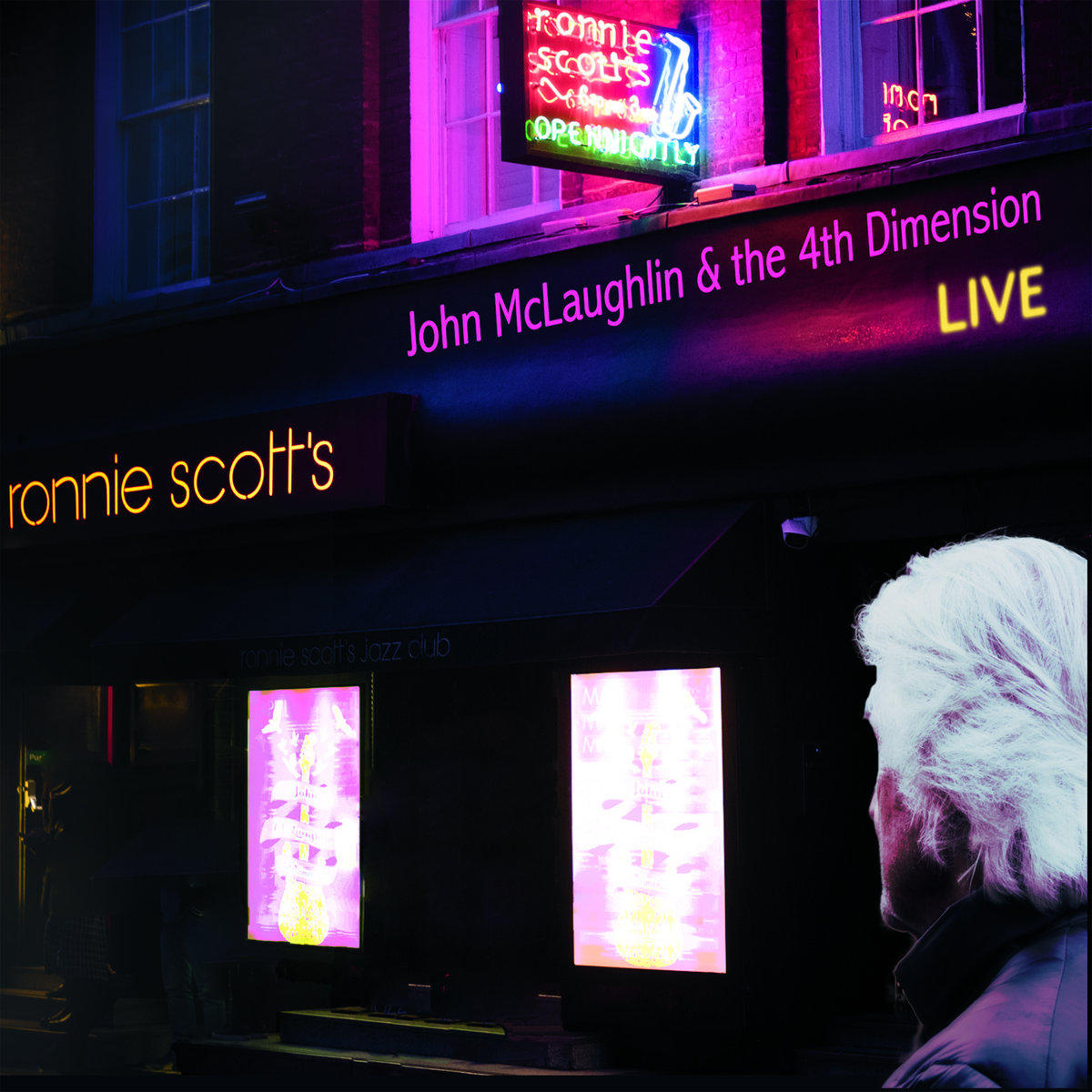
Best Improvised Jazz Solo: “Miles Beyond” — John McLaughlin, soloist
Best Jazz Vocal Album: “Dreams and Daggers” — Cécile McLorin Salvant
Best Jazz Instrumental Album: “Rebirth” — Billy Childs
Best Large Jazz Ensemble Album: “Bringin’ It” — Christian McBride Big Band
Best Latin Jazz Album: “Jazz Tango” — Pablo Ziegler Trio
Best Gospel Performance/Song: “Never Have to Be Alone” — CeCe Winans; Dwan Hill & Alvin Love III, songwriters
Best Contemporary Christian Music Performance/Song: “What a Beautiful Name” — Hillsong Worship; Ben Fielding & Brooke Ligertwood, songwriters
Best Gospel Album: “Let Them Fall in Love” — CeCe Winans
Best Contemporary Christian Music Album: “Chain Breaker” — Zach Williams
Best Roots Gospel Album: “Sing It Now: Songs of Faith & Hope” — Reba McEntire
Best Latin Pop Album: “El Dorado” — Shakira
Best Latin Rock, Urban or Alternative Album: “Residente” — Residente
Best Regional Mexican Music Album (Including Tejano): “Arriero Somos Versiones Acústicas” — Aida Cuevas
Best Tropical Latin Album: “Salsa Big Band” — Rubén Blades con Roberto Delgado y Orquesta
Best American Roots Performance: “Killer Diller Blues” — Alabama Shakes
Best American Roots Song: “If We Were Vampires” — Jason Isbell, songwriter (Jason Isbell and the 400 Unit)
Best Americana Album: “The Nashville Sound” — Jason Isbell and the 400 Unit
Best Bluegrass Album: tie, “Laws of Gravity” — The Infamous Stringdusters and “All the Rage — In Concert Volume One” — Rhonda Vincent and the Rage
Best Traditional Blues Album: “Blue & Lonesome” — The Rolling Stones
Best Contemporary Blues Album: “TajMo” — Taj Mahal and Keb’ Mo’
Best Folk Album: “Mental Illness” — Aimee Mann
Best Regional Roots Music Album: “Kalenda” — Lost Bayou Ramblers
Best Reggae Album: “Stony Hill” — Damian “Jr. Gong” Marley
Best World Music Album: “Shaka Zulu Revisited: 30th Anniversary Celebration” — Ladysmith Black Mambazo
Best Children’s Album: “Feel What U Feel” — Lisa Loeb
Best Spoken Word Album (Includes Poetry, Audio Books and Storytelling): “The Princess Diarist” — Carrie Fisher
Best Comedy Album: “The Age of Spin/Deep in the Heart of Texas” — Dave Chappelle
Best Musical Theater Album: “Dear Evan Hansen” — Ben Platt, principal soloist; Alex Lacamoire, Stacey Mindich, Benj Pasek and Justin Paul, producers; Benj Pasek and Justin Paul, composers/lyricists (original Broadway cast recording)
Best Compilation Soundtrack for Visual Media: “La La Land” — Various Artists
Best Score Soundtrack for Visual Media: “La La Land” — Justin Hurwitz, composer
Best Song Written for Visual Media: “How Far I’ll Go” — Lin-Manuel Miranda, songwriter (Auli’i Cravalho)
Best Instrumental Composition: “Three Revolutions” — Arturo O’Farrill, composer (Arturo O’Farrill and Chucho Valdés)
Best Arrangement, Instrumental or A Cappella: “Escapades for Alto Saxophone and Orchestra From ‘Catch Me If You Can’” — John Williams, arranger (John Williams)
Best Arrangement, Instruments and Vocals: “Putin” — Randy Newman, arranger (Randy Newman)
Best Recording Package: tie, “Pure Comedy (Deluxe Edition)” — Sasha Barr, Ed Steed and Josh Tillman, art directors (Father John Misty) and “El Orisha de la Rosa” — Claudio Roncoli and Cactus Taller, art directors (Magín Díaz)
Best Boxed or Special Limited-Edition Package: “The Voyager Golden Record: 40th Anniversary Edition” — Lawrence Azerrad, Timothy Daly and David Pescovitz, art directors (Various Artists)
Best Album Notes: “Live at the Whisky A Go Go: The Complete Recordings” — Lynell George, writer (Otis Redding)
Best Historical Album: “Leonard Bernstein — The Composer” — Robert Russ, compilation producer; Martin Kistner and Andreas K. Meyer, mastering engineers (Leonard Bernstein)
Best Engineered Album, Non-Classical: “24K Magic” — Serban Ghenea, John Hanes and Charles Moniz, engineers; Tom Coyne, mastering engineer (Bruno Mars)
Producer of the Year, Non-Classical: Greg Kurstin
Best Remixed Recording: “You Move (Latroit Remix)” — Dennis White, remixer (Depeche Mode)
Best Surround Sound Album: “Early Americans” — Jim Anderson, surround mix engineer; Darcy Proper, surround mastering engineer; Jim Anderson and Jane Ira Bloom, surround producers (Jane Ira Bloom)
Best Engineered Album, Classical: “Shostakovich: Symphony No. 5; Barber: Adagio” — Mark Donahue, engineer (Manfred Honeck and Pittsburgh Symphony Orchestra)
Producer of the Year, Classical: David Frost
Best Orchestral Performance: “Shostakovich: Symphony No. 5; Barber: Adagio” — Manfred Honeck, conductor (Pittsburgh Symphony Orchestra)
Best Opera Recording: “Berg: Wozzeck” — Hans Graf, conductor; Anne Schwanewilms and Roman Trekel; Hans Graf and Brad Sayles, producers (Houston Symphony; Chorus of Students and Alumni, Shepherd School of Music, Rice University and Houston Grand Opera Children’s Chorus)
Best Choral Performance: “Bryars: The Fifth Century” — Donald Nally, conductor (PRISM Quartet and The Crossing)
Best Chamber Music/Small Ensemble Performance: “Death & the Maiden” — Patricia Kopatchinskaja and the Saint Paul Chamber Orchestra
Best Classical Instrumental Solo: “Transcendental” — Daniil Trifonov
Best Classical Solo Vocal Album: “Crazy Girl Crazy” — Barbara Hannigan (Ludwig Orchestra)
Best Classical Compendium: “Higdon: All Things Majestic, Viola Concerto & Oboe Concerto” — Giancarlo Guerrero, conductor; Tim Handley, producer
Best Contemporary Classical Composition: “Viola Concerto” — Jennifer Higdon, composer (Roberto Díaz, Giancarlo Guerrero and Nashville Symphony)
Best Music Video: “HUMBLE.” — Kendrick Lamar
Best Music Film: “The Defiant Ones” — Various Artists
 
Jim Eigo
Jazz Promo Services
272 State Route 94 South #1
Warwick, NY 10990-3363
Ph: 845-986-1677
Cell / text: 917-755-8960
Skype: jazzpromo
jim@jazzpromoservices.com
www.jazzpromoservices.com
“Specializing in Media Campaigns for the music community, artists, labels, venues and events.”
NARAS VOTING MEMBER SINCE 1994
 

Jim Eigo Jazz Promo Services T: 845-986-1677 E-Mail: jim@jazzpromoservices.com
http://www.jazzpromoservices.com

HAVE A JAZZ EVENT, NEW CD OR IMPORTANT ANNOUNCEMENT FOR THE JAZZ COMMUNITY YOU WANT TO PROMOTE? CONTACT JAZZ PROMO SERVICES FOR PRICE QUOTE.

CHECK OUT OUR NEW YOUTUBE VIDEO

Unsubscribe | Update your profile | Forward to a friend

PLEASE NOTE: IF YOU DO NOT WISH TO BE ON THIS MAILING LIST PLEASE RESPOND WITH ‘REMOVE’ IN THE SUBJECT LINE. IF YOU ARE RECEIVING DUPLICATE EMAILS OUR APOLOGIES, JAZZ PROMO SERVICES ANNOUNCEMENT LIST IS GROWING LARGER EVERY DAY…..PLEASE LET US KNOW AND WE WILL FIX IT IMMEDIATELY!

Copyright (C) 2018 All rights reserved.

Jazz Promo Services

269 State Route 94 South

Warwick, Ny 10990

Add us to your address book

slide

Jazz and Blues Artists Make a Slippery Impression at the 2018 Grammy Awards | WBGO

Jazz and Blues Artists Make a Slippery Impression at the 2018 Grammy Awards | WBGO

http://wbgo.org/post/jazz-and-blues-artists-make-slippery-impression-2018-grammy-awards#stream/0
 
Jazz and Blues Artists Make a Slippery Impression at the 2018 Grammy Awards
Nate Chinen

The jazz and blues winners at the 60th Grammy Awards are in, and they mostly went to seasoned heads and strong favorites. But this  year’s Grammys also reinforced just how flexible jazz and blues artists tend to be, moving across a range of categories and in a variety of styles. 
Case in point: pianist and singer Jon Batiste, best known as the bandleader on The Late Show with Stephen Colbert, performed a medley with Gary Clark, Jr., the hotshot guitar hero. Backed by Batiste’s close associate Joe Saylor on drums, they paid homage to the rock ‘n’ roll forefathers Fats Domino and Chuck Berry, working with extreme concision but an abundance of soul. (This was the full extent of jazz and blues during the telecast, but at least they weren’t forced to share a stage with, like, The Foo Fighters.)
Most of the awards were distributed during the Grammy Premiere Ceremony, which streamed live at grammy.com. One clear highlight of that ceremony was a performance by Jazzmeia Horn, who was in the running for Best Jazz Vocal Album for her self-assured debut, A Social Call.
That award ultimately went to Cécile McLorin Salvant for Dreams and Daggers, a magisterial double album recorded (mainly) at The Village Vanguard. But Horn emerged a winner nonetheless, on the basis of her work on the Grammy stage. Backed by Paul Shaffer and The World’s Most Dangerous Band, she sang Bobby Timmons’ “Moanin’” as a tribute to Jon Hendricks, who wrote the lyrics to the song. Taking charge from the first phrase, she kicked her performance into a higher gear when she started her scat chorus, about a minute into this clip.


Jazzmeia Horn Performing “Moanin” | 60th GRAMMYs


<div class=”player-unavailable”><h1 class=”message”>An error occurred.</h1><div class=”submessage”><a href=”http://www.youtube.com/watch?v=udvpSKCQDI4″ target=”_blank”>Try watching this video on www.youtube.com</a>, or enable JavaScript if it is disabled in your browser.</div></div>
Scat singing has a bad rep, and sometimes it’s not hard to see why. But Horn made the best argument for the craft of scatting, doing a ton of damage in a brief allotted time. The punch in her phrasing felt like a nod to Lee Morgan, who as a member of Art Blakey’s Jazz Messengers played an indelible solo on the original recording of the song. 
Along with Salvant, winners in the jazz field included pianist Billy Childs, who took home Best Jazz Instrumental Album for Rebirth; and guitarist John McLaughlin, who took home the Best Improvised Jazz Solo award, for his work on “Miles Beyond,” from Live at Ronnie Scott’s. 

<img src=”http://wbgo.org/sites/wbgo/files/styles/default/public/201801/a1177353108_10.jpg” alt=””>
 
McLaughlin recently completed his final tour, so it’s nice to see him win a Grammy for a live album, while that’s still a possibility. As for Best Latin Jazz Album, it went to the Pablo Ziegler Trio, for Jazz Tango. And the award for Large Jazz Ensemble Album went to the Christian McBride Big Band, for Bringin’ It.
From the stage, McBride asked Paul Shaffer to let trumpeter Frank Greene down from the risers to bask in the win. (He also shouted out his colleagues at Jazz Night in America, along with Jazz House Kids and the Philadelphia Eagles.)
Best Traditional Blues Album went to The Rolling Stones, for their first full-stop blues album, Blue & Lonesome. (This was a sound and respectable win, despite what it looks like.) And the joint winners for Best Contemporary Blues Album were Taj Mahal and Keb’ Mo’, for their sterling collaboration TajMo. Also blues-related: Alabama Shakes won in the Best American Roots Performance category for “Killer Diller Blues.”
Jazz artists cropped up in a few other categories. For one, Tony Bennett won Best Traditional Pop Vocal Album — his eighth win in that category, by my count — for the all-star affair Tony Bennett Celebrates 90. Jeff Lorber Fusion won Best Contemporary Instrumental Album, for Prototype. Pianist and composer Arturo O’Farrill won Best Instrumental Composition for “Three Revolutions,” from Familia: Tribute to Bebo & Chico. (“Mom, this Grammy is for you,” he said. “She joined Chico and the ancestors a month ago.”)
Finally, soprano saxophonist Jane Ira Bloom scored the Best Surround Sound Album award, for Early Americans, featuring a trio with Mark Helias on bass and Bobby Previte on drums.


Jane Ira Bloom – “Early Americans” in Surround Sound


<div class=”player-unavailable”><h1 class=”message”>An error occurred.</h1><div class=”submessage”><a href=”http://www.youtube.com/watch?v=sztkrNvqIyc” target=”_blank”>Try watching this video on www.youtube.com</a>, or enable JavaScript if it is disabled in your browser.</div></div>
She shared the award with her engineer and producer, Jim Anderson, who used part of his stage time to address his students at New York University’s Clive Davis Institute for Recorded Music: See you in class tomorrow morning, he said. Life, and the music, roll on.

Jim Eigo Jazz Promo Services T: 845-986-1677 E-Mail: jim@jazzpromoservices.com
http://www.jazzpromoservices.com

HAVE A JAZZ EVENT, NEW CD OR IMPORTANT ANNOUNCEMENT FOR THE JAZZ COMMUNITY YOU WANT TO PROMOTE? CONTACT JAZZ PROMO SERVICES FOR PRICE QUOTE.

CHECK OUT OUR NEW YOUTUBE VIDEO

Unsubscribe | Update your profile | Forward to a friend

PLEASE NOTE: IF YOU DO NOT WISH TO BE ON THIS MAILING LIST PLEASE RESPOND WITH ‘REMOVE’ IN THE SUBJECT LINE. IF YOU ARE RECEIVING DUPLICATE EMAILS OUR APOLOGIES, JAZZ PROMO SERVICES ANNOUNCEMENT LIST IS GROWING LARGER EVERY DAY…..PLEASE LET US KNOW AND WE WILL FIX IT IMMEDIATELY!

Copyright (C) 2018 All rights reserved.

Jazz Promo Services

269 State Route 94 South

Warwick, Ny 10990

Add us to your address book

slide

Congress, It’s Time to Pay Musicians – The New York Times

Congress, It’s Time to Pay Musicians – The New York Times

https://www.nytimes.com/2018/01/28/opinion/congress-musicians-music-bus.html?ribbon-ad-idx=18
 
Congress, It’s Time to Pay Musicians
By KABIR SEHGAL JAN. 28, 2018


Aloe Blacc, performing at a Grammy event last year, testified at a House Judiciary Committee hearing in support of legislation that protects the rights of artists. Jesse Grant/WireImage, via Getty Images
The Grammys are coming to New York City. And Congress just did. On Friday, the House Judiciary Committee held a field hearing in the city, where Neil Portnow, president of the Recording Academy, and the artists Aloe Blacc and Booker T. Jones appeared. They testified in support of legislation that protects the rights of artists and helps them receive fairer compensation for their creative works.
But it’s not enough for Congress to hold hearings. It must pass the “Music Bus” bill, which will benefit the financial interests of musicians.
Just how tough is the financial situation for most musicians? The industry’s global revenue declined to about $15 billion in 2015 from almost $40 billion in the late 1990s. This contraction has hit music’s middle class: the people you’ve never heard of but who write, record and produce songs you know by heart.
For example, the number of full-time songwriters living in Nashville has dropped 80 percent since 2000. In Austin, Tex., 70 percent of musicians earn less than $10,000 a year from music, and 32 percent don’t even make minimum wage. Music creators simply “cannot afford to make a living,” said Daryl Friedman, the head of industry and government relations for the Recording Academy.
Passing the Music Bus bill would go a long way to helping musicians earn a better paycheck. It’s actually an omnibus bill composed of three acts:
First, the Fair Play, Fair Pay Act, which establishes a performance right for artists. Right now, radio stations don’t have to pay artists whose songs they play on the airwaves (the stations pay performance royalties to the music publishers and the songwriters). The United States is the only developed country where this is the case. This act would require stations to pay artists and record companies a royalty. It also includes the Allocation for Music Producers Act, which would enshrine in law the right for producers to receive royalties due them. The Fair Play, Fair Pay Act has bipartisan support. But the legacy radio broadcasters oppose this measure.
Second, the Classics Act, which closes the loophole in federal copyright law that prevents recordings from before 1972 from receiving compensation. Even the United States Copyright Office has noted the inconsistency that pre-1972 works aren’t covered adequately with copyright protection. The Classics Act would allow for the payment of royalties to artists and record labels that made songs many decades ago. This act, which would particularly benefit older musicians who are struggling financially, also has bipartisan support.
Third, the Music Modernization Act, which creates a blanket license for mechanical royalties. (Mechanicals are the royalty payments due publishers and songwriters when their songs are reproduced in various formats like CDs, LPs, downloads and streaming.) Currently a copyright board determines the rate of compensation according to a fixed legal standard. But this act would enable the board to base rates on the market value of what a buyer or seller is willing to pay. A change to this more dynamic standard would mean that songwriters could be compensated more in line with the market.
Despite the bipartisan support for these measures, it will still take substantial effort to pressure Congress to act. “We’ve seen a growth of interest in creator activism like never before,” Mr. Friedman said. The Recording Academy has marshaled significant resources toward promoting these bills — for instance, starting the Grammy District Advocate Program, in which thousands of members of the academy meet with elected officials every year in support of legislation. Until now, Congress has been waiting for some type of industry consensus and bipartisan support to emerge, and now it has. By finally passing the Music Bus bill, compensation for musicians will be more in tune with what they deserve.

Jim Eigo Jazz Promo Services T: 845-986-1677 E-Mail: jim@jazzpromoservices.com
http://www.jazzpromoservices.com

HAVE A JAZZ EVENT, NEW CD OR IMPORTANT ANNOUNCEMENT FOR THE JAZZ COMMUNITY YOU WANT TO PROMOTE? CONTACT JAZZ PROMO SERVICES FOR PRICE QUOTE.

CHECK OUT OUR NEW YOUTUBE VIDEO

Unsubscribe | Update your profile | Forward to a friend

PLEASE NOTE: IF YOU DO NOT WISH TO BE ON THIS MAILING LIST PLEASE RESPOND WITH ‘REMOVE’ IN THE SUBJECT LINE. IF YOU ARE RECEIVING DUPLICATE EMAILS OUR APOLOGIES, JAZZ PROMO SERVICES ANNOUNCEMENT LIST IS GROWING LARGER EVERY DAY…..PLEASE LET US KNOW AND WE WILL FIX IT IMMEDIATELY!

Copyright (C) 2018 All rights reserved.

Jazz Promo Services

269 State Route 94 South

Warwick, Ny 10990

Add us to your address book

slide

Marlene VerPlanck, Singer of Jazz and Jingles, Dies at 84 – The New York Times

Marlene VerPlanck, Singer of Jazz and Jingles, Dies at 84 – The New York Times

https://www.nytimes.com/2018/01/26/obituaries/marlene-verplanck-singer-of-jazz-and-jingles-dies-at-84.html?rref=collection%2Fsectioncollection%2Fobituaries
 
Marlene VerPlanck, Singer of Jazz and Jingles, Dies at 84
By NEIL GENZLINGERJAN. 26, 2018


Marlene VerPlanck performing in England in 2006. Heritage Images/Hulton Archive, via Getty Images
Marlene VerPlanck, a singer who was seen by many on cabaret stages and heard by millions more on jingles for products including Campbell’s soup and Winston cigarettes, died on Jan. 14 in Manhattan. She was 84.
Her death, in a hospital, was announced by the broadcaster Ray Hoffman, who wrote the lyrics to several songs Ms. VerPlanck recorded. He said the cause was pancreatic cancer.
Ms. VerPlanck began as a big-band singer and later became well known on the cabaret circuit, especially in New York, bringing a clear and disciplined voice to jazz and the American songbook. John S. Wilson, writing in The New York Times in 1980, said she “may be the most accomplished interpreter of popular material performing today.”
She was working until a month before her death; her last appearance was in mid-December at Mezzrow in Greenwich Village. Her numerous albums included, most recently, “The Mood I’m In,” released in 2016.
Ms. VerPlanck’s jingle work complemented her cabaret and recording career, giving her the ability to get the most out of each word and to work efficiently.
“Marlene’s finest attribute as a singer was her intonation,” the pianist Tedd Firth, who accompanied and arranged for her in her later years, said by email. “Years of studio work with producers expecting perfect results within one or two takes had honed her sense of pitch to a degree that is seldom seen in any kind of singer — jazz, pop, classical or otherwise.”
 
 
Marlene VerPlanck


<div class=”player-unavailable”><h1 class=”message”>An error occurred.</h1><div class=”submessage”><a href=”http://www.youtube.com/watch?v=3uP8g2BokCc” target=”_blank”>Try watching this video on www.youtube.com</a>, or enable JavaScript if it is disabled in your browser.</div></div>
Marlene VerPlanck Video by A1R Television
Marlene Pampinella was born on Nov. 11, 1933, in Newark to Anthony Pampinella and the former Pauline Biase. After graduating from Bloomfield High School, she briefly considered a journalism career. But instead, at 19, she began singing in a Newark nightclub, the Well.
She sent a review she received there to bandleaders, resulting in jobs with the bands of Tex Beneke and then Charlie Spivak, whose musicians included the trombonist Billy VerPlanck. They dated, then split up, but when she later took a job with Tommy Dorsey’s band, there was Mr. VerPlanck in the trombone section. They were married in 1956, and Mr. VerPlanck did much of her arranging over the next half-century. He died in 2009.
In the early 1960s, a time when radio and television were hungry for little ditties, Ms. VerPlanck began working as a jingle singer.
“I went to a place called the Jingle Mill,” she said in a 1980 interview with The Times, “where I did five commercials an hour for $10.”
In 1965 her stature in that niche profession improved considerably when she was chosen to sing a jingle for Campbell’s Soup, and for decades afterward articles about her would have headlines like “Marlene VerPlanck Is Mmm, Mmm Good.”
Another assignment was for Michelob. Though she recorded that beer’s jingle only once, the job rewarded her for years.
“When I sang ‘Weekends were made for Michelob,’ they asked me to add a ‘Yeah’ at the end,” she told The Boston Herald in 1997. “And then they tacked that ‘Yeah’ of mine onto every Michelob commercial for seven years. Even when Brook Benton and Vic Damone sang the jingle, it was my ‘Yeah’ at the end. It became a very nice annuity.”
Ms. VerPlanck also recorded as a backup singer for artists as diverse as Perry Como and the rock group Kiss. For Frank Sinatra’s ambitious 1980 album, “Trilogy,” she had the job of recruiting 16 other singers for some of the sessions.
By then, Ms. VerPlanck had established herself on the cabaret scene. The jazz guitarist Bucky Pizzarelli, whom she knew from her studio work, arranged her New York nightclub debut in 1972 at Soerabaja on the Upper East Side, where he backed her.
“His guitar is all she has in the way of support,” Mr. Wilson wrote in reviewing that performance, “which leaves her very much on her own. She is attempting the most naked kind of singing — a situation in which nothing can be covered up or faked. And Miss VerPlanck is more than equal to it.”
Sixteen years later, reviewing her at Danny’s Skylight Room in Midtown, Mr. Wilson had a different reason to be impressed.
“Miss VerPlanck inadvertently showed another aspect of her singing when the amplification system disintegrated amid electric shrieks and howls and she abandoned the microphone for her final songs,” he wrote. “In this small, airy room, which is actually under a large skylight, she was able to project the shadings and pure tones of her natural, unamplified voice so clearly on ‘A Sure Thing’ that it became the high point of her performance.”
Ms. VerPlanck is survived by a sister, Barbara Marshall, and a brother, Phil Pampinella. She lived in Clifton, N.J.
Mr. Firth, who played on several of Ms. VerPlanck’s last albums, said her knack for nailing her vocals was as evident in the recording studio as it was on the stage.
“While the band would be requesting a third or fourth take on a song to get their parts right,” he said, “Marlene would be in the vocal booth wondering what was taking us so long.”

Jim Eigo Jazz Promo Services T: 845-986-1677 E-Mail: jim@jazzpromoservices.com
http://www.jazzpromoservices.com

HAVE A JAZZ EVENT, NEW CD OR IMPORTANT ANNOUNCEMENT FOR THE JAZZ COMMUNITY YOU WANT TO PROMOTE? CONTACT JAZZ PROMO SERVICES FOR PRICE QUOTE.

CHECK OUT OUR NEW YOUTUBE VIDEO

Unsubscribe | Update your profile | Forward to a friend

PLEASE NOTE: IF YOU DO NOT WISH TO BE ON THIS MAILING LIST PLEASE RESPOND WITH ‘REMOVE’ IN THE SUBJECT LINE. IF YOU ARE RECEIVING DUPLICATE EMAILS OUR APOLOGIES, JAZZ PROMO SERVICES ANNOUNCEMENT LIST IS GROWING LARGER EVERY DAY…..PLEASE LET US KNOW AND WE WILL FIX IT IMMEDIATELY!

Copyright (C) 2018 All rights reserved.

Jazz Promo Services

269 State Route 94 South

Warwick, Ny 10990

Add us to your address book

slide

Sony Corporation and Blue Note Media Group Announce Landmark Sponsorship

Sony Corporation and Blue Note Media Group Announce Landmark Sponsorship

http://www.4-traders.com/news/Sony-Corporation-and-Blue-Note-Media-Group-Announce-Landmark-Sponsorship–25870107/?
 
Sony : Corporation and Blue Note Media Group Announce Landmark Sponsorship
NEW YORK, Jan. 25, 2018 /PRNewswire/ — Sony Corporation (“Sony”) and Blue Note Media Group (“Blue Note” / “BNMG”) – the sponsorship affiliate of Blue Note Entertainment Group, the organization that owns, operates, licenses, and/or programs 10 music venues worldwide including the iconic Blue Note Jazz Club – today announced a landmark strategic sponsorship agreement. As part of the sponsorship, Sony will collaborate with Blue Note to open “Sony Hall,” a new music venue in Manhattan, sponsor the annual Blue Note Jazz Festival each June in New York City, as well as other plans to be announced.
Located in the heart of New York’s Theatre District (235 W. 46th St at the Paramount Hotel, in the space previously known as Diamond Horseshoe), Sony Hall is scheduled to open in Spring 2018. Owned, operated and programmed by Blue Note, Sony Hall will present world renowned performing artists across all music genres at capacities of 1,000 standing and 500 seated, with a full-service restaurant and bar. Sony Hall will be equipped with Sony’s technologies, integrated throughout the 12,000 square-foot venue to deliver enhanced entertainment experiences to fans. Grand opening plans, headliners, and additional venue details will be announced in the coming weeks.
In addition to the opening of Sony Hall, Sony will sponsor the annual Blue Note Jazz Festival in New York City, scheduled for June 1-30, 2018. Established in 2011 to commemorate the 30th anniversary of the iconic Blue Note Jazz Club New York, Blue Note Jazz Festival has annually grown into one of the largest music events in New York City, featuring over 100 events in 10 venues over the course of 30 days (June 1 through 30 annually). With nightly events at BNEG venues such as Blue Note Jazz Club, Highline Ballroom, BB King Blues Club, among other locations throughout the city, past festival headliners include Aretha Franklin, The Roots, Wyclef Jean, Natalie Cole, Brian Wilson, and more.
Midori Tomita, VP in charge of UX Business Development, Brand Strategy, Sony Corporation:
”We are thrilled to be teaming up with Blue Note on this new music venue set to open this spring and honored to have it be known as ‘Sony Hall.’ It will serve as a staging ground for recording content, testing new and exciting technology, promoting emerging artists, and more. We look forward to engaging with young music fans and those of all ages and continuing to deliver unique and high quality music experiences through this newest venue.”
Steven Bensusan, President, Blue Note Media Group: 
”Blue Note is honored to partner with Sony on this landmark partnership. Sony is a pioneer in delivering best-in-class technology and entertainment experiences. Their innovation and brand paired with our experience operating entertainment properties around the world is a truly unique partnership that will ultimately benefit the fans. We look forward to our collaboration for Sony Hall, Blue Note Jazz Festival and other exciting plans for the future.”
Additional partnership plans between Sony and Blue Note will be announced in the coming months.
About Sony Corporation
Sony Corporation is a leading manufacturer of audio, video, imaging, game, communications, key device and information technology products for the consumer and professional markets. With its music, pictures, interactive entertainment and online businesses, Sony is uniquely positioned to be the leading electronics and entertainment company in the world.  Sony recorded consolidated annual sales of approximately $76 billion for the fiscal year ended March 31, 2017.
Sony Global Web Site: http://www.sony.net/
About Blue Note Media Group & Entertainment Group
Blue Note Media Group is the official sponsorship affiliate of Blue Note Entertainment Group. Founded in 1981 by Danny Bensusan, Blue Note Entertainment Group is a multi-faceted entertainment company that owns, operates, licenses and/or programs Blue Note Jazz Clubs worldwide, including New York, NY; Tokyo and Nagoya, Japan; Milan, Italy; Waikiki, Hawaii; Beijing, China; Napa, California; and Rio de Janeiro, Brazil). The company also owns and operates B.B. King Blues Club & Grill, Highline Ballroom, and Lucille’s Grill. Additionally, the company programs the Regattabar Jazz Club (Cambridge, MA) and Blue Note-branded concerts throughout Italy. Blue Note Entertainment Group presents shows outside of its club network. The annual Blue Note Jazz Festival was established in 2011 and has since grown to become the largest jazz festival in New York City each June. Subsidiaries of Blue Note Entertainment Group include the GRAMMY®-nominated record label Half Note Records, whose catalogue includes over fifty titles recorded live at New York’s Blue Note Jazz Club, as well as Blue Note Travel and Management Group.
 View original content:http://www.prnewswire.com/news-releases/sony-corporation-and-blue-note-media-group-announce-landmark-sponsorship-300588158.html
SOURCE Sony

Jim Eigo Jazz Promo Services T: 845-986-1677 E-Mail: jim@jazzpromoservices.com
http://www.jazzpromoservices.com

HAVE A JAZZ EVENT, NEW CD OR IMPORTANT ANNOUNCEMENT FOR THE JAZZ COMMUNITY YOU WANT TO PROMOTE? CONTACT JAZZ PROMO SERVICES FOR PRICE QUOTE.

CHECK OUT OUR NEW YOUTUBE VIDEO

Unsubscribe | Update your profile | Forward to a friend

PLEASE NOTE: IF YOU DO NOT WISH TO BE ON THIS MAILING LIST PLEASE RESPOND WITH ‘REMOVE’ IN THE SUBJECT LINE. IF YOU ARE RECEIVING DUPLICATE EMAILS OUR APOLOGIES, JAZZ PROMO SERVICES ANNOUNCEMENT LIST IS GROWING LARGER EVERY DAY…..PLEASE LET US KNOW AND WE WILL FIX IT IMMEDIATELY!

Copyright (C) 2018 All rights reserved.

Jazz Promo Services

269 State Route 94 South

Warwick, Ny 10990

Add us to your address book

slide

For All The Dog Lovers Out There

For All The Dog Lovers Out There

Curtis Salgado & Alan Hager – I Want My Dog To Live Longer  (The Greatest Wish) 
https://www.youtube.com/watch?v=Q7-PfzpQcJs

Jim Eigo Jazz Promo Services T: 845-986-1677 E-Mail: jim@jazzpromoservices.com
http://www.jazzpromoservices.com

HAVE A JAZZ EVENT, NEW CD OR IMPORTANT ANNOUNCEMENT FOR THE JAZZ COMMUNITY YOU WANT TO PROMOTE? CONTACT JAZZ PROMO SERVICES FOR PRICE QUOTE.

CHECK OUT OUR NEW YOUTUBE VIDEO

Unsubscribe | Update your profile | Forward to a friend

PLEASE NOTE: IF YOU DO NOT WISH TO BE ON THIS MAILING LIST PLEASE RESPOND WITH ‘REMOVE’ IN THE SUBJECT LINE. IF YOU ARE RECEIVING DUPLICATE EMAILS OUR APOLOGIES, JAZZ PROMO SERVICES ANNOUNCEMENT LIST IS GROWING LARGER EVERY DAY…..PLEASE LET US KNOW AND WE WILL FIX IT IMMEDIATELY!

Copyright (C) 2018 All rights reserved.

Jazz Promo Services

269 State Route 94 South

Warwick, Ny 10990

Add us to your address book

slide

When Jazz Was Dangerous The Paris Review

When Jazz Was Dangerous The Paris Review

https://www.theparisreview.org/blog/2018/01/24/when-jazz-was-dangerous/
 
When Jazz Was Dangerous
Nathaniel Rich


“Robinson’s Band Plays Anything,” F. Bildestein, 1890. From the cover of the New Orleans newspaper the Mascot (November 15, 1890).
Musical forms have the life cycle of carnivorous beasts: clumsy in infancy, terrifying in adolescence, fearsome in maturity, fangless in old age, and pitiful in senescence, before the inevitable silent death. Their life spans tend to be longer than ours, so it can be difficult to recall that some of the more geriatric genres were once vital and fierce. But even Baroque music had a caddish streak—“a most dangerous reef,” in the words of a prominent seventeenth-century German rector, “along which many a young soul, as if called by Sirens … falls into dissoluteness”—and polka, in the 1840s, was a venal Bohemian menace (in 1844, the Illustrated London News wrote that polka “needs only to be seen once to be avoided forever!”). Jazz, now well advanced into its second century, had an especially violent youth. It was more than merely dangerous—it was homicidal.
Jazz, to be precise, was never extraordinarily ferocious. “Jass” was. The soft sibilant turned heavy at around the same time—a century ago—that the music crossed over in the national consciousness, rumbling north on steamboats up the Mississippi and on the northbound Illinois Central to Chicago, then to New York and California, where it swiftly gained popularity, social acceptance, critical esteem. To do so, it had to leave New Orleans, its native home, behind. This was understandable, given the treatment it had received.
The Times-Picayune, the official record of the city’s white establishment, felt obliged to register its revulsion in an exuberantly racist editorial published during the summer of 1918, entitled “Jass and Jassism.” The music was a “vice,” like the “dime novel” and “the grease-dripping doughnut,” the manifestation “of a low streak in man’s tastes that has not yet come out in civilization’s wash. Indeed, one might go farther, and say that jass music is the indecent story syncopated and counter-pointed.” Jass, that is to say, was sex rendered as music.
Of course, you didn’t need the syncopation or the counterpoint to figure this out. The lyrics of some of the most popular songs put it frankly, numbers like “The Whore’s Gone Crazy,” “Funky Butt,” “The Naked Dance,” and “Cocaine Blues,” which Jelly Roll Morton remembered going like this:
I want a gal that works in the white folks’ yard,
A pretty gal that works in the white folks’ yard,
Do you see that fly crawling up the wall,
She’s going up there to get her ashes hauled.
I got a woman lives right back of the jail,
She got a sign on her window—Pussy For Sale.
The music was free, uncensorable, ecstatic—qualities opposite to the way young African Americans in New Orleans were expected to comport themselves in public, at least by the readers of the Times-Picayune. Such brazenness was alarming. The only solution, the editors concluded, was to choke the young music in its very cradle. The infanticide would be “a point of civic honor,” for “its musical value is nil, and its possibilities of harm are great.”
For the moment, the anti-jassists appeared to have triumphed. By 1918, Jelly Roll Morton had moved to San Francisco; Buddy Bolden, the founding king of New Orleans jazz, had by then already spent a decade at the state insane asylum in Jackson, a hundred miles away; his successor King Oliver, who had worked as a butler to an uptown family while pioneering the new music, had fled to Chicago, where he was followed by many of his former bandmates; one of them, his eighteen-year-old student Louis Armstrong, left town the same year on a steamboat orchestra heading up the Mississippi. The previous year, the prostitution palaces of Storyville, reliable venues for early jazz musicians, had been outlawed, and the outbreak of the Spanish flu emptied the honky-tonks, country clubs, and dance halls. Those musicians who remained found work as painters, longshoremen, or manual laborers. Kid Ory was a carpenter. The bandleader Bab Frank ran restaurants. Alphonse Picou, composer of “High Society,” was a tinsmith.
Many of the musicians lived in a neighborhood so rough it was known as the Battlefield. The streets were unpaved, strewn with broken glass, nails, oyster shells. The children, invariably, went barefoot. “But we were young, healthy and tough as old hell,” Louis Armstrong wrote in his memoir Satchmo, “so a little thing like lockjaw did not stay with us a long time.” Once, as a young child, while playing in one of the abandoned, ramshackle buildings that served as jungle gyms for the neighborhood children, Armstrong was laid out by a slate tile that had fallen from the roof.
It knocked me out cold and shocked me so bad I got lockjaw. When I was taken home Mama Lucy and Mayann worked frantically boiling up herbs and roots which they applied to my head. Then they gave me a glass of Pluto Water, put me to bed and sweated me out good all night long. The next morning I was on my way to school just as though nothing had happened.
But it was in these same streets that Armstrong, like so many musicians of his generation, heard the new sound—in the second-line parades returning from the cemeteries; in the jangled tunes that junk collectors played on tinhorns; and from the ballyhoo wagons that carried bands through the streets, advertising boxing matches and dances and dueling with other wagons in “cutting contests” when they encountered each other, until the losing band was forced to retreat in shame. The windows to the honky-tonks and dance halls were left open to the street, so even a barefoote urchin could freely listen. If anything, the street audience was given priority: before a band went on stage, it was the custom for them to set up on the sidewalk and perform a free set for those walking by.
A good way to chart the music’s standing in New Orleans during this transitional period is through the story of the Axman, a madman who began hacking people to death in March 1918. The killer’s motivation was murky at first. Most of his victims were Italian grocers and their wives, which may have had something to do with the fact that grocers lived in apartments attached to their stores and were thus easily accessible to a prowler. But the maniac also killed other innocent people, and by summer the randomness of the slaughters, paired with their brutality, had plunged the city into a state of panic. Dozens of suspected Axmen were arrested—most of them black—and released without charge; men fell asleep in chairs propped against their front doors, cradling loaded shotguns.
The hysteria only subsided with the emergence of the Spanish flu, a far deadlier and more conniving serial killer. When the flu subsided in spring 1919, however, the Axman returned in full gore, slaughtering a grocer, his wife, and their infant child. Within a week, he sent a letter to the Times-Picayune, making a startling admission: “I am very fond of jazz music.”
Swearing “by all the devils in the nether regions,” the Axman announced that he would fly over New Orleans the following Tuesday night and murder anyone who wasn’t listening to jazz. That there was a self-evident affinity between jazz fandom and ax killing was understood, the killings a logical manifestation of the music that the Times-Picayune had described as an “atrocity.” But the city’s response to the letter indicated that attitudes were changing. That Tuesday night, there was no fear, only euphoria. Jazz music could be heard all over the city, not just in the Battleground but in the Garden District and from the millionaires’ mansions on St. Charles Avenue. True to his word, the Axman spared the entire citizenry the ax.
Near the end of his life, Louis Armstrong liked to say that jazz dissolved racial boundaries—that, for at least the space of a song, even white bigots were romanced out of their hatred. “These same society people may go around the corner and lynch a Negro,” he told Ebony in 1961. “But while they’re listening to our music, they don’t think about trouble.” It was trouble, though, that had given the music its life. When a music loses its danger, it succumbs to nostalgia, imitation, and charm, qualities of diminishing potency. It would take later generations to reinvigorate the form and, at least for a time, make it dangerous again. Miles Davis even scared himself; in his memoir, he wrote about what it was like when he first played with Coltrane: “Man, the shit we were playing in a short time was scary, so scary that I used to pinch myself to see if I was really there.” He understood what all great artists—including the Axman himself, an artist of the serial murder—understand, that anything truly new, in Jelly Roll Morton’s phrase, puts a fear into the heart.
Nathaniel Rich’s third novel, King Zeno, published this month. A former fiction editor of The Paris Review, he lives in New Orleans.

Jim Eigo Jazz Promo Services T: 845-986-1677 E-Mail: jim@jazzpromoservices.com
http://www.jazzpromoservices.com

HAVE A JAZZ EVENT, NEW CD OR IMPORTANT ANNOUNCEMENT FOR THE JAZZ COMMUNITY YOU WANT TO PROMOTE? CONTACT JAZZ PROMO SERVICES FOR PRICE QUOTE.

CHECK OUT OUR NEW YOUTUBE VIDEO

Unsubscribe | Update your profile | Forward to a friend

PLEASE NOTE: IF YOU DO NOT WISH TO BE ON THIS MAILING LIST PLEASE RESPOND WITH ‘REMOVE’ IN THE SUBJECT LINE. IF YOU ARE RECEIVING DUPLICATE EMAILS OUR APOLOGIES, JAZZ PROMO SERVICES ANNOUNCEMENT LIST IS GROWING LARGER EVERY DAY…..PLEASE LET US KNOW AND WE WILL FIX IT IMMEDIATELY!

Copyright (C) 2018 All rights reserved.

Jazz Promo Services

269 State Route 94 South

Warwick, Ny 10990

Add us to your address book

slide

The Enduring Power of Otis Redding’s ‘Dock of the Bay’ – The New York Times

The Enduring Power of Otis Redding’s ‘Dock of the Bay’ – The New York Times

https://www.nytimes.com/2018/01/23/arts/music/otis-redding-sittin-on-dock-bay-anniversary.html
 
The Enduring Power of Otis Redding’s ‘Dock of the Bay’
By GAVIN EDWARDSJAN. 23, 2018


Otis Redding’s “(Sittin’ on) The Dock of the Bay” became a hit after his 1967 death. This week in New York, it will be celebrated at the Apollo. Michael Ochs Archives/Getty Images
A posthumous pop hit collapses triumph and sorrow into a single song. Only a handful of performers have reached No. 1 with a single after their deaths, including John Lennon, Janis Joplin and the Notorious B.I.G. But the first person to do it was the soul singer Otis Redding, who died in a plane crash in late 1967 at 26 and topped the charts for four weeks the following March and April with a beautifully melancholy song, “(Sittin’ on) The Dock of the Bay.”
The song ranked as the sixth-most-played composition on American radio and television in the 20th century. It has gone triple platinum and been covered by artists from Cher to Bob Dylan. Rolling Stone named it No. 26 on its 500 Greatest Songs of All Time. To celebrate its endurance across 50 years, the Otis Redding Foundation is organizing a benefit concert on Thursday at the Apollo Theater, hosted by Whoopi Goldberg and featuring a lineup including Warren Haynes, Aloe Blacc and Booker T. Jones. The Dap-Kings and the Preservation Hall Jazz Band will provide the backup.
Paul Janeway of St. Paul and the Broken Bones is scheduled to perform “Down in the Valley” and “I’ve Been Loving You Too Long” at the event. He said that before his band had any original material, it performed complete albums by Redding. The lesson: “As a singer, range is great, but you got to learn to sing the right notes the right way. Otis was one of the masters of that — he was so emotive.” And the reason behind the success of “Dock of the Bay”? “It sounds like the title,” Mr. Janeway said.
 
 
Otis Redding – (Sittin’ On) The Dock Of The Bay (Official Video)


<div class=”player-unavailable”><h1 class=”message”>An error occurred.</h1><div class=”submessage”><a href=”http://www.youtube.com/watch?v=rTVjnBo96Ug” target=”_blank”>Try watching this video on www.youtube.com</a>, or enable JavaScript if it is disabled in your browser.</div></div>
Otis Redding – “(Sittin’ on) The Dock of the Bay” Video by RHINO
“Dock of the Bay” emerged from a period of Redding’s life when he was going through dramatic transitions; had he lived, it might well have been remembered as the beginning of the second half of his career. In early 1967, Redding had made a name as the biggest star on the Stax label and the author of “Respect,” a song commandeered by Aretha Franklin. He was also famed for his electrifying performances, which were expanding beyond the R&B circuit.
Grace Slick, the lead singer of Jefferson Airplane, saw him at the Fillmore West in San Francisco in 1966. “It was the most stunning performance I had seen up to that point,” she said in a phone interview from Malibu. She remembered the stage swaying as he moved around it: “I’d never seen anybody with that much positive thrust, for lack of a better term.”
The next summer, Redding delivered a barnburner set at the Monterey Pop Festival. “This was the ‘love crowd,’” the record producer and Monterey organizer Lou Adler said in a phone interview. “He was aware of what he was getting into but had no idea of what the response would be. As much as the performer gave at Monterey, the audience gave it right back.”
Zelma Redding, the singer’s widow, said that after her husband had flown from the festival to their ranch in Macon, Ga., he told her, “I got a new audience.”
 
 
Otis Redding, “I’ve Been Loving You Too Long”, from MIPF 1967


<div class=”player-unavailable”><h1 class=”message”>An error occurred.</h1><div class=”submessage”><a href=”http://www.youtube.com/watch?v=0vUc17A0SNY” target=”_blank”>Try watching this video on www.youtube.com</a>, or enable JavaScript if it is disabled in your browser.</div></div>
Otis Redding – “I’ve Been Loving You Too Long” Video by Monterey International Pop Festival
Redding threw himself into the project of reinventing himself. “It was clear that his bread and butter, which was these big 12/8 ballads, had plateaued,” Jonathan Gould, the author of the recent biography “Otis Redding: An Unfinished Life,” said in an interview. “He had done what he could do with them, which was more than anybody else could do.”
Like most of the world, Redding spent the summer of 1967 listening to the Beatles’ “Sgt. Pepper’s Lonely Hearts Club Band.” “He thought it was the greatest thing he ever heard,” Ms. Redding said, speaking from her office in Georgia. “I guess he was thinking about ‘How can I be this creative?’”
In August 1967, Redding returned to San Francisco for a week of shows at the jazz club Basin Street West. When he was besieged by female fans at his hotel, the promoter Bill Graham let him stay at his houseboat in Sausalito.
Redding spent his days quietly looking at the water; freed from the usual demands of travel, he could relax and write songs. His road manager, Earl Sims (known as Speedo), said he was the only witness the day Redding picked up his guitar and wrote a new song that began “Sittin’ in the morning sun/I’ll be sittin’ when the evening comes.”
Mr. Sims was used to tapping out a simple beat when his boss was writing songs, acting as a human metronome. The rhythm of this new one was totally different, he said in an interview. “It took me a minute to get into what he was doing. He was away, and he was on the water, and he was relaxed. That’s why he started that song.”
When Redding returned home, he played the song for his wife. “My comment at the time was that it was very different, unusual for him,” she said — meaning she didn’t care for it. “He said, ‘Well, I’m going to change my style, going to be different.’”
That October, Redding had surgery to remove polyps from his vocal cords; while recuperating, he couldn’t speak, so he grew a beard and spent hours in silent contemplation. Five weeks later, his voice sounded better than ever, and he was eager to get some of his new ideas on wax.
Steve Cropper, who regularly backed Redding up as the guitarist for Booker T. and the MG’s (a.k.a. the Stax house band), remembered Redding calling him from the Memphis airport to make sure he was at the studio. When Redding arrived, the pair sat on beige folding chairs, hammering out the song. “I helped him with the second verse a little bit, helped him with the bridge,” Mr. Cropper said in a phone interview. “After he sang, ‘I watch the ships roll in, watch them roll out again,’ I said, ‘Have you thought that if a ship rolls, it’s going to take on water and sink?’” Redding told him, “That’s the way I want it, Crop.”
The duo went into the studio in November, joined by Donald Dunn (known as Duck) on bass, Al Jackson on drums, Booker T. Jones on piano and three horn players. In an interview, Mr. Jones remembered the sessions as having “kind of a hectic feeling — so much so that I remember a number of people sleeping over at the studio.” Redding and Mr. Cropper planned to ask the Staple Singers to contribute backing vocals to “Dock of the Bay,” which never happened. The whistling at the song’s end came in a section earmarked for vocal ad-libbing; on one early take, Redding sputtered and the engineer Ron Capone told him, “You’re not going to make it as a whistler.”
In the middle of the sessions, Redding went back on the road. “I’ll see you on Monday,” were his last words to Mr. Cropper. He had recently acquired a Beechcraft Model 18 airplane so he and his touring band, the Bar-Kays, could fly around the country to play shows on weekends, letting him regularly return to Memphis. But on Dec. 10, 1967, as he flew into Madison, Wis., the plane stalled and crashed into Lake Monona, killing seven people, including Redding. It fell to a shattered Mr. Cropper to finish “Dock of the Bay” for a rush release. “If I had a week to work on it, it probably would have been overembellished,” he said. (He finished the job in 24 hours.)
Different lines of the song resonate with those who have covered it over the years. Michael Bolton recorded the second-most-successful version of the track (a No. 11 hit in 1988). In an email, he said he thinks the song’s key lyric is “look like nothing’s gonna change, everything remains the same.” “It states the obvious lack of our evolution as a society,” he wrote.
Mr. Jones agreed that line has a special power. “It’s one of those lyrics that has the capability of touching anyone who’s been through changes, loneliness, trying to find a secure place in the world,” he said. Over the past 50 years, that’s proved to be just about everyone.

Jim Eigo Jazz Promo Services T: 845-986-1677 E-Mail: jim@jazzpromoservices.com
http://www.jazzpromoservices.com

HAVE A JAZZ EVENT, NEW CD OR IMPORTANT ANNOUNCEMENT FOR THE JAZZ COMMUNITY YOU WANT TO PROMOTE? CONTACT JAZZ PROMO SERVICES FOR PRICE QUOTE.

CHECK OUT OUR NEW YOUTUBE VIDEO

Unsubscribe | Update your profile | Forward to a friend

PLEASE NOTE: IF YOU DO NOT WISH TO BE ON THIS MAILING LIST PLEASE RESPOND WITH ‘REMOVE’ IN THE SUBJECT LINE. IF YOU ARE RECEIVING DUPLICATE EMAILS OUR APOLOGIES, JAZZ PROMO SERVICES ANNOUNCEMENT LIST IS GROWING LARGER EVERY DAY…..PLEASE LET US KNOW AND WE WILL FIX IT IMMEDIATELY!

Copyright (C) 2018 All rights reserved.

Jazz Promo Services

269 State Route 94 South

Warwick, Ny 10990

Add us to your address book

slide

The Enduring Power of Otis Redding’s ‘Dock of the Bay’ – The New York Times

The Enduring Power of Otis Redding’s ‘Dock of the Bay’ – The New York Times

https://www.nytimes.com/2018/01/23/arts/music/otis-redding-sittin-on-dock-bay-anniversary.html
 
The Enduring Power of Otis Redding’s ‘Dock of the Bay’
By GAVIN EDWARDSJAN. 23, 2018


Otis Redding’s “(Sittin’ on) The Dock of the Bay” became a hit after his 1967 death. This week in New York, it will be celebrated at the Apollo. Michael Ochs Archives/Getty Images
A posthumous pop hit collapses triumph and sorrow into a single song. Only a handful of performers have reached No. 1 with a single after their deaths, including John Lennon, Janis Joplin and the Notorious B.I.G. But the first person to do it was the soul singer Otis Redding, who died in a plane crash in late 1967 at 26 and topped the charts for four weeks the following March and April with a beautifully melancholy song, “(Sittin’ on) The Dock of the Bay.”
The song ranked as the sixth-most-played composition on American radio and television in the 20th century. It has gone triple platinum and been covered by artists from Cher to Bob Dylan. Rolling Stone named it No. 26 on its 500 Greatest Songs of All Time. To celebrate its endurance across 50 years, the Otis Redding Foundation is organizing a benefit concert on Thursday at the Apollo Theater, hosted by Whoopi Goldberg and featuring a lineup including Warren Haynes, Aloe Blacc and Booker T. Jones. The Dap-Kings and the Preservation Hall Jazz Band will provide the backup.
Paul Janeway of St. Paul and the Broken Bones is scheduled to perform “Down in the Valley” and “I’ve Been Loving You Too Long” at the event. He said that before his band had any original material, it performed complete albums by Redding. The lesson: “As a singer, range is great, but you got to learn to sing the right notes the right way. Otis was one of the masters of that — he was so emotive.” And the reason behind the success of “Dock of the Bay”? “It sounds like the title,” Mr. Janeway said.
 
 
Otis Redding – (Sittin’ On) The Dock Of The Bay (Official Video)


<div class=”player-unavailable”><h1 class=”message”>An error occurred.</h1><div class=”submessage”><a href=”http://www.youtube.com/watch?v=rTVjnBo96Ug” target=”_blank”>Try watching this video on www.youtube.com</a>, or enable JavaScript if it is disabled in your browser.</div></div>
Otis Redding – “(Sittin’ on) The Dock of the Bay” Video by RHINO
“Dock of the Bay” emerged from a period of Redding’s life when he was going through dramatic transitions; had he lived, it might well have been remembered as the beginning of the second half of his career. In early 1967, Redding had made a name as the biggest star on the Stax label and the author of “Respect,” a song commandeered by Aretha Franklin. He was also famed for his electrifying performances, which were expanding beyond the R&B circuit.
Grace Slick, the lead singer of Jefferson Airplane, saw him at the Fillmore West in San Francisco in 1966. “It was the most stunning performance I had seen up to that point,” she said in a phone interview from Malibu. She remembered the stage swaying as he moved around it: “I’d never seen anybody with that much positive thrust, for lack of a better term.”
The next summer, Redding delivered a barnburner set at the Monterey Pop Festival. “This was the ‘love crowd,’” the record producer and Monterey organizer Lou Adler said in a phone interview. “He was aware of what he was getting into but had no idea of what the response would be. As much as the performer gave at Monterey, the audience gave it right back.”
Zelma Redding, the singer’s widow, said that after her husband had flown from the festival to their ranch in Macon, Ga., he told her, “I got a new audience.”
 
 
Otis Redding, “I’ve Been Loving You Too Long”, from MIPF 1967


<div class=”player-unavailable”><h1 class=”message”>An error occurred.</h1><div class=”submessage”><a href=”http://www.youtube.com/watch?v=0vUc17A0SNY” target=”_blank”>Try watching this video on www.youtube.com</a>, or enable JavaScript if it is disabled in your browser.</div></div>
Otis Redding – “I’ve Been Loving You Too Long” Video by Monterey International Pop Festival
Redding threw himself into the project of reinventing himself. “It was clear that his bread and butter, which was these big 12/8 ballads, had plateaued,” Jonathan Gould, the author of the recent biography “Otis Redding: An Unfinished Life,” said in an interview. “He had done what he could do with them, which was more than anybody else could do.”
Like most of the world, Redding spent the summer of 1967 listening to the Beatles’ “Sgt. Pepper’s Lonely Hearts Club Band.” “He thought it was the greatest thing he ever heard,” Ms. Redding said, speaking from her office in Georgia. “I guess he was thinking about ‘How can I be this creative?’”
In August 1967, Redding returned to San Francisco for a week of shows at the jazz club Basin Street West. When he was besieged by female fans at his hotel, the promoter Bill Graham let him stay at his houseboat in Sausalito.
Redding spent his days quietly looking at the water; freed from the usual demands of travel, he could relax and write songs. His road manager, Earl Sims (known as Speedo), said he was the only witness the day Redding picked up his guitar and wrote a new song that began “Sittin’ in the morning sun/I’ll be sittin’ when the evening comes.”
Mr. Sims was used to tapping out a simple beat when his boss was writing songs, acting as a human metronome. The rhythm of this new one was totally different, he said in an interview. “It took me a minute to get into what he was doing. He was away, and he was on the water, and he was relaxed. That’s why he started that song.”
When Redding returned home, he played the song for his wife. “My comment at the time was that it was very different, unusual for him,” she said — meaning she didn’t care for it. “He said, ‘Well, I’m going to change my style, going to be different.’”
That October, Redding had surgery to remove polyps from his vocal cords; while recuperating, he couldn’t speak, so he grew a beard and spent hours in silent contemplation. Five weeks later, his voice sounded better than ever, and he was eager to get some of his new ideas on wax.
Steve Cropper, who regularly backed Redding up as the guitarist for Booker T. and the MG’s (a.k.a. the Stax house band), remembered Redding calling him from the Memphis airport to make sure he was at the studio. When Redding arrived, the pair sat on beige folding chairs, hammering out the song. “I helped him with the second verse a little bit, helped him with the bridge,” Mr. Cropper said in a phone interview. “After he sang, ‘I watch the ships roll in, watch them roll out again,’ I said, ‘Have you thought that if a ship rolls, it’s going to take on water and sink?’” Redding told him, “That’s the way I want it, Crop.”
The duo went into the studio in November, joined by Donald Dunn (known as Duck) on bass, Al Jackson on drums, Booker T. Jones on piano and three horn players. In an interview, Mr. Jones remembered the sessions as having “kind of a hectic feeling — so much so that I remember a number of people sleeping over at the studio.” Redding and Mr. Cropper planned to ask the Staple Singers to contribute backing vocals to “Dock of the Bay,” which never happened. The whistling at the song’s end came in a section earmarked for vocal ad-libbing; on one early take, Redding sputtered and the engineer Ron Capone told him, “You’re not going to make it as a whistler.”
In the middle of the sessions, Redding went back on the road. “I’ll see you on Monday,” were his last words to Mr. Cropper. He had recently acquired a Beechcraft Model 18 airplane so he and his touring band, the Bar-Kays, could fly around the country to play shows on weekends, letting him regularly return to Memphis. But on Dec. 10, 1967, as he flew into Madison, Wis., the plane stalled and crashed into Lake Monona, killing seven people, including Redding. It fell to a shattered Mr. Cropper to finish “Dock of the Bay” for a rush release. “If I had a week to work on it, it probably would have been overembellished,” he said. (He finished the job in 24 hours.)
Different lines of the song resonate with those who have covered it over the years. Michael Bolton recorded the second-most-successful version of the track (a No. 11 hit in 1988). In an email, he said he thinks the song’s key lyric is “look like nothing’s gonna change, everything remains the same.” “It states the obvious lack of our evolution as a society,” he wrote.
Mr. Jones agreed that line has a special power. “It’s one of those lyrics that has the capability of touching anyone who’s been through changes, loneliness, trying to find a secure place in the world,” he said. Over the past 50 years, that’s proved to be just about everyone.

Jim Eigo Jazz Promo Services T: 845-986-1677 E-Mail: jim@jazzpromoservices.com
http://www.jazzpromoservices.com

HAVE A JAZZ EVENT, NEW CD OR IMPORTANT ANNOUNCEMENT FOR THE JAZZ COMMUNITY YOU WANT TO PROMOTE? CONTACT JAZZ PROMO SERVICES FOR PRICE QUOTE.

CHECK OUT OUR NEW YOUTUBE VIDEO

Unsubscribe | Update your profile | Forward to a friend

PLEASE NOTE: IF YOU DO NOT WISH TO BE ON THIS MAILING LIST PLEASE RESPOND WITH ‘REMOVE’ IN THE SUBJECT LINE. IF YOU ARE RECEIVING DUPLICATE EMAILS OUR APOLOGIES, JAZZ PROMO SERVICES ANNOUNCEMENT LIST IS GROWING LARGER EVERY DAY…..PLEASE LET US KNOW AND WE WILL FIX IT IMMEDIATELY!

Copyright (C) 2018 All rights reserved.

Jazz Promo Services

269 State Route 94 South

Warwick, Ny 10990

Add us to your address book

slide

Bill Hughes – Count Basie Orchestra – YouTube

Bill Hughes – Count Basie Orchestra – YouTube

https://www.youtube.com/watch?v=BfJIAiwr9hg

Jim Eigo Jazz Promo Services T: 845-986-1677 E-Mail: jim@jazzpromoservices.com
http://www.jazzpromoservices.com

HAVE A JAZZ EVENT, NEW CD OR IMPORTANT ANNOUNCEMENT FOR THE JAZZ COMMUNITY YOU WANT TO PROMOTE? CONTACT JAZZ PROMO SERVICES FOR PRICE QUOTE.

CHECK OUT OUR NEW YOUTUBE VIDEO

Unsubscribe | Update your profile | Forward to a friend

PLEASE NOTE: IF YOU DO NOT WISH TO BE ON THIS MAILING LIST PLEASE RESPOND WITH ‘REMOVE’ IN THE SUBJECT LINE. IF YOU ARE RECEIVING DUPLICATE EMAILS OUR APOLOGIES, JAZZ PROMO SERVICES ANNOUNCEMENT LIST IS GROWING LARGER EVERY DAY…..PLEASE LET US KNOW AND WE WILL FIX IT IMMEDIATELY!

Copyright (C) 2018 All rights reserved.

Jazz Promo Services

269 State Route 94 South

Warwick, Ny 10990

Add us to your address book

slide

William Hughes, trombonist with Count Basie Orchestra, dies at 87 | SILive.com

William Hughes, trombonist with Count Basie Orchestra, dies at 87 | SILive.com

http://www.silive.com/entertainment/index.ssf/2018/01/william_hughes_basie_orchestra_trombonist.html
 
William Hughes, trombonist with Count Basie Orchestra, dies at 87
Updated Jan 23, 6:10 PM; Posted Jan 23, 6:05 PM

William Hughes, 87, retired Trombonist for the Count Basie Orchestra.(Jan Somma)
 
By Staten Island Advance
STATEN ISLAND, N.Y. — Longtime West Brighton resident William H. (Bill) Hughes, who played trombone with the world-renowned Count Basie Orchestra, died Jan. 14 in Clove Lakes Health Care and Rehabilitation Center, Castleton Corners. He was 87.
 
Born March 28, 1930, in Dallas, Texas, he relocated to Washington, D.C., in his adolescence.
Mr. Hughes was introduced to music by his father, Joseph, who also played trombone.
 
“I’d tag along to rehearsals with him and I thought it might be fun to learn to play,” he told the Advance in 2003. “But I never thought of making a career out of music.”
 
Mr. Hughes took up the trombone in junior high school and continued in high school, playing gigs at the local Elks Club with his dad. While he was in his third year as a pharmacy major at Howard University, he got a call from his friends who were playing with the Count Basie Orchestra in New York. A seat in the 17-member orchestra was empty and they had recommended him to Count William Basie.
 
Mr. Hughes traveled to New York from Washington for the audition.
 
“I thought I’d be back the next day and that would be the end of it. Boy, was I wrong,” he said.
 
Mr. Hughes credited his wife, Dolores, for urging him to stick with music as a career.


“When I asked her what should I do, she said to me, ‘Not many people get a chance to do what they love to do and get paid for it.’ It hasn’t made me a millionaire, but it’s certainly had its rewards.”
 
Mr. Hughes began his career with the band in 1953 and settled in West Brighton approximately a decade later.
 
As a valued member of the Count Basie Orchestra, Mr. Hughes traveled the globe, entertaining crowds at world-famous festivals and venues, and performing for royal families.
 
Mr. Hughes also performed and recorded with noted vocalists, including Tony Bennett, Rosemary Clooney, Billie Holiday, Nat King Cole, Sammy Davis Jr., Bill Eckstine, Frank Sinatra, Sarah Vaughan, Ella Fitzgerald and Joe Williams.
 
After working in the orchestra for 57 years, Mr. Hughes retired in 2010.
 
In his leisure time, he enjoyed solving crossword puzzles, fishing, watching baseball, reading and spending time with family and friends.
In addition to his wife of 65 years, Dolores, surviving are his daughter, Gwendolyn Hughes; his son, Steven Hughes; six grandchildren, and three great-grandchildren.
 
His son, David, died in 2014.
 
Visitation will be held Wednesday from 6 to 9 p.m. in the Stradford Home for Funerals Home, West Brighton, and Saturday from 11 a.m. to 1 p.m. in Mount Sinai United Christian Church, New Brighton. A service will follow at 1 p.m. Arrangements include cremation.

Jim Eigo Jazz Promo Services T: 845-986-1677 E-Mail: jim@jazzpromoservices.com
http://www.jazzpromoservices.com

HAVE A JAZZ EVENT, NEW CD OR IMPORTANT ANNOUNCEMENT FOR THE JAZZ COMMUNITY YOU WANT TO PROMOTE? CONTACT JAZZ PROMO SERVICES FOR PRICE QUOTE.

CHECK OUT OUR NEW YOUTUBE VIDEO

Unsubscribe | Update your profile | Forward to a friend

PLEASE NOTE: IF YOU DO NOT WISH TO BE ON THIS MAILING LIST PLEASE RESPOND WITH ‘REMOVE’ IN THE SUBJECT LINE. IF YOU ARE RECEIVING DUPLICATE EMAILS OUR APOLOGIES, JAZZ PROMO SERVICES ANNOUNCEMENT LIST IS GROWING LARGER EVERY DAY…..PLEASE LET US KNOW AND WE WILL FIX IT IMMEDIATELY!

Copyright (C) 2018 All rights reserved.

Jazz Promo Services

269 State Route 94 South

Warwick, Ny 10990

Add us to your address book

slide

WILBERT LONGMIRE DIES

WILBERT LONGMIRE DIES

http://www.soulandjazzandfunk.com/news/5249-wilbert-longmire-dies.html
 
WILBERT LONGMIRE DIES
                       

It has been announced that noted jazz guitarist, WILBERT LONGMIRE, renowned for his stylish fretboard work, has passed away at the age of 77.
Born in Mobile, Alabama, Longmire first came to the attention of many R&B and jazz fans in the late 1970s when he recorded for Bob James’ short-lived Tappan Zee label. Enthusiastically recommended to James by another guitarist, George Benson, Longmire recorded three LPs for Tappan Zee between 1978 and 1980. ‘Sunny Side Up’ was his debut, followed by ‘Champagne,’ and ‘With All My Love,’ the latter two charting in the US R&B chart.
Longmire was raised in Cincinnati, Ohio, and learned the violin as a child before gravitating to the guitar. The first band he played in was a Motown-revue style group called The Students. When he was 23, he joined Hammond hero, Hank Marr’s combo in the early ’60s and later joined the band of another organist, Philly-based Trudy Pitts, playing on two of the latter’s LPs for Prestige. In the late ’60s, he did sessions with French violinist Jean-Luc Ponty and west coast arranger, Gerald Wilson. Longmire released his first album in 1969. It was called ‘Revolution’ and was helmed by noted pianist and Jazz Crusaders’ member, Joe Sample. Longmire didn’t record his next album – ‘This Side Of Heaven’ – until 1976, by which time he was on the indie label, J&M.
After his stint with Tappan Zee, Longmire fell off the radar for many years. In recent years, his albums for Tappan Zee  have been been reissued in the UK and Japan. His work can be heard on a forthcoming Cherry Red compilation, ‘The Very Best Of Tappan Zee,’ released on February 9th, which features Longmire’s ‘Black Is The Color,’ ‘Good Morning,’ ‘Love’s Holiday,’ and ‘Take Your Time.’ 
               

Last Updated on Thursday, 04 January 2018 19:50
In order to comment on an article you must be registered and logged in. Registration takes only a few moments and gives you increased capabilities.
 

Jim Eigo Jazz Promo Services T: 845-986-1677 E-Mail: jim@jazzpromoservices.com
http://www.jazzpromoservices.com

HAVE A JAZZ EVENT, NEW CD OR IMPORTANT ANNOUNCEMENT FOR THE JAZZ COMMUNITY YOU WANT TO PROMOTE? CONTACT JAZZ PROMO SERVICES FOR PRICE QUOTE.

CHECK OUT OUR NEW YOUTUBE VIDEO

Unsubscribe | Update your profile | Forward to a friend

PLEASE NOTE: IF YOU DO NOT WISH TO BE ON THIS MAILING LIST PLEASE RESPOND WITH ‘REMOVE’ IN THE SUBJECT LINE. IF YOU ARE RECEIVING DUPLICATE EMAILS OUR APOLOGIES, JAZZ PROMO SERVICES ANNOUNCEMENT LIST IS GROWING LARGER EVERY DAY…..PLEASE LET US KNOW AND WE WILL FIX IT IMMEDIATELY!

Copyright (C) 2018 All rights reserved.

Jazz Promo Services

269 State Route 94 South

Warwick, Ny 10990

Add us to your address book

slide

R.I.P. Bill Moody [JPL]

R.I.P. Bill Moody [JPL]

On 1/23/18, 7:10 PM, “Dick Conte” <dcjazz@vom.com> wrote:

    Jazz drummer, DJ and author of many books, Bill Moody, passed away on 1/12/18.
    at 76 at his home in Vallejo California.
   
    Bill spent many years in Europe, Las Vegas and the S.F. Bay Area both playing
    and teaching creative writing.
   
    He authored books on jazz as well as several jazz pianist/detective crime
    novels with Evan Horne as the lead character.
    Titles include “Death of a Tenor Man” about Wardell Gray, and
    “Looking for Chet Baker”.
    Bill toured with Maynard Ferguson, Earl Hines, Lou Rawls, Junior Mance
    and many others.
   
    Since the late 90’s, Bill has been performing in the Bay Area with Dick Conte,
    Dick Fregulia, and with Terry Henry every Sunday at the Valona Deli
    in Crockett, where there will be a musical tribute on Sunday 2/11 at 5pm.
    Bill Moody will be missed by many friends here in the Bay Area and
    Las Vegas where he lived and played for many years.
   
    I will personally miss Bill both as a drummer and friend, and our frequent
    dinners.
    RIP BILL
    Dick Conte KCSM

Jim Eigo Jazz Promo Services T: 845-986-1677 E-Mail: jim@jazzpromoservices.com
http://www.jazzpromoservices.com

HAVE A JAZZ EVENT, NEW CD OR IMPORTANT ANNOUNCEMENT FOR THE JAZZ COMMUNITY YOU WANT TO PROMOTE? CONTACT JAZZ PROMO SERVICES FOR PRICE QUOTE.

CHECK OUT OUR NEW YOUTUBE VIDEO

Unsubscribe | Update your profile | Forward to a friend

PLEASE NOTE: IF YOU DO NOT WISH TO BE ON THIS MAILING LIST PLEASE RESPOND WITH ‘REMOVE’ IN THE SUBJECT LINE. IF YOU ARE RECEIVING DUPLICATE EMAILS OUR APOLOGIES, JAZZ PROMO SERVICES ANNOUNCEMENT LIST IS GROWING LARGER EVERY DAY…..PLEASE LET US KNOW AND WE WILL FIX IT IMMEDIATELY!

Copyright (C) 2018 All rights reserved.

Jazz Promo Services

269 State Route 94 South

Warwick, Ny 10990

Add us to your address book

slide

Hugh Masekela, Trumpeter and Anti-Apartheid Activist, Dies at 78 – The New York Times

Hugh Masekela, Trumpeter and Anti-Apartheid Activist, Dies at 78 – The New York Times

https://www.nytimes.com/2018/01/23/obituaries/hugh-masekela-dies.html?action=click
 
Hugh Masekela, Trumpeter and Anti-Apartheid Activist, Dies at 78
By GIOVANNI RUSSONELLOJAN. 23, 2018


Hugh Masekela performing “Songs of Migration” in Johannesburg in February 2010. Joao Silva/The New York Times
Hugh Masekela, a South African trumpeter, singer and activist whose music became symbolic of the country’s anti-apartheid movement, even as he spent three decades in exile, died on Tuesday in Johannesburg. He was 78.
His death was confirmed by Dreamcatcher, a communications agency that represented him.
Mr. Masekela came to the forefront of his country’s music scene in the 1950s, when he became a pioneer of South African jazz as a member of the Jazz Epistles, a bebop sextet that included the pianist Abdullah Ibrahim and other future stars. After a move to the United States in 1960, he won international acclaim and carried the mantle of his country’s freedom struggle.
His biggest hit was “Grazing in the Grass,” a peppy instrumental from 1968 with a twirling trumpet hook and a jangly cowbell rhythm. In the 1980s, as the struggle against apartheid hit a fever pitch, he worked often with fellow expatriate musicians, and with others from different African nations. On songs like “Stimela (Coal Train),” “Mace and Grenades” and the anthem “Mandela (Bring Him Back Home),” he played spiraling, plump-toned trumpet lines and sang of fortitude and resisting oppression in a gravelly tenor, landing somewhere between a storyteller’s incantation and a folk singer’s croon.
In the 1970s and ’80s, he collaborated with musicians across sub-Saharan Africa, constantly expanding his style to accommodate a range of traditions.
In 1986, Mr. Masekela founded the Botswana International School of Music, a nonprofit organization aimed at educating young African musicians. The next year, he played with Paul Simon and Ladysmith Black Mambazo on the “Graceland” tour, which was not allowed in South Africa but made stops in nearby countries. On that tour, Mr. Masekela often performed “Mandela (Bring Him Back Home),” a hit song demanding justice for Nelson Mandela, who was imprisoned on Robben Island at the time.
Reviewing a 1989 performance by Mr. Masekela in New York City, Peter Watrous wrote in The New York Times: “Mr. Masekela, playing the cornet, contrasted short melodies against bristling long lines that flowed with the authority and phrasing reminiscent of the trumpeter Clifford Brown. When he sang, in the hoarse shout of the township music from Johannesburg, the band percolated behind him. The show ended with a tribute to Nelson Mandela, which had the audience both dancing and holding fists in the air.”

 
Mr. Masekela performing at the Highline Ballroom in Manhattan in August 2007. Julien Jourdes for The New York Times
Mr. Masekela tended to emphasize the breadth of the musical tradition that inspired him. “I was marinated in jazz, and I was seasoned in music from home,” he said in a 2009 interview with the Australian Broadcasting Corporation. “Song is the literature of South Africa.”
He added, “There’s no political rally that ever happened in South Africa without singing being the main feature.”
Ramopolo Hugh Masekela was born on April 4, 1939, in Witbank, South Africa, a coal-mining town near Johannesburg. His father, Thomas Selema Masekela, was a health inspector and noted sculptor; his mother, Pauline Bowers Masekela, was a social worker.
As a young child, Mr. Masekela was raised primarily by his grandmother, who ran an illegal bar for mine workers. “One of the great things also about Witbank was that all these people brought their different music and their different stories about where they came from,” he said of the miners. “As a little kid, I hung out with them in the backyard and the kitchen and I knew all about their countries.”
When he was 12, he entered St. Peter’s Secondary School, a boarding school in Rosettenville, closer to Johannesburg. By that point he had already begun to pursue music, singing in groups on the street and learning piano in private lessons.
He grew infatuated with the trumpet in 1950, after seeing Kirk Douglas in the film “Young Man With a Horn,” based on a novel inspired by the life of the trumpeter Bix Beiderbecke.

 
A 1954 photograph titled “Hugh Masekela With the Trumpet From Satchmo,” by the South African photographer Jürgen Schadeberg. The trumpet was a gift from Louis Armstrong. Jürgen Schadeberg
At St. Peter’s, he was encouraged to pursue music by Archbishop Trevor Huddleston, an influential anti-apartheid advocate and organizer. He took lessons from Uncle Sauda, an esteemed local trumpeter, and quickly mastered the basics. Archbishop Huddleston established the Huddleston Jazz Band, a youth orchestra, partly to give Mr. Masekela an opportunity to play, and later, during a trip to the United States, he met Louis Armstrong, who had a trumpet sent to the band. The instrument made its way into Mr. Masekela’s hands.
By 1956, Mr. Masekela was performing in dance bands around Johannesburg and in cities across the country. In 1959, he played in the pit band of the hit musical “King Kong,” with music composed by the seminal South African pianist Todd Matshikiza.
The next year he joined Abdullah Ibrahim (then known as Dollar Brand) and four other upstart instrumentalists in the Jazz Epistles, South Africa’s first bebop band of note. With a heavy, driving pulse and warm, arcing melodies, their music was distinctly South African, even as its swing rhythms and flittering improvisations reflected affinities with American jazz.
“There had never been a group like the Epistles in South Africa,” Mr. Masekela said in his 2004 autobiography, “Still Grazing: The Musical Journey of Hugh Masekela,” written with D. Michael Cheers. “Our tireless energy, complex arrangements, tight ensemble play, languid slow ballads and heart-melting, hymnlike dirges won us a following, and soon we were breaking all attendance records in Cape Town.”
The group recorded just one album, which was printed in a run of 500 and eventually became a kind of Holy Grail for collectors.
After the so-called Sharpeville massacre in March 1960, in which 69 protesters were killed by police officers in a township outside Johannesburg, the government banned public gatherings of more than 10 black people. This forced groups like the Jazz Epistles to take their performances underground; Mr. Masekela and Mr. Ibrahim soon chose to leave the country.

 
A poster advertising a Hugh Masekela concert at the Apollo Theater in Harlem in 2004.
In 1960, Mr. Masekela moved briefly to London, where he studied at the Guildhall School of Music, before the singers Harry Belafonte and Miriam Makeba helped him secure a scholarship to attend the Manhattan School of Music. He studied classical trumpet there for four years.
In 1962, he recorded his debut album, “Trumpet Africaine,” for the Mercury label. He followed it in 1964 with “Grrr,” also on Mercury. That album — which featured the trombonist Jonas Gwangwa, a veteran of the Jazz Epistles who had also relocated to New York — included a number of Masekela originals that reflected his devotion to his musical roots. On tunes like “Sharpeville,” the effortless churn of the rhythms and the thrumming harmonies reflected the influence of marabi, an instrumental style developed in the early 20th century by workers in the townships outside Johannesburg.
During this time, Mr. Masekela often wrote instrumental arrangements for Ms. Makeba. Their partnership turned romantic, and the couple married in 1964. The marriage ended in divorce two years later, but the two later continued to collaborate.
Mr. Masekela is survived by a son, Sal Masekela, from his relationship with Jessie Marie Lapierre; a daughter, Pula Twala, from his relationship with Motshidisi Jennifer Ndamse; and his sisters, Elaine and Barbara Masekela. Three other marriages — to Chris Calloway, Jabu Mbatha and Elinam Cofie — also ended in divorce.
In 1964, Mr. Masekela and Stewart Levine, a fellow student at the Manhattan School, established the independent label Chisa, named for the Zulu word for “burn.” The two would remain lifelong collaborators and friends.
The label struck gold in 1968 when Mr. Masekela released the album “The Promise of a Future,” featuring “Grazing in the Grass.” With a sanguine two-chord hook, the song registered as a beatific ode to summer; it was released in May and hit No. 1 on the Billboard charts in mid-July.

 
Mr. Masekela, left, with the Nigerian singer Femi Kuti during the opening ceremony of the World Cup in June 2010 at Soccer City stadium in Johannesburg. Alexander Joe/Agence France-Presse — Getty Images
By that time, Mr. Masekela had begun to sing; on other tracks on the album, including “Vuca (Wake Up)” and “Bajabula Bonke (The Healing Song),” he sang in Zulu, sounding tones of uplift and resistance.
But alongside success came overindulgence. Mr. Masekela developed a dependence on alcohol early in his career, and by the early 1970s he was addicted to cocaine, as well. His substance abuse began to inhibit his work. “No recording company was interested in me,” he told the music historian Gwen Ansell last year.
He sought solace on his home continent. “For me, songs come like a tidal wave,” he said. “At this low point, for some reason, the tidal wave that whooshed in on me came all the way from the other side of the Atlantic: from Africa, from home.”
In the 1970s, Mr. Masekela toured sub-Sarahan Africa and began a partnership with the Nigerian musician Fela Kuti, who had recently pioneered the genre known as Afrobeat. He also worked with the exiled South African saxophonist Dudu Pukwana and began fronting the Ghanaian group Hedzoleh Soundz. He recorded two albums with the group, “Introducing Hedzoleh Soundz” and “I Am Not Afraid,” and toured the United States with them in 1974.
Partly thanks to Mr. Kuti’s influence, Mr. Masekela began to record longer, more immersive tracks, using electronic effects and letting grooves linger for minutes on end. That style is heard to perhaps its greatest effect on “The Boy’s Doin’ It,” which Mr. Masekela recorded in Lagos with Nigerian musicians in 1975.
When he kicked his addictions in the 1990s, Mr. Masekela established the Musicians and Artists Assistance Program of South Africa, to help South Africans battle substance abuse.
In 1980, Mr. Masekela returned to Africa. He settled in Botswana, where he set up a mobile recording studio and recorded two albums. In 1987, he traveled to London to record the album “Tomorrow,” which included “Mandela (Bring Him Back Home).”
Mr. Masekela moved back to South Africa in 1990, the year Mandela was released from prison. He continued to record and tour around the world into his mid-70s.
In 2010, Mr. Masekela was awarded the Order of Ikhamanga in gold, South Africa’s highest medal of honor. Since 2014, Soweto has been the site of an annual Hugh Masekela Heritage Festival, with the stated aim “to restore our South African heritage and to uplift the local artisans of Soweto.”

Jim Eigo Jazz Promo Services T: 845-986-1677 E-Mail: jim@jazzpromoservices.com
http://www.jazzpromoservices.com

HAVE A JAZZ EVENT, NEW CD OR IMPORTANT ANNOUNCEMENT FOR THE JAZZ COMMUNITY YOU WANT TO PROMOTE? CONTACT JAZZ PROMO SERVICES FOR PRICE QUOTE.

CHECK OUT OUR NEW YOUTUBE VIDEO

Unsubscribe | Update your profile | Forward to a friend

PLEASE NOTE: IF YOU DO NOT WISH TO BE ON THIS MAILING LIST PLEASE RESPOND WITH ‘REMOVE’ IN THE SUBJECT LINE. IF YOU ARE RECEIVING DUPLICATE EMAILS OUR APOLOGIES, JAZZ PROMO SERVICES ANNOUNCEMENT LIST IS GROWING LARGER EVERY DAY…..PLEASE LET US KNOW AND WE WILL FIX IT IMMEDIATELY!

Copyright (C) 2018 All rights reserved.

Jazz Promo Services

269 State Route 94 South

Warwick, Ny 10990

Add us to your address book

slide

Rifftides | Monday Recommendation: Django, A Motion Picture

Rifftides | Monday Recommendation: Django, A Motion Picture

https://www.artsjournal.com/rifftides/2018/01/monday-recommendation-django-a-motion-picture.html
Monday Recommendation: Django, A Motion Picture
January 22, 2018 by Doug Ramsey 2 Comments

Director Étienne Comar’s Django portrays guitarist Django Reinhardt’s life during two years when it seemed that Europe might fall to Germany. His account emphasizes the greatness of Reinhardt’s music and the Nazis’ recognition of his extensive popularity. They coerce his collaborationist lover to persuade him to play in Berlin. Reinhardt chooses instead to escape to neutral Switzerland. In real life, his escape effort failed and he was returned to Paris. Reda Kater is credible, if sometimes phlegmatic, in the title role. The film emphasizes Reinhardt’s devotion to his Belgian Romany roots and people. A group led, a bit frantically, by guitarist Stochelo Rosenberg recreates Reinhardt’s music. The film is now playing in New York and Los Angeles. One hopes that the movie will encourage viewers to seek out the real Reinhardt. His recordings are plentiful here, among other places. You’ll find a reasonably accurate biography here.

Trailer

Jim Eigo Jazz Promo Services T: 845-986-1677 E-Mail: jim@jazzpromoservices.com
http://www.jazzpromoservices.com

HAVE A JAZZ EVENT, NEW CD OR IMPORTANT ANNOUNCEMENT FOR THE JAZZ COMMUNITY YOU WANT TO PROMOTE? CONTACT JAZZ PROMO SERVICES FOR PRICE QUOTE.

CHECK OUT OUR NEW YOUTUBE VIDEO

Unsubscribe | Update your profile | Forward to a friend

PLEASE NOTE: IF YOU DO NOT WISH TO BE ON THIS MAILING LIST PLEASE RESPOND WITH ‘REMOVE’ IN THE SUBJECT LINE. IF YOU ARE RECEIVING DUPLICATE EMAILS OUR APOLOGIES, JAZZ PROMO SERVICES ANNOUNCEMENT LIST IS GROWING LARGER EVERY DAY…..PLEASE LET US KNOW AND WE WILL FIX IT IMMEDIATELY!

Copyright (C) 2018 All rights reserved.

Jazz Promo Services

269 State Route 94 South

Warwick, Ny 10990

Add us to your address book

slide

For Your Saturday Viewing Pleasure: María Cristina – Trio de Servando Díaz – YouTube

For Your Saturday Viewing Pleasure: María Cristina – Trio de Servando Díaz – YouTube

https://www.youtube.com/watch?v=i1ivn3If9dA

Jim Eigo Jazz Promo Services T: 845-986-1677 E-Mail: jim@jazzpromoservices.com
http://www.jazzpromoservices.com

HAVE A JAZZ EVENT, NEW CD OR IMPORTANT ANNOUNCEMENT FOR THE JAZZ COMMUNITY YOU WANT TO PROMOTE? CONTACT JAZZ PROMO SERVICES FOR PRICE QUOTE.

CHECK OUT OUR NEW YOUTUBE VIDEO

Unsubscribe | Update your profile | Forward to a friend

PLEASE NOTE: IF YOU DO NOT WISH TO BE ON THIS MAILING LIST PLEASE RESPOND WITH ‘REMOVE’ IN THE SUBJECT LINE. IF YOU ARE RECEIVING DUPLICATE EMAILS OUR APOLOGIES, JAZZ PROMO SERVICES ANNOUNCEMENT LIST IS GROWING LARGER EVERY DAY…..PLEASE LET US KNOW AND WE WILL FIX IT IMMEDIATELY!

Copyright (C) 2018 All rights reserved.

Jazz Promo Services

269 State Route 94 South

Warwick, Ny 10990

Add us to your address book

slide

US $49,959.88 | eBay

US $49,959.88 | eBay

RAY CHARLES JAMES BROWN JACKIE WILSON 1959 AUTOGRAPHED BOXING CONCERT POSTER
 
https://www.ebay.com/itm/RAY-CHARLES-JAMES-BROWN-JACKIE-WILSON-1959-AUTOGRAPHED-BOXING-CONCERT-POSTER/112764729651?hash=item1a414d3933:g:FHEAAOSwDNdVzjkl

Jim Eigo Jazz Promo Services T: 845-986-1677 E-Mail: jim@jazzpromoservices.com
http://www.jazzpromoservices.com

HAVE A JAZZ EVENT, NEW CD OR IMPORTANT ANNOUNCEMENT FOR THE JAZZ COMMUNITY YOU WANT TO PROMOTE? CONTACT JAZZ PROMO SERVICES FOR PRICE QUOTE.

CHECK OUT OUR NEW YOUTUBE VIDEO

Unsubscribe | Update your profile | Forward to a friend

PLEASE NOTE: IF YOU DO NOT WISH TO BE ON THIS MAILING LIST PLEASE RESPOND WITH ‘REMOVE’ IN THE SUBJECT LINE. IF YOU ARE RECEIVING DUPLICATE EMAILS OUR APOLOGIES, JAZZ PROMO SERVICES ANNOUNCEMENT LIST IS GROWING LARGER EVERY DAY…..PLEASE LET US KNOW AND WE WILL FIX IT IMMEDIATELY!

Copyright (C) 2018 All rights reserved.

Jazz Promo Services

269 State Route 94 South

Warwick, Ny 10990

Add us to your address book

slide

Marlene VerPlanck, commercial ‘jingle queen’ and singer of Great American Songbook, dies at 84 – The Washington Post

Marlene VerPlanck, commercial ‘jingle queen’ and singer of Great American Songbook, dies at 84 – The Washington Post

https://www.washingtonpost.com/local/obituaries/marlene-verplanck-commercial-jingle-queen-and-singer-of-great-american-songbook-dies-at-84/2018/01/19/df94260e-fc62-11e7-a46b-a3614530bd87_story.html?utm_term=.51d07f2dd116
 
Marlene VerPlanck, commercial ‘jingle queen’ and singer of Great American Songbook, dies at 84

Mrs. VerPlanck performs at the Watermill jazz club in Dorking in Surrey, England, in 1999. (Brian O’Connor/Jazz Services/Heritage Images/Getty Images)
Marlene VerPlanck, a vocalist who was a darling of Madison Avenue in the 1960s and 1970s, recording thousands of commercials before becoming known as a jazz singer and acclaimed interpreter of American popular song, died Jan. 14 at a hospital in New York City. She was 84.
The cause was pancreatic cancer, according to her family.
Mrs. VerPlanck was “not a household name,” New York Times jazz critic John S. Wilson once observed — an omission that was perhaps more than a little unfair considering that her voice was “heard virtually every day in any household that has a television set.”
She got her start in the 1950s performing with big bands led by Tex Beneke, Charlie Spivak and the Dorsey brothers. She soon married Billy VerPlanck, a trombonist, composer and arranger, who became her musical collaborator and champion.
By the next decade, Mrs. VerPlanck was known as the “New York jingle queen.” Commercials were not glamorous or lucrative, at least at first; she recalled payments of $10 for recording up to five commercials in an hour.
Her fortunes changed when she was chosen to record spots for Campbell’s billing their soups as “Mmmmmmm good!” The commercials ran for years and made the tune, as sung by Mrs. VerPlanck, an American earworm.
For the insurance company, she crooned that “Nationwide is on your side,” and for the beer maker she intoned that “weekends were made for Michelob.”
“When we had finished,” she told the Times, “they asked me to put a ‘Yeah!’ on the end. I did it. And on all the Michelob spots since then, with Billy Eckstine, Vic Damone, Brook Benton, they edit my ‘Yeah!’ on at the end. I’ve never gone back to do the ‘Yeah!’ again. But I collect every time it’s used.”
Commercial recording allowed Mrs. VerPlanck to hone the clarity of her diction, a quality that became one of her calling cards in her performing career. “In the jingles business, you deal in words, messages,” she told the Chicago Tribune in 1989. “If you can’t understand the words, what’s the point in doing the commercial?”
She sang backup for entertainers including Frank Sinatra, Tony Bennett, Perry Como and Mel Torme, eventually establishing herself as a performer in her own right. Mrs. VerPlanck appeared at cabarets from New York to Britain and on television, developing a specialty in the Great American Songbook — particularly works by Jerome Kern, Irving Berlin, Cole Porter, Richard Rodgers and Johnny Mercer. Wilson described her in 1980 as perhaps “the most accomplished interpreter of popular material performing today.”
“Lyricists clearly have a good friend in” Mrs. VerPlanck, music critic Mike Joyce wrote in The Washington Post in 1991. “She’s not only mindful of their intentions, carefully enunciating their words in a pure, unaffected voice, but she’s also quite capable of investing their creations with a wide range of emotions, from the dramatic to the joyful to the exquisitely bittersweet.”
She began her solo recording career in earnest in the late 1970s and made more than 20 albums, among them “Marlene VerPlanck Loves Johnny Mercer,” “You Gotta Have Heart: The Songs of Richard Adler” and “Marlene VerPlanck Sings Alec Wilder.” More recently, she released “Ballads . . . Mostly,” “I Give Up, I’m in Love” and “The Mood I’m In.”
Marlene Paula Pampinella was born Nov. 11, 1933, in Newark, where her mother’s family ran an Italian restaurant. Her father operated a gas station.
Mrs. VerPlanck, who grew up listening to Sinatra and Ella Fitzgerald, began performing in her teens and made her recording debut in 1955 with “I Think of You With Every Breath I Take.”
Her husband died in 2009 after more than 50 years of marriage. Besides her sister, survivors include a brother.
Mrs. VerPlanck, who appeared as recently as December at a jazz club in New York, told the Tribune that she considered songs stories with certain ageless themes. “You meet a man,” she said. “You fall in love. And then you stay in love, or things don’t work out.” But, she added, “Each time I sing a song, I try to make it different.”

Jim Eigo Jazz Promo Services T: 845-986-1677 E-Mail: jim@jazzpromoservices.com
http://www.jazzpromoservices.com

HAVE A JAZZ EVENT, NEW CD OR IMPORTANT ANNOUNCEMENT FOR THE JAZZ COMMUNITY YOU WANT TO PROMOTE? CONTACT JAZZ PROMO SERVICES FOR PRICE QUOTE.

CHECK OUT OUR NEW YOUTUBE VIDEO

Unsubscribe | Update your profile | Forward to a friend

PLEASE NOTE: IF YOU DO NOT WISH TO BE ON THIS MAILING LIST PLEASE RESPOND WITH ‘REMOVE’ IN THE SUBJECT LINE. IF YOU ARE RECEIVING DUPLICATE EMAILS OUR APOLOGIES, JAZZ PROMO SERVICES ANNOUNCEMENT LIST IS GROWING LARGER EVERY DAY…..PLEASE LET US KNOW AND WE WILL FIX IT IMMEDIATELY!

Copyright (C) 2018 All rights reserved.

Jazz Promo Services

269 State Route 94 South

Warwick, Ny 10990

Add us to your address book

slide

The house where jazz means more than music – SWI swissinfo.ch

The house where jazz means more than music – SWI swissinfo.ch

https://www.swissinfo.ch/eng/montreux-upon-zurich_the-house-where-jazz-means-more-than-music/43835998
 
The house where jazz means more than music
By Eduardo SimantobJan 19, 2018 – 10:21


«Funky Claude» Nobs and Jean-Paul Marquis help fight the fire at Montreux Casino. Blame it on Zappa. Montreux 1971.
(© Alain Bettex)
Celebrating the 50th anniversary of the Montreux Jazz Festival, the National Museum of Zurich has opened a memorabilia exhibition mainly focused on its founder, the legendary Claude Nobs (1936-2013). With a carefully selected set of objects, videos and sounds, “Montreux. Jazz Since 1967” gives form to one of the richest immaterial treasures of humanity. 
Before organising his first humble festival in 1967, Nobs had begun meeting established and promising performers while working as an accountant in the tourism office of Montreux, then a sleepy holiday destination by Lake Geneva with barely more than 15,000 souls. His transformation into the larger-than-life personality who was arguably the very soul of the festival, catering to all the artists’ whims, came as the festival expanded its scope to embrace a large range of musical trends and styles. 
Nobs is “Funky Claude” in the lyrics of Deep Purple’s classic “Smoke on the Water”, inspired by an episode when the Montreux Casino burned down during a Frank Zappa show. More than funky, Nobs was amazingly apt to please not just the musicians but also the music industry. The festival brought out over 400 LPs and CDs, plus 150 DVDs/Blu-ray discs of live shows, of which tens of millions of copies were sold. 
In numbers, over 4,500 shows were recorded. There are 11,000 hours of video (5,000 in HD), and 400 million views on Youtube since 2008 (B.B.King’s “Live at Montreux 1993” had 32 million views), 6,000 hours of audio – most of it in multi-track format. The archive which Nobs gave to the Federal Institute of Technology Lausanne (EPFL) to digitise was inscribed in 2013 on the UNESCO Memory of the World Register.  
The complete archives are kept on 14,000 magnetic tapes (weighing 30 tons) along 600 metres of shelves. Over 150 people are involved in the digitisation of the 14,500 terabytes of data at the EPFL.
The curator’s choice

They left a kimono as a souvenir: Nobs (third from the left) with Queen in 1981.
(© Claude Nobs Archives )
With so much material, curator Thomas Bochet decided to focus less on the music than in putting together a homage to Claude Nobs. After a short chronological narrative of the festival history one enters a replica of Nobs’ home theatre located in the basement of one of his villas. Projected are ten live numbers, from Marvin Gaye and Van Morrison to Carlos Santana and ZZ Top. Behind the big screen is Nobs’ favourite spot: the backstage, with excerpts of a fly-on-the-wall documentary that was aborted because of Nobs’ sudden death, in January 2013.  
The rest of the space is filled with memorabilia of Nobs’ homes. Shelves filled with tapes, display cases with autographed guitars, house porcelain, his cooking notebook, jukeboxes and other special gifts, such as Fred Mercury’s kimono. The décor is surrounded by huge walls covered with an outstanding view of Nobs’ villa. It’s an attempt to re-enact the space where music was performed intimately, with all its anecdotal excesses. 
Claude Nobs’ touch of genius, however debated, was to move the festival beyond the limits of jazz, making it a privileged space for musical creation and avoiding the risk of becoming a museum. One could say the exhibition is a clear sign that the festival is still at pains to move beyond the persona of its founder. 

Curtain call Artists pay tribute to Claude Nobs in Montreux
Swiss and international artists gathered in Montreux on Friday to pay tribute to Claude Nobs, founder of the legendary Montreux Jazz Festival.
 
Sign up for our free newsletters and get the top stories delivered to your inbox.
Join us on Facebook!

Jim Eigo Jazz Promo Services T: 845-986-1677 E-Mail: jim@jazzpromoservices.com
http://www.jazzpromoservices.com

HAVE A JAZZ EVENT, NEW CD OR IMPORTANT ANNOUNCEMENT FOR THE JAZZ COMMUNITY YOU WANT TO PROMOTE? CONTACT JAZZ PROMO SERVICES FOR PRICE QUOTE.

CHECK OUT OUR NEW YOUTUBE VIDEO

Unsubscribe | Update your profile | Forward to a friend

PLEASE NOTE: IF YOU DO NOT WISH TO BE ON THIS MAILING LIST PLEASE RESPOND WITH ‘REMOVE’ IN THE SUBJECT LINE. IF YOU ARE RECEIVING DUPLICATE EMAILS OUR APOLOGIES, JAZZ PROMO SERVICES ANNOUNCEMENT LIST IS GROWING LARGER EVERY DAY…..PLEASE LET US KNOW AND WE WILL FIX IT IMMEDIATELY!

Copyright (C) 2018 All rights reserved.

Jazz Promo Services

269 State Route 94 South

Warwick, Ny 10990

Add us to your address book

slide

Les McCann Let’s Gather: The Oxford American

Les McCann Let’s Gather: The Oxford American

http://www.oxfordamerican.org/magazine/item/1362-let-s-gather
 
Let’s Gather
Harmony Holiday

Les had a stroke a few years back that has left him mostly homebound, but he’s still proving that playing the right notes can give life a healing dimension into which no trouble can truly intervene. He still paints, takes photographs, boxes every Tuesday, lights a way. We spoke by phone in early October. As a kid, he told me, he would watch his father go out to the front porch every night with a bourbon and pipe to sketch. He just drew the same tree over and over. That’s the steadfast humility that Les exudes, a maybe-hereditary commitment to seeing the spectacular in the mundane and embodying it, even when it aches or seems to resist capture. In speaking to Les you can immediately feel that he refuses to let his talents alienate him or override his love for people and honest human interaction, which is likely why he can move us, and see us so clearly. 
When he heard my name over the line he joked, Haaa-mony, so do your folks eat a lot of grits? He’s the first person I’ve come across who instantly understood that in Southern vernacular English “hominy” and “harmony” are all but interchangeable. My dad, who was also a soul singer, also from the South, used to call me both. Music is food over here. Members, don’t git weary. 
 
I’d love to hear about the Kentucky music scene as you experienced it growing up in Lexington and working at the Lyric Theatre. 
I just wanted to be there—the shows that came there! Oh, God, they were great. I saw more than half the people I [later] got to know in the business before I was in it—Louis Jordan, Louis Armstrong. A lot of the guys I met then were just sidemen in other people’s bands before they went solo. I used to have a book that I would get everybody to sign. The first person I think I met was Stanley Turrentine. He was with somebody’s band. When we met again later, I made a record with him. 
I’d find out who was coming to town that week. And I knew where they stayed, ’cause back then they all stayed in one hotel. So I’d meet the bus, load their bags, bring ’em up, and they’d all tip me. Right next to the hotel was a guy who carved faces out of coconut shells. I think that was one of my first wake-ups to art, my first exposure to making something out of another thing. 
And did you do any painting then? 
No, when I was in school, I was mostly focused on music. But my father, he had a book he would sketch in after work. Every day after work he’d come home, have his dinner, and sit out on the front porch and draw. What I got out of that was: what a peaceful, quiet place to be. Nobody bothered him. He had a smile on his face that I’ll never forget. He just drew the same tree every day. 
You’ve written a number of songs about Lexington, including “Dunbar High School Marching Band.” How was high school in your hometown? 
All through high school the band teacher and I were very good friends. He received tickets to all the bands and brought me to concerts. I was in perfect heaven. I never said no to anything. And my mother was a fake opera singer. She’d listen to the opera every Sunday while she cleaned house and wooooo, oh my God, it was great! Everybody was into something. Right across the street from our house was the Elk’s Club, so every Friday, Saturday, and Sunday night you’d hear a beautiful organ trio playing. 
Did you meet any local musicians during that time? 
Lionel Hampton’s band came to my school. He’s from Kentucky, too, from Louisville. I’d meet guys—sidemen—and find out they were from Kentucky. 
And when you left Lexington, where’d you go first? 
I had a beautiful English teacher in high school, Ms. Algetha Smith. She told the class, first day, “If you ever want to be somebody in this world, get out of this town.” That’s the one thing I remember learning in school. When I was seventeen, I told my mother I wanted to get out of town and I joined the United States Navy. I wanted to go to the Navy School of Music. In high school, whenever instruments were passed out by the school district, my school got whatever was left, whatever the other schools did not want. So I played an instrument called sousaphone, big horn in the back of the band. I played it all through my last two years of school, only to find out when I joined the Navy it was an instrument no one else used. (Now you see ’em in every marching band.) So they sent me off to Cincinnati to take a test. They brought out a tuba, and I said, “Wait a minute, this is not what I play.” They said, “This is all we use.” So I said, “Please do not send me back to Lexington.” 
After boot camp—with the Navy’s air division in Great Lakes, near Chicago—I went to California. On the first day, my commanding officer was telling us all the things she wanted us to do: “And you, you over there. I heard you playing piano, are you a musician?” 
“Not yet, I would like to be.” 
“I want you to practice every day. And be ready in case I want you to do anything.” 
She was my commanding officer, so I took her orders. Kathy Brieger. She and I are friends to this day. 
Was there a music scene? 
I was in the Bay Area near San Francisco, where every night there were at least five nightclubs going off. I found myself making friends with people. Some were in the Navy; some were people I met at the clubs. After that I was stationed in another California town, at Moffett Field. I was a fireman, and I’d get one or two days off in a row. So I had lots of extra time to go hear music. I’d go to a club in San Francisco called the Blackhawk. I met Miles Davis. 
Then in my last year in the Navy I started reading about music schools in Los Angeles. So I came to Los Angeles to go to jazz school. It was not a very good school, but I was meeting all these great guys, guys who could play. That’s where I formed my first band, a quintet. We started getting jobs right away. But I realized that school wasn’t for me, so I left and went to LA City College. That’s when everything came together. I was meeting all sorts of people from different cultures. My years at LA City College were the opening of my whole career. 
I was on the swim team. And I had an English teacher who said I needed to improve my enunciation, because I had the Kentucky twang to my speech. No one could understand me. 
And were you singing by then? 
I never sang till later on. That didn’t come until after I got a recording contract. I was in the studio preparing guys for the recording and the producer came in: “What was that you were just doing?” I said, “What you mean?” “You were singing. I thought it sounded great—let’s record that.” I wasn’t ready for that, but we did, and that started my vocal career. 
How’d you land your first recording contract? 
I was living in Hollywood playing in clubs around, and I got word that Miles Davis was going to be at Club Renaissance, right up on Sunset Boulevard. When I got there, there was a jam session. The big names had already played, so I started playing, and when I got offstage, Miles came over to me: “How come you didn’t play when I was up there?” I couldn’t even speak. He was my favorite of all musicians. He said, “Man, I like the way you play—very soulful.” 
Then a few days later I got a call from Cannonball [Adderley]. He said, “I heard from Miles that you really know how to play. I’d love to have you in my band.” I said, “Thank you, but I have my own band.” I wasn’t ready yet. But the beauty of it was, while all this was happening in the same club, a guy came over: “Who do you record for?” I said, “No one.” “My name is Nick Venet. I represent a company called Pacific Jazz”—World Pacific at the time. He signed me on the spot, had a contract in his pocket. So I signed it, waited to hear from him, and a couple weeks later got a call from him saying he was fired for signing me. They didn’t want that kind of music—that “church music,” they called it. They didn’t have a name for it—they named it “soul jazz” after me. I met with the president of the company; he said he didn’t like me, he didn’t like what I do. So I said, “Do you want to terminate the contract?” He said, “No, we’ll keep the contract.” So I made a record, and it was the number-one record this company ever had. It was called The Truth
I knew that the arms of something good were around me. I learned back then that one of the best things about me was being able to work with someone else and make a meaningful record. Lou Rawls, Roberta Flack, Stanley Turrentine. 
You discovered Roberta Flack, right? 
I was in Washington, D.C., and the club I was playing at called, said, “I need you to come Monday night and hear this woman.” I thought I’d heard greatness, but this was above greatness. 
I recorded her myself. I sent it to Atlantic. They said no. I sent it to Columbia. They said no. I wanted her on my label, which was Atlantic at the time, but they said, “We already have Aretha Franklin.” I said, “That ain’t got nothing to do with Aretha Franklin.” And when they heard her, they were blown away. They hadn’t listened. When they did, Atlantic signed her. 
Were you into photography by this time? 
I traveled so many places and my mother always wanted to know how it was, what it was like. So I started making photographic essays to show her. I started taking my camera everywhere, only as a means of documenting what we were doing. Then people started seeing my photographs and wanting to use them. 

Photo of Carrie Underwood (Les McCann’s grandmother). Courtesy of The Abrahams Company / Les McCann Archive.
Invitation to Openness is the title of your 1972 album and the book of photographs you published a couple years ago. Where did “Invitation to Openness” come from, as an idea? 
I had a dream about this music. I said, “Forget about having a trio—let’s just be totally spontaneous.” When I told the label what I wanted to do next, they were like, “What? Are you kidding me?” But my producer was in my corner. It was probably one of the best things I did in my life, because I had a dream, I did it, and it came out perfectly, exactly as I had imagined it. I told my A&R guy I needed fifteen musicians. He said, “How about Yusef Lateef?” I said, “Yes!” I called that era of my career “the God Years.” 
I know people always ask you about the song “Compared to What,” but with the state of the world today, we could use its insight. How did that recording come together? 
There was a place on Cahuenga Boulevard owned by a gangster who loved my music. And he was friends with Eugene McDaniels. He asked if I ever wanted to play with him, and when I heard him, I hired him in my band— one of the best singers I’ve ever heard. And I found out he was also a writer. We stayed in touch for years after that, and he would always send me songs. I can’t tell you how many songs he sent me, but that one stuck with me . . . and that’s the biggest record I’ve ever made. 
And do people recognize that it’s a protest song? 
I don’t know why they’re not playing it now. Bump the Trump. When I first recorded it, they refused to play it on the radio because it had the word “abortion” in it. The radio station was fined ten thousand dollars by the FCC for playing it. Abortion was a dirty word then. 
The record was very popular in France. Over there, Ray Charles told me I was the toughest act to follow. You couldn’t get me off stage after I sang that song. The crowd would be cheering for encores. 
I wish America would get that excited about honest music. 
There were many people for whom the song was their theme. They would play it on the way to their march, play it on the way to their protest. 
My number-one saying to people I knew back then was: “You have to get out the house every once in a while.” There’s a lot of greatness you don’t hear about on the radio. 
 
“It Never Stopped in My Home Town” by Les McCann is included on the Kentucky Music Issue CD.
 
Enjoy this interview? Subscribe to the Oxford American.

Jim Eigo Jazz Promo Services T: 845-986-1677 E-Mail: jim@jazzpromoservices.com
http://www.jazzpromoservices.com

HAVE A JAZZ EVENT, NEW CD OR IMPORTANT ANNOUNCEMENT FOR THE JAZZ COMMUNITY YOU WANT TO PROMOTE? CONTACT JAZZ PROMO SERVICES FOR PRICE QUOTE.

CHECK OUT OUR NEW YOUTUBE VIDEO

Unsubscribe | Update your profile | Forward to a friend

PLEASE NOTE: IF YOU DO NOT WISH TO BE ON THIS MAILING LIST PLEASE RESPOND WITH ‘REMOVE’ IN THE SUBJECT LINE. IF YOU ARE RECEIVING DUPLICATE EMAILS OUR APOLOGIES, JAZZ PROMO SERVICES ANNOUNCEMENT LIST IS GROWING LARGER EVERY DAY…..PLEASE LET US KNOW AND WE WILL FIX IT IMMEDIATELY!

Copyright (C) 2018 All rights reserved.

Jazz Promo Services

269 State Route 94 South

Warwick, Ny 10990

Add us to your address book

slide

MARLENE VERPLANCK Obituary – Nutley, NJ | The Star-Ledger

MARLENE VERPLANCK Obituary – Nutley, NJ | The Star-Ledger

http://obits.nj.com/obituaries/starledger/obituary.aspx?n=marlene-verplanck
 
MARLENE VERPLANCK
1933 – 2018 ObituaryCondolences GalleryFlowers


Marlene VerPlanck One of the best-known interpreters of the American Popular Songbook; Nov. 11, 1933 – Jan. 14, 2018 Marlene VerPlanck died Sunday, Jan. 14, 2018, at Memorial Sloan-Kettering Hospital after a brief illness. Relatives and friends will be received at the S.W. Brown & Son Funeral Home, www.swbrownandson.com, 267 Centre St., Nutley, N.J., on Friday, Jan. 19, from 10 a.m. to 12 noon. A funeral service will also be conducted at the funeral home on Friday at 12 noon, followed by burial at Mount Olivet Cemetery in Bloomfield, N.J. A memorial celebration will be held at William Paterson University later this year. Marlene’s final performances were on Dec. 12 and Dec. 13 at the Greenwich Village Jazz Club, Mezzrow. In a 1980 review in the New York Times, John S. Wilson suggested that Marlene VerPlanck “may be the most accomplished interpreter of popular material performing today.” It was after an appearance in London, at Ronnie Scott’s in March 2017, that a reviewer for Jazz Journal International called her “the finest Canary in captivity.” Her most recent recording, “The Mood I’m In,” was ranked as one of the best releases of 2016 in the jazz magazine, DownBeat. Born in Newark, N.J., on Nov. 11, 1933, as Marlene Pampinella, she was first heard by many when she sang the words “Mm-m-m Good, Mm-m-m Good. That’s what Campbell’s Soups are – mm-m-m good.” With her clear voice, sight-reading ability and perfect pitch, Marlene was one of the most successful of the “jingle singers” of the 1960s and ’70s. Hers was the voice of “Winstons Taste Good (like a cigarette should),” of Amtrak, of Michelob Beer, of Singer sewing machines, and “I Love New York.” As Marlene Paula, she started her career singing in clubs around Newark in the early 1950s. That led to a job on the road with the Big Band led by trumpeter Charlie Spivak, and, for a time in 1956, with Tommy Dorsey. Later that year, she married Dorsey trombonist Billy VerPlanck, who became the arranger of most of the material that she would perform in concerts, clubs and many dozens of recordings over the next 60 years. Inseparable as a couple, musical and otherwise, they were married until his death in 2010. During one of her performances at a club in New Jersey, Billy VerPlanck, with tears of affection in his eyes, was heard to say “She’s my favorite act, man.” Marlene VerPlanck lived in Clifton, N.J. She is survived by her sister, Barbara Marshall of Parsippany, N.J.; Phil Pampinella of Clifton; nieces, Janus Strazza and Kristin Depee; nephews, Paul Pampinella and Steven Strazza, and many fans around the world. In lieu of flowers, donations to the J. “Billy” VerPlanck Scholarship Fund at William Paterson University would be appreciated.
 
Published in Star-Ledger on Jan. 18, 2018

Jim Eigo Jazz Promo Services T: 845-986-1677 E-Mail: jim@jazzpromoservices.com
http://www.jazzpromoservices.com

HAVE A JAZZ EVENT, NEW CD OR IMPORTANT ANNOUNCEMENT FOR THE JAZZ COMMUNITY YOU WANT TO PROMOTE? CONTACT JAZZ PROMO SERVICES FOR PRICE QUOTE.

CHECK OUT OUR NEW YOUTUBE VIDEO

Unsubscribe | Update your profile | Forward to a friend

PLEASE NOTE: IF YOU DO NOT WISH TO BE ON THIS MAILING LIST PLEASE RESPOND WITH ‘REMOVE’ IN THE SUBJECT LINE. IF YOU ARE RECEIVING DUPLICATE EMAILS OUR APOLOGIES, JAZZ PROMO SERVICES ANNOUNCEMENT LIST IS GROWING LARGER EVERY DAY…..PLEASE LET US KNOW AND WE WILL FIX IT IMMEDIATELY!

Copyright (C) 2018 All rights reserved.

Jazz Promo Services

269 State Route 94 South

Warwick, Ny 10990

Add us to your address book

slide

Edwin Hawkins, Known for the Hit ‘Oh Happy Day,’ Is Dead at 74 – The New York Times

Edwin Hawkins, Known for the Hit ‘Oh Happy Day,’ Is Dead at 74 – The New York Times

https://www.nytimes.com/2018/01/15/obituaries/edwin-hawkins-dead-gospel-singer.html?_r=0
 
Edwin Hawkins, Known for the Hit ‘Oh Happy Day,’ Is Dead at 74
By NEIL GENZLINGERJAN. 15, 2018


Edwin Hawkins in concert in the Allen Room of Jazz at Lincoln Center in 2008. Richard Termine for The New York Times
Edwin Hawkins, a Grammy Award-winning singer who merged gospel and secular sounds in a career highlighted by the accidental crossover hit “Oh Happy Day” in 1969, died on Monday in Pleasanton, Calif., east of San Francisco. He was 74.
The cause was pancreatic cancer, said his publicist, Bill Carpenter.
Mr. Hawkins, part of a musical family, was studying interior design at Laney College in Oakland, Calif., in the late 1960s and working with a group he and his friend Betty Watson had put together, the Northern California State Youth Choir. The group recorded an album, “Let Us Go Into the House of the Lord,” which they intended to sell locally to raise money for a trip to Southern California for a gospel competition.
“It was recorded on a friend’s little two-track machine,” Mr. Hawkins told The Modesto Bee in 2008. “It was never intended for commercial purposes at all.”
The record rendered songs of praise with a rhythm-and-blues sensibility. A disc jockey at the Bay Area FM station KSAN, Abe Kesh, began playing one particular track, “Oh Happy Day.”
 
 
Oh Happy Day-Edwin Hawkins Singers


<div class=”player-unavailable”><h1 class=”message”>An error occurred.</h1><div class=”submessage”><a href=”http://www.youtube.com/watch?v=ihGHltBuBBI” target=”_blank”>Try watching this video on www.youtube.com</a>, or enable JavaScript if it is disabled in your browser.</div></div>
Oh Happy Day-Edwin Hawkins Singers Video by JohannaFavorites
The catchy song spread, and, with the group renamed the Edwin Hawkins Singers, it was released as a single and eventually reached No. 4 on the Billboard pop chart and No. 2 on the R&B chart. More than seven million copies were sold, Mr. Carpenter said, and “Oh Happy Day” won a Grammy for best soul gospel performance.
Mr. Hawkins was born on Aug. 19, 1943, in Oakland to Daniel and Mamie Hawkins. His father was a longshoreman who liked to play Hawaiian steel guitar. Edwin and his many siblings began singing at local churches as a family group. By age 7 Edwin had replaced his mother as their pianist.

 
The Edwin Hawkins Singers performing in London shortly after the release of their hit single “Oh Happy Day.” Michael Putland/Getty Images
“We would sing at somebody’s church almost every Sunday afternoon,” Mr. Hawkins told Oakland Magazine in 2009. “We didn’t get paid as such, as you pay artists today. That would never happen. Sometimes they would give us what they called a love offering.”
Mr. Hawkins’s singers also backed Melanie on her 1970 Top 10 hit “Lay Down (Candles in the Rain).” If future crossover success proved elusive, Mr. Hawkins was a regular at Grammy time on the gospel side, racking up 19 nominations and three more wins with various projects.
He toured internationally, often with his siblings and other relatives as the Hawkins Family. He performed frequently with his brother Walter, a gospel singer and composer who died in 2010, also of pancreatic cancer. Mr. Hawkins’s survivors include his sisters Carol, Feddie and Lynette and his brother Daniel.
Ben Ratliff, reviewing a 2008 Jazz at Lincoln Center concert by Mr. Hawkins and the jazz pianist Eric Reed, said Mr. Hawkins displayed a “restrained, reassuring, elegant voice.”
Mr. Hawkins was sometimes criticized by gospel purists for sounding too commercial and for unleashing a trend that has only led to more intermingling of styles, like gospel rap. In a 1991 interview with USA Today, he responded to those complaints.
“Some of it sounds very worldly,” he acknowledged of his music and what had come after, “but if the lyrics speak about the Lord, it’s still gospel.”
Over the years, “Oh Happy Day” has been covered by Elvis Presley, Aretha Franklin, Susan Boyle and numerous other artists.
“I wasn’t planning to go into the music business,” Mr. Hawkins once said, adding, “The record’s success decided my fate.”

Jim Eigo Jazz Promo Services T: 845-986-1677 E-Mail: jim@jazzpromoservices.com
http://www.jazzpromoservices.com

HAVE A JAZZ EVENT, NEW CD OR IMPORTANT ANNOUNCEMENT FOR THE JAZZ COMMUNITY YOU WANT TO PROMOTE? CONTACT JAZZ PROMO SERVICES FOR PRICE QUOTE.

CHECK OUT OUR NEW YOUTUBE VIDEO

Unsubscribe | Update your profile | Forward to a friend

PLEASE NOTE: IF YOU DO NOT WISH TO BE ON THIS MAILING LIST PLEASE RESPOND WITH ‘REMOVE’ IN THE SUBJECT LINE. IF YOU ARE RECEIVING DUPLICATE EMAILS OUR APOLOGIES, JAZZ PROMO SERVICES ANNOUNCEMENT LIST IS GROWING LARGER EVERY DAY…..PLEASE LET US KNOW AND WE WILL FIX IT IMMEDIATELY!

Copyright (C) 2018 All rights reserved.

Jazz Promo Services

269 State Route 94 South

Warwick, Ny 10990

Add us to your address book

slide

UPDATE For: Dan Morgenstern “The Duke and the Tiger January 18th Duke Ellington Society @ Saint Peter’s Church

UPDATE For: Dan Morgenstern “The Duke and the Tiger January 18th Duke Ellington Society @ Saint Peter’s Church


Friends,
I’ve just learned that Ellington Soc. will charge non-members $20 for tomorrow! Wish they’d told me, but be forewarned and I’ll certainly not 
expect you’d shell out twenty bucks for little old me! 
Apologies,
Dan

January 17, 2018 
7:30 PM at Saint Peter’s Church, 619 Lexington Ave. @54th St

http://thedukeellingtonsociety.org/news-links–more.html

Dan Morgenstern
Renowned jazz critic, writer, editor, historian
and educator.
 
Friends,
On Thursday from 7 to 9 I’ll be giving a talk with recorded music (mostly the latter), “The Duke and the Tiger,”
covering Mr. Ellington’s fascination with “Tiger Rag,” 1926-1975. It’ll be fun and some surprises if you’re
into Ellingtonia–and who in his or her right mind isn’t? It’s at good old St.Pete’s. Lexington at 54th, don’t
think there’s a charge, but a contribution to the Society….
Love to see you,
xoxox
Dan

Jim Eigo Jazz Promo Services T: 845-986-1677 E-Mail: jim@jazzpromoservices.com
http://www.jazzpromoservices.com

HAVE A JAZZ EVENT, NEW CD OR IMPORTANT ANNOUNCEMENT FOR THE JAZZ COMMUNITY YOU WANT TO PROMOTE? CONTACT JAZZ PROMO SERVICES FOR PRICE QUOTE.

CHECK OUT OUR NEW YOUTUBE VIDEO

Unsubscribe | Update your profile | Forward to a friend

PLEASE NOTE: IF YOU DO NOT WISH TO BE ON THIS MAILING LIST PLEASE RESPOND WITH ‘REMOVE’ IN THE SUBJECT LINE. IF YOU ARE RECEIVING DUPLICATE EMAILS OUR APOLOGIES, JAZZ PROMO SERVICES ANNOUNCEMENT LIST IS GROWING LARGER EVERY DAY…..PLEASE LET US KNOW AND WE WILL FIX IT IMMEDIATELY!

Copyright (C) 2018 All rights reserved.

Jazz Promo Services

269 State Route 94 South

Warwick, Ny 10990

Add us to your address book

slide

Benny Goodman Takes Jazz From The Nightclubs To The Concert Halls : NPR

Benny Goodman Takes Jazz From The Nightclubs To The Concert Halls : NPR

https://www.npr.org/2018/01/16/578312844/how-benny-goodman-orchestrated-the-most-important-concert-in-jazz-history

Jim Eigo Jazz Promo Services T: 845-986-1677 E-Mail: jim@jazzpromoservices.com
http://www.jazzpromoservices.com

HAVE A JAZZ EVENT, NEW CD OR IMPORTANT ANNOUNCEMENT FOR THE JAZZ COMMUNITY YOU WANT TO PROMOTE? CONTACT JAZZ PROMO SERVICES FOR PRICE QUOTE.

CHECK OUT OUR NEW YOUTUBE VIDEO

Unsubscribe | Update your profile | Forward to a friend

PLEASE NOTE: IF YOU DO NOT WISH TO BE ON THIS MAILING LIST PLEASE RESPOND WITH ‘REMOVE’ IN THE SUBJECT LINE. IF YOU ARE RECEIVING DUPLICATE EMAILS OUR APOLOGIES, JAZZ PROMO SERVICES ANNOUNCEMENT LIST IS GROWING LARGER EVERY DAY…..PLEASE LET US KNOW AND WE WILL FIX IT IMMEDIATELY!

Copyright (C) 2018 All rights reserved.

Jazz Promo Services

269 State Route 94 South

Warwick, Ny 10990

Add us to your address book

slide

Obituary for Pianist Mr. Reuben Brown

Obituary for Pianist Mr. Reuben Brown

http://www.fhnfuneralhome.com/obituaries/Reuben-Brown-2/ – !/Obituary


Obituary for Mr. Reuben G. Brown
 
Reuben Brown of Grasonville, MD, formerly of Washington DC, passed away January 10, 2018 at his home. He was 78. Born on December 1, 1939 in Washington, he was the son of the late Moses and Adelaide Brown. Reuben grew up in Washington and attended McKinley Tech High School.  

Reuben was a man of love, kindness, integrity, honor, and humility. He dearly loved his parents, sister, and brother. He was a devoted father to his sons and imparted his values to them in a way that allowed each to incorporate them into his own life. He adored his grandchildren and was most proud of their dedicated and kind spirits. He was a loving father-in law, brother-in law, uncle, and cousin. He was a steadfast and loving husband. He was a dedicated friend and mentor to many.  

Reuben had an intense curiosity about the world and everything in it. He read widely and often, he loved to learn, and he loved to pass on his knowledge to others. He rarely met a stranger who he didn’t want to converse with and he had a way of making anyone he encountered feel special. He had a smile that put people at ease, a sparkle in his eye, and a charming sense of humor.  

Reuben began playing piano as a young child and was gifted with ability far beyond his years. He started playing jazz with other local musicians as a teenager and thus began his musical odyssey of over sixty years. He was a prolific composer and lyricist and continued to compose until his last weeks. He earned the respect of jazz musicians and enthusiasts not only because of his musical abilities, but also because he was humble and kind. He played with hundreds of musicians to whom he wished to pay tribute for helping him expand and share his art.

In 1995 Reuben suffered a debilitating stroke that ended his performance career and affected his health for two decades. He and his wife relocated to Grasonville MD, where he found peace in the beauty of nature and open spaces. From the time of his stroke onward Reuben accepted his limitations with dignity, courage, and grace, and continued to do all that he could to live life to its fullest. 

Reuben is survived by his wife Jan; his sons Terence (Shelia), Christian (Shana), Gary (Etoil), and David Augustine (Diana); his grandchildren Jordan, Micah, Daniel, Caleb, Austin, and Macy Brown, and Jenelle, Armand, and Rhigelle Augustine; his sister Violet and brother Moses, Jr. (Adriana) and a multitude of family and friends. A celebration of life will be held Saturday, January 20, 2018, 11AM at the Chesapeake Bay Beach Club, 500 Marina Club Road, Stevensville, MD. In lieu of flowers, donations may be made to Compass Regional Hospice (compassregionalhospice.org), or to a charity of choice.

Reuben Brown & Steve Novosel: “Straight No Chaser”

Jim Eigo Jazz Promo Services T: 845-986-1677 E-Mail: jim@jazzpromoservices.com
http://www.jazzpromoservices.com

HAVE A JAZZ EVENT, NEW CD OR IMPORTANT ANNOUNCEMENT FOR THE JAZZ COMMUNITY YOU WANT TO PROMOTE? CONTACT JAZZ PROMO SERVICES FOR PRICE QUOTE.

CHECK OUT OUR NEW YOUTUBE VIDEO

Unsubscribe | Update your profile | Forward to a friend

PLEASE NOTE: IF YOU DO NOT WISH TO BE ON THIS MAILING LIST PLEASE RESPOND WITH ‘REMOVE’ IN THE SUBJECT LINE. IF YOU ARE RECEIVING DUPLICATE EMAILS OUR APOLOGIES, JAZZ PROMO SERVICES ANNOUNCEMENT LIST IS GROWING LARGER EVERY DAY…..PLEASE LET US KNOW AND WE WILL FIX IT IMMEDIATELY!

Copyright (C) 2018 All rights reserved.

Jazz Promo Services

269 State Route 94 South

Warwick, Ny 10990

Add us to your address book

slide

Dan Morgenstern “The Duke and the Tiger January 18th Duke Ellington Society @ Saint Peter’s Church

Dan Morgenstern “The Duke and the Tiger January 18th Duke Ellington Society @ Saint Peter’s Church


January 18, 2018 
7:30 PM at Saint Peter’s Church, 619 Lexington Ave. @54th St

http://thedukeellingtonsociety.org/news-links–more.html

Dan Morgenstern
Renowned jazz critic, writer, editor, historian
and educator.
 
Friends,
On Thursday from 7 to 9 I’ll be giving a talk with recorded music (mostly the latter), “The Duke and the Tiger,”
covering Mr. Ellington’s fascination with “Tiger Rag,” 1926-1975. It’ll be fun and some surprises if you’re
into Ellingtonia–and who in his or her right mind isn’t? It’s at good old St.Pete’s. Lexington at 54th, don’t
think there’s a charge, but a contribution to the Society….
Love to see you,
xoxox
Dan

Jim Eigo Jazz Promo Services T: 845-986-1677 E-Mail: jim@jazzpromoservices.com
http://www.jazzpromoservices.com

HAVE A JAZZ EVENT, NEW CD OR IMPORTANT ANNOUNCEMENT FOR THE JAZZ COMMUNITY YOU WANT TO PROMOTE? CONTACT JAZZ PROMO SERVICES FOR PRICE QUOTE.

CHECK OUT OUR NEW YOUTUBE VIDEO

Unsubscribe | Update your profile | Forward to a friend

PLEASE NOTE: IF YOU DO NOT WISH TO BE ON THIS MAILING LIST PLEASE RESPOND WITH ‘REMOVE’ IN THE SUBJECT LINE. IF YOU ARE RECEIVING DUPLICATE EMAILS OUR APOLOGIES, JAZZ PROMO SERVICES ANNOUNCEMENT LIST IS GROWING LARGER EVERY DAY…..PLEASE LET US KNOW AND WE WILL FIX IT IMMEDIATELY!

Copyright (C) 2018 All rights reserved.

Jazz Promo Services

269 State Route 94 South

Warwick, Ny 10990

Add us to your address book

slide

R.I. P. Marlene VerPlanck NATIONAL ITALIAN AMERICAN FOUNDATION Article-Birdland Video-Funeral Services

R.I. P. Marlene VerPlanck NATIONAL ITALIAN AMERICAN FOUNDATION Article-Birdland Video-Funeral Services

 
Over the past few years I had the great pleasure to promote Marlene’s music and live appearances.
 
One of the sweetest, nicest people you’d ever want to meet and a beautiful voice too.
 
She loved telling me stories about growing up in Newark and working in her parent’s Italian restaurant.
 
Here’s a nice piece that ran in The NATIONAL ITALIAN AMERICAN FOUNDATION’S Ambassador Magazine

Here’s a little video I shot at Birdland back in 2016
 
Marlene VerPlanck-vocals, Tomoko Ohno-piano, Warren Vache-flugelhorn, Jay Leonhart-bass, Ron Vincent-drums Birdland NYC 5-5-2016
 
R.I.P. Marlene


https://www.youtube.com/watch?v=3DHO2w8KB9Q

There will be an occasion to pay final respects to Marlene at S.W. Brown & Son Funeral Home, 267 Center Street, Nutley, NJ (973-667-0875) from 10:00-11:00 A.M. on this Friday, 1/19. 
 
There will be a burial immediately following at Mount Olivet Cemetery in Bloomfield.


Jim Eigo
Jazz Promo Services
272 State Route 94 South #1
Warwick, NY 10990-3363
Ph: 845-986-1677
Cell / text: 917-755-8960
Skype: jazzpromo
jim@jazzpromoservices.com
www.jazzpromoservices.com
“Specializing in Media Campaigns for the music community, artists, labels, venues and events.”
NARAS VOTING MEMBER SINCE 1994

Jim Eigo Jazz Promo Services T: 845-986-1677 E-Mail: jim@jazzpromoservices.com
http://www.jazzpromoservices.com

HAVE A JAZZ EVENT, NEW CD OR IMPORTANT ANNOUNCEMENT FOR THE JAZZ COMMUNITY YOU WANT TO PROMOTE? CONTACT JAZZ PROMO SERVICES FOR PRICE QUOTE.

CHECK OUT OUR NEW YOUTUBE VIDEO

Unsubscribe | Update your profile | Forward to a friend

PLEASE NOTE: IF YOU DO NOT WISH TO BE ON THIS MAILING LIST PLEASE RESPOND WITH ‘REMOVE’ IN THE SUBJECT LINE. IF YOU ARE RECEIVING DUPLICATE EMAILS OUR APOLOGIES, JAZZ PROMO SERVICES ANNOUNCEMENT LIST IS GROWING LARGER EVERY DAY…..PLEASE LET US KNOW AND WE WILL FIX IT IMMEDIATELY!

Copyright (C) 2018 All rights reserved.

Jazz Promo Services

269 State Route 94 South

Warwick, Ny 10990

Add us to your address book

slide

Marlene VerPlanck (1933-2018) JazzWax

Marlene VerPlanck (1933-2018) JazzWax

http://www.jazzwax.com/
 
January 16, 2018
Marlene VerPlanck (1933-2018)
LEAD Technologies Inc. V1.01
Marlene VerPlanck, a polished jazz vocalist who began her recording career in 1955, had a strong second career in the 1960s and ’70s as a prolific jingle singer, sang backup on Frank Sinatra’s Trilogy album, recorded solo albums throughout the ’80s and ’90s, and had a third career recently as she toured and performed to critical acclaim in the States and abroad, died January 14. She was 84.

Jim Eigo Jazz Promo Services T: 845-986-1677 E-Mail: jim@jazzpromoservices.com
http://www.jazzpromoservices.com

HAVE A JAZZ EVENT, NEW CD OR IMPORTANT ANNOUNCEMENT FOR THE JAZZ COMMUNITY YOU WANT TO PROMOTE? CONTACT JAZZ PROMO SERVICES FOR PRICE QUOTE.

CHECK OUT OUR NEW YOUTUBE VIDEO

Unsubscribe | Update your profile | Forward to a friend

PLEASE NOTE: IF YOU DO NOT WISH TO BE ON THIS MAILING LIST PLEASE RESPOND WITH ‘REMOVE’ IN THE SUBJECT LINE. IF YOU ARE RECEIVING DUPLICATE EMAILS OUR APOLOGIES, JAZZ PROMO SERVICES ANNOUNCEMENT LIST IS GROWING LARGER EVERY DAY…..PLEASE LET US KNOW AND WE WILL FIX IT IMMEDIATELY!

Copyright (C) 2018 All rights reserved.

Jazz Promo Services

269 State Route 94 South

Warwick, Ny 10990

Add us to your address book

slide

It Happened at Birdland – The New York Times

It Happened at Birdland – The New York Times

https://www.nytimes.com/2017/12/27/nyregion/metropolitan-diary-it-happened-at-birdland.html?rref=collection%2Fcolumn%2Fmetropolitan-diary
 
It Happened at Birdland
By  STEVEN B. GALKIN DEC. 27, 2017
Dear Diary:
It was September 1961, and I was preparing to enter the United States Army in a few weeks.
 
A friend invited me to meet him at Birdland in Manhattan, where Maynard Ferguson and Buddy Rich would be appearing.
 
I had been to Birdland many times before and had usually been let in at no charge by Pee Wee Marquette, who worked at the entrance collecting the $3 admission fee and knew me. (Yes, it was just $3.)
The club was crowded that night. I stood at the back because there were no seats available. As the band played, I spoke to the gentleman standing next to me.
 
“Did you know Ferguson is a high-note specialist?” I asked him based on my knowledgeable, 20-year-old’s experience.
He nodded and said he was aware of that.
 
Just then, the set ended, and a spotlight landed on me and the man I had been talking to.
 
“Ladies and gentlemen, we have someone special here this evening,” Pee Wee Marquette announced to the crowd. “Please welcome Count Basie!”
 

Jim Eigo Jazz Promo Services T: 845-986-1677 E-Mail: jim@jazzpromoservices.com
http://www.jazzpromoservices.com

HAVE A JAZZ EVENT, NEW CD OR IMPORTANT ANNOUNCEMENT FOR THE JAZZ COMMUNITY YOU WANT TO PROMOTE? CONTACT JAZZ PROMO SERVICES FOR PRICE QUOTE.

CHECK OUT OUR NEW YOUTUBE VIDEO

Unsubscribe | Update your profile | Forward to a friend

PLEASE NOTE: IF YOU DO NOT WISH TO BE ON THIS MAILING LIST PLEASE RESPOND WITH ‘REMOVE’ IN THE SUBJECT LINE. IF YOU ARE RECEIVING DUPLICATE EMAILS OUR APOLOGIES, JAZZ PROMO SERVICES ANNOUNCEMENT LIST IS GROWING LARGER EVERY DAY…..PLEASE LET US KNOW AND WE WILL FIX IT IMMEDIATELY!

Copyright (C) 2018 All rights reserved.

Jazz Promo Services

269 State Route 94 South

Warwick, Ny 10990

Add us to your address book

slide

The Squeezebox Surgeon – The New York Times

The Squeezebox Surgeon – The New York Times

https://www.nytimes.com/2018/01/11/nyregion/the-squeezebox-surgeon.html?rref=collection%2Fspotlightcollection%2Fmetropolitan
 
The Squeezebox Surgeon
By COREY KILGANNON JAN. 11, 2018


Guenadiy Lazarov left his physics career to follow his passion: selling and repairing accordions. Bryan Anselm for The New York Times
As a child growing up in Bulgaria, Guenadiy Lazarov was mesmerized by great accordionists tearing off serpentine melodies over uneven Balkan rhythms, as they played for tips at weddings and parties.
“The accordion was king — there was a special respect for the instrument in our culture,” said Mr. Lazarov, who runs one of the last accordion repair shops in the New York City area.
The Accordion Gallery, his small showroom and repair shop in a nondescript house in New Jersey, is where many of today’s accordion kings — from polka stars to Charlie Giordano, an accordionist who plays with Bruce Springsteen — go to have their instruments maintained and repaired.
Mr. Lazarov began playing the accordion when he was 10 and continued to play professionally on the side even while pursuing a career in physics.
In his hands, the accordion seems like some magical music box, but inside it is a complex network of mechanical rods and reeds that can sometimes confound even a trained physicist.
“The more I learn about it, even with my technical background, the more I wonder how it even works,” said Mr. Lazarov, who can spend up to three weeks overhauling a single instrument.

 
A row of accordion buttons after they have been removed from an instrument. Bryan Anselm for The New York Times
Full size accordions can contain up to 500 steel reeds, and a complete tuning can involve filing and shaving each one and then resetting them.
“There are maybe three of us left in the country who really know the art of tuning,” Mr. Lazarov said. “It’s where craft meets art.’’
Mr. Lazarov attaches a row of steel reeds to a wooden block with the help of a sealing mixture of beeswax and resin that he applies with a solder iron.
His wife, Krassi Lazarova, who teaches college physics at Centenary University in New Jersey, has begun keeping bees in their backyard and hopes to begin contributing wax for this process.
The couple met in Sofia, Bulgaria, as students. Soon, Ms. Lazarova was singing in Mr. Lazarov’s band. They moved to Philadelphia and both earned doctoral degrees in physics there.
Mr. Lazarov’s career involved developing and maintaining technology that employed lasers to measure the thickness of microchips.
“I was a physicist by trade and an accordionist by heart,” said Mr. Lazarov, who on the side “followed a dream scenario” to meet and learn from the old Italian masters of accordion repair, including Benny Cintioli in Philadelphia and Charles Nunzio, of Basking Ridge, N.J.

 
In Mr. Lazarov’s hands, the accordion seems like some magical music box, but inside it is a complex network of mechanical rods and reeds that can sometimes confound even a trained physicist. Bryan Anselm for The New York Times
“There’s a saying in my country: You don’t just pick up and learn this craft — you have to steal it,” said, Mr. Lazarov, who used part of his stipend for doctoral research to buy “my dream accordion,” an old Scandalli Super 6.
He took it to a shop in West Nyack, N.Y., run by another Italian master, Aldo Mencaccini, who agreed to fix it, but was leery about letting Mr. Lazarov hang around.
“He said, ‘It took me a lifetime to learn this and you think you can pick it up by watching me,’” Mr. Lazarov recalled. “Italians are very secretive about this. It’s almost like a tribal knowledge.”
Mr. Mencaccini finally decided to mentor Mr. Lazarov and wound up bequeathing him the toolbox of instruments he had hand-fashioned for specific accordion work.
In 2007, Mr. Lazarov left his physics career and opened his repair shop.
“And now I’m in a unique niche — not that I planned it that way,” said Mr. Lazarov, whose physics background comes in handy, especially when working on the smallest accordion reeds, which are made of steel and can be thinner than a human hair.
Being a musician also helps. Each player favors a different setting. He may adjust a player’s reeds to withstand more air flow, “if they attack the accordion the way I play, the way we play from the Balkans.”
With classical players, the priority is on precise tonality, while jazz musicians want a warm tone above all else. Many polka players want a bright sharp tone.

 
An Italian master who mentored Mr. Lazarov bequeathed him the toolbox of instruments he had hand-fashioned for specific accordion work. Bryan Anselm for The New York Times
Before repairing an accordion, Mr. Lazarov said he troubleshoots the instrument by playing it for a couple of days.
“I have to get to know the instrument — it’s an intense relationship,” he said, adding that after a repair is complete, he may test the instrument and get lost in the music for hours in his shop, which is decorated with autographed photos of accordion legends such as Guy Klucevsek, Ivan Milev, Bruce Gassman and Alex Meixner.
Mr. Giordano, the musician who plays with Springsteen, said he had difficulty finding a technician who could adequately tune his accordions before meeting Mr. Lazarov.
“Guenadiy immediately related to me as a musician and understood what I wanted, and was able to do it,” he said. “He sees it from the musician’s point of view and also has the skills to really get it right.”
A full tuning and overhaul can cost up to $2,400, he said, “but if I do a small repair for them for free, they’ll sit down and play something,” he said. “For me, that’s priceless.”
Mr. Lazarov also sells accordions, top instruments that are priced from $4,500 to $9,000.
As more accordion shops close, Mr. Lazarov gets busier. His repair schedule is currently booked three moths in advance, he said, but he still agrees to do quick repairs if they are urgent.
“You need to be a little crazy to do this,” he said, to which Ms. Lazarova fully agreed.
“During Oktoberfest,” Ms. Lazarova said, “it really gets crazy around here.”

Jim Eigo Jazz Promo Services T: 845-986-1677 E-Mail: jim@jazzpromoservices.com
http://www.jazzpromoservices.com

HAVE A JAZZ EVENT, NEW CD OR IMPORTANT ANNOUNCEMENT FOR THE JAZZ COMMUNITY YOU WANT TO PROMOTE? CONTACT JAZZ PROMO SERVICES FOR PRICE QUOTE.

CHECK OUT OUR NEW YOUTUBE VIDEO

Unsubscribe | Update your profile | Forward to a friend

PLEASE NOTE: IF YOU DO NOT WISH TO BE ON THIS MAILING LIST PLEASE RESPOND WITH ‘REMOVE’ IN THE SUBJECT LINE. IF YOU ARE RECEIVING DUPLICATE EMAILS OUR APOLOGIES, JAZZ PROMO SERVICES ANNOUNCEMENT LIST IS GROWING LARGER EVERY DAY…..PLEASE LET US KNOW AND WE WILL FIX IT IMMEDIATELY!

Copyright (C) 2018 All rights reserved.

Jazz Promo Services

269 State Route 94 South

Warwick, Ny 10990

Add us to your address book

slide

The Web Site “Centuries of Sound” is Making a Mixtape for Every Year of Recorded Sound from 1860 to Present | Open Culture

The Web Site “Centuries of Sound” is Making a Mixtape for Every Year of Recorded Sound from 1860 to Present | Open Culture

http://www.openculture.com/2017/08/the-web-site-centuries-of-sound-is-making-a-mixtape-for-every-year-of-recorded-sound-from-1860-to-present.html
 
The Web Site “Centuries of Sound” is Making a Mixtape for Every Year of Recorded Sound from 1860 to Present
in History, Music | August 24th, 2017 Leave a Comment
1887-1888
by Centuries of Sound


1887-1888
by
Centuries of Sound
FOLLOW
 
00:00
 
-13:05


1,568
4
 

The vibrations of the Metropolitan Elevated Railroad in Manhattan, a recitation of “Mary Had a Little Lamb,” the announcements issuing forth from an inventor’s attempt at a talking clock — hardly a mix with which to get the party started, but one that provides the closest experience we can get to traveling in a sonic time machine. With Centuries of Sound, James Errington has assembled those recordings and a few others into its 1878-1885 mix, an early chapter in his project of creating one listening experience for each year in the history of recorded sound.
Centuries of Sound – 1893
by Centuries of Sound


Centuries of Sound – 1893
by
Centuries of Sound
FOLLOW
 
00:00
 
-29:55


1,617
4
 

“Things get a little more listenable in 1887 with a recording of ‘Twinkle Twinkle Little Star,'” writes The A.V. Club’s Matt Gerardi. “It’s also with this third mix that we start to get a sense for Centuries Of Sound’s editing style, as speeches start to be layered over musical performances, creating a listening experience that’s as pleasurable as it is educational.”
 
In so doing, “Errington calls attention to the issue of representation, as one of his primary goals is to paint a global, multi-cultural picture of recording history,” digging past all the “marching bands, sentimental ballads, novelty instrumentals and nothing much else” in the historical archives while putting out the call for expert help sourcing and evaluating “Rembetika, early microtonal recordings, French political speeches, Tagore songs or anything else.”
Centuries of Sound – 2016
by Centuries of Sound


Centuries of Sound – 2016
by
Centuries of Sound
FOLLOW
 
00:00
 
-1:59:53


1,712
8
 

Putting up another year’s mix each month, Centuries of Sound has so far made it up to 1893, the year of the World’s Columbian Exposition in Chicago which “set the tone for the next twenty-five years of architecture, arts, culture and the electrification of the world,” and also the first age of “‘hits’ – music produced with an eye to selling, even if only as a souvenir or a fun novelty.” With a decade remaining until Centuries of Sound catches up with the present moment, Errington has put together a taste of what its sonic dose of the almost-present will sound like with a 2016 preview mix featuring the likes of the final album by A Tribe Called Quest and Lazarus, the musical by David Bowie, both of whom took their final bows last year. We’re definitely a long way from the time of “Mary Had a Little Lamb.” But how will it all sound to the ears of 2027?
via The A.V. Club
Related Content:
The British Library’s “Sounds” Archive Presents 80,000 Free Audio Recordings: World & Classical Music, Interviews, Nature Sounds & More
Cornell Launches Archive of 150,000 Bird Calls and Animal Sounds, with Recordings Going Back to 1929
Great New Archive Lets You Hear the Sounds of New York City During the Roaring 20s
Mapping the Sounds of Greek Byzantine Churches: How Researchers Are Creating “Museums of Lost Sound”
Based in Seoul, Colin Marshall writes and broadcasts on cities and culture. He’s at work on the book The Stateless City: a Walk through 21st-Century Los Angeles, the video series The City in Cinema, the crowdfunded journalism project Where Is the City of the Future?, and the Los Angeles Review of Books’ Korea Blog. Follow him on Twitter at @colinmarshall or on Facebook.

Jim Eigo Jazz Promo Services T: 845-986-1677 E-Mail: jim@jazzpromoservices.com
http://www.jazzpromoservices.com

HAVE A JAZZ EVENT, NEW CD OR IMPORTANT ANNOUNCEMENT FOR THE JAZZ COMMUNITY YOU WANT TO PROMOTE? CONTACT JAZZ PROMO SERVICES FOR PRICE QUOTE.

CHECK OUT OUR NEW YOUTUBE VIDEO

Unsubscribe | Update your profile | Forward to a friend

PLEASE NOTE: IF YOU DO NOT WISH TO BE ON THIS MAILING LIST PLEASE RESPOND WITH ‘REMOVE’ IN THE SUBJECT LINE. IF YOU ARE RECEIVING DUPLICATE EMAILS OUR APOLOGIES, JAZZ PROMO SERVICES ANNOUNCEMENT LIST IS GROWING LARGER EVERY DAY…..PLEASE LET US KNOW AND WE WILL FIX IT IMMEDIATELY!

Copyright (C) 2018 All rights reserved.

Jazz Promo Services

269 State Route 94 South

Warwick, Ny 10990

Add us to your address book

slide

At Peabody jazz: discrimination allegations, a forced ouster — and new hope – Baltimore Sun

At Peabody jazz: discrimination allegations, a forced ouster — and new hope – Baltimore Sun

http://www.baltimoresun.com/entertainment/arts/bs-fe-peabody-thomas-20171211-story.html
 
At Peabody jazz: discrimination allegations, a forced ouster — and new hope
Mary Carole McCauley

Trumpeter Sean Jones will arrive as the jazz chairman at the Peabody Institute this fall with a long, sterling resume: brass department chair at the Berklee College of Music, artistic director of Carnegie Hall’s NYO Jazz, board member of the Jazz Education Network, former lead trumpeter with the Lincoln Center Jazz Orchestra, eight albums, and performances with the likes of Nancy Wilson, Jimmy Heath and Herbie Hancock.
His hiring — announced Tuesday afternoon — comes not a moment too soon for the jazz department of America’s oldest (and one of its most prestigious) musical conservatories, which has been riven by jarring — some would say calamitous — changes.
The former chairman, Gary Thomas, also is an international jazz superstar who possesses a resume that few other living jazz players can rival. What’s more, unlike Jones, Thomas is a native Baltimorean — a plus for an institution like the Johns Hopkins University, which prides itself on investing in local talent.
Last year, Thomas sent a letter to the conservatory alleging discrimination, amid perceptions that the jazz department had become a poisonous environment. In August, Thomas was forced to resign; he was one of three of the department’s seven faculty members to step down in the past 18 months.
Though jazz is a historically African-American musical form, there have been few black faces in the jazz department’s classrooms. The department’s faculty roster listed just one African-American teacher for the fall semester. Of the 12 students currently enrolled in the jazz program, graduate student Julian Brezon identified three of his classmates as black. (Peabody said it doesn’t release demographic data for small departments.)
During the fall term, students, alumni and observers had hoped that the imminent announcement of a jazz chair would bring stability and growth to the beleaguered department.

 
“We had Gary Thomas, a guy who is black and who was raised in Cherry Hill and who played with Miles Davis,” lamented City Councilman Ryan Dorsey, who has taken private music lessons from Thomas. “When Herbie Hancock needed a sax man, he would call Gary. Now, we have a faculty that with one exception is all white. Even on the surface, that’s really unsettling.”
Jones, 39, is African-American. He was not available to comment Tuesday on the announcement, but said in a news release, “Peabody is at a crucial point in its history as a beacon of music education and curator of American Music. It has the unique opportunity to support the codification and curation of America’s indigenous art form not just in word, but in deed! … I am thrilled to be afforded the opportunity to help lead this storied institution into the future of American music education.”
Peabody’s dean, Fred Bronstein, said Jones’ hiring would bring “new energy” to the program and its recruiting.
“He was just a terrific combination of performance skills, teaching skills, the way he engaged with students,” Bronstein said. “The program is really important at Peabody, and we want it to be absolutely top-notch, so we just think he’s absolutely the right person right now to lead the way.”
Bronstein declined to say whether he and Jones discussed the recent controversy during the hiring process.
“We really focused on the future of the program,” Bronstein said.

 
Thomas’ departure had sent shock waves through the school. The 57-year-old musician had overcame a childhood in the impoverished Cherry Hill neighborhood to play the tenor saxophone with the likes of jazz greats Miles Davis and Wynton Marsalis. He founded the Peabody jazz department in 2001 and became the first African-American department chairman in the conservatory’s history.
The upheaval is symptomatic of the historic tension nationwide between classical music and jazz departments in public universities and private conservatories. Some see it as a struggle for dwindling resources between two musical traditions created by different cultural groups and marred by lingering vestiges of institutional racism.
Before Jones’ hiring, Bronstein said that 18 percent of faculty members hired by the conservatory for the current academic year are minorities.
During this transitional year, he said, Peabody’s jazz department has received 52 applications for admission for the 2018-19 academic year,a marked increase from the 29 it received for the current school year.
Nonetheless, the departures of three elite musicians have left in the lurch the jazz students currently enrolled in the conservatory and paying the $46,328 annual tuition.
Many had turned down other jazz schools. There have been complaints that some of the interim faculty members who have been temporarily appointed (one of whom is a current doctoral candidate at Peabody) are professionally their peers, not their superiors.

 
“The whole point of going to Peabody is who you’re going to study with,” Brezon said last month. “I’m not going to Peabody to take musical theory. I came to study with Gary. Some of the people they appointed to teach on an interim basis are at about the same level of musicianship as I am.”
Thomas began teaching at Peabody in 1996, and he didn’t merely train students — he created disciples. Peabody is part of Hopkins, and in 2012, Thomas picked up one of 13 coveted campus-wide excellence in teaching awards. Former students don’t just praise Thomas. They rave about him.
“Gary Thomas taught me everything I know about music and raised me as a man from the age of 14,” said one former student, Dontae Winslow, a trumpet player who works with such celebrities as Justin Timberlake and Queen Latifah. “Gary not only saved my life, he saved a bunch of other people’s lives.”
Thomas’ forced departure was especially jolting because he occupied an endowed chair, which in academia is the equivalent of a federal judgeship. Absent a compelling reason to the contrary, it’s usually an appointment for life.
Thomas declined to discuss the circumstances under which he left Peabody. But The Baltimore Sun obtained a 38-page letter that Thomas’ attorney, William H. “Billy” Murphy, sent to Peabody. It’s unclear how the claim was resolved; a Peabody spokeswoman said: “We do not comment on personnel matters.”
The letter contains a number of disturbing accusations about the way Thomas was treated by other faculty members who, it says, on at least three occasions mistook him for a garage attendant, waved their keys in the air, and asked him to park their cars.
CAPTION
CAPTION
Jazz guitarist Kevin B. Clark, a former Peabody student, witnessed one of these incidents. He said he saw a faculty member walk through a gated entrance with a student. Thomas was several paces behind him; both men had previously served on the same academic committee.
But, the other teacher “quickly closed the gate behind him before Gary could walk through,” Clark said. “That sends a message.”
Taken as a whole, the letter argues that though Thomas was the chairman of the jazz department, he wasn’t allowed to function in that capacity in recent years.
Several people interviewed for this story said that Thomas had to scramble for resources for the jazz department ranging from support staff to instrument purchases that they said were easily obtained by the other music departments. In one instance, Thomas was forced to loan students his personal instruments.
“I do think Gary was treated differently from the other department heads,” said Alex King, a former Peabody student who worked for a time as a member of the Conservatory’s support staff. “Everything I got for Gary, I had to fight for.”
The letter also alleges that aspiring jazz students received fewer scholarships and for smaller sums than those handed out to budding symphony musicians, resulting in a decrease in Peabody’s ability to recruit the nation’s most talented young players. As a consequence, Peabody enrolled students of marginal ability who had greater financial resources, the letter said.

 
The document cites an example from the 2015 auditions in which two applicants received top audition scores of 9.4 and 10 in a 10-point rating system. But the scholarships these candidates were offered covered less than a third of the total cost of attending Peabody, the letter states. Both students were offered full scholarships by Peabody’s top competitors and enrolled in those institutions. Now, one of those students works with Marsalis; the other can be found performing at Lincoln Center. In the end, the Peabody slots went to students who received audition scores of 7.1 and 5.6, though the letter stated that the threshold for acceptance at the Conservatory is generally an audition score of 6.0.
“The environment in the jazz department was pretty toxic,” Brezon said. “Administration was not communicating with the faculty, and the faculty was not communicating with each other. It was quite dysfunctional, and had been for a few years. A bunch of people tried to blame that on Gary.”
Bronstein vehemently denies that a disparity in scholarships exists, and noted that during three of the five years between 2012 and 2016, the average scholarship awarded to incoming jazz students exceeded the average scholarship for incoming students for the rest of the conservatory.
As he put it: “Our level of support for the jazz program is absolutely consistent with the level of support for our other programs.”
Jones will bring strong credentials to support that program. A native of Warren, Ohio, he earned a master’s degree at Rutgers University and taught at Duquesne University and the Oberlin Conservatory of Music. He is artistic director of the Pittsburgh Jazz Orchestra, artist-in-residence at San Francisco Performances and a member of the SFJazz Collective. Though he officially starts in the fall, he’ll appear on campus this semester to attend auditions, run master classes and interact with student ensembles.
Jazz departments have struggled for nearly half a century to receive the respect that its fans argue the art form deserves, and the conflict is often most intense at private school conservatories.

 
“ ‘Conservatory’ has the word ‘conserve’ in its name,” King noted. “They’re very traditional.”
Peabody didn’t found its jazz studies department until 2001. The Juilliard School in New York didn’t offer a degree program in jazz until 2004. Philadelphia’s Curtis Institute of Music still doesn’t have one.
“It’s gotten a lot better, but there are still some people who think that jazz is a lesser art form, that it isn’t serious music,” said Towson University Associate Professor Dave Ballou, division leader for the university’s Jazz and Commercial Music program.
“Jazz musicians are known as ‘jazzers,’ and in the music world, that’s a very bad term. It implies that jazz musicians are irresponsible drug addicts who can’t really play their instruments. Jazz came out of the African-American community, and you can draw from that whatever sociological parallels you want, because they’re there.”
Not everyone has only positive things to say about Thomas’ tenure as jazz department chairman.
Peabody Advisory Board member Paula Boggs remembers having a conversation with Thomas in which she mentioned that Peabody should do more outreach at high schools nationwide. When a well-heeled donor says she’s interested in seeing a specific program created, that’s code for saying she might consider financing such an initiative. But Boggs said Thomas never followed up.
“I don’t know why it didn’t happen,” Boggs said, acknowledging that she felt let down. “I just know that it didn’t.”
Thomas remembers that conversation, but thought it would be inappropriate of him to contact Boggs on his own.
“I once spoke with a donor directly and convinced him to give the school $100,000 to support a new position for my department,” he wrote in a text. “Development read me the riot act.”
Bronstein is limited in what he can say publicly about a former employee. It would be inappropriate for him to discuss any dissatisfaction he might have had with Thomas.
Boggs said that Bronstein was hired in 2014 partly to make the conservatory as innovative as its competitors. Whether he succeeds and how quickly may be a matter of perspective.
“When I think about what’s gone down with Gary, it’s disgusting and kind of embarrassing,” King said.
“A lot of people don’t know how good the Peabody jazz department was in the past. This is their only version of it. You want to be proud of where you went to school and fly the colors. But I’m not. I don’t want to tell anyone now that I went to Peabody.”
Brezon was so upset at Thomas’ exit that he attempted to withdraw from his second year of graduate work. But administrators persuaded him to stay. Brezon said he was glad he did, though he wishes Thomas was still at Peabody.
“He was one of the best teachers I have ever had or ever will have,” Brezon said.
Now the atmosphere in the classrooms and hallways is less tense and he thinks the department finally is starting to coalesce. In October, the jazz department held an after-concert party — common for other disciplines but virtually unheard of for jazz. In addition, Brezon said that while the students involved in the hiring process were impressed with all four finalists, Jones was their clear choice.
“I’m quite optimistic about the future of Peabody,” Brezon said. “Sean was the strongest candidate in the eyes of the students. I think he’s going to be good for the program. But it’s going to be a very different program.”
Baltimore Sun reporter Wesley Case contributed to this article.
mmccauley@baltsun.com
twitter.com/mcmccauley

Jim Eigo Jazz Promo Services T: 845-986-1677 E-Mail: jim@jazzpromoservices.com
http://www.jazzpromoservices.com

HAVE A JAZZ EVENT, NEW CD OR IMPORTANT ANNOUNCEMENT FOR THE JAZZ COMMUNITY YOU WANT TO PROMOTE? CONTACT JAZZ PROMO SERVICES FOR PRICE QUOTE.

CHECK OUT OUR NEW YOUTUBE VIDEO

Unsubscribe | Update your profile | Forward to a friend

PLEASE NOTE: IF YOU DO NOT WISH TO BE ON THIS MAILING LIST PLEASE RESPOND WITH ‘REMOVE’ IN THE SUBJECT LINE. IF YOU ARE RECEIVING DUPLICATE EMAILS OUR APOLOGIES, JAZZ PROMO SERVICES ANNOUNCEMENT LIST IS GROWING LARGER EVERY DAY…..PLEASE LET US KNOW AND WE WILL FIX IT IMMEDIATELY!

Copyright (C) 2018 All rights reserved.

Jazz Promo Services

269 State Route 94 South

Warwick, Ny 10990

Add us to your address book

Call Now Button